
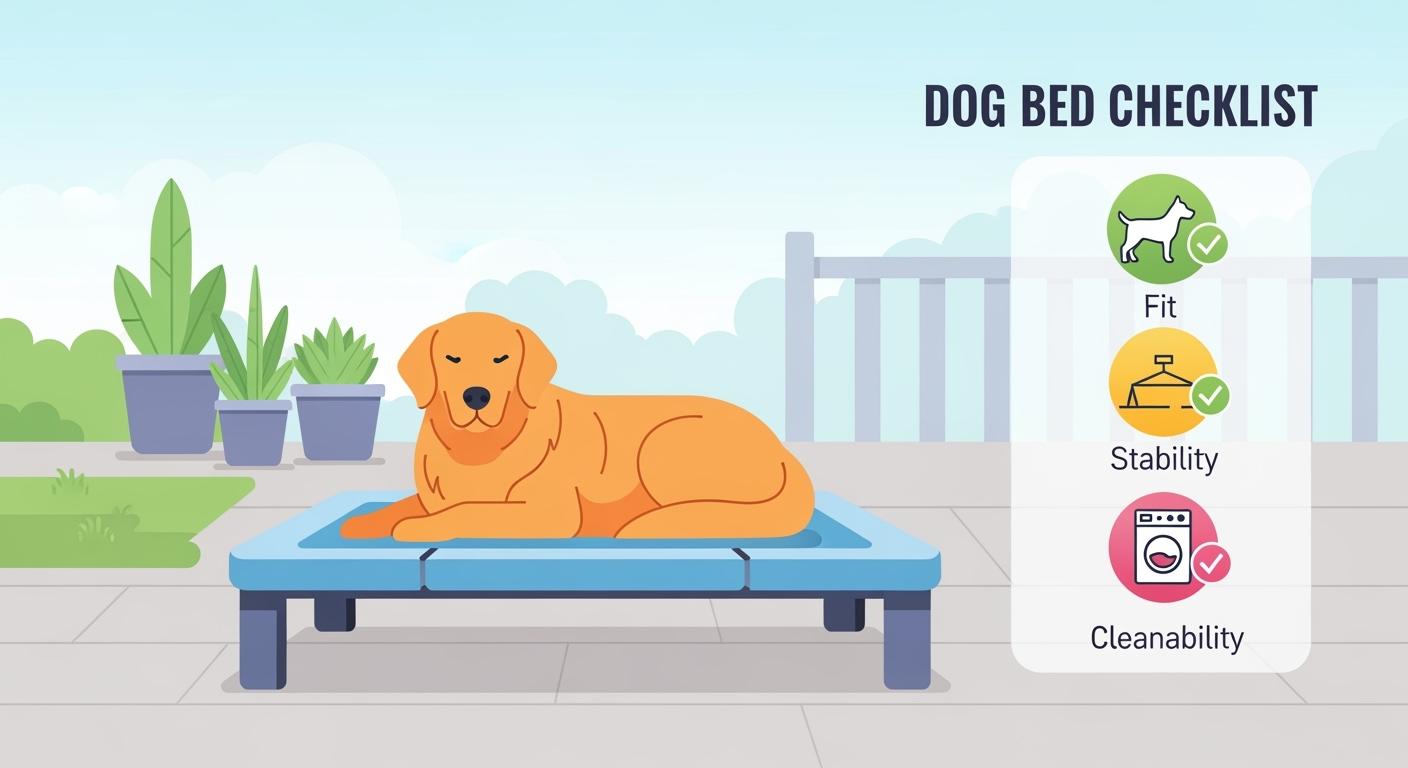
Please follow your local rules. If you worry about health, ask a veterinarian. Dog beds outdoor help dogs feel better and stay clean. They are not made to keep dogs in one place or protect them in a crash. Shade, water, watching your dog, ground type, and the right size are most important for comfort outside.
Challenge | Description |
|---|---|
Fit | Make sure the dog bed outdoor fits how your dog sits and moves so your dog is comfortable. |
Stability | Stability helps the dog bed outdoor last longer, especially if your dog is very active. |
Cleanability | Easy cleaning keeps things clean, which is important for older dogs or when training outside. |
Key Takeaways
Measure your dog’s length from nose to tail to find the right bed size. This ensures comfort and allows your dog to stretch out fully.
Choose a dog bed with a non-slip base to prevent sliding. Stability is crucial for your dog’s safety, especially on outdoor surfaces.
Select materials that are easy to clean and dry quickly. This keeps the bed fresh and comfortable for your dog after outdoor use.
Dog Bed Outdoor Essentials
Comfort vs Protection
You want your dog bed to offer comfort without restricting your dog’s movement. Outdoor beds should let your dog stretch, turn, and settle calmly. Avoid beds that force your dog into a cramped posture or make entry difficult. Use the fixed pre-buy checklist to confirm fit for real sleep posture and stable footing. Outdoor beds do not replace shade, water, or supervision. If your dog shows signs of heat stress, move your dog to a cooler spot and reassess the setup.
Outdoor Use Cases
Outdoor beds work well in many places. You might use them on patios, campsites, or during travel. Each location brings its own challenges. For example, patios need beds with grip and weather resistance. Campsites require easy cleaning and stable surfaces. Travel calls for lightweight and portable beds. Sometimes, you need a different bed type if your dog has mobility issues or if the surface is too rough.
Tip: Avoid placing beds in direct sunlight or damp areas to help materials last longer.
Product Name | Material Description |
|---|---|
Outdoor Chill Pad | Water-Resistant & UV-Protected Fabric, 600-denier fabric |
Memory Foam Outdoor Bed | Water-Resistant Inner Liner to protect memory foam core |
When to Choose a Different Bed
Follow this step-by-step path:
Measure your dog’s posture and movement.
Check entry and exit for stable footing.
Review the checklist for fit, stability, and cleanability.
Observe your dog’s first use for signs of discomfort or slipping.
Change bed types if your dog cannot settle, struggles to climb, or if the bed does not dry quickly.
Quality matters for every dog bed. You want a bed that supports your dog’s comfort and stands up to outdoor use. Always check material and finish cues to ensure quality and durability.
Dog Bed Sizing Guide
Posture-Based Fit
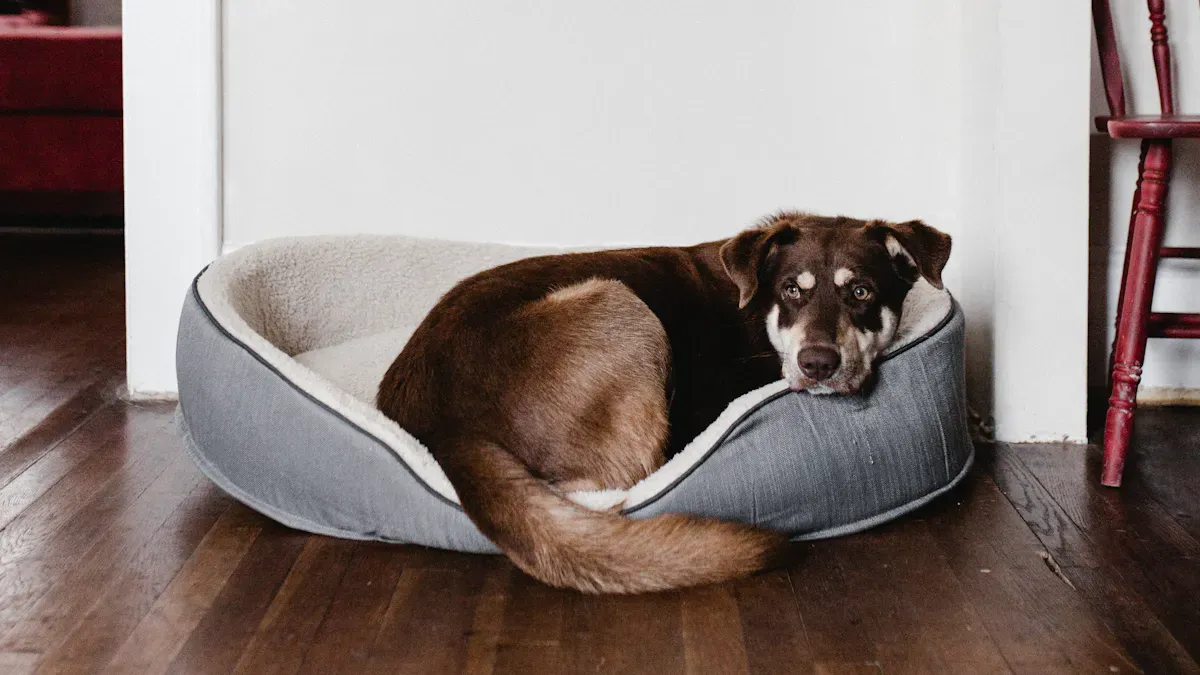
You need to measure your dog’s real sleep posture to find the best dog bed size. Dogs stretch out, curl up, and turn around when they rest. Start by measuring from the tip of your dog’s nose to the base of the tail. This length helps you choose a bed that lets your dog stretch out fully. If your dog likes to curl up, pick a nest-style bed that allows curling while still giving wall support. Dogs with longer legs need a deeper bed to fit their body. Plan for future growth if your dog is young. Getting the right size bed means your dog can settle calmly without cramped edges.
Tip: Use a tape measure while your dog sleeps to get the most accurate measurement.
Measure nose to tail for length.
Check if your dog can stretch and turn comfortably.
Choose a bed that fits your dog’s natural posture.
Entry and Exit Checks
Entry and exit matter for your dog’s comfort and safety. Your dog should step on and off the dog bed without slipping or awkward climbing. Stable footing helps your dog settle and prevents accidents. Beds that sit too high or have slippery surfaces can cause problems, especially for older dogs or dogs with mobility issues. Always check the bed’s height and surface grip before buying.
Entry/Exit Checklist | What to Look For |
|---|---|
Step-on Height | Low enough for easy access |
Surface Grip | Non-slip base for stability |
Edge Design | No sharp or loose edges |
Note: Observe your dog’s first use. If your dog struggles to climb or slips, consider a different bed.
Weight vs Movement
Weight-only sizing can mislead you. Many people pick a dog bed based only on weight, but this does not guarantee comfort. Dogs need space to curl up or stretch out. You must measure the usable sleep surface, not just rely on weight. Your dog’s natural resting position and bed stability matter more than weight alone. A bed that fits your dog’s movement keeps your dog comfortable and safe.
Dogs need room to move, not just support for their weight.
Bed stability and posture are key for outdoor comfort.
Use the checklist for fit and access to avoid mistakes.
Callout: Always use posture-based measurements and entry checks. This approach helps you select the best dog bed for outdoor use.
Best Dog Bed Outdoor Features
Surface and Support
The best dog bed outdoor should feel soft and strong. Make sure the surface cushions your dog’s body. It should not sag or feel thin. A good bed helps your dog rest after playing. It protects joints on hard ground. Press your hand into the bed to test it. The surface should bounce back fast. It should not leave a deep dent. If the bed sags, your dog may not get enough support. Replace the bed if you see dips or your dog avoids it.
Outdoor dog beds use tough materials like heavy-duty vinyl and ballistic nylon. Cordura and Textilene are also used for comfort and strength. Elevated beds use mesh or Textilene for airflow and cooling. Chew-resistant beds have strong seams and tough fabrics.
Feature | Outdoor Dog Beds | Standard Indoor Beds |
|---|---|---|
Material | Water-resistant, scratch-resistant | Usually not water-resistant |
Cleanability | Easy to clean | Often less durable |
Durability | Made for tough places | Mostly for indoor use |
Tip: Elevated beds keep your dog off hot or wet ground. They help with cooling and comfort in warm weather.
Stability and Grip
A dog bed outdoor should stay in place. Look for a non-slip base or grippy feet. Stability stops slips and injuries outside. Push the bed with your foot to test it. It should not slide or tip over. If the bed moves, your dog may feel unsafe. Add a non-slip mat under the bed if needed. Replace the bed if it keeps sliding.
Non-slip bases use rubber grips, textured EVA foam, or silicone patterns. These features keep the bed steady on wood, concrete, or decking. A stable bed helps your dog feel safe and prevents falls.
Note: Dogs with mobility issues need extra grip and low entry for safety.
Cleanability and Drying
Pick a dog bed that is easy to clean and dries fast. Check if the cover wipes clean and does not soak up water. Washability keeps the bed fresh after mud or rain. Pour a little water on the bed to test it. The water should bead up and wipe away. If the bed stays damp or smells, your dog may not use it. Wash covers often. Replace the bed if it does not dry fast or smells bad.
Outdoor beds use heavy-duty vinyl, ballistic nylon, Cordura, and Textilene. These materials are easy to clean and dry quickly. They resist mold and mildew. Chew-resistant beds with smooth finishes are easier to clean and last longer.
Fabric Type | Durability | Cleaning Ease | Additional Notes |
|---|---|---|---|
Heavy Duty Vinyl | Most Durable | Easiest to Clean | Non-absorbent, just spray and wipe dry. |
Ballistic | Durable | Easy to Clean | Abrasion resistant, smooth finish. |
Cordura | Durable | Easy to Clean | Good traction, gentle on skin. |
Textilene | Outdoor Use | Moderate | UV-protected, dries quickly, not chew proof. |
Callout: Always check for strong smells, loose threads, or weak seams. These signs mean the bed may not last outside.
Comparison Table: Outdoor Ground Bed vs. Elevated Bed vs. Travel Mat
Bed Type | Fit | Stability | Drying | Usage Range |
|---|---|---|---|---|
Outdoor Ground Bed | Good for most dogs | Needs grippy base | Dries slower | Patios, decks, shaded lawns |
Elevated Bed | Roomy, fits all postures | Very stable | Dries fastest | Campsites, hot places, wet areas |
Travel Mat | Compact, less support | Stable on flat ground | Dries quickly | Travel, car, indoor/outdoor use |
Tip: Pick the best dog bed outdoor for your main activity. Elevated beds work well for heat and wet ground. Travel mats are good for short trips and easy cleaning.
Common Mistakes & Troubleshooting
Mistakes List
You can stop many problems by using a simple checklist. Here are mistakes people often make when picking a dog bed outdoor:
You only think about your dog’s weight, not how they sleep.
You do not measure your dog when curled up and stretched out.
You get a bed that slides or wobbles on outdoor ground.
You buy a bed with a cover that is hard to take off or clean.
You put the bed in a loud or busy place.
You miss signs your dog is not happy, like not using the bed.
You forget to check for bad smells, loose threads, or weak seams.
Tip: Always check fit, stability, and cleanability before you buy a bed.
Troubleshooting Table
If you see a problem with your dog bed, use this table to help fix it:
Problem | Solution |
|---|---|
Bed slides or moves | Add a non-slip mat or move to a grippier surface |
Bed dries slowly after rain | Place in sun or use a towel to speed up drying |
Odor after wet use | Wash cover and air out bed completely |
Bed sags or loses shape | Replace with a bed that has better support |
Dog refuses to use bed | Check fit, move bed to a quiet spot, or try a different style |
Scratching or chewing damage | Pick a bed with stronger materials and reinforced seams |
Pressure point discomfort | Choose a bed with orthopedic support or memory foam |
Signs of overheating | Move bed to shade, provide water, and monitor your dog |
FAQ Table
You might have questions when buying a dog bed outdoor. Here are answers to some common ones:
What materials work best outside?
Which fabrics are good for dogs that chew a lot?
How do I wash and care for my dog’s bed?
Checklist Item | Action Needed |
|---|---|
Measure your dog curled up and stretched out | Use both positions for accurate size selection |
Check for orthopedic support and memory foam | Choose extra support for older dogs |
Pick strong materials and seams | Improve durability and quality |
Look for a cover you can wash and remove | Ensure washability and easy cleaning |
Make sure the bed fits your space and does not slip | Prevent accidents and improve comfort |
Put the bed in a quiet, cozy spot | Enhance relaxation and health |
Take seniors to the vet often to check support needs | Monitor health and adjust bed as needed |
Note: Using this checklist helps you stop most problems and keeps your dog happy outside.
You can pick the best dog bed outdoor by measuring your dog first. Make sure the bed is stable and easy to clean. Use the checklist and tables so you do not make mistakes. Think about what your dog likes and needs for comfort. Begin by measuring your dog and looking at beds that fit your outdoor plans.
FAQ
How do you judge if a dog bed outdoor is suitable?
Check if your dog can stretch, turn, and settle calmly. Make sure the bed does not slide, wobble, or force your dog into a cramped posture.
Which outdoor bed works best for older or mobility-impaired dogs?
Pick a bed with low entry and stable footing. Make sure your dog can step on and off easily without slipping or climbing.
How do you prevent sliding or odor after outdoor use?
Place the bed on a grippy surface. Wash and dry the cover often. Move the bed to sun or air out after rain or mud.






