
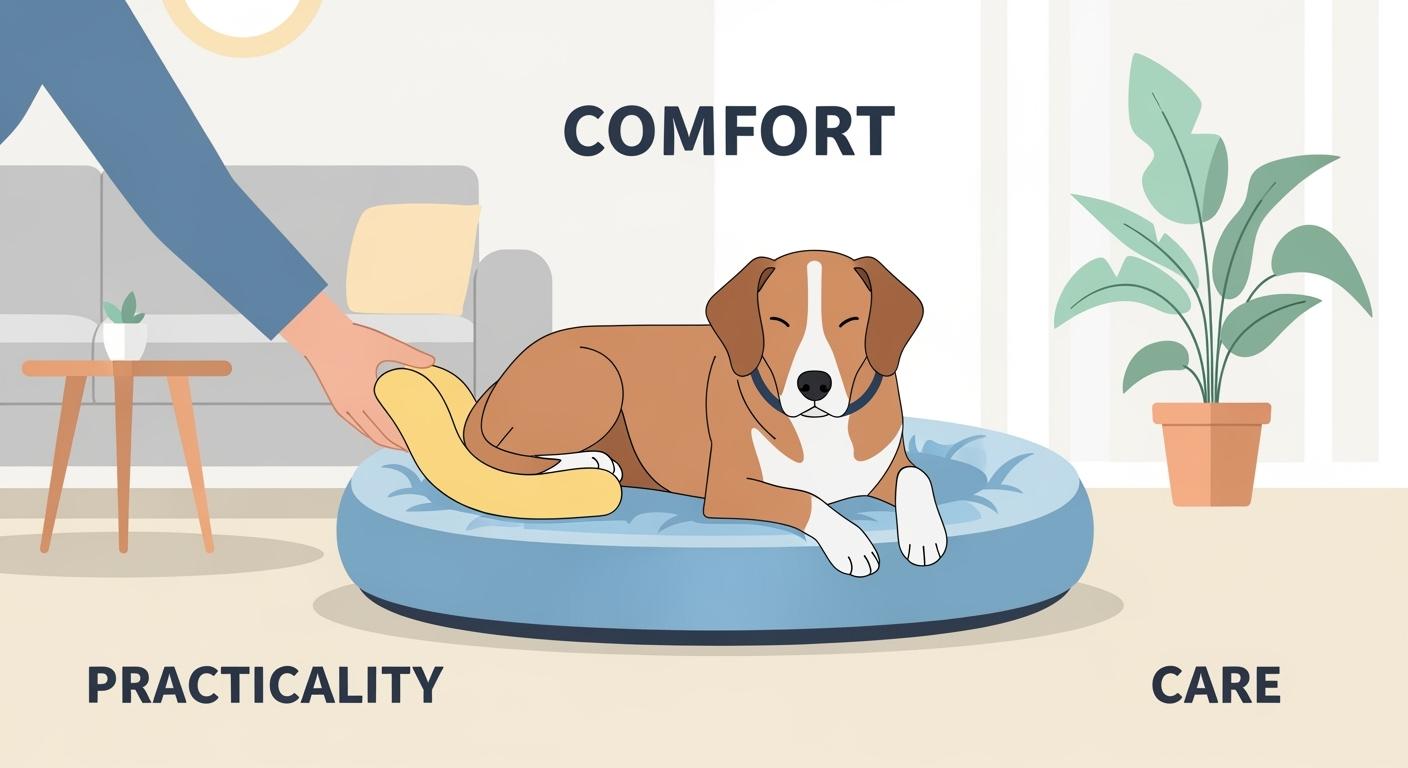
Choosing a bed for a medium dog gets easier when you focus on usable sleep space, support, and cleaning. Watch how your dog sleeps, measure where they actually rest, and pick materials that match your home and routine.
Key Takeaways
- Choose a bed based on your dog’s sleep style, not just weight. Observe how your dog sleeps to find the best fit.
- Look for beds with non-slip bottoms and stable bases. These features prevent sliding and help dogs feel secure.
- Select materials that are breathable and easy to clean. Removable covers make maintenance simple and keep beds fresh.
How to Size a Bed for a Medium Dog
One Size Doesn’t Fit All: Body Shape and Sleep Style
Many people return beds because they only look at weight or breed. Medium dogs have different body shapes. Some dogs curl up, and some stretch out. How a dog sleeps is more important than numbers. You should watch how your dog likes to rest. If you pick a bed for medium dog that does not match their sleep style, you might get complaints about fit or comfort.
Tip: Watch your dog for a week. Write down if they curl up, sprawl out, or change positions. Use what you see to help you choose the right bed.
Common Complaints: Size, Flatness, Heat, Cleaning, Slipping
People complain when beds are too small, too flat, or too hot. Cleaning problems and beds that slide also cause returns. You can stop these problems by picking beds that fit your dog’s habits and your cleaning needs. Beds with confusing size words make things hard. Beds that move or do not support well upset both dogs and owners.
Sizing and Use-Case Table
| Medium Dog Body Type | Sleep Style | Best Bed Orientation | Buyer Notes |
|---|---|---|---|
| Compact, curls up | Curled | Thick edges, round shape | Look for raised sides for head support |
| Long, stretches out | Stretched | Flat, rectangular | Choose extra length for full-body comfort |
| Heavy coat, overheats | Any | Breathable, cool fabric | Avoid plush; seek mesh or cooling materials |
| Mobility issues | Any | Low entry, stable base | Prioritize easy access and non-slip bottom |
| Multi-dog household | Mixed | Durable, easy-clean | Select tough covers and removable liners |
| Concerned about sizing | Any | Clear measurements | Double-check usable sleep space before buying |
You will get fewer complaints and returns if you match the bed for medium dog to the dog’s body and sleep style. Use this table to help you pick the best beds and help buyers find the right one.
Fit and Support Checks
Fit Means Usable Sleep Space
You want your owners to avoid returns. Fit means more than matching a bed for medium dog to a weight chart. Usable sleep space matters most. Dogs curl up or stretch out, so you must check the bed’s inner area. Measure your dog from nose to tail and compare it to the bed’s usable space. Beds with raised edges work well for curlers. Flat beds suit stretchers. If a dog cannot settle or keeps sliding off, the bed does not fit.
Note: Watch for refusal to use the bed, discomfort, or sliding. These signs show poor fit and lead to complaints.
Here is a quick reference table for sizing based on posture and body shape:
| Your dog’s resting length | Sleep style | Usable sleep space to look for |
|---|---|---|
| Measure nose to base of tail | Sprawls / stretches | Choose inner length that meets or exceeds your dog’s length |
| Measure relaxed curl diameter | Curls up | Choose an inner area that fits a curl without pressing the edges |
| Measure shoulder width + turn room | Changes positions often | Choose a stable shape with room to turn and resettle |
Support: Edges, Thickness, Stability
Support keeps dogs comfortable and prevents complaints. You must check edge height and firmness. Raised edges help dogs rest their heads. Flat beds need enough thickness to cushion joints. Look for beds with at least two inches of fill and dense foam. Stability matters. Non-slip bottoms stop beds from sliding. Beds that bunch up or tip over cause frustration.
- Choose a base thick enough that your dog does not bottom out on the floor.
- Foam or fill should rebound after your dog stands up (no lasting dents).
- A stable, non-slip bottom helps the bed stay put on hard floors.
If a dog refuses to settle, the bed may lack support or stability. Beds that flatten quickly or shift under the dog’s weight lead to returns.
Checklist Table
Use this checklist to verify fit and support before you add a bed for medium dog to your catalog. Each area helps prevent common complaints and returns.
| Check Area | What to Verify | Why It Matters | Reader-Facing Language |
|---|---|---|---|
| Usable Sleep Space | Measure inner area, not just size tag | Stops sizing mistakes | Check your dog’s resting length for best fit. |
| Edge Height/Posture Support | Raised sides for curlers, flat for stretchers | Prevents discomfort and refusal | Choose edges for head support or flat for full stretch. |
| Fill Support/Rebound | Minimum thickness and density | Stops flatness and joint complaints | Look for thick, dense fill for lasting comfort. |
| Cover Removability/Cleaning | Removable cover, fast drying | Prevents cleaning issues | Easy-remove covers make cleaning simple. |
| Non-Slip/Bunching Risk | Stable base, non-slip bottom | Stops sliding and bunching complaints | Non-slip bottoms keep beds in place. |
| Seam Strength/Wear Areas | Reinforced seams, check high-wear spots | Prevents tearing and early wear | Strong seams handle daily use. |
| Odor/Hair Management | Material resists odor and hair buildup | Stops smell and hair complaints | Choose covers that manage odor and hair. |
| Warning for Poor Fit | Watch for refusal or discomfort | Prevents repeat returns | If your dog can’t settle, reassess fit. |
Materials and Cleaning

Non-Slip and Stability Features
You want a bed for medium dog that does not move around. Non-slip bottoms stop the bed from sliding on hard floors. Stable beds help dogs get in and out without tripping. These beds are good for dogs of any age. Many good beds have textured bottoms or rubber grips. These features help nervous dogs feel calm. They also keep the bed in place when dogs play or rest.
- Non-slip bottoms keep the bed from moving.
- Textured bases add grip and stop bunching.
- Low entry points make it easy for dogs to step in.
Tip: Look for beds with strong corners and steady edges. These parts help stop the bed from tipping or bunching up.
Cover and Filling: Heat, Breathability, Cleaning
The materials in a bed change how comfy and easy it is to clean. Memory foam shapes to your dog’s body and helps sore joints. Latex lasts a long time and does not cause allergies. Hypoallergenic fabrics protect skin and lower reactions. Check for safety labels like OEKO-TEX or CertiPUR-US. Breathable covers let air flow and keep dogs cool. Removable covers make washing simple. Do not pick beds with covers that dry too slowly.
| Material Type | Key Features |
|---|---|
| High-Density Memory Foam | Shapes to the dog’s body, spreads weight, keeps shape, water-resistant |
| Latex | Lasts long, supports well, hypoallergenic |
| Hypoallergenic Fabrics | Soft, lowers allergic reactions |
| Certifications | OEKO-TEX, CertiPUR-US for safety and no toxins |
Note: Wash the bed every few weeks with gentle soap. Do not use bleach or strong cleaners. If you use the bed outside, check for mold.
Setting Realistic Expectations
You need to know how long a bed will last and how to care for it. Beds with strong frames stay good for years. Fabric beds are great for travel but wear out faster. Orthopedic foam beds help older dogs and last many years. Outdoor beds need checks for wet spots and mold.
| Where you’ll use it | Best bed style | What to verify |
|---|---|---|
| Indoor, hard floors | Foam mattress or bolster bed | Non-slip base + easy-to-wash cover |
| Outdoor, patio/yard | Elevated cot-style bed | Weather-ready fabric + quick drying + easy wipe-down |
| Travel or moving room to room | Lightweight mat-style bed | Packability + washable surface |
Tip: Beds last longer if you clean and check them often. Change covers if you see damage or smell bad odors.
You can get fewer complaints and returns by picking beds with safe, steady features. Tell buyers how to clean and how long beds last so they know what to expect.
Common Mistakes and Fixes
Common Mistakes and Quick Fixes
Lots of complaints and returns happen because of a few mistakes. You can stop these problems with easy checks and fixes:
- Not checking sleep style before choosing “medium”: Watch your dog sleep. Pick a bed shape that matches how they rest.
- Buying too small to save space: Measure your dog from nose to tail. Get a bed with enough room for them to stretch out.
- Choosing heat-retaining covers for hot dogs: Pick covers that let air flow for dogs that get hot.
- Assuming non-slip works on all floors: Try the bed on your floor. Add a rug or mat if it slides.
- Not checking washability before odor complaints: Make sure the cover comes off and dries fast.
- Overstating support or durability in descriptions: Use simple words about how thick and firm the bed is.
- Using harsh cleaners or leaving residues: Clean with pet-safe soap. Rinse well so no soap stays behind.
- Not drying beds completely after washing: Dry every part of the bed so mold does not grow.
Tip: Small changes in how you check and show beds can lower returns and make buyers happy.
Troubleshooting Table
This table helps you fix common problems with a bed for medium dog. It shows what causes the problem, how to fix it, and how to stop it next time.
| Problem | Likely Cause | Immediate Fix | Prevention Tip |
|---|---|---|---|
| Dog can’t settle or keeps shifting | Poor fit or lack of support | Check size and support; add padding if needed | Pick a bed that fits your dog’s sleep style |
| Bed slides or bunches | Not enough grip or wrong floor | Put a rug under the bed or use grip pads | Test the bed on your floor before you buy |
| Bed looks too small after lying down | Not enough usable space | Get a bigger bed | Measure your dog stretched out, not curled |
| Cover deforms or smells | Bad fabric or slow drying | Wash with gentle cleaner; dry all the way | Choose beds with covers that come off and dry fast |
| Mattress flattens over time | Not enough foam or fill | Add more padding or turn the bed over | Pick beds with thick foam and clear details |
| Dog avoids bed after washing | Cleaner left behind or still damp | Rinse the cover well; dry it fully | Use gentle soap and dry the bed all the way |
| Misleading “medium” sizing complaints | Size labels are not clear | Give clear inside measurements | Always list the sleep space in the description |
FAQ
Here are answers to questions buyers ask about beds for medium dogs:
| Question | Answer |
|---|---|
| Can a donut bed help with separation anxiety? | It can help a little. The closed space makes some dogs feel safe, but it will not stop them from missing you. |
| Are there downsides to donut beds? | Yes. Dogs with trouble moving may find high sides hard to climb. These beds can also get hot in warm rooms. |
| Do calming beds work for all dog breeds? | Calming beds are best for small and medium dogs that like to curl up. Big dogs may find them too tight, but some large sizes can still be comfy if you pick the right one. |
Note: Always pick a bed for medium dog that fits your dog’s needs and your home for the best results.
You can pick a good bed for medium dog if you think about comfort, how long it lasts, and if it is easy to clean. The bed should match your dog’s size and how they like to sleep. Check the return rules and see if there is a warranty. Use this simple checklist to help you choose the best bed:
| Checklist Point | What to Look For |
|---|---|
| Comfort & Support | Thick base, bolster edges |
| Durability | Sturdy covers |
| Materials | Breathable or soft |
| Cleaning | Removable, washable cover |
| Size | Enough space to stretch |






