
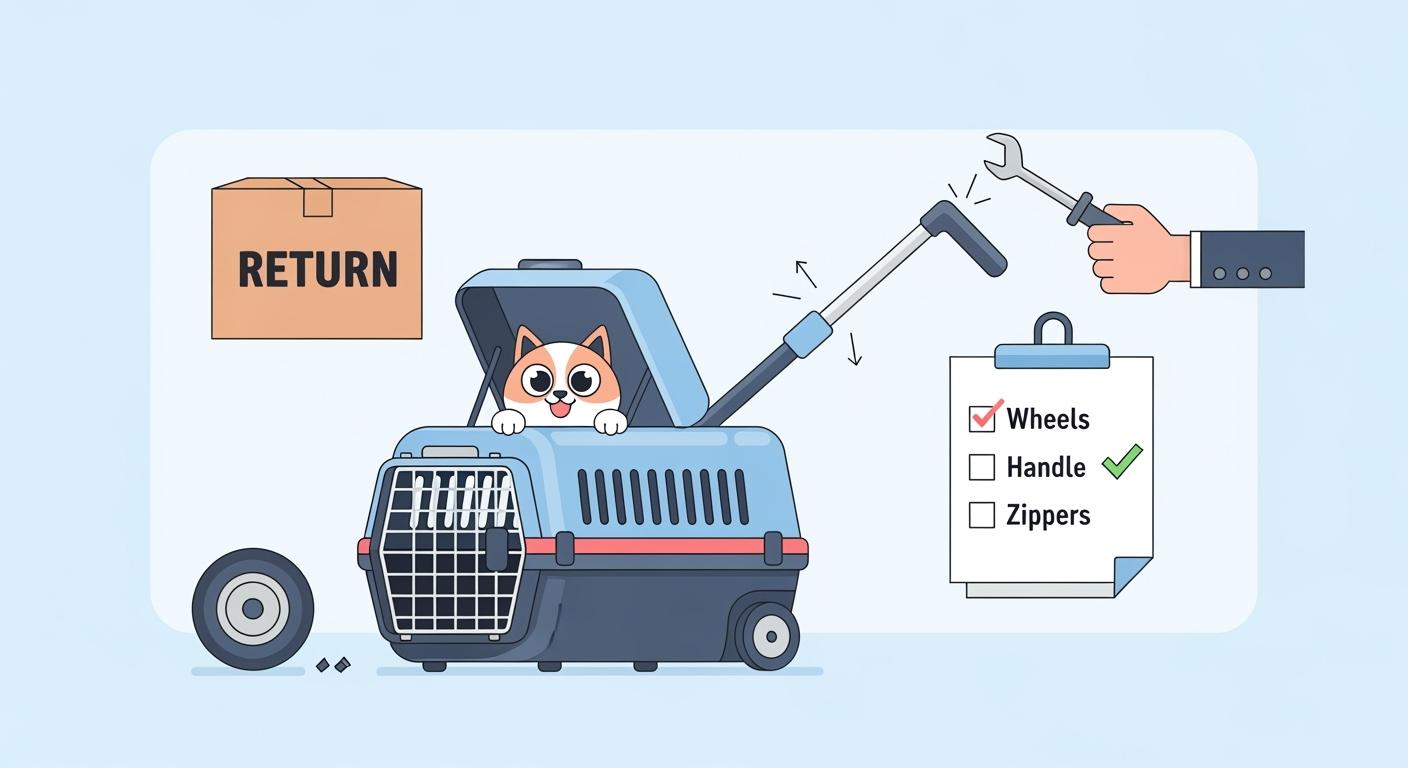
When you pick a pet travel carrier with wheels, you want easy travel and safe handling for your pet. Some common problems are tipping, noisy wheels, weak handles, and hard-to-clean spots. You can make your pet safer and your carrier work better by learning how to choose and take care of the right travel carrier.
Key Takeaways
- Choose the right wheel type for your travel needs. Solid wheels work well on smooth surfaces, while air-filled wheels are better for rough terrain.
- Ensure your pet’s comfort by checking the carrier’s size and ventilation. A well-fitted carrier allows your pet to stand, turn, and lie down comfortably.
- Regularly inspect and clean your carrier to prevent issues. Check wheels, handles, and seams to ensure they are in good condition before each trip.
Where Pet Travel Carrier with Wheels Works Best and Fails
Smooth Floors vs Stairs and Rough Terrain
A pet travel carrier with wheels rolls best on smooth floors. You can move it easily in airports and hotels. It is simple to push in indoor hallways. This helps you avoid hurting your back and keeps your pet safe. But when you get to stairs or rough ground, you have to lift the carrier. This makes traveling harder and less safe. On gravel, sand, or busy sidewalks, small wheels can get stuck. Bigger wheels work better on grass and bumpy places. Still, you need to make sure the carrier is steady and works well.
Tip: Always look at the wheel type before you go. Solid plastic wheels are good for inside. Air-filled rubber wheels are better for rough ground.
Best Use Cases: Nervous Pets, Indoor Travel, Heavy Loads
If your pet gets scared or worried, a wheeled carrier can help them feel calm. You can move them gently and keep them comfortable. When you travel inside, like in airports or hotels, you do not need to lift the carrier. If your pet is big or you have more than one, wheels make it easier to carry them. This keeps your back safe and your pet protected.
Use-Case Table: Scenario, Wheel Direction, Trade-Offs, Buyer Note
| Scenario | Best Wheel Direction | Trade-Offs | Buyer Note |
|---|---|---|---|
| Airports/long corridors | Forward | Smooth, easy roll | Choose solid wheels for indoor use |
| Hotel lobbies/elevators | Forward | Tight turns, stable base | Look for secure handle and base |
| Public transport/crowded sidewalks | Forward | Maneuverability needed | Foam-filled wheels help stability |
| Car trunk loading/curb transitions | Backward | Lifting required | Check handle strength for safety |
| Stairs/escalator-heavy routes | Lift | Carrying strain | Plan for secure lifting |
| Rough surfaces (gravel, grass, sand, snow) | Forward | Stability, wheel size | Air-filled wheels for functionality |
Comfort & Stability Checks for Pet Travel Carrier
Pet Comfort: Posture, Ventilation, Calmness
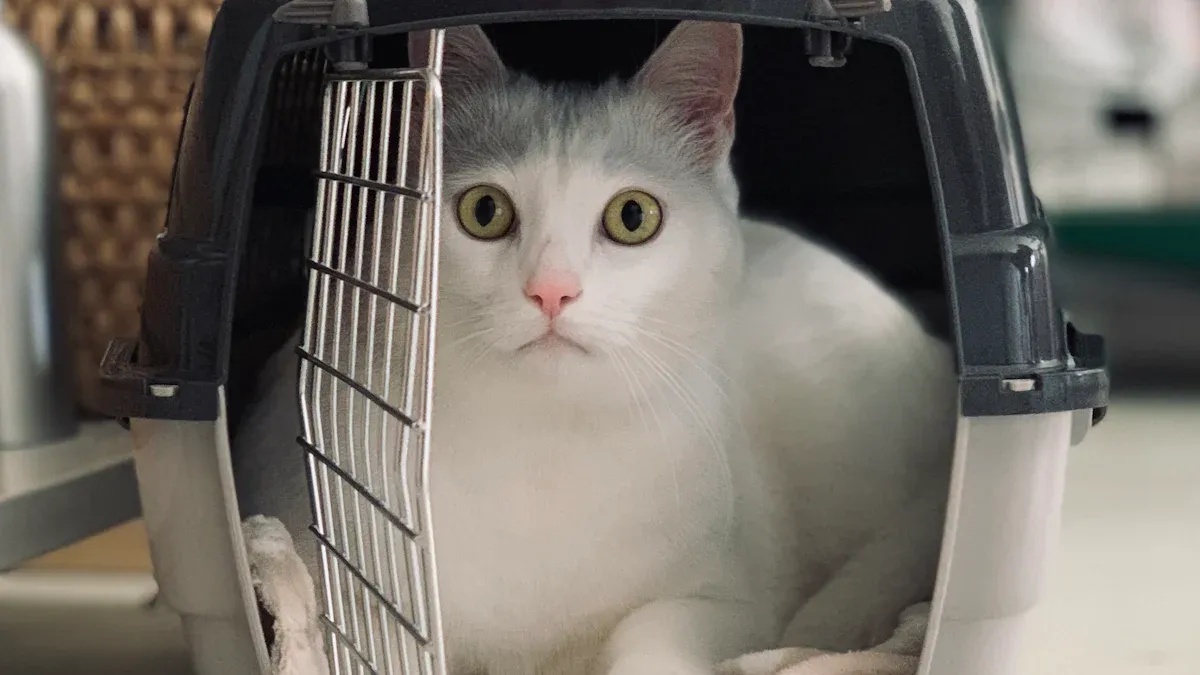
You want your pet to feel safe and happy when you travel. Comfort means your pet can stand up, turn around, and rest inside the carrier. Check if your pet can lie down without bending or twisting. If your pet settles calmly, it means they feel safe. Enough space inside helps your pet stay in a good position. This is important for both cats and dogs.
Good airflow stops your pet from getting too hot. Mesh panels let air move through the carrier. This helps your pet stay cool and less stressed. If your pet pants or seems upset, there may not be enough air. Rules say carriers must have good airflow to keep pets healthy. Look for mesh panels and make sure nothing blocks the air.
Tip: Watch for signs like trying to escape, not settling down, or slumping. These signs show your pet is not comfortable and may need a different carrier.
Stability: Center of Gravity, Base, Anti-Tip
Stability keeps your pet safe and stops the carrier from tipping. Check the rails or racks to see if they hold your pet’s weight. The carrier should sit flat and not move side to side. Shake the carrier and roll it slowly to see if it shifts. Put your pet’s weight in the middle to stop tipping or swinging. Do not use carriers that are too high or far from the center, as they can tip over.
Note: A strong base and anti-tip parts help stop accidents. You keep your pet safe and avoid returns by checking these things.
Handler Experience: Pull, Turn, Set Down
How you use the carrier matters when you pull, turn, or set it down. Handles should feel strong and nice in your hand. You should not feel pain when you pull the carrier. Turning should be easy, and the carrier should not tip over. When you put the carrier down, the base should stay flat and not bend. These things make travel safer and easier for you and your pet.
Tip: Handles that fit your hand and a strong base make travel better and stop problems.
Quick Checklist: What to Verify Before Your Trip
| Area to Check | What to Verify | Why it matters on trips | What to look for |
|---|---|---|---|
| Wheel type/noise | Check wheel material and listen for noise | Prevent noisy travel and stuck wheels | “Wheels roll quietly and smoothly indoors” |
| Wheel connection strength/wobble | Inspect wheel attachment for firmness | Avoid wobble and loose wheels | “Wheels stay firmly attached and stable” |
| Handle stiffness/pull comfort | Test handle for stiffness and comfort | Prevent strain and handle breakage | “Handle feels strong and easy to pull” |
| Base stiffness/sag prevention | Press base to check for sagging | Avoid base collapse and pet discomfort | “Base stays flat and supports your pet” |
| Anti-tip on turns | Tilt carrier gently to check stability | Prevent tipping during turns | “Carrier stays upright when turning” |
| Ventilation layout/clog risk | Look for mesh panels and check airflow | Prevent overheating and distress | “Air flows freely through mesh panels” |
| Closure security/pop-open risk | Test zippers and locks for secure closure | Prevent escapes and accidental openings | “Closures stay shut and keep your pet safe” |
| Cleaning/drying practicality | Inspect seams, corners, and wheel wells | Avoid trapped residue and wet spots | “Carrier cleans easily and dries quickly” |
| Mesh/trim snag risk | Check mesh and trim for snags or loose threads | Prevent pet injury and damage | “Mesh and trim are smooth and safe” |
| Pet discomfort warnings | Observe pet for slumping, twisting, or restlessness | Prevent discomfort and stress | “Pet settles calmly and shows no distress” |
You can use this checklist to check comfort, stability, and handling before you buy a pet travel carrier with wheels. This helps you pick the right carrier and avoid problems when you travel.
Materials, Cleaning, and Odor Control in Travel Carrier
Material Choices: Oxford, Nylon, Breathable Panels
You want a carrier that lasts and feels nice. Oxford and nylon fabrics do not tear easily. They stay strong after many trips. Mesh panels let air move inside the carrier. This helps your pet feel calm. Strong materials help keep bad smells away. The carrier stays fresh longer. Secure closures keep your pet safe inside. Good ventilation moves air but does not make it cold.
- Rolls well on smooth floors but not on stairs.
- Wheels can shake or make noise on hard floors.
- Anti-tip design keeps the carrier from falling over.
- Handle the carrier gently to protect your pet.
- Mesh panels let air in but do not cool the carrier.
- Wheel wells are easy to clean and do not trap dirt.
- Seams and corners wipe clean with a wet cloth.
- Do not use thick inserts that block air.
- Dry the carrier upright to stop bad smells.
- If your pet is not calm, check for comfort.
- Zippers and closures keep your pet safe inside.
- The carrier works for cats and dogs.
Cleaning Challenges: Wheel Wells, Seams, Corners
Cleaning the carrier can be hard sometimes. Dirt and hair get stuck in wheel wells and corners. Use a soft brush or air to remove dry dirt. Clean mesh panels gently so they do not break. Always check for wet spots. Wet spots can cause bad smells and mildew. A strong carrier is easier to clean and keeps your pet healthy.
| Frame Material | Safe Cleaning Method | Water temperature | Strictly Avoid |
|---|---|---|---|
| Polycarbonate | Wipe with a microfiber cloth + mild soap; rinse cloth and wipe again. | Cool to lukewarm | Abrasive pads, strong solvents, very hot water |
| Powder-Coated Aluminum | Soft brush + mild soap; wipe dry to prevent water spots. | Cool to lukewarm | Bleach, steel wool, long soaking |
| Reinforced Nylon Mesh | Soft brush + diluted mild soap; blot dry with a towel. | Cool water | Machine soaking, harsh bleach, steam cleaners |
Cleaning and maintenance steps
You can keep your carrier clean and ready by doing these steps:
- Use a soft brush or air to remove dry dirt.
- Spray a pet-safe cleaner on stains and wait.
- Wipe all parts with a wet cloth in one direction.
- Dab mesh with a cotton swab and alcohol.
- Dry the carrier upright on a rack and turn it every hour.
A clean carrier keeps your pet safe and comfortable every time you travel.
Common Mistakes, Troubleshooting, and Airline Travel FAQs
Mistakes: Terrain, Noisy Wheels, Weak Handles, Sagging Base
Many buyers make simple mistakes when choosing or using a pet travel carrier with wheels. These mistakes often lead to returns or unhappy travel experiences. Here are some common errors and how you can correct them:
- Do not assume all-terrain wheels work well on gravel, sand, or stairs.
- Always check for stairs or curbs on your route before you travel.
- Avoid soft bases that can sag under your pet’s weight.
- Do not expect wheels to stay silent on rough ground.
- Use thin, breathable padding to avoid blocking airflow.
- Test the carrier indoors with your pet before your first trip.
- Clean not only the main compartment but also the wheel area and seams.
Tip: Small changes in how you use or check your carrier can prevent most problems and keep your pet safe.
Troubleshooting Table: Issue, Cause, Fix, Prevention
| Issue | Possible Cause | Immediate Fix | Prevention Next Time |
|---|---|---|---|
| Tipping or instability on turns | Pet weight off-center, narrow base | Center your pet and slow down on turns | Choose a carrier with a wide, stable base |
| Noisy or rough wheels | Dirt in wheels, hard floor, worn parts | Clean wheels and check for debris | Pick durable wheels and clean after travel |
| Bent or hard-to-control handle | Overloaded carrier, weak handle joint | Remove excess weight, adjust grip | Test handle strength before buying |
| Pet movement or crowding | Carrier too small, poor fit | Stop and let your pet settle | Measure your pet and choose the right size |
| Pet pawing at openings | Anxiety, loose closures | Calm your pet, check all zippers and locks | Use secure closures and try short trips |
| Rapid odor after one trip | Trapped moisture, poor cleaning | Wipe all surfaces and dry thoroughly | Clean and dry after every use |
| Hard-to-clean wheel area | Dirt buildup, tight seams | Use a brush or compressed air | Inspect seams and choose easy-clean design |
| Sagging base | Soft or thin base, heavy pet | Add a firm insert or support | Choose a carrier with a rigid base (or a firm base insert) sized for your pet |
| Pet not settling or escaping | Discomfort, poor ventilation | Check posture and airflow, adjust padding | Watch for pet comfort cues before travel |
Note: Regular checks and cleaning help you avoid most issues with your pet travel carrier with wheels.
Airline and Travel Carrier FAQ Block
Q1: Which wheel direction works best for different routes?
Forward rolling works best on smooth floors and long corridors. Pulling backward helps with curbs or loading into a car. Always lift the carrier on stairs.
Q2: How do I keep the carrier stable in crowds?
Hold the handle firmly and move slowly. Keep your pet centered in the carrier. Wide bases and anti-tip features add stability.
Q3: Will my pet feel comfortable when the carrier is closed?
A good travel carrier supports your pet’s posture and allows calm settling. Mesh panels provide airflow, but always check for signs of stress.
Q4: What should I do if my pet cannot settle inside?
Stop and check for slumping, twisting, or restlessness. Adjust the padding or try a short break. If your pet still struggles, consider a different size or style.
Q5: Should I expect noise or vibration from the wheels?
Some noise is normal, especially on hard floors. Durable wheels reduce rattling. Clean wheels often to keep them rolling smoothly.
Q6: How do I clean the wheel area and seams?
Use a soft brush or compressed air for wheel wells. Wipe seams with a damp cloth. Dry the carrier upright to prevent odor.
Q7: Does ventilation keep my pet cool in summer?
Ventilation allows airflow but does not lower the temperature below the room level. Avoid direct sun and check your pet for signs of overheating.
Q8: When is a pet travel carrier with wheels not suitable? Avoid it if your route has lots of stairs/curbs, if the carrier tips easily when turning, or if your pet panics at rolling noise or vibration. In those cases, a handheld carrier can be simpler.
Q9: What should I check before buying? Confirm the usable interior size (standing/turning), wheel type (quiet vs. shock), handle stiffness, base rigidity, ventilation, and how easy it is to clean wheel wells and corners. If you plan to fly, confirm the airline’s size limits and whether wheels can be removed for under-seat fit.
Q10: When should I choose a carrier without wheels?
Pick a non-wheeled carrier for frequent stairs, rough terrain, or if you need a lightweight option for short trips.
Q11: What makes a carrier work for in-cabin flights? Airlines set their own rules, but most require a secure, well-ventilated carrier that canfit under the seat. Before you book, check the airline’s current dimensions and test the fit at home under a chair.
You now know how to find problems with wheels and handles on a carrier. You can use lists and tables to help you pick the best one and keep it working well. Choosing the right features for your pet stops problems and makes travel easier.






