
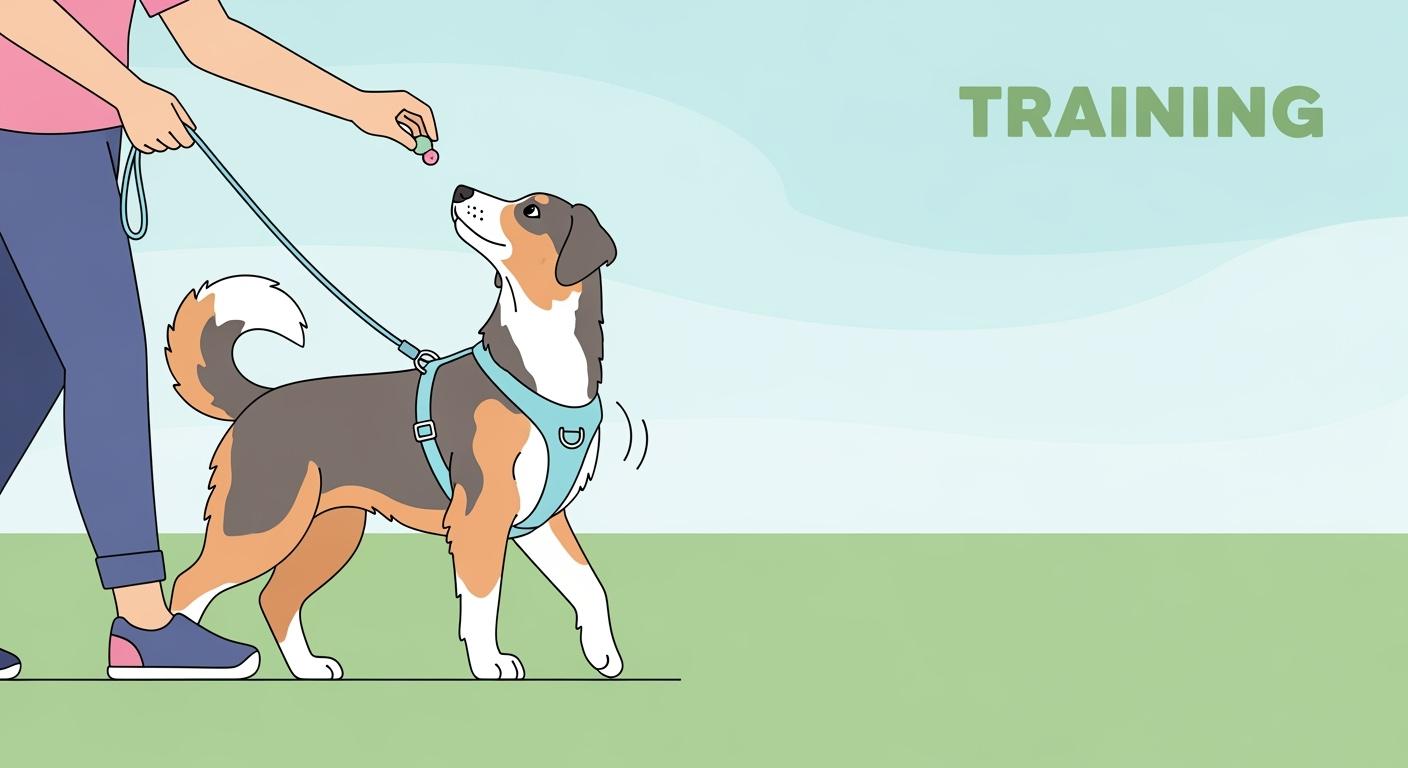
Many people struggle when their dog pulls on leash. You are not alone in facing this challenge. Trainers often recommend front-clip harnesses because these tools help redirect your dog’s attention and make walks calmer. For example, Max, an Australian Shepherd, showed much better leash behavior after switching to a front-clip harness. This type of harness attaches at the chest, so when your dog pulls, it gently pivots them back toward you. With simple training and the right gear, you can make walks safer and more enjoyable for both you and your dog.
Key Takeaways
A front-clip harness helps stop pulling. It turns your dog toward you.
Use positive reinforcement training. This teaches your dog that walking with a loose leash gives rewards.
Always check your dog’s harness and leash before each walk. Make sure they fit right and are safe.
Pick the best front-clip dog harness and leash
When to use a front-clip dog harness
Use a front-clip dog harness if your dog pulls or lunges. It helps when your dog gets distracted or cannot walk calmly. The harness clips at the chest. This helps guide your dog back to you. Trainers like these harnesses for dogs that pull hard or get too excited. They also help dogs that sniff and jump at things. You can use a no-pull dog harness for daily walks or training.
Tip: Try the no-pull harness in quiet places first. Move to busy areas later.
Important harness features for control and comfort
A good harness has soft, breathable fabric and padding. This keeps your dog’s skin safe. Strong stitching and tough buckles make it last longer. Straps that adjust help the harness fit well. Reflective parts help others see your dog at night. A good fit keeps your dog comfy and helps with training.
Feature | Description |
|---|---|
Even Pressure Distribution | Sits lower on the chest and moves with your dog |
Dual Leash Attachment | Front D-ring for training, back D-ring for easy walks |
Heavy-Duty Materials | Strong nylon, metal parts, and soft padding |
Easy On/Off Design | Buckles at the neck and chest for fast use |
Built-In Handle | Lets you grab your dog in crowds |
Adjustable Fit | Four places to adjust for a snug fit |
Reflective Safety | Makes your dog easier to see at night |
Best leash choices to stop pulling
Pick a leash that is about 6 feet long and does not stretch. Do not use retractable or stretchy leashes for training. Make sure the leash clip fits your dog’s size. Heavy clips can bother small dogs. Thin leashes may break with strong dogs. Use a strong leash with your no-pull harness for safe walks.
Gear mistakes that make pulling worse
Do not use harnesses that block your dog’s front legs or rub their elbows. If the harness does not fit, your dog may slip out or feel pain. Do not use gear that hurts or scares your dog. Always check your harness and leash before every walk.
Scenario | Best Setup Choice | Advantages | Common Failure Modes | Pre-Walk Check |
|---|---|---|---|---|
Strong forward-pulling dog | No-pull dog harness + fixed leash | Helps guide and control | Harness too loose, dog escapes | Two fingers under straps, check clips |
Excited greeter | No pull harness + short leash | Quick control, keeps safe | Harness blocks movement | Make sure legs move freely |
Sniff-and-lunge dog | Front-clip dog harness + sturdy leash | Guides and comforts | Leash too thin, wrong hardware | Check leash strength |
Small dog, heavy clip | Lightweight harness + light leash | Feels better, less strain | Clip too heavy, dog feels bad | Use right size hardware |
Busy sidewalk walker | Reflective harness + 6ft leash | Easier to see, more control | Harness rubs, leash tangles | Check for rubbing, adjust fit |
Park walker | Adjustable harness + longer leash | More freedom, stays on | Harness too loose, dog escapes | Check fit, leash attached |
Fit the harness and leash for safety and comfort
Prep and check your gear before walks
Before you walk, check your harness and leash for damage. Look for frayed straps, broken buckles, or weak clips. Make sure the harness feels soft and smooth. A safe harness spreads force across your dog’s chest and shoulders. This reduces neck strain and helps you guide your dog gently.
How to fit a front-clip dog harness
Follow these steps for a safe and comfortable fit:
Place the harness over your dog’s head and chest.
Adjust the straps so the harness sits snugly but does not pinch under the legs.
Slide two fingers between the harness and your dog’s body to check the fit.
Attach the leash to the front clip.
Choose the right leash length for your walk.
Take a few steps and watch your dog move. Make final adjustments if needed.
Tip: Use adjustable straps to match your dog’s shape and size.
Fit checks: movement, rubbing, escape risk
A good harness lets your dog walk, run, and turn without trouble. Watch for these signs of poor fit:
Your dog stops or hesitates.
Scratching or biting at the harness.
Whining, limping, or coughing.
Redness, sores, or hair loss.
Twisting or trying to back out.
Check Item | Pass/Fail Criteria | Improvement Actions |
|---|---|---|
Two-finger space | Can slide two fingers under harness | Loosen or tighten straps |
Leg movement | Dog walks and runs freely | Adjust chest and shoulder straps |
No rubbing | No redness or hair loss | Reposition or add padding |
Escape risk | Dog cannot back out of harness | Tighten straps, check fit |
Leash length tips for different walk settings
Choose leash length based on your walk:
Leash Length | Recommended Use | Pros | Cons |
|---|---|---|---|
6 feet | Most walks | Space for sniffing, good control | N/A |
4–6 feet | City/training walks | Steady control, easy to handle | Less freedom |
3–5 feet | Running with dogs | Close for quick response | N/A |
Avoid retractable leashes in busy areas. Use a fixed-length leash for training and safety.
Training dogs to stop pulling on leash with simple routines
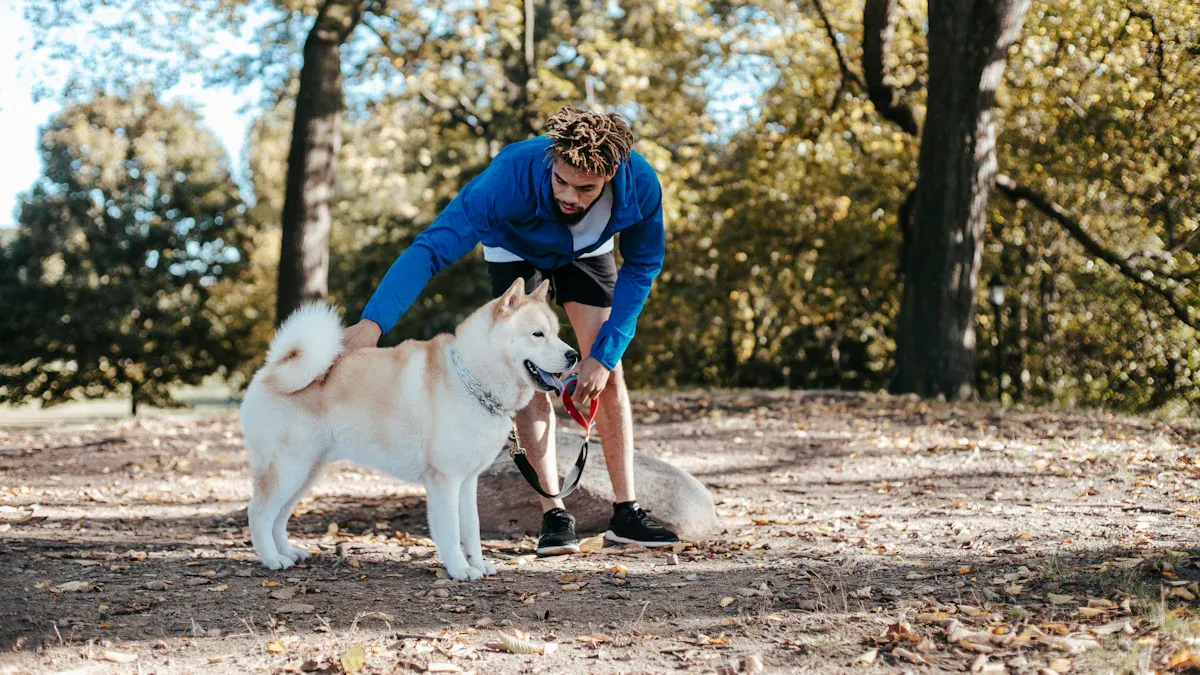
Why dogs pull on leash
You may notice your dog pulls on leash during walks. This happens for several reasons:
Dogs have a natural opposition reflex. When you pull back, your dog pulls forward.
Excitement makes dogs want to explore quickly. The leash can create frustration when they cannot reach what interests them.
Dogs often get rewarded for pulling on leash. If your dog pulls and moves closer to a smell or another dog, they learn that pulling works.
Inconsistent rules confuse your dog. If you sometimes let your dog pull, they keep trying.
Understanding these reasons helps you change the behavior. You can use simple routines to stop pulling and make walks easier.
The stop-and-reward method
You can use a stop-and-reward routine to teach loose-leash walking. This method uses positive reinforcement and clear steps.
Loose-Leash Training Flow:
Start walking with your dog on a front-clip harness and a fixed-length leash.
When your dog pulls on leash and the leash gets tight, stop moving.
Wait until your dog releases tension and the leash goes slack.
Reward your dog with a treat or praise as soon as the leash is loose.
Resume walking. Repeat these steps every time your dog pulls.
Why it works: This routine teaches your dog that pulling on leash stops the fun. When your dog keeps the leash loose, you move forward and reward them. Consistency helps your dog learn that only calm walking gets them what they want.
You can also change direction when your dog pulls. This redirects their focus and keeps them engaged. Reward frequently at first to encourage good habits.
Technique | Description |
|---|---|
Reward when leash is slack | Give a treat or praise when the leash is loose. |
Stop moving when dog pulls | Stand still until your dog stops pulling. |
Change direction when pulling | Turn and walk the other way to regain attention. |
Reward frequently at first | Offer rewards often to build the habit. |
Tip: Every walk is a training opportunity. Consistency matters more than perfection.
Practice around distractions
You can help your dog ignore distractions by practicing in easy environments first. Gradually add more distractions as your dog improves.
Build reliable recall and focus. Use treats or toys to keep your dog’s attention.
Desensitize your dog to noises and busy places. Start in quiet areas and slowly move to busier spots.
Teach leash etiquette. Guide your dog through crowds and around other animals.
Socialize your dog so they learn to ignore strangers and other dogs.
Start with short sessions. Increase difficulty slowly. Celebrate small wins.
What to avoid when training
Many mistakes can slow progress when you train your dog to stop pulling on leash. Here are common errors and solutions:
You keep walking while your dog pulls on leash. Solution: Stop moving when the leash is tight.
You correct but let your dog reach their goal. Solution: Reset and move only when the leash is slack.
You train only when frustrated. Solution: Practice short skill walks when you feel calm.
You reward only perfect behavior. Solution: Reward early progress, even a few seconds of slack.
Your rewards come too late. Solution: Reward quickly while your dog is in the right zone.
You expect zero sniffing. Solution: Use sniffing as a structured reward.
You try to out-stubborn your dog. Solution: Change the reinforcement loop.
You switch rules mid-walk. Solution: Stick to one response for pulling.
You practice only in hard places. Solution: Build the habit in easy spots first.
Problem | Cause | Immediate Fix | Prevention |
|---|---|---|---|
Dog pulls on leash constantly | Opposition reflex, excitement | Stop and wait for slack | Practice calm walking, reward slack |
Dog lunges at distractions | Barrier frustration, lack of focus | Change direction, regain attention | Gradually add distractions |
Dog ignores rewards | Rewards too late, inconsistent | Reward sooner, use high-value treats | Consistent timing, frequent rewards |
Dog backs out of harness | Poor fit, harness too loose | Adjust harness, check fit | Two-finger check, monitor movement |
Dog gets frustrated | Training too hard, too many distractions | Move to easier environment | Start simple, build up slowly |
Safety note: Avoid pain-based tools. Veterinary associations warn that aversive methods increase stress and anxiety in dogs. Reward-based training leads to better welfare and reliable behavior.
Pre-Walk Checklist:
Check harness fit with two fingers under straps.
Inspect leash and clips for damage.
Bring treats or rewards for training.
Choose a calm environment for practice.
Set clear rules for pulling on leash.
Stay patient and consistent.
You can solve most pulling on leash problems with the right setup, clear routines, and positive reinforcement. If your dog pulls on leash with intense lunging or barking, seek help from a professional or your veterinarian.
Solve common leash pulling problems on walks
Pulling toward distractions
You often see your dog pull toward other dogs, people, or interesting smells. Dogs pull because excitement, strong instincts, and learned habits drive them forward. When your dog pulls, stop walking right away. Wait for your dog to look at you. Mark the moment with a cheerful “Yes!” and encourage your dog to return. Walk in the opposite direction if needed. Practice in quiet places first. Gradually add more distractions as your dog improves.
Tip: Reward your dog for walking calmly beside you. This helps your dog learn that staying close brings good things.
Harness twisting or backing out
A twisting harness or a dog backing out signals poor fit. Check the harness before every walk. Make sure you can slide two fingers under the straps. Adjust the harness so it sits snugly but does not restrict movement. Watch for rubbing or slipping. If your dog tries to escape, tighten the straps and check for comfort. Choose a harness with multiple adjustment points for a secure fit.
Quick fixes for common problems
Many leash-pulling triggers appear during walks. You can respond better with practical steps.
Trigger | What the Dog Wants | Common Handler Mistakes | Better Response |
|---|---|---|---|
Other dogs | Social greeting | Letting dog pull ahead | Stop, redirect, reward calm |
People greetings | Attention | Allowing jumping | Ask for sit, reward calm |
Scent spots | Sniffing | Dragging dog away | Use sniffing as reward |
Moving objects | Chase | Pulling back hard | Change direction, distract |
Open spaces | Freedom | Loose leash too soon | Practice loose leash first |
Note: Avoid choke chains or physical punishment. These methods increase stress and do not solve pulling.
Pre-walk safety checklist
Before each walk, check your gear and plan for calm, safe outings.
Inspect harness and leash for damage.
Confirm harness fit with two fingers under straps.
Bring treats for rewards.
Choose a low-distraction area for practice.
Set clear rules for pulling.
If your dog keeps pulling after several weeks of training, try tiring them out before walks or teaching “look at me” for focus. Seek professional help if you see intense lunging or barking that does not improve.
You can help your dog walk politely by choosing the right front-clip harness, fitting it well, and practicing simple routines. Stay patient and consistent.
A front-clip harness gives you better control and keeps your dog safe.
Positive training helps your dog relax and enjoy walks.
Celebrate every small win, like a calm walk or a good sit.
Start today and enjoy progress together!
FAQ
How do you know if the harness fits your dog correctly?
You should slide two fingers under the straps. Your dog must move freely. Check for rubbing or slipping after each walk.
Can you use a front-clip harness for puppies?
Yes, you can use a front-clip harness for puppies. Choose a lightweight harness. Adjust the straps as your puppy grows.
What should you do if your dog keeps pulling despite training?
Check harness fit and leash setup.
Practice in calm areas.
Seek help from a trainer if pulling continues.
