
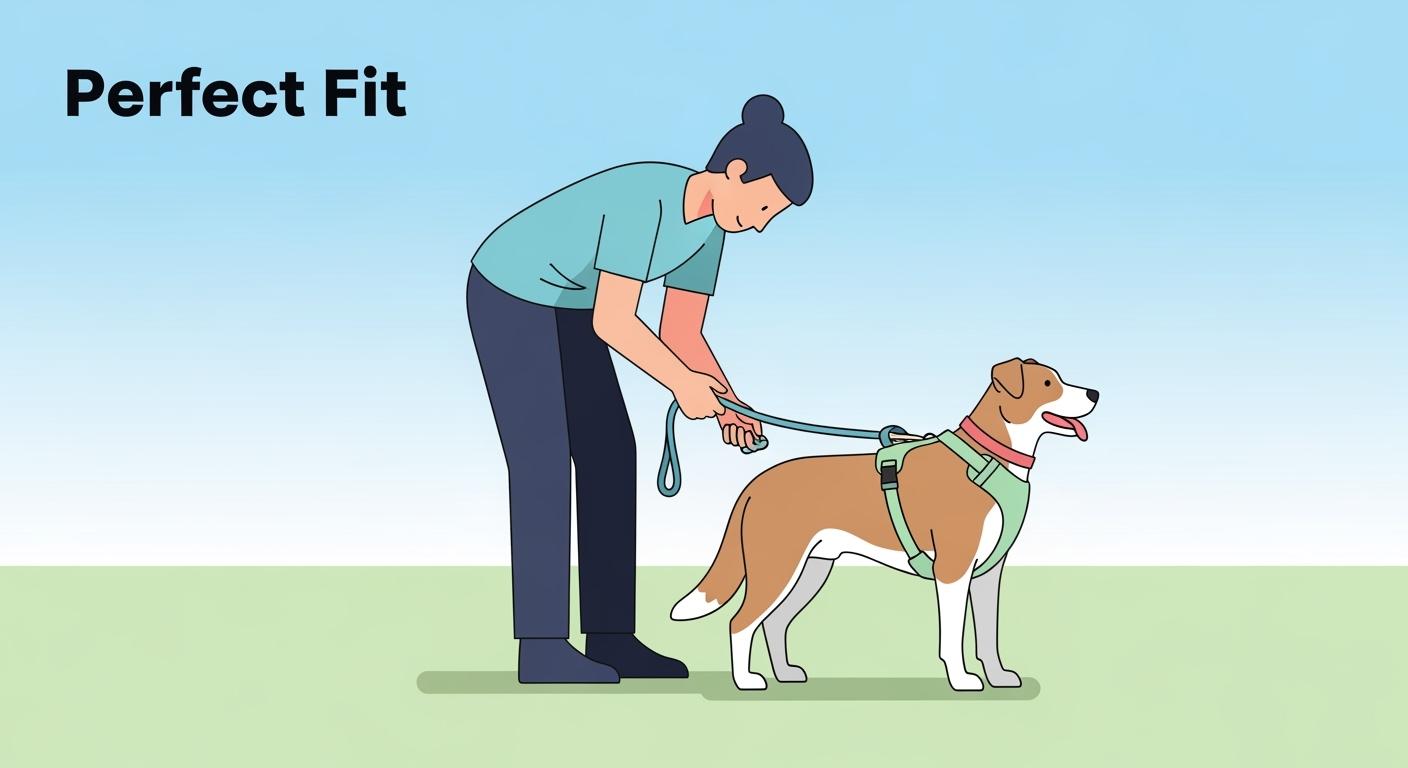
You want your dog to feel safe and happy on every walk. A good dog harness and leash set supports comfort and safety. You see benefits like breathable fabrics, padded panels, and secure fit. Reflective stitching helps you stay visible. The right fit lets your dog move easily and walk with confidence.
Key Takeaways
Choose a harness and leash that fit your dog’s size and behavior. This ensures comfort and safety during walks.
Use the two-finger fit rule to check harness snugness. A proper fit allows freedom of movement without rubbing or escaping.
Select a leash length of 4 to 6 feet for daily walks. This length provides control while allowing your dog to explore safely.
Choose the Right Dog Harness and Leash Set
Match Gear to Your Dog’s Size and Behavior
Choosing the right dog harness and leash set starts with understanding your dog’s size and how they behave on walks. You want gear that matches your dog’s needs, not just their looks. Dogs that pull, lunge, or have lots of energy need different harnesses than calm walkers. Puppies, seniors, and small breeds also have special needs.
Here are some expert tips for matching gear to your dog:
Pick a leash that matches your dog’s size and behavior. For quick potty walks, a slip lead works well.
Use a strong, custom training lead if you want to reinforce good habits.
Try a double-handle leash for better control, especially if your dog pulls.
Pair your leash with a well-fitted collar or a front-clip harness for safety.
Choose a front-clip no-pull harness if your dog pulls or lunges. This style helps teach better walking habits and protects the neck and joints.
Use a back-clip harness for calm dogs that already walk nicely.
Try a dual-clip harness if you want flexibility for both training and daily walks.
Head-halter harnesses work best for high-drive dogs but need slow, careful introduction.
Tip: Flat collars should hold ID tags, not control your dog during walks. Harnesses are safer for most dogs.
You can use the table below to help decide which harness and leash set fits your walking scenario:
Walking scenario | Best harness style direction | Leash style choice | Common failure mode | What to verify before buying |
|---|---|---|---|---|
Daily neighborhood walk | Back-clip or dual-clip | Standard 4-6 ft leash | Loose fit, rubbing | Check two-finger fit, soft lining |
Strong puller | Front-clip or no-pull | Double-handle leash | Pulling, neck pressure | Secure chest strap, sturdy hardware |
Small dog | Lightweight back-clip | Light leash, small clip | Heavy hardware, escape | Weight of clips, snug fit |
Busy sidewalks | Front-clip or head-halter | Short, sturdy leash | Loss of control, tangling | Easy adjustability, quick-release |
Quiet parks | Dual-clip or back-clip | 6 ft leash | Overly loose fit | Comfort padding, flexible fabric |
Short potty walk | Slip lead or back-clip | Simple slip or short leash | Slipping out, stiff movement | Fast on/off, proper fit |
Longer exercise walk | Dual-clip or back-clip | 6 ft leash | Chafing, poor fit | Breathable material, secure straps |
Dog Harness Comfort and Fit Basics
A good dog harness and leash set should always put comfort and fit first. You want your dog to move freely and feel secure. Poor fit can cause your dog to freeze, walk stiffly, or even try to escape. Long-bodied, broad-chested, or senior dogs often need extra attention to fit.
Look for these comfort and fit basics:
The harness should not limit your dog’s front-leg movement.
Avoid harnesses that rub behind the elbows.
Soft linings and flexible fabrics help your dog move easily.
Always check that the harness fits snugly but does not squeeze.
The two-finger fit rule is simple and effective. After you put on the harness, slide two fingers under each strap. You should feel a gentle pressure, not tightness. This rule helps keep your dog safe, allows airflow, and prevents choking or slipping out. Check the fit often, especially if your dog is still growing.
Note: If your dog resists, freezes, or seems uncomfortable, check the fit and try a softer harness.
Leash Length and Hardware for Control
Leash length matters for both control and your dog’s freedom to explore. Most experts recommend a leash between 4 and 6 feet for daily walks. This length gives you enough control in busy areas and lets your dog sniff and explore safely.
Leash Length | Recommended Use | When to Use | When Not to Use |
|---|---|---|---|
6 feet | Control and exploration | Daily walks, neighborhood strolls | N/A |
15-50 feet | Training and open area exploration | Recall training, open fields | Crowded areas, near traffic |
Choose leash hardware that matches your dog’s size and strength. Heavy clips can put too much pressure on small dogs and may cause neck injuries. Thin leashes and small clips do not give enough control for strong dogs and can lead to spinal strain if your dog pulls hard.
Safety Tip: Always check that the leash clip is secure and easy to use. Avoid hardware that feels too heavy or too light for your dog.
Red Flags When Choosing Gear
Watch for these warning signs when picking a dog harness and leash set:
The harness fits too loosely or too tightly.
The harness restricts your dog’s movement or rubs the skin.
The leash hardware feels too heavy for a small dog or too flimsy for a strong dog.
The harness or leash uses rough, stiff, or non-breathable materials.
The harness allows your dog to back out or escape.
The leash is too long for crowded or busy areas.
Introduce new gear slowly. Let your dog sniff and wear the harness in a calm setting before your first walk. This helps your dog feel safe and builds trust with the new equipment.
Remember: A well-chosen dog harness and leash set keeps your dog comfortable, safe, and ready for every adventure.
Fit and Adjust for Comfort and Control
Prep: Check Dog, Gear, and Environment
Before you put on a harness, you need to prepare your dog, the gear, and the walking environment. Preparation helps you avoid problems and keeps your dog safe. Follow these steps for a smooth start:
Measure your dog’s chest and neck to match the harness size.
Inspect the harness for damage or worn parts.
Choose a calm area for fitting and leash training.
Pick a leash length that fits your walking environment.
Check the leash clip size to match your dog’s harness.
Make sure the walking surface is safe and not too hot.
Tip: Always start with a relaxed dog. If your dog feels anxious, wait until they calm down before you begin.
Harness Fit: Step-by-Step Guide
A properly fit harness gives your dog comfort and control. You need to measure and adjust the harness for a great fit. Use the table below to guide your measurements:
Measurement Type | Description |
|---|---|
Chest Measurement | Measure around the deepest part of the chest. |
Neck Measurement | Measure around the base of the neck. |
Leg Loop Fit | Slide two fingers between the strap and the leg. |
To properly fit a harness, follow these steps:
Place the harness over your dog’s head and guide the legs through the loops.
Adjust the chest and belly straps so they fit snugly but do not pinch.
Make sure you can slide two fingers under each strap.
Check that the harness does not rub behind the elbows or restrict front-leg movement.
Use adjustable straps to fine-tune the fit for your dog’s shape.
Look for ergonomic shaping and soft materials to support natural movement.
A no-pull dog harness or padded front lead dog harness can help decrease pulling and prevent neck strain. These harnesses distribute pressure across the chest and shoulders, not the neck.
Leash Attachment and Handling
Attaching the leash the right way keeps your dog safe and gives you control. Use these best practices:
Do’s | Don’ts |
|---|---|
Use a padded, shock-absorbing leash for comfort during pulls. | Attach the leash to collar rings when using a harness. |
Inspect D-rings for wear, rust, or bending before each walk. | Force the snap hook if it does not click smoothly. |
Choose a leash with a reliable trigger snap for easy use. | Allow excess leash slack after attachment. |
Introduce new attachment styles gradually to avoid confusion. | Use bungee or retractable leashes with a no-pull harness. |
When you attach the leash, follow these steps:
Put the harness on your dog and check that it sits flat and straight.
Adjust all straps for a secure fit.
Find the correct attachment point—front for a no-pull dog harness, back for calm walkers.
Clip the leash to the D-ring and test the connection with a gentle tug.
Let your dog move around and watch for rubbing, slipping, or restricted motion.
Adjust if needed before starting your walk.
For leash training, practice in a quiet place. If your dog pulls, stop and wait for them to return to your side. Reward your dog for walking calmly next to you. If your dog gets excited, wait until they settle before you put on the leash. This helps create a positive experience.
Fit Checks: Posture, Movement, and Security
You need to check the harness fit every time you walk, especially for growing dogs. A properly fit harness should not restrict movement or cause rubbing. Use this step-by-step setup flow:
Step One: Inspect the harness for damage or wear.
Step Two: Fit the harness to your dog’s chest and neck.
Step Three: Check the leash clip size and make sure it matches the harness.
Step Four: Choose the right leash length for your walk.
Step Five: Take a short test walk. Watch for rubbing, twisting, or slipping.
Step Six: Do a final pass/fail check before heading out.
Use the table below to check if your harness setup passes or fails:
Check Item | Pass Looks Like | Fail Looks Like | Fix |
|---|---|---|---|
Secure fit | Harness stays in place, no sagging | Harness shifts, sags, or twists | Adjust straps for snug fit |
No backing out | Dog cannot slip out backwards | Dog can back out of harness | Tighten chest and belly straps |
Front-leg movement | Dog moves legs freely, no restriction | Dog walks stiffly or hesitates | Loosen straps, check harness shape |
No rubbing behind elbow | Skin clear, no redness or hair loss | Redness, chafing, or hair loss behind elbow | Adjust fit, try softer harness |
Leash clip position | Clip sits flat, easy to attach | Clip twists, pulls to one side | Reposition harness, check D-ring |
Leash length manageability | Leash easy to handle, no tangling | Leash too long, tangles easily | Shorten leash, use standard length |
Note: Check the harness before each use. For growing dogs, recheck the fit often. Remove the harness from use after any high-force event.
A no-pull dog harness or a properly fit harness helps prevent neck strain and supports leash training. You can decrease pulling and keep your dog comfortable by checking fit and adjusting as needed. Always look for a great fit and use a harness that matches your dog’s size and walking style.
Common Walking Problems and Solutions
Pulling and No-Pull Dog Harness Benefits
Many people have trouble with dogs pulling on walks. If the harness does not fit right, pulling can get worse. When your dog pulls, you might feel upset or lose control. A no-pull harness spreads the force over the chest and shoulders. This helps keep your dog’s neck safe and makes walks better for both of you.
Evidence Type | Description |
|---|---|
Biomechanical Advantage | Harnesses spread force across the chest, shoulders, and body. This lowers pressure on the neck. |
Study Findings | Dogs with front-clip harnesses had less throat pressure and lower heart rates during walks. |
Real-World Example | Max, a German Shepherd, pulled 70% less after using a front-clip harness. |
Some harnesses have strong handles or special rings for more control. These features let you guide your dog without hurting them.
Escapes and Backing Out: Prevention
Dogs sometimes try to slip out of their harness. This happens a lot if the harness is too loose. Small dogs with different body shapes need extra care for fit. If the harness is loose, your dog could escape and run away.
Strategy Type | Description | Pros/Cons |
|---|---|---|
Integrated Five-Point Harness | Locking buckle adds more safety | Very safe, but can be hard to use |
Tamper-Resistant Adjusters | Straps lock by themselves | Keeps fit, but takes longer to adjust |
Build Quality | Strong stitching and tough buckles | Lasts longer, but may cost more |
Adjustability | Many ways to adjust for a good fit | Fits most dogs, but takes time to set up |
Check the harness fit every time before you walk. Make sure you cannot pull the harness off your dog’s head. Pick a harness with strong buckles and straps you can adjust for safety.
Discomfort and Neck Pressure: Harness vs. Collar
Dogs show they are uncomfortable by stopping, scratching, or whining. These signs mean the harness might be pinching or rubbing. Always look for red skin, especially under the arms and chest. A harness that fits well will not cause these problems.
“The neck is not made to hold weight when moving. Controlling a dog with a collar is like making a person walk while being choked.” — Dr. Sophia Yin, renowned veterinarian and animal behaviorist
Item | Risk of Neck Pressure and Discomfort |
|---|---|
Collars | Put pressure on the throat, neck bones, and thyroid. This can cause injuries and long-term problems. |
Harnesses | Spread force over the chest and shoulders. This lowers injury risk and helps your dog learn without pain. |
Harnesses protect your dog’s neck and help stop injuries. They also make training kinder and give you better control.
What Not to Do: Retractable Leashes and Loose Fit
Do not use a retractable leash for exercise walks. These leashes do not give enough control and can make pulling worse. A loose harness can also let your dog escape or feel uncomfortable. Always watch your dog and check the harness fit before you go out.
Tip: Pick a harness that fits snugly and use a regular leash for daily walks. This keeps your dog safe and comfortable.
Dog Harness and Leash Set Checklist and Care
Pre-Walk Checklist: Fit, Clip, Leash, and Route
Before you head out, use this quick checklist to keep your dog safe and comfortable:
Item | Description |
|---|---|
Harness fit check | Make sure the harness sits snug but not tight. Use the two-finger rule for comfort. |
Clip check | Test the clip for secure attachment and smooth action. |
Leash condition | Look for frays or weak spots. Replace if you see damage. |
ID tag | Confirm your dog’s collar has an ID tag with your contact info. |
Route choice | Pick a safe path and avoid busy or hazardous areas. |
Heat/surface awareness | Touch the ground to check for heat. Change your route if it feels too hot for your hand. |
Quick wipe-down after walk | Clean your dog’s paws and harness to remove dirt and debris. |
Troubleshooting: Pulling, Rubbing, and Tangles
Problems can happen on any walk. Use this table to solve common issues:
Problem | Likely cause | Fix now | Prevent next time |
|---|---|---|---|
Dog pulls harder | Harness fit or style | Pause, adjust harness | Try a no-pull harness |
Harness twists | Loose straps | Tighten straps | Check fit before each walk |
Dog backs out | Harness too loose | Stop, refit harness | Use a snug, escape-proof harness |
Rubbing marks | Strap placement | Adjust or add padding | Choose soft, padded harness |
Leash tangles | Too much slack | Shorten leash | Use standard length leash |
Clip too heavy | Wrong hardware size | Switch to lighter clip | Match clip to dog’s size |
Handler loses grip | Wet or thin handle | Dry hands, use better grip | Pick a leash with padded handle |
Common Mistakes and Quick Fixes
You might forget to check the harness fit or miss a worn spot. Always inspect the harness and leash before each walk. If your dog pulls or slips out, stop and adjust the harness right away. For rubbing or chafing, switch to a softer harness or add padding.
Maintenance: Cleaning and Replacement
Check your dog’s harness and leash every month for frayed webbing or weak buckles. Wash the harness with mild soap and let it air dry. Avoid machine washing to keep the harness strong. Store gear in a dry place. Replace the harness if you see damage or if it no longer fits your dog well.
You want every walk to be safe and enjoyable for your dog. Choose a harness and leash set that fits your dog’s body and walking style. Check the fit before each walk. Use the checklist to keep your dog comfortable. Prioritize your dog’s well-being with the right gear.
FAQ
How do you know if your dog’s harness fits correctly?
You should slide two fingers under each strap. Your dog should move freely. The harness should not rub or cause your dog to back out.
Can you use a harness for every dog?
Yes, you can use a harness for any dog. Choose a style that matches your dog’s size and walking habits. Always check for comfort and safety.
What is the best leash length for daily dog walks?
A leash about 6 feet long gives you control and lets your dog explore safely. This length works well for most daily walks with your dog.
