
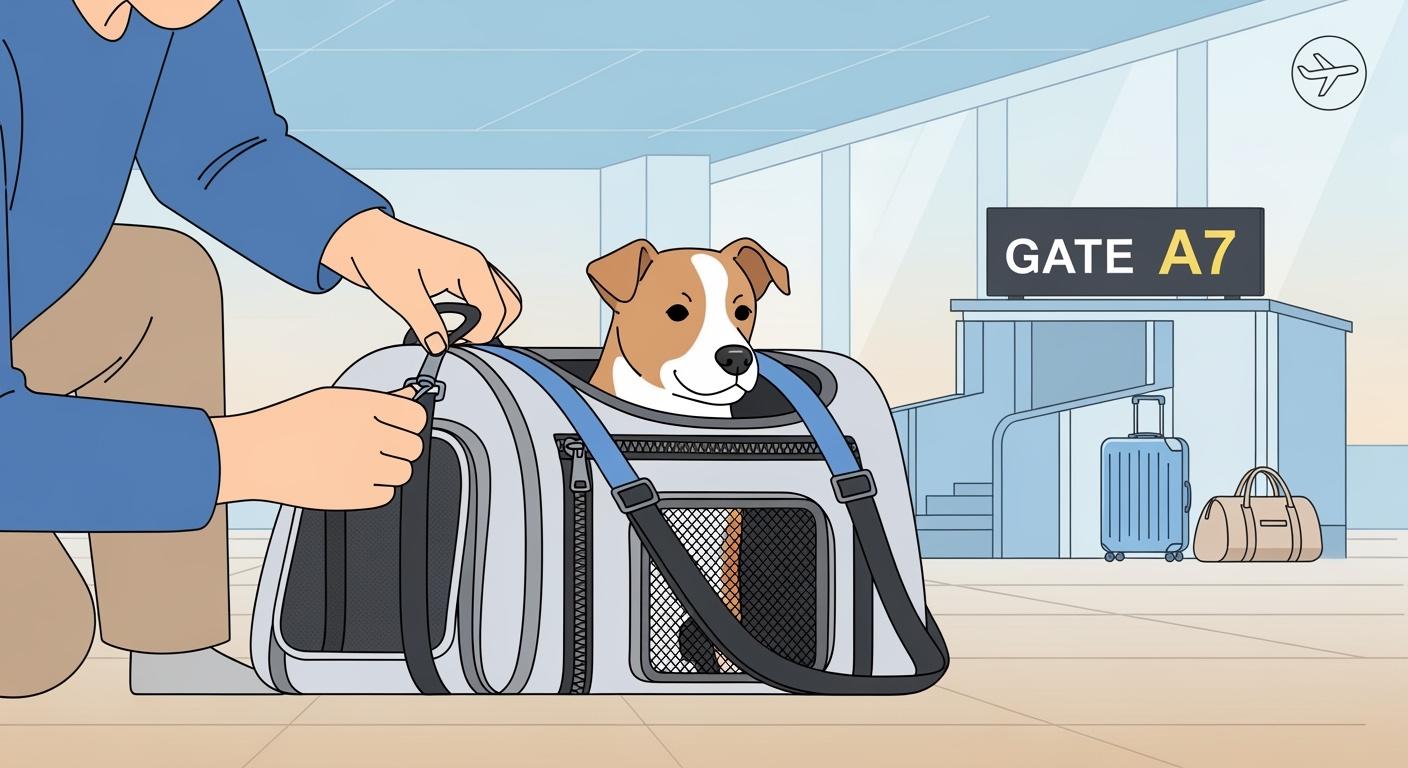
You want your trip with small dogs to be easy. Picking a pet carrier bag for small dogs is important when you fly. Airlines need pets to fit inside a closed carrier. Soft-sided carriers with padding and air holes keep pets safe. Getting ready early helps you avoid stress at the airport.
Key Takeaways
Pick a pet carrier that is the right size for your dog. Measure your dog to make sure they can stand up, turn around, and lie down inside the carrier.
Check your airline’s rules for pet carriers every time. Airlines have different rules for size and air holes.
Help your dog get ready for travel by practicing with the carrier at home. Let your dog get used to the carrier so they feel less scared during the flight.
Pick a pet carrier bag for small dogs that airlines allow
Travel scenario | Best carrier style | Must-have features | Common failure mode | What to check before buying |
|---|---|---|---|---|
Frequent flyers | Soft-sided dog carrier | Under-seat fit, ventilation, secure closures | Incorrect sizing | Measure under-seat space and carrier size |
First-time flyers | Soft-sided dog carrier | Leak-proof base, adjustable straps | Poor ventilation | Look for breathable mesh and multiple vents |
Very calm pet | Hard-sided dog carrier | Stable base, harness clip | Unstable base | Check for plush, machine-washable base |
Anxious pet | Soft-sided dog carrier | Privacy covers, padded interior | Escape risk | Ensure secure zippers and interior clip |
Hot-weather travel | Soft-sided dog carrier | Three mesh sides, breathable design | Blocked airflow | Confirm ventilation on multiple sides |
Tight connections | Soft-sided dog carrier | Lightweight, detachable shoulder strap | Bulky carrier | Choose foldable, portable carrier |
Airline rules: under-seat fit, ventilation, leak-proof base
Airlines have rules for pet carrier bags. Most carriers must fit under the seat in front. The biggest size allowed is about 18 inches long, 11 inches wide, and 11 inches high. Your dog carrier bag should let your pet stand up. Your pet must be able to turn around and lie down. Airlines want carriers with air holes on many sides. Strong closures stop pets from escaping. Leak-proof bases keep the cabin clean.
Tip: Always check your airline’s website for the right under-seat size before you buy a dog carrier bag.
Soft-sided vs structured dog carrier: pros and cons
You can choose soft-sided or hard-sided dog carriers. Soft-sided carriers are light and easy to carry. They fold up and have soft padding inside. Hard-sided carriers are tough and last longer. They do not break easily and are simple to clean.
Feature | Soft-Sided Dog Carrier | Hard-Sided Dog Carrier |
|---|---|---|
Portability | Lightweight and foldable, easy to transport | Bulkier, less portable |
Comfort | Padded interiors, flexible structure | Hard surfaces, less comfortable |
Durability | May not withstand energetic dogs | Robust, withstands wear and tear |
Security | Less secure, may not contain active dogs | More secure with locks, escape-proof |
Cleaning | Can absorb odors, harder to clean | Easy to wipe down, hygienic |
Versatility | Suitable for indoor and outdoor use | Limited to specific uses, but durable |
Size Variety | Limited size options for larger dogs | Available in various sizes for all breeds |
Soft-sided carriers can help anxious pets feel safe. Active pets might get out if zippers are not strong. Big dogs need hard-sided carriers for support. Soft-sided carriers are best for cabin travel. Hard-sided carriers are needed for cargo travel.
Comfort and safety: closures, straps, stable base
Your dog carrier should keep your pet safe and comfy. Pick carriers with three mesh sides for airflow. Entry doors make it easy to put your pet inside. Privacy covers help your pet feel calm. Adjustable straps make carrying simple. A soft, washable base gives your pet a steady spot to rest. An inside clip lets you attach your pet’s harness for safety.
Note: The best dog carrier has strong zippers and sturdy straps. It should not fall down on your pet during travel.
Avoid misleading claims: what “airline approved” really means
Many dog carrier bags say they are “airline approved.” This means the carrier fits some airline rules for cabin travel. It does not mean every airline will accept it. Each airline has its own rules for size, air holes, and safety. Some carriers called “TSA approved” do not meet airline rules. People complain about wrong sizes and bad ventilation. Always check your airline’s rules and measure your carrier before you travel.
Buyer tip: Look for words like “cabin-ready design,” “under-seat stowable,” “ventilated,” “leak-resistant base,” and “secure closures.” Stay away from promises like “guaranteed airline approved” or “fits every airline.”
The best dog carrier for your trip follows airline rules, keeps your pet comfy, and helps you avoid airport problems. Always check before you buy.
Get the best dog carrier size and fit for your flight
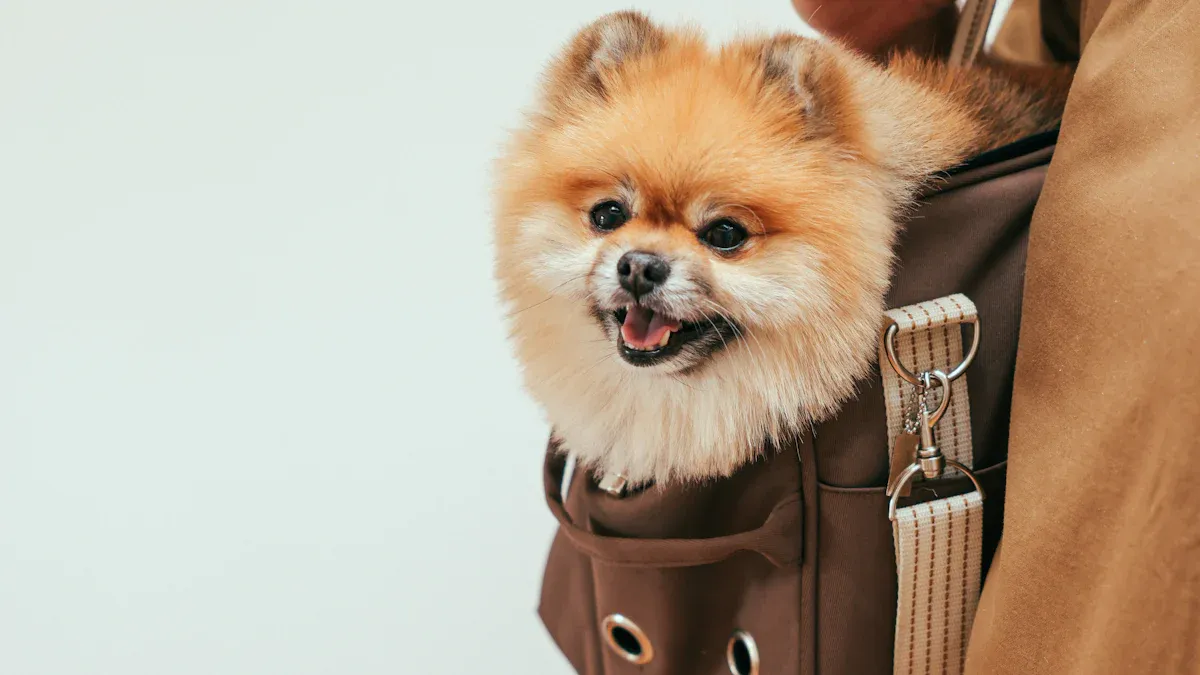
Measure your dog for the right carrier size
You want your pet to feel comfortable during travel. Start by measuring your dog with a soft measuring tape. Ask a helper to keep your dog standing naturally. Measure from the tip of the nose to the base of the tail. Measure from the floor to the top of the head or ears. Add one or two inches to each measurement for comfort. Accurate measurements help you avoid a carrier that is too small. Airlines recommend that the carrier’s length should be your pet’s body length plus half their leg length. The height should match your pet’s full standing height.
Tip: Test the fit by making sure your dog can stand up, turn around, and lie down inside the carrier.
Check under-seat space for your specific aircraft
Every airline has different under-seat space. Check your flight details and look up the seat measurements. The carrier must fit under the seat in front of you. Some seats have less space, so you need to confirm before you travel. Flexible carriers help you fit into tight spaces. If you face a challenge, show the flexibility of your carrier and ask a flight attendant for help.
Requirement | Description |
|---|---|
Enclosure | The pet carrier must enclose the entire pet, preventing any part of the pet from sticking out. |
Size | The carrier must be large enough for the pet to stand up and turn around comfortably. |
Fit | The carrier must fit under the seat in front of the passenger. |
Ensure your dog can stand, turn, and lie down
Your dog must stay fully inside the carrier. No body parts should stick out. The best dog carrier gives your pet enough space to stand, turn, and lie down. Avoid forcing your pet into a carrier that is too small. Comfort matters for both your pet and your travel experience.
The carrier must be spacious enough for your dog to stand up, turn around, and lie down comfortably.
Your dog should not protrude from the carrier.
Choose a carrier that supports natural movement.
Common sizing mistakes and quick fixes
Many travelers pick carriers that are too small or too big. Some forget to check the under-seat space for their flight. Others do not test the fit before travel. You can fix these mistakes with a few simple steps:
Project confidence when traveling with your pet.
Use a flexible carrier to fit under the seat.
Keep the carrier by your feet until asked for it.
If challenged, highlight the flexibility of your carrier.
Ask a flight attendant for assistance if needed.
Step-by-step buying and verification flow
Measure your pet’s length and height.
Confirm your airline’s pet-in-cabin policy.
Check under-seat constraints for your specific flight.
Choose carrier construction for comfort and flexibility.
Test fit and airflow with your pet inside.
Practice short sessions with your pet in the carrier.
Pass/Fail Mini Checklist
Can your pet stand, turn, and lie down inside the carrier? ✅/❌
Does the carrier fit under the seat for your flight? ✅/❌
Is your pet fully enclosed with no body parts sticking out? ✅/❌
Does your pet stay calm during practice sessions? ✅/❌
The best dog carrier fits your pet and your flight. You avoid airport headaches when you check these steps. A pet carrier bag for small dogs must meet airline rules and keep your pet comfortable.
Navigate airport security and boarding with your dog carrier
Security screening: removing your pet and carrier checks
Airport security can feel stressful, but you can make it easier by knowing what to expect. When you reach the checkpoint, follow these steps:
Remove your pet from the dog carrier.
Place the empty carrier on the X-ray belt.
Hold your pet with a leash or in your arms.
Walk through the metal detector with your pet.
Wait for officers to check your hands and inspect the carrier.
Do not do these things:
Never send your pet through the X-ray tunnel.
Do not open the carrier in a crowded line without a secure restraint.
Avoid letting your pet roam free in the checkpoint area.
After screening, move to a quiet spot to return your pet to the carrier.
Boarding: stowing the carrier and keeping it stable
When you board, place the dog carrier under the seat in front of you. This keeps it stable during takeoff and landing. You may slide the carrier out slightly for comfort once the plane is in the air, but always follow crew instructions.
In-flight: keeping your pet contained and calm
Help your dog relax by making sure they are tired before travel. Let your dog eat, drink, and nap in the carrier at home. Bring a familiar item, like a blanket, for comfort. Use a pee pad and a leak-proof water bottle to keep your pet clean and hydrated.
Risks: escape, heat, and comfort issues
You want to prevent escapes and stress. Dogs may pant or whine if they feel hot or anxious. Make sure the carrier has mesh panels for airflow. A secure closure and proper restraint help keep your pet safe.
Why this matters:
Preventing escapes and delays keeps your pet safe and your trip on track. Good preparation helps you avoid last-minute problems at the airport.
Pre-flight checklist for your pet carrier bag and travel day
Booking and documents: domestic vs international
Check the travel rules before you go on your trip. Airlines and countries want different things for small dogs. Look at this table to see what you might need:
Requirement Type | Airlines | Countries |
|---|---|---|
Health Certificate | Needed by most airlines | Needed for many countries |
Vaccination Records | Sometimes needed | Needed for some countries |
Breed Restrictions | Depends on airline | Changes by country |
Container Specifications | Airlines say size and type | Each country has its own rules |
Always ask your airline and the country you are visiting. If you fly to another country, talk to your veterinarian early.
Packing: clean-up kit, ID, comfort items
Pack your travel crate with things your pet needs. This helps your pet feel good and makes your trip easier.
Item | Purpose |
|---|---|
Airline-approved carrier | Follows carry-on rules and keeps your pet safe. |
Absorbent pad or blanket | Makes the carrier soft and soaks up messes. |
Paper towels | Good for cleaning up. |
Collapsible bowls | Easy to use for food and water. |
Empty water bottle | Fill it at the airport for your pet to drink. |
Dog treats | Helps your pet stay calm and happy. |
Soft toy | Makes your pet less nervous. |
Avoid noisy toys | Stops loud sounds on the plane. |
Leave choking hazards at home | Keeps your pet safe from harm. |
Avoid bulky blankets | Saves space in the carrier. |
Practice: carrier training and trial runs
Help your dog get used to the travel crate. Try these ideas:
Let your dog sit in the carrier at home.
Take your dog on short trips in the carrier.
Stay at a pet-friendly hotel for practice.
These steps help your dog feel safe and less scared in the carrier.
Troubleshooting: what to do if issues arise
Use this table to fix common problems when you travel:
Problem | Likely cause | Fix now | Prevent next time |
|---|---|---|---|
Pet vocalizing | Feeling nervous | Give treats or comfort | Practice with the carrier |
Pawing at zippers | Bored or stressed | Give a toy to distract | Use strong zippers |
Carrier sagging | Weak bottom | Add support or adjust it | Pick a strong carrier |
Handle fatigue | Too heavy | Carry a different way | Get comfy straps |
Motion sickness signs | Nervousness | Comfort your pet | Try short trips first |
Bathroom accident | Stress or waiting | Clean with your kit | Use pads that soak up mess |
Buyer-facing spec checklist
Materials: Strong and easy to clean
Structure: Flat bottom, sides that bend
Closures: Safe zippers, clip inside
Ventilation: Mesh on more than one side
Leak control: Pad that soaks up mess, easy to clean
Carry comfort: Straps you can change, comfy handles
Cleaning method: Wash in machine or wipe clean
Labeling clarity: Made to fit under the seat; always check with your airline
You can stop airport problems by getting your pet carrier bag for small dogs and your travel crate ready with these checks.
You can stop airport problems if you check your pet carrier bag before you travel. Look at the airline rules and measure your dog. Make sure you have all the papers you need. Use the checklist to pack and practice with your dog. Check everything again so you feel calm.
Tip: Getting ready early makes your time at the airport easier.
FAQ
Can you use any pet carrier bag for small dogs on a plane?
Airlines want carriers that fit under the seat. The carrier must have good airflow. Always look at your airline’s rules before you fly.
How do you help your dog stay calm in the carrier during a flight?
Put a blanket or toy your dog knows inside.
Try short trips with your dog at home.
Give treats to help your dog feel better.
What documents do you need for flying with your small dog?
Document | Domestic Travel | International Travel |
|---|---|---|
Health Certificate | Sometimes | Often needed |
Vaccination Record | Sometimes | Usually needed |
