
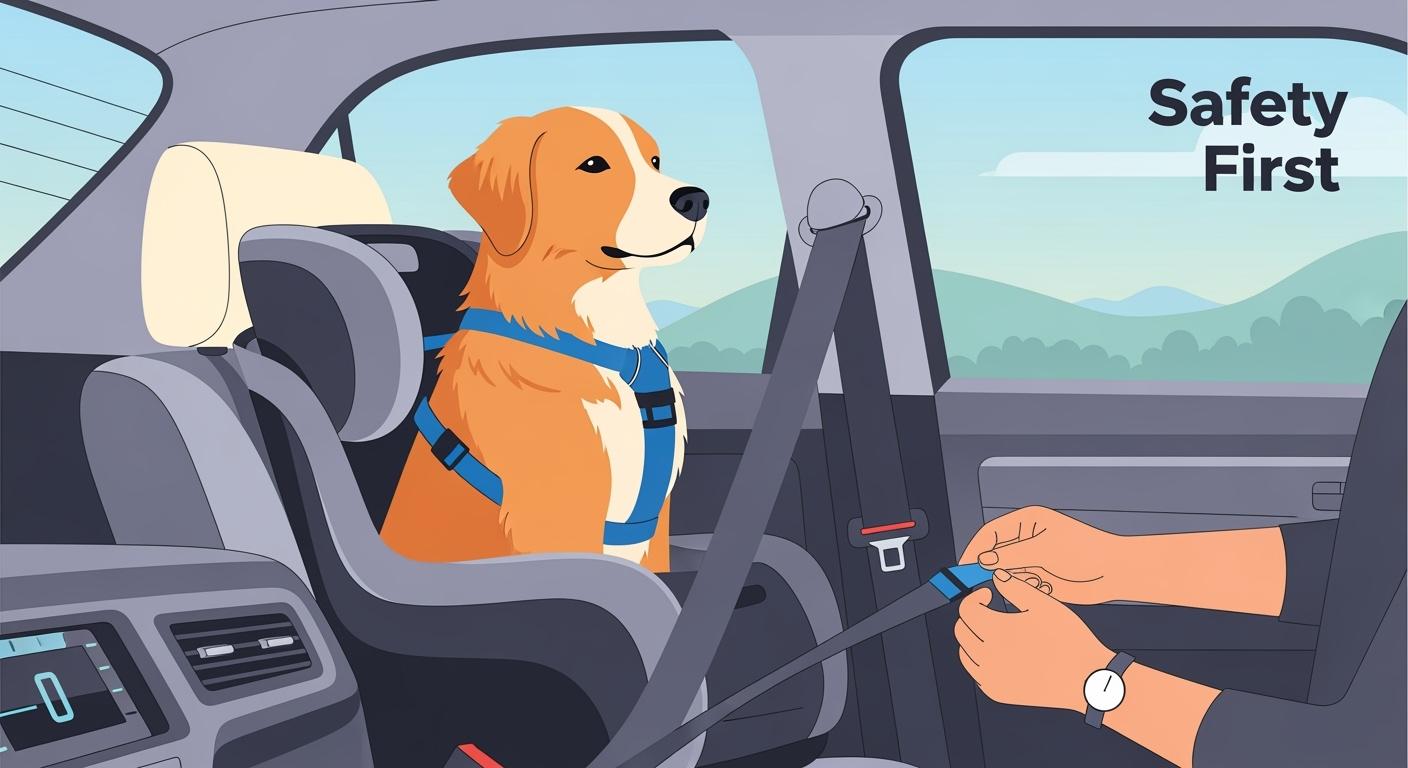
You want your dog safe every time you drive. Dog car seat safety protects your pet from sudden stops or turns. Unrestrained dogs can get hurt, cause distractions, or even be thrown from the car. With the right guidance, you can easily choose and install a safe restraint for your dog.Quick Reference Card
Key Takeaways
Always pick dog restraints that have safety certifications. This helps make sure they are safe and trusted.
Install your dog’s restraint the right way every time. Check it before each trip to keep your dog safe and comfortable.
Do not use products with unclear sizing or weak materials. Stay away from restraints with confusing safety information to protect your dog during travel.
Choosing Dog Car Seat Safety Restraints
You want your dog safe and happy when you drive. Picking the right restraint lowers risk and helps you avoid mistakes. You can find what works best for your dog and car.
Decision Matrix for Dog Car Seat Safety Restraints
Scenario | Best restraint type | Must-have features | Common failure mode | Return-risk note |
|---|---|---|---|---|
Daily commuting | Dog harness | CPS certification, adjustable fit | Strap migration, chest coverage | Sizing errors |
Highway trips | Crash-tested kennel | Secure anchoring, rigid shell | Loose crate, improper tie-down | Fit issues in cargo area |
High-energy dogs | Travel crate | Strong latches, reinforced walls | Escape attempts, crate movement | Chewing damage |
Small dogs | Booster dog car seats | Padded interior, seat belt access | Unstable mounting, thin padding | Poor fit, instability |
SUV cargo area | Crash-tested kennel | Cargo tie-downs, ventilation | Blocked airbag zones, loose crate | Cargo space limitations |
Sedan-only | Dog harness | Short tether, seat belt compatibility | Tether slack, seat belt blockage | Seat belt interference |
Anxious dogs | Carrier or travel crate | Soft lining, secure closure | Excess movement, stress behaviors | Anxiety-related returns |
Multi-dog households | Convertible seat/barrier combo | Multiple attachment points, sturdy build | Overcrowding, barrier failure | Barrier fit, visibility issues |
Car Harness Systems: Best Uses
A dog harness keeps your pet safe in the back seat. Harnesses work for most dogs if you pick one with the right certification. The best harness spreads force across your dog’s body to lower injury risk. Sighthound harnesses fit special body shapes and are safer than regular ones.
Pick harnesses with straps you can adjust and wide chest pieces.
Do not use harnesses that pinch or move around during trips.
Always check the fit with the sizing chart.
Travel Crates in Cargo Area
Travel crates give strong protection for dogs in cars. You can use a crash-tested kennel in your SUV or wagon’s cargo area. Crate training helps your dog feel safe and calm on trips. Airlines want crates that let pets move, which helps lower stress.
Tie down the crate with cargo straps.
Pick crates with strong walls and good latches.
Safety Reminder: Always put the crate in the cargo area, away from airbags.
Carriers and Booster Dog Car Seats
Dog car seats and carriers help small dogs stay safe and comfy. Booster seats stop motion sickness and injuries during quick stops. You can keep your dog safe with straps and a dog seat belt. Look for carriers with soft padding and headrest support.
Type of Restraint | Features | Pros | Cons |
|---|---|---|---|
Foldable Soft-Sided Boosters | Durable fabric, rigid frame | Easy storage, washable covers | Less crash protection |
Hard-Shell Plastic Boosters | Molded base, padded interior | Better energy absorption | Bulky, limited fit |
Convertible Seat/Barrier Combos | Booster and barrier functions | Versatile for multi-pet households | May block visibility |
Window-Mounted Hanging Boosters | Suspended from headrests | Maximize visibility, lightweight | Not crash-tested, unstable—avoid for safety-critical use |
Red Flags in Dog Car Seat Safety
You can spot unsafe products by looking for warning signs. Stay away from restraints with thin fabric, weak stitching, or unclear sizing charts. Products without clear weight limits or safety info are risky. Straps you can’t adjust and “universal fit” claims often cause returns.
Red Flag Description |
|---|
No mention of airbag safety or vehicle-specific testing |
Thin fabric with no puncture resistance |
Poor customer feedback on slipping or tearing |
Missing return policy or warranty information |
Vague sizing charts without measurements |
Thin stitching |
Lack of non-slip backing |
Unclear cleaning instructions |
No clear weight limit or safety data |
Flimsy stitching or thin padding |
Non-adjustable straps that don’t fit your car |
Claims of “universal fit” without customization options |
Alert: If you see any of these warning signs, think again before buying. Always check for independent certification and read the package for clear directions.
You can make every trip safer by using the right restraint and making sure your dog is secure. Dog car seat safety starts with smart choices and careful checks. Dog car safety keeps your pet safe and lowers risk for everyone in the car.
Dog Car Safety Setup Guide
You want to keep your dog safe every time you travel. Setting up dog car seats and restraints the right way lowers risk and helps you avoid common mistakes. Follow these step-by-step scripts for each type of restraint. Use the two-minute verification checklist after each setup to make sure everything is secure.
Harness Installation Steps
Back Seat Harness System Setup
Park your vehicle and turn off the engine before you start.
Place the dog harness on your dog outside the car. Slip the chest piece over your dog’s head and secure the belly strap.
Adjust all straps for a snug fit. You should be able to slide two fingers between the harness and your dog’s body.
Guide your dog onto the back seat. Position the back attachment point centered on your dog’s back.
Locate the seat belt buckle closest to your dog. Attach the harness to the seat belt or dog seat belt as directed by the manufacturer.
Check that the harness does not twist or pinch. Make sure the tether is short enough to keep your dog from reaching the front seat.
Two-minute verification checklist:
Harness fits snugly (pass/fail)
Seat belt path is correct (pass/fail)
Buckles are accessible (pass/fail)
No slack in tether (pass/fail)
Dog cannot reach the front seat (pass/fail)
No straps block seat-mounted airbag zones (pass/fail)
Crate Placement and Anchoring
Travel Crate in Cargo Area Setup
Place the crate in the open cargo area of your SUV or hatchback, flush against the back seats.
Use heavy-duty straps or crate-specific tie-downs to anchor the crate to the vehicle’s cargo hooks or seat anchors.
Tighten all straps so there is no slack. Test for minimal movement by pushing the crate gently.
Check that the crate does not block any seat-mounted airbag zones.
Make sure the crate door faces the rear or side, not the front seat.
Confirm that the crate is not in a position where it could slide or tip during travel.
Two-minute verification checklist:
Crate does not move when pushed (pass/fail)
All straps are tight (pass/fail)
Anchors do not loosen (pass/fail)
No blocked airbag zones (pass/fail)
Crate door is secure (pass/fail)
Dog cannot exit crate during travel (pass/fail)
Carrier and Booster Seat Setup
Carrier or Booster-Style Option for Small Dogs
Unfold the dog car seat or carrier to its full shape.
Secure the front pillow or cushion for added comfort.
Attach the hook and loop base or stabilizer to prevent sliding.
Insert the soft cushion or bedding for your dog’s comfort.
Adjust and secure the straps to the car’s headrest or seat as directed.
Buckle the seat belt through the carrier or booster seat for extra safety.
Two-minute verification checklist:
Carrier or booster does not slide (pass/fail)
Straps are tight and secure (pass/fail)
Seat belt is threaded correctly (pass/fail)
Dog is restrained inside (pass/fail)
No blocked seat belt buckles (pass/fail)
Carrier is not near an active airbag (pass/fail)
Pass/Fail Check Table
Check Item | Pass Looks Like | Fail Looks Like | Fix |
|---|---|---|---|
Correct belt path | Belt runs through harness or seat as directed | Belt twisted, routed incorrectly | Reroute belt per instructions |
Slack controlled | Tether or straps are tight, no extra slack | Loose tether, dog can move too far | Shorten tether, tighten straps |
Buckles accessible | All seat belt buckles easy to reach | Buckles covered or blocked | Adjust restraint position |
No blocked seat-mounted zones | Restraint does not cover airbag or seat deployment area | Straps or crate block airbag zones | Move restraint away from airbag zones |
Dog cannot reach front-seat area | Dog stays in back seat or crate | Dog can move into front seat | Shorten tether, reposition crate |
Crate does not slide | Crate stays in place when pushed | Crate moves or tips easily | Tighten straps, reposition crate |
Anchors do not loosen | Anchors stay tight after test pull | Anchors slip or loosen with movement | Retighten or replace anchors |
You can reduce risk by properly restraining your dog every time you drive. Using a crash-tested harness, a secure crate, or a stable booster seat helps you meet dog car safety goals. A pet safety harness or dog seat belt keeps your dog safe and comfortable. Dog car seats work best when you follow each step and check your setup before every trip. Safe travel starts with the right setup and a quick check.
Dog Car Seat Risks and Mistakes
What this does not do:
Dog car seats, harnesses, and crates keep your pet safe during travel. Seat covers and mats only protect your car’s upholstery. They do not act as restraints or provide crash protection.
Front Seat and Airbag Risks
Placing your dog in the front seat puts them in danger. Airbags deploy with great force. They are designed for people, not pets. The explosive force can cause severe injury or even death to a dog. Even a minor crash can trigger an airbag. You should always keep your dog in the back seat. This is the safest spot for your pet during travel.
Tether Length and Slack Dangers
A dog seat belt or dog harness must have the right tether length. Too much slack lets your dog move into unsafe areas or fall off the seat. Extension tethers can make restraints unsafe. Keep your dog secure and away from the front seat.
Blocking Belts and Anchors
Dog car seats and crates should not block seat belt buckles or child-seat anchors. If you cover or pinch seat belt webbing, you risk making the restraint fail. Always check that all buckles and anchors stay accessible. Do not let straps or crates block seat-mounted airbag zones.
Common Dog Car Seat Mistakes
You can avoid many mistakes by following a few simple steps:
Fit the dog harness snugly and check it before every trip.
Choose only crash-tested products for dog car safety.
Secure your dog correctly every time you travel.
Use the buyer-ready non-interference checklist to prevent problems.
Why this matters:
Preventing interference with your car’s safety systems reduces risk for you and your dog. Careful setup lowers the chance of injury and helps you avoid liability as a buyer or retailer.
Buyer Toolkit for Dog Car Seats
Picking the right safety restraint for your dog means you need to check features, packaging, and proof of safety. This toolkit helps you compare choices, look at packaging, and check claims before you travel with your dog.
Harness vs Crate vs Carrier Table
This table lets you see the main types of dog car seats and barriers for car safety for dogs:
Option | Pros | Cons |
|---|---|---|
Folding Wire Crates | Easy to fold and store; good airflow; fabric covers can help anxious dogs | Not as strong in crashes; hinges and latches may get weak over time |
Soft-Sided Travel Carriers | Light and simple to carry; best for small dogs | No crash safety; can collapse; not good for bigger dogs |
Crash-Tested Harness | Uses seatbelt; lets your dog move a little; no need to install forever | Can hurt neck in fast stops; depends on harness fit and quality |
Spec Sheet and Proof Checklist
Check the spec sheet for these things before you buy:
Feature | Description |
|---|---|
Crash Testing | Find models tested by outside labs. This means better design. |
Weight Capacity | Make sure the seat fits your dog’s weight. Too much weight is not safe. |
Vehicle Fit | Measure your backseat and headrest space. Some seats need a certain distance between posts. |
Anchoring System | Two tethers and seat belt routing are safer. Stay away from single-point attachments. |
Cleanability | Removable covers are easy to wash after spills or accidents. |
Ventilation | Mesh on three sides gives better airflow. |
Portability | Foldable units should be easy to carry and store. |
You can lower risk by using this toolkit to check every product before you travel with your dog. Always look for independent certification and clear instructions to support dog car seat safety and dog car safety.
You can keep your dog safer on every drive by following a few key steps:
Pick a restraint that fits your dog and car.
Choose products with trusted safety testing.
Install and check the seat for comfort and security.
Key Aspect | Why It Matters |
|---|---|
Importance of Restraint Systems | Proper restraints help prevent injuries and lower risk during travel. |
User Experience | Focusing on safety features brings peace of mind for you and your dog. |
Many pets get hurt in car accidents each year.
A well-fitted harness spreads crash forces and lowers injury risk.
Checking the fit before each trip helps prevent dangerous movement.
A few simple steps and regular checks help you travel with confidence and reduce risk for both you and your dog.
FAQ
Can you use a dog harness for every car ride?
You should use a crash-tested harness for each trip. This lowers risk and keeps your dog secure.
Why does tether length matter for dog car safety?
Short tethers keep your dog from moving into unsafe areas.
