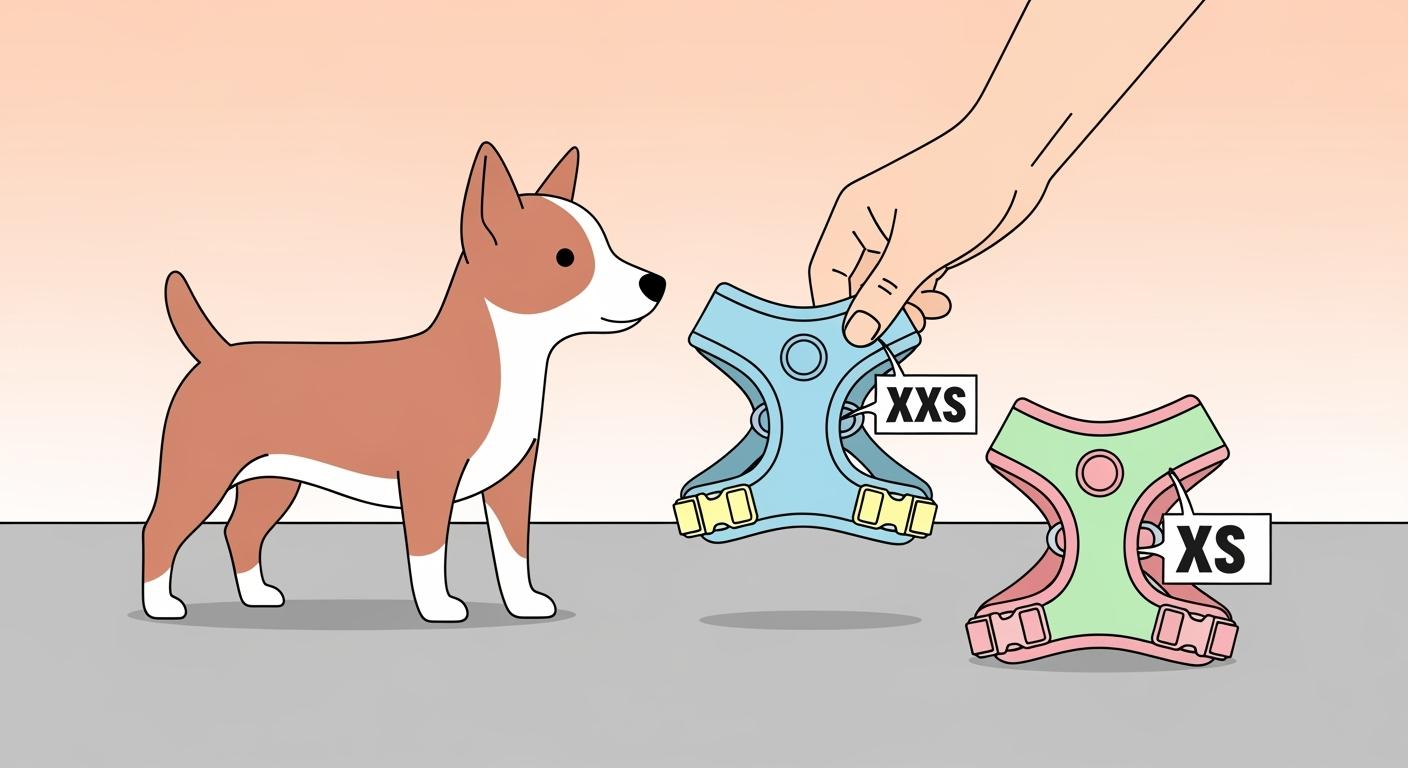
You see complaints about small dog harness sizing every day. People say the XXS slips off or the XS pinches. These problems happen when catalogs use only letter labels. If you list chest girth (inches and centimeters), neck range, and weight guidance, you help buyers pick the right fit. Distributors need clear, consistent sizing rules to avoid returns and mix-ups. The table below shows why customers get frustrated and how you can fix it:
Complaint Type | Description | Suggested Fix |
|---|---|---|
Too Loose | Harness sags or slips, risking escape. | Check chest girth and adjust straps. |
Too Tight | Dog whines or shows red marks from pressure. | Size up and use padded models. |
Hard to Put On | Fidgety dogs struggle with complicated harnesses. | Use step-in or quick-clip designs. |
Pulling Persists | Harness does not stop pulling behavior. | Try a front-clip no-pull harness. |
Key Takeaways
Always measure your dog’s chest at the widest part. This is the most important step for picking the right harness size. – Look at the sizing chart for chest sizes in inches and centimeters. Do not just use letter labels like XXS and XS. – Use your dog’s weight as a second check, not the main way to choose size. Dogs can weigh the same but have different shapes. – Make sure size ranges do not overlap. Each chest size should fit only one size. This helps stop confusion. – Check your catalog often for clear and correct info. Clear tables and steady measurements help lower returns and make customers happy.
XXS vs XS in Small Dog Harness Sizing
Why Letter Labels Alone Fail
You often see XXS and XS labels on small dog harness packaging. These letters look simple, but they do not tell you what size will actually fit a dog. Different brands and suppliers use different measurements for the same label. This leads to confusion and mistakes. For example, one catalog might list XXS as 8-12 inches (20-30 cm) chest girth, while another lists XS as 10-16 inches (25-40 cm). The overlap means a dog with a 10-inch (25 cm) chest could fit in either size, depending on the brand.
Tip: Always check the measurement chart, not just the letter label. Letters alone do not guarantee a proper fit.
Size | Chest Girth (inches/cm) |
|---|---|
XXS | 8-12 in (20-30 cm) |
XS | 10-16 in (25-40 cm) |
Chest Girth as the Key Size
Chest girth is the most important measurement for a small dog harness. You measure it around the widest part of the dog’s ribcage, just behind the front legs. This number tells you which harness size will fit snugly and safely. Always list chest girth in both inches and centimeters. Use a clear range, such as “fits chest girth 8-12 in (20-30 cm).” This helps buyers compare sizes across different brands and reduces the risk of returns.
Measure the dog’s chest at the widest point.
Match the measurement to the harness chart.
Choose the size where the dog’s chest falls within the range.
Neck and Weight as Supporting Info
Neck size and weight can help you fine-tune the fit, but they should not be the main selector. Some harnesses use a neck opening, so you should include neck range only if it affects fit. Weight guidance helps when dogs have unusual body shapes, but always use it as a secondary check. State weight as a suggestion, such as “for dogs up to 8 lbs (3.5 kg),” and remind buyers to measure chest girth first.
A clear catalog entry for a small dog harness should look like this:
Chest girth: 8-12 in (20-30 cm)
Neck range: 6-10 in (15-25 cm) (if needed)
Weight guidance: up to 8 lbs (3.5 kg) (as a suggestion)
This approach helps you avoid mix-ups and keeps your catalog easy to use.
Catalog Fields for Micro Sizes
When you build a catalog for micro sizes, you need to focus on clarity and consistency. The right fields help buyers choose the correct small dog harness and reduce returns. You should always use clear measurement ranges, not just size letters, and present all numbers in both inches and centimeters.
Tip: Always double-check your measurement conversions and keep your tables easy to read.
Chest Girth Range: How to List
Chest girth is the most important field for a small dog harness. You measure chest girth around the widest part of the dog’s ribcage, just behind the front legs. Always list the chest girth range in both centimeters and inches. For example, you might see a table like this:
Size | Chest Girth (cm) | Chest Girth (in) |
|---|---|---|
XXS | 25–32 | 10–12.5 |
XS | 29–38 | 11.5–15 |
You should use your own product’s spec chart, but always follow this format. Make sure the ranges do not overlap. This helps buyers find the right fit and keeps your catalog logic clear.
Neck Range: When to Include
Neck range matters if the harness design uses the neck opening as a real fit gate. If the neck opening adjusts or is fixed, you should list the neck range in both centimeters and inches. Only include this field if it affects the fit. For example, a harness with a fixed neck hole needs this field, but a step-in harness with a fully adjustable neck may not. Always explain where to measure the neck—usually at the base, where the collar sits.
Weight Guidance: Use with Care
Weight guidance can help when dogs have unusual body shapes, but it should never be the main selector. Use weight as a supporting field. State it as a suggestion, such as “for dogs up to 8 lbs (3.5 kg).” Remind buyers to measure chest girth first. Weight alone does not account for breed differences or coat thickness.
Adjustability: State the Usable Range
Adjustability is key for a good fit. You should describe the usable adjustment range for both chest and neck straps. Do not just say “adjustable.” Instead, state the smallest and largest sizes the harness can fit. For example, “chest girth adjustable from 10 to 12.5 in (25 to 32 cm).” Multiple points of adjustment help the harness fit many body shapes, from tiny chihuahuas to pugs. This feature improves comfort and safety.
Required Catalog Fields Table
You can use the following table to check your catalog fields for micro sizes:
Field Name | Plain-English Definition | Format Rule | QA Check |
|---|---|---|---|
Chest Girth Range | Measurement around the widest part of the chest | List in cm and in, show min–max, no overlap | Confirm matches product spec, check for clear conversion |
Neck Range | Measurement around the base of the neck | List in cm and in, only if fit depends on it | Include only if neck is a fit gate, check measurement method |
Weight Guidance | Suggested dog weight for this size | List in lbs and kg, as a suggestion | State as guidance, not as main selector |
Adjustability | Usable range for straps | List min–max for chest/neck in cm and in | Confirm range matches product, avoid vague “adjustable” claim |
Product Identifiers | Codes like GTIN or MPN for tracking | Use standard codes | Check for presence and accuracy |
Safety Warnings | Instructions for safe use and fit checking | Short, clear sentences | Include warning to check fit before each use |
Sizing Table | Table showing all size ranges and adjustment points | Easy to read, no overlaps | Confirm all sizes listed, check for clarity |
Note: Chest girth is always the primary selector. Neck and weight are supporting fields. Adjustability must be clear and specific.
OEM and ODM: What They Mean
You may see the terms OEM (Original Equipment Manufacturer) and ODM (Original Design Manufacturer) in supplier catalogs. OEM means the supplier makes products to your design or brand, while ODM means the supplier offers their own designs for you to sell under your brand. Knowing the difference helps you set up catalog fields and product specs correctly.
Variant Logic for XXS/XS
No Overlap Rule for Size Ranges
You need to set clear boundaries between XXS and XS sizes. Overlapping size ranges cause confusion and increase returns. If a dog’s chest girth matches the boundary between two sizes, you must decide which size includes that number. For example, if XXS ends at 12 inches (30 cm) and XS starts at 12 inches (30 cm), you should pick one size to “own” the 12-inch (30 cm) mark. State this rule in your catalog. This approach keeps your size chart simple and helps buyers choose the right harness.
Tip: Always check your size chart for shared numbers. Assign each measurement to only one size.
How to avoid overlaps:
Review your chest girth ranges for all micro sizes.
If two sizes share a boundary, assign the number to one size only.
Add a note in your catalog, such as “If your dog’s chest girth is exactly 12 in (30 cm), choose size XXS.”
Merging or Splitting Sizes
Sometimes, your product line may need to merge or split sizes. If you see very few dogs fitting into XXS, you might combine XXS and XS into one size. If you notice many returns at the lower or upper end of a size, you might split the range for a better fit. Always update your catalog fields and tables when you change size logic.
When to merge sizes:
Low sales or rare fit for the smallest size.
Overlapping measurements make two sizes unnecessary.
When to split sizes:
High return rates for dogs at the edge of a size range.
Large differences in body shape within one size.
Note: Always review your sales and return data before changing size logic.
Clear Adjustability Disclosure
You must describe adjustability in clear, specific terms. Do not just say “adjustable.” Instead, list the smallest and largest chest girth and neck size the harness can fit. Use both inches and centimeters. This helps buyers understand if the harness will fit their dog, even if the dog is between sizes.
How to state adjustability:
“Chest girth adjustable from 10 to 12.5 in (25 to 32 cm).”
“Neck size adjustable from 8 to 10 in (20 to 25 cm).”
If your harness has multiple adjustment points, mention each one. For example, “Both chest and neck straps adjust independently.”
Alert: Vague adjustability claims lead to more returns. Always show the usable range.
XXS/XS Variant Matrix Table
Use a variant matrix to organize your size logic. This table helps you check for overlaps, missing fields, or unclear adjustability. Fill in your own product’s measurements and guidance.
Size Label | Chest Girth Range (in/cm) | Neck Range (in/cm) | Weight Guidance (lbs/kg) | Adjustability Note | Flag Conditions |
|---|---|---|---|---|---|
XXS | [min]–[max] in ([min]–[max] cm) | [min]–[max] in ([min]–[max] cm) or N/A | up to [max] lbs ([max] kg) | Chest: [min]–[max] in (cm); Neck: [min]–[max] in (cm) | Owns lower boundary; no overlap |
XS | [min]–[max] in ([min]–[max] cm) | [min]–[max] in ([min]–[max] cm) or N/A | up to [max] lbs ([max] kg) | Chest: [min]–[max] in (cm); Neck: [min]–[max] in (cm) | Owns upper boundary; no overlap |
Replace [min] and [max] with your actual product values. Make sure each boundary number appears in only one size.
Checklist for your variant matrix:
Each size has a unique chest girth range.
Neck range included only if it affects fit.
Weight guidance is a suggestion, not a rule.
Adjustability is clear and specific.
No overlaps or shared boundaries.
Summary:
You can reduce confusion and returns by following these rules. Always check your size ranges for overlaps. Use clear, specific language for adjustability. Keep your variant matrix up to date. This approach helps buyers choose the right harness and keeps your catalog easy to manage.
Small Dog Harness Fit Risks
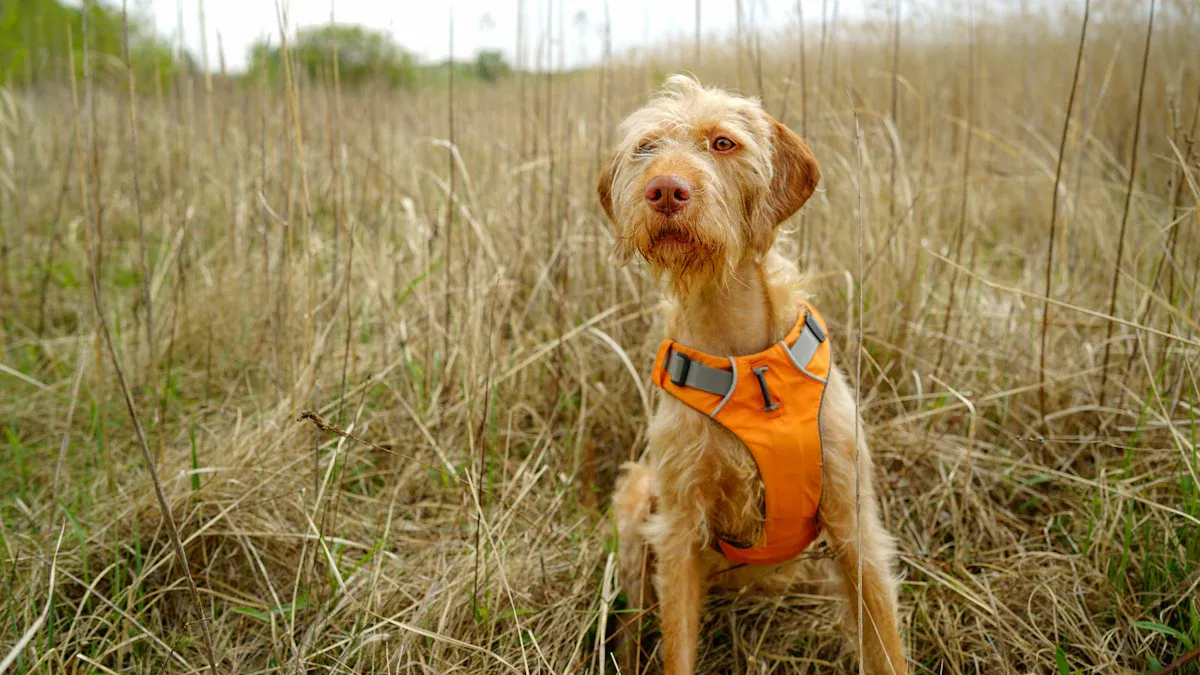
Common Escape Points
You want to keep dogs safe and secure. A harness that fits poorly can let a dog slip out. Most escape risks happen at three main points:
Chest Straps: If the chest straps sit too loose, a dog can back out of the harness. Always check the chest girth measurement against your spec chart.
Neck Opening: A neck opening that is too wide or too tight can cause problems. If the neck is too loose, the harness may twist or slip over the head. If it is too tight, it can cause discomfort or restrict breathing.
Adjustment Buckles: Loose or poorly adjusted buckles can shift during walks. Make sure all buckles sit flat and secure after fitting.
Tip: Always check the harness fit before each walk. A snug fit helps prevent escapes and keeps dogs comfortable.
Quick Fit-Check Script
You can use a simple script to check harness fit every time. This helps you spot problems before they lead to escapes or discomfort. Follow these steps:
Measure the dog’s chest at the widest point, just behind the front legs. Compare this number to your catalog’s chest girth range in both inches and centimeters.
Check the neck opening. Make sure you can fit two fingers between the harness and the dog’s neck. Use your spec chart for neck range if needed.
Adjust all straps. Pull gently to test for slack. The harness should not slide or twist when the dog moves.
Inspect buckles and fasteners. Confirm they are locked and flat against the dog’s body.
Watch the dog walk for a few steps. Look for signs of discomfort or shifting harness parts.
Note: Always use your own product’s measurement chart for best results. Never rely on weight alone when fitting a small dog harness.
A careful fit check reduces escape risks and helps you avoid returns. You keep dogs safer and make your catalog more reliable.
Normalizing Micro Sizes Across Vendors
Size Name and Measurement Format
Many catalogs use different size names and formats. This makes things confusing for buyers and sellers. You should pick clear names for each micro size. Always connect the size name to a measurement range. For example, write “XXS” with its chest girth in inches and centimeters. Use a simple format for every entry. This lets people compare products without trouble.
Tip: Say where to measure in one sentence. For example, “Measure chest girth just behind the front legs.”
Unit Consistency (in/cm, lb/kg)
Using the same units is important for catalogs around the world. Always show measurements in both US and EU units. List chest girth, neck girth, and strap width in inches and centimeters. Show weight in pounds and kilograms too. If you round numbers, use the same rule for every product. This keeps your catalog easy to read and helps stop mistakes.
Chest girth: inches and centimeters
Neck girth: inches and centimeters
Strap width: inches and centimeters
Weight: pounds and kilograms
Note: Always check your conversions. Use the same number of decimal places for all sizes.
Photo Proof List for Micro Sizes
Photos help buyers see the real size. You should add clear pictures that show the harness on a dog with a known chest girth. Put a ruler or tape measure in the photo. Show the harness from the front, side, and top. This helps buyers trust the fit and can lower returns.
Problem Pattern | Standard Fix | Example Phrasing |
|---|---|---|
Inconsistent unit display | List all measurements in in/cm and lb/kg | “Chest girth: 10–12 in (25–30 cm)” |
Vague size names | Match name to measurement range | “XS: fits chest girth 12–15 in (30–38 cm)” |
Unclear measurement location | Add one-sentence location guide | “Measure chest just behind front legs.” |
Missing photo scale | Include ruler or tape in product images | “Photo shows harness on 10 in (25 cm) chest” |
Rounding errors | Use consistent decimal places | “Round to nearest 0.5 in (1 cm)” |
Using the same format and clear photos makes your catalog better. It helps buyers pick the right size.
Supplier Proof and Safety
Material and Hardware Test References
You have to make sure harness materials and hardware are safe. Good suppliers give you test results for buckles, webbing, and metal parts. These tests show how strong the harness is and if the hardware breaks under pressure. You should look for clear paperwork and the same units for all measurements.
Harness Type | Material Description | Testing Standard and Result |
|---|---|---|
Comfort Harness | Aluminum buckles, nylon webbing | Withstands over 4,400 pounds (2,000 kg) of force |
Defender Harness | Custom metal hardware | Stress-tested to resist impact breaks |
Drive Harness | Vehicle-tested materials | Approved by regulatory agencies for restraint use |
Crash tests at labs show harnesses work in real life. Some harnesses for small dogs hold over 2,200 pounds (1,000 kg) of force. You should ask your supplier for these test reports and check if the results match what the catalog says.
Ask for test results in pounds and kilograms.
Make sure hardware and webbing meet the right standards.
Look at crash test papers for safety.
Stitching and Seam Checks
Strong stitching keeps a harness safe and lasting longer. You should look at the seams to see if the stitches are even and straight. Good stitching uses grooves so the thread stays in place and looks neat.
The only thing I notice is the stitching is not perfect, but it is still very good. Stitches look better when the holes are punched well. Grooves help the thread sit in a straight line. Using the same tension for each stitch also makes the stitching better.
Check that the thread does not fray or come loose. You should ask your supplier for close-up photos of the seams and details about how they sew. Good seams lower the chance of the harness breaking.
Claim-Safe Language and Traceability
You need to use careful words in your catalog and with suppliers. Do not make promises you cannot prove. Always back up what you say with test results and clear proof. Both US and EU rules need special info for tracking and safety.
Aspect | US Requirements | EU Requirements |
|---|---|---|
Claims | Support with test details; avoid vague promises | Include product ID and safety instructions in local language |
Contact Info | List responsible party contact information | Provide manufacturer contact and product identification |
Origin Marking | Use permanent, accurate country-of-origin marking | Follow GPSR rules for traceability and consumer contact |
You should put product codes and safety tips in your catalog. Always give contact info for the person in charge. This helps buyers find out more about the product and check safety if needed.
Tip: Say “can help reduce escape risk” instead of “guarantees no escapes.” This keeps your catalog safe and follows the rules.
US/EU Catalog Guardrails
Safety Notes and Contact Info
You need to put clear safety notes and contact details in your catalog. This helps buyers know how to use the harness safely. It also tells them where to get help if they need it. Always show safety rules in a simple table. This makes it easy for people to check if your product follows US and EU rules.
Safety Requirement | Description |
|---|---|
Material Strength Testing | Webbing, buckles, and stitching must meet strength resistance levels to prevent breakage. |
Chemical Safety Standards | Compliance with REACH (EU) and CPSIA (U.S.) regulations is necessary for certain pet products. |
Anti-Choking and Anti-Pressure Design | Harnesses should distribute pressure evenly to avoid trachea strain. |
Reflective Safety Requirements | Designs with reflective elements are preferred for nighttime visibility. |
Proper Labeling and Size Guides | Clear size charts help minimize returns and enhance customer satisfaction. |
Tip: Always list a contact person or company for each product. Add a phone number or email address. This helps buyers reach you if they have questions about safety or fit.
You should also add a short safety note in your catalog. For example, say “Check harness fit before each use. Make sure straps sit snugly but do not pinch.” Use both inches and centimeters when you talk about fit checks.
Avoiding Absolute Claims
You must not make absolute claims in your catalog. These claims can cause problems for you and your customers. If you say a harness “stops pulling” or “prevents escapes,” buyers might think these things always happen.
Absolute claims can cause legal trouble and upset customers.
Saying “stops pulling” may trick buyers and break ad rules.
Over-promising makes more people return products and complain.
Note: Use careful words in your catalog. Say “can help reduce pulling” or “designed to lower escape risk.” This keeps your product description honest and protects you from legal trouble.
You build trust when you use careful statements and give clear safety notes. Buyers know what to expect, and you lower the chance of returns and complaints.
Quick QA Checklist
2-Minute Catalog Audit List
You can use this quick checklist to review your small dog harness catalog entries. This helps you spot common mistakes and keep your listings clear and accurate. Copy and use this list each time you update or add a new harness size.
Harness Fit and Sizing Table
Element | What to Check |
|---|---|
Two-finger rule | Make sure two fingers fit between harness and dog at chest and neck. |
Sternum placement | Confirm the front Y sits above the breastbone, not pressing on the throat. |
Shoulder freedom | Check that straps do not cross shoulder blades; dog should move forelimbs freely. |
Armpit clearance | Ensure a 2–3 cm (about 1 in) gap at the armpit to prevent chafing. |
Symmetry | Adjusters should be even; harness should not shift to one side. |
D-ring alignment | Back ring must sit flat at the shoulder line, not twist or ride up. |
No fur dents | After 10 minutes, check for red marks or dents in the fur. |
Gait check | Watch the dog walk; look for signs of discomfort or restricted movement. |
Slip test | Harness should fit snugly to prevent escape, but not pinch. |
Re-fit plan | Remind buyers to check fit after grooming or weight changes. |
Quick Reminders for Catalog Managers
List all measurements in both inches and centimeters. Double-check conversions for accuracy.
Avoid overlapping size ranges. Assign each boundary number to only one size.
Do not use weight as the main selector. Use chest girth as the primary field.
Include a one-sentence guide for where to measure chest and neck.
Add clear photos with a ruler or tape measure for scale.
Remind buyers not to over-tighten harnesses to stop pulling. Suggest proper training instead.
Note that different breeds may need different harness types.
Suggest buyers let dogs get used to the harness before long walks.
Consider seasonal changes, such as thicker coats in winter, when advising on fit.
Tip: Use this checklist every time you update your catalog. A fast review can help reduce returns and keep your listings clear for everyone.
Tables
You need to use clear tables to keep your catalog neat. Tables make it easy to compare details and find mistakes. They also help you follow the best rules for your listings. Use these tables when you check your work.
Required Catalog Fields Table
This table lists what you must include for micro size harnesses. Each field has a simple meaning, a rule for how to write it, and a quick check. Always use your own product’s numbers for these fields.
Field Name | Definition | Format Rule | QA Check |
|---|---|---|---|
Chest Girth Range | Widest part of the dog’s chest | List in inches/cm, show min–max, no overlap | Confirm conversion, no overlap |
Neck Range | Base of neck where collar sits | List in inches/cm, only if needed | Include only if fit gate |
Weight Guidance | Suggested dog weight | List in lbs/kg, as guidance | Not main selector |
Adjustability | Usable strap range | List min–max in inches/cm | Avoid vague “adjustable” claim |
Safety Warnings | Fit and use instructions | Short, clear sentences | Present in every listing |
XXS/XS Variant Matrix Table
This table helps you set clear lines between XXS and XS sizes. Fill in your own numbers for each size. Make sure each size has its own spot and does not share with another.
Size Label | Chest Girth Range (in/cm) | Neck Range (in/cm) | Weight Guidance (lbs/kg) | Adjustability Note | Flag Conditions |
|---|---|---|---|---|---|
XXS | [min]–[max] in ([min]–[max] cm) | [min]–[max] in ([min]–[max] cm) or N/A | up to [max] lbs ([max] kg) | Chest: [min]–[max] in (cm); Neck: [min]–[max] in (cm) | Owns lower boundary; no overlap |
XS | [min]–[max] in ([min]–[max] cm) | [min]–[max] in ([min]–[max] cm) or N/A | up to [max] lbs ([max] kg) | Chest: [min]–[max] in (cm); Neck: [min]–[max] in (cm) | Owns upper boundary; no overlap |
Tip: Always check that each number is only in one size.
Normalization Rules Table
You need to use normalization to keep your catalog simple and clear. Normalization means you use single values, special IDs, and easy-to-read column names. This stops confusion and makes your data neat.
Normal Form | Requirements |
|---|---|
1NF | Use atomic values, unique row IDs, clear column names, order does not matter |
2NF | Meet 1NF, no partial dependencies on primary key |
3NF | Meet 2NF, no transitive dependencies among non-key fields |
BCNF | Every non-trivial dependency must have a superkey |
Use these rules to keep your catalog tidy and simple to update. Normalized tables help you fix mistakes and make changes faster.
List of Tables for Reference and QA:
Required Catalog Fields Table
XXS/XS Variant Matrix Table
Normalization Rules Table
You can use these tables whenever you change your catalog. They help you find errors and keep your listings easy for buyers and sellers to read.
You can stop XXS and XS mix-ups by giving clear measurement ranges. Update your catalog fields often to help with this. When you use the right sizes, every dog can wear a safe and comfy small dog harness. Keep these important tips in mind:
Always show chest girth and neck size in inches and centimeters.
Use weight as extra info, not as the main way to pick a size.
Good measurements help fit all kinds of dog bodies and make harnesses more comfortable.
Check your catalog often to make sure tables are clear and sizes do not overlap.
If you check your catalog the same way each time, you will have fewer returns and buyers will be happier.
FAQ
How do I choose between XXS and XS for a small dog harness?
Always use your spec chart. Measure the dog’s chest girth at the widest point. Match this number to the chest girth range in both inches and centimeters. Pick the size where your dog’s measurement fits within the stated range.
Should I use weight or chest girth as the main sizing guide?
You should use chest girth as the main selector. Weight only helps as a secondary check. Dogs with the same weight can have different body shapes. Always measure the chest first.
Why do I need to show both inches and centimeters in my catalog?
Listing both units helps buyers from different regions. It also reduces mistakes from conversion errors. Always double-check your conversions for accuracy.
What does “no overlap” mean in size ranges?
“No overlap” means each chest girth number appears in only one size range. This rule prevents confusion. Assign each boundary number to a single size in your chart.
How can I help buyers check harness fit at home?
Tell buyers to measure the chest and neck, then compare to your chart. Remind them to fit two fingers under the straps. Suggest they check for snugness and comfort before every walk.