
You might get confused when you read a dog carrier bag listing. The inside size, outside size, and unclear words about ventilation or safety make it hard to know if the bag fits your dog or works for you. This confusion makes people buy the wrong bag, send it back, or ask for help. You need clear and safe details to pick the right canine bag, pet carrier bag, or travel carrier bag. Here is an easy checklist for the best dog training bag or commute carrier bag:
Inside and outside sizes for good fit and easy packing
Ventilation panels with mesh windows for fresh air
Safety tether with strong closure and harness hook
Carry modes for day trips, training, or travel
Check if the material is strong, water-resistant, and has good design. Look for many pockets, adjustable waist straps, and safety. Always check what the bag is made of and how to pick a dog training bag or dog training treat pouch.
Key Takeaways
Always look at both inside and outside sizes of a dog carrier bag. This helps you pick the right size for your dog. It also helps you not have to return it later.
Check for clear information about ventilation panels. You should know how many sides have ventilation. This makes sure your dog gets enough fresh air.
Make sure to check the safety tether and closure types. A strong harness connection is very important for your dog’s safety when you travel.
Pick a carrier that fits what you want to do. Different ways to carry, like hand, shoulder, or backpack, can make it more comfortable and easy to use.
Use standard words and sizes in listings. This helps buyers compare products and not get confused.
Canine bag buyer confusion
Internal vs external dimensions
Many dog carrier bag listings do not explain the difference between internal and external dimensions. This can make people confused. Internal dimensions show how much space your dog gets inside the bag. External dimensions tell you if the bag fits under a seat or in your car. Some listings mix these up or only give one size. You might buy a bag that looks right but does not fit your pet or your travel needs. Always check if the listing shows both internal and external measurements. This helps you pick the best dog training bag, travel carrier bag, or commute carrier bag for your needs.
Tip: Look for both internal and external dimensions in inches and centimeters. This makes it easier to compare bags and avoid mistakes.
Ventilation claims and wording
A lot of product pages use words like “breathable” or “mesh windows” but do not give clear details. You need to know how many sides have ventilation panels and where they are. Some bags have only a small mesh window, but others have panels on more sides. If you see “ventilation” or “airflow” without numbers or pictures, you may not know if your dog will get enough fresh air. Always look for listings that show how many sides have ventilation and what kind of panels they use. This helps you choose a day-trip carrier bag or pet carrier bag with the right airflow for your dog.
Safety tether language
Safety is important for every dog carrier bag. Some listings say “secure closure” or “safety tether” but do not explain how these work. You want to see clear words about harness connections and quick-release options. Vague words like “secure” or “safe” do not tell you if the bag will keep your pet from jumping out. Always check for details about the safety tether, closure type, and how the bag keeps your dog safe during training or travel. This helps you find a bag with the right safety features and organization for your needs.
Note: Unclear words like “universal fit” or “airline approved” can trick you. Always look for exact size, materials, and design details before you buy.
Dog carrier bag attribute standards
You need clear rules when you list a dog carrier bag. This helps buyers know what they are getting. It also stops confusion. You can use a simple plan to make sure every carrier follows catalog rules and safety needs.
Catalog Standardization Workflow:
Set the name for carrier type and carry mode.
Use the same measurement fields: internal, external, opening, packed.
Use the same ventilation fields: sides, panel placement, materials.
Use the same safety tether fields and safe claims.
Put vendor data in one format and check listing quality.
Measurement fields and definitions
You should use the same words for every carrier. Internal dimensions show space inside the dog carrier bag. External dimensions show the outside size. Opening dimensions show the entry space for your dog. Packed dimensions help with shipping and shelf planning. Always measure length, width, and height at the biggest points. Use inches and centimeters. Keep internal and external measurements apart. If the carrier has soft sides, measure it when built.
Measurement Field | What It Means | How to Measure | Unit |
|---|---|---|---|
Internal Dimensions | Space inside for the dog | Measure inside surfaces | Inches, Centimeters |
External Dimensions | Outside size of the carrier | Measure outer shell | Inches, Centimeters |
Opening Dimensions | Entry space for loading | Measure opening at widest point | Inches, Centimeters |
Packed Dimensions | Size when packed for shipping | Measure carton or polybag | Inches, Centimeters |
You should use easy terms like small, medium, or large. Do not use words like mini or jumbo. Use clear color names like black, gray, or blue. Do not use fancy names like ocean mist or sunset red. This helps buyers compare carriers and pick the right dog training bag, pet carrier bag, or travel carrier bag.
Tip: Always check both internal and external dimensions before you buy a carrier. This helps you avoid returns and makes training easier.
Ventilation panel standards
Ventilation matters for every carrier. You need to show how many sides have ventilation panels. Use words like mesh ventilation panels and say where they are. For example, say “ventilation panels on three sides.” You should say what materials are used, like mesh or perforated plastic. This helps buyers know if the carrier gives enough airflow for their dog.
Mesh ventilation panels
Panel placement (sides, top, front)
Materials (mesh, perforated plastic)
Do not use unclear words like “breathable” or “cooling.” Instead, say “ventilation helps airflow.” Do not promise temperature control or no suffocation. You can use a guide for open-area coverage, but always show photos or diagrams. This helps buyers pick the right day-trip carrier bag or commute carrier bag for their needs.
Safety and retention features
Safety features are important for every dog carrier bag. You need to list the safety tether and closure type. The safety tether helps keep your dog from jumping out during training or travel. You should use harness connection words and not just collar-only words. Quick-release or controlled-release options add more safety. Never say a carrier is escape-proof or guarantees safety.
Zipper closure
Safety tether
Reinforced handles
You should use safe claim words. For example, say “retention support to reduce jump-out risk.” Do not promise restraint or total safety. If you have questions about safety, ask a qualified professional.
Note: Always check the safety features before you use a carrier for training or travel. This helps protect your dog and gives you peace of mind.
OEM and ODM Defined:
OEM means Original Equipment Manufacturer. This company makes products for other brands to sell. ODM means Original Design Manufacturer. This company designs and makes products that other brands can buy and sell under their own name. You need to know these terms when you work with suppliers for canine bag, dog training bag, or pet carrier bag listings.
You help buyers and teams by using clear rules for every carrier. You make safety, function, and durability better. You make sure every dog carrier bag follows catalog rules and gives buyers the right features for training, travel, and daily use.
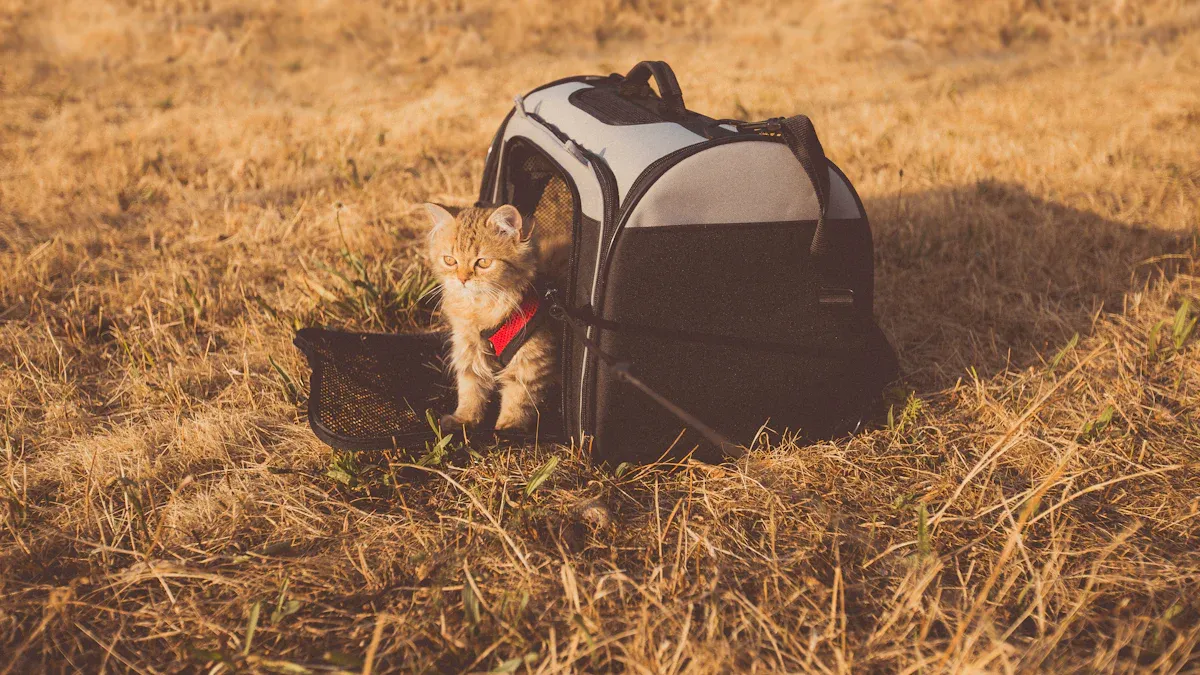
Measuring dog carrier bag dimensions
Internal measurement steps
You need to measure inside the carrier to see how much space your dog gets. First, open the carrier and make sure it looks like it will when used. Use a tape measure to check the length, width, and height from the inside. Always measure at the widest spots. Write these numbers down in inches and centimeters. This helps you compare every dog carrier bag, dog training bag, and pet carrier bag. Internal measurements are important for training. They show if your dog can sit, turn, or rest inside. If the carrier has soft sides, measure it when it is put together. Clear inside measurements help buyers pick the right carrier for training, travel, or daily use.
Tip: Always keep inside measurements separate from outside ones. This makes your catalog easy to read and helps buyers not make mistakes.
External and opening size
Outside size shows the total size of the carrier. You measure the outside shell at the longest, widest, and tallest spots. Use the same units as before. These numbers help you know if the carrier fits under a seat, on a shelf, or in a car. Opening size is important too. Measure the entry space at its widest spot. This tells buyers how easy it is to put their dog in the carrier. For dog training bag and pet carrier bag listings, clear outside and opening sizes make it easier for buyers to plan for travel, training, or storage. Always list these sizes apart from inside measurements.
Dimension Type | What to Measure | Why It Matters | Units |
|---|---|---|---|
External | Outer shell | Fits in spaces | Inches, Centimeters |
Opening | Entry space | Easy loading | Inches, Centimeters |
Packed size for logistics
Packed size means how big the carrier is when folded or boxed for shipping. You measure the box or bag at its biggest points. Packed size changes shipping costs and planning. Shipping companies use both weight and size to set prices. If the packed size is big, shipping costs go up. Different shipping ways use volume and weight in different ways. When you list a travel carrier bag, dog carrier bag, or day-trip carrier bag, always show packed size. This helps teams plan for storage, shipping, and shelf space. Packed size also helps buyers know how easy it is to store the carrier when not in use.
Packed size changes shipping fees because of size and weight.
Bigger packed size means higher shipping costs.
Knowing packed size helps with shelf planning and shipping.
Note: Always list packed size in both inches and centimeters. This helps teams compare carriers and plan for shipping, storage, and display.
Ventilation panels and airflow
Sides and placement
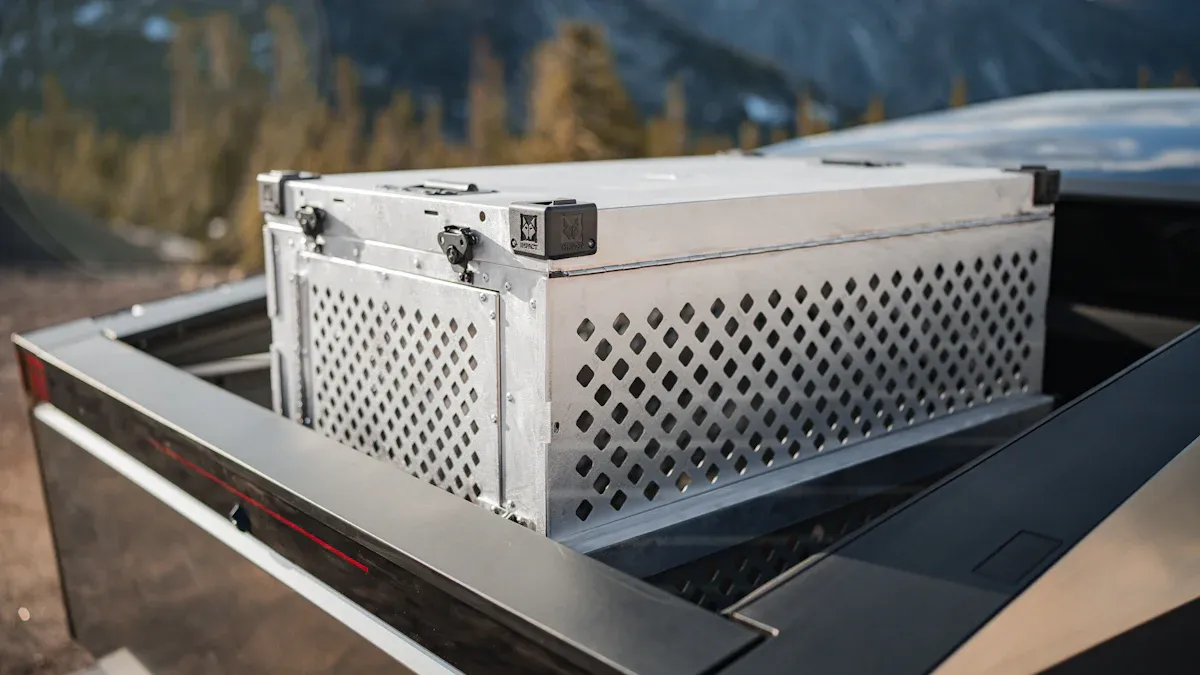
You should check how many sides have ventilated panels. Where the panels are placed matters for airflow. If only one side has panels, your dog may not get enough air. Look for carriers with panels on two opposite sides. This lets air move through the carrier. Your pet will feel more comfortable when traveling or training. The American Veterinary Medical Association says poor ventilation can cause stress and heat problems. Large mesh panels help with airflow and keep pets cooler. When you compare a dog carrier bag, always check the number and placement of ventilated panels.
Tip: Panels on both sides help stop overheating during long trips or training.
Mesh, perforation, vent ports
Carriers use different materials for ventilated panels. Mesh, perforated plastic, and vent ports are common choices. Not all materials are safe or strong. Stainless steel mesh and reinforced polymer panels work best. These last longer and keep pets safer. Nylon netting is not strong enough for most carrier bags. The holes in the panels should be small, no bigger than 0.4 inches. This stops paws or noses from getting stuck. Good soft carriers use ballistic nylon or 1680D polyester with mesh panels all around. These features give better airflow and help with comfort during training.
Requirement | Details |
|---|---|
Minimum Ventilation Area | 16% total ventilation area |
Distribution | Must be distributed evenly on at least two opposing sides |
Material for Mesh Panels | Stainless steel or reinforced polymer (not nylon netting) |
Diameter of Ventilation Openings | Must be ≤0.4 inches to prevent paw or nose entrapment |
Claim-safe ventilation language
Use clear words when you talk about ventilated panels. Say “ventilation helps airflow” instead of promising cooling. Never say a carrier stops suffocation or guarantees safety. Always show how many ventilated panels there are. Show where they are and what materials are used. This helps buyers trust your listing and makes things less confusing. If you are not sure about ventilation or safety, ask a professional before making claims.
Photo and diagram shot list for catalog teams:
Internal measuring tape photo (shows inside space)
Opening photo (shows entry size)
Carry mode photo (shows hand, shoulder, or backpack use)
Tether attachment photo (shows safety tether connection)
Ventilated panel close-up (shows mesh or vent material and size)
This way, you make clear and honest listings for every dog carrier bag. You help with training, safety, and durability by following these standards.
Safety tether and closures
Harness connection wording
Check how the safety tether connects inside the carrier. Always use a harness connection, not a collar. A harness helps keep your dog safe if you stop fast. Collars can hurt your dog if there is a sudden pull. A harness clip works like a seatbelt for your pet. It cannot stop every accident, but it helps keep your dog from jumping out or getting hurt.
“Even well-trained dogs can get scared in new places. A harness clip acts like a seatbelt. It will not stop all accidents, but it lowers the chance your dog gets thrown out if you stop fast.” — Dr. Lisa Maranan, DVM
Always use a harness when you put your dog in a dog carrier bag, dog training bag, or pet carrier bag. This step adds an extra layer of safety.
Quick-release and retention
A good carrier lets you get your dog out fast if needed. Look for a quick-release or controlled-release tether. This lets you unclip your dog quickly. Avoid tethers that are hard to open or get tangled. Carriers with harness clips help keep your pet in place and lower the chance of escape. Regular carriers with only zippers or snaps can fail if your dog pushes hard. You want a carrier with a harness tether and strong closures for better safety during training or travel.
Regular carriers use only zippers and closures. These can break and let dogs escape.
Carriers with harness clips add more safety. They hold your dog in place and do not just rely on fabric.
Closure types
Check the closure types on every carrier. Zippers, buckles, and snaps are common. Make sure these closures stay shut when you move or train. Do not use carriers with gaps or weak seams. The best carriers use strong materials and secure closures to keep your pet safe. You want a carrier that is safe, strong, and lets air in.
Safety Feature | Description |
|---|---|
Sturdy construction | Strong materials that can handle drops and bumps. |
Adequate ventilation | Mesh panels on many sides for good airflow. |
Secure closures | Zippers, buckles, or snaps that do not open by accident. |
Escape-proof design | No big gaps for a dog to squeeze out. |
Proper fit | Enough space for your dog to stand, turn, and lie down. |
Always check the safety features before using a dog carrier bag, dog training bag, or pet carrier bag. If you have safety questions, ask a professional. Picking the right closures and tethers helps keep your pet safe during training and travel.
Carry modes and use-case labels
Hand, shoulder, backpack, multi-carry
It is important to know how each carrier works. Some carriers let you carry them by hand. This gives you quick control and easy access. Shoulder carry helps you walk longer without using your hands. Backpack carry spreads the weight on your back. This is good for day trips or active training. Multi-carry carriers can switch between these ways. You can change how you carry it for comfort or activity. Always look at the product page for clear labels. These labels show which carry modes are included. This helps you choose the best dog carrier bag for your needs.
Tip: Pick a carrier with straps you can adjust and padded handles. These features make training or travel more comfortable.
Commute, travel, day-trip mapping
You should match the carrier to your activity. For daily commutes, choose a carrier with a simple design and good pockets. Travel carriers need to be compact and have trolley sleeves. This makes moving easier. Day-trip carriers work best with breathable materials and strong storage. The table below shows which features fit each activity:
Activity Type | Key Features |
|---|---|
Professional Work & Business | Simple design, good organization, comfort for long commutes. |
Travel & Weekend Getaways | Small size, easy packing, trolley sleeve for moving around. |
Fitness & Active Commuting | Special pockets for workout gear, breathable materials for comfort. |
Leisure & Hobbies | Strong storage for equipment, easy to use for quick trips. |
Always check if the carrier matches your activity and training needs. This helps you avoid buying the wrong pet carrier bag or dog training bag.
When to recommend a different carrier
You should suggest a different carrier if the one you have does not fit your dog’s size, activity, or safety needs. If the carrier does not have enough ventilation or a harness tether, look for another option. For long trips or hard training, pick a carrier with strong closures and extra comfort. If you see safety or fit problems, choose a carrier with better support and clear size details. Always put safety first. Ask a professional if you have questions about training or carrier features.
Canine bag catalog compliance
Standardized fields and synonyms
You should use clear fields when you list a carrier. Always add product ID, contact info, care steps, warnings, and materials. Use the same words for every listing. For example, say “internal dimensions” instead of “inside space.” Say “ventilation panels” instead of “air holes.” This helps buyers compare dog carrier bags and see the features. Do not use confusing words. Use simple terms like “hand carry,” “shoulder carry,” and “backpack carry.” Clear words make training and shopping easier.
Tip: Check your catalog for forbidden words. Do not use “escape-proof,” “guaranteed secure,” or “universal fit.” These words can trick buyers and cause safety problems.
Units, rounding, and measurement rules
Use the same units for every carrier. List measurements in inches and centimeters. Measure length, width, and height at the biggest spots. Round numbers to the nearest half inch or centimeter. Keep internal, external, opening, and packed sizes apart. Never mix these fields. If the carrier has soft sides, measure it when built. This helps buyers know if the carrier fits their dog and works for training.
Measurement Field | Unit | Rounding Rule |
|---|---|---|
Internal | in/cm | Nearest 0.5 |
External | in/cm | Nearest 0.5 |
Opening | in/cm | Nearest 0.5 |
Packed | in/cm | Nearest 0.5 |
Required compliance and warnings
Add US and EU compliance fields in every listing. Include contact info, care steps, safety warnings, and material details. Always show photos or diagrams for key features like ventilation panels, safety tether, and carry modes. Use clear notes in your images. Warn buyers about proper use and training steps. Do not promise total safety. If you have safety questions, ask a professional.
Note: Always check your catalog for forbidden words and missing photos. Clear compliance protects buyers and makes your listings more trustworthy.
QA for listings and receiving
Listing quality checklist
You want every carrier listing to help buyers choose well. Start with a checklist before posting. List internal, external, opening, and packed dimensions in inches and centimeters. Show clear photos of the carrier, including ventilation panels and safety tether. List all carry modes and training use-cases. Describe closure types and retention features. Do not use words like “escape-proof” or “guaranteed secure.” Use safe words for safety and ventilation. Check every listing for spelling, measurement accuracy, and clear order.
Vendor Intake Checklist for Catalog Teams:
Ask for full dimension specs (internal, external, opening, packed)
Request photos showing ventilation panels and tether connection
Get material details for all carrier parts
Confirm carry modes and closure types
Require safety and care instructions
Ask for compliance fields (product ID, warnings, care steps)
Tip: Use this checklist for every new dog carrier bag sample from the factory.
Receiving verification steps
When you get a carrier, check if it matches the listing. Measure the internal and external dimensions yourself. Look at the ventilation panels and count the sides. Test the safety tether and closure features. Try each carry mode to see if it works as described. Review the materials and make sure they match the catalog. Check for clear labels and warnings. If you find any differences, write them down and tell your team.
Step | What to Check |
|---|---|
Measure dimensions | Internal, external, opening, packed |
Inspect ventilation | Panel count, placement, material |
Test tether | Harness connection, quick-release |
Try carry modes | Hand, shoulder, backpack |
Review closures | Zippers, buckles, snaps |
Common ticket triggers
You may see problems when listing or getting carriers. Missing dimensions or unclear ventilation details can confuse buyers. Buyers may ask about safety tether features or carry modes. Incomplete photos or wrong measurements can cause returns. If you see forbidden words or missing compliance fields, open a ticket for review. Always report any safety concerns or unclear training instructions. Use your checklist to catch these problems early.
Note: Careful QA helps you avoid returns and keeps buyers happy with their dog carrier bag.
Attribute standard table
You need clear rules when you list a dog carrier bag. This table helps you check every carrier for travel, training, and daily use. You can use these fields to compare products and check catalog data. This makes sure buyers get what they expect. Always measure and write down each field before you add a carrier to your catalog. This helps you avoid mistakes and keeps your listings correct.
Tip: Use this table as a checklist for every new carrier sample. You will find missing details and make your catalog better.
Field | Plain-English meaning | How to measure or verify | Units or allowed values |
|---|---|---|---|
Internal Dimensions | Space inside for the dog | Measure inside surfaces at widest points | Inches, Centimeters |
External Dimensions | Size of the carrier outside | Measure outer shell at longest, widest, tallest | Inches, Centimeters |
Opening Dimensions | Entry space for loading | Measure entry opening at widest point | Inches, Centimeters |
Packed Dimensions | Size when carrier is packed for shipping | Measure carton or polybag at largest points | Inches, Centimeters |
Ventilation Sides | Number of sides with ventilation panels | Count sides with mesh or vent panels | 1, 2, 3, 4 |
Panel Material | Type of material used for ventilation | Inspect mesh, perforated plastic, or vent ports | Mesh, Perforated Plastic |
Safety Tether | Retention support for harness connection | Check for harness clip and quick-release feature | Yes, No |
Closure Type | How the carrier closes | Inspect zippers, buckles, snaps | Zipper, Buckle, Snap |
Carry Modes | Ways to carry the carrier | Test hand, shoulder, backpack, multi-carry straps | Hand, Shoulder, Backpack |
Activity Labels | Best use-case for carrier | Match features to commute, travel, or day-trip | Commute, Travel, Day-trip |
Compliance Fields | Required catalog and safety info | Check for product ID, warnings, care instructions | Yes, No |
You can use this table to teach your team and make your catalog more accurate. Always check each carrier for these features before you list it. This helps you build trust and lowers returns. If you have safety questions, ask a qualified professional.
Copy guardrails table
When you write about a carrier, use clear and honest words. Do not make claims that can trick buyers or give false hopes. Use safe words that match what your carrier can really do. Always check if you have strong proof before saying big things about training, ventilation, or safety. This helps you build trust and lowers returns for every dog carrier bag.
Remember: Honest words protect your brand and help buyers pick the right carrier for their dog and training.
Here is a table to help you write about carrier features:
Risky claim | Safer wording | What internal proof would justify stronger wording |
|---|---|---|
Escape-proof | Retention support to lower jump-out risk | Lab tests with all dog sizes and breeds |
Guaranteed secure | Made for secure closure and harness connection | Safety certificates and repeated stress tests |
Breathable mesh ensures cooling | Ventilation panels help airflow | Airflow rates and temperature drop in controlled tests |
Universal fit for all dogs | Fits dogs up to listed internal dimensions | Fit trials with many dog sizes and body types |
Airline approved | Meets common airline size rules (check with airline) | Written airline approvals for each carrier size |
100% safe for travel or training | Has safety tether and secure closures | Third-party safety checks and no incidents in field tests |
Prevents overheating | Ventilation panels placed for airflow | Thermal tests in different conditions |
Indestructible construction | Uses strong materials for durability | Lab tests and long-term use data |
Stops all escapes during training | Lowers escape risk with harness tether and closures | Proof of zero escapes in long training sessions |
Always match your claims to the real features of your carrier. If you do not have strong proof, use careful words. This keeps buyers and your business safe. If you have questions about safety or training, ask a qualified professional before you change your product copy.
You help buyers when you use clear standards for every carrier. You show the right features, like ventilation and safety tethers, so people know what to expect. You lower returns when you list each carrier with the same fields and simple words. You make it easy for someone to pick the best dog carrier bag for their dog and training needs. A unified approach builds trust in your canine bag catalog.
FAQ
What is the difference between internal and external dimensions?
Internal dimensions are measured inside the carrier. These numbers show how much space your dog has. External dimensions are the size of the carrier on the outside. Always list both so buyers and teams can compare products easily.
How should I describe ventilation panels in a catalog?
Count how many sides have ventilation panels. List what material the panels use and where they are placed. Use clear photos or diagrams to show these details. Say “ventilation helps airflow” instead of making safety promises.
Why do I need to separate carry modes in the listing?
This helps buyers know how to use the carrier. List each carry mode, like hand, shoulder, or backpack. It makes it easier for teams to match the canine bag to the right use-case.
What is a claim-safe way to describe safety tethers?
Say the tether helps keep your dog in and connects to a harness. Do not promise that it will stop escapes. If you have safety questions, ask a qualified professional before making claims.
How do I check catalog compliance for a new carrier?
Check all measurement fields, ventilation details, safety features, and carry modes. Look for warnings and care instructions. Review photos and diagrams to make sure they are correct before adding the carrier to your catalog.