Visibility claims for reflective dog collars can cause confusion and risk. Many people return collars or ask for help when they mix up reflective collars and illuminated collars. Reflective collars need light to shine. Illuminated collars have their own light. You should use safe words when talking about dog visibility and pet safety gear. Reflective collars use special materials and work best with direct light. Illuminated collars give off light in dark places. No collar can remove all risk. Visibility depends on the place, watching your pet, and using the collar right. If you sell as an OEM or ODM, follow these steps: find out the collar type, pick the right claim and limits, gather proof, write simple words, add clear photos, make support scripts, and get approval before selling. People want night safety collars and safety features. This gives sellers a chance, but you must follow safety rules in your messages to lower accidents and meet market needs and quality.
Key Takeaways
Reflective collars need outside light to work. Illuminated collars make their own light. Always check what kind you have.
Use simple and safe words when you talk about collars. Do not promise things about safety or visibility that you cannot prove.
When you sell collars, follow these steps: say what type it is, pick safe things to say, find proof, and get approval before you list it.
Teach customers what each collar can and cannot do. No collar can keep pets totally safe. How well you see the collar depends on many things.
Use pictures with labels in catalogs to show how collars work. This helps customers see the differences and choose the right one.
Reflective dog collars: definition and real-world use
What makes a collar reflective
You can find reflective dog collars in lots of stores. These collars have special materials that send light back to where it came from. If a car’s headlights or a flashlight shine on the collar, the trim glows. Reflective collars do not make light by themselves. Illuminated collars have lights inside, but reflective collars need outside light.
Reflective dog collars use tough materials so they last longer. Some collars use industrial polyester webbing that does not get ruined by water or sunlight. Many collars have 3M reflective material to help people see dogs in the dark. Some collars have reflective stitching so you can spot your dog at night.
Strong materials help collars last longer
Industrial polyester webbing keeps out water and sunlight
3M reflective material helps people see dogs in dim light
Reflective stitching makes nighttime walks safer
Reflective collars help drivers and people see your dog at night. A report says reflective collars can lower animal injuries by over 85 percent. These collars bounce light from cars, so drivers notice dogs and avoid accidents. The National Highway Traffic Safety Administration found most pedestrian accidents happen at night. Being seen is important. Dogs with reflective collars get noticed faster by drivers.
No collar can remove all risk. How well you see your dog depends on where you are, watching your pet, and using the collar the right way.
Limitations of reflective visibility
You need to know what reflective collars cannot do. These collars only glow when light hits them directly. If there is no light, the collar will not shine. Illuminated collars are different because they have their own light. Reflective collars work best when a car’s headlights or a flashlight point at them. The angle, how far away you are, the weather, and your dog’s fur can change how well the collar works.
You should always watch your dog when you go for walks. Reflective collars help people see your dog, but they do not promise safety. You cannot trust any collar to make your dog always easy to see. Sellers must follow steps to keep claims safe: know the product type, pick the right claim and limits, gather proof, write simple words, add clear photos, make support scripts, and get approval before selling. If you sell as an OEM or ODM, use these steps to keep your claims safe and easy to understand.
Reflective collars need light to shine, and illuminated collars have their own light. They help in different ways. Always check which collar you have before you make claims or answer questions.
Illuminated collars: active light and governance
How illuminated collars work
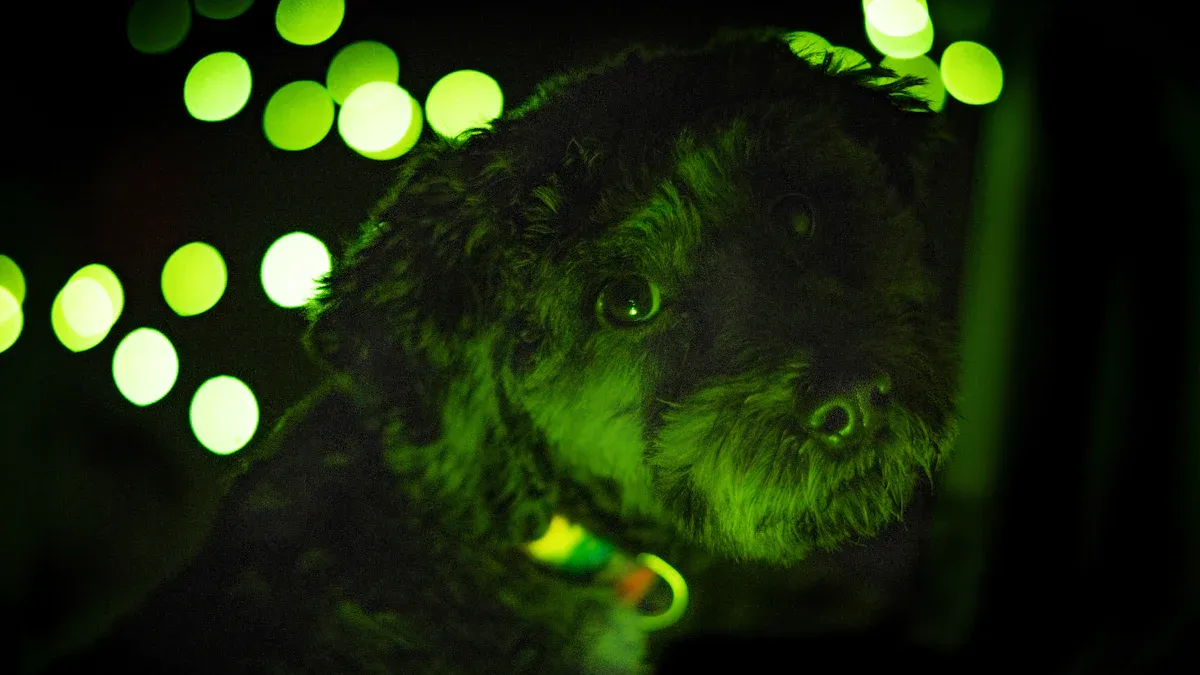
Illuminated dog collars have lights built inside them. These lights help you see your dog when it is dark. Unlike reflective collars, illuminated collars do not need outside light. The collar glows because it has its own light source. Most illuminated collars use LED lights. LEDs last a long time and do not use much power. Some collars turn on by themselves when you put them on right. You can charge the battery again when it runs out. Some collars work for up to 120 hours before charging.
Tip: Always check if your collar is reflective (needs light to shine) or illuminated (has its own light) before you make claims or answer questions.
Here is a table showing common features of illuminated collars:
Feature | Description |
|---|---|
Mechanism | Turns on without a switch and lasts a long time |
LED Type | Superflux LEDs are bright and strong |
Water Resistance | Silicone keeps out water and dirt |
Automatic Function | Turns on by itself when worn right |
Battery Life | Can last up to 120 hours |
Lifespan of LEDs | Works for more than 100,000 hours |
Connection Method | Uses a safe plug-bend system |
Illumination | Very bright light for dark places |
Design | Waterproof and tough for outdoor use |
Battery | Rechargeable and lasts a long time |
No collar can remove all risk. How well you see your dog depends on where you are, watching your pet, and using the collar the right way.
Regulatory differences for illuminated products
You must follow special rules to sell illuminated collars. These rules keep pets and people safe. The US and EU have different rules for illuminated dog collars. In the EU, you must follow REACH rules for chemicals and EN 71 for safety. You need to test for heavy metals and fire risk. You also need a CE mark. In the US, you follow CPSC and FDA rules. You must check for lead, phthalates, and choking dangers. CPSIA covers safety for dog gear and limits bad chemicals.
Here is a table comparing US and EU standards:
Region | Key Regulatory Standards | Key Requirements |
|---|---|---|
EU | REACH Regulation | Limits on heavy metals, banned substances, paperwork |
EN 71 series (safety) | Tests for strength, fire risk, and CE marking | |
US | CPSC/FDA | Limits on lead, phthalates, and checks for choking risks |
CPSIA | Safety for dog gear and limits on bad chemicals |
If you work as an OEM or ODM, follow these steps: find out the collar type, pick the right claim and limits, gather proof, write simple words, add clear photos, make support scripts, and get approval before selling.
Reflective collars need light to shine. Illuminated collars have their own light. Always use clear words to show which type you offer.
Claim governance for dog visibility in US/EU
You have to follow strict rules about dog collar visibility in the US and EU. These rules help keep pets safe and meet what buyers want. They also help lower accident risks. You must use clear words and never promise total safety. Always tell buyers that no collar can remove all risk. How well you see a dog depends on where you are, watching your pet, and using the collar right.
No product can remove all risk. Visibility depends on where you are, watching your pet, and using the collar right.
Allowed and restricted terms for reflective dog collars
You need to use safe words when you talk about reflective dog collars. These collars use special materials that send light back to where it came from. They work best when a direct light, like headlights or a flashlight, shines on them. Always say that reflective collars need light to shine. Do not say they glow by themselves or work everywhere.
Allowed wording for reflective collars:
Retroreflective trim helps dogs be seen when light hits it at night.
Visibility gets better with direct light, like headlights or a flashlight.
Made to help dogs be seen at night, but not a promise for all situations.
Do not use risky words that make reflective collars sound too good. Never say these things:
Guaranteed visibility
Visible from any distance
Always visible
Daytime glow
Failsafe safety
Accident-proof
You should always explain that reflective collars and illuminated collars are not the same. Reflective collars need light to shine. Illuminated collars have their own light. Always check which collar you have before you make claims or answer questions.
If you work as an OEM or ODM, follow these steps for claim rules:
Find out if the collar is reflective or illuminated.
Pick the right claim and write the limits.
Collect proof for the materials or electronics.
Write simple words for catalog and support.
Add clear photos and support scripts.
Get approval before you list the collar.
This process helps you meet quality rules and gives you a chance to sell pet safety gear.
Claim-safe language for illuminated collars
Illuminated collars use lights, like LEDs, that run on a battery. These collars help your pet stand out when it is dark. You must use safe words that match what the collar can do. Always say illuminated collars have their own light, but the light depends on the battery and design.
Allowed wording for illuminated collars:
Active light for dark places.
Light changes with battery and where you use it.
Never use risky words for illuminated collars, like:
Guaranteed visibility
Always visible
Visible from any distance
Failsafe safety
Accident-proof
Always keep visibility and safety apart. You can say illuminated collars help with visibility, but you cannot promise total safety. Remind buyers that illuminated collars and reflective collars work in different ways. Illuminated collars have their own light. Reflective collars need light to shine.
Your claims must match what the collar really does. If you make claims with facts, you need proof. If you use opinions, you still have to be honest.
Tip: Always check if your collar is reflective (needs light to shine) or illuminated (has its own light) before you write catalog copy or answer support questions.
Reflective dog collars and illuminated collars both help dogs be seen, but they do not promise safety. You must follow these rules to meet what buyers want, lower accident risks, and give good pet safety gear. This way, you get a chance to sell more and build trust with pet owners who want night safety collars.
Claim Governance Table
You have to use special rules when you talk about how easy it is to see a dog collar. This table shows which words are safe and which ones are not. Always check if your collar is reflective or illuminated. Reflective collars need light to shine. Illuminated collars have their own light. Each type has its own rules for what you can say and what proof you need.
No product can take away all risk. How well you see the collar depends on where you are, watching your pet, and using the collar right.
Claim Type | Allowed Wording | Risky Wording to Avoid | Proof Required |
|---|---|---|---|
Reflective (needs light) | Retroreflective trim helps the dog be seen when light hits it at night. | Guaranteed visibility | Photometric retroreflective test method name, material spec sheet |
Visibility improves under direct illumination such as headlights or flashlight. | Always visible | Abrasion, seam strength, and aging method names for durability | |
Designed to support nighttime visibility, not a guarantee of being seen in all conditions. | Visible from any distance | Salt spray screening method name for metal hardware | |
Illuminated (has its own light) | Active light for low-light situations. | Failsafe safety | Battery and electronics compliance documentation (EU/US), responsible disposal documentation |
Light output varies with battery condition and environment. | Accident-proof | Product design and battery test records | |
Both types | Helps with nighttime walks. | Daytime glow | For objective claims: test or compliance documentation |
Easy to spot under headlights or in the dark. | 100 percent safe | For subjective claims: honest, clear language | |
Supports visibility, not a safety guarantee. | Miracle cure, cures arthritis, prevents or relieves, clinically tested to be safe | Scientific or clinical evidence for any health or medical claim |
You should never say a collar is always safe or always easy to see. Reflective collars only shine when there is light. Illuminated collars have their own light, but how bright they are depends on the battery and how they are made. If you work as an OEM or ODM, follow these steps: find out what kind of collar you have, pick the right words and limits, collect proof, write simple copy, add photos and support scripts, and get approval before you sell.
When you use safe words and show proof, people trust you more and you stay safe. Always keep safety and visibility as two different things. Reflective collars and illuminated collars both help dogs get noticed, but no collar can stop all risks.
Evidence pack for visibility and safety claims
If you want to sell night safety collars, you need the right proof for each kind. Reflective dog collars and illuminated collars both help dogs get seen, but they do this in different ways. Reflective collars need light to shine. Illuminated collars have their own light inside. No collar can make all risk go away. How well you see a dog depends on where you are, watching your pet, and using the collar right.
Required tests and documentation for reflective dog collars
You need proof before you say what reflective collars can do. First, check if your collar uses retroreflective material. Ask your supplier for the name of the photometric retroreflective test method. This test shows the collar sends light back to the source, like car headlights. Ask for a material spec sheet that tells you about the reflective type and how it is made. You also need proof that the collar is strong and lasts long. Get the name of the abrasion test, seam strength test, and aging test for color or trim. If your collar has metal parts for outside, ask for the salt spray test name. These steps show your reflective collar helps dogs be seen at night.
Battery and electronics compliance for illuminated collars
Illuminated collars use batteries and electronics, so you need more proof. You must check that your collar follows important rules for pet safety and electronics. Here is a table with the main rules:
Standard/Regulation | Description |
|---|---|
ISO 9001 | Makes sure the company has good quality checks. |
CE Marking | Shows the collar meets EU safety and health rules. |
FCC Compliance | Needed for electronics that send out radio waves in North America. |
RoHS Directive | Stops bad chemicals from being used in electronic parts. |
REACH Regulation | Sets chemical safety rules for materials in the EU. |
Always ask your supplier for battery and electronics proof before you sell illuminated collars. This keeps pets safe and helps you follow the law.
If you are an OEM or ODM seller, you should follow these steps: find out what kind of collar you have, pick the right claim and limits, collect your proof, write simple words, add photo tips and support scripts, and get approval before you sell. Both reflective and illuminated collars help dogs get seen, but you must always say how each one works and what proof you have.
Catalog copy blocks for best reflective dog collars and illuminated collars
Headlines and feature bullets
You want your catalog copy to be easy to read. This helps buyers choose the best reflective dog collars or illuminated collars for their pets. Here are some sample headlines and feature bullets you can use in your product listings:
Airtag Dog Collar with Retroreflective Trim
Nylon Reflective Dog Collar Side Release Buckle
Reflective Martingale Dog Collar Chain
LED Illuminated Dog Collar for Nighttime Walks
Feature Bullets:
Metal buckle is strong and the snap is easy to use
Nylon does not smell and keeps water out for outdoor fun
Reflective webbing helps people see your dog at night
Active light works in dark places and the battery lasts a long time
The collar has a cool pattern for style and safety
You can attach a leash or tags in many places
This collar has bright patterns and thick reflective threads. Retroreflective trim helps your dog get seen when light shines on it at night. No product can take away all risk. How well you see your dog depends on where you are, watching your pet, and using the collar the right way.
Limitations and care notes
Reflective collars need light to shine. Illuminated collars have their own light. Each type helps your pet get noticed in different ways. Always check which collar you have before you make claims or answer questions.
Reflective areas work best when a light shines right on them
Illuminated collars change how bright they are with battery and where you use them
Wash by hand with mild soap and let it air dry to keep the collar working well
Keep the collar away from heat and wet places when you are not using it
If you sell as an OEM or ODM, follow these steps: find out what kind of collar you have, pick the right words and limits, collect your proof, write simple copy, add photo tips and support scripts, and get approval before you sell.
Reflective and illuminated collars both help your pet get noticed, but they do not promise safety. Always use clear and safe words in your catalog copy.
Photo and diagram guidance for dog visibility
Night use and angle demonstration
You need to use clear photos and diagrams. These help show how reflective and illuminated collars work at night. Take pictures of both collar types on a dog in a dark place. Use a flashlight or car headlights for reflective collars. Show that the reflective trim only shines when light hits it. For illuminated collars, turn the collar on in the same dark spot. Show that the collar glows by itself, even with no outside light.
Tip: Always put labels on your photos. Write “Reflective (needs light to shine)” or “Illuminated (has its own light)” under each picture. This helps buyers see the difference.
Show the collar from many angles. Take one photo from the front, one from the side, and one from behind. This shows how the collar looks when the dog moves. You can use a simple table to plan your photos:
Collar Type | Light Source | Angle | What to Show |
|---|---|---|---|
Reflective | Flashlight/Car | Front | Reflective trim shines |
Reflective | Flashlight/Car | Side | Partial shine |
Illuminated | None (collar on) | Front | Collar glows |
Illuminated | None (collar on) | Side | Collar glows |
No collar can remove all risk. How well you see the collar depends on where you are, watching your pet, and using the collar right.
Distance and obstruction caveats
You should show how distance and objects change both collar types. Take photos from close, medium, and far away. For reflective collars, show that the trim shines less as you move back or change the angle. For illuminated collars, show how the glow changes with battery and distance.
Take a photo with the collar partly covered by fur or a harness. Show that reflective collars need a clear path for light to bounce back. Illuminated collars can still glow, but fur or gear can block the light. Always add a note under each photo: “Reflective (needs light to shine)” or “Illuminated (has its own light)”.
Note: You must follow the seller steps. Find out the collar type, pick safe claims and limits, collect your proof, write simple words, add photo tips, make support scripts, and get approval before you sell.
Photos and diagrams help buyers see how each collar helps with visibility. Use honest pictures and clear labels to set the right ideas.
Support scripts for visibility and safety questions
Reflective dog collars: sample responses
When people ask about reflective dog collars, explain how they work. Reflective collars have special trim that shines when light hits them. This could be from a car or a flashlight. They do not glow by themselves. Illuminated collars are different because they make their own light. Always check which collar you have before you answer.
No product can remove all risk. How well you see the collar depends on where you are, watching your pet, and using the collar right.
If someone asks about features, you can use this table:
Feature | Description |
|---|---|
Reflective Material | Has trim that helps dogs be seen in low light. |
Durability | Made with strong nylon so it lasts longer. |
Personalization | You can add your dog’s name and your phone number. |
Care Instructions | Simple to wash and keep clean. |
You can also say: Reflective collars help your dog get noticed at night. The collar is light and has a strong buckle. You can add your dog’s name to help if tags get lost. Always check the collar fits right so your dog stays safe and comfy.
Reflective collars need light to shine. Illuminated collars have their own light. Each type helps your dog be seen in different ways.
Illuminated collars: sample responses
When people ask about illuminated collars, explain they have lights inside. These collars do not need outside light to glow. How bright they are depends on the battery and how the collar is made. Reflective collars need light from something else. Always check which collar you have before you answer.
You can say: Illuminated collars use LED lights to help your dog stand out in the dark. The light changes with the battery and where you use the collar. Some collars have GPS or health tracking to help keep pets safe. Always check the fit so your dog does not get sore skin.
Getting an illuminated collar can help your dog be seen and stay safer, especially in the early morning or at night. No collar can take away all risk. How well you see your dog depends on where you are, watching your pet, and using the collar right.
If you work as an OEM or ODM, follow these steps: find out the collar type, pick safe words and limits, collect your proof, write simple copy, add photo tips and support scripts, and get approval before you sell.
Reflective collars need light to shine. Illuminated collars have their own light. Always use clear words to show which type you have.
Support Ticket Mapping Table
When you answer support tickets about dog collars, you see the same questions a lot. People ask why their pet is hard to see in the dark or why the collar does not glow all the time. You need to tell them the difference between reflective collars and illuminated collars. Reflective collars only shine when light hits them. Illuminated collars have their own light inside. No collar can make all risk go away. How well you see a dog depends on where you are, watching your pet, and using the collar right.
You can use this table to match common problems with solutions. This helps you give people what they want and keeps pets safer.
Customer confusion | Likely cause | Copy fix | Photo or spec to add |
|---|---|---|---|
Collar does not glow in the dark | Customer bought reflective, expects illuminated | Say: “Reflective collars need light to shine. Illuminated collars have their own light.” | Add photo: reflective collar under headlights and illuminated collar glowing in darkness |
Dog not visible from far away | Visibility claim overstated | Use: “Visibility gets better with direct light. No collar can promise your dog will always be seen.” | Show distance photos for both collar types |
Collar looks dull during daytime | Reflective material not active without light | Explain: “Reflective collars work best at night when light shines on them. Illuminated collars glow by themselves.” | Add side-by-side photo: collar in daylight vs. at night |
Confusion about safety claims | Misunderstanding of visibility vs. safety | Make clear: “Collars help dogs get noticed, but do not promise safety.” | Add spec: material strength, comfort, and reflective material details |
Unsure about product type | Catalog copy unclear | Add: “Reflective (needs light to shine)” and “Illuminated (has its own light)” in the product description | Add labeled photos for each collar type |
Tip: Always follow the seller steps. Find out what kind of collar you have, pick safe words and limits, collect proof, write simple copy, add photo tips and support scripts, and get approval before you sell.
If you work as an OEM or ODM, you must check what kind of collar you have, pick safe claims, get proof, write clear words, add helpful photos, make support scripts, and get approval before you sell. This keeps your product safe and gives people what they need.
Reflective collars help dogs get noticed in low light. Illuminated collars use their own light to help pets stand out. Both types help your dog get seen, but neither one can promise safety.
Supplier RFQ checklist and approval workflow
If you want to sell safe dog collars, you need a simple plan for working with suppliers. First, decide if you want an OEM or ODM product. OEM means you give your own design to the factory. ODM means you pick a design the factory already made and put your brand on it. Both choices need safety checks and clear claims.
RFQ questions for visibility claims
You should ask good questions when you ask for a quote from a supplier. This helps you keep your product safe in low light. Use these questions for both reflective and illuminated collars:
Is the collar reflective (needs light to shine) or illuminated (has its own light)?
What test method do you use for retroreflective material? Please give the method name.
For illuminated collars, do you have battery and electronics safety papers?
Can you share a material spec sheet for the collar?
What durability tests have you done? Please list abrasion, seam strength, and aging method names.
For metal parts, do you have a salt spray test method name?
Can you show photos of the collar in low light?
What is the battery life for illuminated collars?
Do you have safe disposal info for batteries?
No product can remove all risk; how well you see the collar depends on where you are, watching your pet, and using the collar right.
Internal sign-off steps
You need easy steps before you approve any dog collar for sale. Use these steps for both reflective and illuminated collars:
Find out the collar type: reflective (needs light to shine) or illuminated (has its own light).
Pick safe claim words and write the rule about limits.
Collect all proof from your supplier.
Write simple catalog copy blocks.
Add photo tips and support scripts for your team.
Do an internal check and get approval before you sell the collar.
This plan helps you keep pet products safe and honest. Always check the collar type, use clear claims, and never promise total safety.
Glossary: visibility and safety terms
It is important to use the right words when talking about dog collars and pet safety. This glossary explains how reflective dog collars and illuminated collars work. Each word helps you learn about visibility and safety for your pet.
No product can remove all risk. How well you see your pet depends on where you are, watching your pet, and using the collar right.
Key Terms
Reflective: This material shines when light, like headlights or a flashlight, hits it. Reflective dog collars need outside light to help your dog get seen.
Illuminated Collar: This collar has its own light, like LEDs. Illuminated collars glow in the dark without needing outside light.
Visibility: This means how easy it is to see your pet. Visibility changes with light, distance, weather, and what your dog wears.
Flat Buckle Collar: This is a regular collar with a buckle. Make sure it fits well so your dog cannot slip out.
Martingale Collar: This collar gets tighter if your dog pulls. It helps stop escapes but must be clipped to the live ring.
Center Ring Collar: This collar has a ring in the middle. It helps lower pressure and can stop escapes if the collar gets stuck.
Retroreflective Trim: This is special trim that sends light back to where it came from. You see this on many reflective collars.
Durability: This means how well a collar holds up to use, washing, and being outside.
Do not let your dog wear collars during crating or rough play. Collars can get stuck and hurt your pet.
Collar Types Table
Collar Type | Description |
|---|---|
Flat Buckle Collar | Regular collar with a buckle, fits well for daily use. |
Martingale Collar | Gets tighter when pulled, helps stop escapes, good for training. |
Center Ring Collar | Has a ring in the middle, lowers pressure, helps stop escapes. |
Reflective collars need light to shine. Illuminated collars have their own light. Each type helps your pet get noticed in different ways.
If you want to sell collars as an OEM or ODM, follow these steps: find the product type, pick allowed claims and limits, collect your proof, write simple copy, add photo tips and support scripts, and get approval before you list.
Reflective dog collars and illuminated collars both help with visibility, but neither one can promise safety.
You can help pet owners pick the best collar by using clear steps. Reflective dog collars need light to work. Illuminated collars have their own light. No collar can remove all risk. How well you see a dog depends on where you are, watching your pet, and using the collar right. Always keep reflective and illuminated collars apart in your catalog and answers. Use easy words and show how each collar works. Train your team, use checklists, and follow each step to avoid mistakes. If you sell as an OEM or ODM, first find out the collar type. Then choose safe claims, get proof, write simple copy, add photo tips, make support scripts, and get approval before you list the collar.
Quick-Reference Checklist:
Find out if the collar is reflective (needs light to shine) or illuminated (has its own light)
Use safe claims and add a sentence about limits
Gather all needed proof
Write clear catalog copy and support scripts
Add labeled photos for both collar types
Finish internal approval before selling
FAQ
What is the difference between reflective and illuminated dog collars?
Reflective collars need light to shine on them. Illuminated collars have their own light inside. You see reflective collars best when a flashlight or car lights hit them. Illuminated collars glow in the dark without any outside light. Both types help your dog get noticed, but they work in different ways.
Can a reflective collar make my dog visible in all conditions?
No collar can make your dog visible all the time. How well you see your dog depends on where you are, watching your pet, and using the collar right. Reflective collars only work when light shines on them. If there is no light, the collar will not glow. Illuminated collars have their own light source.
How do I know if my collar is reflective or illuminated?
Look at the product description and photos. Reflective collars say “needs light to shine.” Illuminated collars say “has its own light.” If you see LEDs or a battery, it is illuminated. If you see shiny trim, it is reflective.
Why does my reflective collar not glow in the dark?
Reflective collars do not glow by themselves. They need a light source, like a car or flashlight. Illuminated collars glow in the dark because they have their own light. Always check which collar you have before you buy or use it.
Are illuminated collars safer than reflective collars?
Both collar types help with visibility, not safety. Illuminated collars help your dog stand out in low light. Reflective collars help when light shines on them. Neither collar can promise your dog will always be seen. Always watch your pet and use the collar the right way.