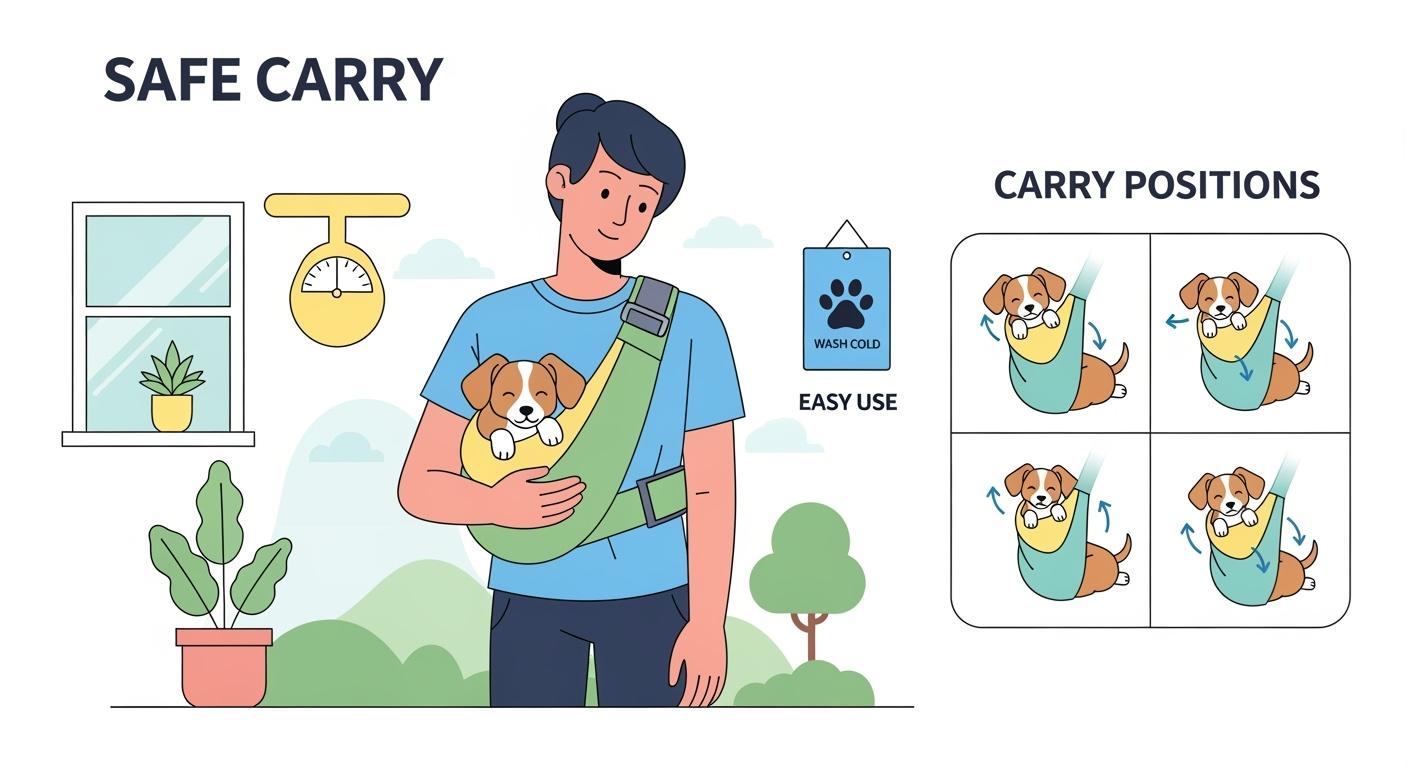
You want to know how much weight your dog sling carrier can safely hold. Most carriers list a maximum weight limit on the label. For example, some small carriers support up to 8.8 lbs (4 kg). Larger models may range from 25 to 40 lbs (11.3 to 18.1 kg). Check the table below for common sizes:
Carrier Size | Weight Capacity |
|---|---|
Small | 10–30 lbs (4.5–13.6 kg) |
Large | 25–40+ lbs (11.3–18.1+ kg) |
Always match your dog’s weight to the label. Clear messaging about weight limits, carry positions, and care helps you keep pets safe and reduces returns. Use direct, honest language so shoppers and staff avoid mistakes.
Key Takeaways
Always look at the weight limit on the dog sling carrier label. Make sure your dog’s weight matches the limit for safety and comfort.
Use simple words in product listings. Do not use confusing terms like ‘one-size-fits-all.’ This helps customers understand better.
Watch your dog’s posture when using the sling. Make sure your dog stays in the middle and feels good. This stops your dog from feeling uncomfortable.
Pick the right carry position for your dog’s size. The front position works best for small dogs. Crossbody is better for heavier dogs.
Follow the care instructions closely. Check if the carrier can go in the washing machine or needs hand washing. This keeps the carrier in good shape.
Comfort Complaints and Returns
Dog sling carriers often drive comfort complaints and returns. You see this happen when shoppers misread sizing, use the carrier for the wrong purpose, or misunderstand weight limits and care instructions. Unclear product copy leads to confusion and support tickets. You can prevent these issues by using standardized fit vocabulary and clear, honest messaging.
Common Listing Misunderstandings
Many complaints start with unclear product listings. Shoppers may think a sling fits all dogs or supports more weight than it should. You should always state the label weight limit in both lb and kg. Use phrases like “supports up to 30 lbs (13.6 kg)” and never imply unlimited use. Avoid terms like “one-size-fits-all” or “guaranteed comfort.” Instead, guide shoppers to check their dog’s weight and body shape before purchase.
Tip: Use a simple table to show size ranges and weight limits. This helps staff and shoppers match the right carrier to the right dog.
Discomfort Sources
Discomfort often comes from poor fit or posture. You should describe support points clearly. For example, mention “bottom support under the body” and “back support along the torso.” Highlight edge contact at the chest and armpit. If the sling presses on the neck or belly, dogs may feel pain or stress. You can reduce complaints by listing these contact points and posture cues in your product copy.
Common discomfort sources:
Edge contact at sensitive areas
Pressure at the neck or belly
Lack of back support
Dog’s spine not in a neutral position
Fit and Posture Issues
Fit and posture matter for both safety and comfort. You should use plain-English cues like “dog stays centered,” “no rolling,” and “no bouncing.” Describe how the sling distributes weight across the human body. If the dog twists or slides, shoppers may return the product. You can help staff diagnose fit issues by listing posture cues such as “head free to move” and “no chin pressed into fabric.” Always encourage staff to check alignment and load distribution before recommending a sling.
Dog Sling Carrier Use Cases and Limits
Errands vs Travel
You can use a dog sling carrier for short errands, shopping trips, or quick outings. This carrier works best when you need hands-free convenience and want to keep your dog close. Small dogs or elderly dogs often struggle to walk long distances. In these cases, a sling provides support and comfort. For travel, especially longer journeys, you should check the label weight limit. Most slings support up to 30 lbs (13.6 kg). Always match your dog’s weight to the carrier’s label. If you plan to carry your dog for extended periods, consider the comfort range. The comfort range is usually lower than the label limit. This helps prevent shoulder strain and keeps both you and your dog comfortable.
Indoor vs Outdoor Carry
Dog sling carriers work well indoors, such as in stores or during vet visits. You can also use them outdoors for short walks or crowded events. The lightweight and compact design makes it easy to move through busy areas. When you use the carrier outside, check for stability cues. Make sure your dog stays centered and does not roll or bounce. For outdoor use, always monitor your dog’s posture and breathing. If the weather is hot, take extra care with flat-faced breeds. The carrier should provide enough support under the body and along the torso. Measure your dog’s length and width in both inches and centimeters to ensure a proper fit.
When to Choose Another Carrier
You should choose another carrier if your dog exceeds the label weight limit or if you need to transport your pet for long distances. Hard-sided carriers or backpacks may offer better support for larger dogs or longer trips. Dog sling carriers suit small to medium-sized dogs best. They strengthen the bond between you and your dog and allow for easy movement in crowded areas or emergencies. If you notice discomfort, pressure points, or poor posture, switch to a different carrier type. Always prioritize safety and comfort for both the pet and the handler.
Fit Language for Shoppers
Key Measurements
You need clear measurements to match each dog to the right sling carrier. Start by checking your dog’s weight in both pounds (lb) and kilograms (kg). Measure your dog’s length and width in inches (in) and centimeters (cm). Review the breed size and weight limit before making a selection. Many product listings use tables to show which breeds and weights fit each carrier. Here is a sample table for reference:
Breed Size | Weight Limit | Example Breeds |
|---|---|---|
Small Breeds | 5–18 lbs (2.3–8.2 kg) | Chihuahuas, Yorkies, Pomeranians |
You should always look for size charts from the brand. These charts help you select the correct carrier for your dog’s body shape and weight.
Check your dog’s breed size and weight before choosing a carrier.
Make sure the carrier supports your dog’s weight comfortably.
Use the brand’s size chart to find the best fit.
Size Range Messaging
You should avoid language that suggests one-size-fits-all. Each carrier has a specific size range and weight limit. Use tables to communicate these limits clearly. For example:
Size | Pet Weight |
|---|---|
20″ x 10.24″ x 5.12″ (51 x 26 x 13 cm) | 22 lbs (10 kg) and under |
Always match your dog’s measurements to the carrier’s listed size and weight. This step helps prevent discomfort and reduces returns. You should use phrases like “fits dogs up to 22 lbs (10 kg)” and “check your dog’s length and width for best results.”
Tip: Never imply that one sling fits every dog. Use clear, honest messaging to guide shoppers.
Support and Breathing Room
Support and breathing room keep dogs comfortable and safe. You should describe support using plain-English terms. Look for “bottom support under the body” and “back support along the torso.” Check for edge contact at the chest and armpit. Make sure the dog’s head stays free to move and does not press into the fabric. The sling should allow enough space for the dog to breathe easily. Avoid pressure at the neck or belly.
Support: Bottom and back support keep the dog stable.
Contact Points: Edges should touch the chest and armpit, not the neck or belly.
Posture Cues: Dog’s spine stays neutral, head moves freely, no chin pressed into fabric.
You should always check these fit cues before recommending a sling carrier. This approach helps shoppers choose the safest and most comfortable option.
Dog Sling Carrier Weight Limits

Label Limit vs Comfort Range
It is important to know two weight numbers. The label limit is the most weight the carrier can hold safely. This number is tested by the maker. You will see it on the product label and in catalogs. The comfort range is a lower weight that feels good for both you and your dog. It works best for short trips or errands. The comfort range is less than the label limit.
The label limit is the highest safe weight for the carrier.
The comfort range helps you know what feels stable and comfy.
Most carriers have a label limit between 15–20 lbs (6.8–9.1 kg).
Always tell shoppers and staff about both limits.
If you only talk about the label limit, people may return the carrier. They might say it feels bad at high weights. You can keep pets safe and customers happy by explaining both limits in simple words.
Safe Label Phrases
Use clear words when you talk about weight limits. Always show both lb and kg. Do not use words that mean the carrier works for every dog or every weight. Here are some good label phrases:
Safe Label Phrase | Example Usage |
|---|---|
Supports up to 20 lbs (9.1 kg) | “This carrier supports up to 20 lbs (9.1 kg).” |
Comfort range: up to 15 lbs (6.8 kg) | “For best comfort, use with dogs up to 15 lbs (6.8 kg).” |
Check your dog’s weight before purchase | “Always check your dog’s weight in lb and kg before selecting a carrier.” |
Note: You can look at the US infant sling standard for ideas. This standard says the max load is 35 lbs (15.9 kg) for baby slings. Use this number to show why load limits matter. Do not say pet carriers are certified by this standard.
Claims to Avoid
Some claims are not safe to use. These can trick shoppers and cause problems. Never say the carrier is “escape-proof” or gives “guaranteed comfort.” Do not promise “all-day carry” for any sling. Do not say the carrier helps health or behavior. Do not say one carrier fits every dog or holds any weight.
Do not say “escape-proof” or “guaranteed comfort.”
Do not promise “all-day carry” for any sling.
Do not say it helps health or behavior.
Do not say one carrier fits every dog or any weight.
Tip: Always use simple words. Show both the label limit and comfort range in lb and kg. This helps people know what to expect and stops returns.
Dog Sling Carrier Carry Positions

Front, Side, Crossbody
You can carry a dog sling carrier in three main positions: front, side, or crossbody. Each position affects comfort and stability for both the handler and the dog. The front position keeps your dog close to your chest. This position allows you to monitor posture and breathing easily. The side position rests the sling on one hip. This method works well for short errands and gives your arm more freedom. The crossbody position spreads the weight across your shoulder and back. This position helps balance the load and reduces strain during longer use.
You should match the carry position to the dog’s size and the handler’s comfort. For example, the front position suits small dogs and short trips. The crossbody position works best for heavier dogs within the comfort range. Always check that the dog’s head stays free and the spine remains neutral in any position.
Tip: Use a table in your product listings to show which carry positions fit each carrier size. This helps staff and shoppers choose the safest option.
Stability and Centering
Stability keeps the dog safe and comfortable. You want the dog to stay centered in the sling. The carrier should not roll, bounce, or twist as you move. Centering prevents pressure points and keeps the dog’s posture neutral. You can use these stability cues to guide staff and shoppers:
The dog stays centered in the sling.
The carrier does not roll or bounce during movement.
The strap does not twist or dig into the shoulder.
The dog’s head stays free to move.
The dog’s chin does not press into the fabric.
You can help the dog feel secure by making the carrier part of a calm routine. Set the carrier out as a normal object. Place treats or toys inside to create a positive association. Praise calm behavior as the dog explores the sling. Start with short sessions and increase the time as the dog becomes comfortable. Always check that the carrier has solid closures and an interior leash or harness clip to prevent escapes.
Movement Guidance
Proper movement reduces the risk of rolling or bouncing. You should adjust the sling for a snug fit before each use. A snug fit supports the dog’s body and keeps the carrier stable. Check the straps often to make sure they stay secure. Loose straps can cause the carrier to shift or sag. Distribute the dog’s weight evenly across your body. Balanced support prevents strain and keeps the dog comfortable.
You can follow these steps for safe movement:
Adjust the sling for a snug, comfortable fit.
Check that all straps and closures are secure.
Distribute weight evenly to avoid strain.
Start with slow, steady movements.
Increase activity as the dog becomes more comfortable.
Note: Pair the carrier with calming routines, such as gentle massage or familiar sounds, to help the dog relax during movement.
You should always monitor the dog’s posture and breathing, especially in hot weather or with flat-faced breeds. Staff can use these guidelines to train shoppers and reduce support tickets. Clear instructions on carry positions and movement help prevent discomfort and returns.
Care and Maintenance
Washability Claims
You should use conservative language when describing washability. Always state if the carrier is machine washable, hand washable, or spot clean only. If the product has any coatings or special trims, recommend hand washing or spot cleaning. Use phrases like “machine wash cold, gentle cycle” or “air dry only.” Never promise that a carrier will look new after many washes. Remind staff to check the care label before making claims to shoppers.
Tip: If you do not see a care label, ask the supplier for written instructions before listing the product.
Care Label Checklist
You need a clear checklist for care labels. This helps staff and shoppers avoid mistakes. Include these points in your product copy and training:
Show the main cleaning method: machine wash, hand wash, or spot clean.
List water temperature: cold, warm, or as specified.
State drying method: air dry, line dry, or tumble dry low.
Warn about bleach, fabric softener, or ironing.
Add a caution for coated or waterproof fabrics.
Care Label Item | Example Wording |
|---|---|
Cleaning Method | “Hand wash only” |
Water Temperature | “Wash cold (30°C)” |
Drying Method | “Air dry flat” |
Warnings | “Do not bleach or iron” |
Notes for Different Fabrics
You will see different fabrics in dog sling carriers. Each type needs special care. For coated fabrics, avoid harsh detergents and high heat. These can damage the coating. For mesh, use a laundry bag and gentle cycle to prevent snags. For knit fabrics, wash by hand or use a gentle cycle. Always air dry to keep the shape. Remind staff to check for loose threads or damaged seams after each wash.
Note: Always follow the supplier’s care instructions. If you see any damage after washing, remove the carrier from sale and report it to your quality team.
Staff Q&A and Safety Messaging
Diagnosing Fit Issues
You need to help staff recognize fit problems quickly. Look for signs that the dog feels uncomfortable or unsafe. Watch for heavy panting, attempts to climb out, or shifting weight. If the sling presses on the neck or belly, the dog may show stress. Always check that the dog’s spine stays neutral and the head moves freely. Use a short test carry and take breaks every 20–30 minutes. Offer small sips of water during breaks. If discomfort appears, stop, reset, and try again later.
Tip: Ensure both the dog and the wearer feel comfortable before recommending longer use.
Guideline | Description |
|---|---|
Test Carry | Start with a short test carry and take breaks every 20–30 minutes. |
Hydration | Offer small sips of water during breaks. |
Recognizing Discomfort | Watch for signs like heavy panting or attempts to climb out. |
Fit and Comfort | Ensure both the dog and wearer are comfortable for easier carrying. |
Resetting | Stop, reset, and try again later if discomfort arises. |
Heat and Breathing Risks
Flat-faced dogs face higher risks in hot weather. Their breathing can become difficult, and they may not cool down well through panting. You must warn shoppers about these risks. Avoid exercising flat-faced dogs during peak heat hours (10 AM – 4 PM). Always carry water and take breaks in shaded areas. Use cooling vests to help regulate body temperature. Exercise in cooler parts of the day and watch for signs of respiratory distress. Provide well-ventilated resting spaces at home.
Watch for these warning signs:
Excessive drooling or thick saliva
Bright red or purple tongue and gums
Rapid, shallow breathing or difficulty breathing
Vomiting or diarrhea
Weakness, stumbling, or collapse
Body temperature above 104°F (40°C)
Never leave pets in parked cars. Check pavement temperature before walks. Ensure pets have access to shade and water at all times.
Handling Discomfort Complaints
You need to support customers without blaming them. Use positive, solution-focused language. Guide them through fit checks and comfort steps. Suggest a backpack or structured carrier if the sling does not suit their dog’s needs.
Retail Staff Mini-Script Q&A
Q: How do I know if the sling fits my dog? A: Check for bottom and back support. Make sure the dog’s head moves freely and the spine stays neutral.
Q: What should I do if my dog seems uncomfortable? A: Stop and reset the sling. Try a short test carry and take breaks every 20–30 minutes.
Q: When should I recommend a different carrier? A: If the dog exceeds the weight limit or shows discomfort, suggest a backpack or structured carrier.
Q: How can I help a flat-faced dog in hot weather? A: Avoid peak heat hours. Use cooling vests and take breaks in shaded areas.
Q: What signs show my dog is too hot? A: Look for rapid breathing, bright red tongue, or weakness. Move to a cool area and offer water.
Q: What if the sling presses on my dog’s neck or belly? A: Adjust the fit. Make sure edge contact is at the chest and armpit, not the neck or belly.
Q: How often should I check the sling during use? A: Check fit and comfort every 20–30 minutes, especially on longer outings.
Q: What should I do if my dog tries to climb out? A: Stop, reset, and try again later. If the problem continues, recommend a different carrier.
Q: Can I use the sling for all-day carry? A: No. Use for short trips and errands only. Take regular breaks for comfort.
Q: How do I handle complaints about discomfort? A: Listen, check fit, and offer solutions. Never blame the customer. Suggest alternatives if needed.
Supplier Copy Inputs
When you make listings for dog sling carriers, you need clear supplier information. This helps your team set the right expectations and lowers returns. Always ask for specific photos, diagrams, and test proof from suppliers. These details help you give honest, safety-first messages. They also help staff answer customer questions.
Required Photos and Diagrams
Ask your supplier for good photos showing the carrier from every side. Get close-up shots of straps, seams, and closures. Request diagrams that show fit, carry positions, and support points. Diagrams should label edge contact at the chest and armpit, bottom support, and back support. You need pictures showing a dog in the sling. Look for posture cues like a straight spine and head free to move.
Ask for photos of the carrier empty and with a dog inside
Request diagrams that show fit and posture
Include close-ups of straps, seams, and closures
Tip: Clear pictures help your team explain features and fit to shoppers.
Test Evidence for Straps and Seams
You need simple test proof for parts that hold weight. Ask your supplier for written proof that straps and seams meet the label weight limit. Request a summary of the test method, like pull tests or seam checks. Suppliers should confirm the carrier holds the stated weight safely. Use the US infant sling standard (max load 35 lbs / 15.9 kg) as a serious example, not as a certification.
Test Item | Supplier Proof Needed |
|---|---|
Straps | Pull test summary |
Seams | Seam strength check |
Closures | Closure durability test |
Receiving QC Checks
Make a checklist for your receiving team. Check each shipment for quality and safety. Make sure straps and seams match the supplier’s test proof. Look for loose threads, weak closures, or damaged fabric. Confirm care labels are there and easy to read. Make sure all photos and diagrams match the real product.
Check straps and seams for strength
Test closures for durability
Confirm care labels and instructions
Match product to supplied photos and diagrams
Note: If you find defects or missing info, report them to your supplier before listing the product.
OEM means Original Equipment Manufacturer. ODM means Original Design Manufacturer. OEM/ODM options let you change products or packaging for your brand.
Messaging Risk Table
Claim | Backfire | Safe Wording
Clear messaging helps people understand and protects your brand. You should not make claims that promise too much or mislead shoppers. Use this table to help your team write product copy and train staff.
Risky claim | Why it backfires | Safer wording |
|---|---|---|
Escape-proof | No carrier can stop every escape. Customers may say their dog escaped. | Use “includes interior leash clip for added security.” |
Guaranteed comfort | Comfort depends on fit and dog shape. Returns go up if pets feel bad. | Say “designed for comfort with bottom and back support.” |
One-size-fits-all | Dogs are different sizes and shapes. Bad fit causes complaints and returns. | State “fits dogs up to X lbs (X kg). Check size chart for details.” |
All-day carry | Long use can make pets and people uncomfortable. | Advise “best for short trips and errands.” |
Supports any weight | Too much weight can break the carrier and hurt pets. | List “supports up to X lbs (X kg) per label limit.” |
Improves health or behavior | You cannot promise health or behavior changes. | Focus on “keeps your dog close for convenience and bonding.” |
Machine washable (without details) | Some fabrics or trims may not work in a machine. | Specify “machine wash cold, gentle cycle. Air dry only.” |
Reflective (without context) | Shoppers may think it glows in the dark. | Clarify “reflective trim requires external light to shine.” |
Tip: Always match your claims to real product features. Use clear words to set expectations and lower support tickets.
You should teach your team to check all product copy for risky words. Use the safer wording in the table as your guide. This helps you avoid confusion and builds trust with shoppers. When you talk about reflective trim, say it needs outside light to work. Do not say it glows by itself. For weight limits, always show both lb and kg. This matches safety rules and helps shoppers choose the right carrier.
If you follow these steps, you will get fewer returns and support tickets. Your messaging will stay honest and clear. This protects your brand and helps you reach your retail goals.
Staff Decision Table
Scenario | Key Question | Recommend Sling or Switch
You need a clear process to help staff decide when to recommend a dog sling carrier or suggest switching to another type. Use this table to guide your team through common shopper situations. Each step matches a section of the outline and supports safety-first messaging.
Shopper situation | Ask this | Recommend sling or switch | What to say |
|---|---|---|---|
Dog weight near label limit | “What is your dog’s weight in lb and kg?” | Switch if over comfort range | “For best comfort, use with dogs under the comfort range. Consider a structured carrier for heavier pets.” |
Dog shows signs of discomfort | “Does your dog seem restless or stressed?” | Switch if discomfort persists | “If your dog feels uncomfortable, try a short test carry. If discomfort continues, a backpack or hard-sided carrier may work better.” |
Flat-faced breed in hot weather | “Is your dog a flat-faced breed? Is it hot outside?” | Switch for long outings or heat | “Flat-faced dogs need extra care in heat. Use the sling for short trips only. For longer outings, choose a ventilated carrier.” |
Shopper requests all-day carry | “How long do you plan to use the carrier?” | Switch for long durations | “Dog sling carriers work best for short errands. For all-day use, recommend a carrier with more support.” |
Dog tries to climb out or escape | “Does your dog try to climb out of the sling?” | Switch if repeated attempts | “If your dog tries to escape, stop and reset. If the problem continues, a different carrier may be safer.” |
Dog’s body shape does not match sling | “What is your dog’s length and width in in/cm?” | Switch if poor fit | “Check the size chart for best fit. If your dog’s shape does not match, suggest a carrier with adjustable support.” |
Shopper asks about machine washing | “Do you need a machine washable carrier?” | Recommend based on care label | “Check the care label for cleaning instructions. If machine washing is required, confirm the carrier supports it.” |
Shopper wants hands-free convenience | “Do you need hands-free carry for short trips?” | Recommend sling for errands | “Dog sling carriers offer hands-free convenience for short errands. Always check weight and fit before use.” |
Tip: Train staff to ask direct questions. Use honest, safety-first language. Never promise escape-proof or guaranteed comfort.
Use this table during staff training and customer interactions. You help shoppers choose the safest option and reduce returns. You also support your team with clear, standardized messaging.
Retail SOP Checklist
Quick Steps for Staff
Your team needs a simple process to follow. This helps everyone handle dog sling carrier listings and talk to customers the right way. Use these steps to keep things safe, comfy, and clear.
Check Product Label and Documentation
Make sure the label shows the weight limit and comfort range in both lb and kg.
Look at supplier photos, diagrams, and test proof for straps and seams.
Verify Product Quality on Arrival
Check straps, seams, and closures to see if they are strong.
Compare the product to the photos and diagrams you got.
Make sure care labels are there and easy to read.
Set Up Listings with Standardized Messaging
Use easy words to talk about fit, support, and posture.
Always show both the label limit and comfort range in your product info.
Stay away from risky claims. Use the Messaging Risk Table for safe words.
Guide Shoppers with Fit and Use Questions
Ask about the dog’s weight, length, and width.
Use tables and charts to help pick the right carrier size.
Give tips about carry positions and how to keep the dog stable.
Educate on Care and Maintenance
Share care label rules with staff and shoppers.
Explain how to clean different fabrics.
Remind staff to look for damage after every wash.
Respond to Comfort or Safety Concerns
Use the Staff Q&A to answer questions about fit, posture, and heat.
Suggest other options if the sling is not right for the dog.
Tip: Keep this checklist where staff can see it in the back office or training room. Go over these steps often with your team. This will help lower returns and make customers happier.
Step | Reference Section |
|---|---|
Label & Docs Check | Weight Limits, Supplier Inputs |
Quality Check | Supplier Inputs |
Messaging | Fit Language, Messaging Risk |
Shopper Guidance | Fit Language, Decision Table |
Care & Maintenance | Care and Maintenance |
Handling Concerns | Staff Q&A, Decision Table |
When you use simple words for every dog sling carrier, things get better. Clear rules for comfort, stability, and care help your team lower returns and build trust. Update your catalog and training with easy words and safety messages. You will notice these good changes:
Customers know what the product can do.
There are fewer complaints and returns.
Staff talk the same way and make your brand stronger.
Use the checklist and tables to help your team. Ask for a quote or samples, or get a catalog to help you choose products.
FAQ
How do I confirm the correct weight limit for a dog sling carrier?
Look at the product label and supplier papers. Match your dog’s weight to the limit in pounds and kilograms. Use the comfort range for short trips. This keeps your dog safe and helps stop returns.
What photos and diagrams should I request from suppliers?
Ask for clear pictures of the carrier from every side. Request diagrams that show fit, posture, and support spots. Get close-up pictures of straps, seams, and closures. These images help your team talk about features and guide shoppers.
How do I handle customer complaints about discomfort?
Listen to the customer and check fit signs. Look for bottom and back support, a straight spine, and a free-moving head. Suggest a short test carry. If the dog still feels bad, recommend a structured carrier.
What cleaning instructions should I include in product listings?
Use the care label from the supplier. Say how to clean, what water temperature to use, and how to dry. Warn people not to use bleach or iron. For coated or mesh fabrics, suggest gentle washing and air drying.
When should I recommend switching to another carrier type?
Switch if the dog is over the comfort range, feels bad often, or does not fit the sling shape. Suggest a backpack or hard-sided carrier for better support. Always put safety and comfort first for pets and handlers.