You want to know your dog will be safe and comfy when riding with your family. The bike dog carrier market is getting bigger. It went from USD 150 million to USD 250 million in less than ten years. This means more families want to take their dog on bike rides. You should pay attention to things you can measure, like mounting strength, comfort, and stability. The table below shows what buyers care about most when picking a small dog bicycle carrier:
Buyer Priority | Evidence |
|---|---|
Safety | 84% of dog owners say safety is a top concern. |
Comfort | Secure harnesses and ventilation help pets and family enjoy the ride. |
Product Innovation | Lightweight materials and tracking features influence choices. |
Price Sensitivity | Families compare durability and price across brands. |
You should use clear words and show sizes in two units. Your goal is to keep your dog safe, comfy, and happy every time your family rides.
Key Takeaways
Safety matters most when picking a bike dog carrier. Find strong mounting systems and tough build to keep your dog safe.
Comfort features like soft floors and good airflow help your dog enjoy the ride. Look for padding you can take out to clean easily.
Stability is important for a smooth ride. Make sure the carrier has a strong mounting system. Check how the weight is spread out so it does not shake.
Always check if the carrier fits your bike. Measure the handlebar and rack in inches and centimeters before you buy.
Use a checklist before every ride to make sure the carrier is safe, comfy, and steady. Checking often helps keep your dog safe and happy.
Matrix Overview and Sell-In Guide
Buyer Priorities: Safety First
You want your family and dog to enjoy every ride together. When you look for a bike dog carrier, you focus on safety first. Most families say safety is the top priority. You check for secure mounting systems, sturdy construction, and bright colors or reflective strips that help others see you on the road. You also look for internal leash clips that keep your dog from jumping out. You know that compromising on safety features is not a good idea. You want a carrier that fits your dog’s size and temperament. You check the weight limit to make sure your dog will be comfortable and safe. You also make sure the carrier fits your bike’s handlebar or rack mounts. These steps help you protect your family and your dog every time you ride.
Scoring and Proof Rules
You need a clear way to compare different small dog bicycle carrier options. The matrix below uses a simple scoring method. Each feature gets a score from 0 to 2:
0 means the feature does not meet the standard.
1 means the feature meets the standard.
2 means the feature exceeds the standard or is premium.
You only give points when you can see proof. Proof can be a test result, a manual, a drawing, or a photo. If there is no proof, you do not give a point. This rule helps you avoid risky claims and keeps your family safe. You look for features that you can measure or check yourself. For example, you check if the mounting system has an anti-rotation design. You look for a stable base that supports your dog’s posture. You check for good ventilation and shock absorption. You also look for clear load placement and strap routing that keeps the carrier steady. You want to see a shake test or a post-ride re-tighten step in the instructions.
Here is a sample differentiation matrix for bike dog carriers. It compares six common SKUs across mounting, comfort, and stability. All sizes and capacities use dual units (in and cm, lb and kg).
SKU | Mounting Type | Mounting Score | Comfort Score | Stability Score | Max Dog Weight (lb/kg) | Basket Size (in/cm) | Proof Provided |
|---|---|---|---|---|---|---|---|
1 | Front Basket | 2 | 1 | 1 | 25/11.3 | 15×12/38×30 | Manual, Photo |
2 | Rear Trailer | 1 | 2 | 2 | 100/45.4 | 32×24/81×61 | Test Result |
3 | Backpack | 1 | 2 | 1 | 15/6.8 | 12×10/30×25 | Drawing |
4 | Handlebar Basket | 2 | 1 | 2 | 20/9.1 | 14×11/36×28 | Manual |
5 | Rack Mount | 1 | 1 | 2 | 40/18.1 | 18×13/46×33 | Photo |
6 | Side Carrier | 1 | 2 | 1 | 30/13.6 | 16×12/41×30 | Manual, Test |
You see that each carrier is rated for mounting, comfort, and stability. You check the proof column to make sure every score is backed by something you can see or test. You compare the basket size and max dog weight in both inches and centimeters, pounds and kilograms. This helps your family pick the right carrier for your dog and your bike.
Tip: OEM means Original Equipment Manufacturer. This is a company that makes products for other brands. ODM means Original Design Manufacturer. This is a company that designs and makes products, sometimes for other brands. You may see these terms when you compare carriers, but you should focus on the features and proof that matter most to your family.
Sell-In Meeting Talk Track
You want to guide buyers through the matrix with a clear talk track. Start by reminding them that safety first is the top priority for every family. Point out that every score in the matrix is backed by proof. Show how mounting, comfort, and stability are measured and documented. Use claim-safe language. For example, say “when properly installed and fitted, this carrier meets the standard for secure mounting.” Avoid saying the carrier prevents accidents or guarantees safety. Highlight features like anti-rotation mounting, stable base support, and clear strap routing. Mention that each carrier’s size and weight limits are shown in dual units for easy comparison. Encourage buyers to look for features that fit their family’s needs and their dog’s size. Remind them that comfort and stability help every family enjoy the ride together.
Bike Dog Carrier Matrix
Mounting: Dog Bike Basket Types
You want to choose a bike dog carrier that fits your family’s needs. Mounting is the first thing you check. You see two main types: front-mounted and rear-mounted dog bike baskets. Front-mounted baskets attach to the handlebars. You can watch your dog during the ride. This type works best for small dogs, especially those under 20 lbs (9 kg). Rear-mounted baskets fit on the back of the bike. These baskets hold more weight and give your family more space. You may not see your dog as easily, but the ride feels steadier.
You also find backpack carriers and bike trailers. Backpack carriers suit short trips and multi-modal travel. They work for dogs under 15 lbs (7 kg). Bike trailers carry dogs of all sizes. They help your family on long rides and rough terrain. You want a secure mounting system. Look for easy-to-install adapters and solid attachments. These features help prevent wobbling or tipping.
Here is a table showing common carrier types, dog sizes, and ride styles:
Carrier Type | Best for Dog Size | Ideal Ride Type | Key Priority |
|---|---|---|---|
Front Basket/Seat | Under 20 lbs (9 kg) | Short, smooth city rides | Keeping a close eye on your dog |
Rear Seat/Carrier | Up to 40 lbs (18 kg) | Commutes, moderate rides | Steering control |
Backpack Carrier | Under 15 lbs (7 kg) | Short trips, multi-modal travel | Versatility, no bike mods |
Bike Trailer | All sizes | Long distances, all terrains | Maximum comfort |
You want to check the mounting system before every ride. A secure adapter lets you attach and remove the carrier quickly. Solid attachments keep your dog safe and steady. Your family can enjoy the ride with less worry.
Comfort: Family and Pet Needs
Comfort matters for your family and your dog. You want a small dog bicycle carrier that feels like a mobile dog bed. Padded flooring gives your dog a soft place to sit or lie down. Flexible positions let your dog choose how to ride. Spacious carriers help your dog shift without feeling cramped.
You also look for proper ventilation. Mesh windows or panels keep air flowing and help prevent overheating. Removable padding makes cleaning easy. Weather protection, like rain covers or sunshades, shields your dog from harsh conditions. Your family enjoys the ride more when your dog feels relaxed.
Here is a table showing comfort features and metrics:
Comfort Feature | Description |
|---|---|
Padded flooring | Soft base for dogs, like a mobile dog bed |
Flexibility of positions | Dogs can sit, stand, or lie down |
Spaciousness | Room for dogs to shift positions |
Comfort Metric | Description |
|---|---|
Proper Ventilation | Mesh windows or panels for airflow |
Adequate Padding & Support | Firm base, removable padding for comfort and cleaning |
Weather Protection | Rain covers or sunshades for harsh weather |
Your family wants every ride to be enjoyable. You check for these comfort features before you buy. Your dog feels happier and calmer when the carrier supports their needs.
Stability: Safety and Predictability
Stability helps your family trust the bike dog carrier. You want a secure mounting system that prevents wobbling or tipping. Proper weight distribution keeps the bike steady. You choose the right carrier type based on your dog’s size and your family’s riding style.
You look for clear load placement and strap routing. These features help lock the carrier in place. You perform a shake test before each ride. You re-tighten straps after the first ride to keep the carrier stable. Your family feels safer when you follow these steps.
Here is a table comparing popular carriers across mounting, comfort, and stability. All sizes and capacities use dual units.
SKU | Carrier Type | Mounting Score | Comfort Score | Stability Score | Max Dog Weight (lb/kg) | Basket Size (in/cm) | Mounting Adapter | Padding | Ventilation | Proof Provided |
|---|---|---|---|---|---|---|---|---|---|---|
1 | Front Basket | 2 | 1 | 1 | 25/11.3 | 15×12/38×30 | Yes | Yes | Yes | Manual, Photo |
2 | Rear Trailer | 1 | 2 | 2 | 100/45.4 | 32×24/81×61 | Yes | Yes | Yes | Test Result |
3 | Backpack Carrier | 1 | 2 | 1 | 15/6.8 | 12×10/30×25 | Yes | Yes | Yes | Drawing |
4 | Handlebar Basket | 2 | 1 | 2 | 20/9.1 | 14×11/36×28 | Yes | Yes | Yes | Manual |
5 | Rack Mount | 1 | 1 | 2 | 40/18.1 | 18×13/46×33 | Yes | Yes | Yes | Photo |
6 | Side Carrier | 1 | 2 | 1 | 30/13.6 | 16×12/41×30 | Yes | Yes | Yes | Manual, Test |
Key stability features you want to check:
Secure mounting system to prevent wobbling or tipping
Proper weight distribution for steady rides
Carrier type matched to your dog’s size and your family’s ride style
Your family can enjoy every trip when you choose a carrier with strong mounting, good comfort, and reliable stability. You help your dog feel safe and happy on every ride.
Mounting Differentiation
Anti-Rotation and Security
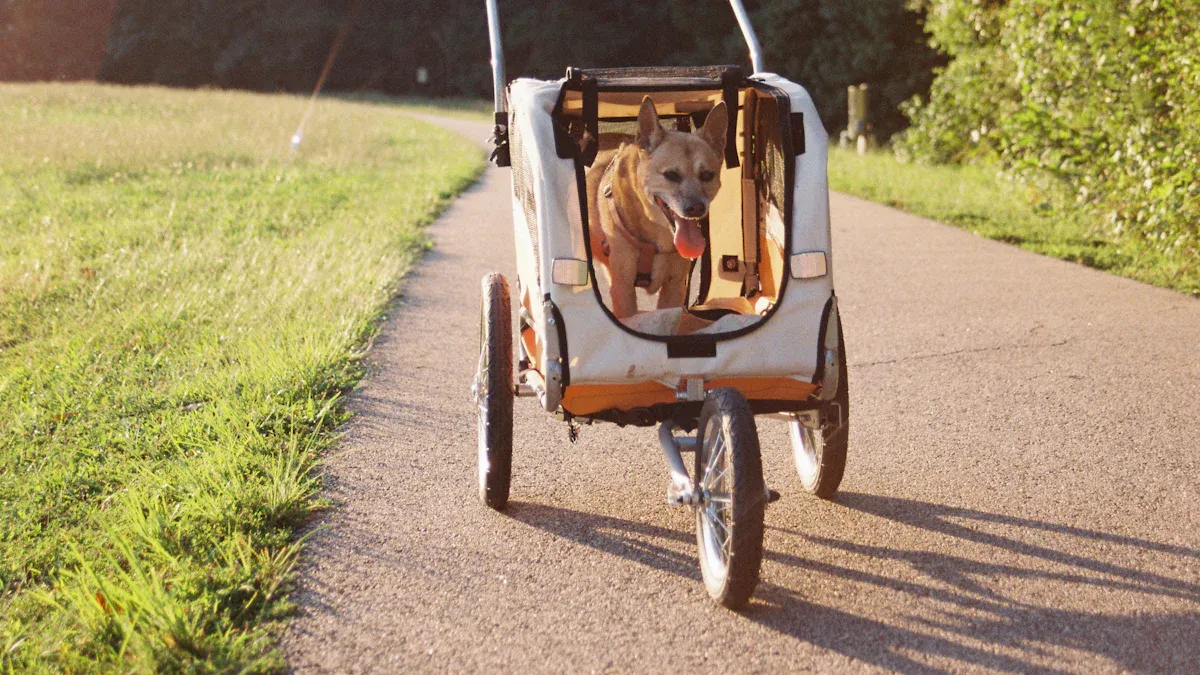
You want your family and dog to feel safe on every ride. Anti-rotation features stop the dog bike basket from twisting or moving. Most bike dog carriers use clamp-on, bolt-on, or strap-secured mounts. Each mount type keeps the carrier steady in its own way. Clamp-on mounts use strong materials to last longer. Bolt-on mounts take more time to put on, but they hold tight. Strap-secured mounts are fast to use, but you must check them before each ride. If you miss a step, the basket can shake or tip. Look for a strong bottom and a leash clip for extra safety. Always follow the instructions for your small dog bicycle carrier to avoid problems.
Type of Carrier | Pros | Cons |
|---|---|---|
Front-Mounted Baskets & Seats | You can see your dog, easy to comfort them | May affect steering, only for small dogs |
Rear-Mounted Carriers & Seats | Barely affects steering, holds more weight | Dog is behind you, needs strong rear rack |
Dog Backpack Carriers | Flexible, no bike changes needed | Only for very small dogs, less room to move |
Dog Bike Trailers | Holds most weight, very stable | Needs more storage, can be wide on trails |
Compatibility Checks
You want to make sure your bike dog carrier fits your bike and your family’s needs. Check the handlebar space and size for front baskets. Make sure brake and gear cables are not in the way. For trailers, check the axle type and see if you need an adapter. E-bikes may have motors or batteries, so check the guide from the maker. Look for strong spots to attach the carrier and tough hardware. Good attachments help keep your dog safe. Leash clips and a low center of gravity help make rides stable.
Compatibility Check | Description |
|---|---|
Front Baskets | Check handlebar space and diameter; make sure cables are clear. |
Trailers | Check axle type; you may need an adapter. |
E-Bikes | Check for interference from motors or batteries. |
Install and Re-Check Steps
You want to put your dog bike basket on fast and right. Follow the manual one step at a time. When you finish, shake the basket to check for movement. Tighten all straps and bolts after your first ride. This helps keep the carrier steady for your family. If you use a strap-secured mount, check the straps for damage. Make sure the padding is in place so your dog is comfy. A short re-check list in the manual helps you remember these steps.
Tip: Always check the carrier before every ride. A quick shake and strap check can help your family avoid surprises.
Failure Modes and Fixes
Sometimes, you may have problems with your bike dog carrier. Handlebar carriers can get in the way of cables or shifters. You should check the cables and test steering both ways. If your bike has a special frame or seatpost, check the clamp size and pad material. For mountain bikes, try the carrier on bumpy ground and use locking bolts if needed. Suspension bikes can change shape when loaded, so check that straps do not touch the tire. Wide handlebars can change how you steer, so test with and without your dog. Always watch your family’s first rides.
Common Installation Errors | Buyer Actions to Resolve |
|---|---|
Handlebar carriers interfere with cables | Check cable routing, test steering, take a photo for QC |
Frame and seatpost constraints | Check clamp size, test for slip, note if not for all frames |
MTB vibration and movement | Test on rough surface, use locking fasteners, re-torque |
Suspension changes clearance | Check clearance, warn about suspension travel |
Wide bars affect steering | Test steering, ask for stability test, supervise first ride |
Your family can enjoy every ride when you check mounting, comfort, and stability. Strong attachments, tough materials, and regular checks help keep your dog safe and happy.
Comfort Differentiation
Posture and Base Support
You want your dog to sit, stand, or lie down comfortably during every ride. A small dog bicycle carrier with a firm base helps your dog keep a natural posture. Padded flooring gives your dog a soft spot to rest. You check that the base does not sag, even when your dog moves. Many bike dog carrier designs use strong materials to support weight up to 25 lb (11.3 kg) or more. You look for carriers with removable padding so you can clean them easily. A stable base helps your family feel confident that your dog will stay comfortable.
Edge and Strap Comfort
You notice that edge and strap comfort matters for both your dog and your family. Soft edges prevent rubbing against your dog’s legs or belly. Wide straps with extra padding help avoid pressure points. You want secure attachments that hold the dog bike basket steady without pinching or pulling. Some carriers use adjustable straps so you can fit them to your dog’s size. Your family benefits from easy-to-use buckles and clips. You check that all attachments stay in place during the ride.
Ventilation and Heat Boundaries
Ventilation keeps your dog cool and relaxed. Mesh panels or windows let air flow through the carrier. You want to see short heat boundaries, which means your dog does not get too warm inside the basket. Removable covers help you adjust for sunny or rainy days. Good ventilation also helps your family avoid worrying about overheating. You check that the carrier has enough openings for airflow and that the materials do not trap heat.
Rider and Family Comfort
Your family enjoys the ride more when everyone feels comfortable. You find that dog trailers give your dog extra space and work well for long trips. Cargo bikes for dogs offer sturdy rides and lots of room, but they can be bulky and hard to steer in traffic. Dog carrier kits let you turn a regular bike into a cargo bike, which saves money and gives you more options. You look for carriers with strong attachments and durable materials. Your family feels better when the carrier fits your bike and your dog’s needs.
Tip: You can improve comfort by checking the padding, ventilation, and secure attachments before each ride.
Comfort Feature | Benefit for Dog and Family |
|---|---|
Padded flooring | Soft support for posture |
Wide, soft straps | Less rubbing and pressure |
Mesh ventilation | Cooler rides, less heat buildup |
Removable covers | Adjust for weather |
Strong attachments | Steady basket, less movement |
Stability and Safety
Load Placement and Balance
You want your family and dog to feel secure every time you ride. Proper load placement helps keep your bike steady. Place your dog in the center of the carrier to balance the weight. If the carrier sits too far forward or back, your bike may feel hard to control. You should check the basket size, such as 15×12 in (38×30 cm), and make sure it matches your dog’s size. A balanced load helps your family enjoy smoother rides and supports durability.
Strap Routing
Strap routing plays a big role in stability. You need to make sure straps run straight and tight. Straps should not twist or rub against your dog. Wide straps with padding help your family avoid pressure points. Secure all straps to the bike frame and double-check that the built-in safety leash clips to your dog’s harness. This step keeps your dog safe and helps your family trust the carrier.
Vibration Damping
Vibration damping makes rides more comfortable for your family and dog. Some carriers use padded bases or shock-absorbing materials. These features help reduce shaking on rough roads. You want to check that the carrier does not rattle or bounce. A stable base and firm attachments help protect your dog and improve durability. Your family feels less stress when the carrier absorbs bumps.
Stability Checks
You should follow a simple checklist before each ride to support safety and stability:
Check the carrier. Make sure all straps, bolts, and connections are secure.
Secure your dog. Clip the built-in safety leash to your dog’s harness.
Check tire pressure. Make sure tires can handle the extra weight of your dog.
Check airflow. Make sure the carrier has good ventilation for your dog.
Pack essentials. Bring water and a collapsible bowl for your dog.
Your family can enjoy every trip when you follow these steps. You help your dog stay safe and comfortable on every ride.
Claim-Safe Messaging
Safe Phrasing Patterns
You want to use words that help your family trust the information about your bike dog carrier. You should describe features with conditions. For example, say “when properly installed” or “when fitted to your dog.” You can use phrases like “supports up to 25 lb (11.3 kg)” or “fits baskets up to 15×12 in (38×30 cm).” You should mention “supervised use” when talking about rides with your family and dog. These patterns help you share facts without making promises you cannot prove.
Examples of safe phrasing:
When properly installed, the carrier supports your dog up to 25 lb (11.3 kg).
When fitted to your bike, the basket stays secure for your family.
Supervised use helps your dog enjoy the ride with your family.
Tip: Always connect claims to conditions you can check or control.
Phrases to Avoid
You should avoid words that make promises about safety or performance. Do not say “guaranteed,” “always,” or “never.” Stay away from phrases like “prevents accidents” or “ensures safety.” Do not claim that your dog will be safe in every situation. You should not say the carrier fits all bikes or all dogs. These words can cause confusion for your family and may lead to risky claims.
Table: Phrases to Use and Avoid
Use These Words | Avoid These Words |
|---|---|
Properly installed | Guaranteed |
Fitted to your dog/bike | Always, never |
Supervised use | Prevents accidents |
Supports up to (lb/kg) | Ensures safety |
Fits baskets up to (in/cm) | Fits all bikes/dogs |
Evidence Mapping
You want to show proof for every claim you make about your bike dog carrier. You should use test results, manuals, drawings, or photos. For example, you can show a manual that lists the weight limit in both lb and kg. You can use a drawing to show how the carrier fits on your bike. A photo can show the padding that keeps your dog comfortable. Test results can show how the carrier performs when installed for your family.
Evidence types to support claims:
Manuals with install steps and size limits
Drawings that show fit and mounting points
Photos of the carrier with a dog inside
Test results for stability and comfort
Note: You should only make claims that you can support with clear evidence. This helps your family make safe choices for every ride.
Sell-In Talk Tracks and Objections
Positioning for Buyers
You want your family to have fun outside with your dog. When you pick a bike dog carrier, you care about safety, comfort, and stability. If you run an adventure center or join active programs, you need a carrier that works for your family. You want proof that the carrier holds your dog up to 25 lb (11.3 kg) and fits baskets up to 15×12 in (38×30 cm). You check if it is easy to mount and has clear steps. Wellness retreats and programs like products that help families do things together. You want a carrier that lets your family go on outdoor trips with your dog.
Note: Always look for proof in manuals, photos, or test results before picking a carrier for your family.
Handling Objections
You might have questions about fit, stability, comfort, or how hard it is to install. If you worry about fit, check the handlebar size and basket size in both in and cm. For stability, look for anti-rotation parts and secure straps. Comfort is important for your dog and your family. You want soft padding and mesh for airflow. If you think installing is tough, read the manual and follow each step. You can ask for a drawing or photo to see how the carrier goes on your bike. You should check for proof before you choose.
Objection | How You Address It |
|---|---|
Compatibility | Check dual-unit sizes and mounting guides |
Stability | Look for anti-rotation and shake test steps |
Comfort | Review padding and ventilation features |
Install Complexity | Use step-by-step manual and visual aids |
Pilot Checklist
You want to try the carrier before using it for family trips. Use this checklist to help your family and dog enjoy outdoor fun:
Check mounting spots and basket size (in/cm)
Make sure max dog weight is right (lb/kg)
Read the manual for install steps
Do a shake test after you put it on
Check padding and airflow for your dog
Clip the safety leash to your dog’s harness
Tighten straps again after your first ride
Tip: You can use this checklist for wellness retreats, outdoor fun, and active programs with your family and dog.
You can look at the matrix to compare each bike dog carrier. You see how mounting, comfort, and stability affect your family’s rides. You find proof for every feature before you trust a carrier. This helps you pick one for small or medium breeds. You use safe words and show sizes in two units. You check the evidence before you decide. This helps your family and dog have fun on every ride together.
FAQ
How do you know if a bike dog carrier fits your bike?
Check the handlebar or rack size in both inches and centimeters. Look at the mounting guide in the manual. Measure the space on your bike before you buy. Make sure cables and brakes do not block the carrier.
What is the best way to check if your dog will be comfortable?
Place your dog in the carrier and check the base support. Look for padded flooring and mesh panels for airflow. Make sure your dog can sit, stand, or lie down. Use the size chart in both in/cm and lb/kg.
How do you keep the carrier stable during rides?
Secure all straps and bolts. Place your dog in the center of the basket. Do a shake test before each ride. Re-tighten straps after your first trip. Follow the checklist in the manual for best results.
Can you use the carrier for long rides or rough roads?
Choose a carrier with strong attachments and shock-absorbing materials. Check the weight limit in both lb and kg. Look for test results or photos that show the carrier on rough surfaces. Make sure your dog fits inside with room to move.
What evidence should you look for before buying?
Read the manual for install steps and size limits. Look for drawings that show how the carrier fits your bike. Check photos of the carrier with a dog inside. Review test results for stability and comfort.