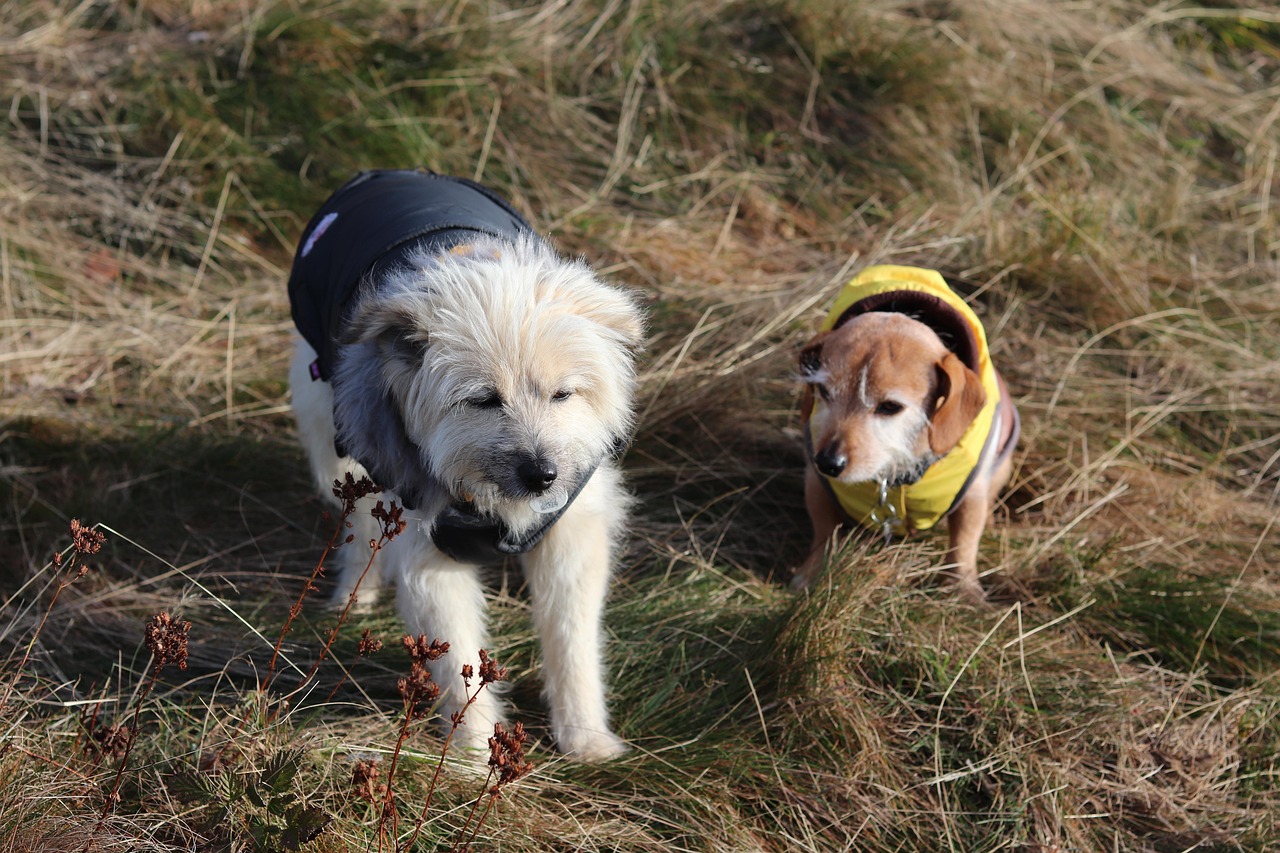
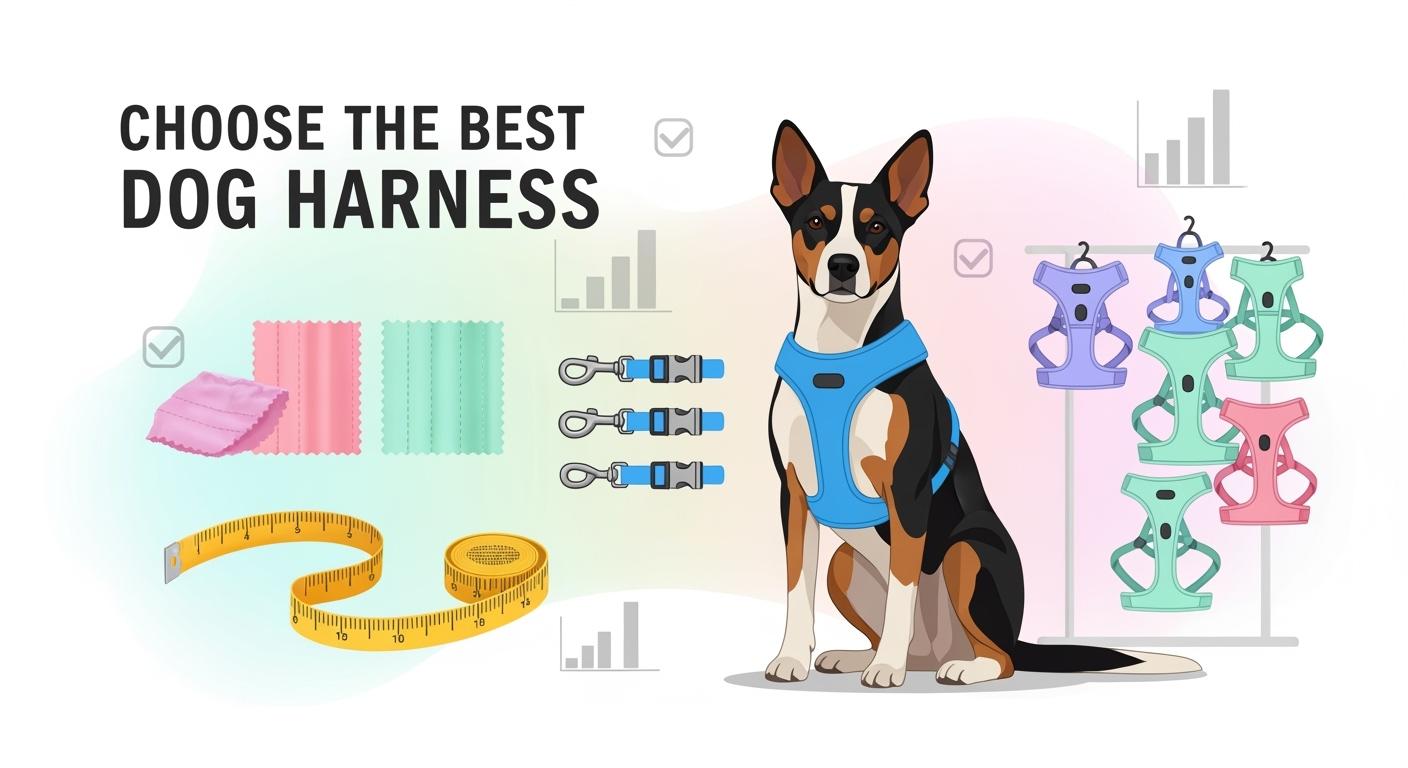
You want to find the best dog harness for your pet. In 2026, PetSafe, Rabbitgoo, and Wilderdog are top choices. They are known for good fit, safety, and lasting a long time.
PetSafe
Rabbitgoo
Wilderdog
This guide helps you pick the right harness for your dog’s breed and how active they are. This guide also helps you not make common mistakes.
Key Takeaways
Pick a harness that matches your dog’s size and how active they are. Use the Quick Reference Card to measure your dog the right way.
Find harnesses made with tough materials and strong stitching. This helps keep your dog safe and comfortable.
Check the fit by using the two-finger rule. The right fit stops slipping and rubbing. It keeps your dog safe.
Best Dog Harness: Quick Picks and Buyer Matrix
Buyer takeaway: You can lower returns and confusion by having many harness styles and sizes. Give clear fit guides to help buyers. Use the Decision Matrix to match what you sell to your customers. This helps you avoid sizing mistakes.
Shopper takeaway: You will find the best dog harness by matching style, fit, and features to your dog. Use the tables and checklists to help you pick with confidence.
Decision Matrix for Dog Harness Selection
You want to pick the best dog harness for your dog’s activity, size, and comfort. The table below lets you compare top harness picks for 2026 by use, style, price, and main features. Use the Quick Reference Card for sizing and fit checks.
Use Case | Recommended Harness & Style | Key Features | Price Band | Who Should Avoid | Common Failure Modes |
|---|---|---|---|---|---|
Everyday Walks | Ruffwear Front Range (Y-front) | Soft padding, dual-clip, easy fit | Mid | Tiny breeds, escape artists | Buckle, webbing wear |
Training/No-Pull | PetSafe Easy Walk (Front-clip) | Redirects pulling, simple straps | Budget | Heavy pullers, chewers | Stitching, plastic rings |
Hiking/Outdoor | Wilderdog (Y-front, padded) | Abrasion resistance, lift handle | Mid | Toy breeds | Hardware, webbing |
Car Travel | Kurgo Tru-Fit (Crash-tested) | CPS Certified, padded chest | Premium | Not for daily walks | Buckle, stitching |
Puppies | Rabbitgoo (Soft vest, back-clip) | Lightweight, adjustable, easy on | Budget | Large, strong pullers | Velcro, plastic buckles |
Seniors/Mobility | Ruffwear Web Master (Lifting) | Lift handle, support, 5-point fit | Premium | Small, short-legged dogs | Buckle, webbing |
Tip: Always check the harness spec sheet for webbing, hardware, and padding details. Ask suppliers about tested failure points and how hard it is to adjust.
Buyer-Ready Checklist:
Size and fit: Share chest-girth measuring tips and fit steps. Do not say “fits all.”
Materials: List shell, padding, lining, webbing, and hardware in the spec sheet.
Hardware and stitching: List what you test for, like buckles, rings, stitching, and webbing moving.
Labeling: Add a fit chart, step-by-step fitting guide, warnings, and clear claims.
Documentation: For any “tested” claim, explain the test or certification and keep it the same on packaging and online.
Supplier Questions Checklist:
What is the adjustment range for each harness size?
Which materials do you use for webbing and hardware?
How do you test for failure points?
Do you provide clear fit and sizing instructions?
Are your claims supported by third-party testing?
Merchandising/Returns Reduction Playbook:
Stock many harness styles and sizes.
Show fit and sizing charts near harnesses.
Train staff to help measure and fit dogs.
Use clear packaging with fit and safety tips.
Offer a try-on area if you can.
Quick Reference Card:
Use the Quick Reference Card for chest girth, neck size, and fit rules.
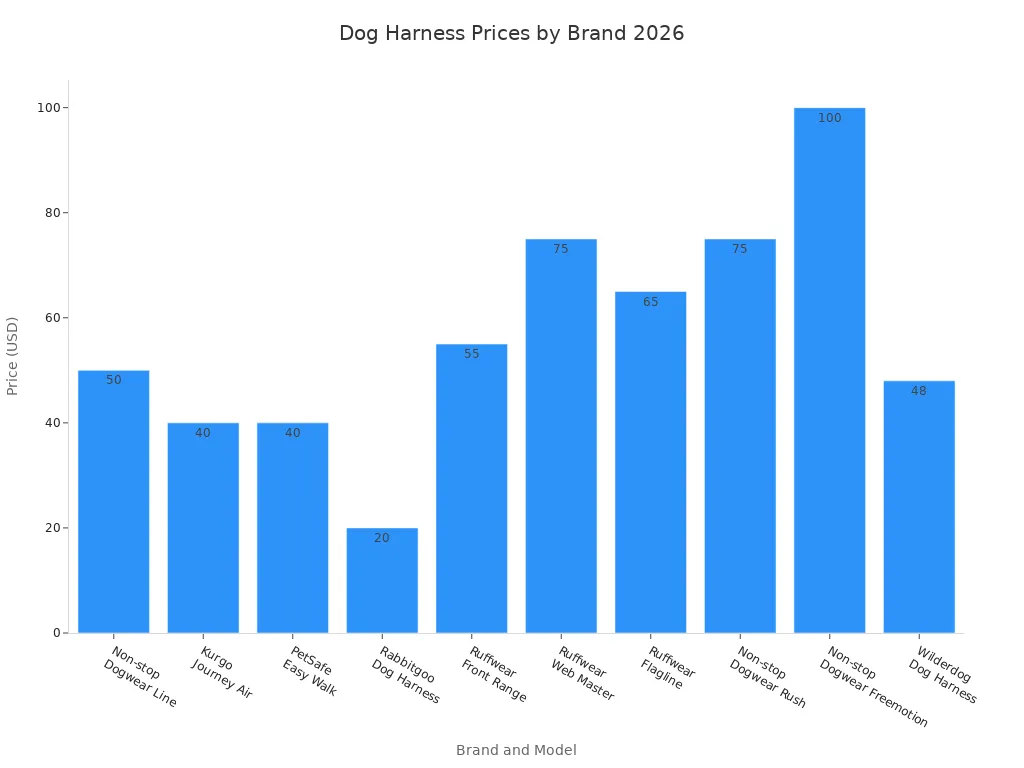
Price Comparison Table:
Brand and Model | Price |
|---|---|
Non-stop Dogwear Line Harness | Mid |
Kurgo Journey Air Dog Harness | Mid |
PetSafe Easy Walk Comfort No-Pull | Budget |
Rabbitgoo Dog Harness | Budget |
Ruffwear Front Range Harness | Mid |
Ruffwear Web Master Harness | Premium |
Ruffwear Flagline Harness | Premium |
Non-stop Dogwear Rush Harness | Premium |
Non-stop Dogwear Freemotion Harness | Premium |
Wilderdog Dog Harness | Mid |
Auroth No Pull Harness | Budget |
One-Minute Style Guide for Shoppers
You can match the right harness style to your dog’s needs by thinking about comfort, safety, and activity. Here is a quick guide:
Dog Type | Primary Need | Recommended Harness Style |
|---|---|---|
Puppy | Growth & comfort | Back-clip, soft vest |
Small dog | Neck protection | Step-in, padded vest |
Large dog | Strength & control | Front-clip, dual-clip |
Senior dog | Support & ease | Padded, lifting harness |
Active dog | Durability & movement | Hiking, performance |
Strong puller | Force management | Front-clip, no-pull |
Pick harnesses with strong webbing and good stitching.
Choose metal D-rings for the leash.
Look for soft padding where the harness touches your dog.
Pick harnesses that are easy to put on and take off.
For outdoor use, choose harnesses that resist wear and weather.
Note: Comfort and fit are most important. Measure your dog’s chest and neck. Look for harnesses you can adjust for movement. Pick breathable fabrics for hot days and padded ones for cold.
Popular Harness Types:
LED Dog Harness: Helps your dog be seen in the dark.
No-Pull Dog Harness: Makes pulling less of a problem.
Back-Clip Dog Harness: Good for calm, trained dogs.
Dual-Clip Dog Harness: Works for training and walks.
Dog Harness with Handle: Helps pets who need support.
Step-In Dog Harness: Easy to put on and hard to escape.
Tactical Dog Harness: Made for tough, active use.
Fit Red Flags to Avoid Returns
You want to avoid fit mistakes that cause returns. Watch for these signs:
The harness slips off your dog’s head or legs.
You see rubbing or hair loss where the harness touches.
Your dog gets out of the harness on walks.
The harness twists or moves when your dog walks.
You cannot fit two fingers under the straps.
The harness leaves deep marks or makes it hard to breathe.
Tip: Always use the two-finger rule and measure the widest part of the chest. If your dog is between sizes, check the brand’s chart and size down if needed. Use the Quick Reference Card for help.
Continue reading for:
How to measure your dog for the right size harness
Dog harness materials and construction explained
Pulling and training harnesses
Car travel safety and standards
Supplier vetting and quality checks
How to Measure Your Dog for the Right Size Harness
Measuring Chest Girth and Neck Circumference
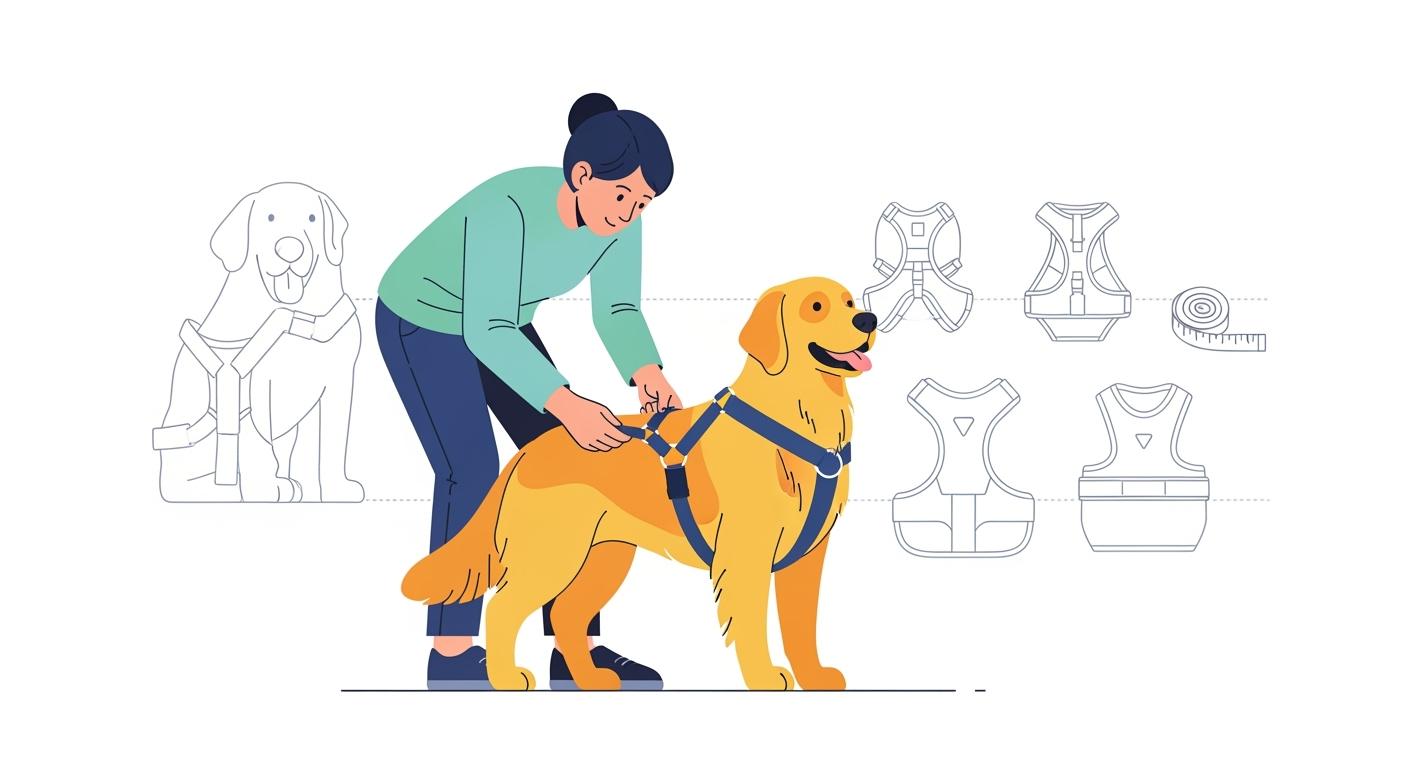
You want your dog’s harness to fit just right. The first thing to do is measure your dog. Chest girth is the most important part to measure. Neck size also matters for a good fit.
Here are the steps to measure your dog:
Get a soft measuring tape.
Wrap it around the widest part of your dog’s chest, right behind the front legs. Make sure the tape is snug but not too tight.
Keep the tape at the same spot on both sides of the body.
Next, measure the widest part of your dog’s neck, just behind the ears. Leave a little space so it is not too tight.
Write down both numbers and look at the sizing chart. Use the numbers from the Quick Reference Card.
Tip: Always measure your dog when they are standing up. This gives you the best numbers for picking a harness.
Fit Check: Two-Finger Rule and Placement
After you measure, check if the harness fits well. A good fit keeps your dog safe and happy. The two-finger rule is an easy way to check.
Put two fingers under each strap, around the neck and chest.
The harness should feel close but not squeeze.
If you can fit more than two fingers, it is too loose.
If you cannot fit two fingers, it is too tight.
Fit Check Table
Checkpoint | What to Look For | Why It Matters |
|---|---|---|
Strap Tightness | Two-finger rule works on all straps | Stops rubbing and keeps harness on |
Strap Placement | Behind front legs and above shoulders | Stops rubbing and lets dog move |
Harness Rotation | Harness stays in place and does not twist | Keeps control features working |
Rubbing/Red Marks | No hair loss or red spots | Makes sure your dog is comfy and safe |
Back-Out Risk | Dog cannot slip out when pulling back | Stops escapes |
Leash Attachment Stability | Leash ring stays in place and does not move | Keeps control strong |
Note: Always use the numbers from the Quick Reference Card for checking fit.
Preventing Slipping, Rubbing, and Escapes
A harness that fits right will not slip, rub, or let your dog get out. You can stop these problems by using the fit check steps and making the straps tighter or looser as needed. Make sure the harness sits flat and does not twist when your dog walks.
Common mistakes are:
Only measuring the neck and not the chest.
Not using the adjustable straps or velcro to help the fit.
Not looking for rubbing or hair loss after walks.
A harness that fits well lets your dog move easily. It keeps pressure off the neck and spreads it across the chest. This keeps your dog safe and comfortable.
Sizing Chart and Between-Sizes Guidance
Use the sizing chart to pick the right harness size. Always check your dog’s chest and neck numbers with the chart. If your dog is between sizes, pick the bigger one and make it tighter for the best fit. Use the Quick Reference Card for all sizing choices.
Sample Sizing Chart
Size | Chest Girth Range | Neck Circumference Range | Typical Dog Breeds |
|---|---|---|---|
XXS | Use Quick Reference Card | Use Quick Reference Card | Chihuahua, Yorkie |
XS | Use Quick Reference Card | Use Quick Reference Card | Dachshund, Pug |
S | Use Quick Reference Card | Use Quick Reference Card | Beagle, Cocker Spaniel |
M | Use Quick Reference Card | Use Quick Reference Card | Border Collie, Bulldog |
L/XL | Use Quick Reference Card | Use Quick Reference Card | Labrador, Bernese Mountain Dog |
Note: Always follow the brand’s sizing chart and use the Quick Reference Card for the best fit.
Why Accurate Measurement Matters
Aspect | Impact on Safety and Comfort |
|---|---|
Proper Fit | Lets your dog move easily and lowers injury risk |
Ill-Fitted Harness | Can make moving hard and cause pain or injury |
Pressure Distribution | Helps your dog walk naturally and move well |
Shoulder Movement | Free shoulders mean smoother, better walking |
Weight Distribution | Bad fit can put weight in the wrong place |
Gait Symmetry | Tight straps can mess up walking and cause injury |
A harness that fits right helps your dog move in a normal way. It keeps the harness working and helps stop injuries.
Keep reading for more tips, checklists, and guides for every breed and activity.
Dog Harness Materials and Construction Explained
Buyer takeaway: You can lower returns if you know about harness materials and how they are made. Use the materials table to help pick what to sell and teach your team.
Shopper takeaway: You will find the right dog harness by learning about webbing, padding, and hardware. This helps you pick a harness that fits well, feels good, and keeps your dog safe.
Webbing, Shell, Padding, and Lining Overview
You want a dog harness that lasts and feels good for your dog. The main parts are webbing, shell, padding, and lining. Each part changes how the harness fits, feels, and lasts. Use the Quick Reference Card for size and fit checks.
Materials Comparison Table
Component | Options (Examples) | Buyer Concerns | Shopper Benefits | Common Defects |
|---|---|---|---|---|
Webbing | Nylon, Polyester, Biothane | Fraying, weak stitching | Strong, resists escape | Frays, stretches |
Shell | Ripstop, Mesh, Neoprene | Breathability, weight | Lightweight, quick-drying | Tears, traps heat |
Padding | PE Foam, Fleece | Overheating, bulk | Soft, prevents rubbing | Flattens, holds odor |
Lining | Mesh, Flannel | Skin sensitivity | Reduces chafing, easy clean | Wears thin, traps dirt |
Hardware | Aluminum, Plastic | Breakage, rust | Secure, prevents escape | Snaps, bends, rusts |
Keep reading to learn more about materials and how long they last.
Hardware, Stitching, and Failure Points
You need strong hardware and stitching to keep your dog safe. Look for harnesses with strong seams and good clips. Some weak spots are:
Stitching that comes apart
Clips that get loose
Fabric that feels rough
Webbing that is weak
Hardware that breaks
Zippers that stick or break
Check all these spots before every walk. This helps you find problems early and stop escapes.
Comfort and Durability for Outdoor Use
You want a harness that works well outside. Pick ripstop or nylon for strength. Padding like PE foam makes it soft and stops rubbing. For hot days, use mesh that lets air in. For cold days, pick harnesses with extra lining. Always check the fit after being outside to keep your dog safe and comfy.
Care, Cleaning, and Odor Management
You can keep your dog harness clean and safe with easy steps:
Shake off dirt and brush away anything stuck.
Wash by hand with mild soap and warm water.
If you use a machine, put it in a laundry bag and use a gentle cycle.
For leather harnesses, wipe with a damp cloth and use leather cleaner.
Hang the harness to dry in a place with fresh air.
Cleaning often stops bad smells and keeps the harness nice. Always look for damage after you clean it.
Use the Quick Reference Card for all fit and cleaning checks.
Use Cases: Bernese Mountain Dog Harness and More
Buyer takeaway: You can stop confusion and returns by matching harness types to your dog’s breed, what they do, and how safe they need to be. Use the claims clarity table and Quick Reference Card to help your team and customers.
Shopper takeaway: You will find the best dog harness if you think about your dog’s size, age, and what they like to do. This section helps you pick a harness that is comfy, fits well, and keeps your dog safe.
Matching Harness Types to Activities
You want a harness that fits your dog’s life. For a Bernese Mountain Dog harness, pick strong materials and easy straps. Big dogs need harnesses that feel good and give control. The table below lists top harnesses for Bernese Mountain Dogs and other large dogs.
Harness | Why it’s great | Ideal for |
|---|---|---|
Desert Camo Terrain Dog Harness | Ultra-tough nylon, stays strong on rough trails | Rugged hikes, powerful pullers |
Noir HNTR 3.0 Dog Harness | Four-way adjustment, fits from puppy to adult | Growing Berners, all life stages |
Honeydew HNTR 3.0 Dog Harness | Top handle, dual leash clips for training support | Training sessions, mixed walking styles |
Chocolate HNTR 3.0 Dog Harness | Quick-release buckles, easy on/off for seniors | Senior Berners, dogs needing fast harnessing |

You can use a no-pull harness for training or a dual-clip harness for walks. Small breeds do better with a back-clip harness to protect their necks. Senior dogs need harnesses with handles to help lift them. Always check the fit and make changes for comfort.
Car Travel Safety: Claims and Standards
You want your dog to be safe in the car. Not every harness is crash-tested. Only harnesses with special certification, like Center for Pet Safety (CPS), meet tough rules. Use the Quick Reference Card to check what claims mean.
Claims Clarity Table
Harness Type | Crash-Tested? | Certification/Standard | Intended Use |
|---|---|---|---|
Walking Harness | No | None | Walks, daily use |
Car Safety Harness | Yes | CPS Certified, ASTM F3725-25 | Car travel, restraint |
Crash-tested harnesses use strong materials and extra stitching.
The Sleepypod Clickit Sport Plus passes CPS crash tests for many dogs.
Some harnesses say they are safe but have not been tested.
Note: Always look for CPS certification. Do not use a walking harness in the car unless it says crash-tested.
Keep reading to learn more about car safety and harness use.
Internal Links: Sizing, Materials, Pulling, Car Travel
You can find more help in these sections:
How to Measure Your Dog for the Right Size Harness
Dog Harness Materials and Construction Explained
Best Dog Harness: Quick Picks and Buyer Matrix
Car Travel Safety: Claims and Standards
Use the Quick Reference Card for sizing, fit, and material tips.
FAQ Block: Long-Tail Queries
Question | Answer |
|---|---|
Do harnesses encourage pulling? | Some do, but a no-pull harness helps stop pulling. Training support can help too. |
Can harnesses cause injury? | Yes, if the fit is wrong. Check for rubbing or slipping often. |
Are harnesses better for small dogs? | Yes. They protect the neck and make walks more comfy. |
How tight should a harness be? | The harness should be snug. You should fit two fingers under the straps. |
Do vets recommend harnesses? | Many vets do, especially for dogs with neck or breathing problems. |
What harness is best for a Bernese Mountain Dog? | Pick a Bernese Mountain Dog harness with strong webbing, four-way adjustment, and a handle for training. |
Can I use a walking harness in the car? | Only use a harness marked crash-tested for car rides. |
What harness helps with training control? | A dual-clip or front-clip harness gives training help and walk control. |
How do I check harness fit? | Measure your dog and use the Quick Reference Card. Adjust for comfort and safety. |
What activities need a special harness? | Hiking, car rides, and training need harnesses with extra features for comfort and control. |
Tip: Always check fit and comfort after walks and car trips.
You can pick the best dog harness if you measure your dog first. Check how the harness fits and look at what it is made of. Match the harness style to what you and your dog need. Use the tables and checklists to help you decide. Look at sizing charts, read what other people say, or ask someone who knows a lot about harnesses. The right harness keeps your dog safe, makes them comfortable, and helps you both enjoy walks more.
Insight | Explanation |
|---|---|
Checklists help you avoid mistakes | They show you each step so you can choose with confidence. |
FAQ
How do I know the pulling-harness fits?
You should check the harness with the fitting guide. Use the unified values in the Quick Reference Card to confirm comfort and safety for your dog.
How to adjust the dog harness for a better fit?
You can adjust each strap on an adjustable harness. Make sure you follow the fitting guide and use the dog harness size chart for the best size and adjustability.
Where can I find a dog harness size chart?
You can find a dog harness size chart in the Quick Reference Card. This chart helps you pick the right size and adjustability for your dog’s needs.