When picking airline approved pet carriers for cats, think about your cat’s comfort and safety. The word ‘approved’ is used to help sell the carrier. Real approval depends on travel rules at the time. You must get a carrier that fits airline rules. It should let your cat relax and breathe well.
Key Takeaways
Always look at your airline’s rules for pet carriers first. Airlines have different rules that may change for each flight.
Pick a carrier where your cat can stand, turn, and lie down easily. Measure your cat and the inside of the carrier to make sure it fits well.
Find carriers with good ventilation, more than one entry, and features that make cleaning simple. These things help your cat feel safe and comfortable when traveling.
Choosing Airline Approved Pet Carriers for Cats
What ‘Airline-Approved’ Really Means
Some people think “airline approved pet carriers for cats” means you can use them on any flight. This is not right. You need to check the rules for each airline and every flight. The words “airline-approved” are often confusing. Each airline has its own rules for carriers. These rules can change depending on the plane, where you are going, and how you travel.
Always ask your airline before you buy a new travel kennel. Check their rules to make sure your carrier is allowed.
The words “airline-approved” are confusing. There is no one rule for all airlines. Each airline makes its own rules for pet carriers. These rules can be different for each airline, for in-cabin or cargo, for different planes, routes, weather, and international trips.
Stores and brands often say their carriers are “airline approved,” but this is not always true.
You need to check both the airline’s rules and the space under the seat before you buy a carrier.
Aspect | Details |
|---|---|
Airline Policies | Every airline has its own pet rules based on the plane. |
Under-seat Dimensions | Under-seat space size changes with each plane type. |
Selection Impact | Owners must pick carriers that fit the airline’s rules. |
Problems Solved and Not Solved by Airline-Approved Cat Carriers
Airline-approved cat carriers help with some travel problems. They keep your cat safe and stop escapes. These carriers protect your cat in cars by staying in place. More doors make it easier to get your cat in or out.
Airline-approved cat carriers stop cats from escaping during trips.
They keep cats safe in cars by staying in place, which helps if you stop fast or have an accident.
Extra doors help you handle your cat with less stress and fear.
But these carriers do not mean your cat can fly on every flight. You still need to check the fit and rules for each trip. At security, you must take your cat out while the carrier goes through the scanner. Never put your cat in the X-ray machine. In-cabin carriers must fit under the seat and stay there during takeoff and landing.
Key Buying Factors for Airline-Approved Pet Carriers
Follow these steps to pick the best airline pet carrier:
Think about your trip. Decide if you need a carrier for flying, driving, or hotels.
Pick a carrier type that matches airline rules and your cat’s needs.
Look at features for safety, comfort, and quality.
Check the size for your cat and the under-seat space.
Try the carrier before you travel.
The best airline-approved pet carrier should have these five things:
Shape and design: Your cat should have room to lie down and turn around.
Interior mat: Find a mat you can remove and wash. It should stay in place inside the carrier.
Loading doors: Two doors make it easier to get your cat in or out.
Carrying straps and handles: Padded straps and double handles help you carry the carrier safely.
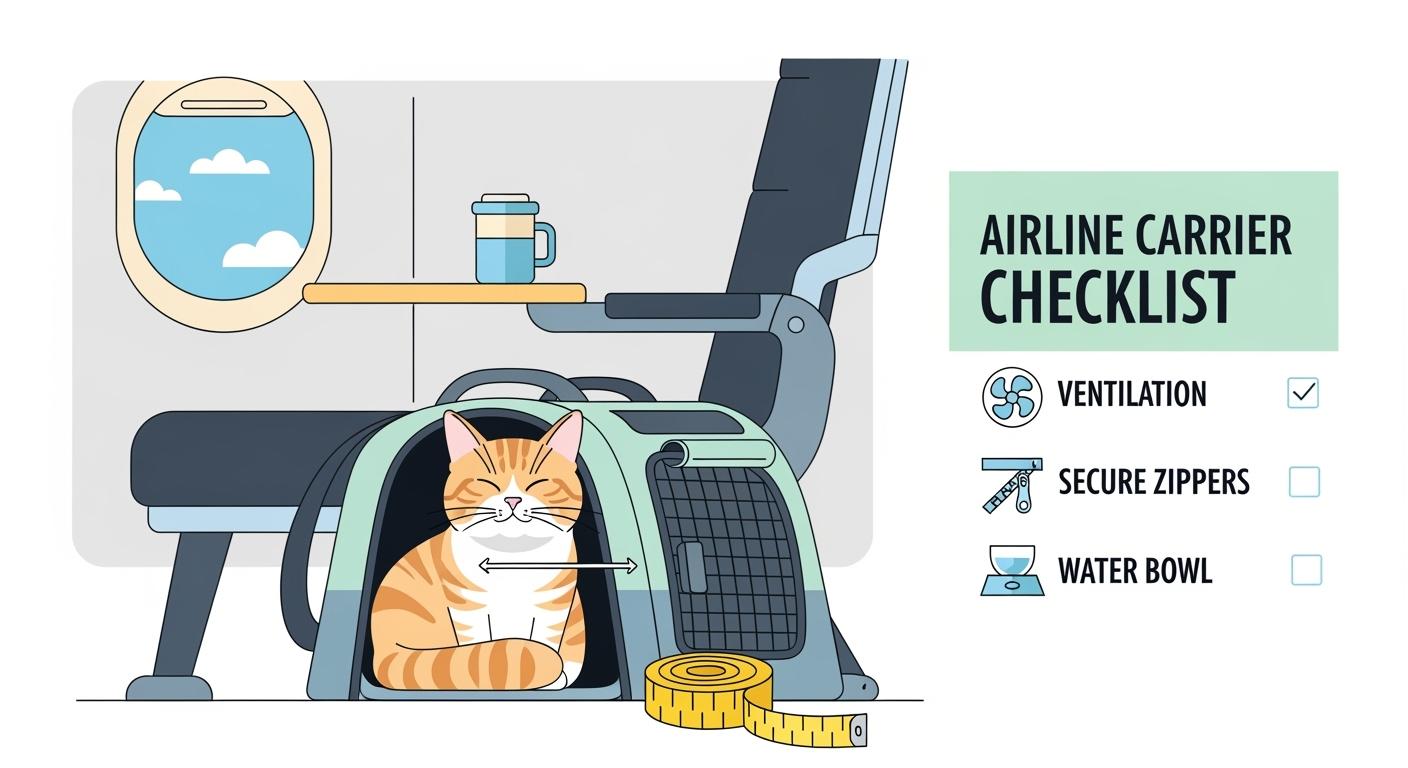
Ventilation: The carrier must have enough airflow, with at least 16% ventilation.
Carrier Type | Closure Security | Ventilation | Leak Resistance | Pocket Design | Base Stability | Cleaning Ease |
|---|---|---|---|---|---|---|
Soft-sided | High | High | Moderate | Variable | Moderate | High |
Hard-sided | Very High | Moderate | High | Limited | High | Moderate |
Tip: Always check the inside space, not just the outside size. A strong base and no sagging make your cat more comfortable and safe.
Make sure the carrier fits your cat. Your cat should be able to relax, sit steady, and breathe well when the carrier is closed. Good quality helps your cat feel safe and helps you worry less.
Carrier Types & Key Features for Airline-Approved Cat Carriers

Soft-Sided vs Hard-Sided Airline-Approved Pet Carriers
There are three main types of airline-approved cat carriers. These are soft-sided, structured soft-sided, and hard-sided carriers. Each type is good for different reasons. Each one also has some downsides. Look at the table below to see how they compare:
Feature | Soft-Sided Carriers | Structured Soft-Sided Carriers | Hard-Sided Carriers |
|---|---|---|---|
Weight | Light, collapsible | Light, holds shape better | Heavier, very durable |
Protection | Minimal in accidents | Moderate | High, best for safety |
Cleaning | Harder to clean | Easier than soft-sided | Easy, wipe-down surfaces |
Shape Retention | Poor | Good | Excellent |
Durability | Limited | Improved | High |
Access | Multiple openings | Multiple openings | Top or front loading |
Soft-sided carriers are used a lot for flying in the cabin. Hard-sided carriers are better for cargo or when you want more protection.
Entry, Closure Security, and Escape Resistance
You should pick carriers with strong entry points. Try to find ones with two locks or metal latches. These help keep your cat from getting out. Stay away from carriers with only one plastic lock or loose latches. A good carrier will not open from the inside. Having more than one door makes it easier to put your cat in or take it out.
Ventilation, Comfort, and Stable Posture
Good airflow is important for your cat’s comfort and safety. Carriers should have mesh or vents on at least two sides. This helps your cat breathe and stay calm. Pick a carrier that lets your cat sit, turn, and rest without falling over.
Base Stability, Leak Control, and Cleaning
A strong base keeps your cat comfy and stops the carrier from sagging. Leak-proof bottoms help stop messes from getting out. Hard-sided carriers are easy to clean with a wipe. Soft-sided carriers can be harder to clean and may hold hair or smells. Always check if the materials are good and if cleaning is easy after trips.
Tip: Pick airline-approved cat carriers with strong locks, good airflow, and a base that is stable and easy to clean for the best trip.
Under-Seat Fit, Sizing, and Cat Comfort Checks
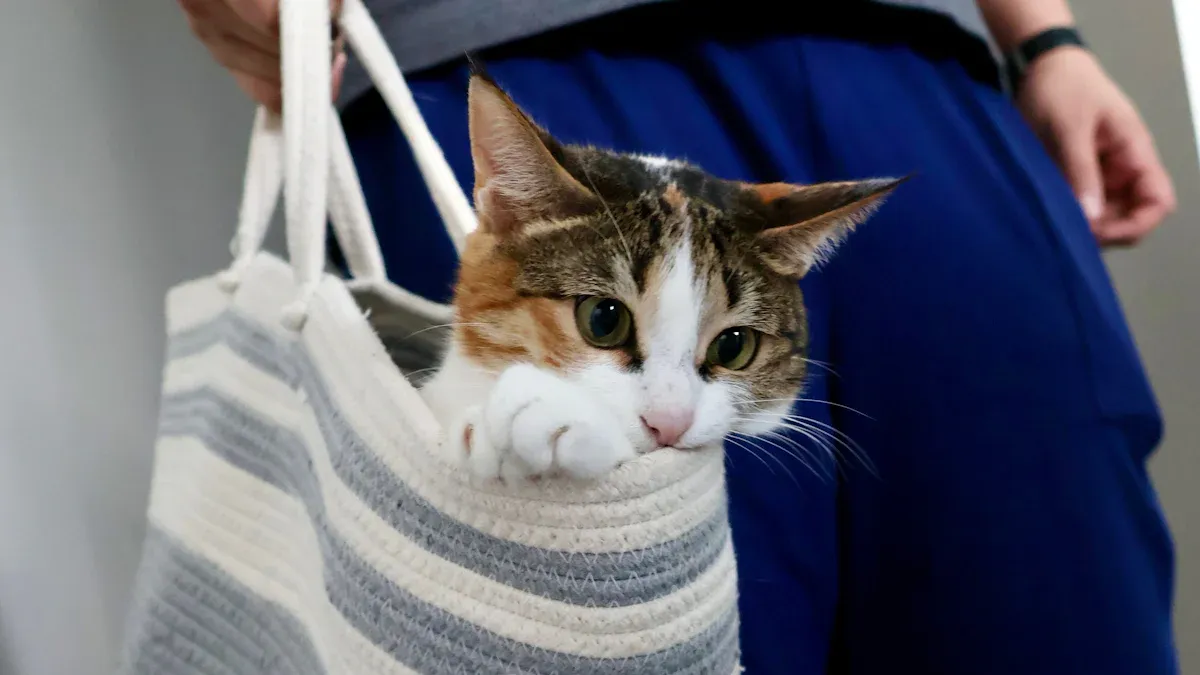
Measuring Your Cat and Carrier Interior Space
You need to measure your cat and the inside of carriers before you buy. This helps you pick airline approved pet carriers for cats that fit well. Follow these steps:
Measure your cat’s chest girth by wrapping a tape around the widest part behind the front legs.
Check the neck where a collar sits, making sure it is not too tight.
Measure your cat’s length from the base of the skull to the base of the tail.
Measure shoulder width across the top of the shoulders.
Look at the inside of carriers, not just the outside. Check for padding and space.
Verifying Under-Seat Fit for Airline-Approved Cat Carriers
Airline-approved cat carriers must fit under the seat. Under-seat space can change by plane. Common limits are about 27 cm high, 40 cm wide, and 55 cm long. Always check the real space on your flight. Make sure the carrier’s structure does not sag and that the base stays flat. Good ventilation panels should not take away from usable space.
Fit Checks: Posture, Turning, and Calm Settling
Carriers should let your cat stand, turn, and settle calmly. Place familiar bedding inside to help your cat relax. Leave the carrier open in a safe area so your cat can explore. Reward your cat for entering on its own. Use both top and front openings for easy access. Good ventilation and soft padding lower stress during travel. A stable carrier helps your cat feel safe.
Pre-Travel Test Protocol for Airline-Approved Pet Carriers
Before travel, test airline-approved pet carriers at home. Use this checklist:
Fit & Safety Check | What to Do |
|---|---|
Internal Safety Tether | Attach to a harness with two-finger slack. |
Ventilation Check | Make sure all mesh panels are clear and open. |
Security Features | Check all zippers and locks for strength. |
Base Stability | Press on the base to check for sagging. |
Cat Comfort | Watch your cat settle, turn, and breathe easily. |
Cleaning Ease | Remove and wash bedding and wipe down surfaces. |
Weather Prep | Keep the carrier in a cool, dry place before travel. |
Tip: Always focus on usable interior space, not just the outside size. Good carriers support calm settling, stable posture, and clear breathing for your cat.
Mistakes and Decision Guidance for Airline-Approved Pet Carriers
Common Mistakes with Airline-Approved Cat Carriers
You can stop many problems if you know what mistakes to avoid. Here are some things people do wrong when they use carriers for travel:
Mistake | Why It Matters |
|---|---|
Storing the carrier out of sight | Cat may fear the carrier |
Using only for negative experiences | Cat avoids the carrier |
Forcing a stressed cat inside | Increases trauma and future resistance |
Forgetting to secure carrier in vehicle | Reduces safety during travel |
Blocking all ventilation in cold weather | Cat needs airflow for comfort |
Choosing based only on looks | Function and safety should come first |
To stop these mistakes, let your cat see the carrier early. Give your cat time to check it out before you travel. Always buckle the carrier in your car. Do not block all the vents, even if it is cold. Pick a carrier that works well and keeps your cat safe, not just one that looks nice.
Matching Carrier Use to Travel Scenarios
You need to pick the right carrier for your trip. Use this table to see what to do for different trip times:
Trip Length | Break Schedule | What to Watch For |
|---|---|---|
Under 2 hours | No stops needed | Watch for panting or drooling |
2-4 hours | One break mid-trip | Offer water, check carrier is secure |
4+ hours | Every 2 hours | Full wellness check, litter box access |
For flights, make sure the carrier closes well, has good airflow, and fits under the seat. For car rides, check that the base is strong and you can clean it easily. In hotels, make a quiet spot for your cat and keep the same routine.
Decision Matrix by Cat Profile and Trip Type
This chart helps you pick the best carrier for your cat and trip:
Trip Type | Recommended Carrier Type | Key Features |
|---|---|---|
Short-Haul | Flexible, soft-sided | Fits under seat, good for confident, slender cats |
Mid-Haul | Expandable, soft-sided | Extra space for stretching, good airflow |
Long-Haul/Overnight | Firm, structured soft-sided | Stable, protects during turbulence, comfort for long trips |
Always put only one cat in each carrier. If your carrier has a tether inside, clip it to a harness and leave a little slack for comfort.
FAQ: Sizing, Ventilation, Cleaning, and Stress Reduction
How do I size a carrier?
Measure your cat from nose to tail base and from floor to head top. Add at least 5 cm to both numbers.What about ventilation?
The carrier should have mesh or vents on two sides or more for air.How do I keep the carrier clean?
Use pee pads, wipes, and bedding you can take out and wash.How can I reduce my cat’s stress?
Let your cat get used to the carrier before you travel. Do not use the carrier only for trips. Do not give tranquilizers before flying.
Tip: Pick airline-approved cat carriers with enough room, good airflow, and easy cleaning. Always check airline rules and think about your cat’s comfort and safety.
You should always check airline and flight rules before you travel. Accurate sizing and comfort checks help your cat feel secure. Use the checklists and tables for better planning.
A well-chosen carrier improves safety and quality for your cat.
Your cat feels secure, and you feel more at ease during travel.
FAQ
How do you check if a carrier fits under an airplane seat?
Measure the carrier’s height, width, and length. Compare these numbers to the airline’s under-seat dimensions for your specific flight. Always confirm before travel.
What is the best way to test carrier fit for your cat?
Place your cat inside the carrier. Watch if your cat can stand, turn, and settle calmly. Check that your cat breathes easily with the carrier fully closed.
How do you keep a carrier clean during and after travel?
Use removable, washable bedding or pads. Wipe down the carrier’s interior after each trip. Clean up spills quickly to prevent odors and stains.