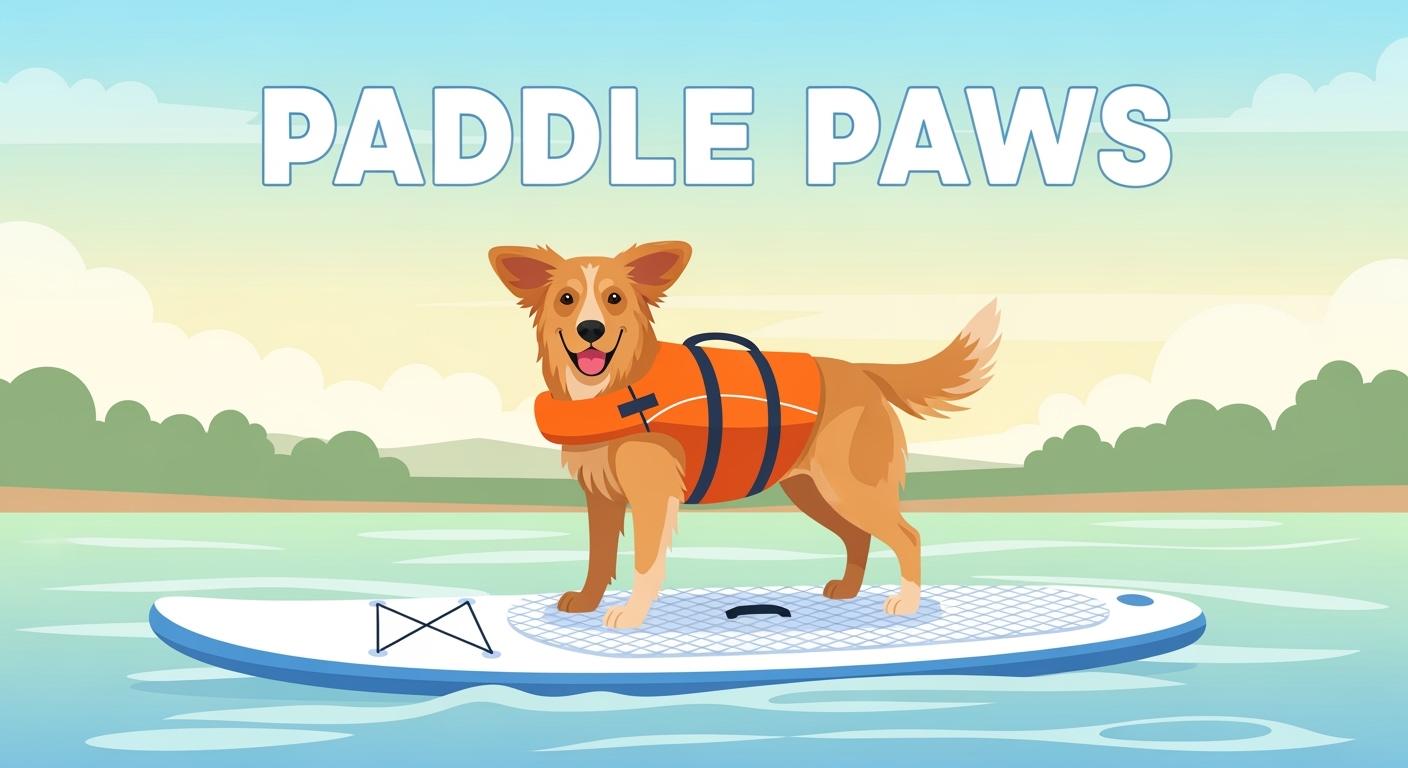
A dog life jacket for paddle board trips needs to do more than add flotation. It has to let your dog stand square, turn without catching at the shoulders, and climb back onto the board without the jacket twisting out of place. Before you buy, compare dog life jacket types, materials, and sizing essentials so you can judge how much support your dog actually needs for calm water, longer swims, or repeated re-entry.
Das Wichtigste in Kürze
- Lower-bulk jackets usually work better on a paddle board because dogs need room to turn, step, and sit.
- A good fit stays centered when wet and does not bunch at the chest during sitting or re-entry.
- Balanced flotation, a solid grab handle, and strong visibility matter more than extra padding by itself.
- Practice on land and in shallow water before a full paddle so your dog can learn the board and the jacket separately.
- Switch jackets if your dog leans forward, hesitates to move, or struggles to climb back on board.
What a Dog Life Jacket for Paddle Board Use Should Do
On a paddle board, balance matters as much as buoyancy. A jacket that feels fine during straight swimming can still be a poor match if it pushes too much foam into the chest, rides up at the neck, or limits shoulder reach. The right setup helps your dog shift weight smoothly as the board moves underfoot and still gives you a reliable handle if your dog slips off the side.
Features That Matter Most on a Board
| Feature | Why it matters for paddle boarding |
|---|---|
| Low-profile flotation | Keeps your dog supported in the water without making turns, sitting, or stepping feel stiff. |
| Centered grab handle | Helps you lift or steady your dog without the jacket rolling sideways. |
| Multiple adjustment points | Makes it easier to secure the chest and ribcage so the jacket stays put when wet. |
| Clear shoulder movement | Lets your dog walk forward on the deck and paddle naturally if they enter the water. |
| Bright color or reflective trim | Makes your dog easier to spot in glare, chop, or low light near the end of a session. |
Once you know whether your dog needs lower bulk or more support, comparing dog life jacket and swim vest options becomes much easier. For bigger water, boat traffic, or longer retrievals, easy lift and visibility for boating usually matters more than style or extra surface coverage.
Fit-Test the Jacket Before a Full Outing
Start with the board on land, then move to shallow water once your dog can step, turn, and settle without looking stiff. Watch what happens when your dog moves toward the nose of the board, pivots back toward you, and climbs from the water onto the deck. The same recovery problems show up in dog life jacket fit for swimming and kayaking confidence, especially when a dog needs help getting back onto the surface or onto the board.
Quick Movement Checks
| Check item | Pass signal | Fail signal | What to change |
|---|---|---|---|
| Stand square on the board | Dog looks balanced and relaxed | Dog leans, braces, or looks front-heavy | Reduce chest bulk or refit the front straps |
| Turn in place | Dog pivots without catching the side panels | Dog hesitates or the jacket snags at the shoulders | Loosen or reposition the side panels |
| Sit or lie down | Dog lowers easily with no bunching | Front padding folds up at the chest | Refit the front section or try a shorter-cut jacket |
| Step toward the nose or tail | Dog moves without pausing | Dog shortens stride or stumbles | Check shoulder clearance and total bulk |
| Re-enter from the water | Jacket stays centered while you assist | Jacket twists or drags to one side | Tighten the body fit or try a more balanced design |
Tip: If your dog can turn, sit, and climb back on the board in one calm sequence, the jacket is usually doing its job.
When Extra Flotation Becomes Too Much Bulk
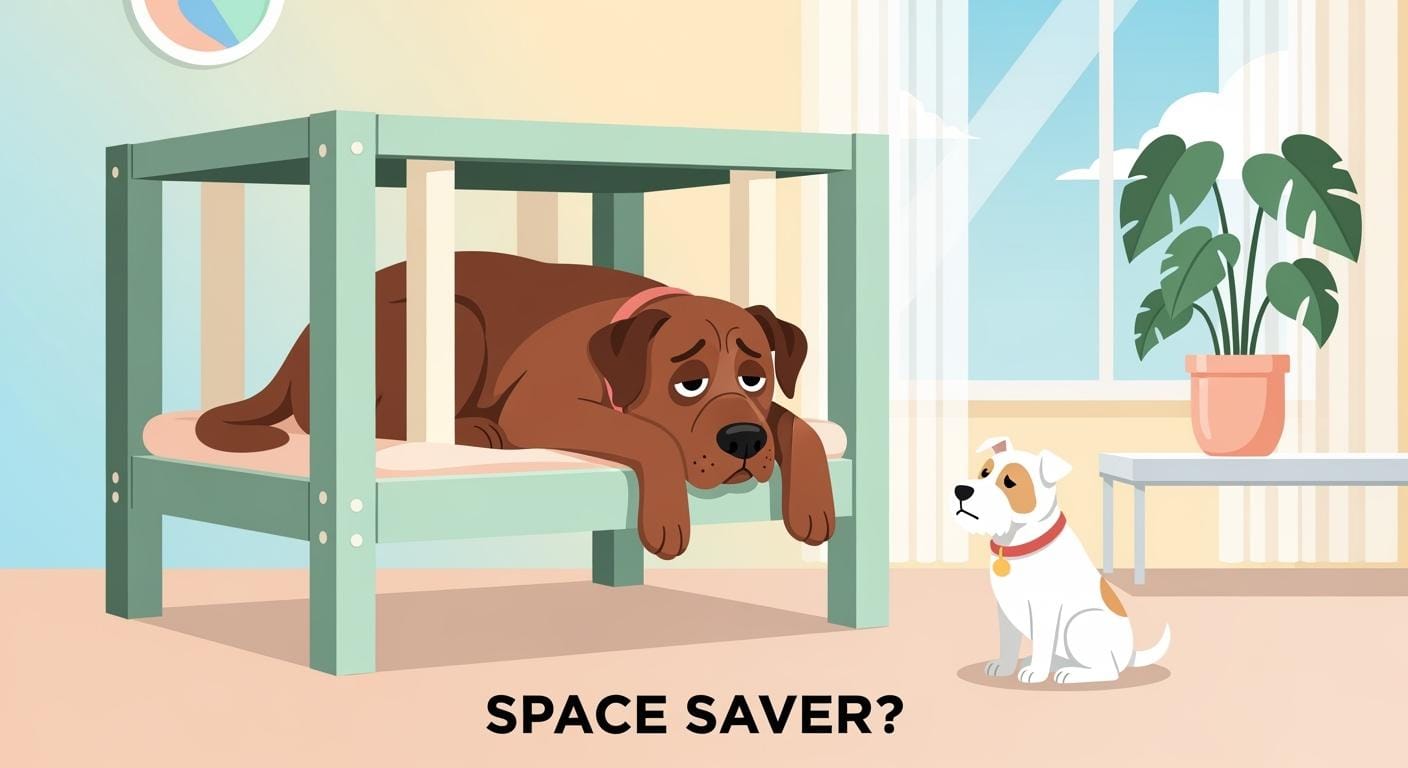
More buoyancy is not automatically better for paddle boarding. Thick flotation can help in open water, but it can also crowd the chest, shorten stride, and make your dog feel unstable on a moving surface. That tradeoff matters most with smaller dogs, short torsos, and dogs that already know how to swim.
| Type | Movement on the board | Support in the water | Best fit |
|---|---|---|---|
| Lower-bulk jacket | Usually easiest for turning, stepping, and sitting | Moderate to good | Most paddle board sessions in calm to moderate conditions |
| Thicker flotation jacket | Can feel stiffer through the chest and shoulders | High | Dogs that tire easily or need more lift in open water |
| Shore-only harness | Good land movement but no flotation | None | Not appropriate for paddle boarding |
Small breeds and shorter torsos often do better when you weigh more float versus less bulk for a small dog instead of assuming the puffiest jacket is safest. A jacket that keeps your dog calm and mobile is usually the better paddle-board choice than one that looks more protective but interferes with balance.
Common Problems to Watch For
| Symptom | Likely cause | Fast check | Beheben |
|---|---|---|---|
| Dog looks front-heavy | Too much flotation in front | Watch whether the chest drops when the dog steps forward | Try a lower-bulk jacket or a more balanced panel layout |
| Dog resists sitting | Chest padding bunches | Look for folding at the front edge | Refit the front or shorten the body length |
| Jacket shifts during re-entry | Loose fit through the ribs | Lift gently by the handle and watch for roll | Tighten the body fit or change size |
| Dog hesitates to turn | Side panels are too stiff or too long | Watch shoulder clearance during a pivot | Use a design with more open shoulder space |
If the jacket rides up after a few minutes or rubs behind the front legs, the same problems in dog life jacket sizing mistakes and chafing checks usually need attention before your next outing.
Getting Your Dog Ready for Paddle Board Sessions
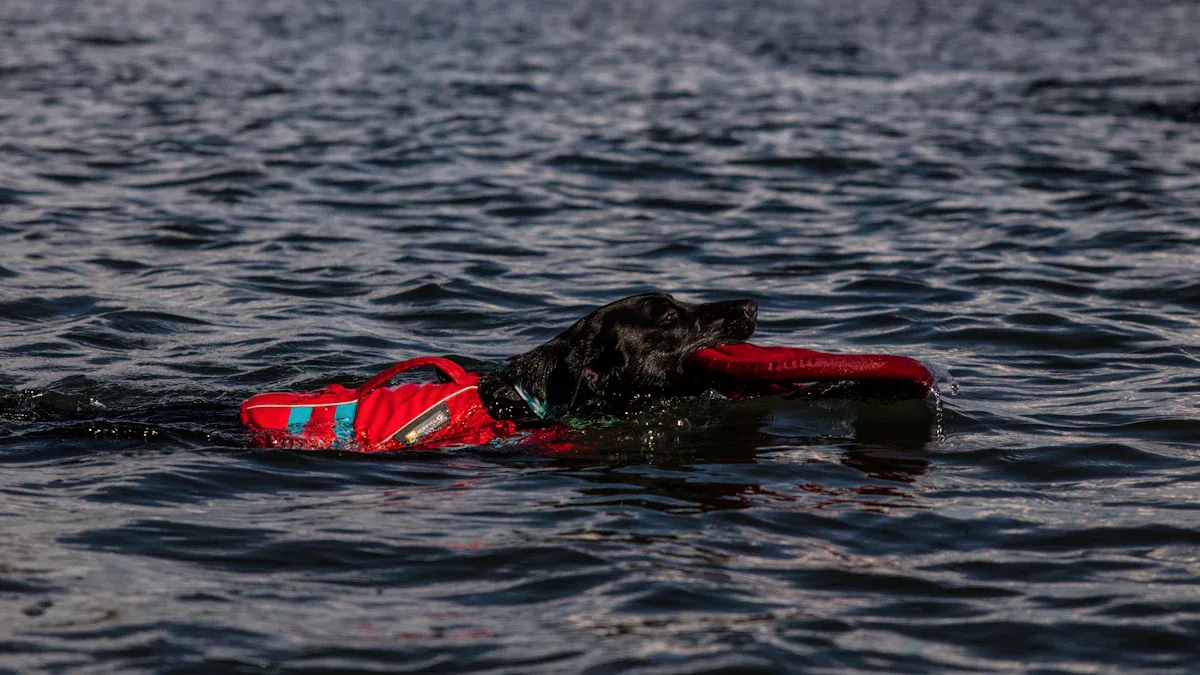
- Let your dog wear the jacket at home long enough to walk, turn, and lie down calmly.
- Put the board on stable ground and reward quiet stepping, standing, and sitting before you add water.
- Move to shallow water and keep the first attempts short so your dog can learn the board’s motion without fatigue.
- Practice one simple re-entry at a time, using the handle only as much as needed to steady and lift.
- End the session while your dog still looks comfortable, not after they are tired or frustrated.
A good dog life jacket for paddle board use should disappear into the activity after the first few minutes. You should not need constant strap readjustments, and your dog should not start pawing at the chest, freezing in place, or refusing to step forward. If your dog shows panic, persistent coughing, or clear breathing trouble, end the session and let them recover on land before you decide whether the fit, the activity, or the overall setup needs to change.
Häufig gestellte Fragen
Does every dog need a life jacket on a paddle board?
Most dogs are safer with one because a board adds movement, distance from shore, and more chances for an awkward fall into the water.
How should the jacket feel during a fit check?
It should stay centered when wet, allow full shoulder movement, and remain stable when you assist your dog by the handle.
When should you switch to a different jacket?
Switch if the jacket rides up, twists during re-entry, crowds the chest, or makes your dog hesitate to stand, turn, or sit.
Is more flotation always better for paddle boarding?
No, because too much bulk can interfere with balance and mobility even when the jacket looks safer on paper.
The best dog life jacket for paddle board outings is the one that keeps your dog steady on deck, supported in the water, and easy to help if something goes wrong. Mobility first, balanced flotation second, and calm practice before distance will usually lead to a safer and more enjoyable paddle.