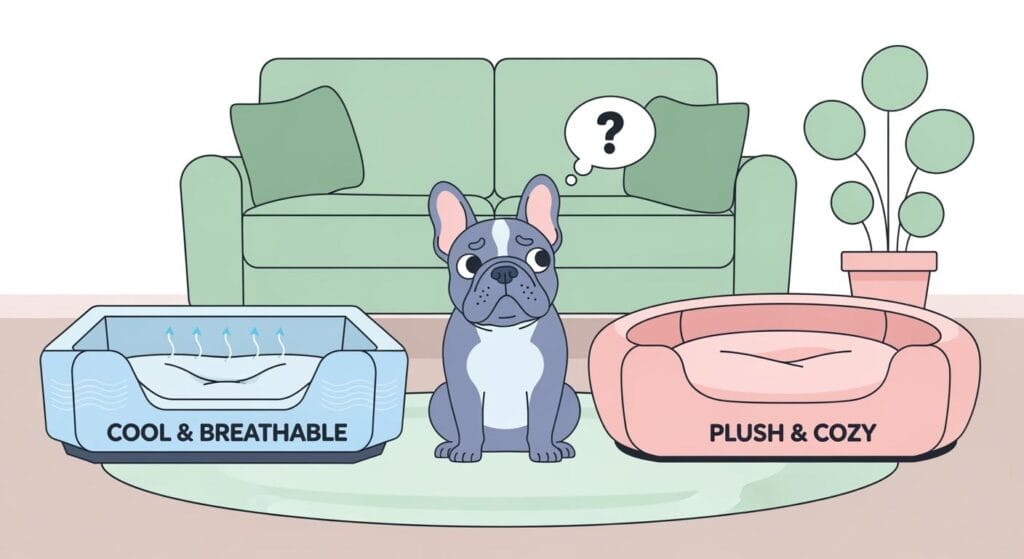
A plush bed can look inviting, but many French Bulldogs settle better on something flatter, firmer, and cooler. Because Frenchies can struggle with heat more than many breeds, the best dog bed for French Bulldog sleep usually has a breathable surface, easy entry, and enough support to keep the body level instead of sinking into a warm pocket.
That does not mean every Frenchie needs the same setup. Some sprawl and sleep hot. Others like to lean against a low side. The right choice comes from watching what your dog actually does after a nap: panting, stretching out, climbing off, or staying put.
What matters most
- Choose a bed with a flat or lightly bolstered surface that does not trap heat.
- Look for low entry, steady support, and a cover that is easy to wash.
- If your dog keeps choosing the floor, the bed is usually too warm, too soft, too small, or too enclosed.
What usually works better for a Frenchie at home
Why flat and breathable often beat plush
French Bulldogs cool themselves less efficiently than longer-muzzled dogs, so surface warmth matters fast. A bed that cups the body too deeply can hold heat around the chest and belly, which is often the opposite of what a Frenchie wants. Flat supportive beds usually work well because they let the dog stretch out, change position easily, and get airflow around more of the body.
Note: Heavy panting, restlessness, glazed eyes, or weakness after settling are warning signs. Move your dog to a cooler area, offer water, and call your veterinarian if the breathing does not settle.
Support matters too. If the middle collapses, the bed may feel soft at first but still leave the shoulders, hips, or spine poorly supported. A firmer foam or dense fill often suits Frenchies better than a lofty pillow-style bed that bunches under their weight.
When a low bolster or elevated bed can still be the better fit
Some Frenchies like light side contact. A low bolster can work well when it gives the dog somewhere to rest the chin without boxing in the whole body. The problem starts when the edge is so high or thick that your dog has to climb over it or ends up sleeping half out of the bed.
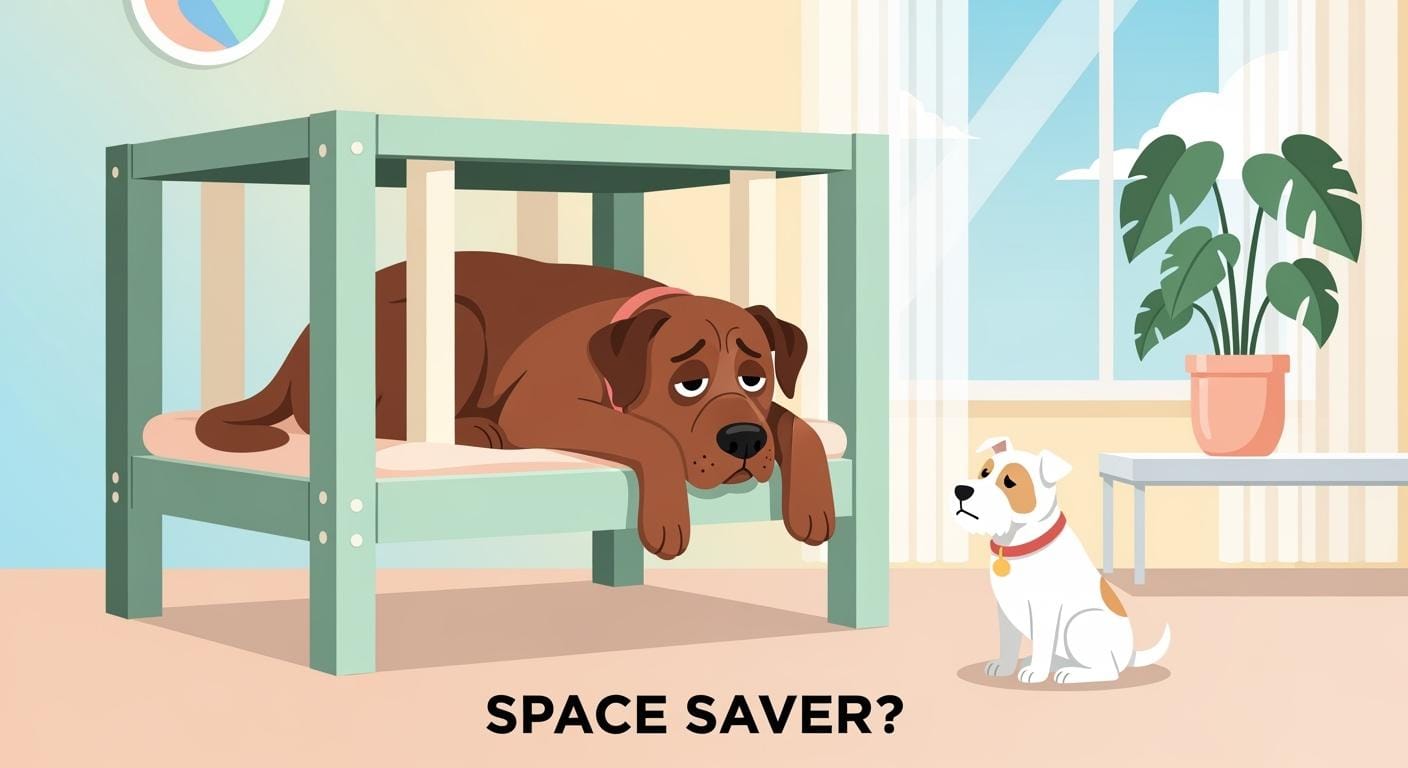
Elevated beds can also make sense, especially in warm rooms, humid climates, or homes where dogs track in dirt and moisture. The raised design allows more airflow underneath, although the surface has to feel stable enough that your dog will actually use it. The sizing logic in Stridepaw’s dog bed size and support guide is useful here because stretch room, entry height, and airflow matter just as much indoors as they do outside. If you want to compare cot-style builds directly, Stridepaw’s raised outdoor dog bed styles are the closest product match.
Which bed style fits which habit
Bed style matters less than sleep posture, entry ease, and heat control. This side-by-side view usually makes the choice simpler:
| Bed Type | What Works Well | What To Watch | Usually Best For |
|---|---|---|---|
| Flat supportive bed | Easy entry, body stays level, better airflow, simple to clean | May feel too open for dogs that like to lean | Frenchies that sprawl, sleep hot, or avoid plush beds |
| Low-bolster bed | Gives light edge support without full enclosure | High or overstuffed sides can trap heat and crowd the body | Dogs that curl lightly or rest the chin on an edge |
| Elevated cooling bed | Air moves under the surface, dries fast, stays cleaner in warm weather | Some dogs dislike the feel, and tall frames can be awkward | Hot rooms, humid climates, and dogs that run warm year-round |
If your dog wakes up stiff, a washable orthopedic bed with a waterproof liner can make sense, but only if the top surface still feels breathable and the entry height stays easy.
How the bed performs in real use

Surface warmth shows up fast
The fastest test is simple: touch the bed after your dog has been on it for a while. If the surface feels hot, damp, or stuffy, the cover and fill may be holding more heat than your Frenchie can tolerate comfortably. Tightly woven but breathable fabrics, mesh panels on elevated beds, and removable covers that wash clean without becoming heavy or fuzzy usually perform better than thick plush tops.
Washability matters because drool, skin oils, and trapped moisture can make a warm bed feel even less comfortable over time. Stridepaw’s article on how often to wash a dog bed and when to wash sooner is a practical reference if you are trying to set a cleaning routine around odor, shedding, or skin sensitivity rather than an arbitrary schedule.
Entry height and edge shape matter more than owners expect
French Bulldogs are compact, heavy in the front, and not built for awkward climbing. A low profile bed is usually easier to use consistently than anything with a deep wall or a thick lip at the opening. If your dog pauses, steps around the bed, or tries to lie half on and half off it, the shape may be wrong even if the cushion itself feels comfortable.
Size matters too. Most adult French Bulldogs do well with a medium bed, but the right measurement is your dog’s sleeping posture, not the breed label on the product page. If your Frenchie likes to stretch out flat, leave room for full body length and a little extra turning space.
The best test is whether your dog stays on it
A bed that works gets used without much convincing. Dogs usually tell you quickly when something feels off. Repeated floor sleeping, constant resettling, sleeping with the chest hanging off the edge, or choosing a cooler mat every afternoon are all useful signals. So is the opposite: a dog that climbs on easily, circles once or twice, and stays there through a normal nap has probably found a workable setup.
| Artikel prüfen | Signal weiterleiten | Fehlermeldung | What To Change |
|---|---|---|---|
| Surface temperature | Dog settles and breathes normally | Panting, frequent shifting, or leaving the bed | Switch to a cooler cover or a flatter design |
| Entry and exit | Dog steps on and off without hesitation | Pauses, climbs awkwardly, or avoids the edge | Lower the profile or remove bulky bolsters |
| Body support | Body stays level across the center | Middle sinks or shoulders hang off | Choose firmer foam or a sturdier base |
| Daily cleanliness | Cover stays manageable between washes | Odor, dampness, or trapped debris build up quickly | Use a removable washable cover or liner |
| Willingness to stay | Dog naps there by choice | Returns to the floor or changes spots often | Reassess size, warmth, and edge shape |
Quick fixes for the most common bed problems
| Problem | Mögliche Ursache | Fast Check | Practical Fix |
|---|---|---|---|
| Dog pants after lying down | Heat trapped in cover or fill | Touch the surface after a nap | Try a cooler, flatter bed or an elevated style |
| Dog avoids the bed after washing | Cover texture changed or insert stayed damp | Check for moisture, stiffness, or detergent smell | Dry fully and use a mild pet-safe wash routine |
| Middle collapses | Support foam or fill is too soft | Press the center with both hands | Replace with firmer support |
| Dog hangs off one side | Bed is too small or bolsters take up usable space | Watch sleep posture during a full nap | Use a larger flat surface |
| Bed gets dirty too fast | No removable cover or weak moisture barrier | Look for trapped hair, drool, or damp spots | Compare wipe-clean vs removable-cover dog beds before replacing it |
Tip: Give your dog two sleep spots for a few days if you are unsure. The better bed is usually obvious once you watch where your Frenchie stays the longest in the warmest part of the day.
Signs the setup is not working
Panting or restlessness after settling
Some dogs pant after play and then calm down. What matters here is panting that starts or gets worse after lying down. That usually points to heat buildup, poor airflow, or a bed that lets the dog sink too deeply. In that case, less cushioning can actually improve comfort.
Sagging middle or edge sleeping
If the center dips, the bed may look full but still fail where your dog’s weight lands most often. That usually leads to one of two patterns: your dog sleeps only on the rim, or the body folds into the middle and then the dog keeps repositioning. Either way, support is not doing its job.
Frequent floor sleeping after the first few uses
Many owners assume the dog is being stubborn when they go back to tile, hardwood, or a crate tray. More often, the dog is choosing the cooler or more stable surface. If you are also weighing liners, waterproofing, and cover durability, Stridepaw’s overview of washable waterproof dog bed choices is useful because cleanup features only help if the bed still feels good enough to use.
For most homes, the best dog bed for French Bulldog use is simple: low to the floor, supportive through the middle, breathable on top, and easy to keep clean. A roomy crate pad or flat orthopedic bed often beats a thick nest-style bed for everyday sleep.
A better bed usually solves one of three problems: too much heat, too little support, or awkward entry. Keep the choice simple and judge it by behavior, not marketing language.
- Pick a medium bed with enough room for your Frenchie to stretch and turn.
- Choose breathable fabric and steady support before extra fluff.
- Wash the cover often enough to control odor and buildup, then replace the bed when support or comfort clearly drops off.
Häufig gestellte Fragen
What size bed does a French Bulldog usually need?
Most adult French Bulldogs fit a medium bed, but measuring your dog’s full sleeping length and favorite sleep posture gives a better result than relying on breed labels alone.
How often should you wash a French Bulldog’s bed?
Wash the cover whenever it smells, feels greasy, or collects visible hair and drool, and clean it sooner if your dog has skin issues, allergies, or frequent accidents.
Are heated beds a good idea for French Bulldogs?
Usually not, because French Bulldogs can overheat easily and tend to do better on a cooler breathable surface unless your veterinarian has advised otherwise.