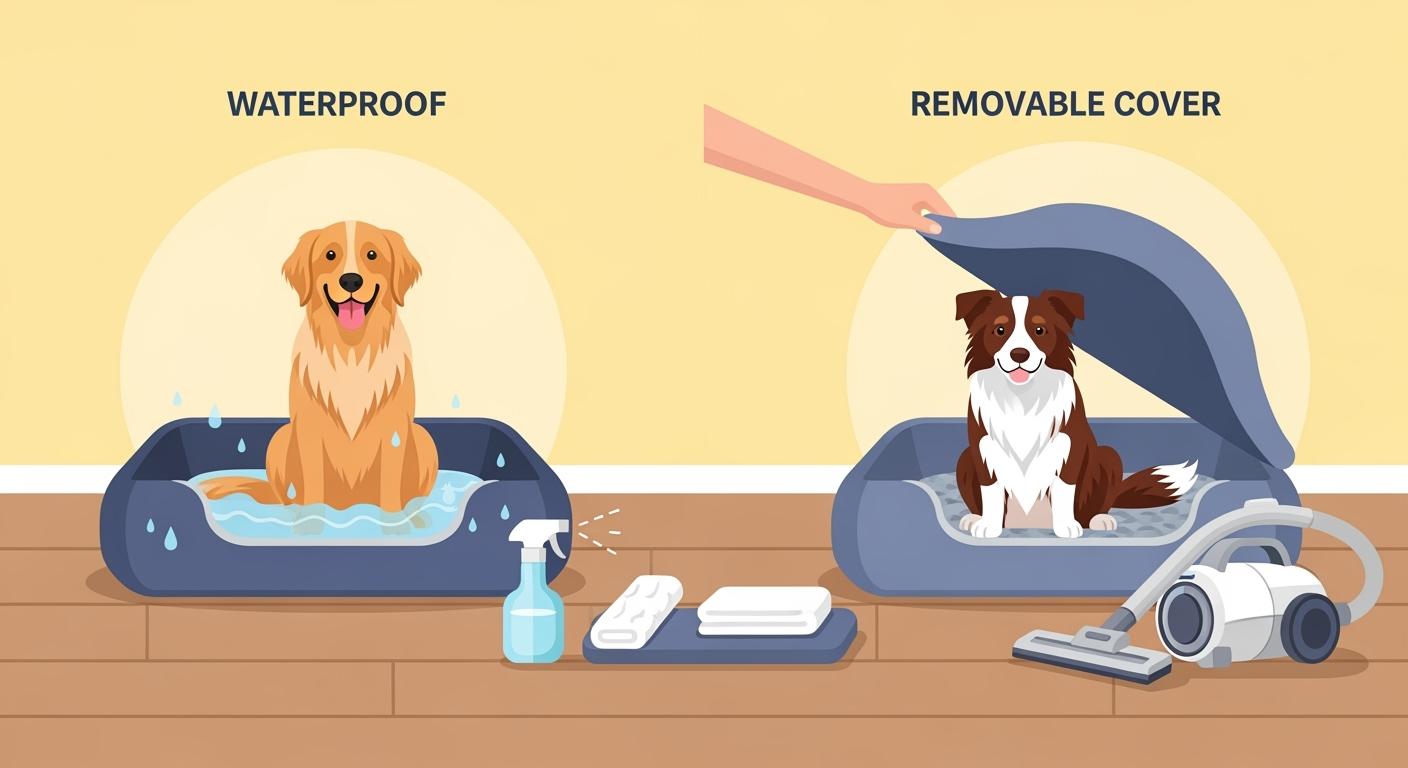
Picking a waterproof dog bed is really a question about how you want to clean it on a Tuesday night, not how the label reads in the store. A wipe-clean surface lets you knock off muddy paws and a knocked-over water bowl in under a minute, while a removable cover lets you strip the bed down and reset it after a rough week. The “best” choice usually comes down to which mess you face most often and how much drying time your space allows.
Note: Waterproof refers to what the bed blocks from soaking in. It does not mean the bed cleans itself. Hair, dander, and surface odor still build up on any style if weekly upkeep is skipped.
Das Wichtigste in Kürze
Match the cleanup style to your most common mess, not to the marketing label. Wipe-clean usually wins on speed and outdoor recovery; a removable, washable cover usually wins on deep odor reset; layered setups protect best but ask for the most steps.
How to Think About Cleanup Style Before You Compare
Before looking at any product, decide which kind of mess you actually deal with most. The right answer for a hiking dog who tracks in dirt is rarely the right answer for a senior dog with occasional accidents indoors.
| Your Most Common Mess | Cleanup Style That Usually Fits | Why It Helps |
|---|---|---|
| Mud, drool, water spills | Wipe-clean surface | Resets in minutes without laundry |
| Hair, dander, light odor | Removable cover | Full wash strips buildup the wipe leaves behind |
| Accidents or heavy shedding | Layered cover plus liner | Liner blocks soak-through, cover handles surface |
For most owners, the deciding factor is drying time, not cleaning time. A bed that washes well but takes two days to dry is not “easy to clean” in a one-bed household.
Wipe-Clean Surface in Daily Use
A wipe-clean surface earns its keep because it shortens the gap between mess and reset. You can knock down a muddy print, drool puddle, or kicked-over water bowl with a damp cloth and get the bed back in service before dinner. This usually fits dogs that move between yard, car, and crate, and it pairs naturally with outdoor dog beds built for daily mess and weather exposure.
| Step | Warum das wichtig ist |
|---|---|
| Lift loose hair with a vacuum or lint roller | Wiping wet hair into the surface smears it instead of removing it |
| Scrub with a damp cloth, not just wipe | Friction breaks the film that holds odor |
| Pass with a clean damp cloth to lift residue | Leftover cleaner attracts new dirt and can irritate skin |
| Air dry fully before the dog returns | A damp surface invites mildew at the seams |
The honest limit of wipe-clean is depth. Surface scrubbing handles the visible layer, but a bed that has absorbed weeks of skin oils and outdoor grime usually needs a fuller wash at some point. For most active-dog households, a wipe-clean surface is the right default and a deeper wash every few weeks closes the gap.
Removable Cover in Daily Use
A removable cover wins on the kind of cleaning a cloth can never do. Stripping the cover, shaking it out, and running it through the machine resets odor and allergens in a way that wipe-down upkeep cannot match. This style usually fits indoor beds, cuddler shapes, and dogs that shed heavily or sleep close to allergy-sensitive humans.
- Unzip and remove the cover outdoors so loose hair stays out of the laundry room.
- Shake or brush the cover before washing.
- Wash in warm water with a pet-safe, fragrance-light detergent.
- Dry the cover all the way through, including the seam allowance, before refitting.
The catch is timing. A removable cover is only “easy” if you have a place for the bed to sit while the cover dries. In humid rooms or single-bed households, that gap can stretch long enough that the dog ends up sleeping somewhere they shouldn’t. For most indoor setups, a removable cover is the better deep-reset tool, as long as drying space is realistic.
Why Waterproof Doesn’t Always Mean Easy Maintenance
Waterproof describes one thing: liquid stops at the surface or liner instead of soaking into the foam. It says nothing about how hair behaves on the fabric, how seams trap dander, or how zippers catch grit. Owners who treat “waterproof” as a synonym for “low maintenance” are usually the ones who end up with odor problems first.
| What Waterproof Does | What It Does Not Do |
|---|---|
| Blocks accidents from reaching the foam core | Stop hair and dander from collecting on the surface |
| Buys time when a spill happens | Prevent odor from building in seams and zippers |
| Protects the fill from long-term staining | Replace weekly upkeep on the cover or surface |
Disclaimer: If your dog avoids a previously favorite bed, scratches more after lying on it, or develops skin irritation, stop using the bed and ask a veterinarian. Cleaning style cannot solve a medical issue.
Side-by-Side: Wipe-Clean, Removable, and Layered
Use this comparison as a starting point for matching your routine, not as a verdict on which style is best in general.
| Feature | Wipe-Clean Surface | Removable Cover | Layered (Cover + Liner) | What to Watch |
|---|---|---|---|---|
| Cleanup Speed | Fastest, minutes | Medium, depends on laundry | Slowest, two stages | Speed drops if you skip the rinse pass |
| Deep Reset | Limited without full wash | Strong with weekly machine wash | Strongest when both layers cleaned | Skipping the liner traps odor inside |
| Drying Time | Air dries quickly | Needs full cover dry-through | Liner can extend drying | Damp seams invite mildew |
| Odor Control | Good with frequent scrubs | Good with regular washes | Best when nothing is skipped | Surface wipes alone rarely cure deep odor |
| Best Use Case | Outdoor, travel, active dogs | Indoor, allergy-aware homes | Heavy shedders, occasional accidents | Wrong match feels like the bed is “always dirty” |
| Main Limitation | Surface-only cleaning | Needs drying space and time | Most steps to maintain | Layered styles punish skipped weeks hardest |
For most active dogs that go outside often, wipe-clean is usually the better default. For most indoor dogs whose mess is hair and dander rather than mud, a removable cover usually fits better. Layered setups earn their place when accidents or heavy shedding make a single line of defense feel undermanned.
Matching Style to Owner and Dog
The match question is less about the dog alone and more about the combination of dog, home, and weekly schedule. A high-shedding dog in a home with a dryer is a different problem than the same dog in a humid apartment with a drying rack.
| Situation | Style That Usually Fits | Why It Helps |
|---|---|---|
| Travel, car, yard rotation | Wipe-clean | Resets between outings without laundry |
| Indoor cuddler, allergy-sensitive home | Removable cover | Full wash clears dander the wipe leaves behind |
| Heavy shedder or senior with accidents | Layered cover and liner | Two lines of defense protect the core |
| Single-bed home, slow drying space | Wipe-clean | No bed-down gap while a cover dries |
If your weekly time for upkeep is short, the honest answer is usually wipe-clean. If your tolerance for lingering odor is low, the honest answer is usually a removable cover. Layered is for owners willing to trade steps for protection.
Common Mistakes That Make Any Style Feel Hard
- Picking by appearance and discovering the cover was never built to survive weekly washing.
- Treating “waterproof” as a permission slip to skip weekly upkeep.
- Wiping a wet, hair-covered surface instead of vacuuming first.
- Returning a still-damp cover to the foam and wondering where the smell came from.
- Cleaning the cover diligently while the liner underneath is never touched.
Tip: The most common mistake is putting a cover back on while it is still damp at the seams. The dog reintroduces warmth and skin oils, and a musty smell shows up within a few days even though the bed was “just washed.”
Pass / Fail Check for Easy Maintenance
| Check | Signal weiterleiten | Fehlermeldung | Improvement Plan |
|---|---|---|---|
| Surface wipes clean | No sticky film after a damp pass | Tacky patches return within a day | Add a scrub step, then a clean rinse pass |
| Cover survives weekly washing | Holds shape and seams over time | Fading, shrinking, or seam pulls | Move to a more durable cover |
| Bed dries fully before reuse | No cool damp spots when pressed | Faint musty smell or cool patches | Extend drying time, use a fan or sun |
| Odor stays gone after cleaning | Fresh through the week | Smell returns within days | Wash the layer you have been skipping |
Troubleshooting: Odor, Dampness, Residue
| Symptom | Mögliche Ursache | Fast Check | Beheben |
|---|---|---|---|
| Musty odor | Trapped moisture in seams | Smell the seam line, not the center | Re-dry in airflow or sun, then reassess |
| Damp surface hours later | Drying cut short | Press a paper towel along the seam | Extend air drying, add a fan |
| Sticky residue | Cleaner not rinsed off | Run a dry hand across the surface | Pass with a clean damp cloth, then dry |
| Stains keep returning | Liner never cleaned, or cover worn | Inspect the liner under the cover | Wash the liner separately, replace if torn |
Record Before You Decide
If you are not sure which cleanup style fits, track the next two weeks before buying anything new. The pattern usually answers the question for you.
Record for 14 days before choosing a cleanup style: number of quick wipe-downs needed, number of full washes wanted, drying time available between uses.
Häufig gestellte Fragen
How often should a waterproof dog bed be cleaned?
A weekly upkeep pass usually keeps odor and buildup under control, with a deeper reset whenever the bed starts to feel or smell off.
Is bleach safe on a waterproof dog bed?Bleach is generally a poor fit because it can degrade waterproof coatings and irritate skin, so a pet-safe cleaner is usually the better default.
What if the bed still smells after a full wash?
A returning smell usually means a layer was skipped or the cover went back on while still damp at the seams.
Wipe-clean or removable cover for a puppy in training?
A removable cover usually fits better during house-training because accidents call for full resets rather than surface wipes.
Note: This FAQ is about cleanup style and upkeep. It does not replace veterinary advice when odor, irritation, or bed avoidance points to a possible health issue.
Bringing It Together
The best waterproof dog bed is the one whose cleanup style matches the mess you actually face and the drying space you actually have. For a fuller view of how size, support, and weather features tie into the same decision, the outdoor dog bed feature guide covers the rest of the picture.
| Dog and Home | Recommended Style | Key Consideration |
|---|---|---|
| Active outdoor dog | Wipe-clean | Speed of reset matters more than depth |
| Indoor dog, allergy-aware home | Removable cover | Plan a backup spot during drying |
| Heavy shedder or senior dog | Layered cover and liner | Do not skip the liner wash |
Disclaimer: If your dog shows skin irritation, persistent itching, or sudden bed avoidance, stop using the bed and consult a veterinarian. Cleaning choices support comfort but cannot diagnose or treat a medical issue.