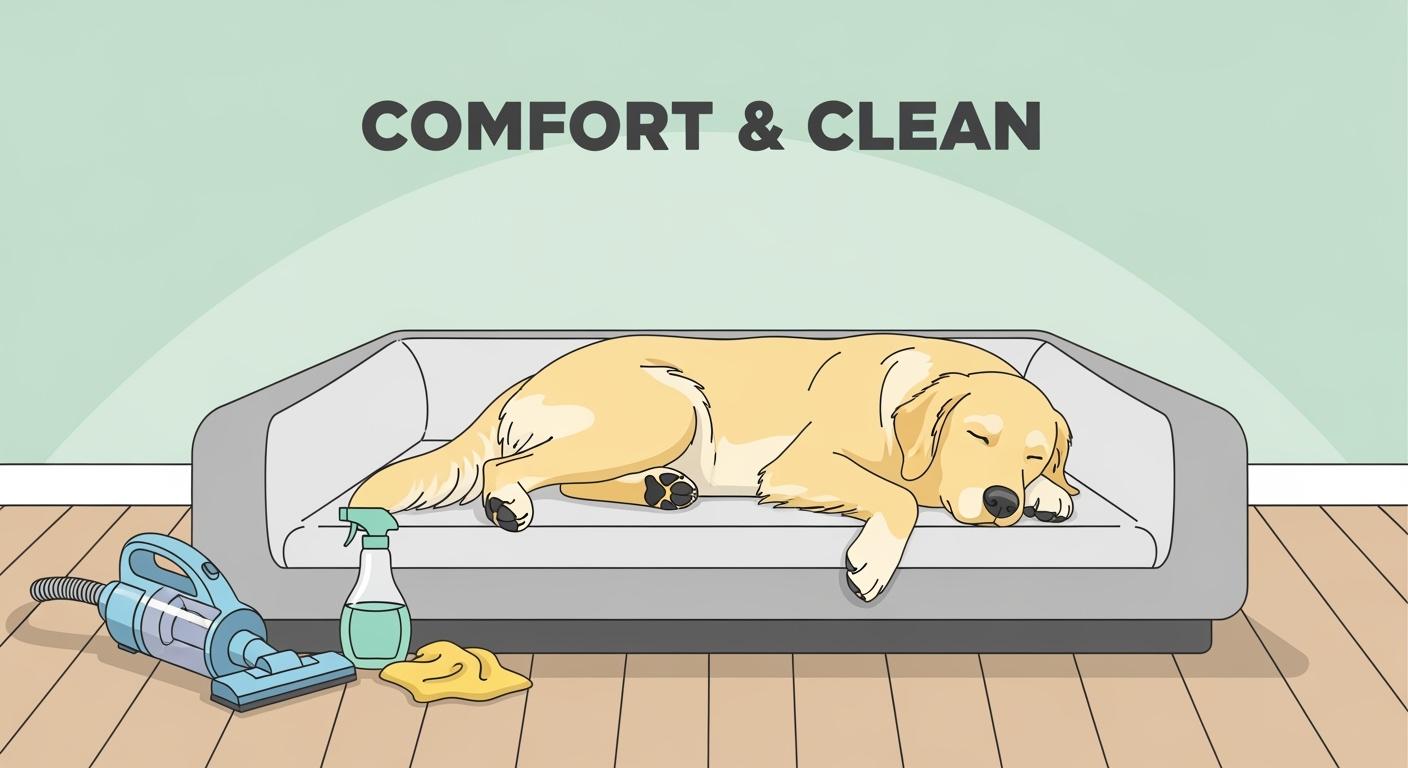
A large waterproof dog bed is worth the extra footprint when the added room actually helps your dog stretch, turn, and settle without hanging off the edge. The tradeoff is maintenance. In practical pet-care terms, the bed still has to stay clean and dry, and it needs faster attention when it is visibly dirty, damp, smells off, or has been soiled by accidents. That means the real buying question is not only whether the bed is big enough. It is whether you can keep that bigger bed usable week after week without trapped damp, slow drying, or a cover that turns every cleanup into a project.
| What More Room Helps With | What a Bigger Bed Makes Harder |
|---|---|
| Lets a large dog lie on its side, stretch out, and change position without sliding off the edge | Adds more surface area, more seams, and more places for hair, dirt, and moisture to stay behind |
| Helps older or heavier dogs settle without constantly re-folding themselves into a tighter shape | Takes longer to wash, dry, lift, rotate, and reset, especially in smaller homes or limited laundry setups |
The best large waterproof dog bed is not just the biggest one. It is the one your dog can use comfortably and you can realistically maintain before odor, dampness, or flattening start taking over.
Key Takeaways
- Choose a large waterproof dog bed that lets your dog lie on its side without paws, hips, or shoulders spilling off the usable surface. Extra room only helps if the bed still supports the body well.
- Bigger beds usually need layered maintenance: fast wipe-downs between washes, a regular full clean, and quicker action after accidents, damp buildup, or bad odors.
- Bed type matters as much as size. Wipe-clean tops reset fast, removable covers help with deeper cleaning, and raised beds dry faster but do not suit every dog.
Large waterproof dog bed: when the extra room really helps
Signs the current bed is too small
Large dogs do not just need space to lie down. They need enough usable room to roll onto one side, stretch the front legs forward, shift position, and get up without stepping half off the bed. If your dog starts on the bed and ends with the hips on the floor, sleeps diagonally every night, or keeps readjusting to find a stable spot, the issue is often usable surface area, not preference.
This matters even more for heavier dogs and older dogs that need a cleaner, more predictable place to settle. A bed can look large at first glance and still feel cramped once the dog actually tries to stretch out naturally.
When bigger starts costing you more time
A bigger waterproof bed is not automatically harder to live with, but it usually becomes more work once daily use starts. There is more cover to vacuum, more surface to wipe, more underside to check, and more bulk to move when you want the bed fully dry again. Waterproof also does not mean maintenance-free. Dirt can build up at piping and seams, wet fur can leave dampness underneath the cover, and a large foam insert can hold moisture longer than people expect.
The burden shows up fastest in real life: rainy walks, drool-prone dogs, occasional accidents, heavy shedding, or a home where you do not have much drying space. That is where bed design starts mattering more than the word “waterproof.”
Wipe-clean surface vs removable cover vs raised bed
You have many options for a large waterproof dog bed. The better choice depends on how your dog uses the bed and how much cleanup you can realistically keep up with.
| Bed Type | Works Best When | Main Strength | Main Watchout | Poor Fit If |
|---|---|---|---|---|
| Large wipe-clean bed | Your dog comes in dirty, wet, or sandy and you need fast resets | Quick surface cleanup between full washes | Odor and hidden damp can stay behind if mess gets past the outer layer | You need deeper laundry-style cleaning more often than simple wipe-downs |
| Large removable-cover bed | You want a more thorough clean and can wash and dry the cover properly | Better access for odor control and deeper maintenance | Large covers take more time, space, and patience to wash and refit | You need the bed back in service quickly after every mess |
| Raised quick-dry bed | You need airflow, faster drying, or less contact with damp floors | Less soak-through risk and easier underside airflow | Less cushion and a different feel than a padded floor bed | Your dog needs a plush, deeply padded sleep surface |
Material and layer setup matter too. A one-piece bed may look simpler, but a large bed is usually easier to live with when the dirty part and the support part are not permanently married together. If your dog drools, tracks in dirt, or has occasional accidents, a removable outer layer plus a waterproof barrier is often easier to recover than a bed that relies on a single easy-wipe claim.
Tip: The easiest large bed to maintain is often the one you can reset quickly after a wet or dirty day, not the one with the longest feature list.
Cleaning routines change once the bed gets big
What changes with a larger footprint
When you pick a large waterproof dog bed, the cleaning routine changes more than people expect. A larger bed usually needs three layers of care: quick removal of hair and surface dirt, a regular full clean, and a separate check for hidden dampness or odor under the cover and around seams. A weekly full reset is a common starting point for many homes, but large beds often need faster spot cleaning in between, especially after dirty walks, wet coats, vomiting, urine accidents, or illness.
The non-negotiable part is not the exact calendar day. It is whether the bed stays clean, dry, and usable. If it stays damp, smells stale, or keeps picking up grime faster than you can reset it, the routine is not holding up.
Pass/fail checklist for a cleaning routine that actually works
Use this checklist to judge whether your cleaning routine is keeping up with the bed size and the way your dog uses it:
| Check Item | Pass Signal | Warning Signal | What to Do |
|---|---|---|---|
| Outer cover or top surface | No sticky residue, no stale smell, and loose hair comes off easily | Hair stays packed in, surface feels tacky, or odor returns fast | Clean sooner, not later, and reassess whether the cover fabric is still easy to maintain |
| Waterproof barrier or liner | Inner layer stays dry and there is no seep-through after a small mess | Dampness gets past the surface or gathers underneath | Check for cracks, worn coating, or seams that are no longer sealing well |
| Foam or support core | Holds shape, dries fully, and does not keep a sour smell | Feels lumpy, stays heavy with moisture, or still smells after drying | Replace the insert or the bed before hidden damp becomes a repeat problem |
| Underside and floor contact area | Bottom stays dry and does not trap grime against the floor | Bottom feels cool, damp, or dirty even when the top looks fine | Lift and air the bed more often and stop assuming the surface tells the whole story |
| Drying time after cleaning | Bed is fully dry before reuse and goes back into rotation without stress | Bed stays out of service too long or gets used while still damp | Choose a design that is easier to separate, rotate, or dry in your actual home setup |
Troubleshooting table for common cleaning problems
If the bed keeps feeling harder to maintain than it should, this is usually where the problem starts:
| Symptom | Likely Cause | Quick Check | Fix |
|---|---|---|---|
| Odor comes back quickly after washing | Smell is sitting below the outer surface or in the foam | Smell the inner layer and seams, not just the top panel | Deep-clean the removable parts or replace the component holding the odor |
| Bed feels dry on top but damp underneath | Moisture is trapped under the cover or against the floor | Lift the bed and press the underside with a dry hand or towel | Air it out longer and stop reuse until the whole bed is dry |
| Hair stays packed into edges and seams | Fabric texture or piping is catching debris faster than surface cleaning can remove it | Look at corners and zipper lines after vacuuming | Use a deeper brush or choose a simpler cover design next time |
| Cover is hard to remove or refit after washing | Oversized insert, limited zipper access, or cover shrinkage | Check whether the difficulty shows up only after drying | Follow care instructions closely and avoid turning every wash into a forced refit |
| Bed stays flat or lumpy after cleanup | Support core is worn out, not just dirty | Press different zones and compare recovery | Replace the insert or retire the bed if support is no longer even |
A large bed is only easy to maintain when the parts that get dirty are also the parts you can actually reach, wash, and dry.
Failure signs and common mistakes with waterproof dog beds
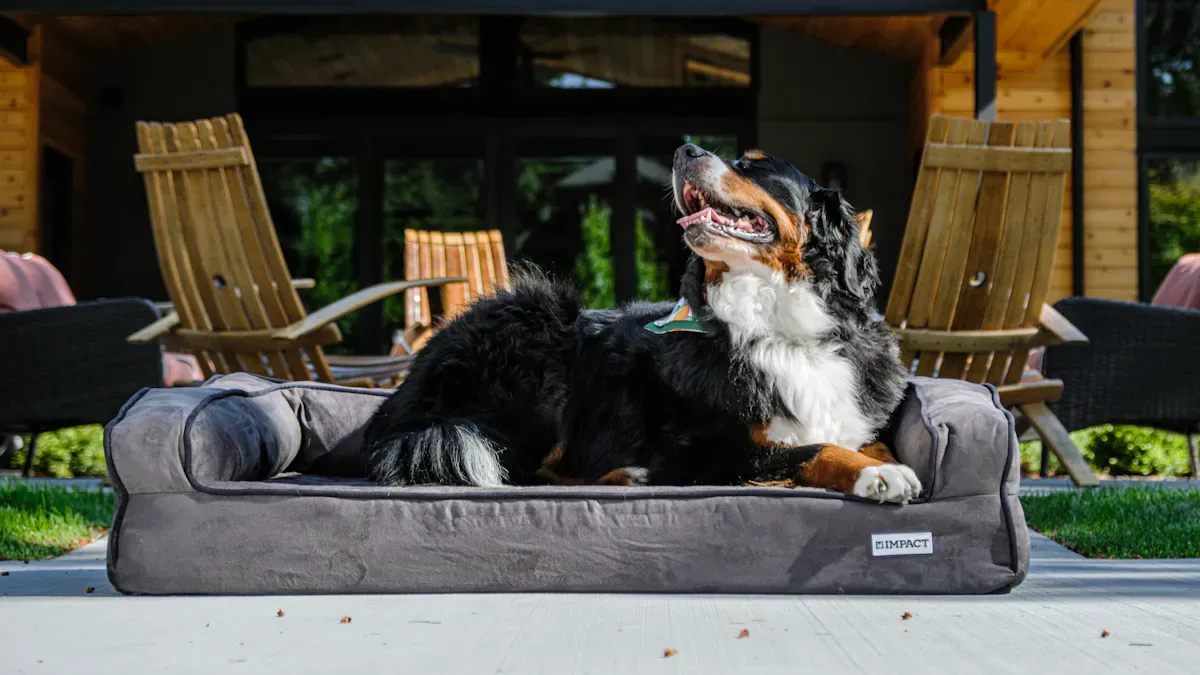
Trapped damp, odor, and slow reset
One of the most common mistakes with a waterproof dog bed is assuming the top surface tells the whole story. The top may look fine while the liner, underside, or foam is still holding moisture. That is how a bed starts to feel musty even when you are technically “cleaning it.” A large bed makes this easier to miss because the dry-looking area is bigger and the wet part can be hiding in one corner, underneath the insert, or near a seam.
Slow reset is another warning sign. If one cleanup means the bed is out of rotation too long, still smells faintly stale, or needs awkward lifting and reassembly every time, the design may be working against your routine. That matters just as much as comfort on day one.
Real consequences of cleaning mistakes
Poor cleaning does not just mean a bed looks messy. It usually shows up as recurring odor, damp patches that keep coming back, grime packed into edges, or a support core that starts losing shape faster than expected. These are the signs that the bed is no longer easy to maintain in the way your dog actually uses it.
If the bed has been contaminated by urine, stool, vomit, or repeated wet use, clean it promptly and do not let your dog go back onto it until it is fully dry again. If your dog has ongoing accidents, skin irritation, or persistent odor issues that do not match the bed alone, that is the point to speak with your veterinarian instead of assuming another wash cycle will solve everything.
When replacement is the smarter fix
Sometimes the right move is not a deeper clean. It is replacement. If the waterproof layer has cracked, the insert still smells after a full clean and full drying cycle, the seams trap grime you can no longer remove well, or the bed has flattened enough that your dog no longer settles comfortably, the bed is no longer doing its job. In that case, “waterproof” has stopped being a benefit and started being a label.
A large waterproof dog bed makes sense when the extra room improves how your dog rests and the cleanup still fits your real routine. The better choice is not simply the biggest bed or the one with the strongest waterproof wording. It is the one that gives your dog enough usable room while staying cleanable, dryable, and realistic to maintain after ordinary dirty days.
FAQ
How often should you clean a large waterproof dog bed?
A weekly full clean is a practical baseline for many homes, but large beds often need faster spot cleaning in between. Clean sooner whenever the bed is visibly dirty, damp, smells off, or has been soiled by accidents.
Is a wipe-clean surface or a removable cover better for a large dog?
A wipe-clean surface is usually better for fast daily resets. A removable cover is usually better when you need deeper odor control or more thorough washing. The better option depends on whether your bigger problem is frequent surface mess or deeper cleanup.
When should you replace a waterproof dog bed?
Replace it when the waterproof layer stops blocking moisture, the core stays smelly or damp after proper cleaning and drying, or the support has broken down enough that your dog no longer settles well on it.