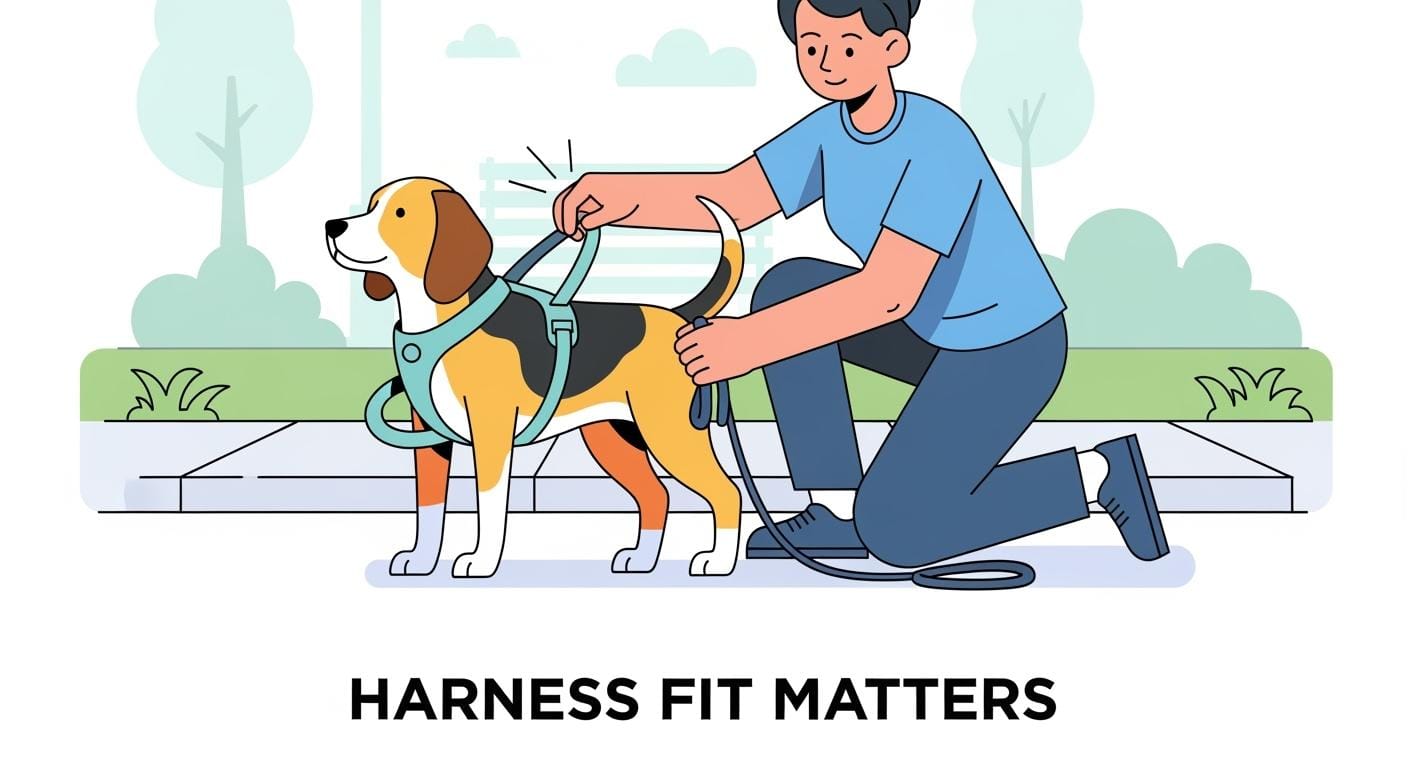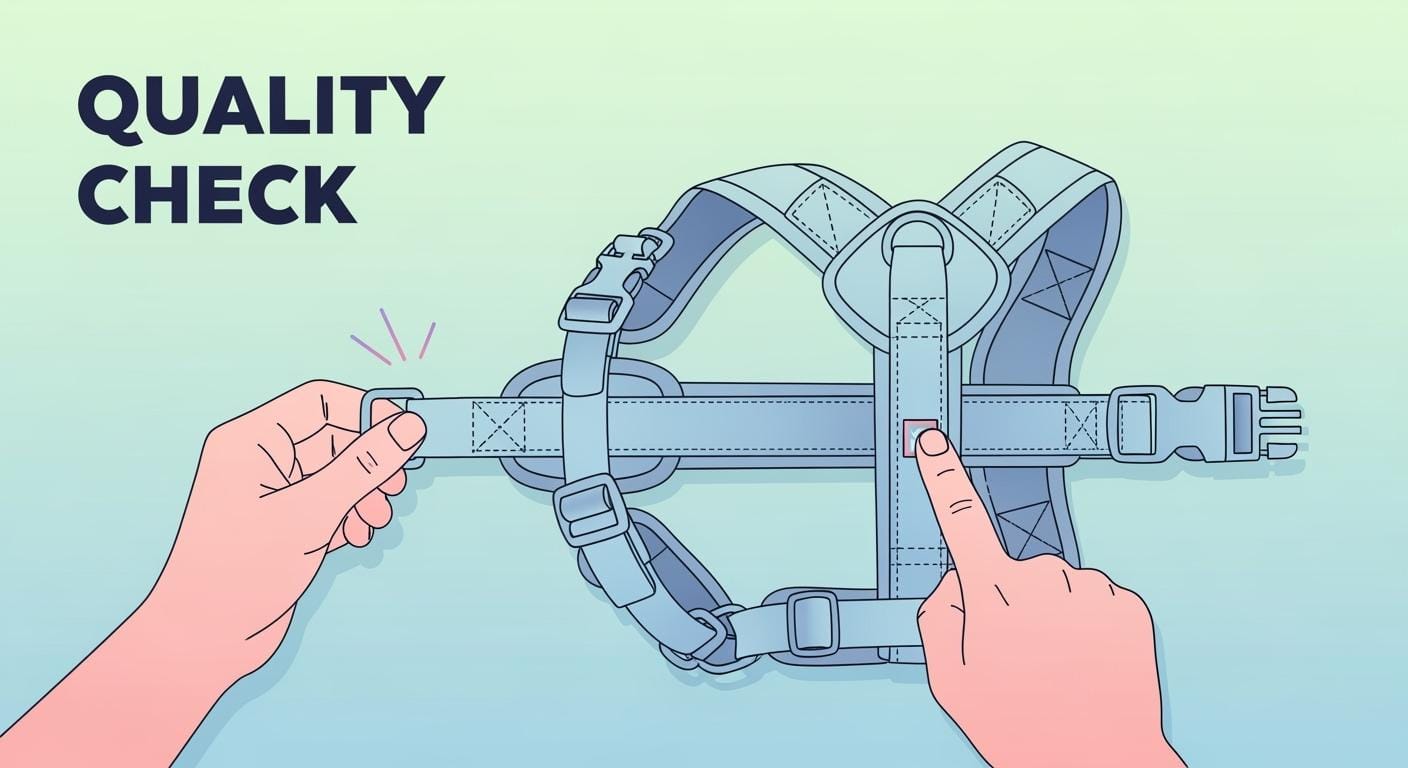
Most harness failures are predictable if you know where to look. You can spot signs of damage early by checking your large dog harness in the right places. Look at the stitching, webbing, and buckles to see if the harness can handle pulling and daily use. A good dog harness must support your dog’s fit and comfort. Regular inspection and maintenance help keep your harness safe and extend its life. The best dog harness should give you peace of mind, whether you use a no-pull harness or another style.
Safety Tip: If you see pain, limping, or skin irritation during use, stop and check the harness. Always retire gear with visible damage.
Key Takeaways
Inspect your dog’s harness regularly. Check stitching, webbing, and buckles for signs of wear. This helps catch problems early and keeps your dog safe.
Look for strong stitching at load points. Reinforced areas prevent sudden failures. If you see loose threads or broken stitches, replace the harness.
Choose durable webbing materials. Polyester is strong and resists wear. Check for fuzzing or curling edges. Replace webbing if it shows signs of damage.
Ensure buckles and hardware are secure. Test that they close tightly and do not open by themselves. Replace any hardware that shows wear or damage.
Clean your harness after each use. Rinse off dirt and moisture to extend its life. A clean harness helps prevent wear and keeps your dog comfortable.
Durability in Large Dog Harnesses
Load Paths and Stress Points
You want your large dog harness to last a long time. Durability means the harness can handle pulling and rough play. The strongest harnesses use tough materials in the load paths. These are places that get the most force, like the chest strap, back attachment, and girth junctions. You should check these spots for early signs of damage. Look for fraying, broken stitching, or stretched webbing. These are clues that the harness might break soon. If you see any damage, stop using the harness and get a new one.
Safety Note: Durability signs help lower risk but do not promise safety. If your dog has pain, limps, or gets skin irritation, stop and ask a veterinarian.
Daily Use and Wear Patterns
Every time you use a harness, the materials get stressed. Walks, hikes, and car rides create friction where straps rub on hardware or fur. Over time, even the best dog harness will show wear in these places. You should check the harness after each hike or wet trip. Look for fuzzing, sharp edges, or loose threads. Strong materials like ripstop fabric and polyester mesh fight abrasion better than soft material. If you see stretching or webbing that will not stay tight, it is time to replace the harness.
Key Areas: Stitching, Webbing, Buckles
Check three main areas when you inspect:
Stitching: Strong stitching at load points keeps the harness safe. Double layers and backtack stitches make it stronger.
Webbing: Tough materials with tight weave stop fraying and fuzzing. Edges should stay smooth and not curl up.
Buckles: Hardware must stay closed when your dog moves. Strong materials in buckles and rings stop them from opening by accident.
A no-pull harness needs to keep its fit and shape, even with strong pulling. Always check the harness for a secure fit before each use. If you see any damage, stop using the harness right away. Remember, gear cannot replace training or watching your dog.
Stitching Inspection for Dog Harness Longevity
Reinforcement and Stitch Patterns
You want your harness to last through daily walks, hikes, and even rough play. Strong stitching helps your large dog harness handle pulling and keeps your dog safe. Look for reinforced areas, especially where the harness takes the most force, like the chest and back attachment points. The best dog harness uses special stitch patterns for extra strength. Box-x stitching creates four load-bearing points, making it perfect for handle loops and high-stress spots. Zigzag stitching adds flexibility and helps prevent fraying, which supports the longevity of your harness.
Quality Clues: Spacing, Backtack, Alignment
Check the stitching closely. Good stitching has even spacing and no skipped stitches. Backtack stitches at the start and end lock the threads in place. Seams should run straight and not twist or bunch. If you see loose threads or uneven lines, the harness may not last. Outward-facing seams help reduce rubbing on your dog’s skin and add to comfort and longevity. Some harnesses use Gore Tenara thread, which resists UV and moisture, making the harness last longer.
Edge Binding and Padding
Edge binding covers the raw edges of webbing and keeps them from fraying. Padding under the stitching protects your dog’s skin and helps the harness keep its fit. Check that the binding is smooth and not peeling away. If you see sharp or rough edges, the harness may cause discomfort or wear out faster.
Stitching Table: Good vs. Bad Signs
Stitch Area | What Good Looks Like | Red Flag | What It Leads To |
|---|---|---|---|
Load Points | Box-x or zigzag, tight, no gaps | Loose, skipped, broken | Sudden failure, break |
Edges and Binding | Smooth, covered, no fray | Exposed, curling, sharp | Fraying, skin irritation |
Seams and Padding | Straight, even, outward-facing | Twisted, bunched, rough | Poor fit, discomfort |
Thread Type | Gore Tenara or similar, no fuzz | Fuzzy, sun-damaged | Weakening, early wear |
Safety Note: Durability signals lower risk but do not guarantee safety. If you see pain, limping, or skin irritation, stop using the harness and consult a veterinarian. Always retire a harness with visible damage.
Webbing Inspection for Harness Durability
Webbing Type and Weave
You want your large dog harness to last a long time. The webbing is the main part that holds it together. Nylon webbing is very strong and lasts long, but it can stretch and does not do well in water. Polyester webbing is almost as strong as nylon. It does better with sun and water. Polypropylene webbing is not as strong as the others. It lasts okay and does very well with water. Most harnesses use polyester webbing because it is strong, lasts long, and does not stretch much.
The way the webbing is woven is important too. Plain weave is tough and lasts a long time. It works well for most harnesses. Tubular weave has two layers, so it is stronger and bends more easily. Herringbone weave is also strong and works for many things. Ripstop fabric stops tears and is good where there is rubbing. Polyester mesh is soft and dries fast, but it may not last long in places that get pulled a lot.
Coatings and Finishes
Coatings and finishes help your harness last longer. Fluorocarbon coatings make the harness resist water and oil almost all the way. Polyurethane coatings help stop the harness from wearing down by rubbing. Some harnesses use resin or latex to help stop wear, especially where there is a lot of rubbing. These coatings keep the webbing strong and clean, even after many uses.
Adjuster Friction Zones
Look at the webbing where it slides through adjusters. These spots can show damage early. Check for fuzz, sharp edges, or curling. The webbing should stay in place and not slip when you pull. If you see it stretching or slipping, change the fit by 1-2 in (3-5 cm) and try again. If it still slips, you may need a new harness.
Tip: Wash your dog’s harness after each hike or wet walk. This removes dirt and helps slow down wear in these spots.
Webbing Table: Signs and Actions
Webbing Zone | Good Sign | Early Wear Sign | What to Do |
|---|---|---|---|
Chest/Back Straps | Tight weave, smooth edges | Fuzzing, curling, sharp | Clean, trim fuzz, watch closely |
Adjuster Area | Holds fit, no slipping | Slips, stretches, frays | Change fit 1-2 in (3-5 cm), retest |
Friction Zones | No marks, no fuzz | Fuzzing, webbing thins | Clean, check after each use |
Mesh/Padding | No holes, dries fast | Holes, stretched out | Replace harness if damaged |
Always wash your dog’s harness with clean water and let it dry all the way. Cleaning gets rid of dirt that can make the harness wear out faster. If you see damage, stop using the harness right away. Remember, strong gear lowers risk but does not promise safety. If your dog has pain, limps, or has skin problems, stop using the harness and talk to a vet. Gear cannot take the place of training or watching your dog.
Buckles and Hardware Checks
Buckle Retention and Release
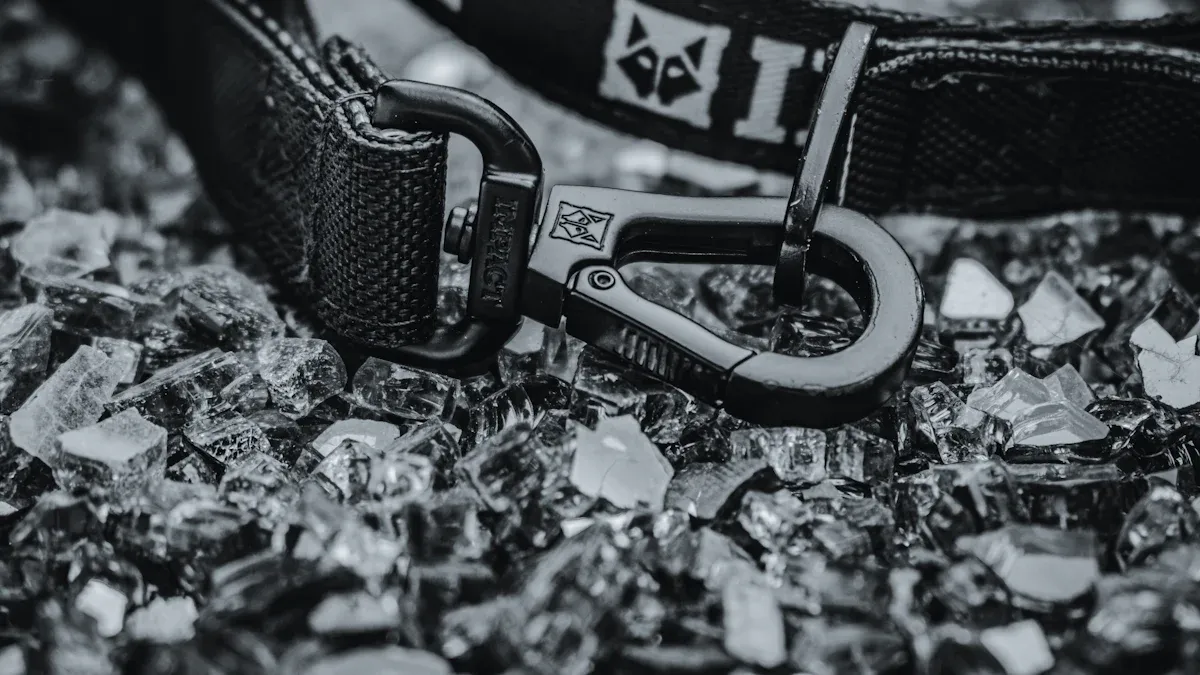
You want your harness to stay safe every time you use it. Buckles need to hold tight when your dog pulls or moves fast. Metal Cobra buckles are very strong and trusted for large dog harnesses. These buckles have two release ears, so they do not open by accident, even if your dog pulls hard. They are made from tough materials and can handle heavy weight. Cobra-style buckles look the same but might not be as good. Frog connectors lock by themselves and you can use them with one hand. Carabiners are good for holding weight, especially if they lock. Trigger snaps and swivel snaps are used a lot but can get weak if they get dirty or wet. Always make sure the buckle clicks shut and does not open on its own.
D Rings and Attachment Points
D rings and attachment points connect the leash to the harness. You should check these parts to see if they are smooth and welded well. Stainless steel D rings do not rust and work best in wet places. Galvanized steel is okay for places that are not too rough. Make sure the D ring does not have sharp edges that could hurt the webbing or your hand. The attachment point should not bend or twist when pulled. If you use a no-pull harness, check the front and back rings for damage.
Material Type | Corrosion Resistance | Best Use Cases |
|---|---|---|
Stainless Steel | High | Marine and chemical environments |
Galvanized Steel | Moderate | Less aggressive environments |
Corrosion and Grit Issues
Water, dirt, and grit can make your harness hardware wear out faster. Water can make nylon weak for a short time, but it gets strong again when dry. If the harness stays wet too long, mold or mildew can grow and hurt the material. Dirt and grit rub against the hardware and webbing like sandpaper. You should rinse the harness after every hike or wet walk and let it dry all the way. This helps stop rust and keeps the hardware working well.
Safety Note: Strong gear lowers risk but does not promise safety. If you see pain, limping, skin problems, or panic, stop using the harness and talk to a vet. Always stop using gear with damage you can see.
Hardware Table: Checks and Fixes
Hardware Part | What to Check | Red Flag | Quick Fix |
|---|---|---|---|
Buckle | Closes securely, no cracks | Opens by itself, cracked | Replace buckle |
D Ring | Smooth, no sharp edges | Bent, sharp, rusted | Replace ring |
Carabiner | Locks, no sticking | Does not lock, bent | Replace carabiner |
Trigger Snap | Snaps closed, no grit | Sticks, does not close | Clean, replace if needed |
Swivel Snap | Rotates freely, no wear | Stiff, worn, broken | Clean, replace if needed |
Hardware Finish | No rust, no pitting | Rust, pitting, roughness | Clean, dry, replace if corroded |
Check the hardware before you use the harness each time. If you find a problem, make a small change and test the fit again. For example, move the strap by 1-2 in (3-5 cm) and see if the hardware works. If the problem does not go away, stop using the harness. Remember, gear cannot take the place of training or watching your dog.
Harness Inspection Routine
A good harness inspection routine helps you keep your dog safe and your gear in top shape. You can spot problems early and make small fixes before they become big issues. Use this routine before you buy a harness, at home, and after every walk or hike.
Store Inspection: Quick Checks
When you shop for a harness, you want to check the basics right away. Follow these steps:
Look at the stitching. Check for even lines, no loose threads, and strong reinforcement at load points.
Feel the webbing. It should feel smooth, not fuzzy or sharp. Edges should not curl or fray.
Test the buckles and hardware. Open and close each buckle. Make sure it snaps shut and does not open by itself.
Adjust the straps. Pull each strap through its adjuster. The webbing should hold its place and not slip.
Check padding and liners. Padding should cover all rough edges and feel soft against your hand.
Look for any signs of damage or poor materials. If you see cracks, rust, or weak spots, choose another harness.
Tip: Always try the harness on your dog in the store if possible. Adjust the fit so you can slide two fingers under the straps. This helps with regular adjustment for comfort.
Home Inspection: Flex and Pull Tests
At home, you should do deeper checks before each use. This keeps your harness safe for daily walks, hikes, or road trips.
Flex the harness in your hands. Bend and twist it to check for weak spots.
Pull on the straps and buckles. They should not stretch or slip more than 1-2 in (3-5 cm).
Inspect all stitching, especially at chest, back, and girth junctions. Look for broken or loose threads.
Check the webbing for fuzzing, curling, or thinning.
Test the adjusters. Make sure the webbing does not creep or loosen after you pull.
Examine hardware for cracks, rust, or sharp edges.
Clean the harness with mild detergent and lukewarm water. Air dry it fully before storing.
Safety Note: Equipment shall be inspected by the user before each use and, additionally, by a competent person other than the user at intervals of no more than one year.
Field Checks After Use
After each walk, hike, or wet trip, you should do a quick field check. This helps you catch early signs of wear from pulling or rough play.
Look for dirt, grit, or moisture trapped in the harness.
Check for new fuzzing, fraying, or stretched webbing.
Inspect buckles and rings for grit or sticking.
Make a small adjustment for regular adjustment for comfort if the fit feels off.
Rinse the harness with clean water and let it dry fully.
If you see any visible damage, stop using the harness. Replacing worn-out harnesses keeps your dog safe.
Unified Data Pool Table: Parameters and Values
You can use this table to guide your routine inspections and maintenance. It shows what to check, why it matters, and what to do next.
Parameter | Target option or rule | Why it matters |
|---|---|---|
Use case | daily walks, hikes, road trips | Predicts wear patterns |
Load points | chest, back attachment, girth strap junctions | Where failures start |
Stitching | reinforced at load points | Holds structure under pull |
Webbing | tight weave, low fuzzing | Resists abrasion |
Adjusters | no creeping under use | Maintains fit stability |
Buckles | secure retention, smooth release | Prevents accidental opening |
Rings | smooth, no sharp edges | Protects straps and tethers |
Cleaning | rinse grit, dry fully | Slows corrosion and odor |
Retire rule | visible damage means retire | Prevents sudden failure |
Step-by-Step Harness Inspection and Maintenance Table
Step | Where to Look | Pass Sign | Fail Sign | Next Action |
|---|---|---|---|---|
1 | Stitching at load points | Even, tight, no loose threads | Broken, loose, skipped stitches | Replace harness or repair stitching |
2 | Webbing on straps and adjusters | Smooth, tight weave, no fuzz | Fuzzing, curling, thinning | Clean, trim fuzz, monitor closely |
3 | Buckles and hardware | Closes securely, no cracks | Opens by itself, cracked, rusted | Replace hardware or harness |
4 | Adjusters | Holds fit, no slipping | Slips, stretches 1-2 in (3-5 cm) | Adjust fit, retest, replace if needed |
5 | Padding and liners | Soft, covers edges | Rough, peeling, missing | Replace harness if discomfort |
6 | After use (field check) | No new wear, dry, clean | Dirt, grit, moisture, new damage | Rinse, dry, inspect again |
7 | Overall fit | Allows two fingers under straps | Too tight, too loose | Adjust for regular adjustment for comfort |
8 | Visible damage | None | Any visible damage | Retire harness immediately |
Safety Reminder: Durability signals lower risk but do not guarantee safety. If you see pain, limping, skin irritation, panic, or breathing issues, stop using the harness and consult a veterinarian. Gear cannot replace training or supervision. Always retire gear with visible damage.
Routine inspections and maintenance help you spot problems early. You should check your harness before each use and after every hike or wet trip. Deep checks at home and regular cleaning keep your harness in good shape. Store it in a dry place and follow the manufacturer’s care instructions. Replacing worn-out harnesses is the best way to prevent sudden failure. A no-pull harness or any other style needs the same care. Good materials and regular adjustment for comfort help your harness last longer and keep your dog safe.
Comfort vs. Durability Tradeoffs
Heavy Duty vs. Flexibility
When picking a harness, you have two choices. One is heavy-duty strength. The other is flexible comfort. Heavy-duty harnesses use strong materials and extra stitching. These harnesses work well for pulling and rough play. They protect your dog from sharp things and last longer. But they can feel stiff and may limit movement. Flexible harnesses use lighter materials and special shapes. These harnesses let your dog move easily and stay cool. They might not last as long if your dog pulls hard or plays rough.
Padding, Liners, and Moisture
Padding and liners make harnesses more comfortable. Thick padding helps spread out pressure and protects your dog’s chest. Liners that wick away moisture keep your dog dry. They help stop skin problems. Some harnesses have extra padding near the sternum for safety. Breathable linings help your dog stay cool on walks. Strong stress points make the harness last longer. Materials you can wash in a machine are easy to clean. Too much padding can trap water. This can cause bad smells or make the harness wear out faster.
Quick Dry vs. Plush Comfort
Quick-dry harnesses use thin fibers. These dry fast and do not smell bad. They are good for dogs who swim or walk in wet places. Plush comfort harnesses use thick, soft padding. These feel nice on your dog’s skin but can hold water. They take longer to dry. Plush materials can wear out faster in wet or muddy places. Pick the harness that fits your dog’s needs and how often you clean it.
Tip: If your dog uses a no-pull harness, look for padding that does not rub or hold water.
Comparison Table: Features and Impacts
Feature Choice | Durability Impact | Comfort Impact | Who It Suits | What to Avoid |
|---|---|---|---|---|
Heavy-duty webbing | High | Moderate | Strong pullers, rough play | Stiff, limits movement |
Flexible, ergonomic fit | Moderate | High | Active, mobile dogs | Not for heavy pulling |
Thick, ventilated padding | Moderate | High | Long walks, sensitive skin | Excess moisture, slow drying |
Quick-dry materials | High | Moderate | Wet, outdoor activities | Less plush, less cushion |
Plush comfort padding | Low | Very High | Calm, indoor dogs | Moisture retention, odor |
You need to balance comfort and durability when choosing a harness. Think about how active your dog is and where you use the harness. Always check for damage and stop using the harness if you see any. Remember, strong features lower risk but do not promise safety. If your dog has pain, limps, or skin problems, stop using the harness and talk to a vet.
Troubleshooting Early Wear in Dog Harnesses
Fraying and Fuzzing Straps
Sometimes, harness straps get fuzzy or start to fray after you use them a lot. This usually happens where the straps rub against metal parts or your dog’s fur. Fraying can start small but get worse fast if you ignore it. Look at the webbing for rough spots or loose threads. If you see fuzz, trim it with scissors and keep checking that spot. If the fraying spreads or the edges feel sharp, the harness is getting weak. If you cannot fix the straps, you should stop using the harness.
Slipping Adjusters and Stretched Webbing
Adjusters are supposed to keep the webbing tight during walks. If you see straps slipping or stretching more than 1-2 in (3-5 cm), the harness is not fitting right. Stretched webbing or slipping adjusters can make the harness unsafe. Test the adjusters before every walk. If you cannot fix the slipping by adjusting, get a new harness. Straps that do not stay tight mean the harness is damaged.
Buckle Noise and Grit
Buckles and other metal parts can get dirty or wet after you go outside. If you hear clicking, grinding, or sticking sounds, wash the hardware with water and let it dry. Buckles that open too easily or do not close tight are not safe. If cleaning does not help, change the hardware or get a new harness. Clips that open by themselves are a sign of damage you should not ignore.
Troubleshooting Table: Symptoms and Fixes
Symptom | Likely Cause | Quick Fix | Next Step |
|---|---|---|---|
Fuzzing or fraying strap | Friction, material wear | Trim fuzz, monitor | Retire if fraying spreads |
Slipping adjuster | Worn webbing, loose fit | Adjust by 1-2 in (3-5 cm), retest | Replace if slipping continues |
Stretched webbing | Overloading, old material | Test fit, adjust, monitor | Retire if does not hold shape |
Buckle noise or grit | Dirt, moisture, corrosion | Clean, dry thoroughly | Replace hardware if not fixed |
Buckle opens easily | Worn spring, damage | Test closure, replace buckle | Retire harness if not secure |
Holes in padding | Wear, chewing | Patch if small, monitor | Retire if holes cannot be patched |
Scenario A: Daily Walker/Hiker
You use your harness every day for walks and hikes. After a few weeks, you see fuzz on the straps and seams wearing out. You trim the fuzz and check the seams. The harness still fits, but you keep watching the area after each walk. If the fraying gets worse or the seams break, you stop using the harness to keep your dog safe.
Scenario B: Road Trip with Buckle and Hardware Issues
After a long road trip, you notice the buckle sticks and the metal parts look rusty. You clean the buckle and let it dry. If the buckle still makes noise or opens too easily, you change the hardware. If the problem does not go away, you stop using the harness.
Safety Note: Strong gear lowers risk but does not promise safety. If you see pain, limping, skin problems, panic, or trouble breathing, stop using the harness and talk to a vet. Gear cannot replace training or watching your dog. Always stop using a harness with damage you can see, like frayed edges you cannot fix, holes in padding, stretched straps that do not stay tight, or clips that open too easily.
You keep your dog safe and extend the life of your harness when you inspect it often. Use the steps and tables in this blog to check every part, from stitching to hardware. Make harness inspection a habit, especially if your dog pulls or uses a no-pull harness. A good dog harness protects your pet during every walk. When you buy, ask about how the harness is made and tested. The table below shows what to look for from OEM and ODM makers.
Aspect | Details |
|---|---|
Construction & Safety | Ask about webbing strength, sewing methods, and test standards like tensile tests. |
Customization Depth | Check how much you can customize, such as patterns or hardware finishes. |
Communication & Sampling | Find out about sample costs, lead times, and if they adjust samples after feedback. |
Quality Control | Look for strict checks during production and inspection of finished harnesses. |
OEM means the maker builds harnesses to another brand’s design. ODM means the maker designs and builds harnesses that brands can customize and sell as their own.
FAQ
How often should you inspect your large dog harness?
You should check your harness before each use and after every hike or wet trip. Do a deeper inspection at home on a regular schedule. This helps you spot early signs of wear.
What is the first sign that a harness needs to be retired?
Look for visible damage like fraying, broken stitching, stretched webbing, or hardware that does not close. If you see any of these, stop using the harness right away.
How do you clean a dog harness without damaging it?
Rinse the harness with clean water after each use. Use mild detergent and lukewarm water for deeper cleaning. Let it dry fully before storing. This helps slow down wear and prevents odor.
What should you do if the harness fit changes during a walk?
Stop and check the adjusters. Adjust the straps by 1-2 in (3-5 cm) and test the fit again. If the harness keeps slipping, you may need a new one.
Can you repair a harness with minor fraying or fuzzing?
You can trim small fuzz or fray with scissors and monitor the area. If the damage spreads or affects safety, retire the harness. Safety comes first.