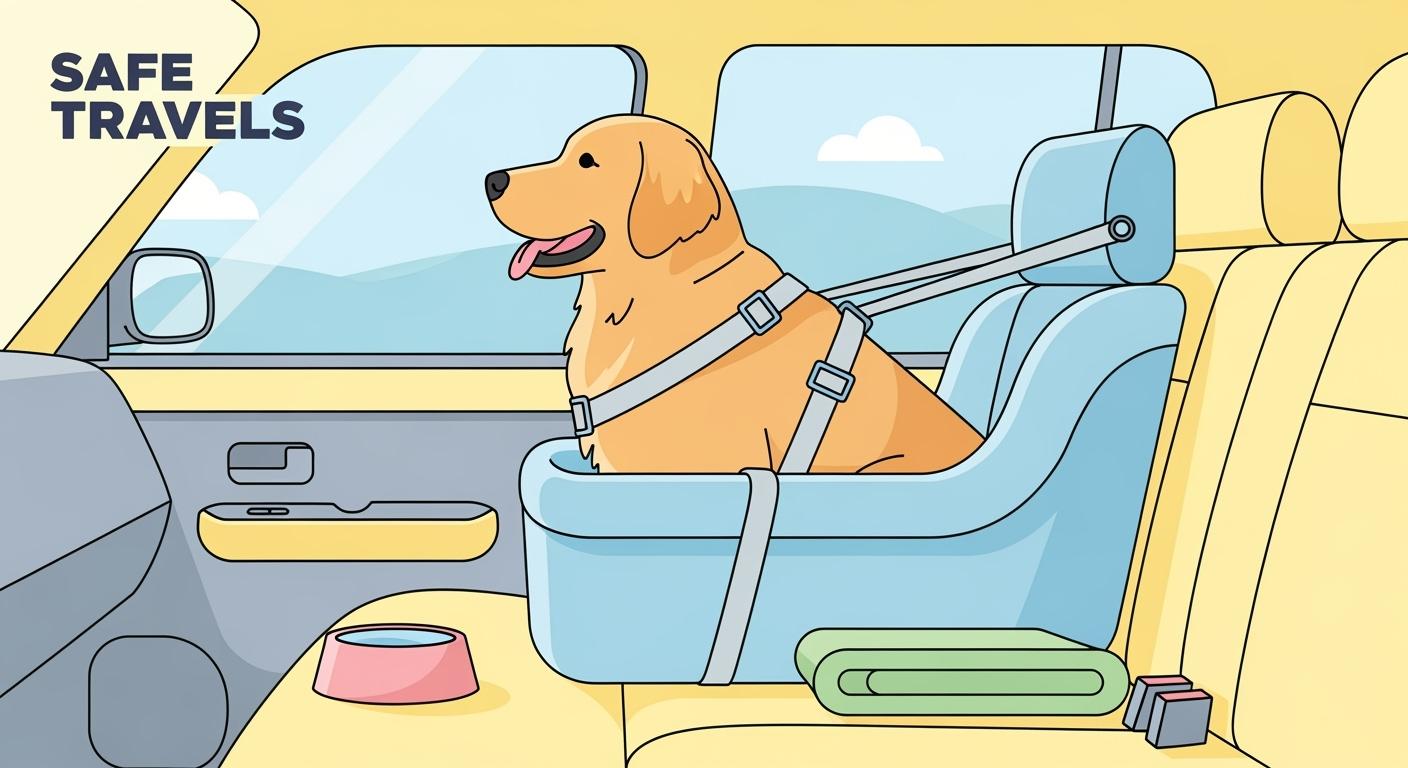
Traveling with a large dog means more than just finding space. You need to think about how a large dog car seat handles weight, movement, and comfort. Many owners believe a large dog car seat will always keep their dog safe, but comfort and restraint are different. You should look for features that support your pet and match your vehicle. Sudden stops can cause injury if your dog is not secured. The best dog car seat cover adds stability, but restraint remains a separate choice. Check the table below for common safety risks and tips:
Safety Risk | Recommendation |
|---|---|
Distracting the driver | Secure your dog and keep them away from the driver’s view. |
Unrestrained travel | Use a car seat, carrier, or barrier to limit free movement. |
Anxiety or motion sickness | Watch for stress and provide a comfortable setup. |
Escape risks | Keep windows closed and avoid front seat placement. |
Key Takeaway: Always match your large dog car seat to your dog’s weight and your car’s size. Comfort platforms do not replace restraint. Place your dog in the back seat when airbags are present.
Key Takeaways
Pick a large dog car seat that fits your dog’s weight and your car’s size. This helps keep your dog safe.
Use comfort platforms and restraint systems together. These keep your dog secure when you travel.
Measure your car’s back seat and the space on the floor before you buy a car seat. This makes sure it will fit right.
Choose strong materials for your dog’s car seat. Strong materials last longer and do not break easily.
Put your dog in the back seat every time. This keeps your dog safe from airbags if there is a crash.
Large Dog Car Seat Basics and Limits
Comfort Platform vs Restraint
When you shop for a large dog car seat, you will see two main types: comfort platforms and restraint systems. A comfort platform gives your dog a flat, stable place to rest. It helps your dog relax and keeps them from slipping into the footwell. However, a comfort platform does not secure your dog during sudden stops. A restraint system, such as a harness or seat belt attachment, keeps your dog in place and helps prevent injuries. You should always remember that comfort and restraint are not the same. For true safety, use a seat belt compatible restraint along with a comfort platform.
The core component of serious interior protection: The seat platform is the main failure point because it takes the most weight and receives the most mess. If the seat layer fails, everything else gets harder: more slipping, more pooling, more hair embedding, and more interior surfaces getting hit. Sag creates instability, which makes dogs brace and reposition.
Gap Coverage and Stability
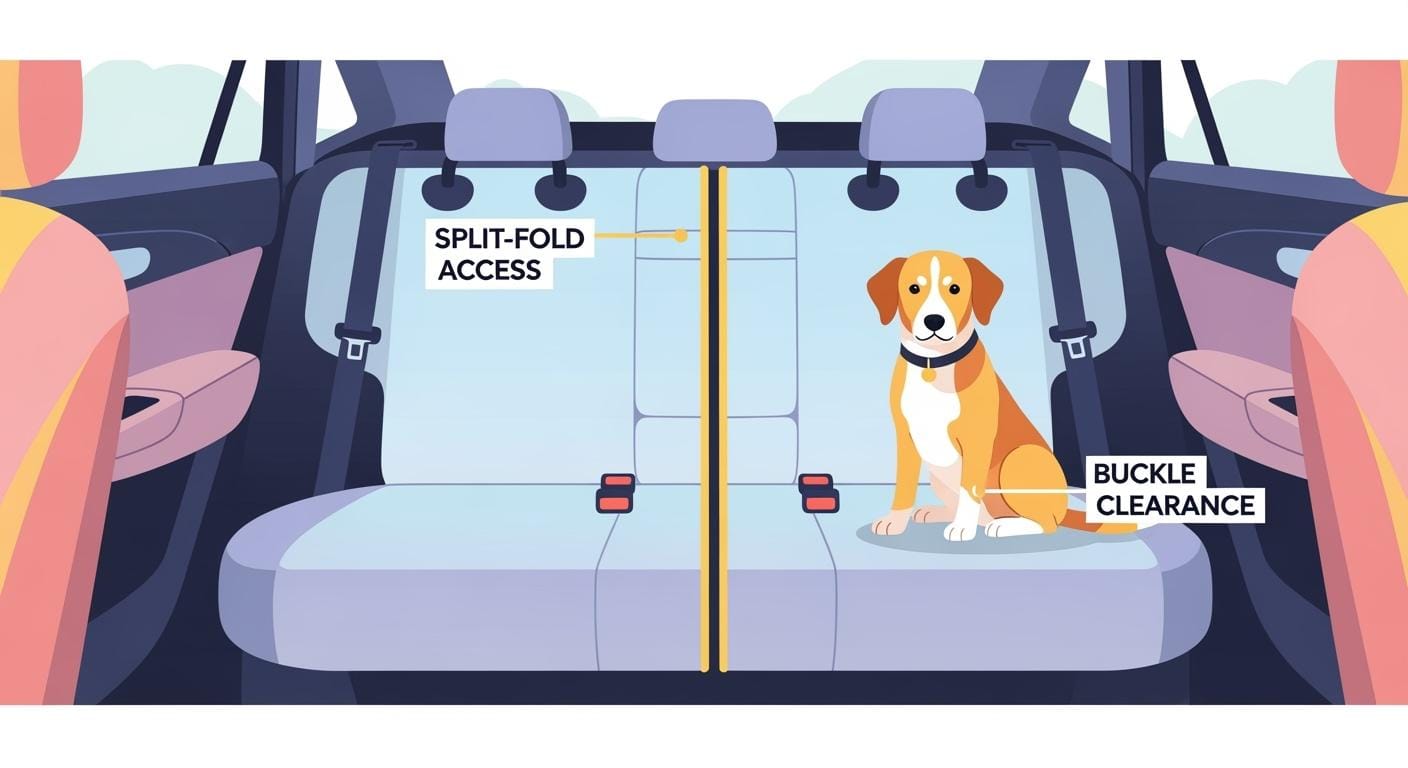
Large dogs need extra support in the car. Many back seats have a gap between the bench and the front seats. A good car seat platform covers this gap and creates a stable surface. This helps your dog feel secure and reduces the risk of slipping. Look for a hard, flat base that does not sag.
A flat, rigid base protects both dogs and cars. It is especially important for dog travel gear for large dogs, but it also matters for senior and anxious dogs who settle faster when the surface feels predictable.
Always check that the platform matches your dog’s weight and your car’s size. This step improves safety and comfort for every ride.
When to Use a Crate Instead
Sometimes, a car seat is not enough. If your dog is close to the weight limit, or if they move a lot during travel, a crate may offer better safety. Crates provide more structure and help prevent injury during sudden stops. Place your dog in the back seat or cargo area, not the front seat, especially when airbags are present. If your dog has mobility or breathing issues, talk to your veterinarian before travel. If your dog panics in the car, consult a qualified trainer. Remember, unrestrained dogs can distract drivers and may be injured during sudden stops. Comfort platforms and covers do not replace restraint.
Types of Large Dog Car Seats for Travel
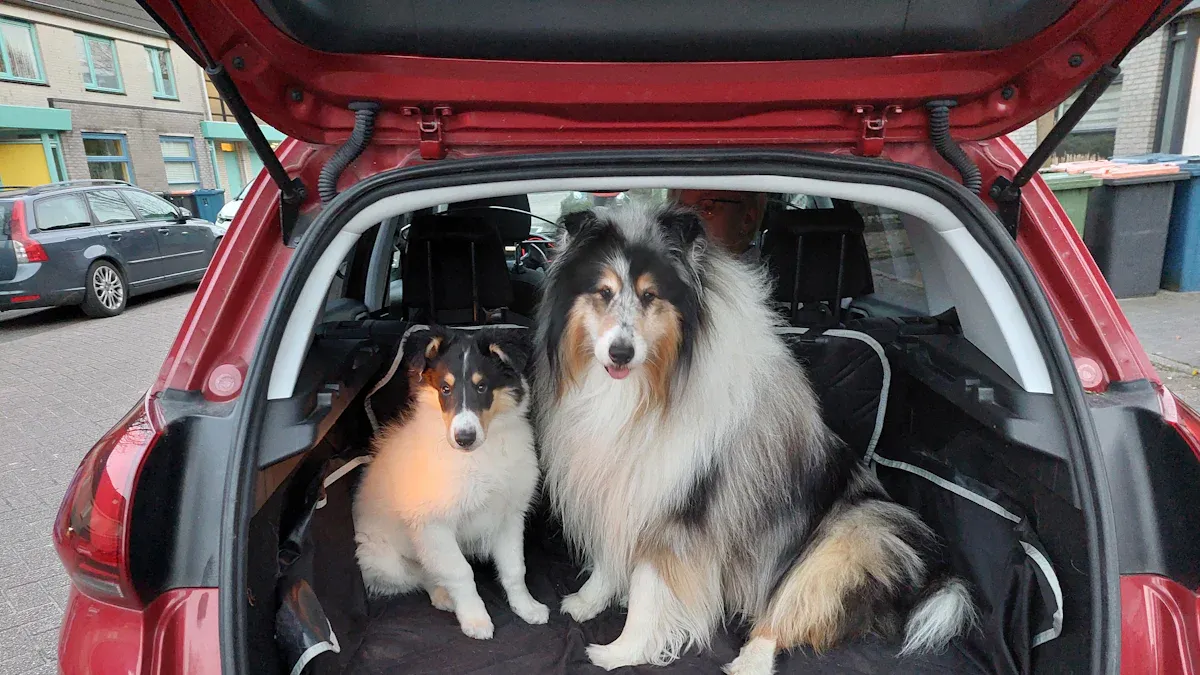
Choosing the right dog car seat cover for your large dog can make every trip safer and easier. You will see three main types: back seat extender platforms, hammock dog car seat covers, and cargo area beds and barriers. Each option solves different problems for large breeds. You should match the cover to your dog’s size, your vehicle, and your travel habits.
Back Seat Extender Platforms
Back seat extender platforms create a stable, flat surface across the rear bench and footwell. You can use these platforms to prevent your dog from slipping into the gap. Most platforms measure about 52 in x 25 in (132 cm x 64 cm), which fits many vehicles. The hard base supports heavy dogs and keeps the cover from sagging. You should check the weight label before buying. If your dog is close to the maximum, switch to a more structured travel option. Extender platforms work well for daily rides and long trips. They help dogs who like to stretch out or sit upright.
Safety tip: Comfort platforms and covers do not replace restraint. Always use a seat belt compatible restraint when possible.
Hammock Dog Car Seat Covers
Hammock dog car seat covers hang between the front and back seats. The hammock design protects the back seat from dirt and scratches. You can install a hammock quickly, and it works for one small to medium dog. Most hammock covers measure about 52 in x 65 in (132 cm x 165 cm). The cover keeps your dog from falling into the footwell. Hammocks are lightweight and easy to clean. You should use a waterproof dog car seat cover for muddy rides. Hammocks do not provide much support for very large dogs. Always check the label for weight limits.
Cargo Area Beds and Barriers
Cargo area beds and barriers fit in the rear cargo space of SUVs and wagons. You can use these covers for giant breeds or multiple dogs. The cover protects the cargo area and keeps your dog away from the front seat. Many cargo beds have waterproof layers and raised edges. Barriers add extra safety by blocking access to the front. You should measure your cargo area before buying. If your dog has mobility or breathing issues, consult your veterinarian before travel.
Avoid front seat placement when airbags are present. Prioritize back seat or a properly secured crate for safety.
Comparison Table
Option | Pros | Cons | Best For |
|---|---|---|---|
Back Seat Extender Platform | Stable, supports large dogs, covers gap | Bulky, needs correct fit | Large breeds, daily rides |
Hammock Cover | Easy install, protects seat, lightweight | Limited support for big dogs | Small-medium dogs, short trips |
Cargo Bed & Barrier | Fits giant breeds, multi-dog, waterproof | Needs large cargo space, harder to install | Giant breeds, long trips, SUVs |
You should always match the dog car seat cover to your dog’s weight and your vehicle’s size. Measure before buying. Comfort platforms and covers do not replace restraint.
Sizing for Safety and Comfort
Choosing the right size for a large dog car seat is one of the most important steps for safe and comfortable travel. You should never guess the size. Always measure your vehicle and your dog before you buy. This helps you avoid common problems and keeps your large dog secure.
Measuring Rear Bench and Footwell Gap
Start by measuring the width of your rear bench. Use a tape measure to check the distance from one side to the other. Next, measure the gap between the back seat and the front seats. Write down these numbers. Many large dog car seat platforms have a typical size of 52 in x 25 in (132 cm x 64 cm). If your gap is bigger or smaller, you need to find a different size. A good fit means more comfort and less sliding.
Scenario A: Imagine your large dog slides toward the footwell when you brake. This happens if the seat gap is open. A seat extender platform fills the gap and gives your dog a stable, flat surface. Anchoring points keep the platform in place. After you install the platform, check that it does not move when you push on it.
Matching Platform Size to Vehicle
You should match the platform size to your vehicle. Do not guess. Always check the label for the recommended size and weight. Many covers list a weight limit. This limit often shows the best case, but real travel can create more force if your large dog moves around. If your dog is close to the weight limit, choose a stronger platform or a crate for more support.
Weight limits for large dog car seats:
Labels often show a range from 90 lb (41 kg) to 420 lb (191 kg).
These numbers are for ideal conditions.
Dogs that move or shift can create more force than the label shows.
Dog Size and Preferred Position
Measure your dog from nose to tail and note their weight. Watch how your large dog likes to ride. Some dogs stretch out, while others curl up. Pick a platform size that matches your dog’s body and comfort needs. If you have more than one large dog, measure both and choose a size that fits all.
Common Cause | What It Leads To | What To Do Next |
|---|---|---|
Guessing platform size | Poor fit, sliding, discomfort | Measure bench and gap before buying |
Ignoring weight label | Platform failure, safety risk | Match dog weight to label, choose wisely |
Wrong comfort platform size | Dog cannot lie flat, stress, anxiety | Pick size for your dog’s position |
Step-by-step setup:
Measure rear bench width and footwell gap.
Measure your large dog’s length and weight.
Choose a platform size that matches both.
Confirm the weight label supports your large dog.
Install the platform and anchor it.
Plan for restraint with a seat belt compatible harness.
Take a short test ride and check for movement.
Comfort platforms and covers do not replace restraint. Avoid front seat placement when airbags are present. Use the back seat or a crate when possible. Ask your veterinarian for advice if your large dog has mobility or breathing issues. If your dog panics in the car, talk to a qualified trainer.
Support Features for Giant Breeds
Traveling with giant breeds brings unique challenges. You need a car seat that can handle their size, weight, and energy. Not all seats are built for these needs. You must look for features that keep your giant dog safe, comfortable, and calm on every ride.
Hard Base and Anti-Slip Design
A hard base is the foundation for any car seat made for giant breeds. This base keeps the seat from sagging under heavy weight. It spreads your dog’s weight evenly, which helps relax muscles and prevents pressure on joints. A flat, rigid base gives your giant dog a predictable surface. This helps them settle faster and reduces anxiety during travel.
You also need a strong anti-slip design. Large dogs can shift a lot during turns or stops. If the seat slides, your giant dog may lose balance or get hurt. Look for a seat with a textured, non-slip backing and seat anchors. These features keep the platform in place, even when your giant dog moves. A stable platform means less bracing and more comfort for your pet.
A hard base supports the weight of giant breeds and prevents sagging.
Anti-slip backing and anchors keep the seat from sliding.
Even weight distribution helps your giant dog relax and stay safe.
Stability reduces the risk of injury during sudden stops or turns.
A rigid base protects your car’s interior from damage.
Scenario B: Imagine your giant dog stands up and pivots during a sharp turn. Without a stable base and side support, your dog may slide or fall, causing chaos in the car. You might lose control of the situation. When you choose a seat with a hard base, strong side walls, and a seat belt compatible restraint, you reduce these risks. Your giant dog stays in place, and you keep your focus on the road. Travel is never risk-free, but the right features make it much safer.
Edge Support and Side Walls
Edge support and side walls are key for giant breeds. These features stop your giant dog from rolling off the seat or getting stuck in awkward positions. Stiff edges and raised sides give your dog clear boundaries. This helps them feel secure and keeps them from shifting too much during turns.
You should check for side walls that are tall enough to contain your giant dog. The walls should not collapse under pressure. Stiff edges also help keep the seat’s shape, even after many rides. When your giant dog leans against the side, the support should hold firm. This keeps your dog comfortable and prevents injuries.
Edge support keeps your giant dog stable during sharp turns.
Side walls create a safe space and reduce the risk of falling.
Stiff edges help the seat last longer and keep its shape.
Raised sides give your giant dog a sense of security.
Durable Materials and Seams
Giant breeds need seats made from durable materials. You want a cover that can handle claws, drool, and muddy paws. Look for rip-resistant and scratch-resistant fabrics. Reinforced stitching at stress points adds strength for energetic giant dogs. Non-slip backing helps with traction and keeps the seat in place.
A durable seat is also easier to clean. Waterproof layers protect your car from wet fur and spills. Breathable designs keep your giant dog cool, even on long trips. Always check the care label before washing. Wipe down the seat after muddy rides and let it air dry fully. This keeps the materials strong and extends the life of your seat.
Feature | Description |
|---|---|
Waterproof | Keeps seats dry from wet fur, drool, and muddy paws. |
Rip-resistant / scratch-resistant | Designed to withstand wear and tear from large dogs. |
Reinforced stitching | Provides additional strength for energetic pets. |
Non-slip backing | Prevents sliding during sudden stops and turns. |
Breathable design | Ensures comfort without sacrificing durability, especially for heated seats. |
Choose a seat with durable fabric and reinforced seams for giant breeds.
Non-slip backing improves traction and keeps your giant dog safe.
Waterproof covers make cleaning easier and protect your car.
Breathable designs add comfort for long rides.
Comfort platforms and covers do not replace restraint. Avoid front seat placement when airbags are present. Use the back seat or a properly secured crate when possible. Consult your veterinarian for dogs with mobility or breathing issues. If your giant dog panics in the car, talk to a qualified trainer.
Safety and Restraint Setup
Back Seat vs Front Seat Safety
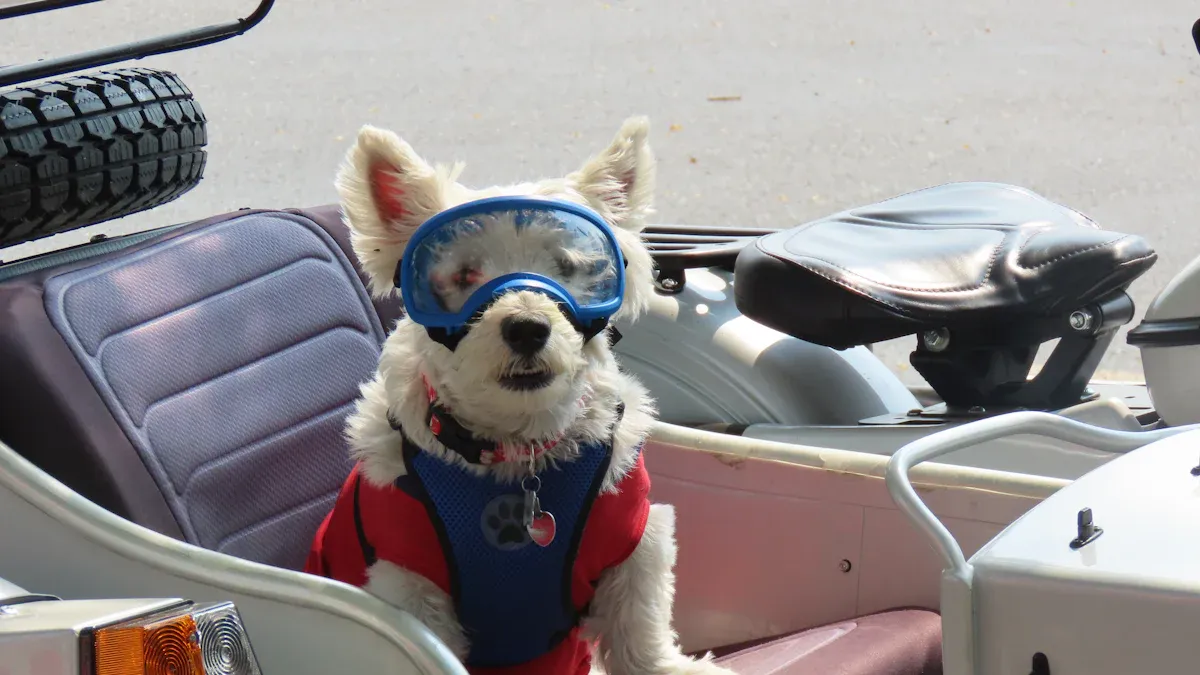
You should always place your large dog in the back seat when you travel. The back seat gives your dog more space and keeps them away from airbags. Airbags can hurt your dog during a crash. The back seat also helps you focus on driving. If you use a crate, put it in the back seat or cargo area. Never put your dog in the front seat if airbags are present. This simple step improves safety for both you and your pet.
Tip: Comfort platforms and covers do not replace restraint. Always use a seat belt compatible restraint or crate for better safety.
Using Seat Belt Compatible Restraints
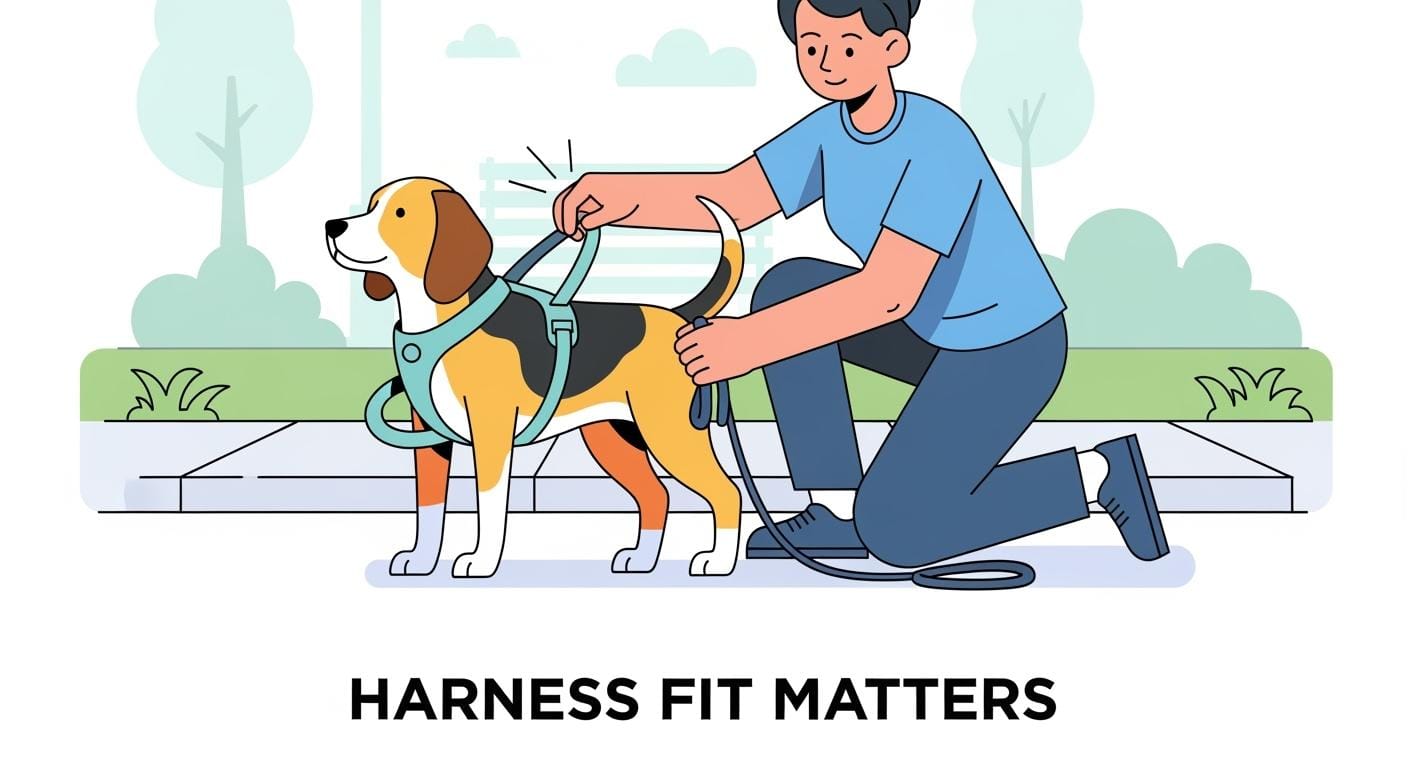
A seat belt compatible restraint keeps your dog in place during sudden stops. You should choose a harness or tether that works with your car’s seat belt system. Clip the restraint to your dog’s harness, not their collar. This helps prevent neck injuries. Check the restraint for a weight label and make sure it matches your dog’s size. If your dog is close to the maximum weight, use a crate for extra support. Always follow the instructions for setup.
Quick Setup Steps:
Place your dog on the comfort platform or cover.
Attach the harness to the seat belt restraint.
Check that the restraint is snug but not too tight.
Test the setup by gently pulling on the harness.
Quick Safety Checks
Before every trip, do a quick safety check. Make sure the platform or cover does not slide. Check that all straps and anchors are secure. Look at the restraint and harness for signs of wear. If you see damage, replace the gear before your next ride. Watch your dog during the drive. If they seem stressed or try to escape, stop and adjust the setup.
Safety Check | What to Do |
|---|---|
Platform movement | Push to test for sliding |
Harness fit | Check for snug, comfortable fit |
Strap condition | Look for fraying or damage |
Dog behavior | Watch for stress or escape attempts |
Note: Always consult your veterinarian if your dog has mobility or breathing issues. If your dog panics in the car, talk to a qualified trainer. Comfort platforms and covers do not replace restraint. Avoid front seat placement when airbags are present.
Feature Checklist for Buyers
Check important features before you buy a large dog car seat. This checklist helps you avoid problems and pick the best seat for your dog and car.
Fit and Installation Steps
Make sure the car seat fits your car and supports your dog’s weight. Measure your rear bench and footwell gap first. Match these numbers to the platform footprint and cover size on the label. Find a flat, rigid base that does not sag. Non-slip backing keeps the seat steady when your dog moves. Strong attachment points help the platform stay in place. Easy step-in access lets your dog get in without jumping. Harness-based restraint supports your dog’s chest and body.
Parameter and Value Table
Parameter | Target Range or Option | Why It Matters |
|---|---|---|
Platform footprint | 52 in x 25 in (132 cm x 64 cm) | Covers gap and adds stable space |
Cover size | 52 in x 65 in (132 cm x 165 cm) | Seat coverage and side protection |
Rear seat panel | 52 in x 24.4 in (132 cm x 62 cm) | Bench fit reference |
Weight label | Match dog weight to label maximum | Safety and return prevention |
Label examples | 90 lb (41 kg) to 420 lb (191 kg) | Sets realistic expectations |
Base style | Hard base or soft base | Sag control and stability |
Anchoring | Headrest straps and seat anchors | Reduces sliding and shifting |
Anti-slip backing | Yes or no | Helps platform stay put |
Edge support | Side walls or stiff edges | Better stability on turns |
Cleaning | Wipe down and air dry | Maintains materials longer |
Restraint note | Seat belt compatible restraint | Control and safety planning |
Tip: Comfort platforms and covers do not replace restraint. Do not put your dog in the front seat if airbags are there. Use the back seat or a crate that is secured.
Cleaning and Durability Checks
Strong gear makes travel safer and easier. Look for a stable, flat base for hard-bottom support. Waterproof protection keeps seats dry. Tear-resistant fabric stands up to claws and many trips. A protective surface lets hair come off and wipes clean. Quick resets after muddy rides and deeper cleaning when needed keep the seat in good shape. Replace the seat if straps get loose or the surface bends after cleaning.
Checklist for Cleaning and Durability
Waterproof cover for easy cleaning
Tear-resistant fabric for long-term use
Reinforced stitching at stress points
Non-slip backing for traction
Regular quick resets and deeper cleanings
Label Verification
Always check the product label before you buy. Match your dog’s weight to the maximum on the label. If your dog is close to the limit, pick a stronger platform or a crate. Look for clear instructions about setup and care. Make sure the seat works with seat belt restraints. If your dog has trouble moving or breathing, ask your veterinarian. If your dog gets scared in the car, talk to a trainer.
Safety Note: Comfort platforms and covers do not replace restraint. Put large dogs in the back seat or a crate that is secured.
Retail and Assortment Notes
Use Cases: Daily, Long Trips, Multi-Dog
Think about how people use large dog car seats. Different trips need different features. Here are some examples: Two big dogs in an SUV need less sag in the middle. This gives both dogs more room. A giant breed with a medium dog needs a strong base. This stops them from sliding around. Kids and dogs can share the back seat better with a stable platform. Long road trips need a steady seat. This helps dogs stay calm and move less. Daily rides are easier with seats that last a long time. You can help shoppers by sorting products by these needs. Point out which features fit each trip. For example, a hard base and strong edges are good for families with more than one dog or for long drives.
Safety reminder: Comfort platforms and covers do not replace restraint. Do not put dogs in the front seat if airbags are there.
Clear Product Listings
Clear listings help people pick the right seat. Always show the size, materials, and how the seat fits. Use tables to show important facts. Here is an example:
Measurement | Description |
|---|---|
Seat Width | Measure for full coverage |
Seat Depth | Prevent gaps |
Seat Height | Ensure secure fit |
Headrests | Check if adjustable/removable |
Seat Belt Openings | Align with car anchors |
Fit Type | Universal or custom-fit cover |
Show what the seat is made of, like heavy canvas, for strength. Use clear pictures from the front and side. Do not add extra words or graphics to the photos. Keep images simple and easy to see.
Tip: Always match the seat to your dog’s weight and your car’s size.
Supplier Specs to Request
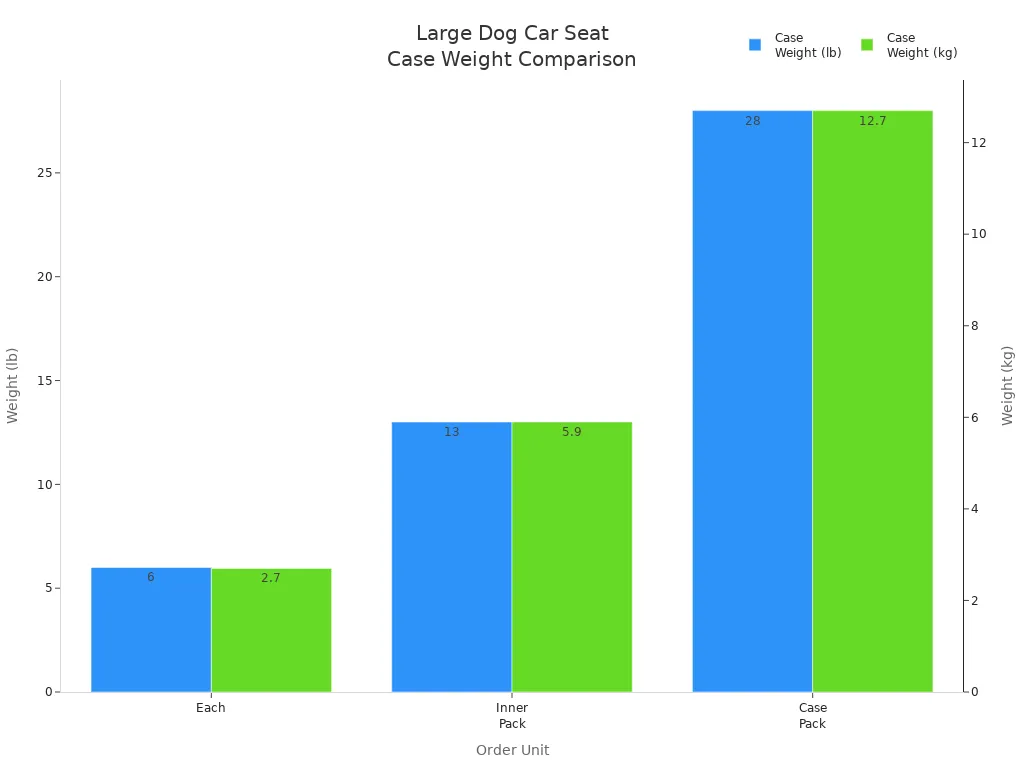
When you buy from suppliers, ask for details that help with safety and fit. Ask for these things: Platform size and shape, base strength and what it is made of, anchor spots and seat belt holes, washable or waterproof cover, box size and weight, and clear cleaning steps. Ask for pictures that show all parts, like edge support and anti-slip backing. Request a table with all sizes and colors. This makes it easier to offer the right choices for every shopper.
Comfort platforms and covers do not replace restraint. Use the back seat or a crate that is secured when needed. Ask a vet for advice if your dog has trouble moving or breathing. Talk to a trainer if your dog gets scared in the car.
You want your large dog to ride safely and feel good. The most important things are strong support, water protection, safe straps and anchors, and a steady seat platform. These things stop the seat from sagging or slipping. They also help keep your car clean after spills or accidents. The table below shows what is most important:
Feature | Importance |
|---|---|
Structural Support | Stops sagging and slipping during rides and after accidents. |
Moisture Protection | Keeps your car safe from spills, wet fur, and messes. |
Straps and Anchors | Hold the seat in place, even if there is an accident. |
Seat Platform Stability | Protects your dog if you stop fast or have an accident. |
Easy Cleaning | Makes it simple to clean up after messes or muddy trips. |
Always measure your car and your dog before you buy. Look for real restraint features, not just comfort. Many people return seats with thin padding or weak straps that break in accidents. Stay away from covers that hold hair and water. Use the feature checklist to help you pick the right seat and avoid returns. Get a new seat after any accident, just like you would for a child’s car seat. Comfort platforms and covers do not take the place of restraint. Do not put your dog in the front seat if there are airbags. Use the back seat or a crate that is secured. Ask your vet for help if your dog has trouble moving or breathing. Talk to a trainer if your dog gets scared in the car.
FAQ
How do you measure your car for a large dog car seat?
You should measure the width of your rear bench and the gap between the back and front seats. Write down these numbers. Always check the product label to match your measurements before you buy.
Can you use a large dog car seat for two dogs?
Yes, you can use one seat for two dogs if the platform supports their combined weight and size. Measure both dogs and check the weight label. If they are close to the limit, choose a stronger option or a crate.
What is the best way to clean a large dog car seat?
Wipe the cover after muddy rides. Let it air dry fully. For deeper cleaning, follow the care label instructions. Choose a waterproof and tear-resistant cover for easier maintenance.
Do comfort platforms keep your dog safe during a crash?
Comfort platforms add stability and space. They do not replace restraint. Use a seat belt compatible harness or a secured crate for safety. Avoid front seat placement when airbags are present.
When should you switch from a car seat to a crate?
Switch to a crate if your dog is near the weight limit, moves a lot, or needs more structure. Crates offer more support during sudden stops. Always place crates in the back seat or cargo area.