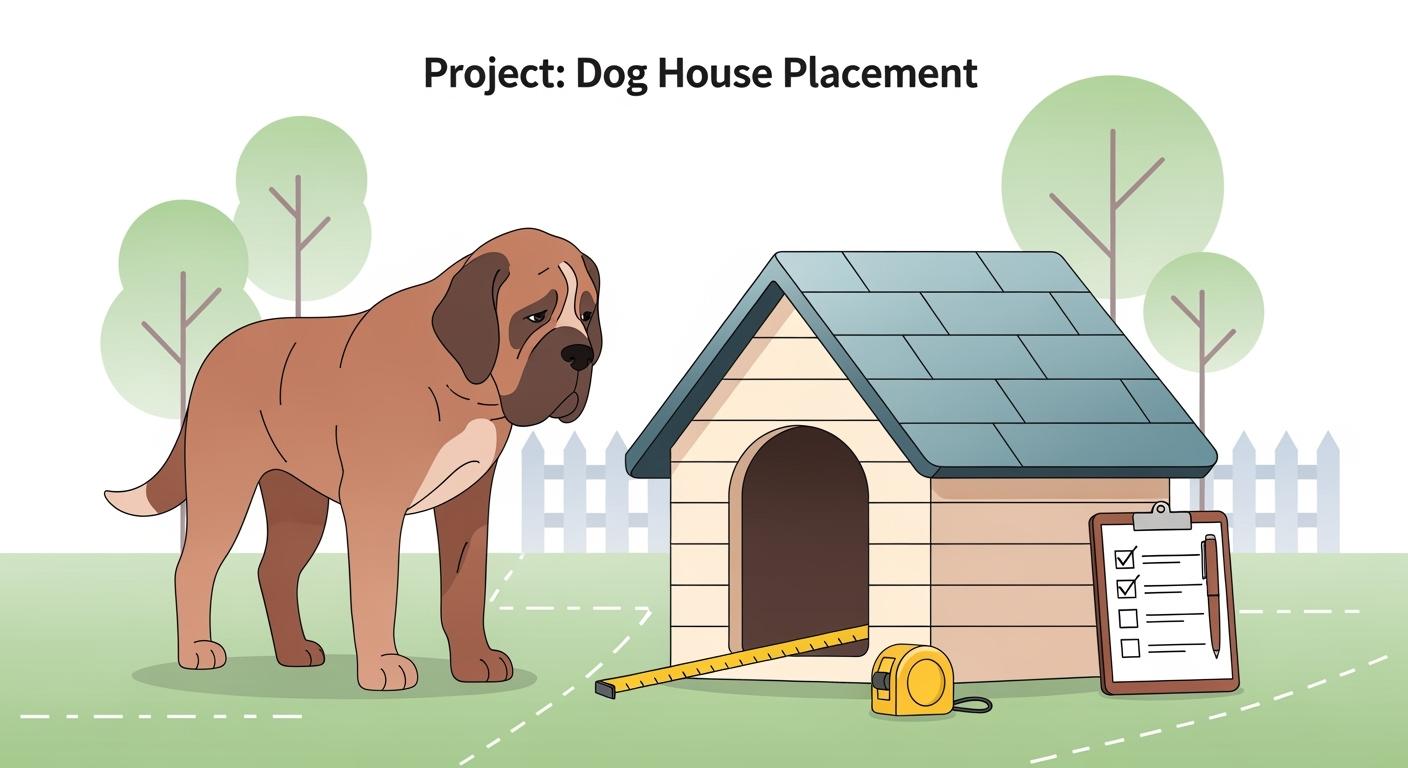
Choosing a giant dog house means checking more than outer dimensions. The house needs enough interior room for turning and resting, a stable floor under a heavy body, airflow that does not trap heat, and placement that stays dry after real weather. Fit, support, and yard placement all matter more than a broad “giant” label.
Key Takeaways
- Measure your dog carefully and compare those numbers to the usable inside space. A good fit should allow turning, sitting, and full resting without crowding the walls.
- Check floor firmness, roof clearance, and entry height before you treat the house as ready to use.
- Place the house where drainage, shade, and airflow work together instead of fighting the weather.
- Choose a design that you can clean and inspect regularly. Dirt, dampness, and poor access create problems fast.
- Watch your dog after setup. Avoidance, restlessness, heat buildup, or repeated damp spots all mean something still needs adjustment.
Giant Dog House Fit and Support Checks
Interior Space and Entry for Dog Comfort
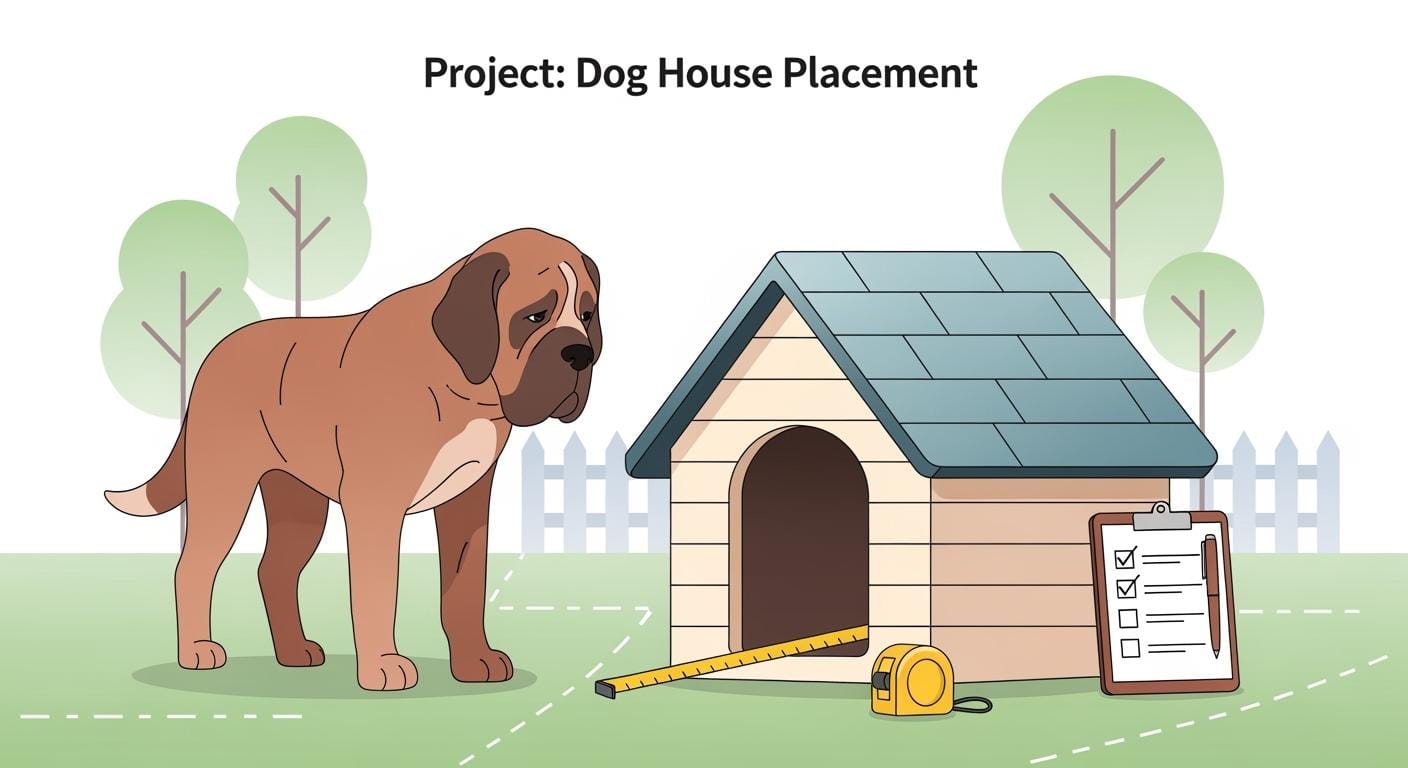
Start with inside measurements, not only the outside footprint. Your dog should be able to step in, turn, lie down, and rest without folding into the walls. Interior length, width, and roof height all affect whether the house feels usable or cramped.
Entryway size matters too. A giant dog house should not force a large dog to crouch, jump awkwardly, or clip the shoulders at the doorway. Use these checks:
- Measure your dog’s height at the shoulder and compare it to the opening height.
- Check that the entry threshold is low enough for normal stepping instead of a forced hop.
- Make sure the doorway is wide enough that the shoulders do not brush both sides at once.
If your dog slows down at the doorway, turns sideways to enter, or hesitates before stepping in, the entry size or threshold may be wrong.
Tip: Always check entryway measurements before you buy. A good fit prevents stress and injury.
Floor Stability and Roof Clearance
The floor should stay level and firm when a heavy dog steps in, turns, or settles down. A soft or flexing base can make the house feel unstable. Roof clearance should also let your dog sit upright without brushing the head or ears against the top.
Check these points:
- The floor should not sag or wobble under your dog’s full weight.
- The roof should leave enough headroom for sitting and repositioning.
- The house should not shift, tip, or rock when the dog moves inside.
If the base flexes or the top feels too low, the house may look large enough but still feel insecure in actual use.
Signs of Oversized or Cramped Dog House
A giant dog house can still be the wrong size. Too little room makes resting awkward, while too much empty space can make the house feel exposed, harder to keep temperate, and less likely to be used well.
Common signs include:
- Your dog cannot turn or lie down comfortably.
- Your dog bumps the doorway, walls, or roof during normal movement.
- Your dog stays near the opening instead of settling deeper inside.
- Your dog avoids the house, paces, or appears restless inside.
- You notice repeated rubbing, stiffness, or awkward body positioning.
A cramped house often creates obvious movement problems. An oversized one may still fail if the dog never settles, the floor stays cold or damp, or the interior feels too exposed in changing weather.
Note: Recheck fit after bedding, mats, or raised inserts are added. Extra layers can change both usable room and entry height.
Step-by-Step Fit and Support Guide
Use this sequence before you commit to daily outdoor use:
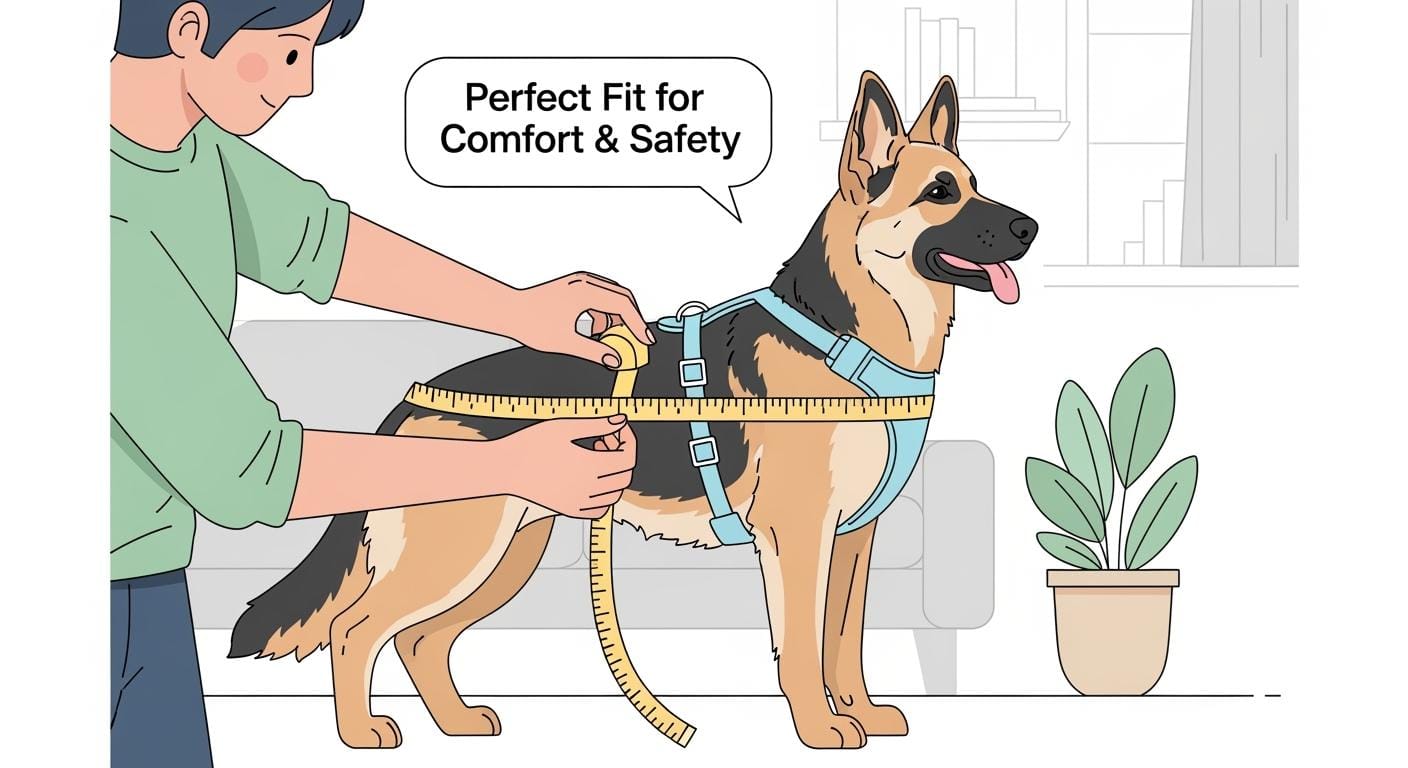
- Measure your dog’s body length, shoulder height, and widest body area.
- Compare those numbers to the usable inside dimensions of the house.
- Check entry height, entry width, and threshold height.
- Press on the floor and watch your dog step, turn, and settle inside.
- Confirm roof clearance while your dog sits normally.
- Watch for hesitation, rubbing, or signs that the house still feels wrong.
Pass/Fail Fit and Support Checklist
| Check Item | Pass Signal | Fail Signal | Solution |
|---|---|---|---|
| Interior room | Dog turns and rests without crowding | Dog braces, hesitates, or cannot lie normally | Move to a better-sized house |
| Entry size | Dog steps in and out without twisting or hopping | Dog clips the doorway or slows down at entry | Adjust threshold or choose a wider/taller opening |
| Floor stability | Base stays firm under full weight | Base flexes, sags, or feels uneven | Reinforce or replace the floor |
| Roof clearance | Dog sits upright comfortably | Dog crouches or brushes the roof | Increase usable headroom |
Comparison Table: Key Design Features
| Feature | Option 1 | Option 2 | Practical Impact |
|---|---|---|---|
| Base height | Raised | Ground-level | Raised bases usually handle damp ground better |
| Ventilation style | More open airflow | More enclosed walls | Better airflow reduces trapped heat and stale dampness |
| Structure weight | Lighter unit | Heavier unit | Lighter houses move easier; heavier houses often stay steadier |
| Interior surface | Easy-clean surface | Softer lining or insert | Easy-clean surfaces simplify upkeep; softer inserts can improve rest comfort |
Safety Reminder: A dog house can help with shade, wind blocking, and dry ground, but it is not a substitute for bringing your dog indoors during dangerous weather.
Weather, Ventilation, and Outdoor Safety
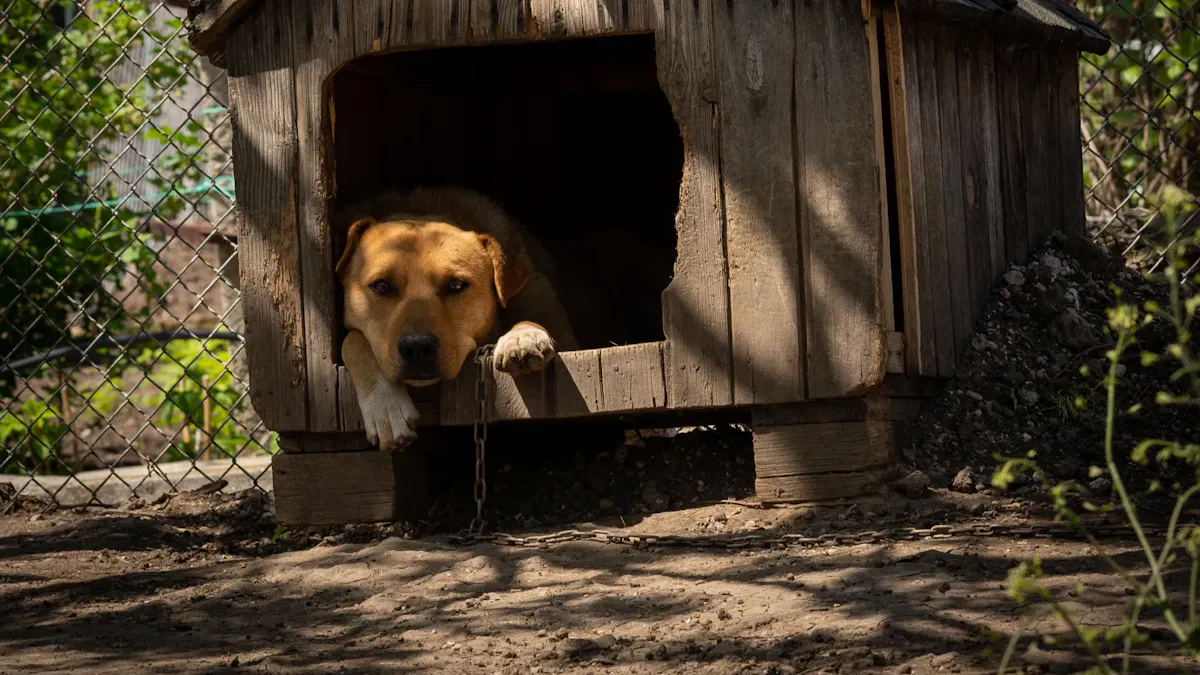
Airflow and shade matter because giant houses can trap heat and stale air faster than they look from the outside. Placement should reduce direct sun exposure while still allowing fresh air to move through the structure.
In warm conditions, use shade and airflow together. In wet or colder conditions, reduce drafts without sealing the house so tightly that moisture stays trapped.
- Place the house where natural or built shade helps reduce direct sun load.
- Keep vents or openings clear so air can move through the interior.
- Avoid placing the house where solid barriers block all cross-ventilation.
- Use a raised base and dry placement to keep the house cooler and drier when ground conditions change.
Tip: Check the inside surface by hand in different weather. If it feels stuffy, damp, or hot long after the outside air cools down, the setup still needs work.
Dry Floor, Drainage, and Raised Base
A dry floor matters as much as roof coverage. Water that stays under or inside the house can lead to odor, damp bedding, and a surface your dog avoids. A raised base, basic slope awareness, and a clear runoff path usually help more than extra bedding piled on a wet floor.
| Benefit | Description |
|---|---|
| Moisture protection | A raised or separated base helps reduce direct contact with wet ground |
| Improved drainage | Better placement and runoff reduce standing water around the house footprint |
- Keep the area around the doorway clear of routine waste and muddy buildup.
- Avoid placing the house at the low point of the yard where water collects.
- Check where runoff goes after rain instead of assuming the ground dries evenly.
- Good airflow helps damp areas dry faster and lowers stale odor buildup.
Note: A dry, ventilated setup usually stays easier to clean and more comfortable to use.
Common Placement and Use Mistakes
Many giant dog house problems come from placement or expectations rather than from the shell itself. Buyers often assume “giant” automatically means usable, or that a bigger house will solve airflow, heat, or dampness on its own.
- Placing the house in full sun without enough shade or airflow.
- Assuming a very large interior will always feel better to the dog.
- Ignoring wet ground, runoff, or recurring dampness near the base.
Troubleshooting Table
| Symptom | Possible Cause | Quick Check | Solution |
|---|---|---|---|
| Wet floor or odor | Poor drainage or a low base | Check ground moisture and base height | Raise the base or improve runoff |
| Dog pants or stays restless | Heat buildup or weak airflow | Check shade and vent clearance | Improve airflow or move the house |
| Dog avoids the house | Size, placement, or interior comfort issue | Watch entry and settling behavior | Recheck fit, shade, and floor comfort |
| Strong smell or staining | Hard-to-clean areas or trapped dampness | Inspect corners, floor, and bedding | Deep clean and reduce moisture retention |
| House feels unstable | Uneven ground or weak structure | Push corners and watch floor movement | Level the site or reinforce support |
Safety Reminder: If your dog shows heat stress, persistent discomfort, or avoids the house in changing weather, adjust the setup or bring the dog inside.
Upkeep, Cleaning, and Placement Checks
Cleaning Access and Weekly Maintenance
Cleaning access matters because giant houses are harder to maintain once odor, dampness, or grime build up. Wide openings, removable panels, or enough reach for a brush and cloth make routine upkeep much easier.
- Remove debris and visible waste regularly.
- Wash bowls and check the water area often.
- Clean walls, floor, and entry surfaces on a consistent schedule.
- Wash or replace bedding only after the interior is fully dry.
- Do a deeper inspection of corners, seams, and roof joints on a regular cycle.
Routine cleaning helps you catch damp spots, insect issues, damaged flooring, and problem seams before they turn into larger maintenance issues.
Tip: Clean bedding and removable inserts often enough that smell, grit, and moisture do not build up under them.
Correct Yard Placement and Risk Zones
Placement should keep the house away from standing water, repeated foot traffic, and fence corners that trap wind or heat. High ground, shade, and basic airflow usually matter more than decorative placement.
Check for these placement basics:
- Reliable shade during the hottest part of the day
- Airflow that is not blocked by solid walls or tight corners
- Enough distance from gates, roads, or busy walkways
- Ground that drains instead of staying muddy or waterlogged
A durable, easy-clean floor and a placement plan that stays dry after rain usually reduce upkeep more than frequent patch fixes.
Note: Placement is part of the house system. A well-built unit in a bad spot can still become hot, damp, or underused.
Troubleshooting Giant Dog House Issues
Use this table to diagnose everyday upkeep issues before they become bigger comfort or hygiene problems:
| Issue | Quick Check | Solution |
|---|---|---|
| Leaks or drafts | Inspect seams, roof, and doorway edges | Seal gaps or improve weather protection |
| Pests | Look for droppings, nests, or easy entry points | Clean promptly and block access points |
| Odor or stains | Check floor, corners, and bedding contact areas | Deep clean and let the interior dry fully |
| Mold or dampness | Feel for moisture and inspect airflow | Improve drainage, airflow, or base height |
| Dog avoids house | Watch approach, entry, and settling behavior | Recheck fit, comfort, and placement |
Regular checks work best when they combine sizing, placement, and upkeep instead of treating each one as a separate problem.
Check fit, support, airflow, dry placement, and cleaning access together. A giant dog house works better when the whole setup stays usable after real weather, daily movement, and regular upkeep.
A dog house can help with shade, wind blocking, and dry ground, but it is not a complete weather solution. Use it as one part of a safer outdoor setup, not as the only protection in harsh conditions.
- Dogs need enough room to move, turn, and rest normally.
- Dry footing and airflow matter as much as wall thickness.
- Fresh water, regular checks, and safe weather decisions still come first.
A well-chosen giant dog house should feel stable, dry, and usable day after day. That is a better goal than simply buying the biggest unit available.
FAQ
How do you know if a giant dog house fits correctly?
Watch whether your dog can step in easily, turn around, sit upright, and lie down without crowding the walls or roof. If any of those feel awkward, recheck size and entry dimensions.
What is the best way to clean a giant dog house?
Remove debris regularly, clean the main surfaces on a routine schedule, and let the whole interior dry before your dog uses it again. Wide access panels and easy-clean surfaces help a lot.
Where should you place a giant dog house?
Place it on high, dry ground with shade, airflow, and enough distance from standing water or busy walkways. Check the area again after rain to make sure the spot still works.
How do you know if your dog feels comfortable inside?
A comfortable dog usually enters without hesitation, settles normally, and uses the whole space without bracing or constant repositioning. Avoidance, pacing, or repeated heat and dampness checks suggest the setup needs adjustment.
What mistakes do people make with giant dog houses?
Common mistakes include buying by label alone, ignoring wet ground, assuming a larger house is always better, and skipping follow-up checks after placement or weather changes.