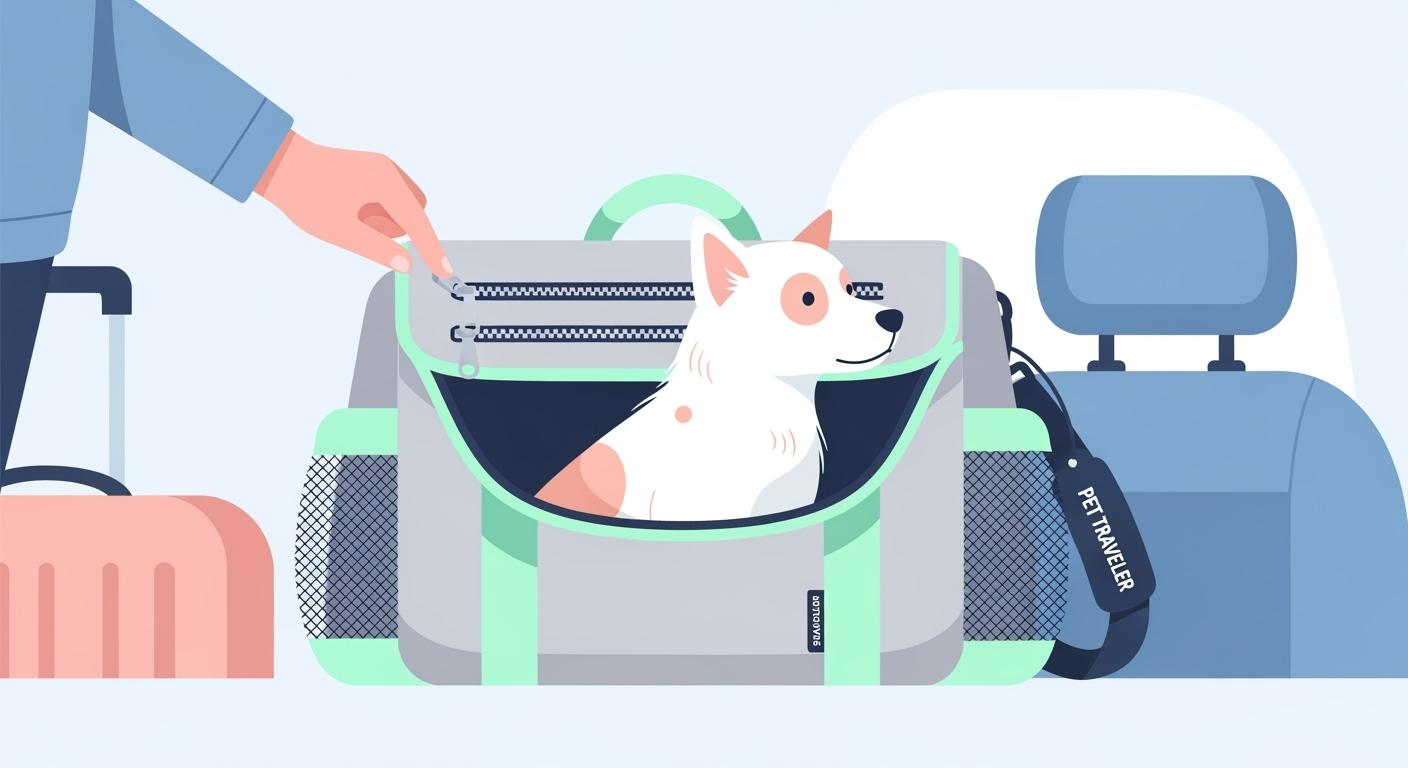
A lot of people pick a dog travel bag just by weight. This is a mistake and can make dogs feel cramped. It can also make them anxious and try to escape. You should measure your dog’s length and height for a good fit. Always look at the inside size and check the closures before you buy. Use a checklist to make sure your dog can stand, turn, and lie down. A good checklist helps you find escape risks and keeps travel calm.
Key Takeaways
Measure your dog’s length and height to ensure a proper fit. This helps your dog stand, turn, and lie down comfortably.
Choose a travel bag with secure closures and reinforced seams to prevent escapes. Locking zippers add extra safety.
Always check the internal dimensions of the bag, not just the external size. This ensures your dog has enough space to move.
Use a tether attached to your dog’s harness inside the bag for added security. This prevents your dog from jumping out if the bag opens.
Perform a 60-second escape test before traveling. This helps identify any weak spots in the bag that could lead to escapes.
What a dog travel bag should allow and its limits
Comfort vs restraint in travel bags
You want your dog to feel safe and comfortable during travel. A good travel bag should let your dog stand, turn, and lie down naturally. Crash-tested harnesses attach to seatbelts and limit movement, but they still allow some flexibility. Travel crates, whether hard or soft-sided, need to be secured with seatbelts or anchors. Both harnesses and crates focus on safety, but comfort matters too. Dogs need enough space to avoid stress. A 2023 study found that only 17 percent of harnesses passed crash tests at 30 mph. Crash-tested seat belts or harnesses and secure, well-ventilated crates are safer options for travel.
Tip: Always check that your travel bag or crate is secure and well-ventilated before each trip.
Cramped posture and escape risk
If your dog cannot stand up straight or turn around, the risk of escape attempts goes up. Cramped posture can make your dog anxious. You might see your dog paw at zippers, push at seams, or try to chew through mesh. These behaviors show discomfort and a desire to get out. Dogs that feel trapped may panic, which can lead to injury or damage to the bag.
Signs of cramped posture:
Constant crouching
Head pressed into the top panel
Repeated repositioning
Stiff, curled posture
If you notice these signs, your dog may need a larger bag or a different carrier.
When to choose a different carrier
A travel bag does not work for every dog. If your dog shows distress, tries to escape often, or overheats, stop using the bag. Some dogs need more space or a different restraint system. Dogs with mobility or breathing problems may need special carriers. You should talk to your veterinarian if you have concerns about your dog’s health. If your dog panics in carriers, a qualified trainer can help.
Safety note: A travel bag is not a replacement for safe restraint planning. Always put your dog’s comfort and safety first.
Measuring for proper fit and comfort
Choosing the best fit for your dog starts with measuring the right way. Many people look at weight only, but this can lead to problems. Imagine Scenario A: You pick a travel bag that matches your dog’s weight, but your dog cannot stand up straight or turn around. Your dog feels cramped, tries to escape, and becomes anxious. You can avoid this by measuring length, height, and adding a buffer for comfort.
Dog length and height methods
You need to measure your dog’s length from the nose to the base of the tail. For height, measure from the floor to the top of the shoulder area. These measurements help you find a travel bag that gives your dog enough space. Always add a buffer of 2-4 in (5-10 cm) to both length and height. This buffer lets your dog move naturally and reduces crouching.
Tip: Use a soft tape measure for accuracy. Write down each measurement in both inches and centimeters.
Here is a table to guide you:
What to Measure | How to Measure | Why It Matters |
|---|---|---|
Dog length | Nose to base of tail (in/cm) | Sets the baseline for fit |
Standing height | Floor to top of shoulder (in/cm) | Prevents hunching |
Buffer for comfort | Add 2-4 in (5-10 cm) to length/height | Reduces cramped posture |
Shoulder width and chest depth tips
Shoulder width and chest depth also affect fit. Measure the widest part of your dog’s shoulders and the deepest part of the chest. Your dog should be able to turn around without scraping the sides of the bag. If the bag is too narrow, your dog may feel squeezed and uncomfortable.
Measure shoulder width at the widest point (in/cm).
Measure chest depth from the top of the back to the bottom of the chest (in/cm).
Check that the bag’s internal width matches or exceeds these measurements, plus a small buffer.
Buffer rules for fit
The buffer rule helps you avoid cramped posture. Add 2-4 in (5-10 cm) to your dog’s length and height. This extra space lets your dog stand, turn, and lie down in a natural position. You should always check the internal dimensions of the bag, not just the outside label.
Step-by-step fit checklist:
Measure your dog’s length, height, shoulder width, and chest depth.
Add the buffer to each measurement.
Compare these numbers to the bag’s internal dimensions.
Place your dog in the bag and do a posture test:
Can your dog stand without hunching?
Can your dog turn around easily?
Can your dog lie down naturally?
Watch for signs of cramped posture:
Constant crouching
Head pressed into the top panel
Repeated repositioning
Stiff, curled posture
If your dog passes all these checks, you have found the best fit for comfort and safety.
Note: Internal dimensions matter more than external size. Always check the inside measurements before you buy.
Bag measurements for proper fit
Internal vs external dimensions
You need to look at the inside size of a dog travel bag before buying. The outside can seem large, but the inside might be much smaller. The inside length, width, and height show if your dog can move and rest well. For example, many under-seat travel bags are 18 in x 11 in x 11 in (46 cm x 28 cm x 28 cm) inside. Always check these numbers against your dog’s size plus extra space. This helps stop cramped posture and lowers escape chances.
Tip: Write down both the inside and outside sizes when shopping. Use your dog’s size as your main guide.
Base stability and comfort
A strong bottom keeps your dog safe and calm. Pick a travel bag with a hard base and anti-slip parts. These features help stop the bag from tipping or sliding when you travel. A weak or soft bottom can make your dog feel nervous and stressed. You want your dog to feel safe, so always check the base before picking a size.
Entry opening and posture
The entry opening is important for comfort and safety. Your dog should get in and out without squeezing or crouching. The opening needs to fit your dog’s shoulder width and chest depth. If the opening is too small, your dog may not want to go in. A good opening lets your dog keep a normal posture when moving in and out.
Fit checklist table
Use this table to see if a travel bag works for your dog. Compare each part to your dog’s size and how you travel.
Parameter | Target Range or Option | Why It Matters |
|---|---|---|
Dog length | Nose to base of tail | Sets baseline size |
Standing height | Floor to shoulder area | Prevents hunching |
Buffer rule | Add 2-4 in (5-10 cm) | Reduces cramped posture |
Internal dimensions | Internal L x W x H | Fit accuracy |
Under-seat example | 18 in x 11 in x 11 in (46 cm x 28 cm x 28 cm) | Common reference size |
Closure design | Locking zipper pulls preferred | Reduces self-opening risk |
Tether setup | Tether to harness point | Helps reduce escape risk |
Base style | Stiffer base, anti-slip bottom | Reduces tipping and sliding |
Ventilation | Breathable panels | Comfort cue |
Inspection | Check seams and zippers weekly | Prevents surprise failures |
Note: Always match the inside size to your dog’s measurements for the best fit.
Escape prevention in dog travel bags
To keep your dog safe while traveling, you need escape prevention features. Some dogs seem calm at home but act differently in busy places. For example, your dog may relax in the carrier at home. But in a crowded or loud area, your dog might paw at the zipper and push at the seams. You may feel stressed, and your dog can sense it. You can lower escape risks by picking good closures, using a harness tether, and making travel calm.
Secure closures and seams
Check the closure design first. Locking zipper pulls help stop your dog from opening the bag. Some dogs learn to paw at zippers, so locks add safety. Reinforced seams are important too. Dogs may push or scratch at weak spots when they feel anxious. Strong stitching keeps the bag together and makes it last longer. When you shop for a dog carrier, look for these things:
Locking zipper pulls or closures that do not open easily
Reinforced seams at corners and entry points
Waterproof panels and a waterproof base for easy cleaning and strength
Durable materials that last a long time
Tip: Check seams and zippers every week. Look for fraying, gaps, or loose threads. Fixing problems early helps stop escapes.
Tether setup for safety
A leash tether inside the carrier adds more safety. Attach the tether to your dog’s harness, not the collar. This keeps your dog from jumping out if the door opens or if your dog pushes through a weak spot. The tether should be short enough to stop your dog from reaching the opening but long enough for comfort. Many carriers have a built-in tether, but always check if it is strong.
Use a harness, not a collar, for the tether
Check the tether clip and anchor for strength
Adjust the tether so your dog can stand, turn, and lie down
Note: Never leave your dog tethered alone. Always watch your dog during travel.
The escape test before travel
Before you travel, do a 60 second escape test. Put your dog in the carrier, close all zippers, and attach the tether. Watch your dog for escape tries. Look for pawing at zippers, pushing at seams, or trying to make gaps bigger. If your dog finds a weak spot, fix it before you travel. This test helps you find problems early and gives you peace of mind.
Put your dog in the carrier with all closures closed
Attach the tether to the harness
Watch for 60 seconds
Look for pawing, pushing, or chewing at seams and zippers
Check for zipper gaps or seam movement
If your dog stays calm and cannot open the bag, you pass the test. If you see escape tries, fix weak spots or try a different carrier.
Common causes and solutions table
Dogs try to escape for many reasons. Some dogs feel anxious in new places. Others react to loud noises or sudden moves. You can lower escape risks by using calming routines and the right features. Here are common causes and what you can do:
Common Cause | What It Leads To | What To Do Next |
|---|---|---|
Loud noises or busy environments | Anxiety, escape attempts | Use calming music, cover carrier, keep routines |
Weak zippers or seams | Bag opens, dog escapes | Choose locking zippers, reinforced seams |
No tether or loose tether | Dog jumps out | Attach tether to harness, adjust length |
Cramped posture | Stress, repeated escape tries | Check fit, add buffer, use correct internal size |
Lack of familiar scent or comfort | Restlessness, anxiety | Add blanket or item with your scent |
No waterproof base | Messes, discomfort, bag damage | Choose carrier with waterproof base |
Not enough ventilation | Overheating, stress | Pick carrier with breathable panels |
You can also try these calming ideas:
Use calming supplements from your veterinarian for anxious dogs
Put a familiar blanket or toy in the carrier
Play calming music or white noise to cover loud sounds
Escape prevention checklist
Use this checklist before every trip to keep your dog safe:
Check all closures for locks
Inspect seams for strength and durability
Make sure waterproof panels and base are not damaged
Attach leash tether to harness
Adjust tether length for comfort and safety
Place familiar items in the carrier
Test fit: dog can stand, turn, and lie down
Do the 60 second escape test
Check ventilation and comfort features
Inspect pockets for safe storage of treats, waste bags, or calming aids
Parameter and Value table
Parameter | Target Range or Option | Why it matters |
|---|---|---|
Dog length | nose to base of tail | Sets baseline size |
Dog standing height cue | floor to shoulder area | Prevents hunching |
Buffer rule | add 2-4 in (5-10 cm) | Reduces cramped posture |
Internal dimensions | internal L x W x H | Fit accuracy |
Under-seat example | 18 in x 11 in x 11 in (46 cm x 28 cm x 28 cm) | Common reference, not a guarantee |
Closure design | locking zipper pulls preferred | Reduces self-opening risk |
Tether setup | tether to harness point | Helps reduce escape risk |
Base style | stiffer base, anti-slip bottom | Reduces tipping and sliding |
Ventilation | breathable panels | Comfort cue |
Inspection | check seams and zippers weekly | Prevents surprise failures |
Remember: The right features, routine checks, and a calm space help keep your dog safe in any travel setting. Always match the carrier to your dog’s needs and your travel routine.
Materials, ventilation, and cleaning for safety
Breathable panels and structure
Your dog needs to feel safe and cool in the travel bag. Mesh panels let air move through the carrier. These panels help stop heat from building up inside. A strong base and sides keep the bag from tipping or sliding. You should pick materials that are both tough and let air in. Ripstop fabric is a good choice because it does not tear easily. It also protects the bag from damage. PEVA liners add extra safety. They keep the inside clean and block leaks.
Here is a table with safe materials:
Material Type | Features | Safety Aspect |
|---|---|---|
Tough Ripstop | Made like a waterproof river bag, so it is strong and safe. | Stops damage from wear and tear. |
PEVA Liner | Safe for food and has sealed seams to stop leaks. | Keeps food safe and blocks germs. |
Tip: Always look for mesh panels and a strong base when you pick a travel bag.
Lining and edge finishing
The inside lining should feel soft and smooth for your dog. The edges need strong stitching to stop them from coming apart. This keeps the bag safe for your pet. Sealed seams in the liner stop leaks and make cleaning simple. Check the lining and edges before every trip. Watch for loose threads or rough spots that could bother your dog.
Note: Smooth lining and finished edges help your dog feel calm and lower escape tries.
Cleaning and care routine
Cleaning the travel bag keeps your dog healthy and makes the bag last longer. Wipe the cover after each use. For small messes, use a damp cloth on waterproof parts. Take off the cover and wash it in the machine if needed. This stops bad smells and keeps the bag waterproof. Check seams and zippers every week. Fix problems early to stop escapes.
Here is an easy cleaning checklist:
Wipe the cover after every trip.
Use a damp cloth to clean waterproof panels fast.
Take off and wash the cover in the machine when needed.
Let the bag air dry all the way before you put it away.
Check seams and zippers every week for damage.
Cleaning and checking the bag often keeps your dog safe and happy on every trip.
Choosing the right dog travel bag for your routine
Short trips and calm dogs
Some dogs are calm and like short trips. For these trips, you want a bag that is light and easy to carry. The bag should have a wide opening so your dog can walk in easily. Mesh panels let air move through the bag. Make sure the bottom is strong and does not move around. Check that the closures stay shut. Pockets on the outside help you grab treats or waste bags fast.
Long travel and active dogs
Active dogs need more support on long trips. Pick a bag made from strong but light materials. Eight adjustment points help you fit the bag to your dog. The bag should have spine support to keep your dog comfy. Reflective trim helps people see you in the dark. A big, soft handle makes it easier to hold the bag. Hooks on the back let you attach a leash for safety. Outside pockets help you reach supplies quickly.
Lightweight and strong materials
Eight ways to adjust the fit
Spine support for comfort
Reflective trim for safety
Big, soft handle
Leash hook on the back
Nervous or escape-prone dogs
Nervous dogs need a bag that feels steady and safe. A solid bottom keeps your dog from slipping. Windows all around help your dog see out and feel less trapped. The bag should stay still and not move too much. Stay away from bags that make loud noises or have wobbly bottoms. Keep calming items, like a blanket, close by to help your dog relax.
Dogs may try to escape if the bag moves, they cannot see out, or there are loud sounds. You can help your dog feel better by picking a bag with a strong bottom and windows.
Decision and comparison tables
Decision Table
Dog Type | Travel Context | Best Bag Features | What to Avoid |
|---|---|---|---|
Calm, small dog | Short travel | Soft sides, quick access pockets | Heavy, stiff bags |
Active, medium dog | Long travel | Durable, adjustable, ergonomic | Poor ventilation, weak base |
Nervous, escape-prone | Any travel | Stable base, panoramic windows | Shifting surfaces, loud zippers |
Comparison Table
Option | Pros | Cons | Best For |
|---|---|---|---|
Soft bag | Lightweight, quick access | Less structure | Short travel, calm dogs |
Structured carrier | Stable, ergonomic, durable | Heavier, less flexible | Long travel, active dogs |
Backpack style | Hands-free, quick access | May lack base stability | Short travel, active dogs |
Tip: Always pick a travel bag that fits your dog’s needs and your trip. Use pockets and quick access features to make travel simple.
Sizing clarity for retail and wholesale
Presenting size charts
You want shoppers to pick the right dog travel bag the first time. Clear size charts help you do this. Always show internal dimensions in both inches and centimeters. Use a simple table that lists length, width, and height. Add a buffer rule so buyers know to add 2-4 in (5-10 cm) for comfort. Show a sample fit for a common under-seat bag, like 18 in x 11 in x 11 in (46 cm x 28 cm x 28 cm). Make sure you label every measurement as “internal” or “external” so there is no confusion.
Tip: Use bold text for key numbers in your chart. This helps buyers spot the right size fast.
Sample Size Chart
Bag Model | Internal Length (in/cm) | Internal Width (in/cm) | Internal Height (in/cm) | Buffer Rule |
|---|---|---|---|---|
A | 18 / 46 | 11 / 28 | 11 / 28 | Add 2-4 in (5-10 cm) |
Listing copy for expectations
You can lower returns by writing clear product descriptions. Tell buyers to measure their dog from nose to base of tail and from floor to shoulder. Remind them to add a buffer for comfort. Explain that the dog should stand, turn, and lie down inside the bag. Use simple language and short sentences. Avoid confusing terms. List the main features like locking zippers, tether points, and base style. Show how each feature helps with fit and safety.
Ask buyers to check internal dimensions before ordering.
Remind buyers to use the fit checklist.
Highlight escape prevention features in the listing.
Supplier specs for fit and safety
You need clear specs from suppliers to make sure the bags fit and keep dogs safe. Request these details for every model:
Internal length, width, and height
Stiffness of the base and anti-slip bottom
Zipper type and locking pull design
Number and placement of tether points
Care label with cleaning instructions
Supplier Spec Table
Spec Item | Why It Matters |
|---|---|
Internal dimensions | Fit accuracy |
Base stiffness | Prevents tipping and sliding |
Zipper design | Reduces escape risk |
Tether points | Adds safety |
Care label clarity | Eases cleaning and maintenance |
Note: Clear specs and charts help buyers choose the right bag and keep pets safe. You can reduce returns and build trust by sharing all the details up front.
You want your dog to travel safely and comfortably. Always measure your dog for proper fit and check escape prevention features before you buy a travel bag. Use the fit and safety checklists to guide your choice. When you focus on comfort and security, you help your dog feel calm and happy during trips. If your dog does not settle in one type of carrier, switch to another style for better safety.
Proper sizing lets your dog stand, turn, and lie down.
Robust zippers and internal tethers keep your pet secure.
Familiar bedding and toys ease anxiety.
Short car rides help your dog get used to travel.
Tip: A checklist-first approach makes travel easier for you and safer for your dog.
FAQ
How do you measure your pet for a pet travel tote bag?
You measure your pet from nose to base of tail for length. Measure from floor to shoulder for height. Add 2-4 in (5-10 cm) for comfort. This helps you pick the right pet travel tote bag for your pet.
What is the difference between a pet travel tote bag and a soft-sided carrier?
A pet travel tote bag often has a soft-sided design. It gives your pet comfort and flexibility. A soft-sided carrier also uses flexible materials. Both types help your pet feel safe during travel.
How do you check the weight capacity of a pet travel tote bag?
You check the label for weight capacity. Weigh your pet with a scale. Make sure your pet does not go over the listed capacity. This keeps your pet safe in the pet travel tote bag.
Why does a pet travel tote bag help with reduced anxiety?
A pet travel tote bag gives your pet a cozy space. Your pet can see out and feel secure. This setup leads to reduced anxiety for your pet during travel.
Can you use a pet travel tote bag for any dog size?
You need to match the pet travel tote bag to your pet. Check the dog size and internal measurements. Your pet should stand, turn, and lie down inside the carrier. Always check fit before travel.