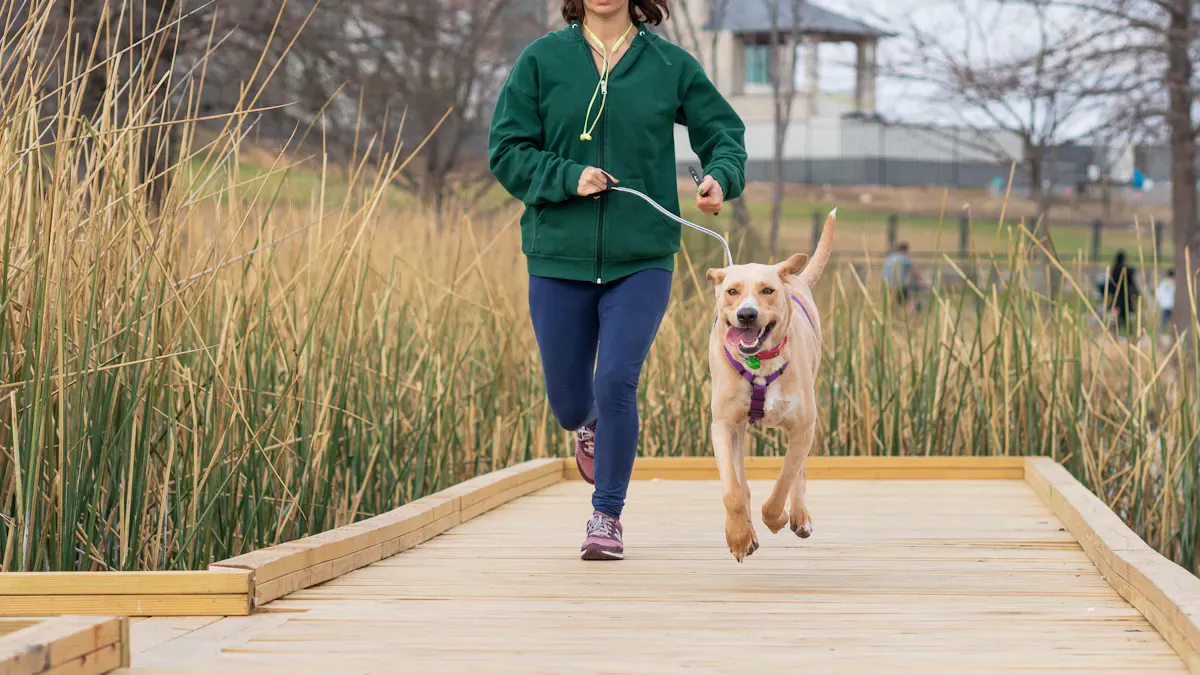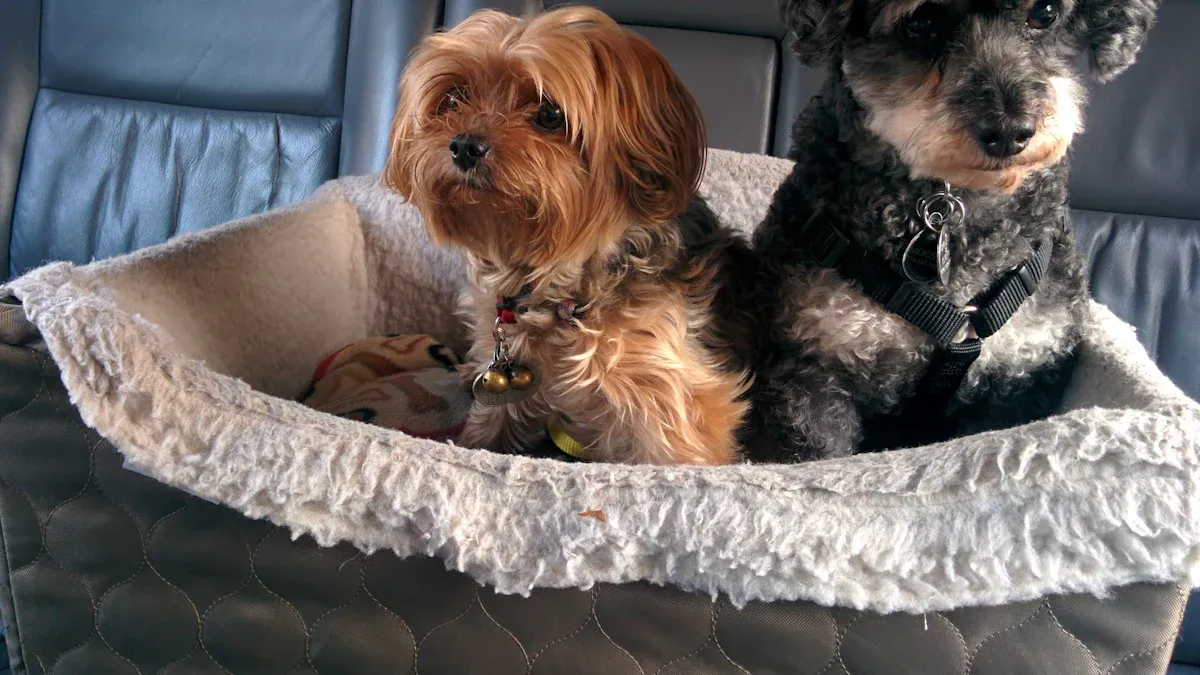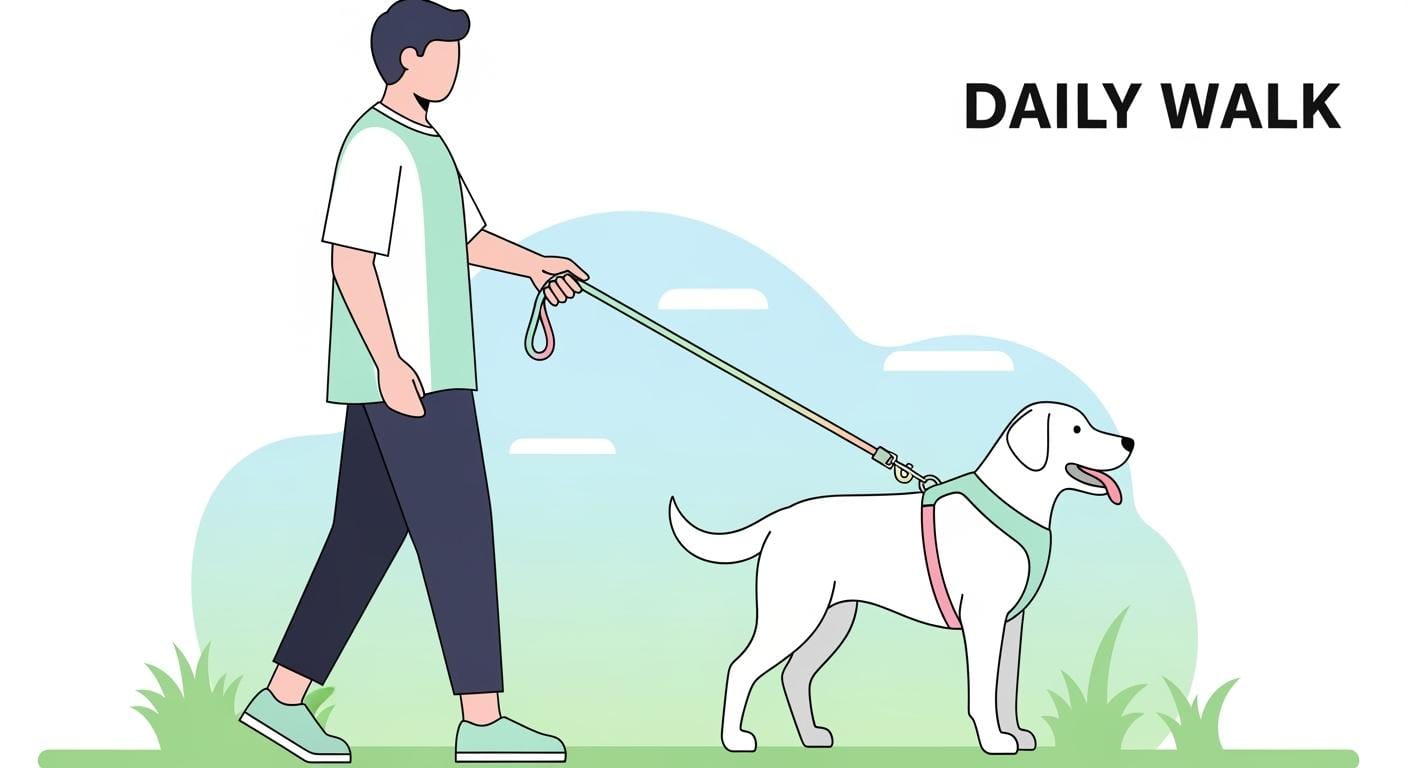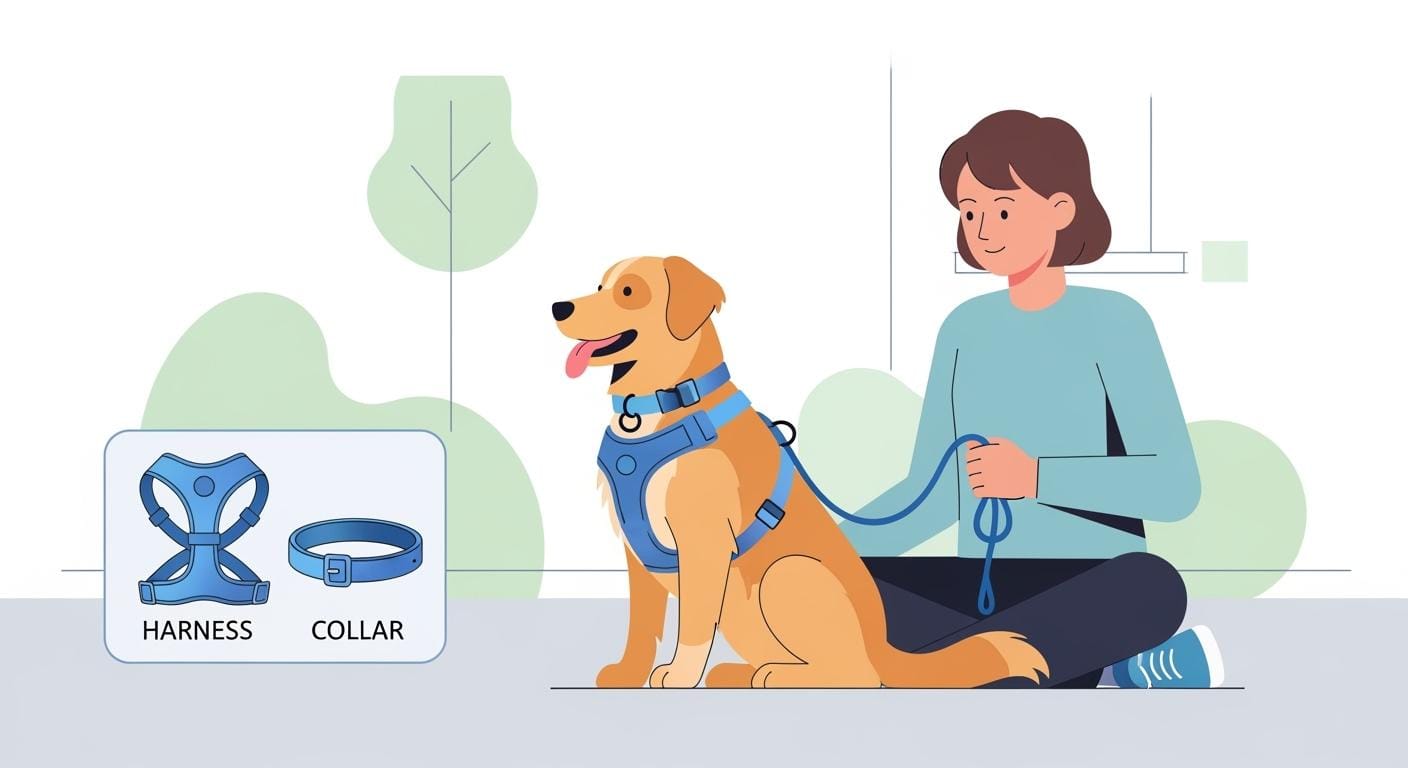
A dog harness lead setup can work well for both quick stops and full walks, but the same setup does not feel equally good in both situations. Quick stops need fast shortening, easy clipping, and cleaner control near doors, curbs, and distractions. Full walks need comfort over time, steadier movement, and a lead length that does not keep interrupting your dog every few steps. The better choice depends on what the walk asks from you and your dog most often.
| Reason for Choosing a Harness Lead | Description |
|---|---|
| Quick control | A stable harness and manageable lead help you shorten distance fast at doors, curbs, and crowded corners. |
| Comfort over time | A well-fitted harness helps keep the walk comfortable when the outing lasts longer than a fast toilet break. |
| Less neck-focused pressure | Many owners prefer a harness setup when they want leash contact to stay more centered on the chest and body. |
A harness lead can make handling easier, but it still works best when the dog is learning loose-lead skills at the same time. Think about your route, your dog’s pulling pattern, and whether you usually need quick control or longer, steadier comfort before you choose.
Key Takeaways
- A dog harness lead that fits well keeps you and your dog safer and more comfortable. Recheck the fit when the walk type changes, not just when you first put it on.
- Use more control-oriented setups when you need quick shortening, closer handling, or better redirection in busier places. Use cleaner, simpler setups when the goal is a calmer full walk with less interference.
- Use harness leads with training for the best results. Reward calm loose-lead moments and treat the equipment as support, not as a shortcut around practice.
When to Use a Dog Harness Lead
Best scenarios for harness leads
You should use a dog harness lead when you want a setup that feels more stable and easier to manage than a simple collar-and-lead routine. That usually matters most when the walk includes repeated stops, direction changes, or a dog that gets stronger once the leash goes tight.
- Your dog pulls or surges at the start of walks.
- You need cleaner handling in doorways, parking areas, or curb crossings.
- Your dog does better when leash contact stays off the neck area.
- You want a setup that can shorten quickly for brief control but still work on longer outings.
- You plan longer outings or need a comfortable fit for everyday walks.
Some dogs also do better with a harness lead when the route changes often. A short pavement stop, a car park exit, and a longer neighborhood walk do not all ask for the same handling, so the setup needs to feel usable in more than one context.
Here is a quick comparison of lead types:
| Lead Type | Use Case | Main Benefit | Main Watchout | Who Should Skip It |
|---|---|---|---|---|
| Fixed Lead | Short walks, quick stops, busy areas | Simple handling and faster shortening | Less range for relaxed full walks | Dogs that need more exploration room on quieter routes |
| Adjustable Lead | Full walks, mixed routes, training | More flexible range for different moments | Needs smoother handling to avoid fumbling | Handlers who want the fastest possible setup every time |
| Dual-Ended Lead | Training, mixed-clip setups, versatility | Multiple attachment options | Can feel busy or tangle if handled poorly | People who want the simplest lead routine |
When to avoid harness leads
You should avoid using a dog harness lead if the harness does not stay stable on your dog or if the lead style does not match the environment. A harness alone will not fix pulling, and a long or complicated lead setup can become the problem instead of the solution if the route is tight or busy.
If the harness twists, gaps at the neck, or rides into the leg, do not assume the dog just needs more practice. If your harness is not designed for car travel, do not use it as a restraint. If your dog is already stressed by gear, a more complex lead setup can make the walk harder, not easier.
Note: If your dog shows signs of stress, pain, or breathing problems, stop using the harness and talk to your veterinarian.
Common mistakes and consequences
Many owners test a harness lead only in the hallway or for a few seconds at the front door. That is usually not enough. A setup that feels fine standing still can still twist when the dog turns, tangle when you shorten it quickly, or start rubbing only after ten minutes of walking.
Other common mistakes include using too much lead for quick-stop routes, using too little range on longer relaxed walks, and expecting a no-pull style to do all the training work. The result is often the same: more frustration, more start-stop movement, and a dog that never settles into a clean walking rhythm.
Quick Stops vs Full Walks: Handling Differences
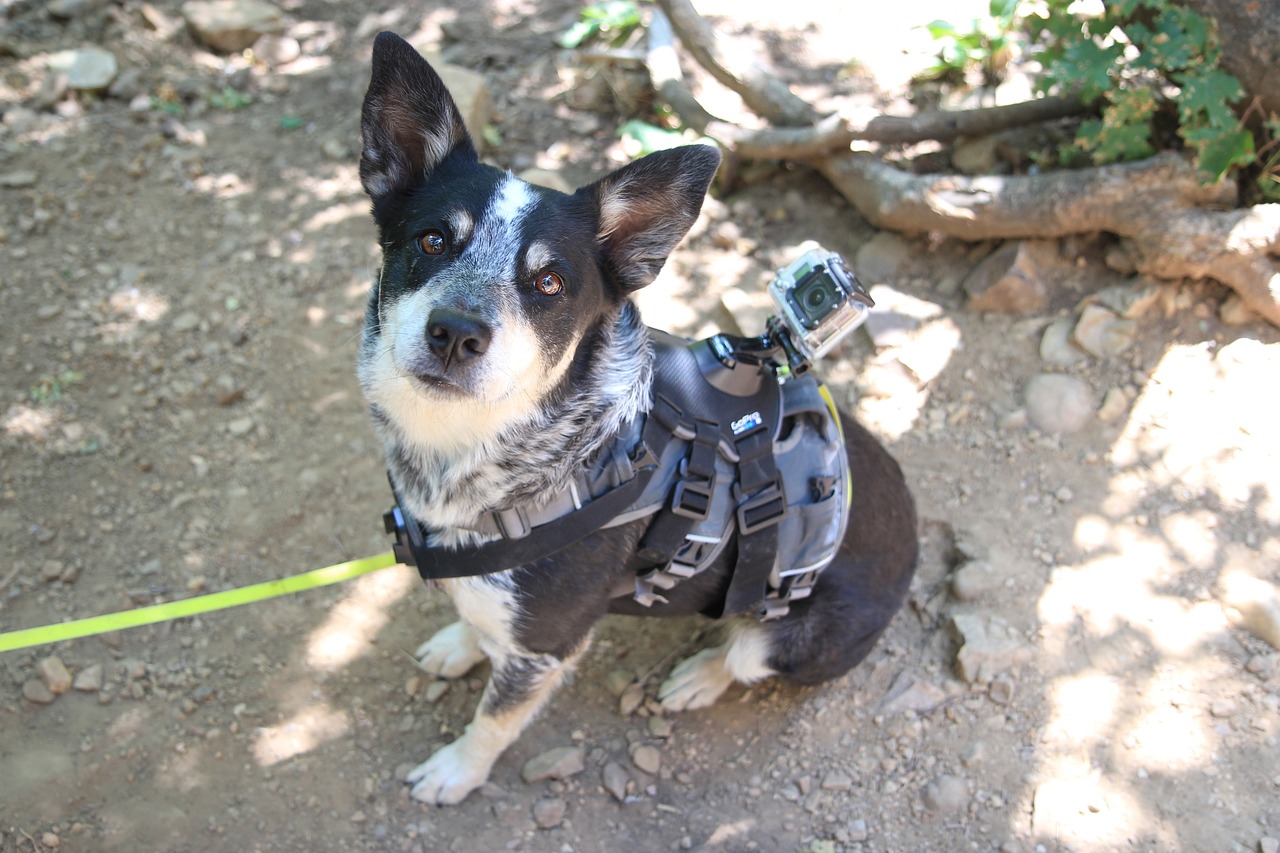
Leash range and adjustability
When you use a dog harness lead, you need to think about how much leash length you want. For quick stops, you usually want less range and faster shortening. For full walks, you usually want enough slack for natural movement without turning the lead into a dragging or tangling problem.
- Fixed-length leads are easier to read and shorten in crowded or stop-start areas.
- Adjustable leads work better when the route shifts between open and tight spaces.
- Longer-extension leads may feel useful in open low-risk areas but can become awkward when you need instant control.
- The best lead length is the one you can manage smoothly without constant wrapping, dropping, or tugging.
| Leash Type | Range | Control Level | Best Use Cases |
|---|---|---|---|
| Fixed-length lead | Short and predictable | High | Busy sidewalks, curb crossings, fast toilet breaks |
| Adjustable lead | Variable | Medium to high | Mixed routes, full walks, training transitions |
| Long-extension lead | Longest range | Lowest when rushed | Open areas where you do not need quick shortening |
A dog harness lead works best when the lead range matches the route in front of you. If you need to shorten the dog in one or two movements and cannot, the setup is wrong for that environment even if it feels comfortable elsewhere.
Control and comfort on walks
Quick stops and full walks ask for different kinds of comfort. On a quick stop, comfort means the harness goes on cleanly, clips smoothly, and lets you guide the dog without a struggle. On a full walk, comfort means the harness stays quiet on the body: no chest drift, no rubbing, no constant shoulder interruption, and no lead pattern that keeps snapping the dog out of a normal walking rhythm.
- A stable harness should let your dog move without shortening the front stride.
- A useful lead should be easy to shorten fast but not so short that the dog never settles.
- More control is not always better if the route is calm and the dog is already walking well.
- More freedom is not always better if you keep needing to gather the lead at doors, roads, or distractions.
Some dogs do best with a more steering-focused clip point for short urban handling and a simpler clip pattern for longer relaxed walks. Others prefer one steady setup as long as the fit stays clean and the lead handling is consistent.
Tip: Loose-lead walking depends on practice and reward-based training, not just the equipment.
Pass/Fail Checklist Table
Use this checklist to see if your dog harness lead setup works for quick stops or full walks:
| Check Item | Pass Signal | Fail Signal | Fix |
|---|---|---|---|
| Lead shortens quickly | You can shorten it fast without looking down | Fumbling, wrapping, or tangling | Use a simpler lead style or practice one-hand shortening |
| Dog stays manageable in quick stops | Dog can pause near you without chaos | Dog lunges, circles, or pulls through every stop | Shorten range earlier and reward calmer check-ins |
| Harness stays stable | No twisting, rubbing, or chest drift | Harness moves, chafes, or gaps | Refit before the next walk and recheck during motion |
| Dog moves comfortably | Natural gait and relaxed turns | Reluctance, stiff turns, or repeated stopping | Reassess lead length, clip point, and harness position |
| Clip access feels easy | You can clip and unclip smoothly even with excitement | You keep missing the ring or fighting the angle | Use a more accessible attachment point or simpler setup |
Troubleshooting Table
If you run into problems during walks, use this table to find quick solutions:
| Symptom | Likely Cause | Fast Check | Fix |
|---|---|---|---|
| Chafing or red marks | Strap position, friction, or too much movement | Look for marks after the walk | Refit the harness and reduce shifting |
| Dog escapes backward | Loose body fit or poor harness shape match | Test gentle backward pressure in a safe area | Tighten and reassess before busy walks |
| Dog slips out forward | Neck area too open | Check for front gap when the lead goes tight | Adjust the neck fit or change harness style |
| Dog resists harness | Negative gear association or awkward fit | Watch for freezing, ducking away, or stress | Reintroduce slowly with rewards and reduce handling pressure |
| Lead tangles often | Too much range or inconsistent handling | Notice where tangles start | Use a shorter or simpler lead for that route |
Note: If your dog shows signs of stress, pain, or breathing trouble, stop using the harness and talk to your vet.
Step-by-Step: Real-Use Evaluation
- Start with a short stop-start route. Clip the lead on and check whether you can shorten it quickly without looking down for long.
- Use the setup in one tighter space, such as a doorway exit, curb crossing, or parked-car area. Watch whether the dog stays manageable without repeated tangles.
- Try a longer walk. Check whether the harness stays centered and whether your dog keeps a natural stride after the first few minutes.
- Practice clipping and unclipping while your dog is mildly excited. Make sure the ring is easy to reach and the lead does not twist around the harness.
- After each walk, check the coat and skin for rubbing and think about whether the lead length helped the walk or kept getting in the way.
A dog harness lead should make both handling and movement easier. If it only solves one part of the walk while creating new problems in the other, it is not the right setup yet.
Signs of Harness Lead Failure
Early warning signs
You need to watch for early signs that your harness lead is not working as it should. These signs often show up during ordinary daily use before anything obviously “fails.”
- The lead tangles around your dog’s legs or your own feet more often than expected.
- You struggle to shorten the lead quickly when the route suddenly gets tighter.
- The harness drifts sideways, sags, or shifts after a few turns.
- Your dog starts and stops often, not from sniffing, but from frustration or awkward handling.
- The harness or lead shows wear around the clasp, stitching, or connection points.
You may also notice your dog pulling harder, resisting movement, or trying to slip out. These are not always training failures. Sometimes they are setup failures.
Fixes for common issues
You can solve many harness lead problems with a few simple steps:
- Check the fit before every walk, especially if the dog’s coat, body shape, or recent activity has changed.
- Practice shortening and lengthening the lead until you can do it smoothly without tension spikes.
- Use a shorter, simpler lead in crowded places and save extra range for quieter routes.
- Inspect the harness and lead for fraying, stiff clips, or weak points before they become real failures.
- Reward calm loose-lead moments so the dog is learning what the equipment is trying to support.
A harness lead setup works best when handling and training reinforce each other. If the gear is always fighting the walk, it is time to simplify or switch.
Who should skip harness leads
Some owners may find that a specific harness lead setup does not suit their needs. You should skip it if:
- Your dog chews through gear or repeatedly backs out before the fit problem is solved.
- You cannot get the harness stable enough for a snug, repeatable fit.
- You need a car restraint, but your harness is not designed for travel restraint use.
- You need a different lead system for running, biking, or another specialty activity.
A dog harness lead can help with control and comfort, but it still has to match your dog’s behavior and the kind of walk you actually do most.
Note: If your dog shows pain, stress, or breathing trouble, stop using the harness and contact your veterinarian.
A dog harness lead can be a very good setup, but it works best when the walk type and the gear type match. For quick stops, you usually want faster shortening, simpler handling, and cleaner control. For full walks, you usually want steadier comfort, better movement, and a lead range that does not keep creating frustration. Use the checklist and troubleshooting signs to judge what your dog actually needs, and let training do the rest of the work.
Remember: A good fit and consistent rewards make walks smoother, safer, and easier to read.
FAQ
How do you know if a harness lead fits your dog?
You should check that the harness stays stable during real movement, not just while your dog is standing still. The setup should not shift, rub, or create obvious gaps when the lead comes tight.
Can you use a harness lead for both quick stops and long walks?
Yes, sometimes. The setup works best across both situations when you can shorten it quickly for close handling but still give enough relaxed range for a full walk. If it only works well in one setting, it may not be the best all-round option.
What should you do if your dog seems stressed or uncomfortable in the harness?
Stop using the setup for that walk, check the fit, and look for rubbing, tangling, or movement restriction. If the dog still seems uncomfortable or shows pain or breathing changes, speak with your veterinarian.
This is not medical advice. Always consult your vet for health concerns.