Large dogs put more force through a collar than many owners expect. That is why fit problems show up faster: a collar that sits too loose can slide over the head when the dog backs up, and a collar that feels secure only when tightened too much can create coughing, rubbing, or neck pressure. The goal is not to make the collar tighter and tighter. The goal is to create a stable walking setup that stays secure without turning the neck into the main pressure point.
This guide stays focused on the original question: how to size dog collars for large dogs so they feel safe, comfortable, and less likely to slip during real walks. That means looking at neck measurement, width, hardware, coat changes, backing-out risk, and the signs that a collar should no longer be the main walking tool.
Why fit matters more on large dogs
Big dogs often have stronger necks, thicker coats, and more momentum when they stop, lunge, or back out. That means small fit mistakes matter more. A little extra slack that seems harmless indoors can become a real slip risk outside when the dog startles or changes direction quickly.
What a good collar fit should do
- Stay high enough on the neck to remain stable.
- Lie flat instead of twisting or dropping onto the shoulders.
- Let your dog breathe, turn, and walk normally.
- Reduce the chance of slipping over the head during backward movement.
Why large dogs need regular rechecks
Heavy coats, wet fur, grooming changes, and daily wear can all change how the collar behaves. This is one reason fit works best inside a repeatable daily walking routine rather than a one-time adjustment you never revisit.
Quick rule: if the collar feels safe only when it is very tight, or if it still slips when worn snugly, the problem is usually not solved by one more notch.
How to size a collar for safe tightness and less slipping
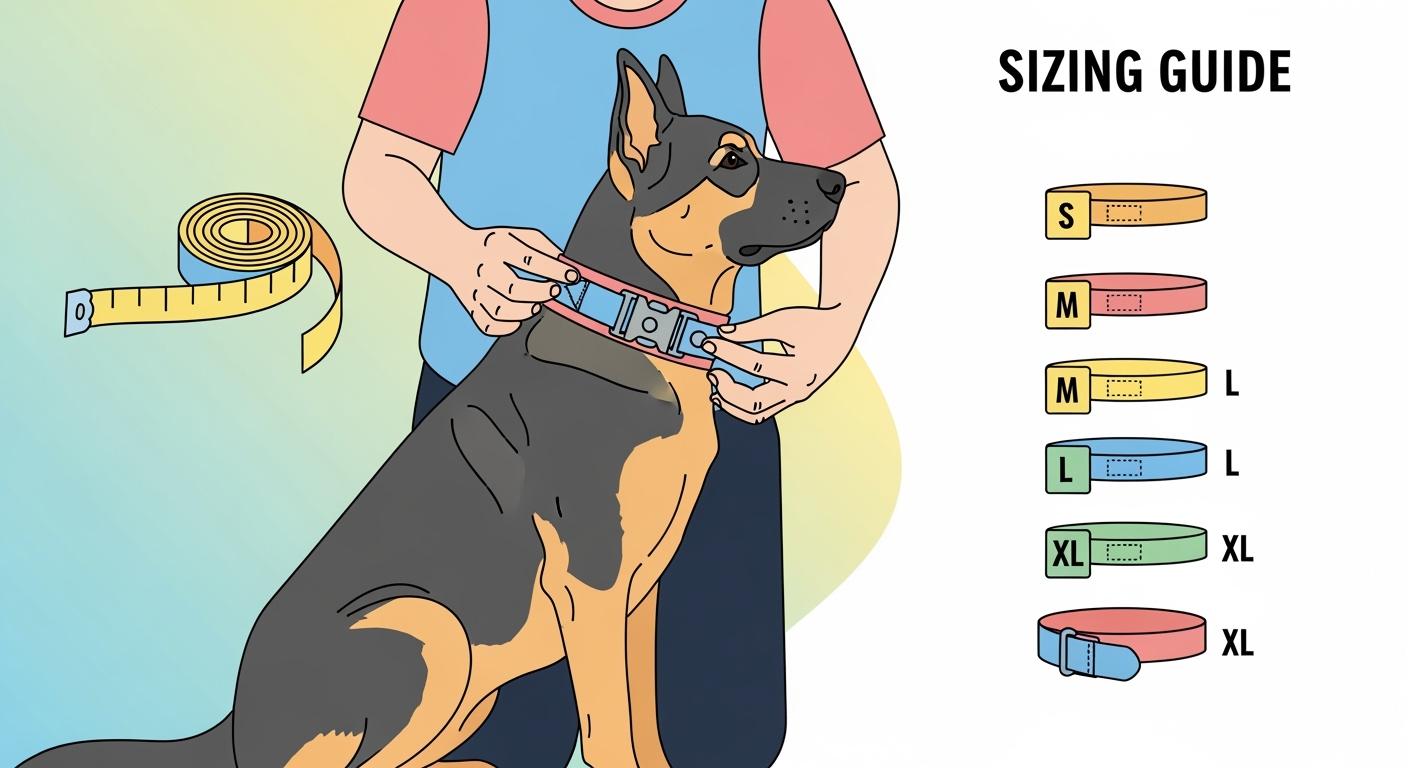
The best starting point is neck measurement where the collar will actually sit, not a guess based on breed or body weight. Large dogs can have very different head and neck proportions even when they weigh about the same.
Use this sizing sequence
- Measure the neck near the upper part of the neck where the collar rests best.
- Choose a size range that comfortably includes that measurement.
- Fasten the collar and use a two-finger check for snug but not pinching contact.
- Walk your dog a few steps and do a gentle backward slip check.
| Check | What good looks like | What needs fixing |
|---|---|---|
| Neck position | Collar sits high and stable | Drops low, twists, or rides into the throat |
| Two-finger fit | Two fingers fit without forcing | No room at all or obvious looseness |
| Backward check | Collar stays on during a light test | Slides easily over the head |
| Walk test | No coughing, pawing, or rubbing | Gagging, scratching, or visible discomfort |
Common sizing mistakes
- Choosing by weight instead of neck measurement.
- Leaving extra slack for thick coats without checking movement.
- Ignoring the fact that wet or brushed-out fur can change fit.
- Assuming a collar that looks strong is automatically sized correctly.
Width, hardware, and coat changes that affect control
Large dogs often do better with collars that spread pressure more evenly and use hardware that can handle repeated daily force. That does not mean the widest collar is always best. It means width and hardware should match the dog’s size, coat, and walking habits.
How width changes the feel
A wider collar can help distribute pressure and stay more stable on some large dogs, especially those with strong pulling force. But if the collar is too bulky or badly placed, it can still twist or feel awkward. Narrower collars may feel lighter, but they are more likely to dig in or rotate on bigger dogs when force increases.
What to inspect on the hardware
- Buckles should close cleanly and stay locked.
- D-rings should sit flat and show no bending.
- Stitching and strap edges should stay intact under regular use.
- Wet-weather use should not leave the collar stretched, rough, or misshapen.
Why backing out risk is sometimes a shape problem
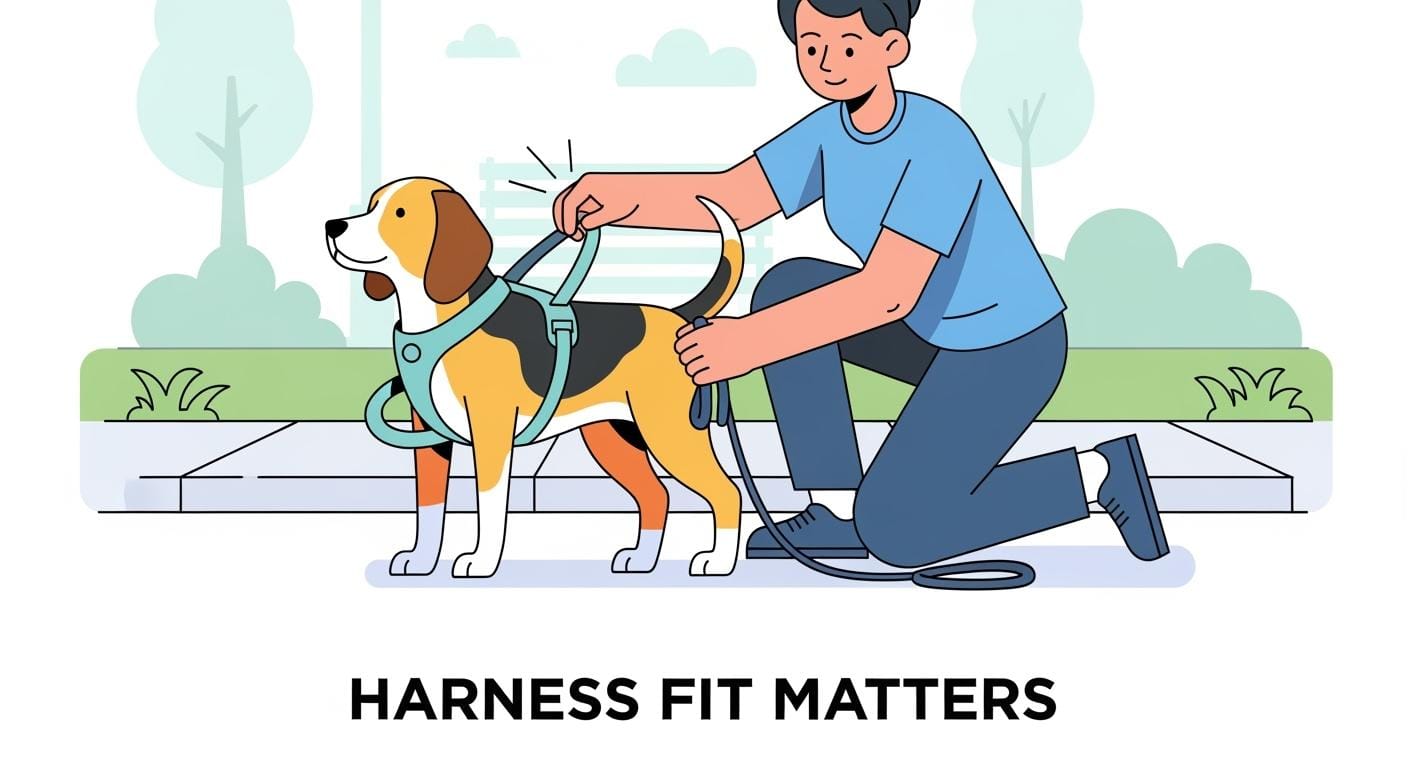
Some large dogs have neck and head proportions that make ordinary flat collars easier to slip, especially when they panic or reverse quickly. If that keeps happening, it is worth reassessing whether a collar-only setup is enough. In those cases, looking at harness fit and use cases often makes more sense than just tightening the collar again.
When a collar is no longer the best walking choice
A collar is often useful for identification and calm everyday wear, but it is not always the best main restraint for every large dog. If your dog pulls hard, coughs under leash pressure, backs out repeatedly, or seems more stressed once tension hits the neck, the setup may need to change.
Warning signs to stop and reassess
- Repeated coughing, gagging, or throat pressure.
- Redness, hair loss, or rubbing under the collar line.
- Frequent slipping during backward movement.
- Hardware wear, cracking, bending, or loosening.
- Strong pulling that turns every walk into neck pressure.
A better pre-walk check for large dogs
- Confirm the collar sits high and flat.
- Use the two-finger fit test.
- Do a gentle backward slip check.
- Inspect buckle, ring, and stitching.
- Think about the route and whether the current collar still matches the dog’s behavior there.
A large dog collar works best when it stays boringly dependable. If every walk involves slipping, coughing, twisting, or re-tightening, the collar is telling you the system is not working as well as it should.
FAQ
How tight should a collar be on a large dog?
It should feel snug enough that two fingers fit underneath without forcing, but not so loose that it rotates excessively or slides over the head during a gentle backward check.
Why does my large dog still slip out of the collar?
Slip-outs often come from a mix of loose fit, poor placement, thick coat changes, or a neck-and-head shape that makes flat collars easier to back out of.
Is a wider collar better for large dogs?
Often it can help with pressure distribution and stability, but only if the collar still sits correctly and does not become bulky or awkward for your dog’s neck shape.
How often should I recheck the fit?
Check before walks and again after grooming, swimming, rain, shedding changes, or any time the collar starts feeling less secure or less comfortable.
When should I switch from a collar to a harness for walks?
Reassess if your dog pulls hard, coughs, slips backward repeatedly, or shows rubbing and discomfort that keep returning even after correct sizing and adjustment.