A dog bed elevated large can feel either helpful or awkward depending on how your dog gets on, turns around, and settles. Large dogs usually expose the difference quickly. If the bed is too high, the first step feels uncertain. If the frame shifts, the whole platform feels less trustworthy. If the sleep surface loses tension, the center dips and the edges stop feeling stable. That is why height alone is not the decision. The better bed is the one your dog can step onto calmly, use without hesitation, and stay centered on through the night.
Key Takeaways
- Pick an elevated dog bed when airflow, easier cleanup, and off-floor sleeping matter to your dog and your space.
- Make sure the platform height matches the way your dog steps up and down. If the first step looks uncertain, the bed may already be too tall or too unstable.
- Check corner stability, surface tension, and edge behavior after setup. Large dogs put more load on all three than smaller dogs do.
When a dog bed elevated large is right or wrong
What elevated beds actually help with
Elevated beds help most when your dog benefits from airflow underneath, a cleaner sleep surface, or being kept off damp, dusty, or warm ground. That makes them practical for outdoor use, warm rooms, covered patios, and dogs that tend to run hot. A raised design can also make daily cleanup easier because hair and debris are less likely to get trapped the way they do with some floor beds.
These are real benefits, but they only matter if the dog can use the bed comfortably. A large elevated bed that looks practical in the room can still be the wrong choice if entry feels awkward or the frame does not stay steady under load.
Why large dogs expose bad height choices quickly
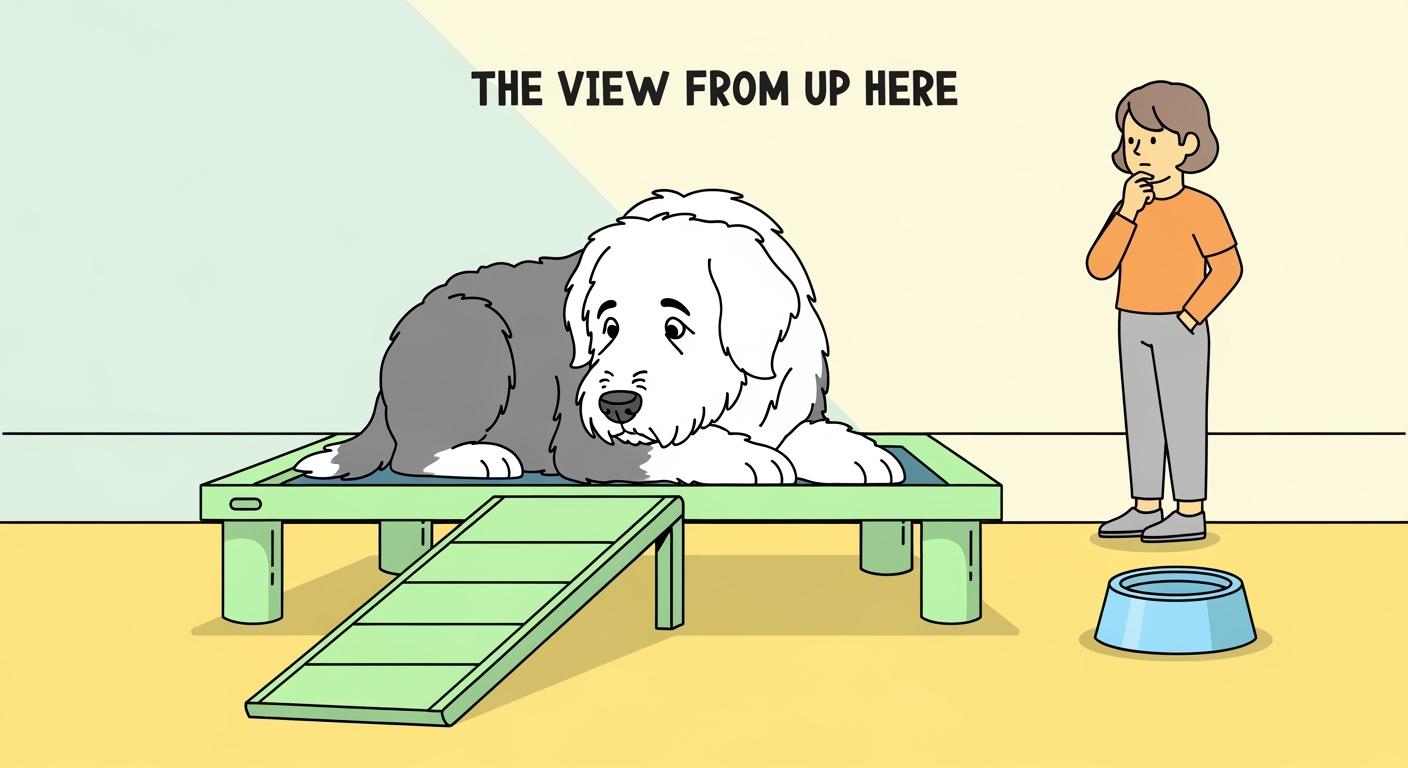
Large dogs do not just step onto a bed. They load it. The first paw lands, body weight shifts forward, then the second half of the body follows. If the bed is too high, too narrow-feeling at the edge, or too lively under that weight transfer, the dog notices it immediately. Some dogs hesitate at entry. Others jump on but keep circling or repositioning because the platform does not feel as stable as they expected.
- Large dogs tend to test the front edge more heavily during entry.
- Longer bodies make usable sleeping width matter more.
- Heavier dogs reveal sag and frame movement faster than small dogs do.
Comparison table: elevated large bed vs low floor bed vs padded raised bed
Here is a practical comparison based on how these beds usually feel in real use:
| Bed Type | Use Case | Main Benefit | Main Watchout | Who Should Skip It |
|---|---|---|---|---|
| Elevated Large Bed | Hot climates, outdoor use, dogs that dislike heat buildup | Airflow, cleaner sleep surface, easier wipe-down | Entry height and frame stability matter more | Dogs that are very uneasy stepping up or down |
| Low Floor Bed | Puppies, cautious dogs, easier entry setups | Easy access, low step demand | Less airflow, collects more floor dust and heat | Dogs that overheat easily outdoors |
| Padded Raised Bed | Indoor comfort-focused setups | Softer top feel with some lift from the floor | Can feel warmer and take longer to dry or reset | Dogs that already run hot |
Common mismatch signs
A large elevated bed is usually the wrong fit when your dog shows the same problems more than once:
- pausing before the first step instead of walking on naturally
- landing diagonally and avoiding one corner
- circling longer than usual before lying down
- sleeping too close to the edge because the center feels less comfortable than expected
Tip: Watch the first three uses closely. Large dogs usually tell you very quickly whether the height and platform feel right.
Height, frame, and surface tension tradeoffs

Low, medium, and high setups
You need to choose a height that your dog can use without turning entry into a climb. Low-profile elevated beds usually feel easiest. Mid-height beds often balance airflow and usability well. Higher platforms can help more with under-bed airflow, but they leave less room for error if your dog hesitates, loads the front edge hard, or dislikes unstable first steps.
- Low setups usually suit dogs that want easier entry.
- Mid-height setups often work well for healthy large dogs that move confidently.
- Higher setups make more sense when airflow matters and the dog already handles elevation comfortably.
Frame stability and sleep surface tension
Frame stability matters because large dogs rarely land gently every time. The bed should stay planted when weight arrives near one corner. It should not click, rock, or shift on the floor. The sleep surface also needs enough tension to stay supportive without feeling drum-tight or sagging too deeply in the middle.
A good large elevated bed usually feels predictable in two ways: the frame stays put, and the fabric platform stays even enough that the dog does not roll toward the center or drift toward an edge.
Pass/fail checklist table: fit and fixes
Use this table to check whether the bed actually fits your dog’s movement and resting pattern.
| Check Item | Pass Signal | Fail Signal | Fix |
|---|---|---|---|
| Entry height | Dog steps on without pausing | Hesitation, awkward climb, or backing away | Use a lower setup or improve approach stability |
| Frame stability | No rocking, no drift, no rattle | Bed shifts or feels lively under load | Tighten hardware and move to a flatter surface |
| Surface tension | Platform stays even and supportive | Center sags or corners feel uneven | Adjust or replace the fabric surface |
| Usable width | Dog can turn and settle without riding the edge | Dog crowds the edge or curls too tightly | Choose a larger or more usable platform shape |
| Cleaning ease | Hair and dirt clear quickly | Debris sticks or dries into the fabric | Clean more often or choose a smoother surface |
Troubleshooting table: symptom, cause, fix
If the bed still feels wrong, this table helps narrow down what is actually happening:
| Symptom | Likely Cause | Fast Check | Fix |
|---|---|---|---|
| Dog avoids bed | Entry feels too high or too unstable | Watch first-step behavior | Lower the challenge or improve stability |
| Bed wobbles | Loose joints or uneven floor contact | Press on each corner | Retighten and level the setup |
| Surface feels too loose | Fabric tension has dropped | Check center and edge support | Retension or replace the sleeping surface |
| Dog sleeps near the edge | Center does not feel as stable or roomy as expected | Watch where the dog settles repeatedly | Reassess width, tension, and frame feel |
| Dog seems too warm | Placement or top surface is trapping heat | Check airflow and location | Move the bed or choose a more breathable setup |
Elevated dog bed failure signs and fixes

Wobble and edge-slip issues
Wobble usually shows up first at the corners. Edge-slip shows up when the dog loads the platform from the side and the footing does not stay predictable. These problems matter more on smooth floors or uneven outdoor surfaces. A large dog may still use the bed for a while, but the approach often becomes slower and less confident over time.
- rocking at one corner usually means the frame is not sitting evenly
- side drift often means the platform and footing are not working together well
- repeated edge use can show that the usable center does not feel as good as it should
| Check Item | Pass Signal | Fail Signal | Solution |
|---|---|---|---|
| Stable footprint | Bed sits flat and stays put | Bed rocks or slides | Level the setup and improve traction |
| Edge safety | Dog stays comfortably centered | Dog drifts or slips near the perimeter | Reassess width, tension, and footing |
Step-up hesitation and edge drift
If your dog hesitates before stepping up, do not assume the dog simply “doesn’t like elevated beds.” Watch what happens more closely. Is the first step awkward? Does one front paw stay searching for a stable point? Does the dog approach from the same side every time? Those patterns usually tell you more than a simple yes-or-no reaction.
Edge drift is similar. If the dog repeatedly sleeps too close to the outside edge, that often means the platform is not feeling evenly usable across its full width.
Note: If your dog shows pain, repeated stiffness, or obvious difficulty with stepping up or down, talk to your veterinarian. An elevated bed does not solve a mobility problem by itself.
Heat buildup and cleaning tradeoffs
A large elevated bed often feels better in warm conditions because air can move under the platform. That helps only if the bed is placed well and the top surface itself does not stay damp, dirty, or heat-loaded. Regular cleaning matters because dried debris and worn fabric can change how the bed feels long before the frame actually fails.
- brush or wipe the bed down often enough that dirt does not build into the surface
- inspect the frame and tension points before they become obvious problems
- replace worn covers or surfaces before sag becomes the dog’s normal sleeping experience
Tip: If the bed becomes harder to clean, looser in the middle, or less stable at the corners, treat those as early warning signs rather than waiting for a full failure.
You should choose a dog bed elevated large when your dog benefits from airflow, easier cleanup, and being off the ground without turning entry into a challenge. Height helps only when the frame stays steady, the surface stays supportive, and the edge still feels safe for a large body to use naturally.
FAQ
How do you know if your dog likes an elevated bed?
Watch how your dog gets on, turns around, and settles. If the dog steps up calmly, stays centered, and lies down without repeated readjustment, the setup is usually working well.
What should you do if your dog slips off the bed?
Check the footing, frame stability, and usable width first. A slip usually means the problem is not just the dog’s movement. It is often a bed setup issue that needs correcting.
How often should you clean an elevated dog bed?
Clean it often enough that hair, dirt, and dampness do not become part of the sleeping surface. Beds used outdoors or by heavier shedders usually need more frequent resets than lightly used indoor beds.