Canine Bag Carry Styles for Long Walks: Shoulder, Crossbody, or Backpack?
When people search for a canine bag for longer walks, they usually are not asking which style looks best. They are trying to avoid shoulder strain, bouncing, heat build-up, and a dog that starts out calm but ends up slumped or stressed halfway through the route. The right carry style depends on how long you will walk, how much support your dog needs, and how stable the bag feels on your body.
If you want to compare the main travel options first, start with pet travel bags and carriers. That gives you the bigger picture before you narrow the choice down to one carry style.
Which carry style usually feels best on long walks
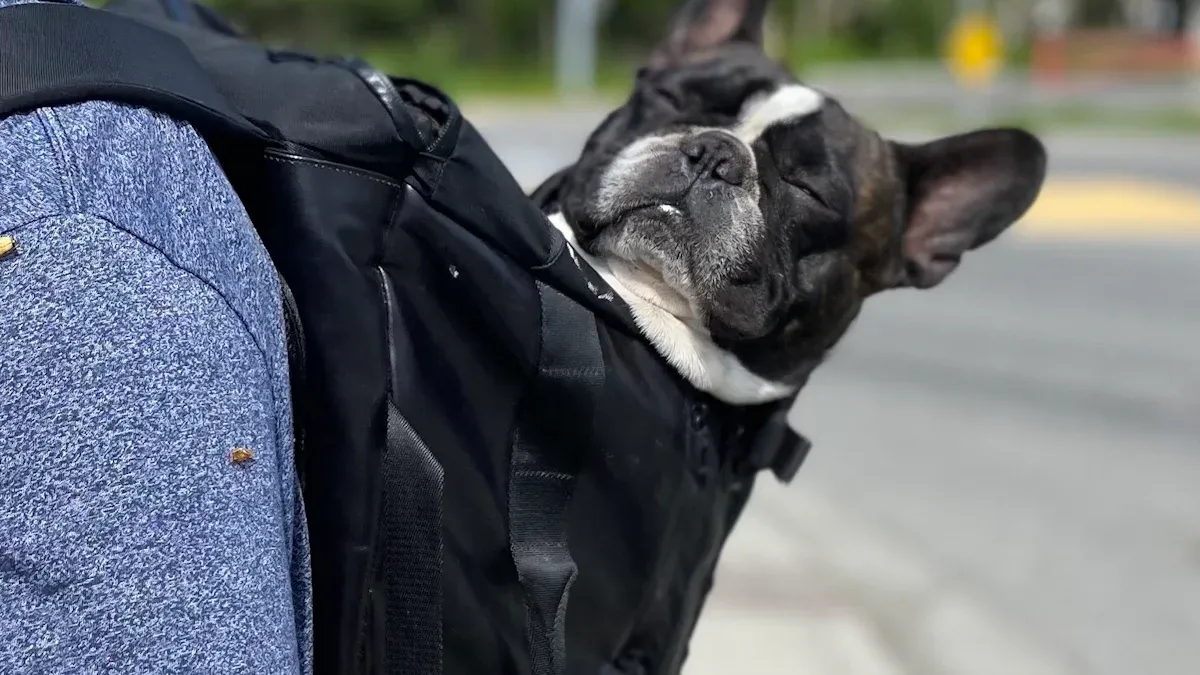
For most longer walks, a backpack-style carrier is the easiest option to keep stable. The weight sits across both shoulders instead of one side, which usually reduces swing and makes it easier to keep your posture natural. That matters because a bag that feels fine for five minutes can become tiring very quickly once one shoulder starts taking the full load.
Crossbody styles can work well for shorter walks, errands, and dogs that want a close, supported position. They tend to feel more stable than a single-shoulder bag because the strap crosses the body and keeps the carrier closer to your center. But they still place more pressure on one side than a backpack does, and that can become noticeable on longer routes.
Single-shoulder bags are usually the quickest to lift on and off, but they are also the easiest to outgrow once walks get longer. If the bag shifts with every step, pulls your neck down, or makes you keep adjusting the strap, it is probably not the best style for regular long-distance use.
A useful comparison point is this backpack carrier vs rucksack guide, especially if you are deciding between a more structured carry design and a more outdoor-oriented one.
How to match the bag style to your dog and your route
Start with your dog’s body and behavior, not the product name. A calm small dog that settles easily may do well in a crossbody bag for moderate outings. A dog that leans, squirms, or gets unsettled by movement often does better in a backpack that stays closer to your back and moves less with each step.
The route matters too. Smooth sidewalks, short city walks, and quick transfers put less pressure on carry comfort than uneven paths, stairs, longer outings, or warm-weather walking. The more movement and time involved, the more important stability becomes. For longer sessions, the best bag is usually the one that lets both you and the dog stay steady without constant correction.
Weather changes the decision as well. Bags that hold the dog close to your body can feel comforting in cooler conditions, but the same setup may trap heat faster on a warm day. If your dog pants quickly, droops, or shifts restlessly, the bag may be too warm, too unstable, or both.
Fit checks that matter before a long walk
The fastest way to rule out the wrong canine bag is a short home test. Put the dog in the carrier, adjust the straps, then walk around for two or three minutes. You are not just checking whether the dog fits inside. You are checking whether the bag stays high and close, whether the dog keeps a neutral posture, and whether the load feels balanced on your body.
Watch for sliding, leaning, or a base that sags under the dog’s weight. If the dog sinks too low, curls unnaturally, or keeps bracing against one side, the structure or size is not right. If the bag keeps swinging away from your body, the issue may be the style itself rather than just the strap length.
Check your own body too. If one shoulder starts tightening up, the strap rubs your neck, or you feel the need to hike the bag back into place every few steps, treat that as a fit failure. Long-walk comfort is not just about the dog being inside the bag. It is also about whether you can carry that setup without strain.
For actual outings, it also helps to pack the right basics in advance. A simple dog travel essentials kit makes it easier to manage water, cleanup, and quick rest stops without overloading the carrier itself.
Common problems with shoulder, crossbody, and backpack styles
Shoulder bag problem: the carrier pulls down one side and starts swinging as you walk. This usually shows up as neck tension, shoulder fatigue, and a dog that shifts around more with each step. If you notice that early, the fix is often not tighter adjustment. It is moving to a more balanced carry style.
Crossbody problem: the strap feels stable at first, but the bag starts rubbing at the neck or hip over time. This can happen when the bag sits too low, the strap is too narrow, or the dog’s weight pulls the carrier away from your center. Raising the bag higher on the torso often helps, but there is still a limit to how comfortable one-sided carry can be on longer routes.
Backpack problem: the load is balanced, but the bag sits too far from your back, bounces, or gets hot. This is usually a strap adjustment problem or a structure problem. The bag should sit close enough that it moves with you, not behind you like a swinging load. If it feels bulky and unstable even after adjustment, the size or design may be wrong for your dog.
Another common mistake is choosing more space than you need. People often size up for comfort, but too much empty room can increase sliding and bounce. Long-walk comfort comes from supported posture and steady carry, not from extra interior space alone.
How to decide without overthinking it
Choose a backpack style if your priority is longer walking comfort, better weight distribution, and the least side-to-side strain. Choose a crossbody style if your route is shorter, your dog likes to stay close, and you want easier access with more stability than a single-shoulder bag. Choose a shoulder bag only if the route is short and the load is light enough that one-sided carry will not become tiring.
If two styles both seem workable, do not decide by product photos alone. Put the dog in, adjust the bag, and walk with it for a few minutes. The wrong option usually reveals itself quickly through bounce, body strain, slumping, or heat discomfort.
FAQ
Is a backpack always better for long walks?
Not always, but it is usually the most stable choice for longer routes because the weight is shared across both shoulders. That tends to reduce swing and body strain compared with one-sided carry styles.
Is a crossbody bag good enough for everyday use?
It can be, especially for shorter walks, errands, and dogs that stay calm in a close carry position. The main limit is that longer routes may still cause one-sided fatigue or rubbing if the bag does not sit well.
How do I know the bag is too loose?
If the carrier swings, drops lower as you walk, or lets the dog slide and lean to one side, it is too loose or the structure is not supportive enough. The bag should stay close to your body without constant adjustment.
Should I size up for extra comfort?
Usually no. Extra room often increases movement inside the bag, which can make both posture and stability worse. A better fit is one that supports the dog without forcing a curl and without leaving too much unused space.
What signs mean I should stop using the bag on that walk?
Stop if your dog shows heavy panting, repeated escape attempts, slumping, stiff posture, or clear distress. Also stop if you feel neck, shoulder, or back strain building quickly, because that usually means the carry style or fit is not working.