A big harness for dog use should feel secure without restricting movement, but large dogs make fit problems show up faster. If the chest fit is off, the straps are uneven, or the harness shifts backward under tension, a big dog can twist out, rub the skin quickly, or make the whole walk feel harder than it should. That is why this guide stays focused on one thing: how to check fit in a simple, repeatable way before the harness becomes a problem.
If you are comparing broad options first, start with a dog harness category view. It helps separate everyday walking harnesses from bulkier vest styles or handle-heavy designs before you commit to one shape.
Why fit matters more on a large dog
Large dogs put more force into every fit mistake. A harness that feels only a little loose on a calm try-on can start rotating once the dog leans into the leash. A neckline that seems fine indoors can creep upward toward the throat once the dog starts walking with purpose. A girth strap that sits a little too far back can rub and shift more quickly because the dog covers more ground with each stride.
That does not mean big dogs need the heaviest or bulkiest harness available. It means they need a harness that stays centered, spreads pressure across the chest cleanly, and keeps its adjustment under real movement. Good fit usually matters more than extra padding, extra panels, or extra hardware.
A large dog also makes weak points easier to notice. If the harness twists, the adjusters slip, or the chest panel pulls off center after one short walk, treat that as useful information. The problem may be size, shape, or strap balance, but it is still a real fit problem, not something to ignore.
If you want a broader comparison of shapes and daily-walk priorities before choosing one, this best dog harness guide is the right next step.
Fit check 1: measure the dog before you trust the size label
Start with the widest part of the chest, just behind the front legs, because that is the measurement that usually matters most for harness stability. Then measure the base of the neck where the harness will actually sit, not high under the jaw unless the design specifically sits there. If the harness size chart includes body length or chest panel length, check that too for dogs with unusually deep chests or long bodies.
Do not guess from breed, old size labels, or the idea that your dog is “usually a large.” Large dogs vary too much in chest depth, shoulder width, and neck shape for that shortcut to work consistently. A broad dog and a tall narrow dog can both wear large sizes but need very different strap ranges and panel shapes.
If your dog falls between sizes, do not assume the bigger size is always better. More room can make the harness easier to put on, but it can also create more shifting and back-out risk. The better choice is the size that gives enough adjustment range without leaving the harness floating on the body.
Fit check 2: adjust for stability, not just snugness
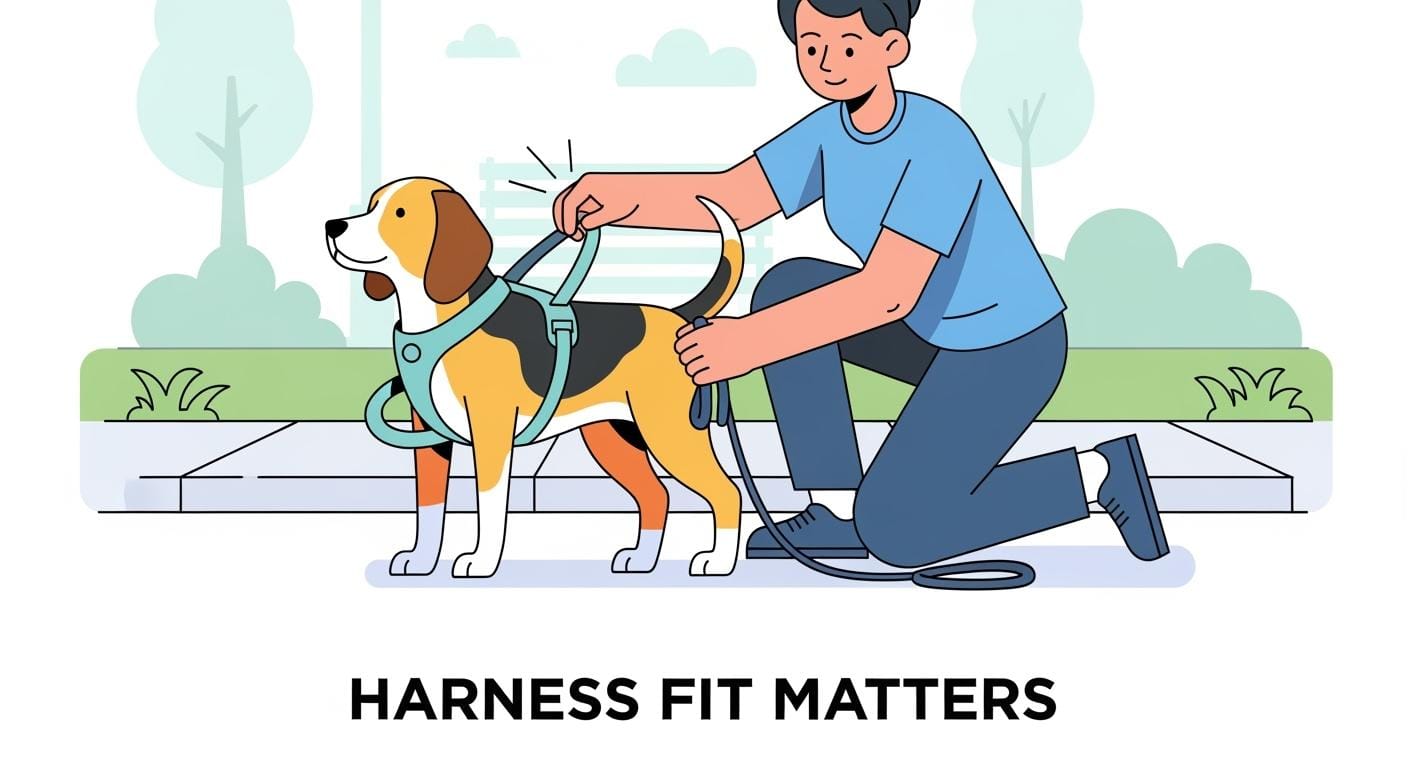
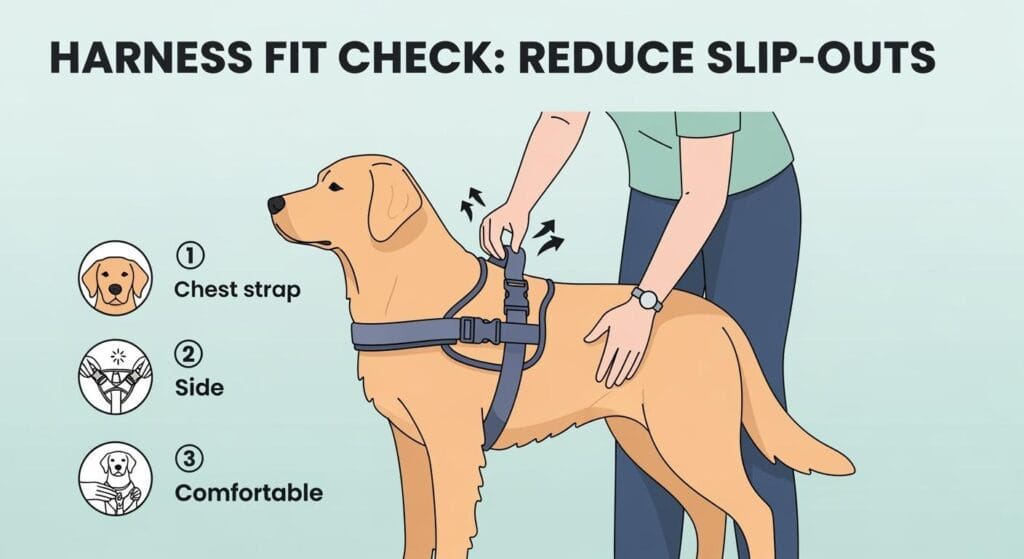
Once the harness is on, tighten each point gradually instead of pulling one strap tight and leaving the rest loose. The chest panel should stay centered, the neckline should sit cleanly without pressing into the throat, and the girth strap should clear the front legs enough to reduce rubbing. A simple two-finger check under the straps is a good starting point, but it is only the start.
The harness should feel secure without flattening the coat too hard or changing the dog’s posture. If you can fit far more than two fingers under the harness, it is probably too loose. If you have to force your fingers under it, the harness is too tight and may create pressure points even if it seems stable at first.
Watch the hardware too. The buckles should sit where they do not dig in, the D-ring should stay in a practical leash position, and the adjusters should hold their length instead of creeping back after a little tension. Large dogs expose weak adjusters quickly, so a harness that will not hold its setting is not a good walking setup.
If you are also choosing leash length and clip style at the same time, this dog harness and leash set guide helps make sure the harness and leash work together instead of adding extra pulling force in the wrong place.
Fit check 3: validate movement before the first full walk
Now test the harness with movement, because standing still hides a lot of problems. Have your dog walk a short indoor loop or a quiet outdoor stretch. Watch whether the harness stays centered when the dog turns, sits, lowers the head, and moves with normal stride length. The chest panel should not slide off to one side, and the neckline should not ride up into the throat.
Then check for back-out risk. You do not need a rough test. A gentle backward pull while the dog stands calmly can tell you a lot. If the harness starts loosening, lifting over the shoulders, or rotating too easily, do not assume it will improve later. That is a sign the size or shape may be wrong for the dog.
After the first short walk, run your hand under the straps and inspect the coat. Look for flattened fur, pink skin, strap drift, or a harness that has moved into a different position than where it started. These are early warnings that the fit is unstable, even if the walk looked mostly fine on the surface.
Common big-dog harness problems and what they usually mean
The harness rotates to one side: the chest fit is often too loose, the strap balance is uneven, or the harness shape does not match the dog’s body.
The dog backs out during stress: the neckline and shoulder fit are too loose, or the overall size is too generous for the dog’s shape.
The girth strap rubs behind the legs: the harness may be too long in the body, sitting too close to the armpits, or tightened in a way that pulls the whole structure backward.
The harness rides into the throat: the neck opening is sitting too high, the chest panel is too short, or leash tension is pulling the whole harness forward.
The straps keep loosening: the adjusters are slipping, the webbing is too slick for the hardware, or the harness is no longer holding fit under normal use.
FAQ
How tight should a big dog harness be?
It should feel secure enough that the harness does not shift heavily or allow easy back-out, but loose enough that you can slide two fingers under the straps comfortably. Then confirm the fit again while the dog is moving.
Should I size up for a large dog to make it more comfortable?
Not automatically. Too much extra room often creates more movement, more twisting, and more escape risk. Comfort usually comes from stable support, not from a looser overall fit.
Why does the harness look fine standing still but fail on walks?
Because movement reveals whether the chest panel stays centered, whether the neckline rides up, and whether the straps hold their setting. A still fit check is useful, but it is never enough by itself.
When should I stop using that harness size?
Stop using it if the harness repeatedly rotates, rides into the throat, causes rubbing, allows backing out, or no longer holds its adjustment after careful fitting.
Can a large dog use a vest-style harness safely?
Yes, if the vest shape matches the dog’s body and still allows free shoulder movement. A vest is not automatically safer just because it covers more area. Fit and stability still matter most.