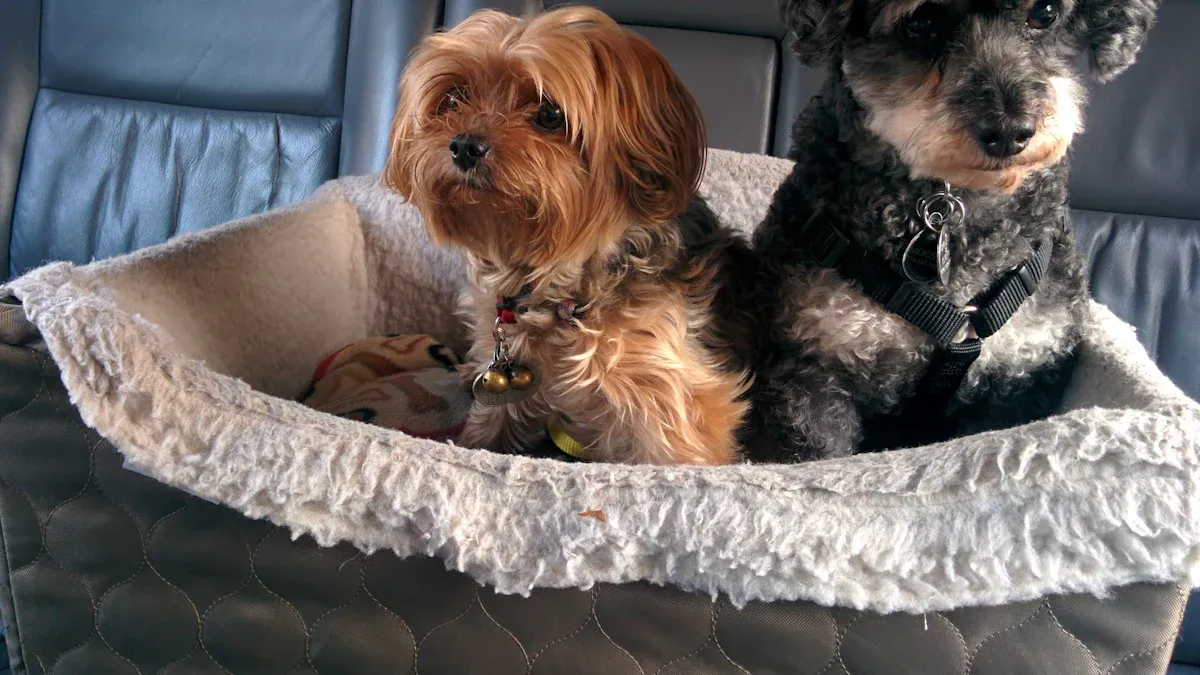
The best travel dog bed depends less on trends and more on where you are going, how long you will stay, and how much support your dog actually needs once you arrive. A roll-up mat usually works better when space is tight and the bed needs to pack fast, dry fast, and stay easy to carry. A cushioned bed makes more sense when your dog will spend longer stretches resting in one place, when the ground is hard, or when comfort matters more than compact packing. The real decision is not “lightweight or plush” in theory. It is whether the bed still feels practical after you pack it, set it down, clean it, and watch whether your dog actually settles on it.
Key Takeaways
- Choose a roll-up mat for shorter, lighter trips when pack size and fast drying matter more than deeper padding.
- Opt for a cushioned bed for longer journeys. It gives more resting comfort when your dog will spend more time lying down between drives or overnight stays.
- Always test the bed at home before traveling. A familiar surface is more useful than a “travel bed” your dog refuses to use once you arrive.
When a Travel Dog Bed Matters Most
Essential Times for a Travel Dog Bed
A travel dog bed matters most when your dog is moving through unfamiliar environments or resting on surfaces that are colder, harder, dirtier, or less predictable than home. Hotels, campgrounds, cabins, road-trip stops, and longer visits are the situations where a designated bed starts doing more than a blanket. It gives your dog one place that smells familiar, stays cleaner than the ground, and works as a more consistent rest zone after the excitement of travel.
- Your dog has a familiar place to settle in hotels, guest rooms, or campsites.
- A bed adds separation from hard floors, rough ground, or damp surfaces.
- You get an easier cleanup boundary instead of letting your dog use every surface directly.
- Trips often feel smoother when your dog has one defined resting place instead of improvising one.
When a Simple Mat or Blanket Works
A simple mat or blanket can still be enough for very short stops, familiar visits, or dogs that already settle easily without much padding. If the dog is only taking a short break, if the floor is already clean and comfortable, or if you need the lightest possible option, a basic layer may do the job. The mistake is assuming that “something soft” always equals a proper travel bed. Sometimes it does. Sometimes it is too thin, too slippery, or too quick to soak through and stay damp.
Comparison Table: Roll-Up, Cushioned, and Cot Beds
| Bed Type | Best Use | Main Benefit | Main Watchout | Who Should Skip It |
|---|---|---|---|---|
| Roll-Up Mat | Short trips, light packing, fast stops | Easy to pack, easy to shake out, fast to dry | Can feel too thin for harder ground or longer rests | Dogs needing more support or longer overnight comfort |
| Cushioned Pad | Hotels, longer drives, cabins, longer stays | More comfort and better body support | Bulkier, slower to dry, harder to pack small | Very light packers or trips with almost no extra space |
| Cot Bed | Camping, damp ground, outdoor setups | Keeps the dog off wet or uneven ground | Less portable and not ideal for small-car packing | Urban stays, hotel rooms, or trips where folding bulk matters |
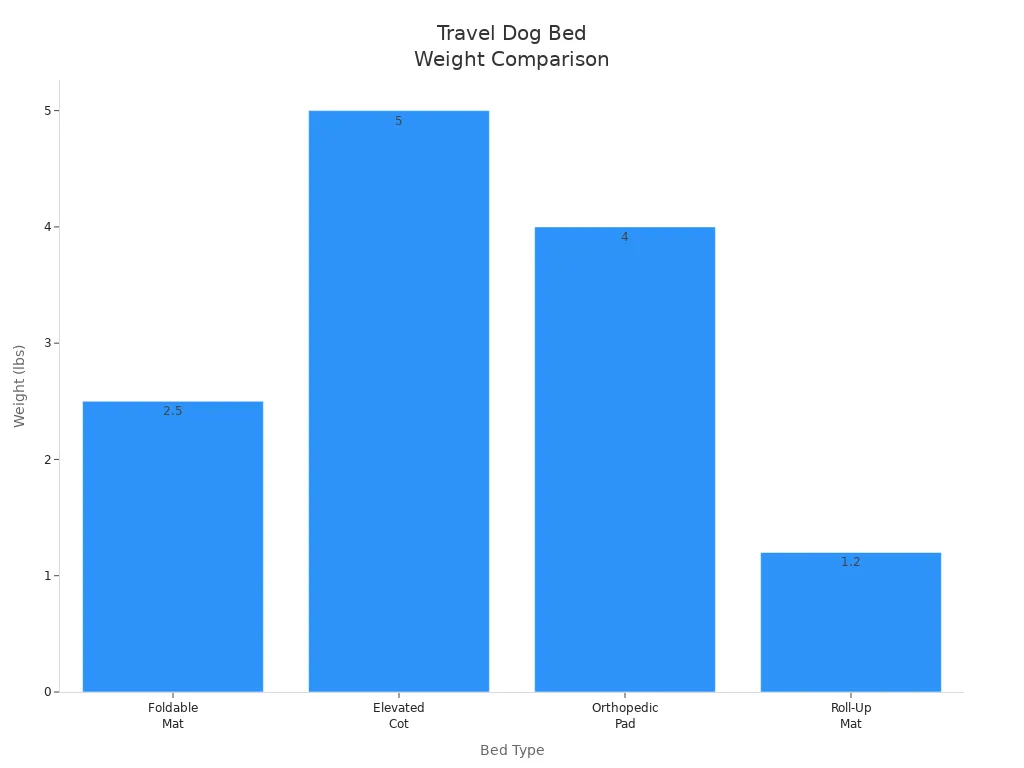
Tip: If your dog is older, slow to settle on hard ground, or clearly more comfortable with deeper support, a cushioned option usually makes more sense than forcing a super-packable bed to do everything.
For outdoor trips, the best choice is often the bed that stays cleaner and dries faster after real use, not the one that only feels nice in the product photo. A mat, cushioned pad, or cot can all work well if they match the trip conditions instead of fighting them.
Roll-Up vs Cushioned: Best Travel Dog Bed Features
Portability and Packing for Trips
When you travel, you want a bed that fits your space and packs quickly. Roll-up mats stand out when you need something that packs down fast, fits around other gear, and does not become a problem if it gets damp or dirty. They are usually easier to strap outside a bag, slide behind other items, or shake out after a stop.
Cushioned beds offer more support, but they ask for more space in return. Some compress reasonably well, but many still take up a meaningful part of a trunk, crate area, or luggage plan. That is not automatically bad. It just means the comfort has to justify the space. If your trip already feels tight, a bulky bed can become the first thing you regret packing.
| Material Type | Pros | Cons |
|---|---|---|
| Lightweight outer materials | Easier to pack and carry | May feel less cushioned on hard surfaces |
| Compressible fills | Can store smaller while keeping some loft | Lower-quality fills may flatten over time |
| Odor- and fur-resistant surfaces | Usually easier to clean between trips | Not every bed balances this with comfort |
Tip: Pack the bed with your actual travel gear before the trip. A bed that seems compact on its own can feel much larger once the rest of the car or bag is already full.
Comfort and Support on the Go
Comfort matters for your dog’s well-being. The best travel dog bed gives your dog a familiar place to settle without becoming a burden to carry. Roll-up mats work best when your dog is already fairly easygoing and the trip asks more from your packing space than from the bed itself. Cushioned beds matter more when the dog will rest longer, when surfaces are hard, or when your dog clearly does worse on thin bedding.
This is also where “trip length” matters. A bed that is fine for a daytime stopover may not feel good enough after a long drive, a hotel night, or a full weekend away. The right bed is the one your dog still chooses after the novelty of travel wears off.
- Roll-up beds are easier to move and suit shorter or more mobile trips.
- Cushioned beds help more when support and longer rest matter.
- A familiar bed often works better than a technically “travel-ready” bed your dog avoids.
Note: If your dog has joint issues, mobility changes, or clear discomfort on thinner surfaces, talk with your veterinarian before assuming a lightweight bed is good enough.
Pass/Fail Checklist Table for Travel Dog Beds
Use this checklist to test your travel dog bed before the trip instead of discovering problems on the road.
| Check Item | Pass Signal | Fail Signal | Fix |
|---|---|---|---|
| Packs easily with gear | Fits naturally in your bag, car, or crate plan | Feels bulky, awkward, or always in the way | Try a roll-up mat or a lower-bulk bed |
| Dries quickly after wash | Fully dries before your next outing or packing window | Still feels damp too long after cleaning | Switch to a thinner or faster-drying bed style |
| Dog uses bed willingly | Dog lies down and settles without being coaxed every time | Dog avoids it or leaves it quickly | Add familiar scent or rethink the bed style |
| Easy to clean | Hair, dirt, and odors come off without a fight | Stains hold, smells linger, or cleanup takes too long | Choose more practical materials before the next trip |
| Stays flat on ground | No bunching, curling, or sliding in normal use | Shifts, bunches, or keeps moving under the dog | Use a grippier base or a more stable bed type |
Troubleshooting Table: Common Travel Bed Issues
If you run into problems, use this table to identify the likely cause faster.
| Symptom | Likely Cause | Fast Check | Fix |
|---|---|---|---|
| Dog refuses to use bed | Unfamiliar scent, texture, or shape | Compare it with the bed or blanket your dog already likes | Add a familiar blanket and reintroduce it at home |
| Bed feels too small | Wrong size for the dog’s real resting posture | Measure your dog in the position they actually sleep in | Go larger if the dog cannot rest naturally |
| Bed looks worn after washing | Poor materials or cleaning demands that are too harsh for the bed | Check fabric, stitching, and care label after cleaning | Choose a more durable, easier-care bed next time |
| Bed slides on surfaces | Base is too light or too slick for that floor | Test it on tile, tent floor, or smooth cabin flooring | Add grip or choose a bed with a steadier base |
| Bed stays damp | Slow-drying materials or too much loft for the cleaning routine | Time how long it actually takes to dry after washing | Use a thinner or more practical travel-focused option |
Real-World Tips for Choosing the Best Outdoor Dog Beds
- Practice using the bed at home before the trip so your dog does not meet it for the first time in a new place.
- Keep cleaning realistic. If you use the bed often, a weekly clean is a practical baseline, and dirtier trips may need faster cleanup.
- Choose the bed that you can actually wash, dry, and repack without turning the next trip into a hassle.
- The best outdoor dog bed is the one that balances support, portability, and cleanup for your real travel style.
Best for Travel: Avoiding Common Mistakes
Signs Your Bed Isn’t Working
You might notice your dog avoids the bed, the bed bunches up, or the bed stays damp longer than your trip allows. Those are useful signs, not just small annoyances. If your dog curls up somewhere else, chooses the floor, or only uses the bed after you add another blanket, the current setup is probably missing something. Sometimes the problem is comfort. Sometimes it is texture, stability, or simply that the bed feels too unfamiliar compared with home.
Tip: If your dog refuses the new bed, add a familiar blanket or towel and let your dog use it at home first. Familiar scent often matters more than the bed label.
Mistakes to Avoid with Camping Dog Beds
Many owners choose a bed that is too small, too bulky, too slow to dry, or too hard to clean for the kind of trip they are actually taking. Another common mistake is buying for the idea of camping instead of the reality of how the dog sleeps. A sprawling dog needs usable surface length. A dog that curls tightly may tolerate a smaller footprint better, but still needs enough stability and insulation.
Common mistakes include:
- not measuring your dog in their real sleeping position
- choosing a thick cushioned bed for a trip that leaves almost no packing space
- choosing a thin mat for a dog that clearly needs more support
- forgetting how much drying time matters once the bed gets dirty or wet
How to Choose the Best Camping Dog Beds
Start by measuring your dog in the position they actually sleep in. Then match the bed to the trip. Pick roll-up styles when packability, lighter weight, and faster drying matter most. Pick cushioned beds when your dog will be resting longer or needs more body support. Pick cots when keeping the dog off wet ground matters more than compact packing.
The best travel bed is not the one with the most features. It is the one that still makes sense after packing, after washing, and after your dog has used it for a real trip instead of a quick living-room test.
Note: If your dog has joint issues, talk to your vet before choosing a bed. This article does not provide medical advice.
Regular cleaning and full drying keep the bed usable for the next trip. A good travel bed should be something you can realistically reset between outings, not just something that looks travel-friendly on day one.
You match the best travel dog bed to the trip by focusing on pack size, drying time, surface conditions, and how your dog actually rests. A roll-up mat works best when portability leads the decision. A cushioned bed works better when rest quality matters more than packing small. The right choice is the bed that your dog will use willingly and that you can still carry, clean, and reset without regretting it halfway through the trip.
- Use the tables and checklists to compare what matters on your kind of trip.
- Test the bed at home before travel so the first use does not happen under stress.
- Maintain the bed well so it stays usable, cleaner, and easier to repack.
Note: Always consult your vet for health concerns.
FAQ
How do you decide between a roll-up mat and a cushioned bed for travel?
You look at trip length, packing space, and your dog’s comfort needs. Choose a roll-up mat when you need lighter packing and faster drying. Choose a cushioned bed when your dog will rest longer or needs more support.
Can you wash travel dog beds in a machine?
You can wash many travel dog beds in a machine, but always check the care label first. Let the bed dry fully before packing it again.
What if your dog has joint issues?
You usually need a more supportive bed rather than the thinnest travel option. Ask your vet for advice before choosing.
Note: This FAQ does not provide medical guidance.