

To balance control and shoulder freedom, choose a big dog harness with strap geometry that stays clear of the shoulder. Confirm your dog’s movement freedom with a simple gait check. Manage moisture every rainy walking day to prevent rubbing. When you fit a big dog harness, use the two-finger fit rule for comfort. Watch for early signs of irritation near the gear. Always check how the big dog harness works with your leash before every adventure.
Key Takeaways
Pick a big dog harness that lets shoulders move. This helps your dog walk easily and feel good.
Use the two-finger fit rule to check comfort. This stops rubbing and keeps the harness snug.
After rainy walks, dry your dog and the harness. This lowers the chance of skin problems from wetness.
Look for early signs your dog feels bad. Watch for yawning or lip licking to spot problems early.
Check your harness and leash often for damage or fit. This keeps your dog safe and happy on every walk.
Big Dog Harness Fit and Rainy Trail Risks
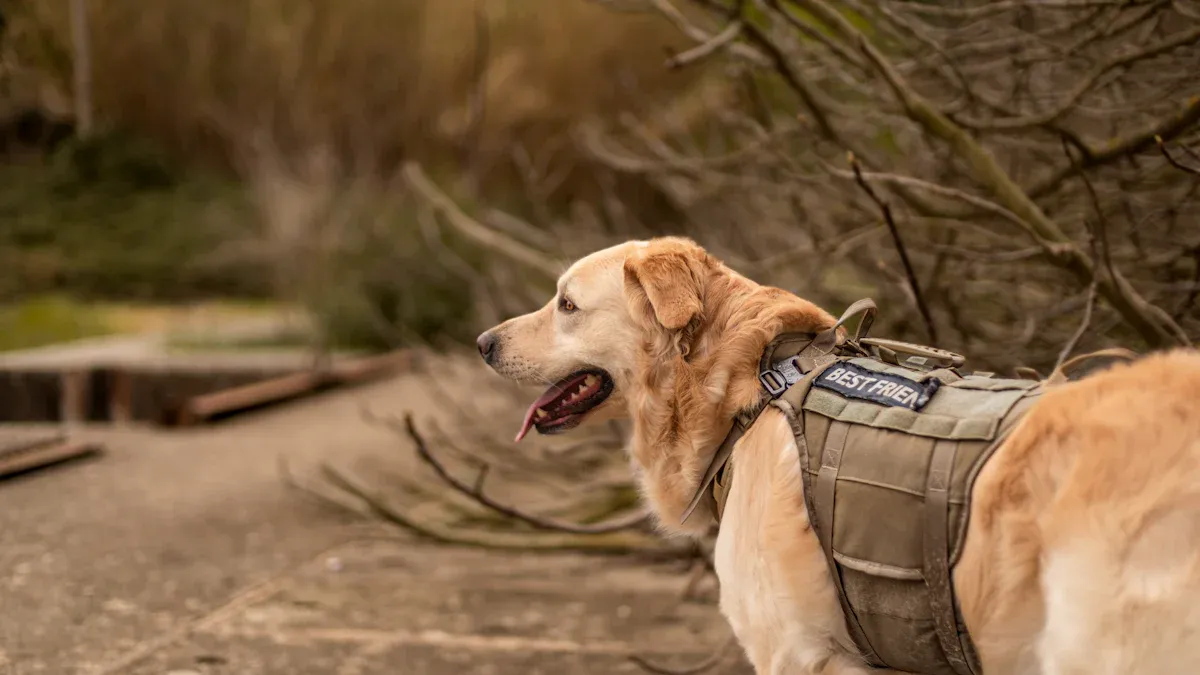
Why Fit Matters for Big Dogs
You want your harness to support both control and safety. A proper fit helps prevent discomfort and keeps your dog secure during walking. Use the two-finger rule at every strap contact point. This means you should slide two fingers between the harness and your dog’s body. If the harness feels too tight or too loose, adjust it before heading out. A good fit keeps the harness from shifting or twisting, even when your dog pulls on the leash.
Common fit problems can appear quickly, especially on rainy trails:
The harness may rotate or shift to one side.
The neckline can move up toward the throat.
Straps may rub the armpit or chest.
Your dog might scratch at the gear or try to escape.
Pressure points can cause skin irritation.
Straps may dig in, leaving red marks.
Armpits and chest may show soreness.
Twisting or slipping harnesses can lead to sore spots.
Heavy coverage with low airflow can increase heat stress.
Rain and Increased Rubbing Risk
Rain changes the way your harness works. Wet fur and trapped moisture can increase friction between the harness and your dog’s skin. This can lead to irritation, especially in high-risk rubbing zones like behind the elbow, the chest centerline, and the belly strap area. Always check these spots after wet walks. Remove the harness and dry both the gear and your dog before putting it back on. This simple step supports safety and comfort.
Early Warning Signs of Restriction
You can spot early signs of discomfort if you know what to look for. Watch for changes in your dog’s behavior during and after walks. Some dogs yawn or lick their lips when they feel stress. Others may freeze, shake, or tuck their tails. Severe reactions include refusing to eat or drink. Use this table to help you recognize early warning signs:
Behavior | Dogs |
|---|---|
Early signs | Yawning, licking lips |
Increased stress signs | Freezing, shaking, tail tucking |
Severe stress reactions | Defecating, urinating |
Appetite changes | Refusal to eat/drink |
For safety, always remove the harness when your dog is unsupervised. This prevents rubbing and lets the skin recover. Regular checks and quick action keep your dog comfortable and safe on every adventure.
Harness Design for Shoulder Freedom and Control
Strap Paths and Shoulder Movement
You want your harness to let your dog move easily. Strap paths are important for shoulder freedom. If straps cross the shoulder or sit near the armpit, your dog may not walk well. Y-shaped chest harnesses keep straps away from the shoulder joint. This lets your dog stretch out more. Across-chest front control harnesses might touch the shoulder. You should check if your dog moves freely when walking. Dual-clip harnesses let you change how the straps fit. This helps you find what is most comfortable and gives you control. Wide-padded harnesses spread out pressure. But if the padding stays wet, it can hold moisture.
Tip: After you put on the harness, watch your dog walk and trot. Make sure your dog moves smoothly. There should be no limping or short steps.
Front Control and Friction Zones
Front control harnesses clip at the chest. This helps stop pulling and is good for training. You get more control over strong dogs. But the front control hardware sits near places that rub, like the chest centerline and behind the elbow. If the harness moves during walks, rubbing can get worse, especially when it is wet. Back-clip harnesses are good for calm dogs. They may not work well for dogs that pull hard. Dual-clip harnesses let you pick front or back clips. This gives you choices for different walks.
Front-clip harnesses help stop pulling.
Back-clip harnesses are good for calm dogs.
Dual-clip harnesses give you more ways to control your dog.
Padding and Moisture Management
Padding makes harnesses more comfortable. Soft padding keeps skin safe from rubbing. When it rains, padding can soak up water and stay wet. This can make skin sore. Quick-dry materials like polyester do not hold water and dry fast. Linen feels soft but gets wet and wears out faster. You want padding that dries fast and does not hold dirt. After every wet walk, rinse and dry the harness and your gear. This helps stop sore spots and keeps your dog happy.
Fabric | Durability | Comfort | Water Resistance |
|---|---|---|---|
Linen | Not strong when wet; wears out | Breathes well; feels soft | Okay; soaks up water |
Polyester | Very strong; hard to tear | Not as cool; can get hot | Great; dries fast |
Comparison Table: Harness Designs for Rainy Trails
Option | Best For | Pros | Cons | Notes |
|---|---|---|---|---|
Y-shaped chest | Active dogs, shoulder freedom | Lets your dog walk naturally, less shoulder block | Can move if not fitted right | Check fit after wet walks |
Across-chest front control | Training, strong pullers | Stops pulling, gives more control | Can rub near shoulder and chest | Watch for rubbing when it is wet |
Dual-clip | Many needs, flexible | Lets you pick front or back control | Has more parts, can be heavier | Move clips for best fit |
Wide-padded | Comfort, long walks | Spreads out pressure, less digging | Can hold water, dries slowly | Use quick-dry padding for rainy days |
Sourcing Checklist for B2B Buyers
When you pick harnesses for your business, use this list:
Straps you can adjust for a two-finger fit
Straps that do not block the shoulder or armpit
Padding that dries fast and does not hold dirt
Quick-dry materials like polyester for wet days
Hardware that does not rust or break
Surfaces that are easy to clean and padding you can remove
Clear size labels for picking the right fit
Warranty and help for returns or exchanges
Checks for rubbing, moving, and how it works when wet
Buyer note: Most returns happen because fit instructions are not clear, straps block the shoulder, or the harness does not work well when wet. Make sure your listings and packaging show clear specs, safe strap paths, and how to reset after wet walks.
Objection Handling: Common Issues and Solutions
You may see these problems with harnesses:
Front control rubs: Change how the straps fit and check after wet walks.
Rear clip loses control: Use dual-clip harnesses for strong dogs.
Harness moves when wet: Pick quick-dry materials and check the fit again.
Too strong dogs: Get harnesses with strong hardware and wide straps.
Wrong size: Use clear size labels and offer samples.
Returns from rubbing: Add better padding and give fit instructions.
What would help you decide? You want harnesses that pass the movement check, stay in place when wet, and keep your dog happy. If you see rubbing or shifting again and again, try a new design or material.
How to Walk a Dog That Is Stronger Than You-Rainy Routine
Fit and Gait Checks Before Walking
Dog walking safety starts with a proper fit. Before walking, always adjust your gear. You want to check throat clearance to keep your dog comfortable. Use a two-minute fit test to confirm strap placement. Watch your dog move to see if the shoulders stretch freely. After walking, inspect the skin for redness or irritation. These steps help you prevent problems when walking large dogs.
Pre-walk fit and gait checklist:
Adjust the harness for a snug fit.
Check throat clearance.
Test comfort and strap placement.
Observe shoulder movement.
Inspect skin after walking.
Wet-Day Reset Routine Steps
Rainy days change how you manage strong dogs. Wet fur increases rubbing risk. After walking, check your dog’s skin for warmth, redness, or broken hair. Clean and dry the gear to reduce friction. Make sure the harness fits well to avoid rubbing behind the elbows. Moisture can increase skin problems, so always perform a wet-day reset.
Rainy walk and trail day routine:
Identify control problems and rubbing risk zones.
Apply the fit-check rule at every contact point.
Confirm free shoulder movement with a gait check.
Confirm harness stability during a gentle test walk.
After rain or mud, rinse grit, dry gear, and re-check fit.
Handling Tips Beyond the Harness
Controlling powerful dogs requires more than gear. Use a sturdy leash for walking large dogs. Practice loose-leash walking to prevent the urge to pull. Consistent training helps you manage strong dogs. Hold the leash with both hands for extra safety. Stay alert to your dog’s signals. Walking techniques for handling larger canines include keeping your dog close and using short commands.
Tip: Walking your dog with regular breaks helps reduce stress and keeps your dog focused.
Common Mistakes in Wet Conditions
Dog walking safety depends on avoiding common errors. Many people forget to check gear after walking in rain. Some ignore early signs of irritation. Others skip the wet-day reset. Not adjusting the leash or harness can lead to problems. Failing to use consistent training makes managing strong dogs harder.
Mistakes to avoid:
Skipping fit and gait checks before walking.
Ignoring wet-day reset steps.
Overlooking signs of skin irritation.
Using a leash that is too thin for walking large dogs.
Forgetting consistent training for loose-leash walking.
Not cleaning and drying gear after walking.
Allowing gear to rub behind the elbows.
Fit vs Not a Fit-Checklist and Next Steps
Fit Checklist for Big Dogs in Rain
You want to make sure your harness fits well before every rainy walk. Use this quick checklist to confirm a good fit:
Two fingers slide easily between the harness and your dog at every strap.
Your dog walks with a normal gait and stretches the shoulders freely.
The harness stays in place, even when wet or when your dog pulls.
Padding and materials dry quickly and do not stay damp after walking.
No signs of redness, hair loss, or discomfort appear after use.
Tip: Always check for smooth movement and comfort before and after each walk. This helps you spot problems early.
Not a Fit Checklist and Alternatives
If you notice any of these red flags, your harness may not be the right choice:
The harness restricts shoulder movement or changes your dog’s walk.
Rubbing or irritation keeps coming back, even after adjusting the fit.
The harness shifts or twists when wet, causing more friction.
Your dog develops hot spots or sore skin under the gear.
When you see these issues, consider these alternatives for choosing the right gear:
Try a harness with a different strap design that avoids the elbow and armpit.
Use a dual-clip harness to adjust control and reduce pressure on one area.
Add training to teach loose-leash walking and reduce pulling force.
Plan your route to include dry-out breaks on long, wet walks.
Modular harnesses with extension straps can help fit very large dogs.
Slip leads work well in emergencies for quick control and transport.
Next Steps for Buyers and Owners
Selecting the right harness means knowing what to look for in a dog harness and what to look for in a dog leash. Review your fit checklist often. If your current gear does not pass, explore new designs or materials. Request a sample or spec sheet if you need to compare options. Contact your supplier for advice or to discuss custom sizing. Choosing the right gear for your dog keeps every walking day safe and comfortable.
You can keep your dog safe and comfortable on every walking adventure. Choose a harness that allows shoulder movement. Use the two-finger fit rule for every strap. Follow the rainy-walk reset routine to protect your dog’s skin. Watch for early warning signs of discomfort. Safety comes first with every piece of gear. Use the checklists and sourcing tips to improve safety. Reach out if you need more help with harness or leash choices.
FAQ
How do you check if your harness fits your dog for walking?
You slide two fingers between the harness and your dog at every strap. Watch your dog walk. Make sure the harness does not shift or rub. Adjust the fit before each walk.
What should you do if your gear gets wet during a walk?
Remove the harness after walking in rain. Rinse off grit. Dry both your gear and your dog before putting the harness back on. This helps prevent skin irritation.
Can you use any leash with a big dog harness?
You should choose a sturdy leash that matches your dog’s size and strength. Avoid thin leashes. Test the leash with your harness before walking to confirm control and comfort.
Where do you look for early signs of rubbing or discomfort?
Check behind the elbows, the chest centerline, and the belly strap area. Look for redness, hair loss, or licking at strap lines. Stop using the harness if you see these signs.
How often should you inspect your harness and gear?
You inspect your gear before and after every walk. Look for wear, damage, or moisture. Regular checks help you catch problems early and keep your dog safe.






