
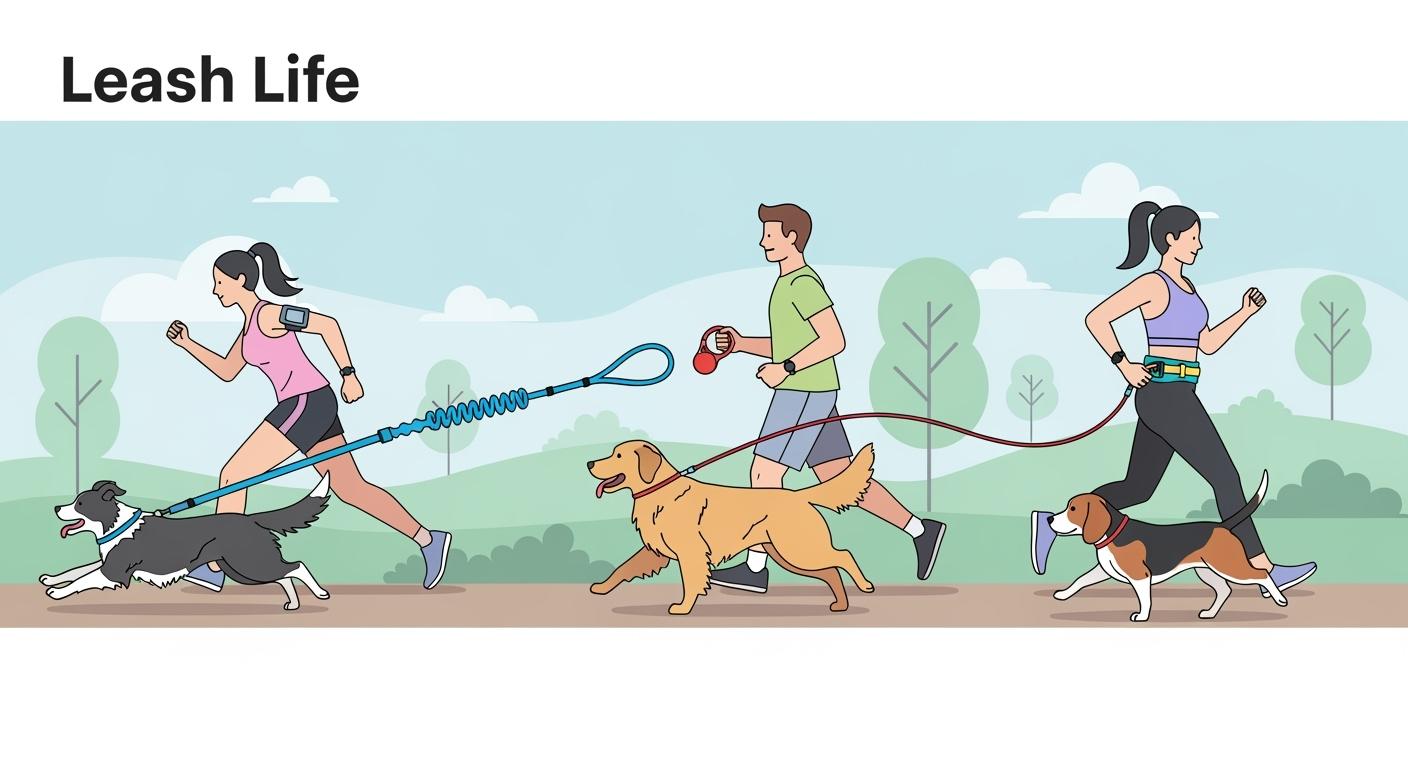
Running with a dog can feel very different depending on the leash setup. A standard leash gives clearer control feedback but less shock absorption, a bungee leash can soften sudden pulls but may feel too springy, and a hands-free leash depends on waist belt stability, leash routing and tangle control. This guide compares how standard, bungee and hands-free leashes behave during real runs, turns, pace changes and pulling moments, so you can choose the setup that fits how you actually run with your dog.
Factor | Description |
|---|---|
Material | Nylon, biothane, or leather work better for different weather and surfaces. |
Length | The leash length affects your stride and your dog’s freedom. |
Width | The width changes how strong and comfortable the leash feels in your hand. |
Tip: Match your leash to your dog’s energy and your favorite way to run for the best experience.
Key Takeaways
Choose the right leash type based on your dog’s behavior and your running style. Standard leashes offer control, bungee leashes absorb shocks, and hands-free leashes provide freedom.
Always attach the leash to a well-fitted harness, not a collar. This reduces the risk of neck injuries and improves control during runs.
Consider leash length and width carefully. A leash that is 4 to 6 feet long is ideal for most situations, while width should match your dog’s size for comfort.
Practice good running etiquette. Keep your dog on one side, shorten the leash in crowded areas, and alert others when passing to ensure safety.
Regularly check your gear for wear and fit. A well-fitted waist belt and leash can prevent injuries and improve your running experience.
What a dog running leash can and cannot do
Hand strain relief vs pull control
A dog running leash can make your runs more comfortable, but it cannot solve every challenge. If you use a hands-free leash, you will notice less hand strain and a smoother running rhythm. This style lets you swing your arms naturally. A bungee leash absorbs sudden pulls, which can help if your dog likes to dart forward. However, too much stretch can reduce your control, especially in busy areas. Standard leashes give you predictable handling, but they do not cushion sharp tugs. You must always stay alert to your dog’s movements. Sudden jerks can cause discomfort for both you and your dog. In crowded places, a leash with too much slack can delay your reaction if your dog tries to bolt.
Fit, training, and leash style impact
The way you fit the leash and train your dog matters as much as the leash style. Studies show that harnesses can increase pulling force, especially for small dogs. If your dog pulls, a non-tightening front-clip harness and reward-based training work best. For steady walkers, a chest-strap or Y-shaped harness with a back clip gives comfort and control. Flat collars only suit dogs that never pull. You should always attach your running leash to a well-fitted harness, not a collar. This reduces the risk of neck injury. Choose a leash width that matches your dog’s strength and hardware size. Smooth edges help prevent hand burns.
When not to run with your dog
Some situations make running with your dog unsafe. Avoid running if your dog is reactive, injured, or not leash trained. Thin cords or faulty locking mechanisms can snap or cause burns. Surfaces that are slippery or rough can hurt your dog’s paws. In busy areas, shorten your leash and keep your dog on one side. Give extra space when passing others. If you see signs of fatigue or stress in your dog, stop and rest. Your safety and your dog’s comfort should always come first.
Risk Type | Description |
|---|---|
Risk of Injury | Thin cords can snap or burn hands. |
Less Control | Hard to manage in crowded or high-traffic areas. |
Not Ideal for Training | Variable tension makes teaching leash manners harder. |
Faulty Locking Mechanism | Can fail under pressure, leading to accidents. |
Encourages Pulling | Some leashes reinforce pulling, making training more difficult. |
Delayed Reactions | Extra slack can slow your response in emergencies. |
Dog running leash styles explained
Standard leash for predictable control
You find the standard dog lead in most homes. This type of lead uses nylon, leather, or biothane leash for dogs. The standard biothane leash often measures 4 to 6 feet (1.2 to 1.8 meters). You get a loop handle and a sturdy clasp. The pros of a standard leash include predictable control and safety. You can use a standard biothane leash for dogs in busy areas or during obedience training. The standard dog lead gives you less freedom but more control. If your dog surges toward distractions, you can quickly shorten the lead and guide your dog back. The pros of a standard leash make it a top choice for urban walks.
Bungee-style leashes for shock absorption
Bungee-style leashes use elastic sections to absorb tension. When your dog pulls, the bungee stretches and cushions the jolt. You feel less strain on your arm and shoulder. The bungee leash works well for active dogs who like to run or hike. You get more freedom for your dog, but less direct control. If your dog pulls hard, the bungee can stretch too much. You should use a harness with a bungee-style lead to reduce neck risk. The standard biothane leash for dogs does not absorb shock, so you feel every tug. Bungee-style leashes help both you and your dog enjoy smoother runs.
Hands-free leashes for active owners
Hands free leash designs let you run without holding the lead. You wear the hands-free dog lead around your waist or shoulder. This style gives you more freedom and helps you keep a natural running rhythm. Hands-free leashes work best with well-trained dogs. You can use a hands free leash for jogging, hiking, or walking multiple dogs. Some hands-free leashes include bungee sections for extra shock absorption. You get more freedom, but less instant control. If your dog pulls hard, you may lose balance. Always use a harness with a hands free leash for safety.
Tip: Choose a lead width that matches your dog’s size. Use 5/8 inch for small to medium dogs and 3/4 inch for larger breeds.
Comparison table: style, pros, cons, best for
Style | Pros | Cons | Best For |
|---|---|---|---|
Standard biothane leash | Predictable control, safety, versatility | Less freedom, material durability issues | Urban walks, training |
Bungee-style leashes | Shock absorption, more freedom | Less direct control, durability issues | Active dogs, running, hiking |
Hands free leash | More freedom, convenience, versatility | Less immediate control, balance risk | Jogging, hiking, multiple dogs |
Scenario A:
If your dog surges toward distractions and you feel jolts, use a harness with a bungee-style lead. This setup cushions the shock and protects your dog’s neck. For more control, shorten the standard dog lead and keep your dog on one side. With a hands free leash, practice cueing your dog before turns and keep the lead short in busy areas. Freedom meets function when you match the right lead to your running style and your dog’s behavior. You can enjoy more freedom and safety with the correct setup.
Types of dog leashes include standard biothane leash, bungee-style leashes, and hands free leash.
The comparison of styles helps you pick the best dog running leash for your needs.
Control and safety on real runs
Sudden changes and distractions
Running with your dog can bring surprises. Your dog might see a squirrel and want to chase it. Quick pulls can hurt your wrist or cause a sprain. Every year, over 16,000 people go to the ER for leash injuries. Bungee-style leashes help by soaking up fast tugs. Always clip the leash to a harness, not a collar. Harnesses spread out the force and protect your dog’s neck. Keep your dog on one side of you. Do not let the leash go under your legs. This keeps you in control and helps stop falls.
Note: Running leashes help you guide your dog, but they do not make your dog behave perfectly. Watch your dog and slow down if your dog gets distracted.
Passing and traffic etiquette
When you run near others, use good manners. Keep your dog farthest from other dogs when passing. Tell people “on your left” as you go by. Make the leash shorter in crowds for better control. Pick paths that are not slippery and keep your dog’s paws safe. Stay away from rough trails if your dog is not used to them. If it is hot, run in the shade and stay close to water. After your walk, check your dog for ticks or sharp things.
Harness vs collar for running safety
Always use a harness when you run or walk your dog. Collars can hurt your dog’s neck and cause injuries. Harnesses spread the pull across the body and are safer. Dogs are less likely to slip out of harnesses if they jump. Bungee leashes and hands-free leashes work well with harnesses. Never tie the leash around your body because you could fall and get hurt.
Safety tip: Clip your leash to a harness, not a collar, to keep your runs safer.
Risk table: situations and safer setups
Situation | What can go wrong | Safer setup |
|---|---|---|
Sudden dog pull | Sprained wrist, shoulder strain | Use bungee-style leashes, harness |
Passing pedestrians | Tripping, leash tangling | Shorten leash, alert others |
Rough or slippery surface | Paw injury, slipping | Choose safe trails, check paws |
Hot weather | Heat exhaustion | Run in shade, carry water |
Collar attachment | Neck injury, escape risk | Use harness, secure fit |
Leash tied to body | Falls, fractures | Use hands-free belt, proper routing |
Disclaimer: Running leashes help you stay safe and have fun, but you must watch your dog and your surroundings. Always use a harness instead of a collar when running.
Fit and setup for hands-free leashes and bungee
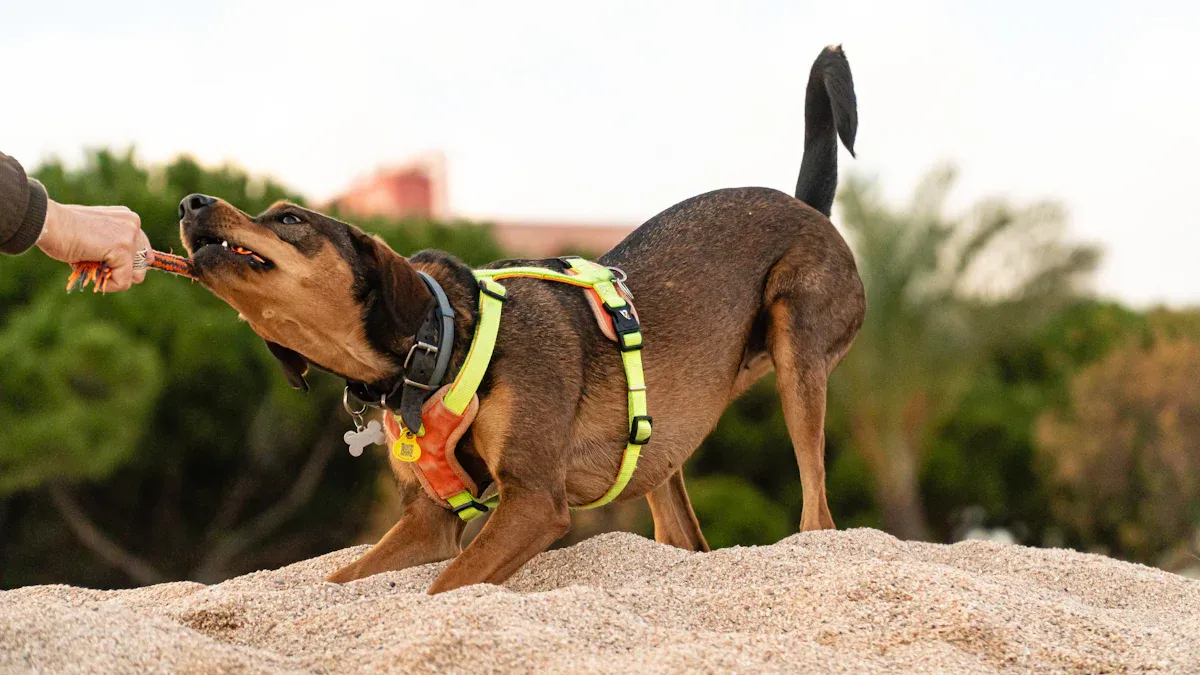
Waist belt fit and buckle placement
When you use a hands-free biothane leash, the fit of your waist belt matters. Place the belt above your hips. This helps stop the belt from sliding down or bouncing as you run. Tighten the belt so it feels snug but does not press into your stomach. Move the buckle off-center to avoid pressure on your belly. If you notice the belt bouncing, check the fit and adjust the tightness. A hands-free biothane leash works best when the belt stays in place and does not shift during your run.
Harness clip and leash routing
Always attach your hands-free biothane leash to a harness, not a collar. The harness should fit so you can slide two fingers under the straps. This keeps your dog safe and stops escapes. Use a strong clasp on your hands-free biothane leash for security. Keep the leash path flat and untwisted. If your hands-free biothane leash has a swivel, use it to help prevent tangles. A bungee section on your hands-free biothane leash can absorb sudden pulls, but make sure it is not too stretchy. Bungee-style leashes work well for dogs that pull, but you still need to check the leash for wear.
Anti-tangle habits and turn cues
To avoid tangles with your hands-free biothane leash, keep your dog on one side. Practice running in a straight line before adding turns. Slow down before you turn and cue your dog to move with you. Do not let the hands-free biothane leash cross under your legs. If you feel the leash twisting, stop and reset. Bungee-style leashes can help with shock, but you must still guide your dog. In crowded areas, shorten your hands-free biothane leash for better control.
Scenario B: If your waist belt bounces and your hands-free biothane leash tangles during turns, check the belt fit first. Adjust the buckle so it sits above your hips. Flatten the leash path and use a swivel if possible. Choose a hands-free biothane leash with moderate stretch if you run at a steady pace. For faster runs, a standard or less elastic bungee may give you more control.
Parameter and value table: fit, attachment, leash length
Parameter | Target range or option | Why it matters |
|---|---|---|
Leash style | standard, bungee, hands free | Changes control and shock feel |
Attachment point | harness, not collar | Reduces neck risk |
Standard length | 4-6 ft (1.2-1.8 m) | Balances stride room and control |
Hands free tether | 3-5 ft (0.9-1.5 m) | Reduces tangling and reach |
Bungee stretch | moderate stretch, not overly elastic | Predictable handling |
Belt placement | above hips | Reduces bounce and sliding |
Buckle placement | offset from center | Reduces pressure points |
Routing rule | strap paths flat | Reduces twist and tangling |
Crowd handling | shorten control | Reduces conflict risk |
Practice loop | short test run | Finds bounce and tangles early |
Tip: Practice with your hands-free biothane leash on a short run before heading out for longer distances. This helps you spot any bounce or tangle issues early.
Choosing the best leash for your dog and run style
Strong pullers vs steady runners
You need to match your leash choice to your dog’s pulling strength and running habits. Strong pullers often make runs challenging for any dog owner. If your dog pulls hard, you should look for a leash with a no-slip grip and sturdy material. Pairing this leash with a front-clip harness helps you guide your dog and reduce pulling. Avoid retractable leashes because they can make control harder and increase risk. Steady runners give you more options. You can use a standard leash for predictable control or a bungee leash for shock absorption. Bungee leashes work well if your dog sometimes gets distracted or surges forward. They cushion sudden pulls and make your run smoother. If your dog keeps a steady pace, you may prefer a standard leash for direct feedback and control.
Small dogs and bounce control
Small dogs need special attention when you choose a dog running leash. Lightweight leashes with soft edges help prevent skin irritation. You should avoid thick, heavy leashes that can weigh down your dog. For small breeds, a hands-free leash is convenient for jogging and supports an active lifestyle. Make sure the bungee section is not too elastic, or your dog may bounce and lose balance. A harness with a secure fit keeps your dog safe and comfortable. Padded handles and smooth materials protect your hands and your dog’s skin. Always check the leash and harness for wear before each run.
Reactive dogs and alternatives
Reactive dogs need extra control during outdoor adventures. If your dog lunges or reacts to other animals, you should use a short, thick leather leash with a padded handle. This style gives you maximum control and helps you manage sudden movements. A bungee leash can also help by reducing the impact of lunges, but you must stay alert. For some reactive dogs, a standard leash may not provide enough control. You should avoid noisy hardware or unfamiliar textures that can make anxious dogs more nervous. Always use a harness with a secure fit and avoid attaching the leash to a collar.
Tip: For reactive dogs, keep your leash short and your grip firm. Practice calm walking before you try running.
Decision table: dog profile, leash style, harness setup
You can use the following table to find the best leash for your dog and your active lifestyle. This table shows which leash style and harness setup work best for different dog profiles. It also lists what you should avoid.
Dog Profile or Context | Best Leash Style | Best Harness Setup | What to Avoid |
|---|---|---|---|
Strong Pullers | No-slip grip, bungee or thick nylon | Front-clip harness | Retractable leashes, collar attachment |
Steady Runners | Standard or bungee | Back-clip harness | Overly elastic bungee, loose fit |
Small Dogs | Lightweight, hands-free leashes | Padded, secure harness | Heavy leashes, collar attachment |
Reactive Dogs | Short (4-foot), thick leather, padded handle | Secure, escape-proof harness | Noisy hardware, long slack |
Chewers | Biothane or chain-reinforced | Durable harness | Leaving dog unsupervised with leash |
Anxious Dogs | Consistent material feel | Soft, quiet harness | Hardware that creates noise |
Step-by-step guide to choosing the best leash for your dog
Choose leash style using comparison and decision tables.
Review your dog’s profile and running habits. Pick a leash style that matches your needs for control, comfort, and shock absorption.Choose harness attachment points and confirm fit.
Always attach the leash to a harness, not a collar. Make sure the harness fits snugly but does not restrict movement.Set waist belt fit and tether routing.
If you use hands-free leashes, place the belt above your hips and offset the buckle. Keep the leash path flat and untwisted.Do a short practice loop and re-check tangling, control, and comfort.
Test your setup on a short run. Watch for bounce, tangling, or loss of control. Adjust as needed.Build distance gradually and adjust based on what fails first.
Increase your running distance slowly. If you notice problems with control or comfort, make changes before your next run.
Note: The best leash for your dog depends on your dog’s size, behavior, and your active lifestyle. You can enjoy convenient jogging and safe outdoor adventures by matching your leash and harness to your dog’s needs.
Common mistakes and quick fixes
Active owners often run into common problems when using dog running leashes. You can avoid most issues with a few simple changes. Here are the mistakes you might see and how to fix them.
Too much stretch, loss of control
If your leash stretches too much, you may lose control of your dog. This happens often with bungee leashes that are too elastic. You might notice your dog surging ahead or zigzagging. You can fix this by choosing a leash with moderate stretch. Pair it with a front-clip harness to reduce pulling. Reward-based training helps your dog learn to walk calmly. Avoid painful tools like prong collars. They can make walks stressful for both you and your dog.
Loose belt, bouncing and rubbing
A loose waist belt can bounce and rub against your skin. This makes running uncomfortable and can distract you. You should fit your running belt snugly above your hips. Offset the buckle from the center to reduce pressure. A well-fitted belt spreads the pull force and protects your lower back. Choose a harness that fits well and allows your dog to move freely. A bungee leash can absorb shock and make your run smoother.
Wrong leash length, tangling
Using the wrong leash length can lead to tangling and running difficulties. Long leashes often get tangled in dog parks or busy areas. They can wrap around your legs or attract other dogs. This may cause chases or confusion. You should use a shorter leash in crowded places. Keep your dog on one side and avoid letting the leash drag. Practice loose-leash walking before you run in busy environments.
Tip: Start slow and let your dog build stamina. Always address leash pulling or reactivity before jogging.
Common cause table: issues and solutions
Common Cause | What it leads to | What to do next |
|---|---|---|
Too much stretch | Loss of control, surging | Use moderate stretch, front-clip harness |
Loose waist belt | Bouncing, skin irritation | Adjust fit, offset buckle, check harness |
Wrong leash length | Tangling, tripping | Use shorter leash, keep dog on one side |
Skipping training | Unsafe runs, pulling | Practice leash skills, reward calmness |
Starting too fast | Fatigue, injury | Build stamina slowly, watch for signs |
You can prevent most problems by checking your gear, training your dog, and adjusting your setup before each run.
Retail tips and OEM/ODM notes for dog running leashes
Product page copy and safe setup
When you shop for a dog running leash, look for clear product descriptions. Good product pages explain how to use the leash safely. You should see details about the leash style, length, and best use cases. Many buyers want to know if the leash works for hands-free running, if it has a bungee section, or if it fits different harness types. Safe setup tips help you avoid mistakes. Always check if the leash attaches to a harness, not a collar. Look for advice on belt placement and how to adjust the fit. A short setup guide can help you get started quickly and reduce confusion.
Tip: Choose a leash with clear instructions and photos that show the leash in use. This helps you set up your gear the right way.
Spec checklist: hardware, swivel, stretch, padding
You should check the hardware and design features before you buy. Use this table to compare key aspects:
Key Aspect | Description |
|---|---|
Material Choices | Look for reflective, bite-resistant, or padded materials for safety and comfort. |
Hardware | Strong clasps and D-rings keep your dog secure. Swivels help prevent tangling. |
Stretch | A bungee section absorbs shock and reduces strain during sudden pulls. |
Padding | Soft padding on handles and belts adds comfort for long runs. |
Design Features | Custom options include printed patterns, logos, and different leash widths. |
Functionality | Hands-free, no-pull, and adjustable features make the leash more useful for active owners. |
A bungee leash can make your run smoother by absorbing quick pulls. Swivels and flat straps help prevent tangles and keep you in control.
Sizing and setup for fewer returns
Proper sizing and setup reduce the chance of returns. Use this table to check what matters most:
Key Aspect | Details |
|---|---|
Belt Adjustment Ranges | Most waist belts adjust from 28 to 48 inches (71 to 122 cm). |
Recommended Width | Choose a belt at least 2.75 inches (7 cm) wide for better comfort and force spread. |
Importance of Fit | A stable belt gives you more control and comfort. |
Common Return Reasons | Many returns happen because of confusion about belt size, leash length, or setup steps. |
You should measure your waist before you buy. Check the leash length to match your stride and your dog’s size. A good fit means fewer problems and more enjoyable runs.
OEM and ODM explained for leash sourcing
If you want to source dog running leashes for your store or brand, you will see the terms OEM and ODM. OEM stands for Original Equipment Manufacturer. You give your own design and specifications, and the factory makes the leash for you. ODM means Original Design Manufacturer. The factory offers ready-made designs that you can customize with your logo or colors. OEM gives you more control, while ODM saves you time and development costs.
Note: When you choose a supplier, ask about hardware quality, material options, and if they offer hands-free or bungee features. This helps you get the best leash for your customers.
Picking a dog running leash depends on how you run and what your dog needs. Look for waist belts with padding. Make sure the leash length can change. Reflective stitching helps keep you safe. Bungee leashes soak up sudden pulls. These work well for dogs that tug. Standard leashes give you more control. They are good for dogs that run steady. Hands-free leashes let you run without holding the leash. This keeps your hands free and makes running easier. Always check for extra handles and strong leash materials. Look at your leash before every run. If your dog limps, gets too hot, or seems upset, stop and call your vet.
Tip: Pick a leash that fits your activity and your dog’s behavior. This helps you have safer and happier runs.
Leash Type | Best For | Key Features |
|---|---|---|
Standard | Steady runners | Control, extra handles |
Bungee | Pullers, active dogs | Shock absorption, durability |
Hands-Free | Joggers, multi-taskers | Comfort, adjustability |
FAQ
What is the safest way to attach a running leash?
Always attach your running leash to a well-fitted harness. This setup protects your dog’s neck and gives you better control. Avoid attaching the leash to a collar when running.
How do I stop my leash from tangling during runs?
Keep your dog on one side. Use a leash with a swivel if possible. Slow down before turns and cue your dog to move with you. Practice helps you avoid tangles.
Which leash type works best for strong pullers?
A bungee leash with moderate stretch helps absorb sudden pulls. Pair it with a front-clip harness for more control. Avoid retractable leashes for strong pullers.
Can I use a hands-free leash with any dog?
You can use a hands-free leash with well-trained dogs that do not pull hard. For dogs that lunge or react, use a standard or bungee leash for more control.
How do I choose the right leash length for running?
In open areas, use a longer leash for more stride room. In crowded places, use a shorter leash for better control. Most running leashes range from 4 to 6 feet (1.2 to 1.8 meters).






