You need a clear way to name and describe a big harness for dog across every channel. Consistency means your title shows the main features, your bullets explain those features, and your images prove them. Use controlled tokens like chest girth in inches and centimeters, clip point, and clear fit limits. Avoid words like “big” without details. This method helps your team stay aligned and helps customers choose the right harness for their dog.
Key Takeaways
Use one simple name for each harness. This stops people from getting confused and helps everyone know what the product is.
Make sure titles, bullets, and images match. Each part should show the same main features. This helps customers pick the right product.
Follow a naming rule that uses size, clip point, and main features. This helps customers find the harness they need.
Use two types of units for sizes. This helps customers in different places understand and pick the right size.
Check and update listings often. This keeps the product details correct and helps stop mistakes.
Naming Consistency for Big Harness for Dog
One Product, One Name
You need to use one clear name for each product. This helps your team and your customers know exactly what you are talking about. If you call a product a big harness for dog in one place, you must use the same name everywhere. Do not switch between different words like “giant harness” or “XL harness” unless you add the chest girth range.
Tip: Use chest girth as your main sizing token. For example, say “Chest Girth 28-38 in / 71-97 cm” in every product name. This makes it easy for people to match the harness to their dog.
A single name with clear tokens helps you avoid confusion. It also makes it easier to update your sizing guides and product lists. When you use one name, you can track feedback and returns more easily.
Alignment Across Titles, Bullets, Images
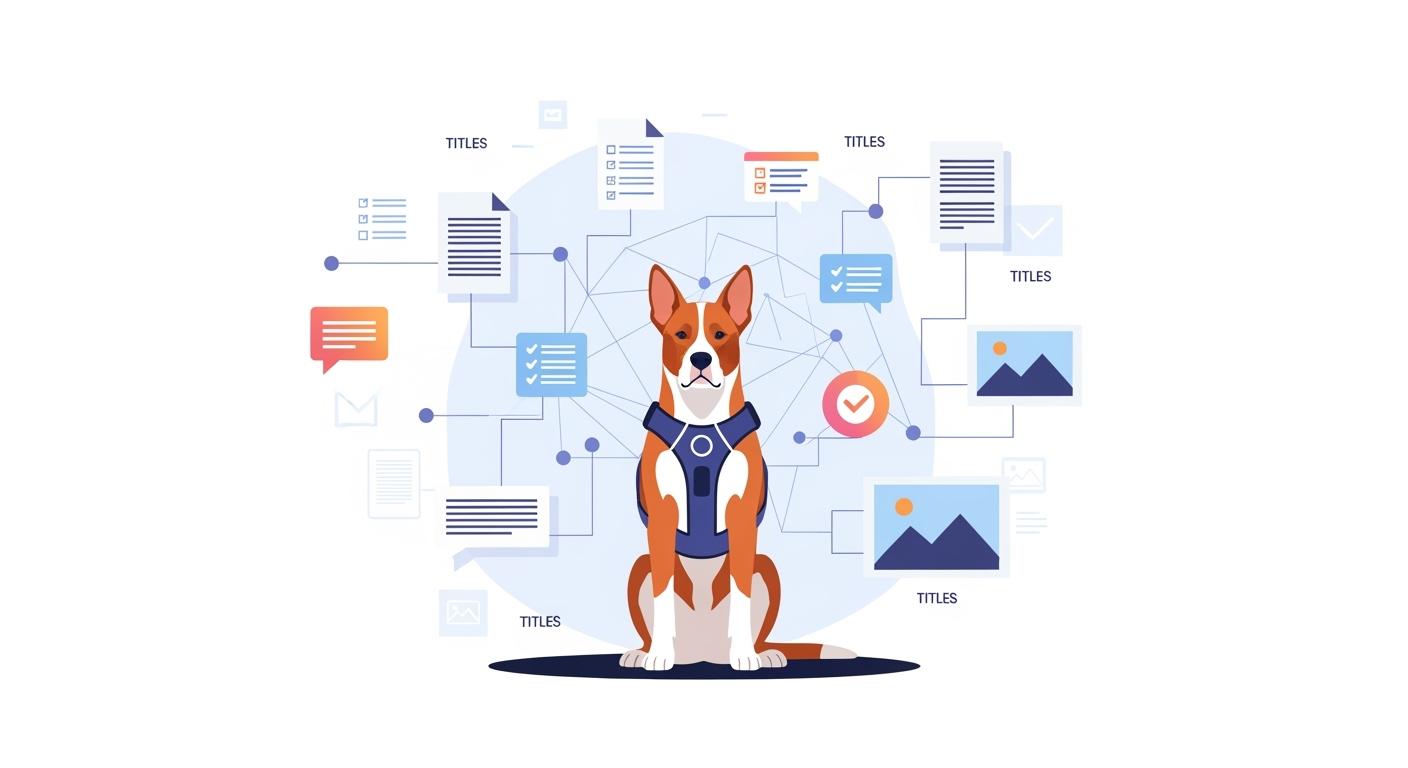
Consistency means alignment. You do not need to repeat the same words in every place. Instead, you must show the same facts in your title, bullets, and images. Each part has a job:
Title: Shows the main tokens. These are fit (chest girth), clip point (front, back, or dual), and limits (such as “for large dogs”).
Bullets: Explain the tokens. For example, a bullet can tell how to measure chest girth or describe the clip points.
Images: Prove the tokens. Show a photo or graphic with a measuring tape on a dog. Show both clip points if the harness has them.
Here is a simple table to help you check alignment:
Content Type | Must Show Fit | Must Show Clip Point | Must Show Limits |
|---|---|---|---|
Title | ✅ | ✅ | ✅ |
Bullets | ✅ | ✅ | ✅ |
Images | ✅ | ✅ | ✅ |
You must use the same chest girth range in all three places. If your title says “Front Clip,” your bullets must explain what a front clip does. Your images must show the front clip location. This method helps your customers understand the product. It also helps your team keep all details correct.
Note: Do not use words like “big” alone. Always add a chest girth range and clear clip point. This keeps your naming safe and clear.
When you align your titles, bullets, and images, you make your big harness for dog easy to understand. You also make your sizing guides more useful. This reduces mistakes and helps people choose the right harness for their dog.
Canonical Naming Formula for Large Dog Harness
Functional Name and Controlled Tokens
You need a clear formula to name every large dog harness. This formula helps you keep your titles, bullets, and images in sync. Here is a simple naming formula you can use:
Dog Harness for Large Dog, Front Clip, Chest Girth 28-38 in / 71-97 cm, Padded
This formula uses controlled tokens. Each token stands for a key feature. You can swap out the words in each spot to match your product. For example, you can change “Front Clip” to “Dual Clip” or “Padded” to “Reflective.”
OEM means Original Equipment Manufacturer. You design the harness, and another company makes it for you.
ODM means Original Design Manufacturer. The company both designs and makes the harness, and you sell it under your name.
You must use “Large Dog” and a chest girth range in every name. These tokens give clear sizing information. They help people pick the right harness for their dog. If you only say “big,” people may not know if the harness will fit.
Accurately measuring a dog’s girth is crucial for selecting the right harness size.
The girth measurement is taken around the broadest part of the dog’s chest.
Proper fit prevents skin chafing and discomfort, especially in large dogs.
Fit and Clip Point Details
Fit and clip point details make your large dog harness name useful and clear. Fit means the chest girth range. Clip point means where you attach the leash. You must show both in your product name.
Many tested models include at least one no-pull clip-in point, which is highly effective.
Some harnesses provide additional clip-in locations for increased versatility.
A few products failed to offer an effective restraint system, highlighting the importance of clip point design.
A harness that is too loose can allow a dog to escape during walks.
A harness that is too tight can cause discomfort, restrict movement, or lead to breathing issues.
You should always show the chest girth range in both inches and centimeters. This helps people in different markets. You should also show the clip point, such as “Front Clip,” “Back Clip,” or “Dual Clip.” This tells people how they can use the harness.
Variant and Feature Tokens
You can add more tokens to your large dog harness name to show extra features. These tokens help you track every version of your product. They also help your team sort and find products.
Here are some best practices for adding variant and feature tokens:
Rule/Practice | Why it matters | Example of correct naming |
|---|---|---|
SKU Code Formatting | Stops system errors and import issues | 06FT-BSNAP-BLK-12MM |
Attribute-Based Categorization | Makes it easy to sort and find products by key features | 15FT-TSNAP-RED-10MM |
Consistency in Process | Reduces mistakes and training time for your team | All SKUs follow the same template |
Add more tokens if you need to track extra features.
Make sure each part is easy to read.
Plan for growth so you can add new leash lengths or hardware types later.
A strong internal SKU code structure helps you track every variant of large dog harness. It helps in warehouse management and keeps codes short and easy to read. Use a consistent order for tokens, avoid special characters, and use uppercase letters and numbers.
When you use this naming formula, you make it easy for your team and your customers to find the right large dog harness. You also make sure your titles, bullets, and images all show the same facts.
Title Templates for Big Harness for Dog
Title Format and Token Order
You need a clear and repeatable format for every large dog harness title. This helps your team stay consistent and helps customers find the right product. Use this order for your tokens:
Product type and size
Clip point
Chest girth range (in and cm)
Key feature
Here are three title templates you can use for your big harness for dog:
Template Type | Example Title |
|---|---|
Short | Large Dog Harness, Front Clip, 26.5–33.0 in / 67–84 cm |
Standard | Large Dog Harness, Dual Clip, Chest Girth 26.5–33.0 in / 67–84 cm, Padded |
Catalog Long | Large Dog Harness for Walking and Training, Dual Clip, Chest Girth 26.5–33.0 in / 67–84 cm, Padded, No-Pull Design |
This order keeps the most important facts first. You show the product type, then the clip point, then the fit range, and then any extra features.
Tip: Always use dual units for chest girth and weight. This helps customers in all markets.
Length Guidance for Titles
Keep your titles clear and easy to read. Short titles work best for mobile screens. Standard titles fit most online catalogs. Catalog long titles help in search results and internal lists.
Short: Up to 60 characters
Standard: 61–90 characters
Catalog Long: Up to 120 characters
Do not add extra words or repeat the same idea. Use only the tokens that match your product. If you add more features, keep the order the same.
Prohibited and Claim-Safe Words
You must avoid words that make promises you cannot prove. Some words need approval before use. Here is a table of banned phrases and why you should not use them:
Banned Phrase | Reason for Avoidance |
|---|---|
stops pulling | Promises a result you cannot guarantee |
prevents pulling | Implies the harness works for all dogs |
guaranteed no pulling | Makes a promise that is not evidence-based |
trains your dog | Suggests the harness replaces training |
instant leash manners | Implies fast results without effort |
works for every dog | Ignores differences in dogs and handlers |
behavior guaranteed | Claims a change you cannot prove |
Use claim-safe words like “no-pull design,” “reinforced stitching,” or “for large dog handling.” Always include fit and safety warnings in your title or bullets. For example, you can add “Use size chart and measure chest girth for best fit” or “Supervise your dog while harnessed.” These warnings help set clear limits and keep your product information safe and clear.
Note: Only use evidence-gated words if you have proof and approval. This keeps your large dog harness titles honest and easy to trust.
Bullet Rules for Right Size Harness
A clear bullet system helps you explain the right size harness in a way that matches your title and images. Each bullet has a job. You must use the same tokens from your title, like sizing, clip point, and features. This keeps your listing clear and safe for your customers.
Fit Logic and Sizing
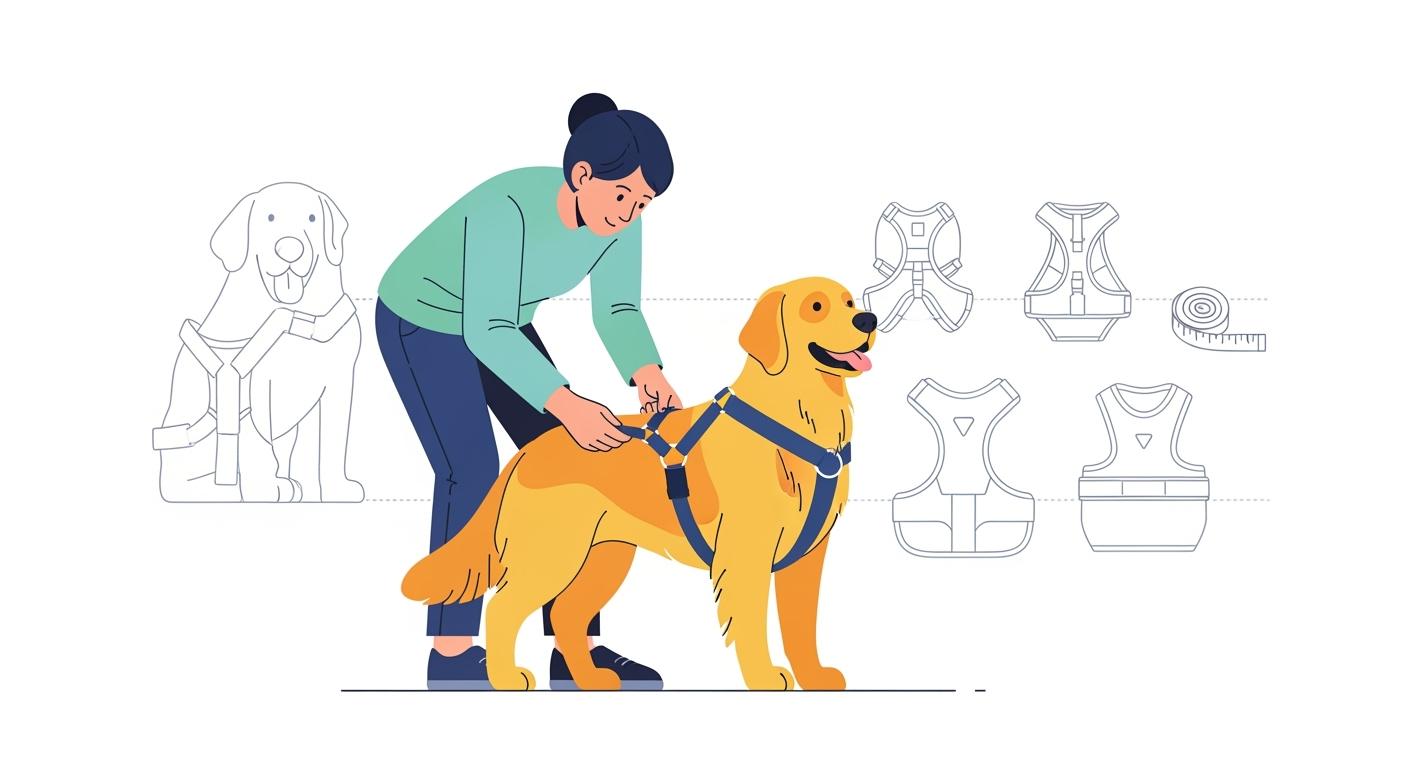
Start with sizing. Tell your customer how to measure their dog’s chest. Use a soft tape and measure at the widest part of the ribs. The chest girth in inches and centimeters is the main guide. Remind your customer to check the size chart and sizing charts before choosing. The right fit comes first. After that, check if the dog’s weight fits the adjustment range. Show how to adjust the straps so two fingers fit under the webbing. This gives a snug fit, not a tight one. Good sizing guides help your customer avoid mistakes.
Clip Point Explanation
Explain the clip points. The rear clip works best for pulling and gives your dog freedom. The middle back clip helps with walking and keeps the leash from tangling. The front clip can change how the harness fits. Use it with care and only if your customer knows how. Do not promise that any clip point will stop pulling. Just explain what each one does.
Durability and Care
Talk about the harness materials. Mention reinforced stitching, wide webbing, and metal hardware. These features support large dogs. Tell your customer how to clean the harness. Most harnesses need hand washing and air drying. Remind your customer to check the harness for wear before each use.
Boundary Line Statement
End with a clear boundary line. Remind your customer to use the sizing charts and size chart for the best fit and adjustment. Supervise your dog when using the harness. Do not promise safety or behavior changes. This keeps your listing honest and clear.
Here is a sample 5-bullet template for a right size harness:
Bullet Number | Purpose | Example Content |
|---|---|---|
1 | Sizing and Fit | Measure chest at widest rib point. Use size chart for best fit. |
2 | Clip Point Details | Rear and front clips for leash options. See guides for use. |
3 | Adjustment Instructions | Adjust straps for snug fit. Two fingers under webbing. |
4 | Durability and Care | Reinforced stitching and metal hardware. Hand wash, air dry. |
5 | Boundary Line | Use sizing charts. Supervise dog. No harness is escape-proof. |
Note: Use dual units for all measurements. This helps customers in all markets follow the sizing guides.
Image Alignment for Large Dog Harness
Required Image Shots
You need clear and high-quality images for every large dog harness listing. Good images help your customers see the real product and make better choices. Use sharp, colorful photos that show the harness from different angles. Make sure each image meets size and resolution rules so it looks good on all screens. Most shoppers trust what they see, so your images should create a positive feeling.
Here is a shot list for a large dog harness:
Image Slot | Purpose | Required Callout Text | Must-Show Detail | Return Risk Prevented |
|---|---|---|---|---|
1 | Main product overview | Chest Girth 28-38 in / 71-97 cm | Full harness, unclipped, on plain background | Wrong size ordered |
2 | Fit on dog (side view) | Shows fit on large dog | Harness on dog, chest and straps visible | Poor fit, sizing confusion |
3 | Clip point close-up | Front and rear clip points | Both attachment points in one frame | Missed feature, wrong clip choice |
4 | Measurement guide | How to measure chest girth | Tape measure on dog at widest chest | Incorrect measuring, wrong size |
5 | Hardware and padding detail | Reinforced stitching, padding | Close-up of hardware and padding | Durability concern, missed detail |
Tip: Use high-resolution images with bright colors. This helps your large dog harness stand out and reduces returns.
Proving Fit and Clip Points
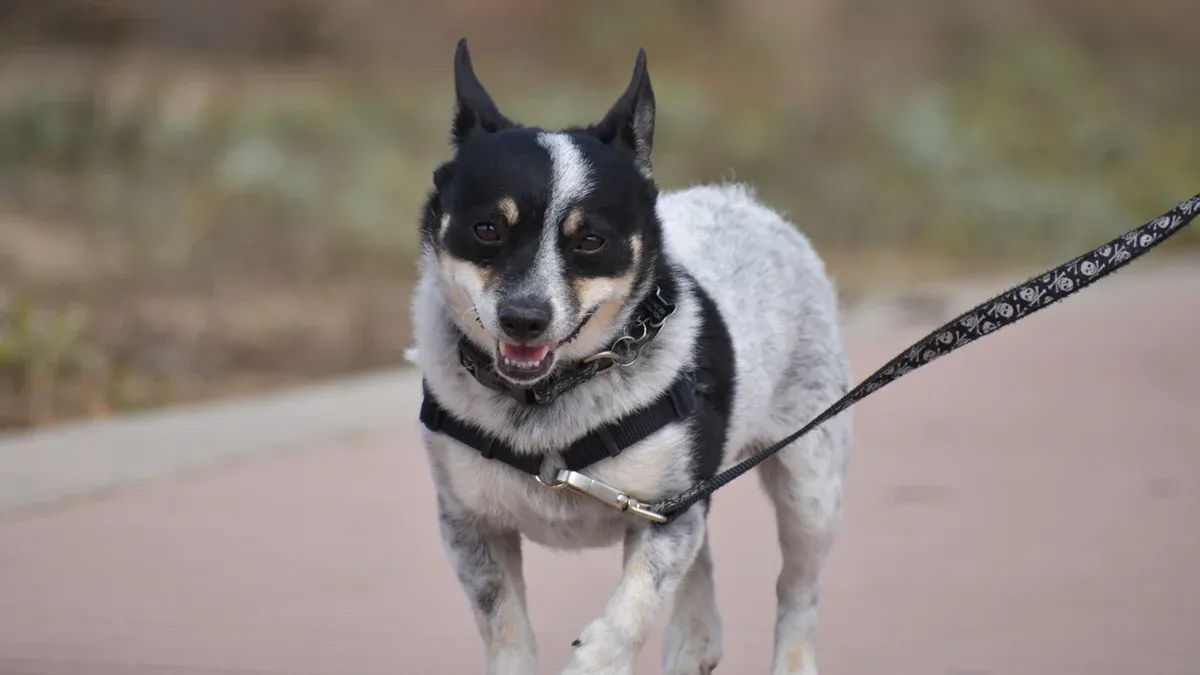
You must show how the large dog harness fits on a real dog. Use side and top views to display the chest girth area and strap placement. Show both good and bad fits if possible. This helps your customer see where the harness should sit. Add a close-up of the clip points. Show both the front and rear clips in one image if your harness has them. This proves the features you list in your title and bullets.
Photos should help your customer understand how the harness works with a dog’s body. Show the tape measure at the widest part of the chest. This makes sizing clear and helps prevent mistakes.
Caption and Overlay Rules
Add clear captions and overlays to each image. Use simple words like “Chest Girth 28-38 in / 71-97 cm” or “Front Clip Point.” Place overlays near the feature you want to highlight. Do not cover important parts of the large dog harness. Keep text easy to read on both phones and computers.
Note: Images must confirm the same tokens as your title and bullets. This means fit, clip point, and limits must all appear in your images. For markets outside your main one, always show dual units for measurements.
Controlled Vocabulary for Big Harness for Dog
Approved Size and Fit Terms
You need to use clear words when you talk about sizing and fit. This helps everyone understand your harness guides and makes it easy to pick the right size. Use these approved terms for sizing:
Girth: This means the widest part of your dog’s chest. It is the most important sizing measurement.
Neck circumference: This is the measurement around your dog’s neck. It helps with adjustment and comfort.
Adjustment range: This shows how much you can change the harness size to fit your dog.
Sizing guides: These help you match your dog’s measurements to the right harness.
Well-fitted harness: This means the harness sits snug but not tight, with room for two fingers under the strap.
Here is a table with common sizing terms and examples:
Size Name | Neck (in/cm) | Girth (in/cm) | Example Breeds |
|---|---|---|---|
Large – Regular Fit | 12–14 / 30–36 | 27–37 / 69–94 | Bulldog, Terrier |
Large – Lucy Fit | 13–16 / 33–41 | 25–34 / 64–86 | Boxer, Poodle |
XLarge | 13–17 / 33–43 | 28–39 / 71–99 | Great Dane, Bernese Mountain |
You should always use dual units for all sizing and adjustment range numbers. This helps people in every market.
Clip Point and Strength Language
You must use clear words for clip points and strength. Use these approved terms:
Front clip
Rear clip
Dual clip
Reinforced stitching
Wide webbing
Metal hardware
Designed for large-dog handling
Adjustment buckle
These words help you explain the harness features without making promises. You can say the harness has a front clip for leash attachment or that it uses reinforced stitching for strength. You should not say the harness will stop pulling or prevent escapes. Use adjustment to show how the harness can fit different dogs.
Banned and Evidence-Gated Words
Some words can cause confusion or make promises you cannot prove. You must avoid these banned words:
Escape-proof
Unbreakable
Indestructible
Stops pulling
Prevents pulling
Guaranteed fit
Always works
You can only use words like “no-pull” or “behavior support” if you have proof and approval. These are called evidence-gated words. Always add warnings and safety warnings in your guides and product details. Remind people to check sizing, use the adjustment range, and supervise their dog. Do not promise results you cannot show.
Note: Use dual units for all sizing and adjustment range details. Add clear warnings about fit and supervision in every listing.
Governance and QA for Naming Consistency
Field Mapping and Updates
You need a clear system to keep naming consistent for every large dog harness. Field mapping helps you match short and long names across all sales channels. You should use the same field names and order for each listing. This makes it easy to check that sizing, adjustment, and fit details stay the same everywhere.
Use a fit chart to set the SIZE_LABEL. Do not rely only on vendor labels. This keeps sizing clear and helps you avoid mix-ups.
Include chest girth and neck girth in every listing. Show these measurements in both inches and centimeters. This helps customers in every market understand sizing.
Map short names for mobile or search listings. Use long names for catalogs or detailed product pages. Make sure both show the same sizing and adjustment tokens.
Update your field mapping when you add new features or change sizing. Set a rule to review all listings if you change the fit chart or adjustment range.
Add a change-control trigger. If you update sizing or adjustment, send a notice to your team. This helps everyone check for errors and update sizing guides.
You should keep a record of all changes. This helps you track updates and fix mistakes fast. Use a checklist to review sizing, adjustment, and warnings in every listing.
Note: Dual units for sizing and adjustment help you meet compliance rules for all markets.
Review and Training
You need a review process to keep naming and sizing consistent. Set up regular checks for all listings. Look for errors in sizing, adjustment, and warnings. Use a checklist to make sure every listing has the right sizing tokens, adjustment details, and safety warnings.
Train your team to use the same words for sizing and adjustment. Show them how to fill out each field. Give examples of good listings with clear sizing and adjustment. Remind your team to add warnings and safety warnings in every listing.
Review sizing and adjustment fields before you publish a new product.
Check that all warnings and safety warnings are in place.
Update your training when you change the fit chart or add new sizing options.
Keep a log of all reviews and updates. This helps you spot patterns and fix sizing or adjustment errors.
A strong review and training process helps you keep sizing, adjustment, and warnings clear for your team and your customers. This reduces mistakes and helps everyone trust your sizing guides.
You can keep your big harness for dog listings clear by following a few simple steps. Use the same naming tokens in your titles, bullets, and images. Check that every big harness for dog listing uses the right fit, clip point, and limits. Use the templates and vocabulary as your checklist for quality.
Regular reviews help you catch errors and keep your product details up to date as your channels change.
FAQ
How do you measure your dog’s chest girth for a harness?
Use a soft tape measure. Wrap it around the widest part of your dog’s chest, just behind the front legs. Write down the number in inches and centimeters. Check the size chart before you buy.
What does “dual clip” mean on a harness?
A dual clip harness has two leash attachment points. You can use the front clip or the rear clip. This gives you more options for walking and training your dog.
Why do harness listings show both inches and centimeters?
You see both units to help you match your dog’s size, no matter where you shop. This makes sizing clear for everyone. It also helps meet compliance rules for different markets.
Can a harness stop your dog from pulling?
A harness with a front clip can help you guide your dog. It does not promise to stop pulling. You need to use training and supervision for best results.
How do you clean and care for a large dog harness?
Hand wash the harness with mild soap and water. Air dry it away from direct sunlight. Check the straps and hardware before each use to make sure everything works well.