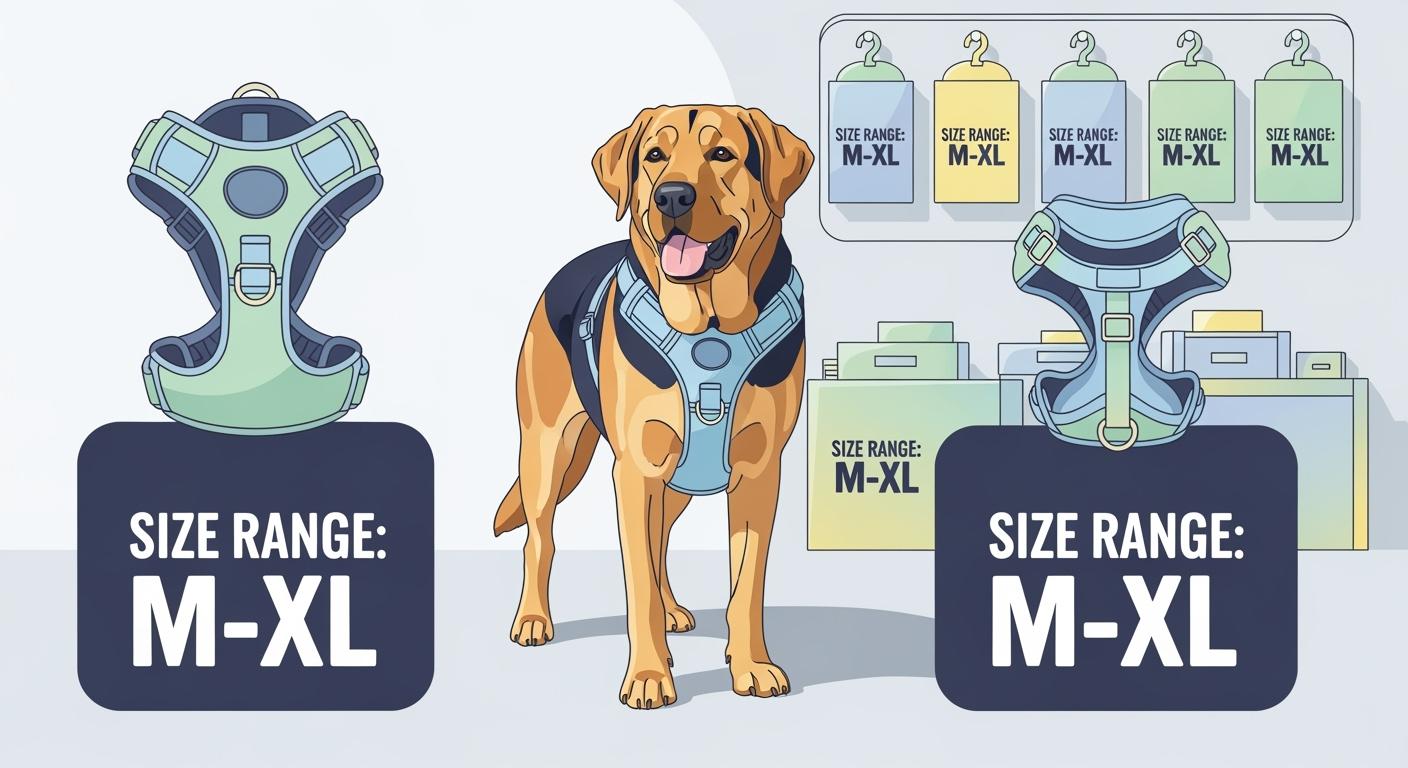
You want a dog harness for large dogs that fits right the first time. The term “large dog” means more than just a label—look for a chest girth between 26.5–33.0 inches (67–84 cm) and a weight range of 45–75 lbs (20–34 kg). Chest girth gives you the most reliable fit. Use weight as a guide. This approach helps you pick the best size and reduces confusion.
Measurement Type | Range |
|---|---|
Chest Girth | 26.5–33.0 in / 67–84 cm |
Weight | 45–75 lbs / 20–34 kg |
Key Takeaways
Measure your dog’s chest girth for the best harness fit. This measurement is more reliable than weight alone.
Always check the size label for chest girth and weight before purchasing. This helps avoid returns and ensures comfort.
Consider your dog’s body type. Deep-chested or thick-coated dogs may need a larger size for comfort.
Inspect the harness regularly for wear and damage. A well-maintained harness keeps your dog safe and comfortable.
Use the front clip for training and redirecting your dog’s movement. The back clip is best for regular walks.
Large Dog Harness Definition
A large dog harness helps you control big dogs safely. You pick a harness by looking at measurements, not just the word “large.” The chest girth is the most important number to check. It is measured in inches and centimeters. You also look at your dog’s weight in pounds and kilograms. These numbers are on the size label to help you choose the right harness.
Intended Use and Control
You use a large dog harness for walking, training, or traveling with your dog. The harness lets you guide your dog without hurting its neck. Most harnesses for large dogs have strong straps and tough stitching. They also use metal parts to make them stronger. These things help the harness stay safe if your dog pulls or moves fast. Size labels show chest girth and weight so you can match your dog’s body. Harnesses must pass tests for strength and safety. Tensile strength testing checks how much force the harness can take. Static and dynamic testing make sure the harness works during normal use and sudden stops, like in a car. Chemical safety rules keep your dog safe from bad materials. Certifications like CE and CPS mean the harness meets safety rules.
Tip: Always look at the size label for chest girth and weight before you buy. This helps you get the right fit and avoid returns.
What It Does Not Guarantee
A large dog harness does not keep your dog safe in every situation. Harnesses can help with pulling and control, but they do not stop all dangers. In crash tests, harnesses might not protect your dog or people from getting hurt. If the harness is too tight, it can be uncomfortable. You need to check the harness for damage, especially with strong dogs. The size label helps you, but you still need to check and adjust the fit.
OEM means a company makes products for other brands. ODM means a company designs and makes products that other brands can sell.
Dog Harness for Large Dogs Sizing Logic
Choosing the right dog harness for large dogs starts with understanding how to measure your pet. You want a harness that fits well and keeps your dog comfortable. The best way to do this is by using chest girth as your main measurement. This method helps you find the right size quickly and reduces the chance of returns.
Chest Girth as Primary Measurement
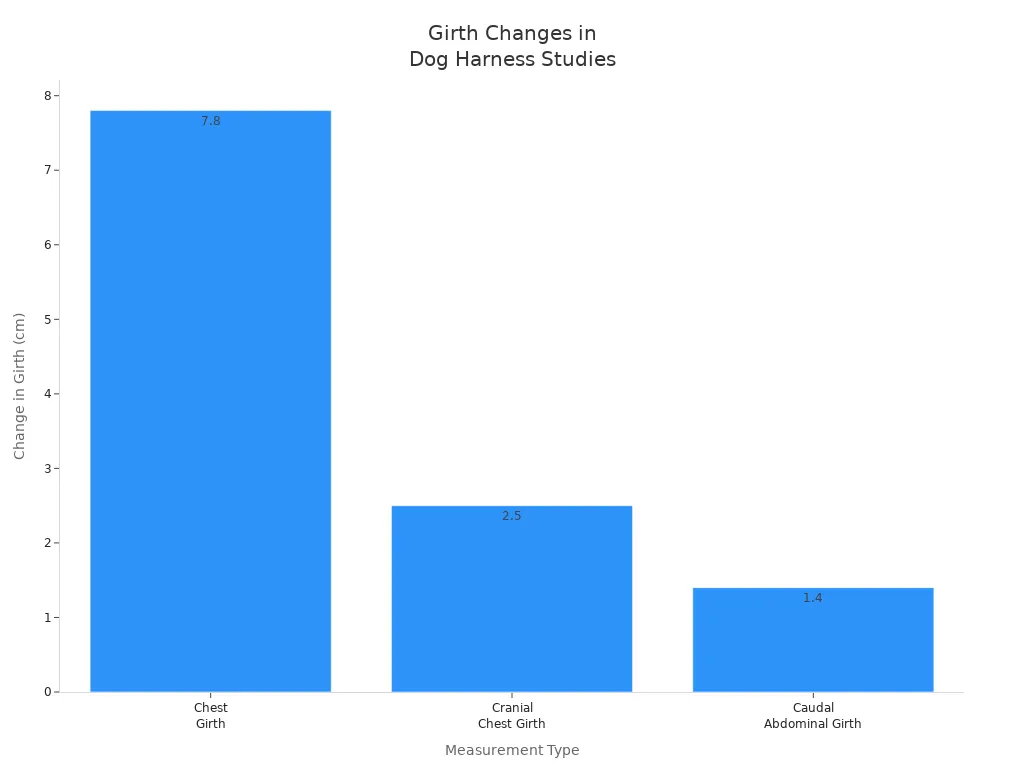
Chest girth gives you the most accurate fit for a large dog harness. You measure around the widest part of your dog’s chest, just behind the front legs. This spot gives you a number that matches the harness size on the label. Studies show that chest girth changes the most as a dog’s body shape changes, making it the most reliable measurement for sizing.
Study | Measurement Type | Change in Girth (cm) | Significance |
|---|---|---|---|
Chun et al. | Chest Girth | 7.8 (underweight vs obese) | Significant |
Söder et al. | Cranial Chest Girth | 2.5 (after exercise) | Significant |
Söder et al. | Caudal Abdominal Girth | 1.4 (after exercise) | Significant |
When you use chest girth, you lower the risk of the harness being too tight or too loose. This helps prevent your dog from slipping out or feeling uncomfortable. Most sizing charts for harnesses use chest girth as the main number. You can find this number in both inches and centimeters on the label.
Tip: Use a soft measuring tape and wrap it around your dog’s chest, 2-3 inches (5-8 cm) behind the front legs. Make sure the tape is snug but not tight.
Weight as Secondary Guidance
Weight can help you choose a harness, but it should not be your only guide. Dogs with the same weight can have very different chest sizes. For example, a tall, slim dog and a short, stocky dog might weigh the same but need different harness sizes. Most sizing guides list a weight range to help you double-check your choice.
The recommended weight range for large dog harnesses is 50–100 lbs (23–45 kg).
Use weight as a backup check after you measure chest girth.
If your dog is still growing, check their weight and chest girth often. This helps you keep the harness fitting well as your dog changes.
Sizing Up for Deep-Chested or Thick-Coated Dogs
Some large dogs have deep chests or thick coats. These dogs may need a bigger harness, even if their chest girth is close to the top of a size range. If your dog is stocky or has a lot of fur, you should consider sizing up for comfort.
Measure your dog’s length, chest, and neck.
If your dog’s chest or neck is at the upper edge of a size, pick the next size up.
For deep-chested breeds, make sure the harness fits both girth and length.
A larger size can help avoid tightness and rubbing.
Note: If your dog wears a coat or sweater under the harness, measure with the extra layer on.
Fit Checks for Large Breeds
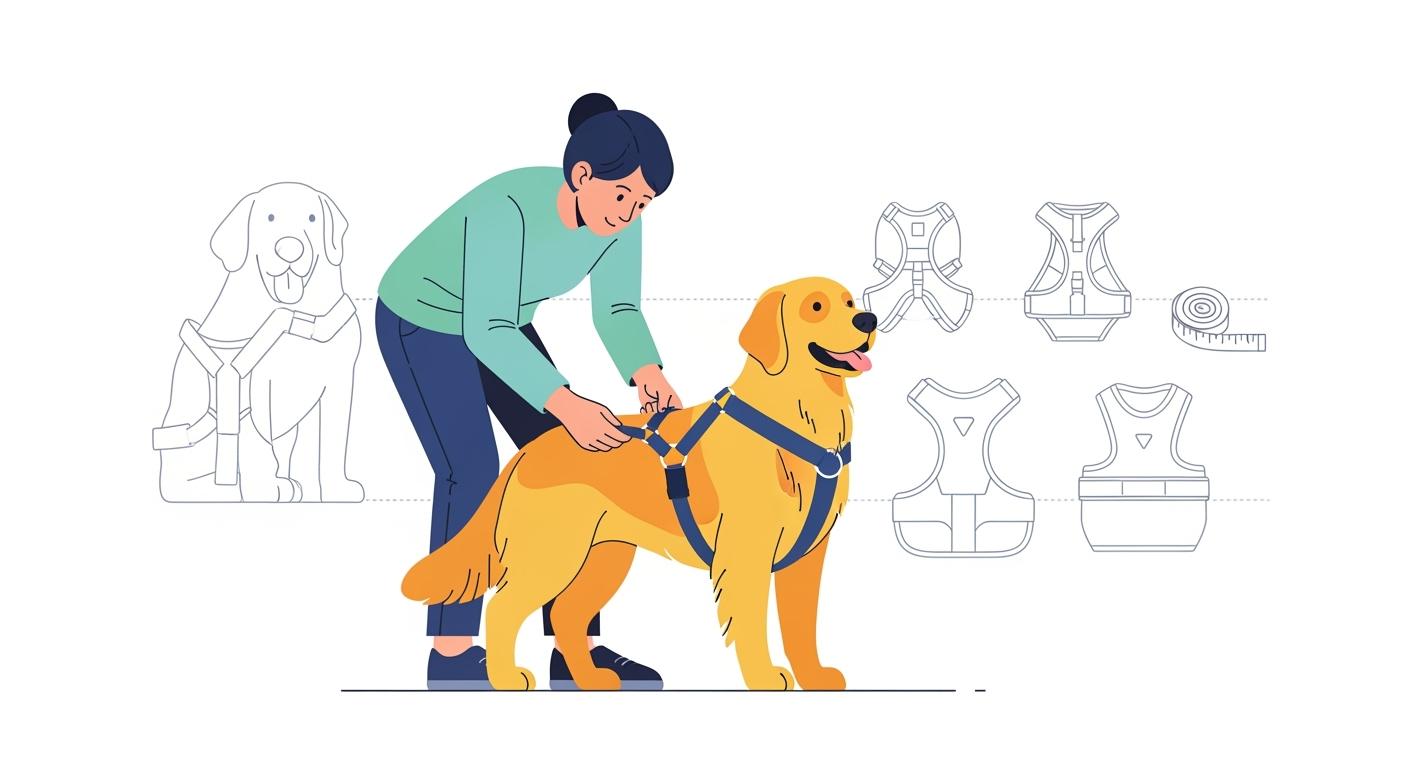
After you pick a size, you need to check the fit. A good fit keeps your dog safe and comfortable. Follow these steps to make sure the harness fits right:
Measure your dog’s neck while they stand or sit.
Wrap the tape around the broadest part of the chest, snug but not tight.
Check your dog’s weight and see if they are still growing.
Put the harness on and make sure it does not rub or restrict movement. Adjust as needed.
A harness size guide can help you with these steps. Many sizing guides include pictures or diagrams to show where to measure. If you follow these steps, you will find a harness that fits well and keeps your dog happy.
Remember: A proper fit helps prevent injuries and keeps your dog from slipping out of the harness.
Size Architecture for Retail Programs
Choosing the right large dog harness starts with understanding the size codes you see on the label. You want a harness that fits your dog’s chest girth and matches their body type. Retail programs use clear codes to help you pick quickly and avoid confusion.
Size Codes and Mapping (L, XL, XXL)
You will see size codes like L, XL, and XXL on most sizing charts. Each code stands for a chest girth range and a weight guide. These codes help you match your dog to the right harness. Here is a simple table to show what each code means:
Size Code | Description |
|---|---|
L | Large |
XL | Extra Large |
XXL | Double Extra Large |
Look for both inches and centimeters on the label. You will also see weight in pounds and kilograms. This dual-unit display makes it easy for you to compare sizes, no matter where you shop.
Overlap and Gap Prevention
Retailers want you to find the best fit without guessing. They set size ranges that touch but do not overlap too much. This helps you avoid buying a harness that is too small or too big. Here is how they do it:
Step | Description |
|---|---|
1 | Set size ranges that touch but do not overlap too much to avoid confusion. |
2 | Use fit trial data to adjust size ranges based on real-world feedback. |
3 | Maintain a grading matrix to identify gaps or overlaps before product launch. |
You can trust sizing guides that use these steps. They help you pick the right harness and reduce returns.
Body Type Tags vs. New Sizes
Some dogs have deep chests or thick coats. You might see body type tags like “broad chest” or “long body” on the label. These tags help you choose between sizes if your dog does not fit the standard chart. Retailers use tags instead of adding new sizes. This keeps the sizing charts simple and easy to read. If your dog is between sizes, check the body type tag for extra guidance.
Tip: Measure your dog’s chest girth and look for body type tags on the label. This helps you find the best fit for your dog’s shape.
Front Label Template for Large Dog Harness
When you shop for a dog harness for large dogs, you want to pick the right size quickly. The front label gives you the key facts you need. You see the size code, chest girth range, weight guidance, and the main clip points. This helps you match your dog to the harness without guessing.
Label Hierarchy: Size, Chest Range, Weight, Clip Points
The front label uses a clear order. You see the size first, then the chest girth range in both inches and centimeters. Next, you find the weight guidance in pounds and kilograms. Clip points show you where to attach the leash. Adjustment points help you fit the harness to your dog’s body.
Here is a sample front label layout:
Field | Example Value / Placeholder |
|---|---|
Size Code | XL |
Chest Girth Range | 28–34 in / 71–86 cm |
Weight Guidance | 60–90 lb / 27–41 kg |
Clip Points | Front & Back |
Adjustment Points | 4 |
Fit Reminder | Check fit before each use |
Supervision Reminder | Supervise dog while harnessed |
Tip: If your dog’s chest girth is between sizes, choose the larger size and adjust the straps for comfort.
You see all measurements in dual units. This makes it easy to compare sizes, no matter where you shop. Sizing charts and measurement ranges help you find the right fit and reduce returns. Clear fit instructions and honest language guide you to a safe choice.
Benefit Line for Large Dogs
You want to know how the harness helps your dog. The benefit line tells you what matters most for large breeds. You see statements like:
Improved safety and comfort for big dogs.
Better control during walks and training.
Even pressure across the chest to lower injury risk.
Helps discourage pulling without hurting your dog.
These lines focus on real features. You get facts, not promises. The harness supports your dog’s movement and helps you guide them with less strain.
Mandatory Boundary Statement
Every front label must include a boundary statement. This keeps you informed and meets US/EU rules. You see clear notes about what the harness can and cannot do.
Statement Type | Example Statement |
|---|---|
Intended Use | For walking and training only. Not for lifting or car safety. |
Fit Guidance | Use size chart and measure chest girth for best fit. |
Supervision Note | Supervise your dog while harnessed. |
Wear-and-Tear Check | Inspect harness for damage before each use. |
Compatibility Limits | Use only with standard leashes. Not escape-proof. |
Limits | Harness does not prevent all injuries or guarantee escape prevention. |
Note: The harness does not guarantee escape-proof use or prevent all injuries. Always check fit and inspect hardware before each walk.
Ready-to-Paste Front Label Copy Template
You can use this template for your large dog harness front label. Fill in the placeholders with your product’s details.
Size: [L / XL / XXL]
Chest Girth: [__–__ in / __–__ cm]
Weight Guidance: [__–__ lb / __–__ kg]
Clip Points: [Front / Back / Dual]
Adjustment Points: [__]
Fit Reminder: Check fit before each use
Supervision Reminder: Supervise dog while harnessed

Benefit Line: [Improved safety and comfort for large breeds. Better control during walks and training. Even pressure distribution. Helps discourage pulling.]

Mandatory Boundary Statement:
- For walking and training only. Not for lifting or car safety.
- Use size chart and measure chest girth for best fit.
- Supervise your dog while harnessed.
- Inspect harness for damage before each use.
- Use only with standard leashes. Not escape-proof.
- Harness does not prevent all injuries or guarantee escape prevention.
You see all the key facts in one place. This template helps you build a front label that is clear, honest, and easy to read. You help shoppers pick the right large dog harness and follow safe use rules.
Back Label Template for Dog Harness for Large Dogs
The back label helps you measure, fit, and care for your harness with confidence. You get clear steps and safety checks. This label also helps stores and brands meet rules for safe use.
How to Measure: Step-by-Step
You want the harness to fit right. Follow these steps:
Stand your dog up. Wrap a soft tape around the neck, just below where the collar sits. Feel for the shoulders to find the right spot.
Measure the chest at the widest part, just behind the front legs. Keep the tape snug, not tight.
Check your dog’s weight. Make sure it fits the harness size range.
Write down all numbers in inches/centimeters and pounds/kilograms.
Fit Checklist (Max 4 Points)
Check these points before every walk:
The harness lets your dog move but does not slip off.
Your dog feels comfortable and does not rub or chafe.
You see no signs of wear or damage.
Adjust the straps if your dog grows or changes shape.
Tip: Let your dog get used to the harness with treats and praise.
Intended Use and Limits
Use for walking, training, and service work.
Not for lifting, car safety, or as a tie-out.
Most trainers use harnesses to help with pulling and lunging.
Rescue teams use special harnesses for emergencies.
This harness does not prevent all escapes or injuries.
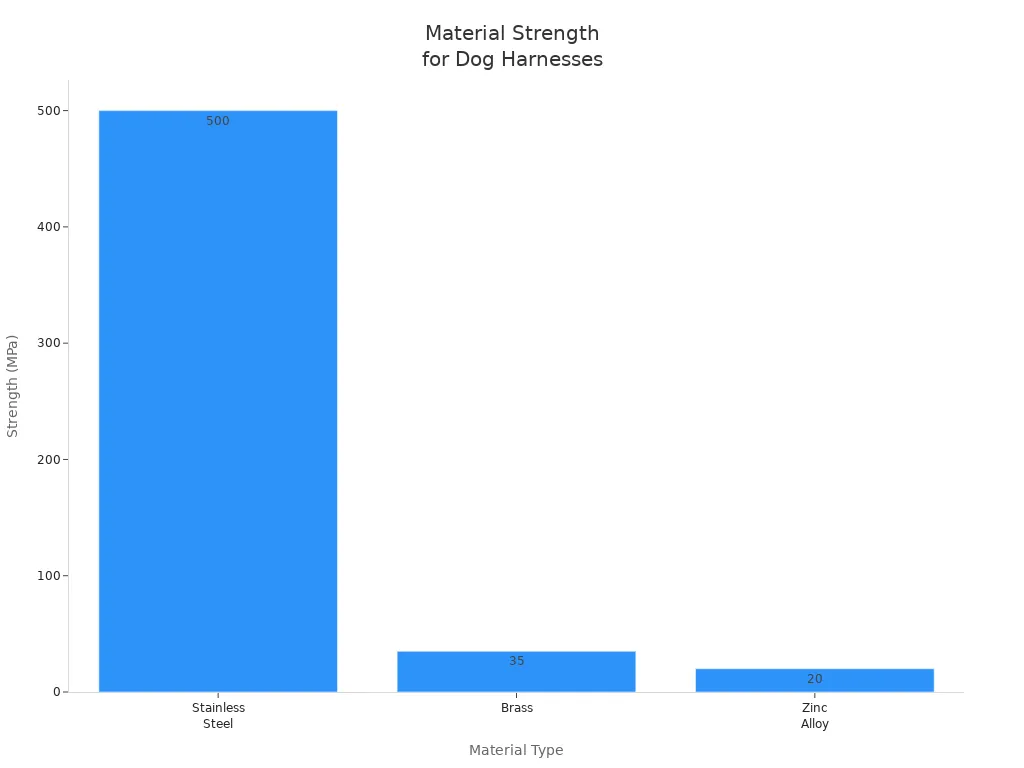
Hardware Inspection and Wear
Check the harness often. Look at the hardware and stitching.
Material | Strength (MPa) | Rust Resistance | Best Environment |
|---|---|---|---|
Stainless Steel | 500-1500 | Excellent | Wet/salty |
Brass | 35-45 | Good | Dry to humid |
Zinc Alloy | 20-30 | Moderate | Dry |
Choose harnesses with strong webbing and reinforced stitching.
Look for at least 20 stitches per inch at stress points.
Replace the harness if you see fraying, broken buckles, or loose threads.
Care and Cleaning Instructions
Hand wash with mild soap and lukewarm water. Scrub straps and buckles gently.
If machine washing, use a gentle cycle in a laundry bag. Use pet-safe detergent. Do not use bleach or softeners.
Rinse well to remove all soap.
Air dry away from sunlight and heat. Do not tumble dry.
Store in a cool, dry place. Hang to keep its shape.
Check for wear before each use.
Ready-to-Paste Back Label Copy Template
How to Measure:
1. Neck: Measure around the neck, just below the collar spot (in/cm).
2. Chest: Measure the widest part behind the front legs (in/cm).
3. Weight: Record your dog's weight (lb/kg).

Fit Checklist:
- Harness allows movement, does not slip off.
- No rubbing or chafing.
- No signs of wear or damage.
- Adjust straps as needed.

Intended Use and Limits:
- For walking, training, and service use.
- Not for lifting, car safety, or tie-out.
- Does not prevent all escapes or injuries.

Hardware Inspection:
- Check buckles, rings, and stitching before each use.
- Replace if damaged or worn.

Care and Cleaning:
- Hand wash with mild soap and lukewarm water.
- Rinse well and air dry.
- Store in a cool, dry place.

Customer Help Line: [Insert contact info]
The back label gives you and your customers the facts you need. It builds trust and helps you follow safety rules for every dog harness for large dogs.
Clip Points and Wording Rules
When you choose a harness for a large dog, you see different clip points. Each clip point has a purpose. You want clear wording on the label so you know how to use each option. This section helps you understand the meaning of front, back, and dual clip points. You also learn the rules for describing them on retail labels.
Front Clip: Redirect Support
The front clip sits on your dog’s chest. You attach the leash here to help guide your dog. This clip can help you redirect your dog’s movement. Many trainers use the front clip for dogs that pull. You do not get a guarantee that pulling will stop. You get support for training and control.
Controlled Vocabulary for Front Clip:
Front clip
Chest attachment
Redirect support
Training aid
Tip: Use the front clip for training sessions or when you need extra control.
Label Example:
Clip Point | Location | Purpose |
|---|---|---|
Front | Chest | Redirect support |
Back Clip: Walking Position
The back clip sits on your dog’s shoulders. You attach the leash here for regular walks. This clip gives you a standard walking position. You use the back clip for calm dogs or everyday outings. The back clip does not provide extra control for pulling.
Controlled Vocabulary for Back Clip:
Back clip
Shoulder attachment
Walking position
Everyday use
Note: The back clip works best for dogs that walk calmly beside you.
Label Example:
Clip Point | Location | Purpose |
|---|---|---|
Back | Shoulders | Walking position |
Dual Clip: Handling Options
Some harnesses offer both front and back clips. You get more options for handling your dog. You switch between clips for training or walking. Dual clip harnesses suit dogs with changing needs. You see both clip points listed on the label.
Controlled Vocabulary for Dual Clip:
Dual clip
Front and back attachment
Handling options
Versatile use
Tip: Dual clip harnesses let you adjust your control based on your dog’s behavior.
Label Example:
Clip Point | Location | Purpose |
|---|---|---|
Dual | Chest & Shoulders | Handling options |
You see all clip points described with clear, simple words. Labels use the same terms for every harness. This helps you pick the right harness and use it safely.
Large Dog Harness Claim Language
Safe Feature-Based Wording
When you talk about a large dog harness, focus on what it can do. Use simple, honest words so shoppers know how the harness works. You should point out design parts that help with control and comfort.
front-attachment option for directional control
designed to help redirect forward motion
two-point attachment compatibility (front and back)
fit-focused adjustment points for stable positioning
You can also explain how the harness helps when used the right way.
helps reduce pulling leverage for the handler when used correctly
supports loose-leash training routines when paired with reward-based training
can improve handling control for some dogs depending on fit and technique
If you talk about results, add a warning. Results can change based on the dog, the fit, and how you use the harness. Use phrases like:
may help reduce pulling for some dogs when properly fitted and used with training
results vary by dog, fit, and handling technique
a management tool, not a standalone training solution
Note: Always link any claim about how the harness works to a feature or a condition. This keeps your label clear and safe for shoppers.
Claims to Avoid
Do not make promises or say things you cannot prove. These kinds of claims can break rules in the US and EU. Stay away from words that say the harness always works or is the best without proof.
Do not say “miracle cure” or “best on the market” unless you have strong evidence.
Avoid “100 percent safe” or “completely non-toxic” unless you meet strict standards.
Never claim the harness “cures” or “treats” a condition unless approved by health authorities.
Do not use phrases like “contains real chicken” if you only use flavoring.
Avoid the word “holistic” because it has no legal meaning.
Tip: If you cannot prove a claim with facts or tests, use softer words and add a warning.
By using safe, feature-based words, you help shoppers trust your product and follow store rules.
Adjustable Dog Harness Master Table
Choosing the right adjustable dog harness starts with knowing your dog’s measurements. You want a harness that fits well and feels comfortable. The dog harness size chart helps you match your dog’s chest girth and weight to the right size. Many harnesses use breathable mesh to keep your dog cool during walks.
Size Code and Chest Girth (in/cm)
You see size codes like Large – Lucy Fit, Large – Regular Fit, and XLarge. Each code matches a chest girth range in inches and centimeters. This makes it easy to pick the right adjustable dog harness for your dog’s body shape.
Size Code | Chest Girth (in/cm) | Breed Types |
|---|---|---|
Large – Lucy Fit | 25–34 in / 64–86 cm | Boxer, Doberman Pinscher, Giant Schnauzer |
Large – Regular Fit | 27–37 in / 69–94 cm | American Bulldog, English Bulldog |
XLarge | 28–39 in / 71–99 cm | Bernese Mountain Dog, Great Dane |
Weight Guidance (lb/kg)
Weight helps you double-check the fit. You see weight ranges in pounds and kilograms. If your dog is near the top of a range, size up for comfort.
Size Code | Weight Range (lb/kg) |
|---|---|
Large – Lucy Fit | 45–75 lb / 20–34 kg |
Large – Regular Fit | 55–85 lb / 25–39 kg |
XLarge | 70–110 lb / 32–50 kg |
Back Length (Optional)
Some adjustable dog harnesses list back length. This helps you check if the harness covers enough of your dog’s body.
Size Code | Back Length (in/cm) |
|---|---|
Large – Lucy Fit | 10–13 in / 25–33 cm |
Large – Regular Fit | 12–15 in / 30–38 cm |
XLarge | 14–17 in / 36–43 cm |
Strap Width and Clip Points
Strap width matters for comfort. Wider straps help prevent rubbing and chafing. Clip points show where you attach the leash. Many adjustable dog harnesses use front and back clips for more control.
Size Code | Strap Width (in/cm) | Clip Points | Mesh Type |
|---|---|---|---|
Large – Lucy Fit | 1.0 in / 2.5 cm | Front & Back | Breathable mesh |
Large – Regular Fit | 1.2 in / 3.0 cm | Front & Back | Breathable mesh |
XLarge | 1.4 in / 3.5 cm | Dual (Front/Back) | Breathable mesh |
Tip: Choose a harness with wide straps and breathable mesh for comfort and skin protection.
Leash Load and Warning Lines
You want to know how much force the harness can handle. Most adjustable dog harnesses list a leash load range. Warning lines remind you to check for wear and avoid using the harness for lifting or car safety.
Size Code | Leash Load (lb/kg) | Warning Line |
|---|---|---|
Large – Lucy Fit | up to 250 lb / 113 kg | Not for lifting or car safety. Inspect before use. |
Large – Regular Fit | up to 300 lb / 136 kg | Not for lifting or car safety. Inspect before use. |
XLarge | up to 350 lb / 159 kg | Not for lifting or car safety. Inspect before use. |
Note: Harnesses do not prevent all escapes or injuries. Always check fit and hardware before each walk.
You can make size labels that are easy to read and follow the rules. First, write the chest girth in inches and centimeters. Next, add the weight in pounds and kilograms. Use simple words that tell what the harness does. This way, you help people pick the right size and return fewer harnesses. It also helps stores follow their rules.
Retail Labeling Checklist:
Chest girth and weight in dual units
Clear size codes and ranges
Fit and supervision reminders
Boundary and inspection statements
FAQ
How do you measure your dog for a large harness?
Use a soft tape. Measure around the widest part of your dog’s chest, just behind the front legs. Write down the number in inches and centimeters. Check your dog’s weight in pounds and kilograms.
What if your dog is between two sizes?
Pick the larger size if your dog’s chest girth is near the top of a range. Adjust the straps for a snug fit. This helps prevent rubbing and keeps your dog comfortable.
Can you use a large dog harness for car safety?
No. Large dog harnesses are for walking and training. They do not protect your dog in a car. Use only harnesses tested for car safety if you need travel protection.
How often should you check the harness for wear?
Inspect the harness before each walk. Look for fraying, broken buckles, or loose stitching. Replace the harness if you see damage.
What is the best clip point for controlling pulling?
Use the front clip for redirecting your dog’s movement. This clip can help with training. Results depend on your dog’s behavior and how you use the harness.