Start your product copy so people understand. Follow this easy guide:
Do: Say what each safety harness is for. Use words that are easy to read. Give proof for what you say. Tell what the product can and cannot do.
Do not: Say it will stop all injuries. Do not use words like “unbreakable” or “crash-proof.” Do not say the product does more than it really does.
If you make claims that are not clear, shoppers may get confused. They might feel upset or return the product. You could even have legal trouble if you do not use careful words.
Key Takeaways
Say what the safety harness is for. Use easy words to tell what it does, like helping you control your dog on walks.
Do not make big promises. Do not say the harness is ‘unbreakable’ or ‘crash-proof.’ This can trick people and cause problems with the law.
Always give help with sizing. Add a size chart and tell users to check the fit each time. This helps keep dogs safe and comfy.
Use careful words in your claims. Say things like ‘designed to help’ instead of making promises. This makes your product copy honest and easy to trust.
Check the harness often for damage. Look for worn straps or broken buckles before each use to keep your dog safe.
Safety harness definition and limits
Intended use explained
A safety harness for dogs is something your dog wears on its body. You use it to help control your dog when you walk it. It also helps when you need to handle your dog or keep it in one place. The main goal is to make some risks smaller, not to get rid of all danger. When your dog wears a harness, the force spreads out over its chest and shoulders. This means there is less chance of hurting your dog’s neck than with a collar. Collars put pressure on just one spot.
Rules in the US and EU say pet products must be safe. For example, the General Product Safety Regulation in the EU says harnesses must be strong, not have bad chemicals, and come with clear instructions. In both places, you need to make sure the harness fits your dog. You should use the harness the way it is meant to be used.
Tip: Always look at the size chart and make the harness fit snugly. If the harness is too loose, it might not work right.
Here is a quick look at what safety rules cover:
Safety Area | Description |
|---|---|
Material Strength Testing | Webbing and buckles must not break easily. |
Chemical Safety Standards | Materials must not have bad chemicals. |
Anti-Choking and Anti-Pressure | Harnesses should spread out pressure to protect the neck. |
Reflective Safety Requirements | Reflective parts help people see your dog at night. |
Proper Labeling and Size Guides | There must be clear size charts and instructions. |
What safety harnesses cannot guarantee
A safety harness can help you control your dog, but it cannot keep your dog safe all the time. It does not stop every injury. For example, if your dog pulls hard, a harness can help stop neck pain, but it cannot stop all problems. Some harnesses can even make pulling worse if you do not train your dog.
You should not think a harness will protect your dog in every case. For car rides, only use a harness the way the directions say. If the harness has not passed crash tests, do not think it will keep your dog safe in a crash. Always watch your dog and check the harness for damage.
A safety harness does not always stop escapes. You must fit and adjust it the right way.
It cannot change how your dog acts by itself. You still need to train and watch your dog.
No harness can take away all risk. It can only help lower some dangers if you use it right.
When you use simple words and tell the truth, you help shoppers and teams know what a safety harness can and cannot do.
Common shopper misunderstandings
Use-case confusion: walk, lift, car
Many people think one harness works for everything. You might see a safety harness and think it is good for walking, lifting, and car rides. But each job needs a different kind of harness. Some harnesses are best for walks. Others have handles or soft padding for lifting dogs that need help. Car harnesses often have special parts for seat belts. If you use the wrong harness, your dog might not be safe or feel good.
Not all harnesses are made for car trips. If the harness does not say it passed crash tests, do not think it will protect your dog in a crash. Most car harnesses just help keep your dog from moving too much with a seat belt. They do not promise to keep your dog safe in every crash.
Here is a table that shows what to check for in a harness so you do not make mistakes:
Key Findings | Description |
|---|---|
Scapula Freedom | The harness should not press on your dog’s shoulder blades. |
Avoid Lateral Chest Tapes | Straps across the chest can block natural leg movement and cause harm. |
Ergonomic Design | The harness should let your dog move in a natural way for comfort and safety. |
Labeling intended use clearly
Clear labels help you pick the right harness. Always read the product description to see what the harness is for. Look for words like “designed for walking,” “intended for lifting,” or “for use with seat belt tethers.” If you write about products, use these words to help shoppers. Do not use words that promise too much, like “guaranteed safe” or “crash-proof.”
Clear labels also help business teams and partners. OEM means a company makes products for other brands. ODM means a company designs and makes products for other brands to sell. When you write about a product, make sure what you say matches what the harness was tested for and how it was made.
Note: Always add fit tips and reminders to watch your dog in your product copy. This helps shoppers use the harness the right way and keeps things clear.
Claim-safe language for safety harnesses
Using clear words helps everyone know what to expect. When you write about a safety harness, pick words that match what it can do. Do not use words that promise too much or sound like a guarantee.
Words to use: designed to help, intended for
You should use words that show the harness has a special job. These words help shoppers know how to use the harness. They also help business teams make safe claims that are easy to check.
Designed to help control your dog on walks.
Intended for use with seat belt tethers in the car.
Built to support handling and lifting when fitted right.
Made to fit most medium and large dogs if adjusted as shown in the size guide.
These phrases show what the harness does. They do not promise things you cannot prove. You can also say “helps reduce risk” or “supports comfort” when you talk about features.
Here is a table that shows what words you need for safety info in the US and EU:
Region | Language Requirement |
|---|---|
US | English for required origin marking; buyer instructions usually in English |
EU | Safety info and mandatory consumer info in language(s) consumers can understand (varies by destination) |
Tip: Always match your product copy to the language rules for each market. This helps shoppers and partners know how to use the harness safely.
Words to avoid: guarantees, crash-proof, unbreakable
Some words sound strong but can cause problems. If you say a harness is “guaranteed safe,” “crash-proof,” or “unbreakable,” you make promises you cannot always keep. These words can confuse people, make them upset, or cause legal trouble.
Do not use these risky words:
Guarantees
Crash-proof
Unbreakable
Escape-proof
Injury prevention
If you use these words, you might face big problems:
One broken buckle can cause accidents and lawsuits. This can hurt your brand.
Skipping safety rules to save money makes legal problems worse if someone gets hurt.
The law says brands must make sure their products are safe. This means the risk moves from suppliers to the brand.
Instead, change claims to show limits and support safe use. Here are some examples:
Risky claim:
“This harness is crash-proof and will protect your dog in any accident.”
Safe rewrite:
“This harness is intended for use with seat belt tethers to help limit your dog’s movement during car travel. It has not been tested for crash protection.”
Risky claim:
“This harness is unbreakable and escape-proof.”
Safe rewrite:
“This harness features reinforced webbing and hardware designed for large-dog loads. It is escape-resistant when properly fitted. Always check fit and inspect for wear before each use.”
Using claim-safe words helps shoppers make smart choices. It also keeps your business safe from risk. Always make sure every claim matches the product’s design and test results. If you cannot prove a claim, use softer words and clear limits.
Note: Claim-safe language is not just for shoppers. It helps business teams, partners, and legal reviewers keep product copy clear and compliant. You can build reusable copy blocks with safe phrases for every harness type.
Evidence for safety harness claims

Acceptable support: tests, specs, records
When you write about a safety harness, you need to back up your claims with real proof. Shoppers and business partners both want to know that your product meets safety standards. You can use test results, technical specs, or official records to support what you say.
Look for testing that follows known standards, such as FMVSS 213 or CMVSS 213. These show the harness has gone through proper checks.
Make sure an independent lab, not just your own team, did the testing.
Check that the whole harness system was tested, not just one part like a buckle or strap.
If you have these types of proof, you can mention them in your product copy. This helps people trust your product and understand its limits.
Matching claims to evidence
You should always match your claims to the proof you have. If your harness passed a certain test, say which test and what it means. If you do not have crash test results, do not suggest crash protection. Use phrases like “tested to support large-dog loads” or “designed for use with seat belt tethers.” This keeps your copy honest and clear.
Here is a simple checklist for matching claims to evidence:
State only what you can prove.
Name the test or standard if you have it.
Describe the use case the test covers.
Avoid words like “guaranteed” or “crash-proof” unless you have full proof.
Stating product limits
You help shoppers and teams when you set clear limits. Tell people what the harness can and cannot do. For example, say “not tested for crash protection” if you do not have that proof. Remind users to check fit and inspect for wear. Use plain language so everyone understands.
Note: Clear limits protect your business and help shoppers use the harness safely. Always update your copy if new test results or standards come out.
US/EU safety harness listing checklist
Required safety info: use, fit, supervision
When you sell a safety harness in the US or EU, you must give clear safety information. This helps shoppers use the harness the right way. It also keeps your business safe and legal. Here are the main things you need to include:
Intended use: Say what the harness is made for, like walking, lifting, or using with a seat belt tether. Do not say it can do things it was not tested for.
Fit guidance: Give a size chart and show how to measure your dog. Remind people to check the fit every time before using the harness. A good fit helps stop escapes and keeps dogs comfortable.
Supervision note: Tell people to watch their dog when it wears the harness. Dogs should not wear harnesses alone, especially puppies. This helps avoid danger or discomfort.
Wear-and-tear inspection: Tell users to look at the harness before each use. Check for broken straps, buckles, or labels. If you see damage, stop using the harness.
Compatibility boundaries: Explain what the harness works with, like certain seat belt tethers or leash types. Make it clear if the harness is not for car crash safety unless you have test results.
Limits: List what the harness cannot do. For example, it cannot stop all injuries or promise escape-proof use.
Tip: When you get a new harness, check for problems and make sure it fits. Look at the harness often, especially if more than one dog uses it.
Here is a table to help you remember the important safety info:
Safety Info Element | What to Include |
|---|---|
Intended Use | Walking, lifting, car restraint (if tested for it) |
Fit Guidance | Size chart, measuring tips, fit check reminder |
Supervision | Watch your dog, do not leave unsupervised |
Wear-and-Tear | Inspect before use, remove if damaged |
Compatibility | Works with specific tethers or leashes, not for crash safety |
Limits | Cannot prevent all injuries, not escape-proof |
You must also follow the law. In the US, harnesses must not have harmful chemicals and must pass strength tests. Some states need warning labels if the harness has certain things in it. In the EU, you must give safety info in a language your customers understand.
Warnings and limits in plain language
Clear warnings help people avoid mistakes and keep pets safe. Write warnings in simple words so everyone can understand. Do not use words that scare people. Instead, explain the risks and how to stay safe.
Here are some examples of easy-to-understand warnings and limits:
The wrong size or type of harness can bother your dog’s skin.
Harnesses with front straps may press too hard on your dog’s chest.
Dogs left alone with harnesses can choke, especially if they chew the straps.
Puppies should not wear harnesses alone.
Using the harness for a long time can make it dirty and smelly.
A harness that does not fit right can be a choking risk.
Harnesses can cause fur loss or tangles if not checked often.
Note: Not all harnesses are tested for car crashes. Only use a harness with a seat belt tether as the directions say. Do not expect crash safety unless the product copy says it passed crash tests.
When you write warnings, stick to the facts. For example, say “Check the harness before each use. Stop using it if you see damage.” This helps people stay safe without being scared.
If you write product copy for business teams or partners, use these warnings again and again. Always make sure the warning matches the harness and its test results. Update your warnings if new safety rules or test results come out.
A safety harness can help lower some risks if you use it right. It does not take away all danger. Honest warnings keep pets and your business safe.
Reusable copy blocks for teams
Intended use statement
This harness is designed to help you control your dog during walks, support handling, or secure your dog in specific setups as described. Always use the harness as intended and follow the included instructions for best results.
Fit and adjustment guidance
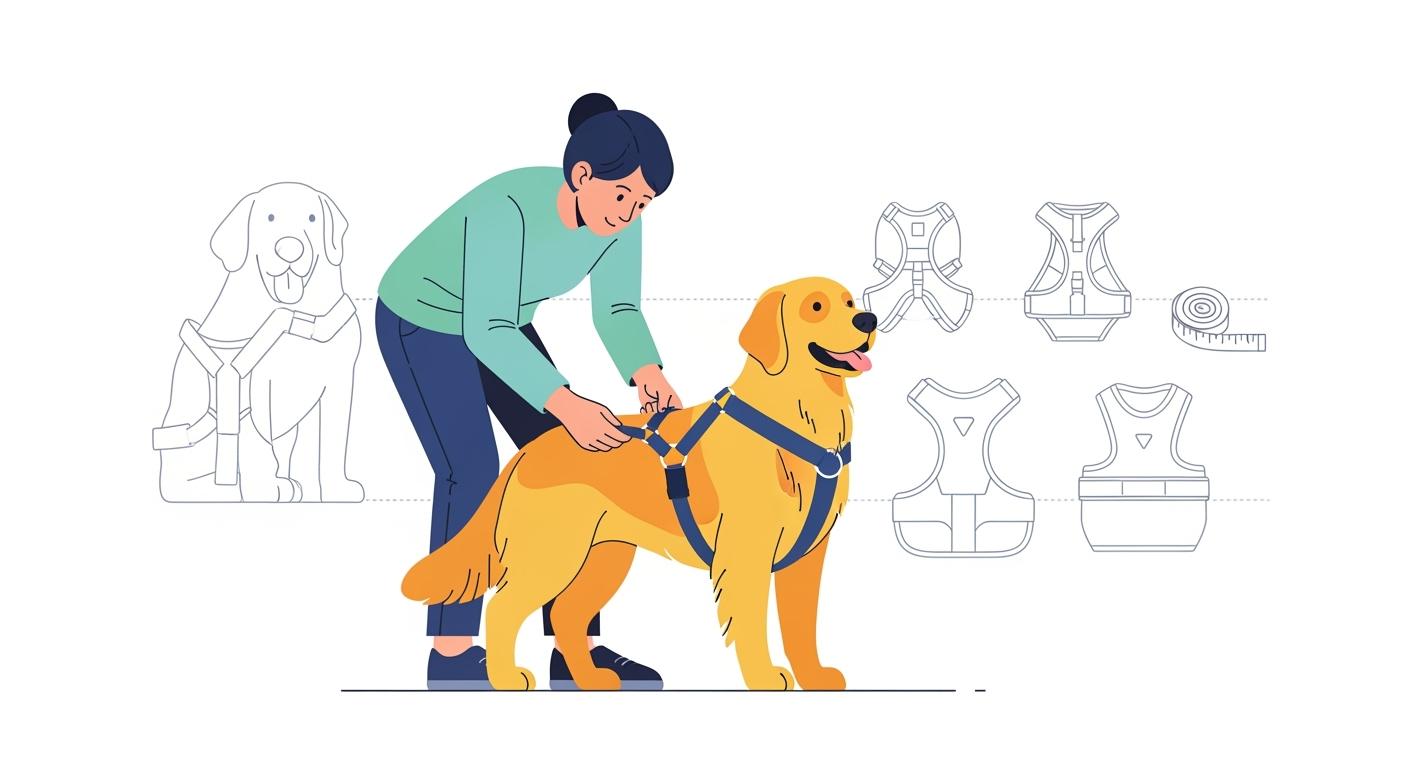
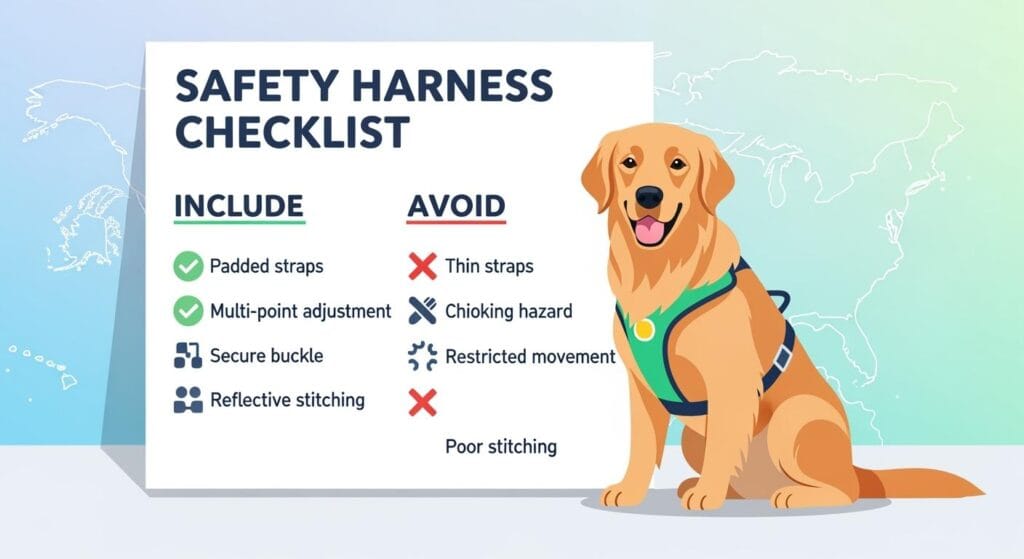
Check your dog’s harness fit every six months. Dogs can grow or change shape over time. Use a soft tape to measure your dog’s chest just behind the shoulders and around the neck. Pick the size that matches your measurements. Adjust all straps so the harness fits snug but does not pinch. Look for signs like awkward walking or refusal to walk, which may mean the fit is wrong.
Choose a harness with several adjustment points.
Measure your dog’s chest and neck for the right size.
Adjust straps so you can fit two fingers under the harness.
Hardware and strength notes
Requirement | What to Ask For | How to Check When You Get It |
|---|---|---|
Hook-and-loop strength | At least 3,000 cycles | Test by opening and closing |
Stitching | Strong, even stitches | Inspect all seams |
Edge finish | No raw edges | Look at all harness edges |
Hardware durability | Secure buckles and rings | Check for solid, clean hardware |
Always check that all hardware and stitching look strong before each use.
In-vehicle use boundaries
Use this harness with a seat belt tether to help limit your dog’s movement in the car. This harness does not promise crash protection. Larger dogs may not fit safely in all back seats. The harness helps prevent your dog from moving forward but cannot guarantee full restraint in every situation. Always follow the instructions for car use.
Care and inspection reminders
Inspect the harness for fraying, loose stitching, or damage before each use.
Clean buckles and rings with a soft cloth to remove dirt.
Handwash the harness with mild soap and lukewarm water. Air-dry only.
Store the harness in a dry place, away from direct sunlight.
Avoid crowding harnesses in storage to keep their shape.
If you find minor damage, repair it with a needle and thread. For bigger problems, ask a professional for help.
Internal review workflow
A strong internal review process helps you keep your safety harness product copy clear and compliant. You want to make sure every claim matches what the harness can do. This protects shoppers, your team, and your business.
Claim review steps
Start by checking each product claim. Ask yourself if you can prove what you say. Use these steps to guide your review:
Read the product copy line by line. Look for words like “guaranteed,” “crash-proof,” or “escape-proof.” Change these to softer phrases such as “designed to help” or “intended for.”
Check that every claim matches the harness’s design and test results. If you say the harness works with seat belt tethers, make sure the product supports this use.
Review fit and adjustment instructions. Make sure you include reminders to check fit and inspect for wear.
Confirm that you list the intended use, fit guidance, supervision notes, and product limits.
Keep records of your reviews. Write down who checked the copy and what changes you made.
Tip: Regularly inspect harnesses for damage. Replace any that do not meet your standards.
You can use a simple table to track your review:
Step | Who Checks | What to Look For |
|---|---|---|
Claim wording | Copywriter | Risky words, overpromises |
Evidence match | Product manager | Test results, specs, records |
Fit instructions | QA specialist | Clear, simple, correct guidance |
Final approval | Compliance lead | All safety info and warnings |
When to escalate
Sometimes you find a claim you cannot prove or a new use case that does not match the harness’s design. In these cases, you need to escalate the review.
Escalate if you see a claim about crash protection without test results.
Escalate if the harness is used in a way not covered by current instructions.
Escalate if you find new safety rules or standards that affect your product.
Bring these issues to your compliance lead or legal team. They can help you decide what to change or update. This keeps your product copy safe and up to date for both shoppers and business partners.
When you use clear and honest words, people trust your product more. Always make sure your claims match real test results. Set limits so shoppers know what the harness can and cannot do. Update your product copy when rules or safety checks change.
Key Aspect | Description |
|---|---|
Certification | OEKO-TEX® checks for harmful stuff in every part of the harness. |
Compliance | Following safety rules keeps harnesses safe for dogs. |
Ongoing Inspection | Get new certification each year to keep safety high. |
“What you say about health and safety matters to shoppers. If you make claims that are not true, people may stop trusting your product.”
Check and update your product copy often. This helps you follow the rules and lowers risk.
FAQ
How do I know if a safety harness fits my dog?
Measure your dog’s chest and neck. Use the size chart to pick the right harness. Adjust the straps so you can fit two fingers under the harness. Check the fit every time before you use it.
Can I use any harness in the car?
Not every harness works for car travel. Only use a harness with a seat belt tether if the product says it is designed for that use. Most harnesses help limit movement but do not promise crash protection.
What should I check before each use?
Look for frayed straps, broken buckles, or loose stitching. Make sure the harness fits snugly. If you see damage, stop using the harness. Clean the harness as needed to keep it in good shape.
Is a safety harness escape-proof?
No harness can promise to stop all escapes. A well-fitted harness can help prevent escapes. Always check the fit and watch your dog when it wears the harness.
How often should I replace a safety harness?
Inspect the harness often. Replace it if you see signs of wear, damage, or if your dog outgrows it. Regular checks help keep your dog safe and comfortable.