You can make your catalog listings clear and the same by setting exact rules for fonts, nameplates, and embroidery. Custom dog collars let you put a dog’s name, phone number, or business logo right on the collar in different ways. Personalization means any special text, font, or design that is added to the product for one order. Clear rules help private label dog collars look different and make it easy to check and compare products. When you use the same rules, your team will not get confused when buying and will follow the rules for every product.
Key Takeaways
Make clear rules for fonts, nameplates, and embroidery. This helps your catalog stay neat and easy to read. Pick simple fonts that are easy to see. Set limits on how many letters you can use. This stops mistakes in custom orders. Pick strong materials for nameplates. Make sure the edges are rounded so your dog stays safe. Use tough threads for embroidery. This keeps the color bright and the collar looking good. Follow care tips to help the collar last longer. Always look at product listings to check sizes, colors, and options. This helps you make fewer mistakes.
Custom Dog Collars in Catalogs
Personalization Types
There are many ways to personalize a dog collar. Personalization lets you pick special text, icons, or designs. These choices make each collar special for the dog. You can add a name, phone number, or a pet icon. Some catalogs offer different styles and themes. Here are some popular types you might find:
Personalization Type | Description |
|---|---|
Pop Culture Themes | Designs from movies, TV, or trends. |
Lifestyle Trends | Styles that fit what people like now. |
Holiday Themes | Patterns for holidays and seasons. |
Boho and Pastel Gradients | Soft colors and modern styles. |
Fruit Themes | Prints with fruit shapes for fun. |
Ethnic-Inspired Tribal Prints | Patterns from many cultures. |
Matching Accessories | Sets for dogs and owners together. |
You can pick the collar material too. Polyester collars are strong and show bright colors. Nylon collars are light and easy to wash. Leather collars look classic and are good for engraving. Waterproof collars are best for dogs who swim.
Tip: Always look at the catalog for character limits, font choices, and placement zones before you order. This helps you avoid mistakes and keeps your listing clear.
OEM means you get collars made just for your brand. ODM means you choose from ready-made designs and add your logo or details. Both ways help you build your own catalog.
What’s Not Personalization
Some things are not personalization. Picking the size, color, or closure type does not count. These choices help the collar fit the dog but do not add custom text or design. Standard hardware, adjustable neck sizes (like 30–45 cm / 12–18 in), and safety features are not personalization. You only personalize when you add something special for one dog or order.
Personalization Methods Compared
Picking the right way to customize collars helps your catalog. It lets you give good choices and keeps listings easy to read. You can pick engraved nameplates, embroidery on webbing, or hook-and-loop patches. Each one makes the collar look and feel different. You can use these to add a logo, a pet’s name, or other info. It is important to know which way works best for you.
Engraved Nameplate
Engraved nameplates put sharp, clear words on metal. This way is good for collars that need to look professional. Many people pick engraved plates because they last and are easy to read. You can choose the plate size, shown in millimeters and inches, like 50 mm or 2 in wide. You can also pick the finish, like brushed or shiny. Rounded corners and smooth edges help keep dogs safe. The plate is attached with rivets or screws, so it stays on. You can add a logo or words. This way is great for dogs who play outside or wear their collar every day.
Note: Engraved nameplates are made to last a long time. How you clean and care for them can change how long the words stay clear.
Embroidery on Webbing
Embroidery lets you put colorful words or designs right on the collar. You can pick thread colors and fonts for your collar. This way gives a fancy look and feel. You can put the embroidery in spots like the middle or near the buckle. Using the same backing and stitch direction helps every order look the same. Embroidery is good for adding a logo or name. You can wash these collars, but the colors might fade after a while. You should follow care tips to help the embroidery last longer.
Tip: Embroidered collars are made for daily use. Washing and rubbing can change how they look over time.
Hook-and-Loop Patch
Hook-and-loop patches let you change the look of the collar. You can swap patches for teams, events, or seasons. You can add a logo, name, or message. The patch sticks to a panel on the collar, so you can change it fast. This way is good for dogs in training or service jobs. You can pick patch sizes in millimeters and inches, like 60 mm or 2.4 in wide. You should look for strong stitching and tough loop material. This helps the patch stay on during use.
Note: Hook-and-loop patches are made for daily use. The loop part might wear out if you change patches a lot.
Comparison Table: Engraved Plate vs Embroidery vs Patch
Method | Best For | Durability (Claim-Safe) | Lead Time (Avg) | Listing Fields Needed | Pros | Cons |
|---|---|---|---|---|---|---|
Engraved Nameplate | Everyday wear, clear text, ID | Designed for regular use | 2-4 weeks | Plate size, finish, font, text | Crisp text, secure, professional look | Needs clear edge safety, fixed info |
Embroidery on Webbing | Premium look, colorful designs | Designed for regular use | 2-4 weeks | Thread color, font, placement | Soft feel, many colors, flexible zones | May fade, needs care guidance |
Hook-and-Loop Patch | Teams, events, flexible info | Designed for regular use | 2-4 weeks | Patch size, font, placement | Swappable, easy updates, team use | Loop wear, patch may detach |
Each way to customize has its own good points. Engraved nameplates are best for clear, lasting info. Embroidery gives a fancy look with lots of color choices. Hook-and-loop patches are good if you want to change the collar often.
You should look for strong stitching, tough buckles, and hardware if you need collars for rough use. Waterproof collars are good for dogs who swim or play in water. Reflective parts help keep dogs safe at night. Easy-to-clean materials help keep collars fresh when things get busy. Adjustable sizes help the collar fit any dog well.
OEM means you get products made just for your brand, with your own rules and designs. ODM means you pick from ready-made products and add your logo or details. Both ways help you make a catalog that matches your brand.
Font Specs for Readability
Choosing Fonts
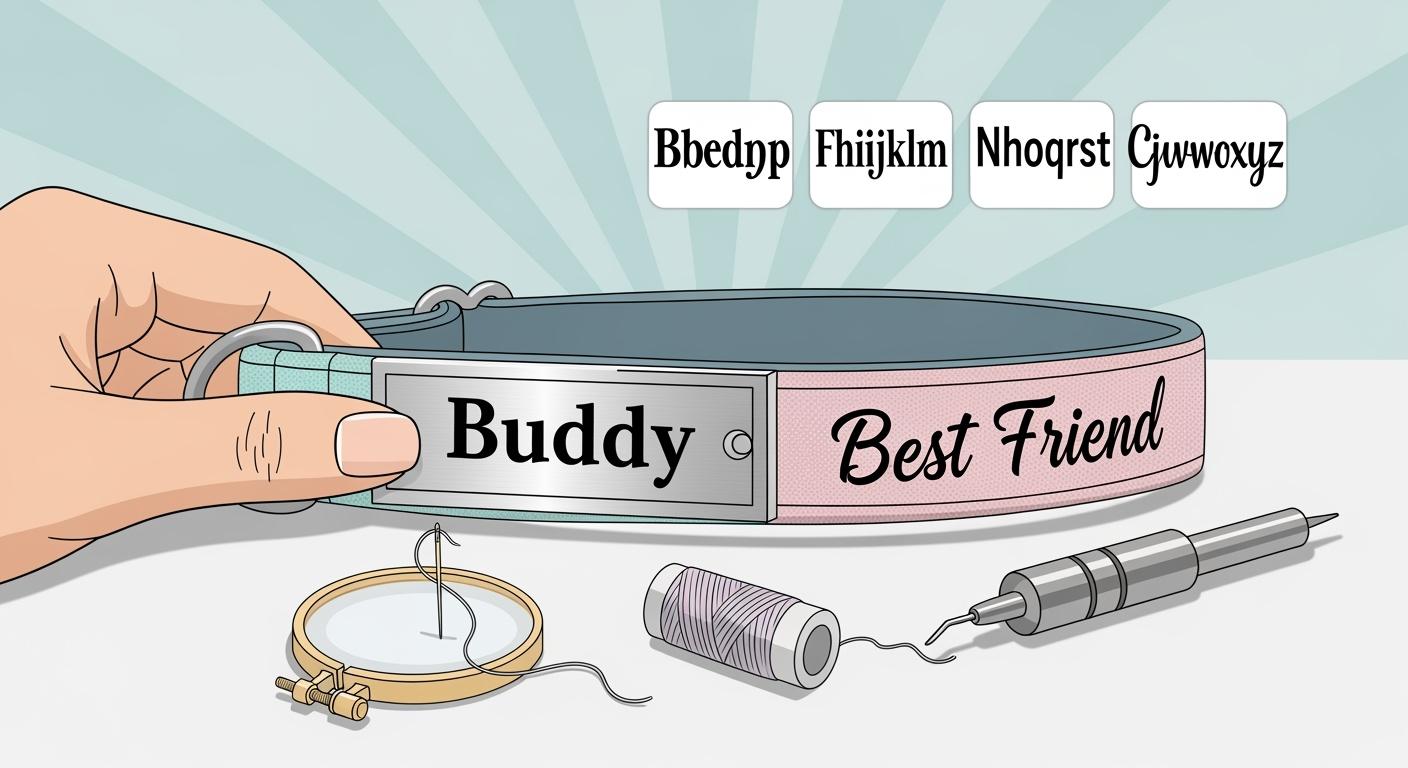
You want every customized dog collar to look sharp and easy to read. Simple fonts work best for customization. Sans-serif fonts like Arial or Helvetica help you avoid confusion because they do not have extra strokes. These fonts keep each letter clear, even when you add a customized logo or a dog’s name. Larger font sizes make the text stand out, especially when you need to identify a dog quickly. Always check the design from about three feet (0.9 meters) away to see if you can read it. Deep engraving on metal plates creates shadows that boost contrast, making the text easier to see in different lighting. For embroidery, pick thread colors that stand out against the collar webbing. High contrast between the thread and the collar helps your customization pop.
Choose simple, open fonts for all customized text.
Use larger font sizes for better readability.
Pick thread and webbing colors with strong contrast.
Character & Line Rules
You need to follow clear rules for how much text fits on each collar or tag. Too many characters or lines can make the text hard to read. The table below shows the recommended limits for different buckle and tag sizes. Always use both inches and millimeters for clarity.
Buckle/Tag Size | Recommended Lines | Characters per Line |
|---|---|---|
3/8″ (9.5 mm) Buckles | 1-2 lines | 10 characters |
5/8″ (16 mm) or 3/4″ (19 mm) Buckles | 2-3 lines | 10-15 characters |
1″ (25 mm) Buckles | 4 or less lines | 10-15 characters |
1.5″ (38 mm) Buckles | Up to 8 lines | 10-15 characters |
3/8” (9.5 mm) Tags | 3 lines or less | 10 characters |
5/8″ (16 mm) or 3/4″ (19 mm) Tags | 4 lines or less | 10-15 characters |
1″ (25 mm) Tags | 5 lines or less | 10-15 characters |
1.5″ (38 mm) Tags | Up to 8 lines | 10-15 characters |
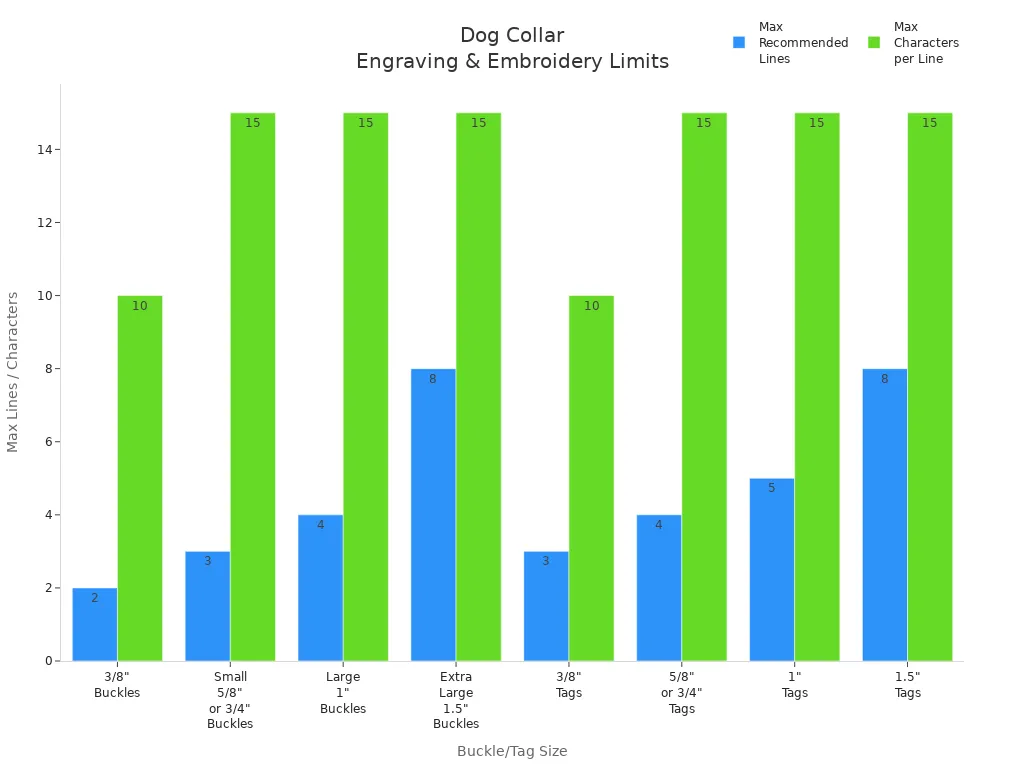
For most customization, keep the total character count under 24, including spaces and punctuation. On small and medium collars, 20 characters or less works best. This prevents the adjustment slider from covering important information.
Common Font Issues
You may run into some common problems when you customize dog collars. If you choose a decorative or script font, the text can become hard to read, especially on small tags. Adding too many lines or characters forces you to use smaller text, which can make the information unclear. Sometimes, low contrast between thread and webbing or shallow engraving can make the text fade or blend in. Always test your customized design for readability before you approve it for your catalog.
Decorative fonts reduce readability.
Too much text leads to small, unclear letters.
Low contrast and shallow engraving make text hard to see.
By following these font specs, you help every customized collar and customized logo stand out and stay easy to read for every dog.
Nameplate Specs & Safety
Material & Finish
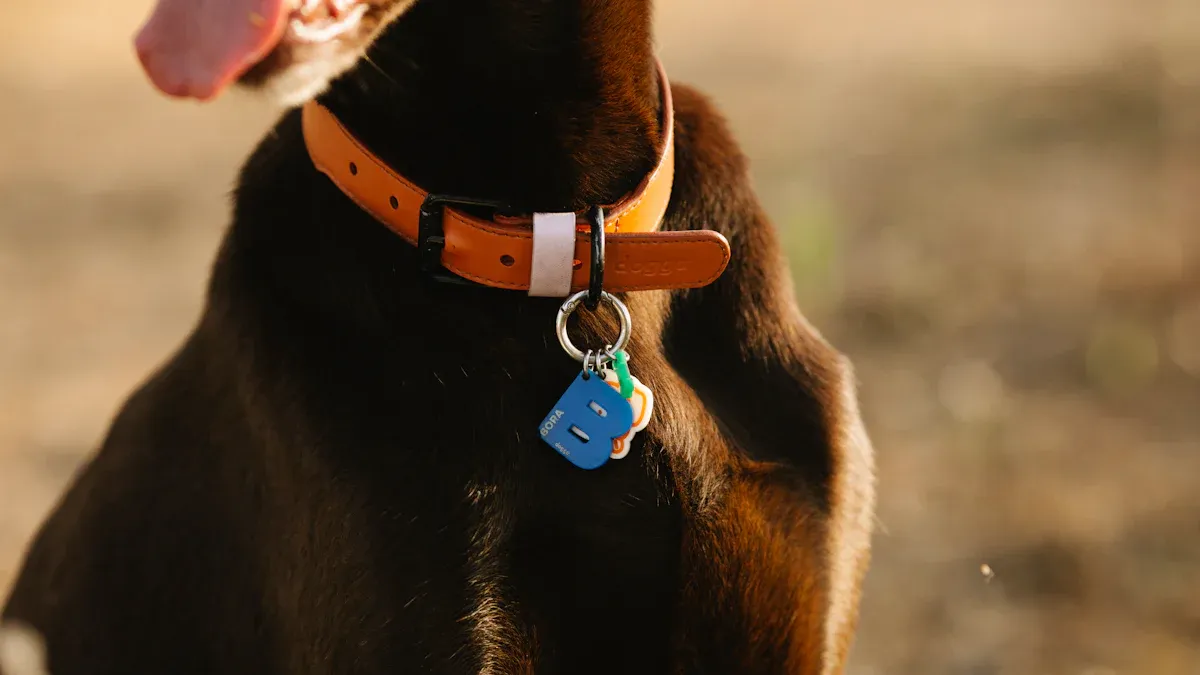
You want your dog’s collar to last and be safe. The nameplate material changes how strong and safe it is. Most nameplates use brass, stainless steel, or zinc alloy. Brass is tough but needs polishing to stay shiny. Stainless steel lasts longest and is easy to clean. Zinc alloy costs less but might not last as long. The finish matters too. You can pick brushed, shiny, or matte surfaces. Smooth finishes help stop scratches on your dog’s skin. Here is a table that shows how materials compare:
Material | Cost Level | Long-Term Value |
|---|---|---|
Brass | Moderate | Good durability |
Stainless Steel | High | Best longevity |
Zinc Alloy | Low | May need replacing |
Strong materials keep the leash clip safe when you walk your dog. If your dog’s skin is sensitive, a gentle finish helps stop rashes. When you talk to a dog collar oem manufacturer, ask what materials they use. This helps you check suppliers and pick the best ones for your catalog.
Tip: Stainless steel nameplates are simple to clean and do not rust. This helps your collar stay nice for a long time.
Edge & Corner Safety
Sharp edges or corners can hurt your dog. You should pick nameplates with rounded corners and smooth edges. This design helps stop scratches and snags. Many oem dog collar suppliers make plates with safe shapes. When you look at samples, run your finger along the edge to check for rough spots. Good nameplates protect your dog and keep collars safe for daily use. Rounded corners also help the customized logo stay clear and undamaged.
Note: US and EU buyers often want extra safety tests for hardware. Always check safety notes from your supplier.
Attachment Methods
How you attach the nameplate changes safety and quality. You can use rivets, screws, or keepers. For leather collars, punch holes with a leather tool and use rivets to hold the plate. For nylon collars, melt holes with a soldering iron and hammer the rivet closed. Always line up the plate before you attach it. For regular buckles, slide the keeper onto the strap end. For quick-release buckles, use pliers to make a gap, put the keeper in, and bend the seam back. These ways keep the nameplate secure and stop it from falling off.
Tip: Strong attachment methods help your collar last longer and keep your dog safe.
OEM means you get products made just for your brand with your own rules and designs. ODM means you pick ready-made products and add your logo or details. Both choices help you build a catalog that matches your brand’s quality.
Embroidery Details & Care
Thread & Backing Choices
You want embroidery that lasts and keeps its color. The thread and backing you pick change how strong the collar is. Polyester threads are good for dog collars. They do not fade in sunlight and can handle water. Bonded polyester is very waterproof. It works well for outdoor gear. V-69 polyester is best for thick leather or canvas collars. Nylon thread is tough and works with leather. Polypropylene thread is light and does not soak up water. It is good for outdoor collars.
Thread Type | UV Resistance | Waterproofing | Application Tips |
|---|---|---|---|
UV-Treated Polyester | Very good | Moderate to high | Use for dog collars, outdoor furniture, and gear. |
Bonded Polyester | Moderate | Excellent | Great for marine and outdoor use. |
V-69 Polyester | N/A | N/A | Heavy-duty for thick leather or canvas. |
For backing, use sticky stabilizers or strong Pellon. These help stitches stay straight and keep them from moving. Using the same backing and stitch direction helps every order look the same. This keeps your catalog samples and orders matching.
Tip: Test new thread and backing on scrap first. This helps you find problems early and keep quality high.
Placement Zones
Putting embroidery in the right spot makes it easy to see. It also keeps it looking neat. Lay the collar flat and smooth out any wrinkles. Put a sticky stabilizer in your embroidery hoop. Cut an “X” in the paper to show the sticky part. Press the collar onto the sticky area. Make sure no parts overlap. Mark where you want the embroidery with chalk or a washable marker. Use alignment tools or apps to help place designs. This is important for adjustable collars. Both vertical and horizontal alignment matter for how it looks.
Use sticky stabilizers for thick collars or leather.
Set your machine to 63.5–72.6 stitches per inch. Use 0.1 mm pull compensation and edge underlay.
Test placement and stitch density on scrap before making the whole batch.
Doing these steps for every order keeps quality the same.
Wash & Fade Guidance
Embroidery on dog collars is made to last. How you care for it changes how long it stays nice. Hand washing is best to protect the embroidery. If you use a washing machine, put the collar in a mesh bag. This helps stop damage. To keep colors bright, soak the collar in room temperature water. Add white vinegar and a teaspoon of salt. Leave it for 30–60 minutes. Rinse with cold water and lay flat to dry. These steps help keep the collar looking good and stop fading.
Note: Washing in a machine may make colors fade over time. Always follow care tips for the best results.
OEM means you get products made just for your brand. You set your own rules and designs. ODM means you pick ready-made products and add your logo or details. Both ways help you keep quality high and your catalog the same.
Artwork & Proofing Workflow
File Formats & Color Naming
You need artwork files that work for all suppliers. Most factories want vector graphic files. These files keep lines neat and colors bright. Here are some common formats:
File Format | Description |
|---|---|
AI | Adobe Illustrator files. Save as .eps or .ai with PDF. |
Adobe Acrobat files. They hold vector and bitmap images. Change text to curves. | |
BMP/PNG | Used as guides to help remake artwork. |
SVG | Scalable Vector Graphics. Images stay clear at any size. |
For embroidery, you might need .DST, .PES, or .EMB files. These help machines stitch your design just right.
Color names are important. Use simple color names and codes. Colors can look different on each collar. Light, background, or dye can change how colors look. Digital proofs may not show the real color or texture. Photos can also make colors look different. Always check color samples on the real collar material.
Tip: Ask your supplier for a real color swatch before you say yes.
Proof Checklist
You need a checklist to catch mistakes before making collars. Check these things every time:
Make sure the file format and size are correct (show mm and inches).
Check font style and size so it is easy to read.
Make sure color names and codes are right.
Look at placement zones for embroidery or nameplates.
Check spelling and character limits for text.
Make sure hardware finish and attachment method are correct.
Ask for a sample or digital proof before you approve.
A good checklist helps you stop delays and keeps your catalog neat.
Reorder Consistency
You want every reorder to look like your first order. Use easy designs and clear instructions. Good suppliers talk often and keep quality high. Make a full order sheet with all details approved. Ask for updates at important steps. Build strong relationships with your suppliers to avoid problems. Check quality at each stage to catch mistakes early.
Process | Description |
|---|---|
Design Simplification | Easy designs help reorders stay the same and quick. |
Proactive Supplier Practices | Good suppliers talk and check quality often. |
Detailed Order Confirmation | A full order sheet stops confusion. |
Proactive Updates | Regular updates keep you in the loop. |
Strong Supply Chain Relationships | Trusted suppliers help you plan better timelines. |
In-house Quality Control | Internal checks catch problems before shipping. |
Note: OEM means you get products made just for your brand with your own rules and designs. ODM means you pick ready-made products and add your logo or details. Both ways help you build a catalog that matches your brand.
Catalog Fields for Private Label Pet Brand
When you make a catalog for custom dog collars, you need clear rules for each product. This helps your team and buyers find the right collar fast. Your catalog stays neat and simple to use. It also helps your business avoid mistakes and returns. Every product should show the correct logo, size, and care instructions. You also need to check that each collar is safe and good for training.
Required Listing Attributes
Every listing for custom dog collars must have important fields. These fields show the types of personalization, the customized logo, and product details. They also set clear rules for care and training. Here is a table with the minimum catalog fields for a private label pet brand:
Required Catalog Fields | Description |
|---|---|
Personalization Method | Pick engraved nameplate, embroidery, or hook-and-loop patch for the customized logo. |
Text Rules | Set limits for characters, lines, and symbols for each product. |
Font | Choose a font that is easy to read for the logo and text. |
Plate Size | Show plate size in millimeters (mm) and inches (in) for each collar. |
Thread Color | List thread color choices for embroidery and logo. |
Collar Width | Give collar width in mm and in for every product. |
Neck Range | Show adjustable neck range in mm and in for each collar. |
Closure | List closure types, like buckle or quick-release, for training and daily use. |
Hardware Finish | Describe finish for metal parts, like matte or shiny, for logo plates and D-rings. |
D-Ring Position | State D-ring position for leash or training attachments. |
Custom Logo | Offer metal, rubber, cotton badges, or printed logos for your dog collar brand. |
Color Options | Give many colors or allow custom colors for the logo and collar. |
Pattern Customization | Let buyers pick patterns or make their own for the logo and collar. |
Custom Packaging | Allow branded packaging for each product and logo. |
Minimum Order Quantity (MOQ) | Set low MOQ, like 100 pieces, for buying from suppliers and manufacturers. |
Tip: Always check that every product listing follows your catalog rules. This keeps quality high and stops confusion.
Example Listing Copy Block 1:
Custom dog collar with embroidered logo. Pick up to 15 letters for your dog's name. Choose from 20 thread colors. Collar width: 25 mm (1 in). Adjustable neck range: 300–450 mm (12–18 in). Quick-release buckle. D-ring for training leash. Care: Hand wash only. MOQ: 100 pieces.
Example Listing Copy Block 2:
Leather collar with metal logo plate. Plate size: 50 mm (2 in) wide. Font: Arial. Logo engraved with up to 12 letters. Collar width: 19 mm (3/4 in). Neck range: 250–400 mm (10–16 in). Matte hardware finish. D-ring near buckle for training. Custom packaging offered.
You set these fields for each product so buyers can compare choices. You also help your team keep the catalog tidy. Importers and distributors can check product specs and logo details easily.
Variant Logic
You need clear rules for product variants. This stops confusion when buyers pick sizes, colors, or logo types. You set clear lines between sizes, like XXS and XS, so buyers know which collar fits their dog. You do not let size ranges overlap. This lowers returns and helps buyers pick the right collar for training or daily use.
Set clear lines between collar sizes, like XXS (180–230 mm / 7–9 in) and XS (230–280 mm / 9–11 in).
Do not let neck ranges overlap for each product and logo type.
Use a simple size chart for every collar and logo.
Offer color and pattern choices for the logo and collar.
List closure and hardware choices for training and daily use.
You help buyers pick the right collar for their dog. You also make it easy for catalog teams to list each product and logo variant. Your catalog stays clear and mistakes are fewer.
Safety & Compatibility Notes
You must add safety and compatibility notes to every product listing. These notes help buyers pick the best collar for their dog and training needs. You also help your business meet quality standards and avoid complaints. Here is a table with key safety features for custom dog collars:
Safety Feature | Description |
|---|---|
Fitting Guidelines | Measure your dog’s neck and add 25–50 mm (1–2 in) for small to medium dogs, or 50–75 mm (2–3 in) for big breeds. |
Comfort Considerations | Make sure the collar fits well. Leave two fingers between the collar and the dog’s neck. |
ID Tags and Reflective Elements | Add visible ID tags and reflective parts for safety during training and in low light. |
Break-Away Options | Offer collars with break-away parts to stop choking during training. |
Care Instructions for Leather | Give special care tips for leather collars, especially when wet. Suggest waterproof collars for dogs who swim. |
Note: Always use claim-safe words for product care and safety. You help buyers learn how to use each collar and logo safely.
You set these notes for every product to help buyers and catalog teams. You also help your dog collar brand meet sourcing and quality goals. You make sure every collar, logo, and product follows safety rules for training and daily use.
OEM and ODM Defined:
OEM means you work with a maker to create custom dog collars with your own logo, design, and product rules. ODM means you pick ready-made collars from a maker and add your logo or business details. Both choices help you build a private label pet brand with quality products and clear catalog fields.
You keep your catalog neat by setting clear rules for every product, logo, and collar type. You help buyers, importers, and distributors find the right collar for their dog and training needs. You also make sure your dog collar brand stands out with quality and customized logo choices.
FAQ for Custom Dog Collars & Variants
Returns & Exchanges
If you need to return or exchange a custom dog collar, there are rules. Most suppliers have clear rules for business buyers. Custom orders cannot be returned unless they are damaged or defective. If your package says delivered but you did not get it, contact your supplier. Sizing mistakes happen if you do not measure right. Always check the size chart in millimeters and inches. You can exchange a custom item if it is not worn or damaged within 30 days. Items marked as final sale cannot be returned or exchanged.
Reason for Return/Exchange | Description |
|---|---|
Delivery Issues | A tracked package marked as delivered but not received |
Damage | Packages that arrive damaged |
Sizing Errors | Errors made in measuring, leading to incorrect sizes |
Condition for Exchange | Description |
|---|---|
Non-Refundable Custom Item | Exchangeable within 30 days if not worn or damaged |
Return Condition | Description |
|---|---|
Customized Orders | Not eligible for returns unless damaged or defective |
Final Sale Items | Not eligible for returns or exchanges |
Tip: Always read catalog rules before you order many collars. This helps you avoid problems with returns.
Handling Long Names
Catalog teams ask about long names and special characters for custom dog collars. Most suppliers only allow up to 12 letters for your pet’s name. You cannot use special phone characters or emojis. If you order on your phone, the character limit may not work right. Follow the rules to avoid mistakes.
Rule | Details |
|---|---|
Maximum Characters Allowed | 12 characters for the pet’s name. |
Special Characters Restrictions | Special phone characters and emojis are not permitted and will not be printed. |
Mobile Device Warning | Character limitations may not function correctly on mobile devices; users should follow guidelines carefully. |
Note: Always check the character limit in the online catalog and on your order sheet.
Dog Bark Collar Variants
There are different bark collars in catalogs. A dog bark collar uses bark sensing technology to help with training. You put it on your dog’s neck, and it works when your dog barks. Remote training collars are different. You control them with a remote and can pick shock, vibration, or tone. Personalized bark collars let you add branding and keep your catalog clear.
Feature | Bark Collar | Remote Training Collar |
|---|---|---|
Purpose | Designed just for bark control | Designed for all types of both basic and advanced dog training |
Control | A single collar you place around your dog’s neck | A collar and handheld device you use to control the function of the collar |
Correction Options | Only have one and sometimes two correction training options | You can get remote training collar with all 3 of shock, vibration, and tone training options |
Activation | Automatic bark sensing technology | Rely on you to deliver correction manually |
Tip: Pick the right collar type for your catalog. This helps you give good choices and better training options.
You can make your catalog easy to understand by using simple rules for fonts, nameplates, and embroidery. Pick fonts that are easy to read. Choose nameplates with smooth edges so they are safe. Use strong threads for embroidery so it lasts. Always show sizes in both millimeters (mm) and inches (in). Check this list before you finish your product listing:
Personalization method and where it goes
Font name and how many letters you can use
Plate or patch size in mm and in
Thread color and what backing you use
Collar width and neck size in mm and in
Hardware finish and where the D-ring is
Using clear and matching catalog fields helps you make fewer mistakes and helps your catalog team do their job better.
FAQ
How do you handle long pet names on custom collars?
You can use up to 12 characters for a pet name. If the name is longer, use initials or a nickname. Always check the character limit in the catalog before you order.
What is the best way to clean embroidered dog collars?
Hand wash the collar in cold water. Use a mild soap. Place the collar flat to dry. Machine washing may cause fading over time.
Can you reorder the same custom collar design?
You can reorder the same design by saving your approved artwork and specs. Share the order sheet with your supplier. This keeps every reorder consistent.
What safety features should you look for in custom collars?
Feature | Description |
|---|---|
Rounded Edges | Prevent scratches and snags |
Secure Hardware | Keeps the collar attached during daily use |
Adjustable Fit | Ensures comfort for different neck sizes |