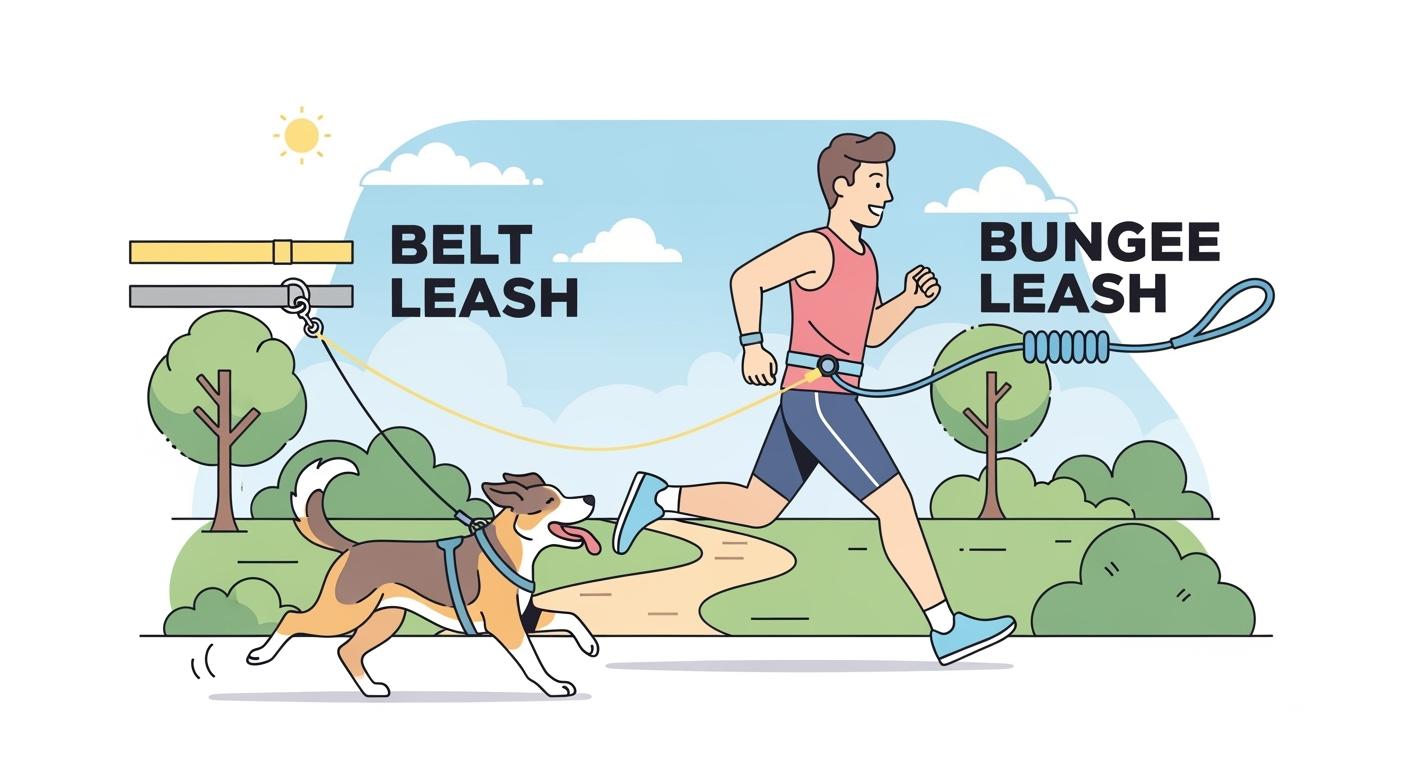
A runners leash for dog is a hands-free system. You attach your dog to a waist/hip belt using a line. Some models include a shock-absorbing bungee section that helps reduce sudden jolts.
Quick Chooser:
Use a belt and static line runners leash for dog for steady dogs or short runs.
Pick a belt and bungee runners leash for dog for energetic dogs or long runs.
Choose a hand-held runners leash for dog for walks or full control.
Many shoppers misread relaxed vs expanded length, bungee feel, and belt or clip fit. Always check both relaxed (at rest) and expanded (under tension) lengths. Test the bungee section for preferred stretch. Make sure the belt fits your waist/hip size and the clip matches your dog’s collar.
For strong pullers or canicross, the belt and bungee runners leash for dog works best. For small dogs or casual jogs, a static line runners leash for dog offers easy handling.
OEM means you buy a runners leash for dog made to an existing design. ODM lets you order a runners leash for dog with custom features or branding.
Key Takeaways
Choose a belt and static line for steady dogs or short runs. This setup offers better control and predictability.
Opt for a belt and bungee line for energetic dogs or long runs. The bungee section absorbs shocks and reduces sudden jolts.
Use a hand-held leash in crowded areas for better control. This option allows you to guide your dog closely.
Always check both relaxed and expanded lengths of the leash. Knowing these helps you avoid surprises and choose the right fit.
Ensure the belt fits well and adjusts properly. A good fit enhances comfort and control during your runs.
What Is a Runners Leash for Dog
Hands-Free System Explained
A runners leash for dog gives you hands-free convenience when you run or jog with your dog. You wear a waist/hip belt that sits around your waist or hips. The belt usually measures at least 2.75 inches (7 cm) wide for comfort and stability. You attach a line from the belt to your dog’s harness or collar. Some lines include a shock-absorbing bungee section. This bungee section stretches under tension and helps soften sudden jolts if your dog pulls or changes direction quickly.
Tip: Always check both the relaxed length (line at rest) and expanded length (line stretched). For example, a typical line may measure 4.9 feet (1.5 meters) relaxed and expand to 8.2 feet (2.5 meters) under tension.
You may see two main types of lines:
Static line: Does not stretch. Good for steady dogs or short runs.
Bungee line: Has an elastic section. Designed for energetic dogs or longer runs.
The belt often adjusts to fit waist sizes from 28 inches (71 cm) up to 48 inches (122 cm). Most setups use a locking carabiner-style clip or a standard snap hook to connect to your dog’s harness. Some models include a swivel to help keep the leash from tangling.
When Not to Use for Running
You should avoid using a runners leash for dog in some situations. If your dog is not leash-trained or pulls very hard, a hand-held leash may give you better control. For crowded areas or busy streets, a hand-held leash helps you guide your dog safely. Puppies or small dogs may need a shorter, lighter leash for comfort. If your dog has health issues or special needs, ask your vet before using a hands-free system.
Note: The runners leash for dog is designed for running and jogging with dogs. It helps keep your hands free and softens sudden jolts, but it does not guarantee full control or prevent pulling.
OEM and ODM Explained:
OEM means you buy a runners leash for dog made to an existing design. ODM lets you order a runners leash for dog with custom features or branding. Retail buyers and merchandisers use these terms to choose between standard products and custom options.
Core Setups Compared
Choosing the right runners leash for dog setup helps you enjoy running with your dog and reduces the chance of wrong orders. You will see three main setups in the market. Each setup fits different sports needs, dog types, and running styles. You can compare their features, comfort, and sports performance to find the best match.
Belt and Static Line
The belt and static line setup gives you a simple hands-free sports experience. You wear a waist/hip belt that sits around your waist or hips. The belt usually measures at least 2.75 inches (7 cm) wide. This width helps spread the force across your body during sports activities. The static line connects your belt to your dog’s harness or collar. The static line does not stretch. It keeps a fixed length, which helps you predict your dog’s position during sports.
You may prefer this setup for steady dogs or short runs. The static line works well for sports where you want close control. It also suits sports with small dogs or dogs that do not pull hard. The static line often measures about 4.9 feet (1.5 meters) relaxed. You will see a locking carabiner-style clip or a standard snap hook at the end. Some sports models add a swivel to help keep the leash from tangling.
Tip: Always check both the relaxed and expanded lengths. Static lines do not expand, so the listed length is the true sports working length.
Retail buyers and merchandisers often choose this setup for entry-level sports products. The simple design helps reduce confusion for new sports users. You can list the belt width, adjustment range, and line length in both inches and centimeters for clear sports catalog entries.
Belt and Bungee Line
The belt and bungee line setup is designed for active sports with energetic dogs. You wear a waist/hip belt, just like the static setup. The belt should measure at least 2.75 inches (7 cm) wide for sports comfort. The key difference is the bungee line. The bungee section stretches under tension. This sports feature helps soften sudden jolts when your dog pulls or changes direction.
You may want this setup for long runs, canicross, or sports with strong pullers. The bungee line helps reduce the impact on your body during sports. The relaxed length often measures about 4.9 feet (1.5 meters), and the expanded length can reach up to 8.2 feet (2.5 meters). The bungee section may sit near the dog or closer to your belt. Some sports users prefer the bungee near the dog for better shock absorption.
You will see locking carabiner-style clips or standard snap hooks. Many sports models include a swivel to help keep the leash from tangling. Some designs add a secondary handle for extra control during sports.
Note: The bungee line helps soften sudden jolts but does not stop pulling. Always check the bungee feel. Some sports users prefer a stiffer bungee, while others want more stretch.
For B2B buyers, the belt and bungee line setup fits mid-tier and premium sports listings. You can highlight the shock-absorbing section, relaxed and expanded lengths, and belt adjustment range. List all sports dimensions in both US and metric units for marketplace clarity.
Hand-Held Option
The hand-held runners leash for dog setup gives you direct control. You hold the leash in your hand instead of wearing a belt. This setup works well for sports in crowded areas, busy streets, or when you need to guide your dog closely. The hand-held leash often measures about 4 to 6 feet (1.2 to 1.8 meters) in length. Some sports models add a padded handle for comfort.
You may choose this setup for sports with puppies, small dogs, or dogs that are not leash-trained. The hand-held option helps you react quickly during sports. Some designs include a bungee section to help soften sudden jolts. You will see both locking carabiner-style clips and standard snap hooks in sports models.
Alert: The hand-held setup does not offer hands-free sports convenience. You must keep one hand on the leash at all times.
Retail buyers often select the hand-held option for sports users who want full control. You can list the handle type, line length, and clip style in both inches and centimeters for sports catalog accuracy.
OEM and ODM for B2B Buyers:
OEM means you buy a runners leash for dog made to an existing sports design. ODM lets you order a runners leash for dog with custom sports features or branding. These terms help retail buyers and merchandisers choose between standard sports products and custom sports options.
You can use the table below to compare the core setups for sports retail listings:
Setup Type | Belt Width (in/cm) | Line Length (ft/m) | Bungee Section | Clip Type | Swivel | Handle Type |
|---|---|---|---|---|---|---|
Belt + Static Line | 2.75+ / 7+ | 4.9 / 1.5 | No | Carabiner or Snap Hook | Yes/No | Optional |
Belt + Bungee Line | 2.75+ / 7+ | 4.9–8.2 / 1.5–2.5 | Yes | Carabiner or Snap Hook | Yes | Optional/Extra |
Hand-Held | N/A | 4–6 / 1.2–1.8 | Optional | Carabiner or Snap Hook | Yes/No | Padded/Standard |
You can use this table to help sports buyers and merchandisers select the right design for their sports catalog or marketplace listing. Always check the sports features, design details, and dimensions to match your sports needs.
Performance and Durability Factors
Knowing how a runners leash for dog works helps you pick the right one. You want it to work well, last a long time, and feel comfortable. These things change how the leash feels, fits, and lasts.
Relaxed vs Expanded Length
You should check both relaxed and expanded length. Relaxed length is when the leash is not stretched. Expanded length is when the leash is pulled tight. For example, a bungee line can be 4.9 feet (1.5 meters) relaxed. It can stretch to 8.2 feet (2.5 meters) when pulled. Listing both lengths helps you know what to expect. This makes performance better. Retail buyers use these numbers to match leashes to dogs and running styles. Clear sizes help you compare how long the leash lasts and how it feels.
Bungee Section Placement
The bungee section helps make sudden pulls softer. Sometimes the bungee is near the dog. Sometimes it is closer to your waist. Where it sits changes how it works and feels. If the bungee is near the dog, you get more shock absorption. If it is near your waist, you feel less pulling. Retail teams list where the bungee is to help buyers pick the best one. Where the bungee sits also changes how long it lasts. Stretching it a lot can wear it out faster.
Belt Fit and Adjustment
A belt that fits well feels better and works better. Most belts can adjust from 28 inches (71 cm) to 48 inches (122 cm). Wider belts, at least 2.75 inches (7 cm), spread out the force and feel nicer. You should check how the belt tightens and where it sits on you. A good fit keeps it from slipping and helps it last longer. Retail buyers list how much the belt adjusts to help shoppers find the right size.
Clip and Hardware Quality
The clip and hardware need to be strong and safe. You may see locking carabiner-style clips or snap hooks. Locking clips help stop the leash from coming off by accident. Swivels help keep the leash from twisting. Retail teams list clip types and hardware features so buyers can compare them. Always look for strong materials and safe hardware.
Note: OEM means you buy a runners leash for dog made to an existing design. ODM lets you order a runners leash for dog with custom features or branding. Retail buyers use these words to pick standard or custom products for their listings.
SKU Logic and Variant Naming
Choosing the right leash setup helps you get the best customer experience. You want to find the right fit, length, and hardware for your needs. Many sports bag brands use clear names and sizes to help you compare options. You can look for details like belt width, line length, and clip type. These details make shopping easier and help you avoid mistakes.
Setup, Length, and Hardware
You will see sports bag brands list each leash by setup, length, and hardware. Setup means how you wear or hold the leash. Length shows both relaxed and expanded sizes. Hardware means the type of clip or swivel. Here is a simple SKU naming template:
Template:
[Setup]-[RelaxedLength]ft/[ExpandedLength]ft-[ClipType]
Examples:
BeltBungee-5ft/8ft-Carabiner
BeltStatic-5ft-SnapHook
HandHeld-4ft-Carabiner
Sports bag brands use this style to help you see what you get. Always check both feet and meters. For example, 5 ft (1.5 m) relaxed, 8 ft (2.5 m) expanded.
Variant and SKU Rules
Sports bag brands set rules for each variant. A variant is a change in setup, length, or hardware. You may see these rules:
Change the SKU if the setup changes (belt, hand-held, bungee).
Change the SKU if the relaxed or expanded length changes.
Change the SKU if the clip or hardware changes.
List all sizes in both US and metric units.
This logic helps sports bag brands keep track of stock and makes it easy for you to find the right leash.
OEM and ODM:
OEM means you buy a leash made to an existing design. ODM means you order a leash with custom features or branding.
Marketplace Title Clarity
Sports bag brands write clear marketplace titles. They use setup, length, and hardware in the title. This helps you compare products fast. Here is a sample title:
Belt and Bungee Runners Leash for Dog, 5 ft (1.5 m) Relaxed, 8 ft (2.5 m) Expanded, Carabiner Clip
You can use this format for listings. It helps buyers and teams avoid wrong orders and returns. Clear titles improve the customer experience and make shopping simple.
Quality Claims for US/EU Listings
When you buy a runners leash for dog, you want it to work well and last long. You also want it to fit your needs in the US and EU. You will see words like waist/hip belt and bungee line. Waist/hip belt is the strap you wear around your waist or hips. Bungee line is the stretchy part that helps with sudden pulls. Always check the size in inches and centimeters. For example, a belt can adjust from 28 inches (71 cm) to 48 inches (122 cm).
Claim-Safe Language
You want clear claims about quality and sustainability. Retail teams use words that help you know what the leash does. They say “hands-free convenience,” “shock-absorbing section helps soften sudden jolts,” and “designed for running or jogging with dogs.” These phrases show the leash’s quality but do not promise training or safety. You see “helps keep the leash from tangling (swivel)” and “belt adjusts for comfort and fit.” You also see “reflective elements help improve visibility.” Retailers talk about durable materials and easy care instructions for sustainability.
Tip: Always look for claim-safe language. It helps you compare quality and sustainability in different listings.
What to Avoid in Copy
Do not trust listings that promise training results or injury prevention. Retail teams do not say “guarantees no pulling,” “prevents injuries,” or “escape-proof.” They do not use “100 percent control.” Instead, you see “helps reduce sudden jolts” and “designed for active dogs.” You want clear terms like “locking carabiner-style clip” or “standard snap hook.” Retailers use the same US/EU terms so you can compare quality and sustainability.
What to Say vs What Not to Say Table:
What to Say | What Not to Say |
|---|---|
Hands-free convenience | Guarantees no pulling |
Shock-absorbing section helps soften jolts | Prevents injuries |
Designed for running/jogging with dogs | Escape-proof |
Belt adjusts for comfort and fit | 100 percent control |
Helps keep the leash from tangling (swivel) | Stops pulling |
Durable materials for sustainability | Injury-proof |
Compatibility and User Notes
You want to know if the leash fits your dog and running style. Retail teams list belt adjustment ranges and line lengths in US and metric units. You see notes about using the leash with harnesses and collars. You also see care instructions for quality and sustainability, like “machine washable” or “replaceable parts available.” If your dog pulls hard or is small, you find tips for other setups. Retailers use clear notes to help you pick the right leash for quality and sustainability.
Note: OEM means you buy a leash made to an existing design. ODM means you order a leash with custom features or branding. Retail buyers use these words to pick standard or custom products for their listings.
Retail Display and Add-Ons
Display Story and Key Features
When you walk into a store, you want to see what makes each runner’s leash for dog special. Good displays show the leash on a waist/hip belt, with the line stretched out. You can touch the bungee section to feel how it stretches. You see the relaxed length and expanded length on the tag, for example, “4.9 ft (1.5 m) relaxed, 8.2 ft (2.5 m) expanded.” The display shows the clip type, such as a locking carabiner-style clip or a standard snap hook. You also see if the leash has a swivel to help keep it from tangling.
Key features to highlight:
Hands-free design for running or jogging
Shock-absorbing bungee section helps soften sudden jolts
Adjustable waist/hip belt fits 28–48 in (71–122 cm)
Reflective elements help improve visibility
Durable materials for easy care
Tip: Always check both the relaxed and expanded lengths before you buy.
Useful Add-Ons
You can find add-ons that make your running experience better. Some leashes come with a secondary handle for extra control. Others have a pouch for treats or keys. You may see replacement bungee sections or extra clips. Reflective patches help you stay visible in low light. Some brands offer matching harnesses for a complete set.
Add-On Type | What It Does |
|---|---|
Secondary Handle | Gives you more control when needed |
Pouch | Holds treats, bags, or keys |
Replacement Bungee | Lets you swap out worn sections |
Reflective Patch | Helps you stay visible at night |
Extra Clip | Adds backup or fits other harnesses |
Staff Prompt Script
“This is a runner’s leash for dog. You wear the belt around your waist or hips. The line connects to your dog’s harness. Some models have a bungee section that helps soften sudden pulls. You can see the relaxed and stretched lengths on the tag. The belt adjusts from 28 to 48 inches, or 71 to 122 centimeters. We have options with locking carabiner clips or snap hooks. If you want more control, look for a leash with a secondary handle. Let me know if you want to see add-ons like pouches or reflective patches.”
OEM means you buy a leash made to an existing design. ODM lets you order a leash with custom features or your own branding. Retail buyers use these terms to choose between standard and custom products for their stores.
FAQ-Driven Return Prevention
You want your runner’s leash for dog to fit well and work as expected. Many returns happen because shoppers misunderstand belt sizing, leash length, or which setup works best for strong pullers. This section answers common questions to help you choose the right product and reduce mistakes.
Belt Sizing and Fit
A good fit keeps the belt stable and comfortable during your run. Most waist/hip belts adjust from 28 to 48 inches (71 to 122 cm). You should measure your waist or hips before you buy. Look for a belt at least 2.75 inches (7 cm) wide. This width helps spread out the force and keeps the belt from slipping. If the belt feels loose or rides up, adjust it for a snug fit. A stable belt gives you better control and comfort.
Key points to check:
Belt adjustment range (inches and centimeters)
Minimum belt width for comfort
How the belt fastens and tightens
Tip: Try the belt on before your first run to make sure it stays in place.
Leash Length Expectations
You need to know both the relaxed and expanded lengths of your leash. Relaxed length is the leash at rest. Expanded length is how far it stretches when your dog pulls. For example, a bungee leash may measure 4.9 feet (1.5 meters) relaxed and stretch to 8.2 feet (2.5 meters) expanded. Always check both numbers on the package or listing. This helps you avoid surprises and pick the right leash for your running style.
Common features to look for:
Relaxed and expanded lengths listed in both US and metric units
Bungee section for shock absorption
Swivel to help keep the leash from tangling
Strong Pullers and Alternatives
If your dog pulls hard, you may want extra control. Some setups help with strong pullers:
Use a front-clip harness. This helps reduce pulling and neck strain.
Try a double-handle leash. This gives you close control when needed.
Pick leashes with no-slip materials and dual handles for strong dogs.
Choose lighter leashes for small dogs.
Note: Always attach the leash to a harness, not a collar. This helps protect your dog’s neck and gives you better control.
For retail buyers and merchandisers, clear FAQ sections help reduce returns. List belt adjustment ranges, leash lengths, and recommended setups for strong pullers in both US and metric units. Use simple terms and claim-safe language in your listings.
OEM means you buy a leash made to an existing design. ODM lets you order a leash with custom features or your own branding. These terms help retail teams choose between standard and custom products for their stores.
Attribute Table: Runners Leash for Dog
You want to know what makes each runner’s leash for dog different. This table helps you compare the main features. You can see how each setup works and what to expect. The table shows the setup type, belt width, relaxed and expanded length, bungee section, clip type, swivel, handle, reflective elements, and care instructions. Each feature helps you pick the right leash for your needs.
Tip: Relaxed length means the leash at rest. Expanded length means the leash when stretched. Always check both numbers before you buy.
Attribute | What It Means | Example Values |
|---|---|---|
Setup Type | How you use the leash (belt + static, belt + bungee, hand-held) | Belt + Bungee, Belt + Static, Hand-Held |
Belt Width | How wide the belt is (comfort and fit) | 2.75 in (7 cm), 3.5 in (9 cm) |
Relaxed Length | Leash length at rest | 4.9 ft (1.5 m) |
Expanded Length | Leash length when stretched | 8.2 ft (2.5 m) |
Bungee Section | If the leash has a shock-absorbing part and where it sits | Yes, near dog; No |
Clip Type | How the leash attaches to the harness or collar | Locking carabiner, Snap hook |
Swivel | If the leash has a part that helps stop twisting | Yes, No |
Handle | If there is a handle for extra control | Yes, No |
Reflective | If the leash has reflective parts for visibility | Yes, on line; No |
Care | How to clean or maintain the leash | Machine washable, Hand wash |
You can use this table to fill out product listings or compare options for your store. Retail teams often use these fields to help shoppers find the right fit. Always list both US and metric units for belt width and leash length.
OEM means you buy a leash made to an existing design. ODM lets you order a leash with custom features or your own branding. These options help retail buyers and merchandisers choose between standard and custom products for their stores.
If you want to help shoppers, show these attributes in your listings. Clear details help reduce wrong orders and returns. You can also add notes about which setup works best for different dog sizes or running styles. This makes it easier for everyone to find the right leash.
Feature Ladder: Entry, Mid, Premium
When you shop for a runner’s leash for dog, you see different levels. Each level has its own special features. Entry-level leashes give you simple hands-free use. Mid-tier leashes add more comfort and last longer. Premium brands have advanced features and strong materials.
You want to know what changes as you move up. Entry leashes use basic belts and static lines. Mid-tier leashes add bungee sections and wider belts. Premium brands have extra features like reflective parts and locking carabiner clips.
Tip: Always check both relaxed and stretched lengths. Entry leashes may be 4.9 ft (1.5 m) relaxed. Premium brands can stretch up to 8.2 ft (2.5 m).
Here is a table that shows how features change at each level:
Tier | Performance | Durability | Quality | Features |
|---|---|---|---|---|
Entry | Basic hands-free running | Standard webbing | Simple belt, snap hook | Static line, optional handle |
Mid | Shock absorption, comfort | Reinforced stitching | Wider belt, swivel clip | Bungee section, reflective strip |
Premium | Advanced shock absorption | Heavy-duty materials | Locking carabiner, plush belt | Dual handles, full reflective, pouch, replaceable bungee |
You get more features as you go from entry to premium. Entry leashes help you start running with your dog. Mid-tier leashes work better for longer runs and active dogs. Premium brands make leashes for serious runners and strong pullers.
For US/EU retail buyers and merchandisers, you list each level by setup, belt width, line length, and hardware. Entry leashes use belts at least 2.75 in (7 cm) wide. Premium brands may use belts up to 3.5 in (9 cm) wide. Always show both US and metric units.
OEM means you buy a leash made to an existing design. ODM lets you order a leash with custom features or your own branding. These choices help you match products to your store or marketplace needs.
You can match the best runner’s leash for dog to your needs. Use a belt and bungee line for energetic dogs or long runs. Choose a static line for steady dogs or short jogs. Hand-held leashes work well for crowded places. For the best comfort and experience, check this quick list:
Dog size and pull strength
Running style and terrain
Belt fit (28–48 in / 71–122 cm)
Leash relaxed and expanded length
Bungee section feel
Always review the table below to avoid common mistakes and improve your experience and comfort.
Common Mistake | Explanation |
|---|---|
Using a back-clip harness for a strong puller | This can reinforce pulling behavior due to opposition reflex. |
Rushing the introduction of a Gentle Leader | Dogs may develop fear if forced to wear it too quickly. |
Skipping training and relying solely on the tool | Equipment is an aid, not a substitute for teaching behavior. |
Pulling back hard on the leash | Sharp corrections can damage trust and cause injury. |
OEM means you buy a leash made to an existing design. ODM lets you order a leash with custom features or branding.
FAQ
What is the difference between relaxed and expanded leash length?
Relaxed length means the leash at rest. Expanded length shows how far the leash stretches when your dog pulls. For example, a bungee leash may be 4.9 feet (1.5 meters) relaxed and 8.2 feet (2.5 meters) expanded.
How do I pick the right belt size?
You should measure your waist or hips before buying. Most belts adjust from 28 to 48 inches (71 to 122 centimeters). A belt at least 2.75 inches (7 centimeters) wide helps spread force and adds comfort.
What clip type should I choose?
You can pick a locking carabiner-style clip for extra security or a standard snap hook for quick use. Locking clips help prevent accidental unclipping. Always check if the clip fits your dog’s harness or collar.
Is a bungee section better for strong pullers?
A bungee section helps soften sudden jolts if your dog pulls hard. It does not stop pulling but makes running more comfortable. For very strong pullers, use a front-clip harness or a double-handle leash for more control.
What do OEM and ODM mean for retail buyers?
OEM means you buy a leash made to an existing design. ODM lets you order a leash with custom features or your own branding. These options help you match products to your store or marketplace needs.