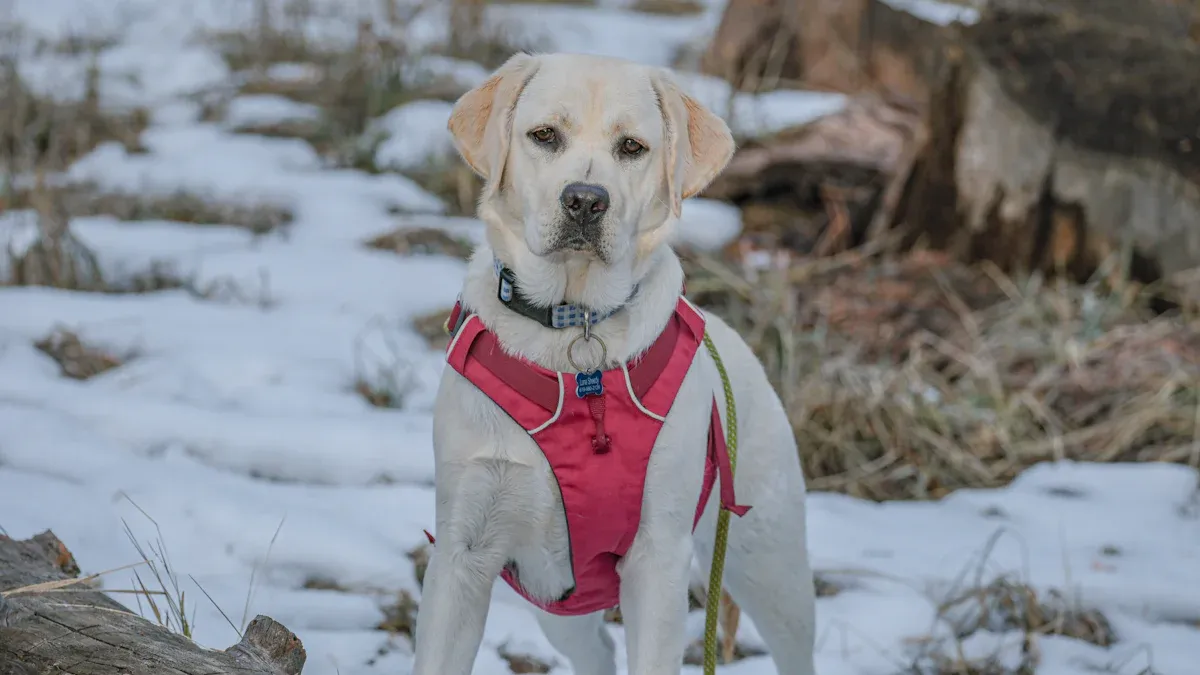
Finding the right size for a dog harness big enough for your furry friend can be challenging. Many vendors use different size labels, which can make the selection process confusing. You want an easy way to compare harnesses and choose the best one for your dog.
Providing clear sizing and instructions is incredibly helpful. Good sizing charts for big dog harnesses assist customers in selecting the right size from the start. This leads to fewer issues and fosters greater trust with your clients.
Clear sizing charts help people make fewer mistakes.
Training staff to measure dogs accurately results in better fitting harnesses.
Fewer returns lead to happier customers.
A unified system with accurate measurements and consistent terminology helps reduce returns and build trust. You will see how a main attribute dictionary and standardized rules simplify the process of picking harnesses, making it easier and more reliable for everyone involved.
Key Takeaways
Use easy-to-read sizing charts. This helps customers pick the right harness size. It lowers returns and builds trust.
Teach workers how to measure dogs the right way. This makes the harness fit better and keeps customers happy.
Use one SIZE_LABEL system (XS to XXL) for all vendors. This makes harness sizes the same everywhere and stops confusion.
Show fit ranges and product sizes in different spots on listings. This gives buyers clear facts and helps them not make sizing mistakes.
Always look at measurements in inches and centimeters. This helps people in different places and makes things clear.
Why size breaks in dog harness big catalogs
When you look at a dog harness big catalog, you might get confused about harness size. Vendors use different labels, so it is hard to compare products. Before we go further, let’s talk about two important words. OEM means the company makes the harnesses you see in catalogs. ODM means the company designs and makes harnesses for many brands. Knowing these words helps you see why harness size and fit can change between listings.
Vendor size label confusion
One vendor might call a harness “Large.” Another might use “L” or even “bulldog” for the same size. This makes things confusing, especially for staffy or french breeds. Some vendors only use neck measurements and forget about chest girth. This mistake means harnesses do not fit bulldog or staffy dogs well. Adjustable straps can help, but people often do not know how to use them. This can make dogs uncomfortable. You need a clear size guide that shows chest girth, neck girth, and adjustment points for every breed, from smaller bulldogs to large staffy or french bulldog types.
Impact on exchanges and returns
Sizing confusion makes more people return harnesses. This happens a lot with bulldog, staffy, and french breeds. If customers cannot find a clear size guide, they guess the harness size. This leads to returns, sometimes up to 12% for some catalogs. Training your team to use a good size guide and measure each puppy or adult bulldog the right way will lower these numbers. A good harness size chart helps you pick the right harness for each breed, including smaller bulldogs and small breed puppies.
Common sizing mistakes
Many buyers make the same mistakes when picking a harness size for a puppy, staffy, or bulldog. Here are the most common errors:
Guessing the harness size instead of measuring the dog.
Picking style over structure, which can hurt comfort and safety for a staffy or french bulldog.
Ignoring the weight and breed, which affects fit for smaller bulldogs and small breed puppies.
Adjusting straps only once or not at all, missing the best fit for a puppy or staffy.
Forgetting about comfort, which can make walks stressful for any breed.
A clear size guide and good measurements help you avoid these problems. Always check the harness size for each breed, especially for staffy, bulldog, french, and small breed puppies. Remember, fit depends on body shape and adjustment range, not just the label.
Canonical size schema for dog harness big listings
You want all dog harness big listings to use the same rules. This helps you compare products and find the right fit for every dog. You can use a step-by-step guide to make size attributes match and keep your catalog neat.
Unified SIZE_LABEL system (XS to XXL)
Start by picking one SIZE_LABEL system. Use only XS, S, M, L, XL, and XXL. These labels work for all large dog harness listings. Many vendors use their own words, like “Large,” “L,” or breed names. You should skip these and match every harness to your standard labels.
Tip: Always match the SIZE_LABEL to how the harness fits, not just the vendor’s label. This stops confusion and helps you get the right fit.
Here is a simple table to help you change vendor terms to your standard fields:
Vendor term or field | Your canonical field | Accept or request clarification |
|---|---|---|
Large, L | SIZE_LABEL: L | Accept if fit range matches |
Bulldog, Staffy | SIZE_LABEL: L or XL | Request chest girth measurement |
Breed name only | None | Request fit measurements |
Weight only | FIT_WEIGHT_RANGE | Request chest girth range |
Girth (no location) | None | Request clarification |
Always check the fit range before you pick a SIZE_LABEL. This keeps your catalog correct and helps people find the right harness.
Attribute dictionary for harness listings
A standard attribute dictionary makes your listings easy to read. You should add these main attributes for every large dog harness:
SIZE_LABEL (XS, S, M, L, XL, XXL)
FIT_CHEST_GIRTH_RANGE (dog chest girth adjustment range)
FIT_NECK_GIRTH_RANGE (if neck adjustment exists)
FIT_WEIGHT_RANGE (recommended dog weight range)
STRAP_WIDTH (webbing width)
ADJUST_POINTS (number and location of adjustment points)
HARNESS_STYLE (Y-front, H-front, step-in, vest)
LEASH_POINTS (back D-ring, front D-ring, dual)
PRODUCT_DIMENSIONS (harness measured flat)
PACKAGED_DIMENSIONS (shipping package size)
PRODUCT_WEIGHT (item weight)
PACKAGED_WEIGHT (shipping weight)
MATERIALS_PRIMARY (main fabric, padding, hardware)
CARE_INSTRUCTIONS (wash and dry guidance)
SAFETY_NOTES (warnings and safe use tips)
Think about your dog’s breed and how they act. Measure your dog’s girth carefully. Check neck measurements for a good fit. Make sure you can fit two fingers under the harness.
Attribute | Description |
|---|---|
Durability | Made from strong materials that last and handle outdoor use. |
Comfort | Uses soft materials like neoprene so walks feel nice. |
Adjustability | Harnesses should adjust to fit different shapes and sizes of big dogs. |
Safety Features | Has safe buckles and leash rings for better control. |
Every listing should show these details. This helps buyers and catalog teams compare harnesses and pick the best one.
Standardizing fit ranges and adjustment points
Always keep fit ranges and product dimensions separate. Fit ranges show the chest and neck girth the harness can adjust to. Product dimensions show the harness size when it is flat. Do not mix these in one field.
Adjustment points are important for a good fit. More adjustment points let you change the harness for each dog. List the number and where the adjustment points are, like neck, chest, or belly.
Adjustment points help stop sizing mistakes.
Fit ranges must use both inches and centimeters.
Weight ranges should use pounds and kilograms.
Note: Always round measurements the same way for every vendor. This keeps your catalog neat and easy to read.
Lock measurement points for every listing. Always ask for chest girth and neck girth. If a vendor only gives breed names or weight, ask for more info. Run checks and watch for exchange reasons. This helps you find sizing problems and make your listings better.
By using this guide, you make sure every large dog harness listing is clear, correct, and easy to compare. You help buyers find the right fit and lower returns.
Measurement points for fitting dog harnesses
Glossary Box
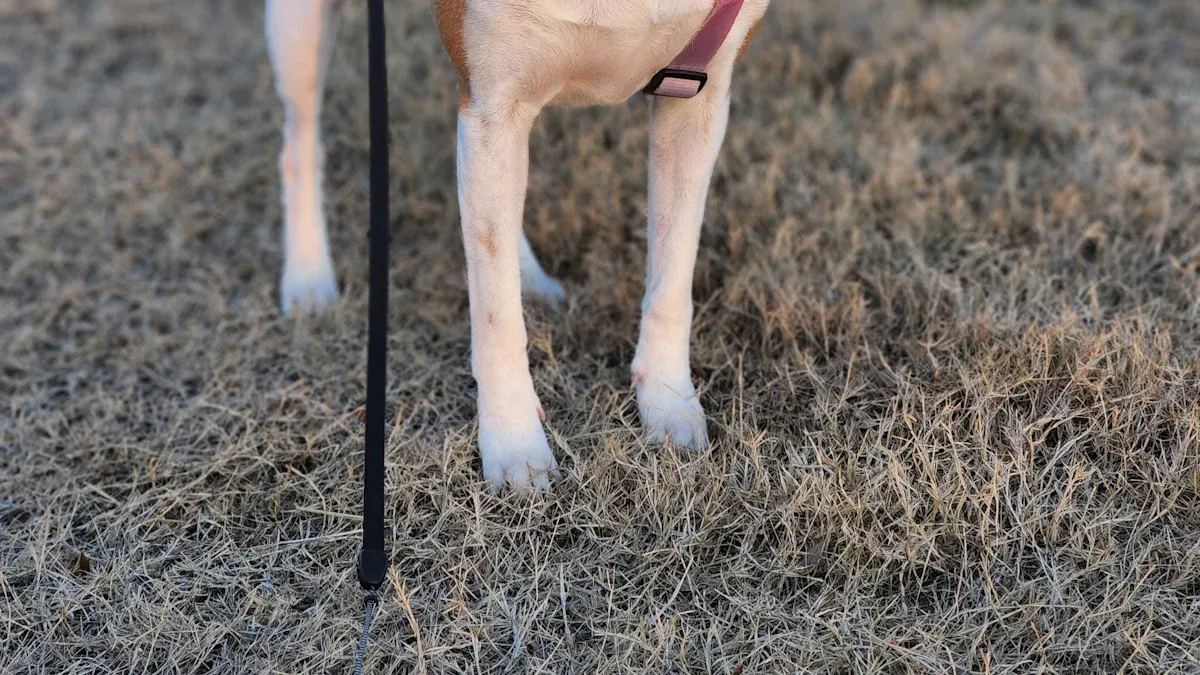
Fit range: The chest and neck measurements that a harness can adjust to fit.
Product dimensions: The size of the harness when laid flat, not the size of the dog.
Adjustment points: The places on the harness where you can change the size for a better fit. More adjustment points help reduce sizing complaints.
Chest girth and neck girth definitions
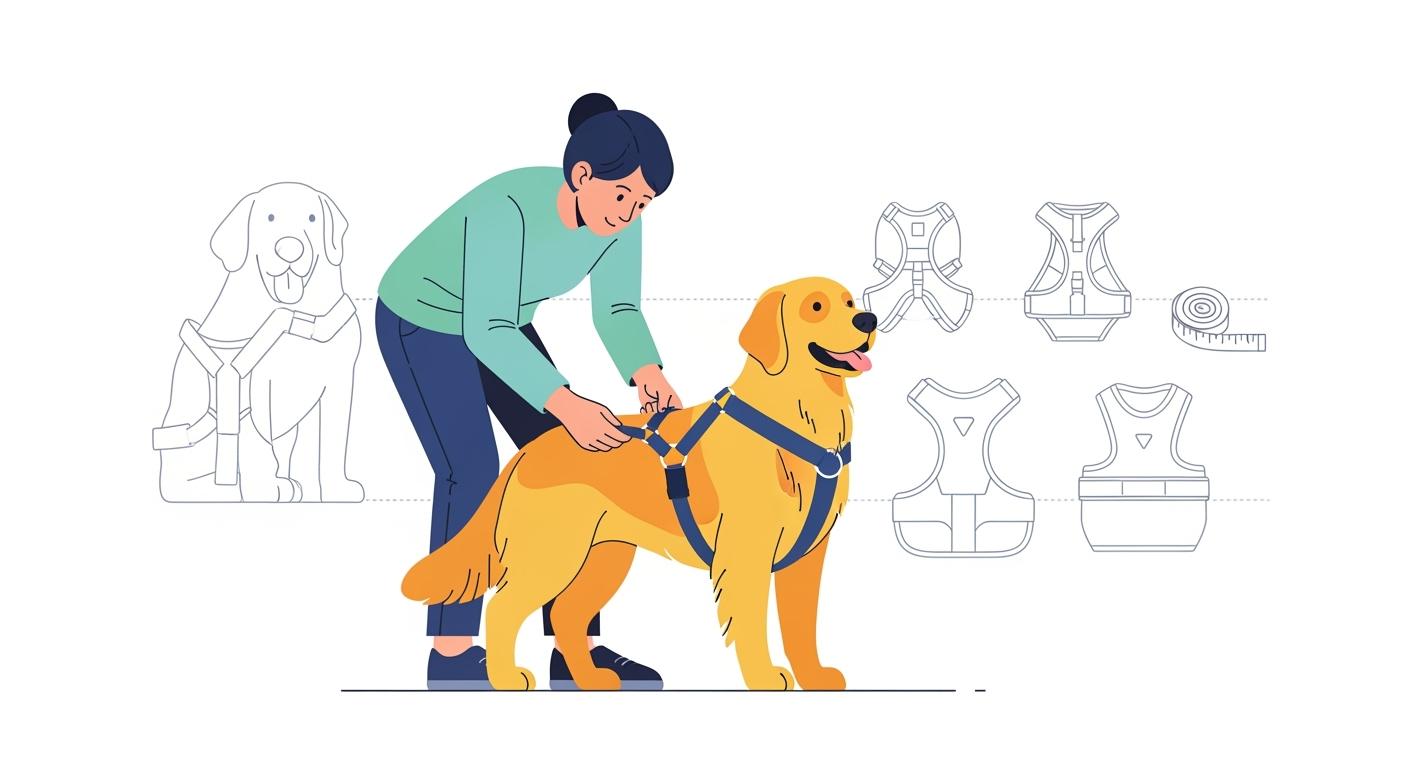
You need to measure your dog at the right spots to get a comfortable fit. Always measure the chest girth at the widest part, just behind the front legs. This spot gives you the most accurate chest circumference for a bulldog, staffy, or french breed. Neck circumference matters too. Measure at the base of the neck, where a collar sits. This step helps you avoid discomfort and keeps the harness safe for every puppy, staffy, or bulldog. Never guess the girth size. Use a soft tape and write down both inches and centimeters. Always round measurements the same way for every listing.
Product vs. fit dimensions
You must keep product dimensions and fit range separate. Product dimensions show the harness size when flat. Fit range tells you the chest and neck circumference the harness can adjust to fit. For a staffy, bulldog, or french puppy, always check the fit range first. Do not mix these numbers in your catalog. Show both inches and centimeters for every measurement. Use pounds and kilograms for weight. This step helps you compare harnesses for every breed, from puppy to adult bulldog.
Handling breed-specific sizing
Each breed has a different body shape. Bulldogs, staffy, and french breeds often need special attention. Puppies grow fast, so you must check their measurements often. Here is how to measure your dog for a comfortable fit:
Measure your dog’s girth around the broadest part of the chest for comfort.
Check the neck measurement at the base of the neck where a collar would sit.
Make sure the harness fits snugly. You should fit two fingers between the harness and the dog.
Always check the adjustment points for each breed, especially for staffy, bulldog, and french puppies.
Review the fit range for every listing. This step helps you avoid returns and keeps every puppy, staffy, or bulldog comfortable.
Remember, fit depends on body shape and adjustment range, not just the label. Always follow the steps for how to measure your dog. This habit helps you get the best fit for every breed, from staffy to french bulldog.
Normalize vendor size names to the right size harness schema
When you work with many vendors, you see different size names for the same harness. Some say “Large,” some use “L,” and others list only a breed or weight. This makes it hard to pick the right size harness for your catalog. You need a clear way to map these vendor names to your standard system. This step helps you build a reliable size chart and makes it easier for buyers to determine the size for every dog.
Mapping rules for ambiguous vendor data
You often get vendor data that is not clear. Sometimes, a vendor gives only a breed name, like “bulldog,” or just a weight, such as “50-70 lbs.” Other times, the vendor uses “Large” or “L” without any measurements. You must not guess the fit. Instead, you should follow these rules:
If the vendor gives a chest girth range, map it to FIT_CHEST_GIRTH_RANGE.
If the vendor says “girth” but does not say where, ask for more details.
If the vendor lists only a breed, request chest and neck measurements.
If the vendor gives only weight, store it as FIT_WEIGHT_RANGE, but always ask for girth.
If the vendor uses “Large” or “L” but the fit range does not match your standard, assign the SIZE_LABEL based on your fit chart, not the vendor label.
Tip: Always use your own size chart and fit ranges. Do not rely on vendor labels alone. This helps you offer the proper harness for every dog.
Decision table for attribute normalization
You can use a decision table to make your work easier. This table shows what to do when you get different types of vendor data. Follow these steps to keep your catalog clean and accurate.
Vendor Provides | Store As | What To Do Next |
|---|---|---|
Chest girth range | FIT_CHEST_GIRTH_RANGE | Accept and assign SIZE_LABEL |
Neck girth range | FIT_NECK_GIRTH_RANGE | Accept if harness has neck adjustment |
Weight range only | FIT_WEIGHT_RANGE | Request chest girth range |
Breed name only | None | Request fit measurements |
“Large” or “L” label | None | Assign SIZE_LABEL by fit range |
Girth (no location) | None | Request clarification |
Worked Example: Standardizing a Vendor Entry
Suppose a vendor lists a harness as “Large” for “bulldog” and gives only “girth: 28-36.” You want to make this clear for your buyers.
Before Standardization:
Vendor Size: Large
Breed: Bulldog
Girth: 28-36
After Standardization:
SIZE_LABEL: L (based on your fit chart)
FIT_CHEST_GIRTH_RANGE: 28-36 in (71-91 cm)
FIT_NECK_GIRTH_RANGE: (request if not provided)
FIT_WEIGHT_RANGE: (request if not provided)
HARNESS_STYLE: (add from vendor or request)
STRAP_WIDTH: (add from vendor or request)
You now show the fit range in both inches and centimeters. You use your own SIZE_LABEL. This helps buyers pick the right size harness and stops confusion. Shoppers will not mistake “Large” for a different fit. You also make it easy to compare all types of dog harnesses in your catalog.
Resolving conflicts in size labels
Sometimes, you see the same label used for different fit ranges. One vendor’s “Large” might fit a 28-inch chest, while another’s fits a 32-inch chest. You must always use your own fit chart to assign the SIZE_LABEL. Never trust the vendor label alone.
Follow these steps to resolve conflicts:
Check the fit range first. Assign the SIZE_LABEL that matches your chart.
If the vendor label and fit range do not match, use your label and ignore the vendor’s.
If you cannot get a fit range, request it before listing the harness.
Always show dual units (inches and centimeters) for every fit range.
Keep product dimensions and fit ranges in separate fields.
Note: Fit depends on the dog’s body shape and the adjustment range of the harness. You help buyers find the proper harness by using clear, normalized data.
Validation Table
Check | What failure looks like | What to do next |
|---|---|---|
Missing chest girth range | No FIT_CHEST_GIRTH_RANGE in listing | Request from vendor |
Mixed product and fit dimensions | Both in same field | Separate into correct fields |
Vendor label does not match fit range | “Large” label but fits medium chest | Assign SIZE_LABEL by fit range |
Only breed or weight given | No measurements, just “bulldog” or “50 lbs” | Request full fit measurements |
No dual units shown | Only inches or only centimeters | Add both units to all measurements |
You can use this table to check every dog harness big listing before it goes live. This step-by-step playbook helps you offer the right size harness, reduce returns, and keep your catalog team confident.
Cross-market consistency: US/EU units and labels
Dual unit standards for measurements
You must show all measurements in both US and EU units. This means you always display chest girth, neck girth, and strap width in inches and centimeters. You also show weight in pounds and kilograms. This helps buyers in different markets understand the size. For example, you write “Chest Girth: 28-36 in (71-91 cm)” and “Weight: 50-70 lbs (23-32 kg)”. You should use the same rounding rule for every listing. This keeps your catalog clear and easy to compare.
Tip: Always check that every measurement field has both units. This step reduces confusion and helps teams in the US and EU work with the same data.
Feed field alignment across channels
You need to keep your data fields the same across all sales channels. Use the same field names and order for every listing. This makes it easy to update your catalog and share data with partners. For example, always use “FIT_CHEST_GIRTH_RANGE” for chest fit, not “chest size” or “girth”. You should also separate fit ranges from product dimensions in your feed. This helps you avoid mistakes and keeps your listings accurate.
Key fields to align:
SIZE_LABEL
FIT_CHEST_GIRTH_RANGE
FIT_NECK_GIRTH_RANGE
FIT_WEIGHT_RANGE
STRAP_WIDTH
A clear feed structure helps you manage listings for both US and EU markets.
Label translation and rounding rules
You must translate size labels and measurements for each market. Use XS, S, M, L, XL, XXL for every listing. Do not use vendor labels like “Large” or “Bulldog”. Always round measurements the same way. For example, round chest girth to the nearest whole number. This keeps your catalog simple and easy to read.
Field | US Example | EU Example |
|---|---|---|
Chest Girth | 28-36 in | 71-91 cm |
Weight | 50-70 lbs | 23-32 kg |
Strap Width | 1.5 in | 4 cm |
Note: Fit always depends on the dog’s body shape and the harness adjustment range. Never promise a perfect fit based only on the label.
By following these steps, you make sure your catalog works for both US and EU buyers. You help teams compare harnesses and reduce sizing mistakes.
Validation checks for fitting dog harnesses
Validation checks help you keep your catalog correct and safe. You must check both the data you get and the harness samples you test. This helps you make fewer mistakes and helps your team pick the right harness for each dog.
Data validation for schema compliance
First, check that every listing uses your attribute dictionary. Follow these steps:
Make sure each harness has a FIT_CHEST_GIRTH_RANGE and, if needed, a FIT_NECK_GIRTH_RANGE.
Check that STRAP_WIDTH, HARNESS_STYLE, and ADJUST_POINTS are included.
See that PACKAGED_DIMENSIONS and PACKAGED_WEIGHT are listed for shipping.
Fit ranges should use both inches and centimeters, and weights should use pounds and kilograms.
Keep fit ranges (dog body size) and product dimensions (harness size when flat) in different fields.
Tip: Always look over your data fields before you add a new harness to your catalog. This keeps your listings clear and easy to compare.
Physical sample fit testing
You need to try harness samples on real dogs. This step checks if the harness fits like the data says. Use these steps:
Measure the dog’s chest and neck with a soft tape.
Adjust the harness at all adjustment points.
Put the harness on the dog and check for comfort and movement.
Write down any differences between the sample and the catalog data.
Testing real harnesses helps you find mistakes before you sell them. Always keep notes about your results for later checks.
Handling discrepancies between data and sample
Sometimes, the harness does not match the data. You need a clear way to fix these problems. Use the table below to help your team:
Step | Description |
|---|---|
1 | Start with correct measurements using a soft tape measure to get the right fit. |
2 | Put the harness on carefully so it sits flat and does not twist. |
3 | Do a quick fit check before walking to see how the dog moves. |
4 | Make rules for re-fitting the harness if it moves or feels tight, and write down any changes. |
If you find a problem, update your catalog data or ask the vendor for more details. Always keep dog fit measurements and product dimensions in separate fields. This makes your listings safe and easy to read.
Note: Fit always depends on the dog’s body shape and how much the harness can adjust. Never say a harness will fit every dog perfectly. Careful checks help you lower returns and make fitting harnesses better.
Vendor and team hand-off checklist
A clear hand-off helps your team keep harness listings safe. Every team must know what to check and what to send. This checklist helps you avoid mistakes and keeps your catalog working well.
Required fields for harness listings
You need all the right details before adding a harness. Here is a simple vendor checklist:
SIZE_LABEL (XS, S, M, L, XL, XXL)
FIT_CHEST_GIRTH_RANGE (with how you measure)
FIT_NECK_GIRTH_RANGE (if it can adjust)
FIT_WEIGHT_RANGE (for advice only)
STRAP_WIDTH
ADJUST_POINTS (how many and where)
HARNESS_STYLE
LEASH_POINTS
PRODUCT_DIMENSIONS (flat size)
PACKAGED_DIMENSIONS
PRODUCT_WEIGHT
PACKAGED_WEIGHT
MATERIALS_PRIMARY
CARE_INSTRUCTIONS
SAFETY_NOTES
Tip: Ask vendors to use both inches and centimeters, pounds and kilograms. Keep fit ranges and product dimensions in separate spots.
Rejecting incomplete specs
Never accept listings with missing or unclear info. If a vendor leaves out chest girth, neck girth, or only uses breed names, ask for more details. Bad specs can cause wrong fits and unhappy buyers.
Catalog Manager Checklist:
Check that all needed fields are there.
Make sure banned words or risky icons are not used.
Confirm “no pull” features are labeled right.
See that disclaimers are included.
Fit ranges must show both inches and centimeters.
Sample QA Table:
QA Step | Pass/Fail | Notes/Action Needed |
|---|---|---|
Only uses approved phrase bank | ||
Anchors “no pull” as Claim_Feature | ||
No banned phrases or outcome promises | ||
No risky icons or before/after visuals | ||
Includes standard disclaimers | ||
Matches claim ladder labels | ||
Follows Guardrail_ImpliedClaims | ||
Follows Guardrail_Visuals | ||
Version and approver recorded |
Communicating schema requirements
You must explain your rules clearly to vendors and your team. Use easy words and share your attribute dictionary. Remind everyone that fit depends on the dog’s body shape and how much the harness can adjust.
Quick Reference Checklists:
For Vendors:
Send all needed fields with both units
Keep fit ranges and product dimensions apart
Add adjustment points and harness style
For Catalog Managers:
Check every field for accuracy
Reject specs that are missing or unclear
Look for disclaimers and safe words
For QC Teams:
Check samples for fit and adjustment
Make sure product matches listing data
Report any problems before launch
Note: A clear hand-off keeps your listings safe and easy to compare. Always follow these steps to help buyers find the right harness for every dog.
Standard SKU naming for the right size harness
A clear SKU naming system helps you manage large dog harness listings. You can track inventory, reduce mistakes, and make it easy for your team to find the right product. When you use a standard format, you avoid confusion between similar items, such as a step-in harness and other styles.
Human-readable SKU format
You should build SKUs that anyone on your team can read and understand. A good SKU includes key details like harness style, size, color, and main features. This makes it easy to spot a step-in harness or a different type at a glance.
Here is a simple SKU format you can use:
[Harness Style]-[Size Label]-[Color]-[Strap Width]-[Feature Code]
For example, you might see a SKU like this:
SIH-L-BLK-1.5-DUAL
This SKU tells you the harness is a step-in harness, size large, black color, 1.5-inch strap width, and has dual leash points.
Tip: Always use the same order for each part of the SKU. This keeps your catalog organized and helps you avoid mix-ups.
Example SKUs for large dog harnesses
You can use the table below to see how to build SKUs for different harnesses, including step-in dog harnesses:
SKU Example | Description |
|---|---|
SIH-L-BLK-1.5-DUAL | Step-in harness, Large, Black, 1.5″, Dual points |
SIH-XL-RED-2.0-BACK | Step-in harness, XL, Red, 2.0″, Back D-ring |
SIH-M-BLU-1.0-FRONT | Step-in harness, M, Blue, 1.0″, Front D-ring |
You can see that each SKU gives you the main details. This helps your team pick the right step-in harness for each order. Always check the fit range and adjustment points before you assign a SKU. Fit depends on the dog’s body shape and how much the harness can adjust.
Note: A clear SKU system helps you avoid errors and keeps your catalog easy to use.
FAQ for catalog teams on dog harness big listings
Updating listings for vendor size changes
You may see vendors update their size charts or change how they label a dog harness big product. When this happens, always check the new fit range. Do not rely on the vendor’s label alone. Measure the chest girth and neck girth for each bulldog, staffy, or french puppy. Update your catalog using your standard SIZE_LABEL. If a vendor changes a size for a breed, compare the new fit range to your chart. Always show both inches and centimeters. This step keeps your listings clear and helps buyers pick the right harness for every puppy, staffy, or bulldog.
Checklist for updating listings:
Review new vendor size info for each breed.
Measure chest and neck girth for bulldog, staffy, and french puppies.
Assign SIZE_LABEL based on your fit chart.
Update fit ranges in both units.
Handling duplicate size names
Sometimes, you find two harnesses with the same size name but different fit ranges. For example, one vendor’s “Large” may fit a bulldog, while another’s fits a staffy or french puppy. Always use your own fit chart to assign the correct SIZE_LABEL. Do not let duplicate names confuse your team. List the fit range for each harness. This helps you avoid mistakes and keeps your catalog safe for every breed.
Tip: Always separate product dimensions from fit ranges. This step helps you compare harnesses for every bulldog, staffy, or french puppy.
Managing breed-specific harnesses
Bulldog, staffy, and french breeds often need special harnesses. Their body shapes differ from other dogs. When you add a harness for a specific breed, check the fit range first. Measure the chest and neck girth for each puppy. Make sure the adjustment points fit the breed’s shape. Do not guess based on the label. Always use your own measurements. This step helps you lower returns and keeps every bulldog, staffy, and french puppy comfortable.
Table: Breed-specific harness checks
Breed | Measure Chest | Measure Neck | Check Adjustment Points |
|---|---|---|---|
Bulldog | ✔ | ✔ | ✔ |
Staffy | ✔ | ✔ | ✔ |
French | ✔ | ✔ | ✔ |
Puppy | ✔ | ✔ | ✔ |
Remember, fit depends on body shape and adjustment range. Always measure before you list a harness for any breed.
You can make every listing better with one size system. A clear attribute dictionary helps you compare harnesses for bulldogs. This lowers mistakes when picking harnesses for each bulldog. If you follow the normalization rules, it is easier to find the right fit. Checking with vendors often keeps your data correct and lowers sizing problems. Always remember, fit depends on the bulldog’s body shape and how much the harness adjusts. Use this schema and mapping table for every bulldog harness you add.
FAQ
How do I update a listing if a vendor changes their size chart?
Check the new fit range first. Measure chest and neck girth again. Assign the correct SIZE_LABEL using your standard chart. Update both inches and centimeters. Always confirm adjustment points match the new data.
What should I do if two harnesses have the same size name but different fit ranges?
Ignore the vendor’s label. Use your own fit chart to assign SIZE_LABEL. List the fit range for each harness. This helps your team avoid mistakes and keeps your catalog clear.
Can I list a harness if the vendor only provides breed names or weight?
No. Always request chest and neck measurements. Fit depends on body shape and adjustment range. Breed names or weight alone do not give enough information for a safe fit.
Why do I need to separate fit range from product dimensions?
Fit range shows the dog’s body measurements the harness can adjust to. Product dimensions show the harness size when flat. Keeping these separate helps you compare harnesses and reduces sizing mistakes.