Large Dog Harness Channel Readiness Checklist for Retailers and Catalog Teams

Sizing confusion, missing proof assets, and unclear FAQs can make large dog harness launches fail in stores. You might see more exchanges and support tickets if teams do not have the same asset packs and compliance papers. Use this checklist to help your teams work together and get better launch results.

Key Takeaways

  • Make sure sizing guides and pictures are easy to see. This helps lower returns and makes customers happier.

  • Get a full launch kit ready with important things like product pictures, sizing charts, and FAQs. These help buyers make good choices.

  • Teach staff how to fit the harness right and explain its features. This makes customers have a better time and lowers exchanges.

  • Always use the same names and product codes. This makes it easier to manage the catalog and stops mix-ups.

  • Check feedback often and change resources when needed. This keeps making the launch better and cuts down on support problems.

Channel Readiness for Large Dog Harness Launches

Large-Dog Fit Error Impact

It is important to know why channel readiness matters for every large dog harness launch. Fit mistakes cost more for big dogs. These dogs need harnesses that fit well and can be adjusted easily. If sizing is not clear, you will see more returns and exchanges. Every return means extra work, checking, and putting the harness back in stock. The table below shows how common fit mistakes can hurt your profits.

Aspect

Details

Common Fit Error

Sizing confusion is a main problem that causes returns.

Baseline Return Rate

Usually between 4% and 12%, depending on channel and sizing clarity.

Return Handling Cost

Normally costs from 6 to 18 USD for each returned harness, including checking and restocking.

Tip: Easy-to-read sizing guides and clear size pictures help lower returns and make customers happier.

Minimum Launch Kit Essentials

You need to get a full launch kit ready before you list a large dog harness. Buyers want certain things to help them choose and to lower support problems. Here is a checklist you can follow:

  • Main product pictures (at least 250×250 pixels, but over 1000 pixels is better for zoom)

  • Clean pictures with no watermarks and the harness easy to see

  • Sizing charts with neck, chest/girth, and body length explained in simple words

  • Instructions for how to adjust and check the fit

  • Product description that tells what to expect and any limits

  • FAQ section about fit, adjustment, escape risk, and care

  • Special product codes (GTIN, brand, MPN)

  • Same naming for size, color, width, and hardware

  • Safety warnings and papers for US and EU rules

Note: Put these files in a shared folder so your team can find and check them easily.

Common Failure Points

You can stop most launch problems by looking for common issues before you start selling. The table below lists common buyer complaints, why they happen, and how you can fix them with good specs and tests.

Buyer Symptom

Likely Root Cause

Spec/Test to Prevent Issue

Harness will not latch in receiver

Wrong compatibility profile picked

Check Profile_US_ReceiverInsert or Profile_EU_ReceiverInsert fit with sample receivers

Harness jams or cannot release

Receiver-insert shape does not match

Test buckle release force at BuckleReleaseForceCeiling; check receiver shape during quality checks

Dog moves too far in car

Tether is too long or installed wrong

Check reach in car with fit checklist; make sure install matches profile

Harness rubs or pinches dog

Wrong size or bad adjustment

Use sizing chart; check fit for rubbing and adjust

Buckle or adjuster fails

Hardware not tested for use or strength

Do buckle cycling test at BuckleReleaseCyclingTarget; check WL/PL/UT for all load paths

Webbing frays or wears out fast

Not strong enough against rubbing

Test webbing at WebbingAbrasionTarget; look for early wear during checks

Metal parts rust or corrode

Not good against rust

Ask for corrosion test; check hardware when it arrives

Label missing key warnings

Label or package not complete

Check labels for LoadLabelMustInclude and WarningMustInclude rules

Harness used with collar

Buyer uses it wrong or instructions not clear

Add clear warnings on hangtag and instruction sheet; teach staff with StridePaw guide

Dog escapes at rest stop

Leash not clipped before leaving car

Show how to clip leash at rest stops; use StridePaw training video

Alert: Train store workers to check harness fit and show buyers how to adjust. This helps stop confusion and lowers returns.

You can use these tables and checklists to help your team and avoid expensive mistakes. When you get every file ready and test each part, your large dog harness launch will go well.

Asset Pack: Images and Scale Cues

Asset Pack: Images and Scale Cues

A strong image pack helps your team launch a large dog harness with fewer returns and less confusion. You need to meet platform rules and give buyers the details they expect. Use the checklist below to build your asset pack.

Master and Hero Images

You should use clear, high-resolution images for every listing. Most e-commerce platforms require JPEG or PNG files. The main image must have a pure white background. The product should fill at least 85 percent of the frame. Do not add props, text, or overlays. Keep the file size under platform limits. For best results, use images over 1000 pixels on the longest side. This allows buyers to zoom in and check details.

Requirement

Description

Image Format

Use JPEG or PNG formats.

Background

Pure white background (RGB 255,255,255).

Product Fill

Product should fill 85% of the frame.

Additional Elements

No props, text, or overlays allowed.

Pixel and File Size

Must meet specified limits for resolution and file size.

Tip: Clean, zoom-friendly images help buyers see the harness clearly and make better choices.

Hardware and Stitching Details

Show close-up images of hardware, buckles, and stitching. Buyers want to check the strength and finish of these parts. Use good lighting and sharp focus. Show both sides of the harness. Include shots of the adjusters and leash clips. These images help buyers trust the quality and spot any issues before buying.

Scale and Measurement Overlays

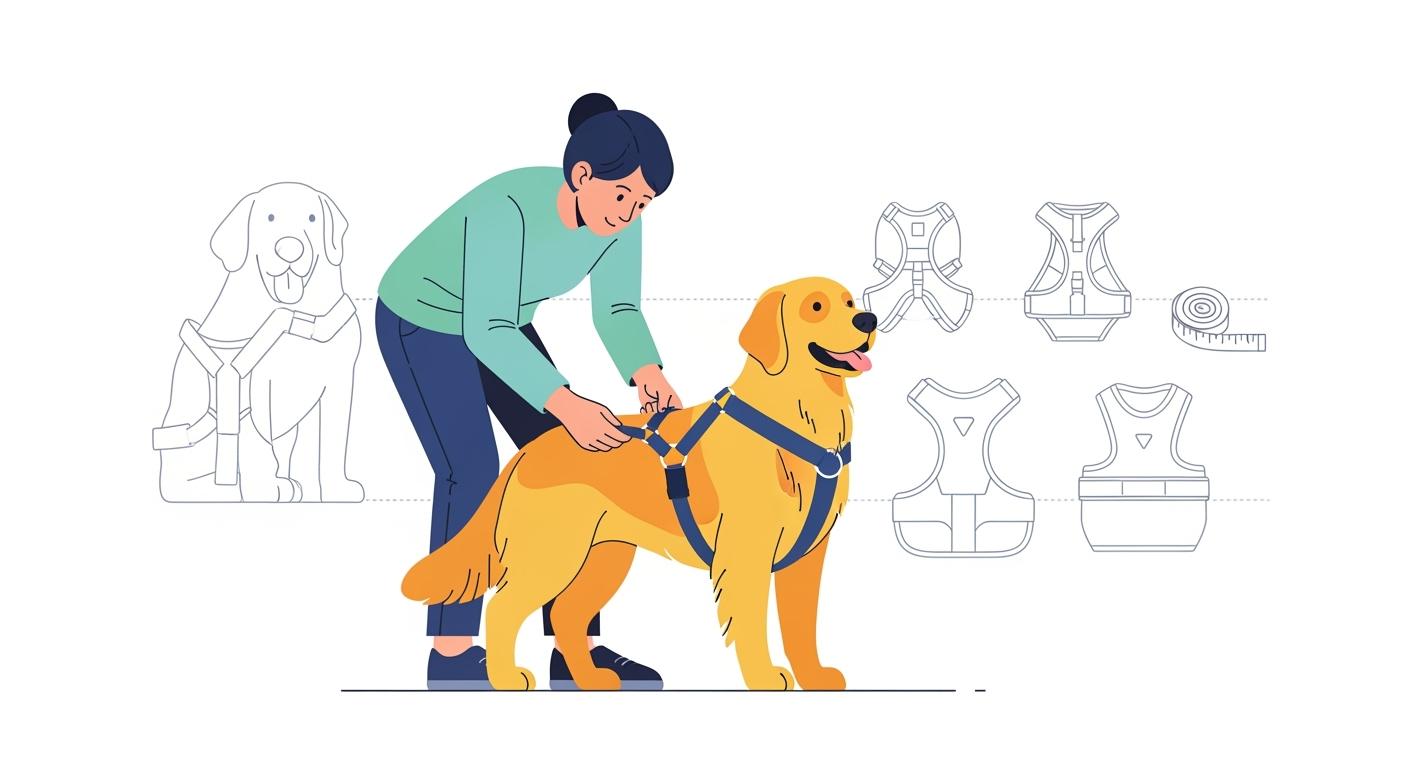
Add images that show the harness next to a ruler or on a large dog model. Use overlays to mark neck, chest, and body length points. This helps buyers measure their dogs and pick the right size. Clear scale cues reduce sizing mistakes and returns.

Table 1: Asset Deliverables for Large Dog Harness Launch

Asset Type

Why Buyers Need It

How It Reduces Returns

Master Image

Shows full product, meets platform rules

Sets clear expectations, avoids surprises

Detail Images

Shows hardware, stitching, adjusters

Confirms quality, prevents complaints

Scale Images

Shows size next to dog or ruler

Helps buyers measure and choose correctly

Sizing Overlay

Marks neck, chest, body points

Reduces sizing errors and exchanges

Note: Store staff can use these images to answer buyer questions and show correct fit in-store.

Sizing Tables for Large Dog Harnesses

Sizing Tables for Large Dog Harnesses

Measurement Points Explained

You need to use clear language when you describe how to measure a dog for a harness. This helps buyers and store staff get the right fit the first time. Use these three main points:

  • Neck: Measure around the base of the neck, where a collar sits. Do not measure high up near the ears.

  • Chest/Girth: Wrap the tape around the widest part of the chest, just behind the front legs. This is the most important spot for harness fit.

  • Body Length: Measure from the base of the neck to the start of the tail. Not all harnesses need this, but it helps for longer designs.

Tip: Always use a soft tape measure. Keep it snug but not tight.

Adjustment Range and Fit Checks

You must show the adjustment range for each size in your sizing tables. This means the smallest and largest neck and chest sizes each harness can fit. Buyers need to know how much room they have to adjust the straps.

  • Check that the harness sits flat and does not twist.

  • Make sure you can fit two fingers under each strap. This means the harness is snug but not too tight.

  • Look for rubbing or pinching, especially behind the front legs and around the neck.

  • Check that both sides of the harness adjust evenly. Uneven straps can cause poor fit and returns.

Fit Check Step

What to Do

Why It Matters

Two-Finger Test

Slide two fingers under strap

Prevents straps from being too tight

Strap Symmetry

Adjust both sides evenly

Stops harness from shifting or rubbing

Movement Check

Let dog walk and sit

Confirms harness stays in place

Preventing Sizing Exchanges

You can lower returns by making sizing tables easy to read and by training staff to help buyers measure correctly. Most sizing exchanges happen because of these reasons:

  • Wrong measurement point used (neck or chest measured in the wrong spot)

  • Size names that confuse buyers (like “Large” vs. “XL”)

  • Missing scale cues in product photos

  • Unclear instructions in the FAQ

Note: Add a simple script for staff—”Measure the chest just behind the front legs, check the neck at the collar spot, and use the sizing table before you pick a size.” This script helps buyers choose the right large dog harness and reduces costly exchanges.

Product Copy: Setting Expectations

Intended Use and Limitations

You help buyers know what to expect when you explain what the harness does and what it cannot do. Large dog harnesses help people control strong dogs. You should say the harness is for control, not for training. How well it works depends on the dog, the person, and how they use the harness. Always tell buyers that stopping pulling takes time and practice. Suggest using rewards when training with the harness.

Sample staff script:

  • Thank you for picking this harness. It helps you guide your dog.

  • Every dog acts differently. Results change with your training and handling.

  • Use the harness to manage your dog. Training results need steady, reward-based practice.

Safe Language for Control and Comfort

Use easy words to talk about control and comfort features. Do not make promises that always work. Use phrases that show results can change. For example, say, “If your dog pulls, the front-attachment option may help lower pulling strength.” Do not say, “This harness stops pulling.” Talk about comfort features like padding and straps, but link them to correct fit and use.

Key phrases for product copy:

  • “Helps reduce pulling leverage for the handler”

  • “Padding may improve comfort if the harness fits correctly”

  • “Secure attachment points support safe handling when adjusted properly”

Tip: Always connect how well the harness works to proper fit and use. This helps buyers know what to expect.

Returns-Prevention Messaging

You can help stop returns by using clear messages that are easy to repeat. Add a warning block to your product copy. Remind buyers that harness results depend on fit, adjustment, and training. Give simple steps and show why measuring before buying is important.

Copy Element

Safe Example Phrase

Claim Ladder Label

PDP Title

No pull dog harness with front-attachment option

Claim_Feature

Hangtag Bullet

Helps reduce pulling leverage for the handler

Claim_Function

Disclaimer Block

Training outcomes depend on consistent, reward-based practice.

Standard Disclaimer

Returns-prevention checklist:

  • Thank the buyer and explain harness features.

  • Say that results can change.

  • Stress the need for correct fit and use.

  • Suggest reward-based training.

Note: Staff can use these scripts to help buyers and lower returns from sizing or use problems.

FAQ Library and Support Macros

A strong FAQ library helps your team answer common questions quickly and consistently. You can use these support macros to train staff and reduce returns. Clear answers build trust with buyers and help prevent confusion.

Fit and Adjustment

You often hear questions about how to fit and adjust large dog harnesses. Staff should guide buyers to measure the neck at the collar spot and the chest just behind the front legs. Remind buyers to check that two fingers fit under each strap. Uneven straps can cause rubbing or shifting. If a harness does not fit after adjustment, suggest trying a different size.

Tip: Always connect fit advice to the sizing table and adjustment range. This helps buyers choose the right harness the first time.

Table 2: FAQ for Large Dog Harnesses

Question

Plain-English Answer

What Not to Say

How do I measure my dog?

Measure the neck at the collar spot and the chest just behind the front legs.

Do not guess the size or use weight alone.

How tight should the harness be?

You should fit two fingers under each strap.

Never say “as tight as possible.”

What if the harness rubs?

Try adjusting the straps or check if you need a different size.

Do not say “all harnesses rub sometimes.”

Escape Risk Guidance

Buyers want to know how to prevent escapes. You should explain that a proper fit and correct adjustment lower escape risk. Always check that the harness sits snugly and that all buckles are secure before use. Remind buyers to attach a leash before opening car doors or letting the dog out. Never claim a harness is escape-proof.

Alert: Staff should use scripts like, “A snug fit and secure buckles help keep your dog safe. Always check the harness before each walk.”

Care and Cleaning

Proper care keeps harnesses safe and extends their life. You should wipe down buckles and D-rings with a damp cloth each week. Machine wash webbing parts at 30 degrees Celsius or lower every month. Apply oil to metal hardware every few months to prevent rust. Before each use, inspect stitches for loose threads and repair as needed. Replace worn straps right away to avoid accidents.

Note: Regular care and checks help prevent failures and keep harnesses ready for use.

Catalog Data and Product Identifiers

Variation and Naming Logic

You should use a simple naming system for each large dog harness SKU. This helps everyone find the right product quickly. Always list size, color, width, and hardware in order. For example, write “XL Black Wide Steel” instead of mixing up the words. Do not use different names for the same color. Use only one color name for each shade. This keeps your catalog neat and stops mistakes.

Checklist for Naming Logic:

  • Put the size first (S, M, L, XL, etc.)

  • Use just one color name for each SKU

  • Add width and hardware type after the color

  • Do not use names that are the same or too close

Tip: Using the same naming style helps buyers compare choices and lowers wrong orders.

Product Identifiers (GTIN, MPN)

You need to add important product codes for every harness. GTIN means Global Trade Item Number. MPN means Manufacturer Part Number. These codes help stores and websites keep track of products and stop mix-ups. Always put the brand name with these codes. If you buy from OEM or ODM suppliers, ask them for these codes before you start selling.

OEM/ODM Explainer:
OEM stands for Original Equipment Manufacturer. ODM means Original Design Manufacturer. OEM suppliers make products the way you want. ODM suppliers design and make products for your brand. You need clear codes from both types to keep your catalog in order.

Table: Required Product Identifier Fields

Field

Description

Why It Matters

GTIN

Global Trade Item Number

Helps track products everywhere

Brand

Brand name

Shows who made it and where it is from

MPN

Manufacturer Part Number

Connects to supplier and product details

Image and File Management

You should save all product images and files in one shared folder. Give each file a clear name with the SKU or product code. Keep master images, close-up shots, and size overlays together. Make sure every file is the right size and format for the website. This helps catalog teams and buyers find what they need fast.

Best Practices for File Management:

  • Name files with SKU and what the image shows (like XL_Black_Steel_Master.jpg)

  • Use images over 1000 pixels so buyers can zoom in

  • Keep all files in one shared folder

  • Check file size and format before you upload

Note: Good file naming and storage makes launches faster and helps teams avoid missing or wrong files.

Claims and Compliance for US and EU

Evidence-First Claims

You have to prove every claim about durability or safety. Buyers and marketplaces in the US and EU will want this proof before selling a large dog harness. Always keep test reports and quality control records close by. These papers show your harness meets the right standards for large dogs. The table below lists what proof you need for each claim.

Category

Description

Evidence Required

Durability/Load Integrity

Harness must meet working load (WL), proof load (PL), and ultimate tensile (UT) for large dogs

Test reports, label photos

Slippage Control

Adjusters must lock down, no slip under load

Fit check video, pull test data

Consistency

Harnesses must match size bands and measurement points

Batch measurement records

Tip: Put these files in a shared folder. This helps your team answer questions or pass audits fast.

Safety Warnings and Documentation

You need to give clear safety warnings and instructions with every harness. These should explain how to fit, adjust, and use the harness safely. Always add warnings about checking fit before each use and looking for wear. In the EU, you must also list the responsible economic operator and product identification on labels or packaging. Keep all compliance documents—like test summaries, warning texts, and label photos—in one folder. This helps you answer buyer or marketplace requests quickly.

Checklist for Safety Documentation:

  • Safety instructions and warnings

  • Product identification and operator details (EU)

  • Test summaries and QC plans

  • Packaging labels and warning text

Note: Check and update your safety documents often to match new rules or feedback.

Avoiding Implied Guarantees

Do not use words like “escape-proof” or “guaranteed” in your product copy or training scripts. These strong claims can cause legal trouble and make buyers upset. Use words that connect performance to correct fit and use. For example, say, “A snug fit and secure buckles help reduce escape risk.” Always remind staff and buyers that results depend on proper adjustment and regular checks.

Safe Script for Store Staff:

  • “This harness is designed for strength and control when fitted and used as shown.”

  • “Always check the fit and all buckles before each use.”

Alert: Using safe, careful language protects your business and helps buyers trust you.

Pilot Launch Loop

Small Test Plan

Start your large dog harness launch with a small test. Choose a limited number of stores or online channels. Select a few SKUs that cover the most common sizes and colors. Give your team a clear script for staff training. For example:

“Measure the dog’s chest just behind the front legs. Check the neck at the collar spot. Use the sizing table before you choose a harness.”

Track every return, exchange, and support question. Ask staff to note why buyers return harnesses or ask for help. Use this feedback to spot patterns early.

Update Sizing and FAQs

Review all feedback from your test launch. Look for questions about fit, adjustment, or sizing confusion. Update your sizing tables if buyers struggle with measurement points or size names. Add new questions and answers to your FAQ set. Make sure every answer uses plain English and matches your staff script. Repeat this process until you see fewer returns and support tickets.

Tip: Use buyer feedback to improve your sizing guides and FAQ scripts. This helps your team answer questions faster and lowers return rates.

SKU Expansion or Simplification

After your test, review your sales and return data. If buyers want more size or color options, plan to expand your SKU list. If some sizes or colors do not sell or cause confusion, consider removing them. Keep your catalog simple and easy to manage. Always update your asset pack, sizing tables, and FAQ set when you add or remove SKUs.

Channel Readiness Checklist

Use this checklist before you scale up your launch:

  • ✅ Master images (over 1000px, no watermarks, product fills frame)

  • ✅ Sizing tables with neck, chest, and body length points

  • ✅ FAQ set covering fit, adjustment, escape risk, and care

  • ✅ Product identifiers (GTIN, brand, MPN)

  • ✅ Consistent naming for size, color, width, hardware

  • ✅ Claims supported by test reports or QC records

  • ✅ Safety warnings and compliance documents

Note: A complete checklist helps your team avoid costly mistakes and supports a smooth launch.

A single channel readiness checklist helps you launch large dog harnesses with fewer mistakes and less risk. These tools help your team work together and lower returns. They also help you follow the rules. To get the best results:

  • Look over the checklist and tables before each launch.

  • Check your files and make changes if you get feedback.

  • Only add more stores or products when your team feels ready.

Tip: Getting ready the same way each time helps keep launches safe and successful.

FAQ

How do you measure a dog for a large harness?

You measure the neck at the collar spot. You measure the chest just behind the front legs. Use a soft tape measure. Always check the sizing table before you choose a size.

What should staff say if a harness does not fit?

Staff can say: “Let us check the neck and chest measurements again. We can adjust the straps or try a different size for a better fit.”

How do you lower escape risk with a harness?

You lower escape risk by checking that the harness fits snugly. Make sure all buckles are secure. Always attach a leash before opening car doors or letting the dog out.

How do you clean and care for a large dog harness?

You wipe buckles and hardware with a damp cloth each week. Machine wash webbing parts at low temperature every month. Check for loose threads and replace worn straps right away.

What documents do you need for compliance checks?

You need test reports, safety instructions, product identification, and warning labels. Keep these files in a shared folder. This helps you answer buyer or marketplace requests quickly.

Get A Free Quote Now !

Table of Contents

Blog

Dog Harness Big Sell-In Storyboard Strength Comfort Control for Buyer Presentations

Dog harness big storyboard shows strength, comfort, and control with clear sizing, fit tips, and proof to help buyers reduce risk and returns.....

Dog Life Jackets Size and Fit Communication Standard (Girth/Weight) for B2B Pages

Dog life jackets sizing for B2B: use girth as the main fit guide, confirm with weight, and follow clear standards for accurate product....

Reflective Dog Collars Seasonal Positioning Calendar (Fall/Winter Visibility) for Retail Programs

Reflective dog collars seasonal calendar guides retail programs for fall and winter, boosting pet visibility and safety during low-light walks and holiday travel.....

Bike Dog Carrier Competitive Differentiation Matrix (Mounting, Comfort, Stability) for Sell-In Meetings

Compare bike dog carrier options by mounting, comfort, and stability with proof-based scores to help your family choose the safest and most comfortable....

Car Seat for Dogs Variant and Pack Configuration Guide for Wholesale Catalogs (Size Bands, Colorways, Case Pack)

Car seat for dogs catalog guide: size bands, colorways, and case pack details for accurate wholesale ordering and safer pet travel.....

Dog Treat Pouch Attach-Rate Growth Plan (Treats, Clickers, Leashes) for Distributors

Boost dog treat pouch attach rates by bundling with treats, clickers, and leashes. Improve distributor sales and retention with targeted growth strategies.....
Scroll to Top

If You Have Any Questions, Please Do Not Hesitate To Contatct With Us.

Get A Free Quote Now !

Welsh corgi wearing a dog harness on a walk outdoors