
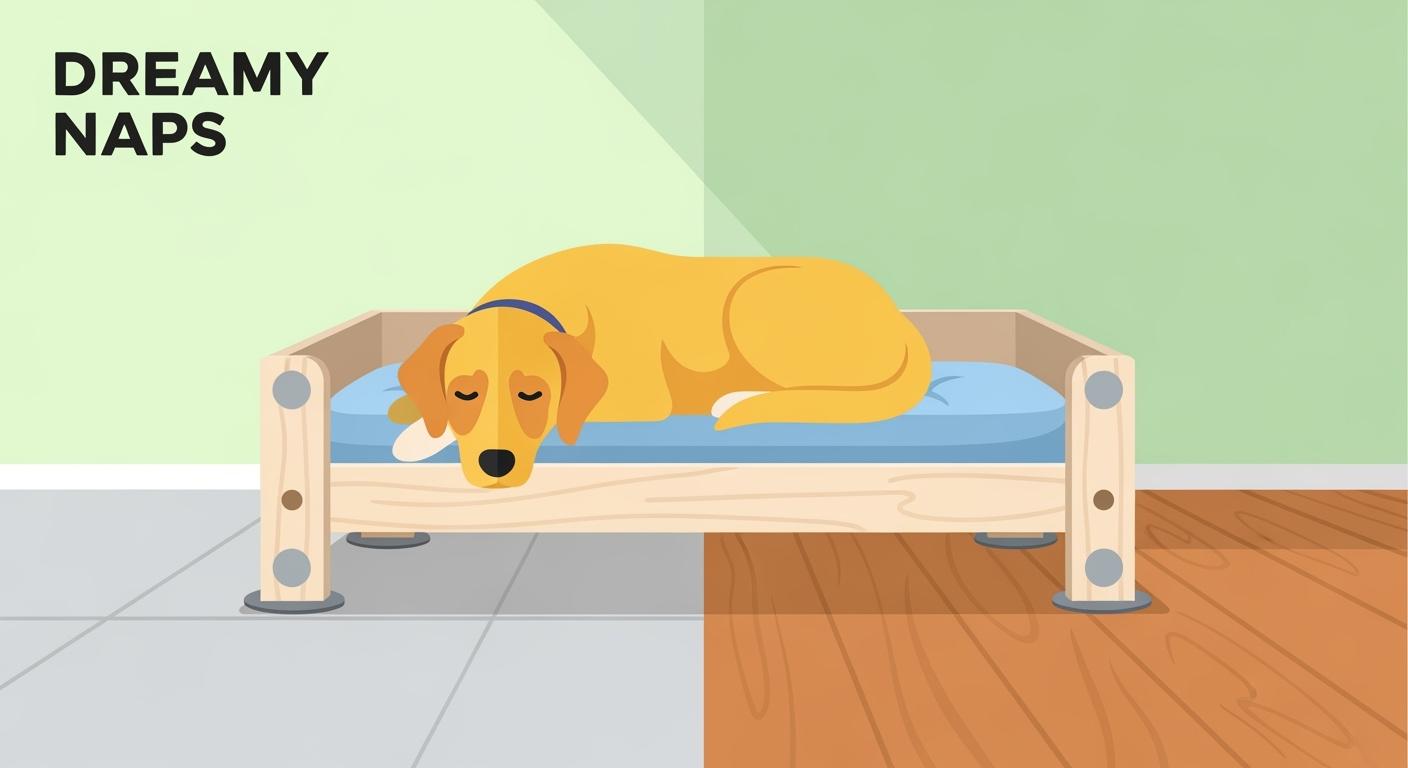
A bed frame for dog can look sturdy in photos and still feel awkward the moment a dog steps onto it. On tile and wood floors, the real problem is often the first contact, not the cushion. The frame slides a little, one corner rocks, or the dog cannot find steady footing while stepping up. Once that happens, even a soft bed can become something the dog approaches carefully instead of using naturally. The better setup is not just comfortable after lying down. It feels predictable from the first paw on the edge.
Key Takeaways
- Choose a bed height your dog can step onto without pausing or bracing. The first step matters more than many owners expect.
- Check whether the frame stays planted on hard floors when weight lands near the front or one corner.
- Recheck grip and wobble after moving the bed, washing the cover, or changing the room layout.
Why hard floors make bed stability more obvious
Entry height changes how willing the dog is to use the bed
Dogs do not judge bed height the way people do. A frame that looks low to you can still feel like an awkward step if the dog needs to climb up while the base shifts underneath. This is why some dogs hover at the edge, test with one paw, then step back. The issue is not always fear of the bed itself. Often the dog is reading the combination of height and floor grip.
Lower profiles usually work better when the dog prefers an easy walk-on entry. A taller frame can still work, but only when the structure stays stable and the dog never feels the bed move during that first step.
| Bed Style | Entry Feel | Best Fit |
|---|---|---|
| Low-profile frame | Easier first step, less hesitation | Dogs that approach beds carefully or dislike climbing |
| Moderately elevated frame | Cleaner airflow and clearance, but needs better stability | Dogs already comfortable stepping up |
| Higher raised frame | More noticeable entry height | Only when the frame feels planted and the dog uses it confidently |
If your dog slows down right before stepping on, that is useful information. It often means the entry feels less certain than the bed looked during setup.
Wobble matters more than “softness”
A bed frame for dog should feel the same every time the dog gets on and off. A small amount of rocking may seem harmless to people, but dogs notice that kind of movement quickly. A frame that clicks, shifts, or settles unevenly can make the dog circle longer, approach from odd angles, or refuse to use one side of the bed.
This is especially obvious on tile and wood floors because those surfaces do not hide instability. Carpet often masks minor movement. Hard floors expose it immediately.
Grip starts under the frame, but it also affects the step-on feel
Floor grip is not just about whether the bed slides across the room. It also changes how secure the dog feels when stepping on. If the base moves even slightly as weight transfers forward, the dog may stop trusting the edge. That can show up as short, careful steps or repeated attempts before fully climbing onto the bed.
The goal is simple: the bed should stay where you put it, and it should feel the same on the first use and the fiftieth.
Tip: Push down lightly on two corners before regular use. If the frame shifts easily by hand, the dog will usually notice it even more.
Entry height, wobble, and grip: what actually works better
Low vs. elevated bed frame for dog
You want the bed height to match how your dog really approaches rest, not just what looks nice in the room. Low-profile frames usually feel easier on hard floors because they reduce both the climb and the sense of instability. Raised frames can still work well when airflow or cleaning access matters, but they need a steadier planted feel than many owners expect.
| Frame Type | Entry Height | Stability | Cleaning Ease | Fit-for Use Case | Not-fit-for Use Case |
|---|---|---|---|---|---|
| Low-profile | Minimal | Usually easier to keep steady | Easy | Hard floors, cautious dogs, routine indoor use | Situations needing more under-bed airflow or clearance |
| Elevated | Moderate | Varies by frame quality and floor contact | Good | Dogs comfortable stepping up, spaces where airflow matters | Dogs that dislike wobble or hesitate at entry |
| Fixed position | Consistent | Usually more predictable | Easy | Indoor use, stable placement, repeatable daily routine | Frequent moving between rooms |
| Moveable frame | Varies | Depends on where it is placed | Varies | Flexible spaces or occasional relocation | Dogs that rely on a very predictable setup |
A raised bed is not automatically a poor choice. It just leaves less room for setup errors on tile and wood floors.
When ramps or steps actually help
Some dogs do better when they do not have to step directly onto the frame in one motion. In those cases, a ramp or small step can help, but only if it is just as stable as the bed itself. An unstable access aid beside an unstable bed usually makes the whole setup feel worse, not better.
Ramps often work better when the dog dislikes abrupt step-ups. Small steps can work when the rise is low and the footing stays secure. The key is not whether the accessory looks helpful. It is whether the dog uses it without second-guessing the surface.
| Feature | Ramps | Steps |
|---|---|---|
| Best use | Gentler approach when one step up feels abrupt | Shorter climbs where the dog already handles step-by-step movement well |
| Main benefit | Continuous entry instead of a single upward step | Smaller footprint in tighter spaces |
| Main caution | Needs strong floor grip and enough space to place it well | Too-steep steps can feel uncertain on hard floors |
Hard floors change the definition of “stable”
On carpet, a slightly imperfect setup may still feel usable because the floor itself adds grip and absorbs some movement. On tile and wood floors, the bed has to do more of that work on its own. That is why a frame that seemed acceptable in one room may feel completely different in another.
A stable bed on hard floors usually shares the same traits: manageable height, planted feet, no corner rock, and a surface the dog can step onto without bracing. Those details matter more than decorative styling or a “premium” look.
Callout: If a dog tests the bed with one paw, backs off, then tries again, the setup is often telling you something useful about height, movement, or grip.
Setup mistakes and quick stability checks
Common errors with bed frame for dog
The biggest setup mistakes are usually small. They are not dramatic failures. They are the kind of issues that make the bed feel slightly less trustworthy every day.
- Choosing a frame that is a little too high for how the dog naturally steps up.
- Assuming sturdy-looking materials automatically mean the frame will not wobble.
- Placing the bed on a slick patch of floor without checking whether it stays planted.
- Moving the bed and assuming it will behave the same way on the new surface.
- Focusing only on cushion softness while ignoring entry stability.
Tip: Dogs usually trust a stable bed quickly. They usually “negotiate” with an unstable one.
Pass/fail checklist for stability
Use this table to check whether the bed frame feels safe and usable on a hard floor.
| Check Item | Pass Signal | Fail Signal | Solution |
|---|---|---|---|
| Entry feel | Dog steps on without pausing or backing away | Dog hesitates, leans in, then reconsiders | Lower the setup or improve floor grip |
| Frame stability | Frame stays planted when weight lands near one side | Rocks, shifts, or clicks on the floor | Check joints, tighten hardware, improve footing |
| Floor contact | Bed stays where it was placed | Bed slides or drifts during entry or exit | Add traction or move to a more stable surface zone |
| Turn-before-lying-down feel | Dog circles and settles naturally | Dog keeps readjusting or avoids one edge | Check wobble and usable surface area |
| Consistency after moving | Bed feels the same in daily use | Setup changes depending on room or floor patch | Redo the stability check after every move |
Troubleshooting sliding or wobble
If the bed slides or wobbles, fix the frame behavior first instead of hoping the dog will get used to it.
| Problem | Quick Fixes |
|---|---|
| Bed slides on hard floor | Place a traction layer under the bed or move it to a less slick section of floor. |
| Bed wobbles | Check joints, tighten the frame, and confirm all feet contact the floor evenly. |
| Dog hesitates to use bed | Retest entry feel after improving grip or lowering the step-up. |
| Bed feels different after moving | Redo the step-on test in the new location instead of assuming the old setup still applies. |
Regular cleaning still matters, but it should not distract from the bigger issue. If the frame itself feels unstable, the dog notices that before it cares whether the bedding is freshly washed.
You help your dog use a bed more confidently when the frame stays planted, the entry height feels manageable, and the first step does not shift underneath them. On tile and wood floors, small stability problems show up fast, so the best bed frame is usually the one that feels predictable every single time.
FAQ
Why does my dog hesitate before stepping onto a bed frame?
Usually because the first step does not feel fully certain. The bed may be slightly high, slightly unstable, or slightly slippery under the frame, and dogs often notice that combination right away.
Is a low bed frame better on tile or wood floors?
Often yes. A lower frame usually makes the first step easier and reduces how much instability the dog feels during entry.
How do I know if the frame is too unstable?
Press gently on the frame from different sides and watch your dog step on and off. If the bed rocks, shifts, or changes the way your dog approaches it, the setup still needs work.
Can a raised dog bed still work on hard floors?
Yes, but it needs a better planted feel than the same bed would need on carpet. Height and stability have to work together.
Should I add steps or a ramp?
Only if bed height is part of the problem and the support piece is just as stable as the bed. An unstable ramp or steep step usually makes the whole setup feel less trustworthy.






