
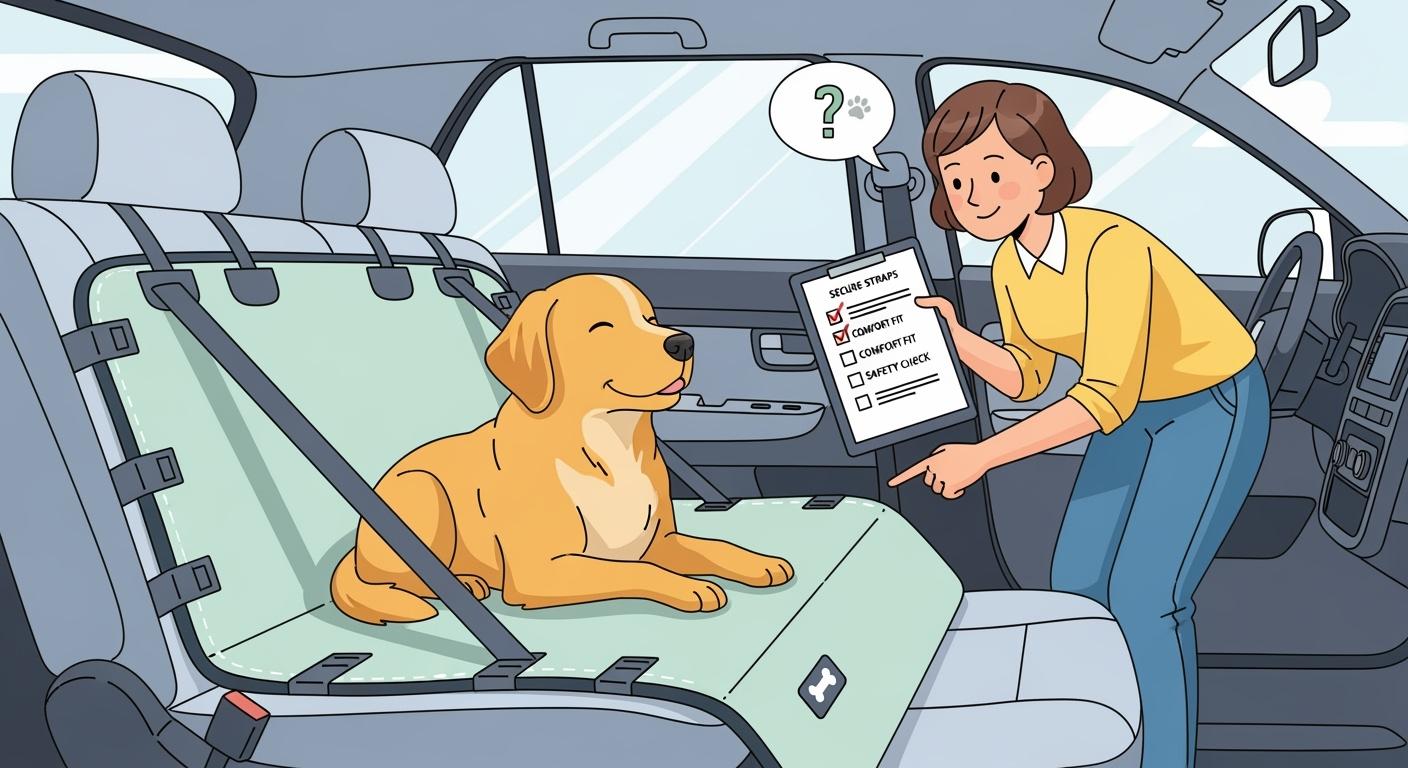
A hard-bottom dog car seat cover should not be judged by how firm it feels when the back seat is empty. The real test is what happens when a large dog steps in, turns around or lies down: does the center sag into the seat gap, do the corners lift, can the seat buckles still be reached, and does the bottom keep its shape after cleaning? This guide looks at the support, grip, strap tension and restraint boundaries that matter when a hard-bottom cover is used in a real car.
That is where many hard-bottom designs fail. Some panels bow in the center, lift at the corners, cover seat-belt buckles, or feel stable only in product photos. For a B2B buyer, those failures are not small details. They affect product satisfaction, support questions, and whether the item feels worth adding to a pet car travel line.
This article focuses on how to judge a best hard bottom dog seat cover before sourcing, sampling, or expanding a rear-seat protection category.
- A strong cover should stay flat under real dog weight, not only when empty.
- Buckle access and vehicle fit matter as much as the hard base.
- Cleaning claims only matter if the panel keeps its shape afterward.
What Real Support Means in a Hard Bottom Cover
The main reason to choose a hard-bottom cover is to reduce the sag that happens when a dog steps into the gap between the rear seat and the front-seat area. A firmer base can help larger dogs feel more stable when standing, turning, or settling. It can also make the product easier to position as a comfort and cleanliness upgrade for pet travel buyers.
Real support, however, is not the same as extra stiffness. A rigid insert can still fail if it is too narrow, too flexible in the center, too slick on top, or poorly matched to the seat shape. If the cover bridges across a curved bench seat and leaves empty space underneath, the dog may feel the platform move even though the product is described as hard-bottom.
A hard base also does not replace a restraint system. It can improve footing and help protect upholstery, but it should not be presented as crash protection or full containment. Buyers should treat it as a support and protection product, not as a complete travel safety solution.
| Check Area | Strong Design Signal | Weak Design Signal | Why Buyers Should Care |
|---|---|---|---|
| Center load | The base stays level when dog weight is added. | The middle dips or bows toward the seat gap. | Center sag defeats the reason to choose a hard bottom. |
| Corner contact | Edges stay in contact with the bench seat. | Corners lift, curl, or float above the seat. | Raised edges create instability and customer complaints. |
| Top surface | The dog can settle without constant sliding. | The surface feels slick once weight shifts. | A hard base still fails if paw grip is poor. |
| Buckle area | Buckles remain visible and usable after setup. | Openings drift, bunch, or disappear under fabric. | Blocked buckles make daily use harder and reduce trust. |
Buyer note: A hard-bottom sample should be tested with weight on it. Pressing an empty cover by hand does not show how the platform behaves when a dog steps, turns, or lies down.
Questions That Expose Weak Hard-Bottom Designs

Before adding a hard-bottom cover to a product line, compare the sample against real rear-seat use rather than the size label alone. A cover can appear spacious in a listing but still feel unstable if the usable floor is shorter than expected, the side drop is too steep, or the insert does not sit cleanly on common bench seats.
This is also where a broader best hard bottom dog seat cover comparison should go beyond fabric and waterproof claims. The support panel, buckle openings, strap tension, and split-seat behavior all affect whether the product feels reliable in daily use.
| Buyer Question | Pass Signal | Fail Signal | Better Buying Response |
|---|---|---|---|
| Does it sit flat on the actual rear seat? | The panel follows the seat without floating gaps. | The base bridges over contours or leaves empty space below. | Choose a different footprint or a softer layout. |
| Can the dog step in without tipping the edge? | Entry feels stable and predictable. | The front section flips, lifts, or shifts. | Reject designs that need constant adjustment. |
| Do buckle openings stay aligned after tightening? | Openings remain easy to reach. | Buckles hide under folds or pulled fabric. | Prioritize clean buckle access over extra bulk. |
| Can the dog lie down without one side collapsing? | The surface stays even during turning and settling. | One side drops or the center buckles. | Do not mistake a stitched top for a strong platform. |
| Does split-seat use still work cleanly? | Passenger space and dog space both remain usable. | Folded sections create a hard ridge or unstable edge. | Use split functions only when the remaining platform stays flat. |
A hard-bottom upgrade is only valuable when it solves a real support problem in the vehicle. If it creates a new edge, buckle issue, or tipping point, the stronger base becomes a new use problem rather than a selling point.
Why Cleanup Claims Come After Stability
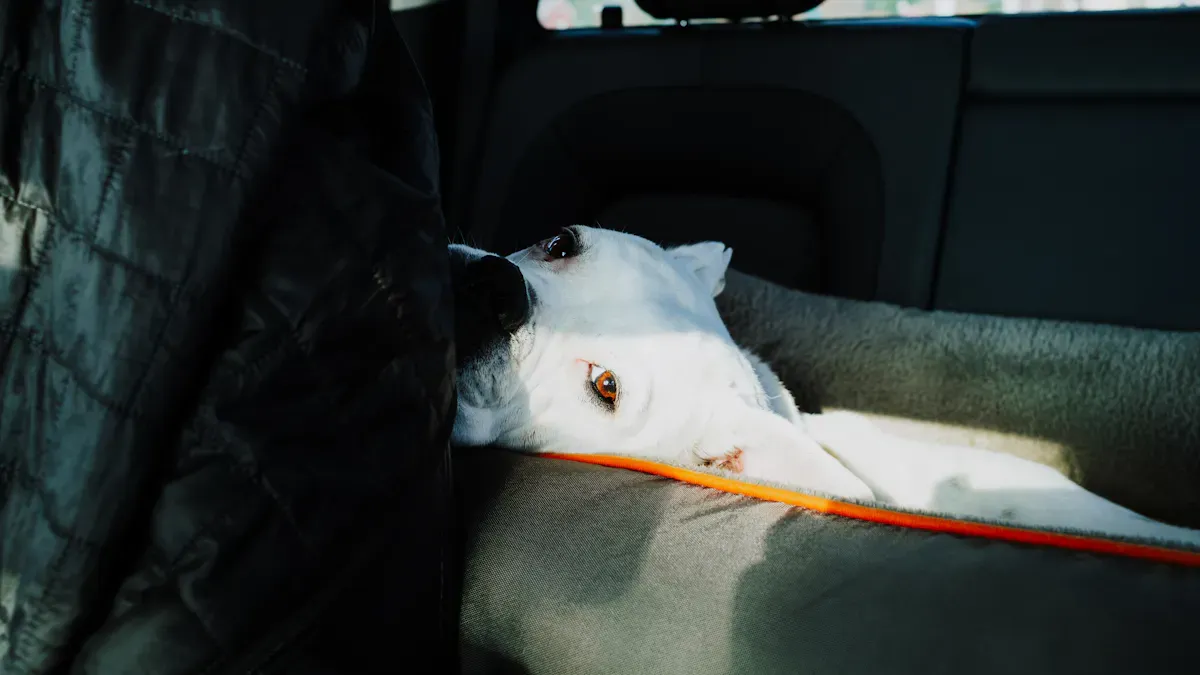
Easy cleaning matters, but it should not be the first reason to approve a hard-bottom cover. A waterproof dog car seat cover can protect upholstery from mud, wet paws, and small accidents, but that benefit becomes weaker if the platform slips, curls after washing, or loses shape along the seat edge.
For B2B buyers, wash durability should be judged after the product goes back into the vehicle. The insert should return flat, the straps should still tighten evenly, and the top surface should not become slicker than before. If cleaning changes the shape or tension of the cover, the issue is not only cosmetic. It changes how the dog stands and settles.
| Area to Recheck | Pass Signal | Fail Signal | Why It Matters |
|---|---|---|---|
| Panel shape | Returns flat after cleaning. | Curls, bows, or twists. | Shape changes can bring sag back. |
| Top surface | Still gives paw grip. | Feels slicker or stiffer. | Grip loss makes dogs shift and brace more. |
| Straps and anchors | Tighten evenly and hold position. | Stretch unevenly or pull the cover off-center. | Off-center tension makes buckle access drift. |
| Seam areas | Stay smooth with no puckering. | Ripple, bunch, or lift at stress points. | Seam distortion often becomes fit distortion on the seat. |
Light messes may only need a wipe-down or vacuum. Heavier cleanup may require washing and air drying. The important point is not the cleaning step alone; it is whether the cover still fits the same way after the cleaning cycle.
When a Hard Bottom Cover Is the Wrong Choice
A hard-bottom cover is not the right answer for every car, dog, or product range. Some rear seats are too narrow, sculpted, or split for a rigid insert to sit cleanly. Some dogs pace, climb, or keep pushing against the front edge, which means they need a different travel setup rather than only a flatter platform.
The product also becomes harder to sell honestly when buyers expect the hard base to solve restraint. A cover can protect upholstery and improve footing. It should not be positioned as a substitute for a proper restraint strategy. If the cover works only before the first wash, only when no one uses the buckles, or only when the dog stays perfectly still, it is not ready for real travel use.
| Use Situation | Good Match? | Main Watchout | Better Direction |
|---|---|---|---|
| Large dog on a flat rear bench | Often yes | Needs real center support, not decorative stiffness. | Test with dog weight before approving the sample. |
| Highly sculpted or narrow rear seat | Often no | The insert may bridge and float. | Choose a layout that follows the bench better. |
| Frequent human passenger use | Maybe | Split use can create unstable edges. | Prioritize simple access and flatter partial coverage. |
| Dog that climbs, paces, or needs stronger control | Usually no | Support does not equal restraint. | Use a setup that addresses restraint more directly. |
The best hard-bottom cover earns its place by staying flat, keeping buckles usable, holding shape after cleaning, and giving dogs better footing without pretending to be a full restraint system. For product buyers, that is the difference between a useful seat-cover upgrade and a bulky item that creates support questions after purchase.
FAQ
Does a hard bottom cover improve crash safety?
No. A hard bottom can improve footing and reduce sag, but it should not be treated as crash protection or as a substitute for proper travel restraint choices.
Why does it still sag near the seat gap?
The insert may be too narrow, too flexible in the center, or mismatched to the shape of the rear seat. A hard-bottom label does not guarantee full support across the whole platform.
Is it always better for larger dogs?
Not always. It can help larger dogs on a flatter rear bench, but it can still fail if the surface is slick, the seat contour is awkward, or the usable footprint is smaller than expected.
What if the cover curls after washing?
Recheck the setup before continuing to use or approve the design. If the panel no longer lies flat, the straps pull unevenly, or the buckle openings drift, the product has changed in a way that affects real use.






