
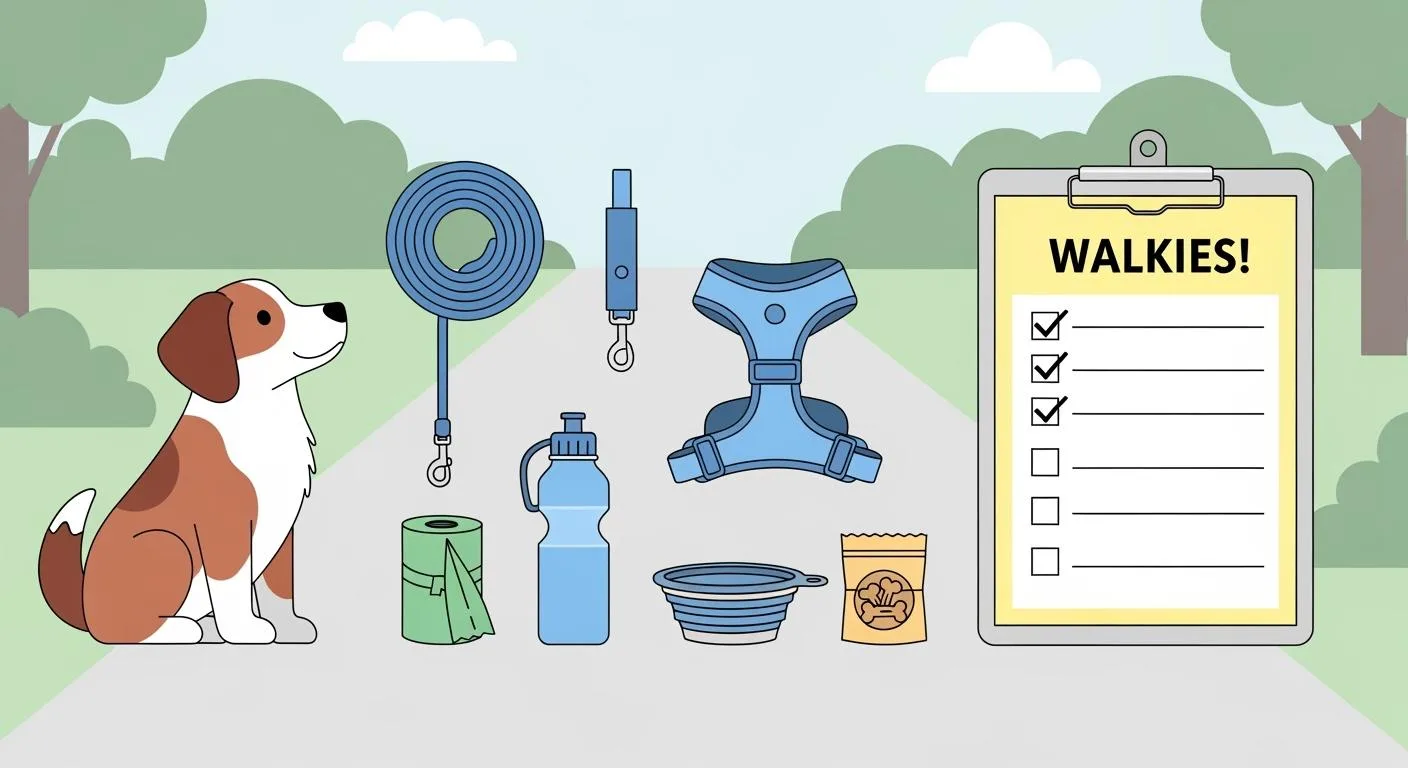
A useful dog walking kit is not just a group of basic items. The harness, leash, treat pouch, waste bags, and visibility gear need to work together during a real walk. If the harness twists, the leash clip feels too heavy, the treat pouch spills, or the kit becomes awkward to carry, the setup stops helping and starts getting in the way.
For daily walking products, the better direction is simple: stable control, light hardware, quick access, easy cleaning, and enough visibility without unnecessary bulk. The right dog walking kit should make walks easier to manage without turning the setup into a heavy training system.
Key Takeaways
- A dog walking kit should be judged by how the products work together, not by how many items are included.
- The most common failure points are harness twisting, heavy leash clips, slow treat access, pouch spills, missing waste bags, and weak visibility in low light.
- A better setup uses a stable harness, a fixed-length leash, a secure treat pouch, easy-clean materials, and visibility details that match the walking scene.
Build a Dog Walking Kit Around Real Walking Problems
Many walking kits look complete on a product page but feel wrong during use. A kit can include a harness, leash, pouch, bags, bowl, and visibility item, yet still fail if the pieces do not match the dog’s size, strength, walking route, and weather. The problem is not the number of items. The problem is whether each item solves a real walking problem without adding another one.
A short neighborhood walk needs different gear from a busy urban route or a park trail. A small dog does not need the same clip weight as a strong puller. A treat pouch that works for a short training session may bounce, spill, or collect crumbs during daily walking. A reflective strip placed in the wrong area may look good but remain hard to see from the side.
| Walking scene | Kit items that matter most | Common failure | Better product direction |
|---|---|---|---|
| Short neighborhood walk | Harness, leash, waste bags, small treat pouch | Too many accessories make the kit bulky | Lightweight setup with stable control and easy cleanup |
| Busy urban walk | Stable harness, fixed-length leash, treat pouch, visibility gear | Leash tangles, slow treat access, weak low-light visibility | Shorter control length, secure pouch, visible reflective placement |
| Park or trail walk | Harness, suitable leash, water, bowl, waste bags, visibility detail | Overpacking or using heavy gear for long movement | Pack-light accessories and materials that dry faster |
| Rainy or muddy walk | Washable harness, easy-clean leash, secure pouch, waste bags | Wet fabric, odor, dirt trapped in seams | Wipe-clean surfaces, quick-dry fabric, simple construction |
What belongs in the kit
The core kit usually starts with a harness, leash, treat pouch, and waste bags. Water, a portable bowl, a coat, boots, or extra visibility gear can be added when the route or weather needs it. These additions should not make the kit feel overloaded. A good setup feels simple because the items are matched to the walk.
- Harness: should stay centered and avoid rubbing behind the front legs.
- Leash: should match the dog’s strength, route, and clip weight needs.
- Treat pouch: should open quickly, close securely, and avoid spills.
- Waste bags: should be easy to reach without interrupting leash control.
- Visibility gear: should be placed where drivers, cyclists, or walkers can actually see it.
- Weather items: should solve a real problem such as cold, rain, mud, or hot pavement without adding unnecessary bulk.
Choose Harness and Leash Details That Keep Control Stable
The harness and leash decide whether a dog walking kit feels controlled or awkward. A back-clip harness may work for calm daily walks, but it can rotate or encourage forward pulling when the dog is strong. A front-clip design may give more direction, but the chest panel and strap layout need to stay centered so the dog is not pulled sideways.
Leash hardware also matters. Oversized clips can feel heavy on small dogs and may drag the leash angle downward. Thin clips may feel light but can be a poor match for stronger dogs. A good walking kit should match harness structure, leash thickness, clip weight, and walking scene instead of using one generic setup for every dog.
| Walking problem | Likely product cause | Better design direction |
|---|---|---|
| Harness twists during the walk | Loose strap range, narrow chest panel, or wrong clip position | More stable chest coverage, balanced strap layout, and better size grading |
| Small dog looks weighed down | Heavy leash clip or thick webbing | Lightweight hardware and narrower leash width |
| Strong dog pulls through the setup | Weak control point or soft strap structure | Stronger webbing, secure stitching, and a control point suited to the walk |
| Leash tangles or drags | Length does not match the walking scene | Fixed-length leash for daily walks and shorter control length for busy spaces |
Fit and size checks that affect the whole kit
A harness that is too loose can shift, twist, or let the dog back out. A harness that is too tight can rub the armpit area, restrict shoulder movement, or create pressure marks. Fit affects more than comfort. It changes how the leash angle works and how much control the handler actually has.
The same issue applies to leash width and clip size. Small dogs often need lighter hardware so the leash does not drag down from the chest or back. Stronger dogs need hardware and stitching that can handle pulling force without making the setup feel stiff or oversized.
| Part | Pass sign | Fail sign | Product adjustment |
|---|---|---|---|
| Harness fit | Sits flat and stays centered | Twists, rubs, gaps, or rides forward | Better size range, chest panel shape, and strap placement |
| Leash clip | Moves smoothly without dragging the dog down | Feels too heavy or too weak for the dog | Match clip size and material to dog size and strength |
| Leash length | Gives control without tangling | Too long for crowded routes or too short for relaxed walks | Choose length by walking scene, not by one default setup |
| Contact edges | Do not dig into the chest, neck, or armpit area | Skin redness, hair loss, or shortened stride | Smoother binding, softer padding, and better panel spacing |
Make Treat Pouch and Waste Bag Access Fast Without Spills
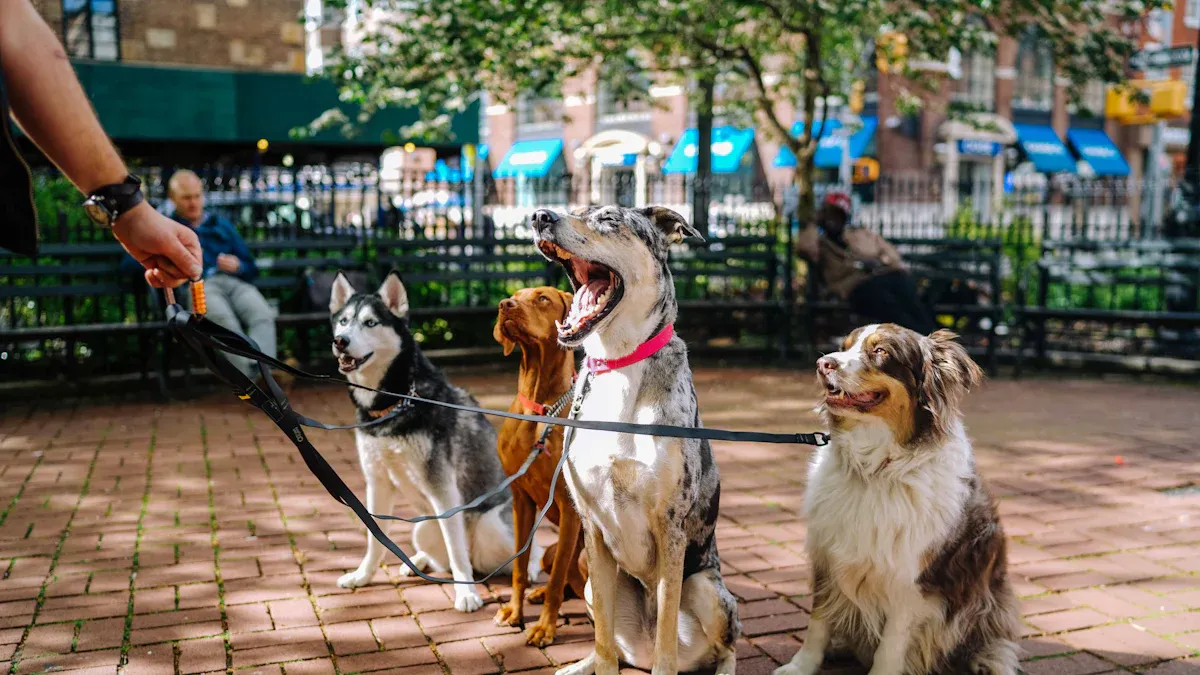
A treat pouch looks like a small accessory, but it often decides whether the whole walking kit feels practical. If the opening is hard to reach, treats spill out, crumbs collect inside, or the clip shifts on the waistband, the pouch becomes frustrating during daily use.
The better design is not simply a larger pouch. A walking treat pouch needs one-hand access, a secure closure, a stable clip or belt loop, and an easy-clean lining. The size should hold enough treats for the walk without becoming bulky or bouncing against the body.
- Secure closure: helps prevent treats from spilling when the walker bends, turns, or clips the leash.
- Stable attachment: keeps the pouch from swinging or sliding along the waist.
- Easy-clean lining: reduces odor, crumbs, and sticky residue after repeated use.
- Right capacity: holds enough treats without making the kit feel overloaded.
- Waste bag access: should be separate or easy to reach so cleanup does not interrupt leash control.
Why pouch placement matters
The pouch should sit where one hand can reach it while the other hand manages the leash. If the pouch slides behind the hip, swings when walking, or requires two hands to open, it breaks the flow of the walk. A stable attachment point is as important as storage capacity.
Waste bag access should also be simple. If the dispenser is buried inside the pouch or detached from the leash, cleanup becomes slower and more awkward. A better walking kit keeps treats, bags, and leash handling separate enough to avoid confusion.
Match Visibility, Weather, and Cleaning Details to the Walk
Visibility gear is often added as an afterthought, but it matters in early morning, evening, rainy, or urban walking scenes. Reflective details should be visible from practical angles, not only from the front. Leashes, harness panels, pouch trim, or small accessory loops can all help if the placement is clear and not hidden by the dog’s body.
Weather also changes what a dog walking kit needs to solve. Rain, mud, and wet grass can make fabric leashes, harnesses, and pouches hold odor or dry slowly. Cold routes may need coats or boots, while hot pavement may require route changes or paw protection. The kit should support those conditions without becoming oversized for normal walks.
| Condition | Common problem | Better product detail |
|---|---|---|
| Low light | Small reflective patches are hard to notice | Reflective placement on moving or outer-facing areas |
| Rain or mud | Wet fabric holds odor and dirt | Quick-dry webbing, wipe-clean lining, and fewer dirt-trapping seams |
| Cold weather | Extra layers interfere with harness fit | Adjustable harness range that works over coats when needed |
| Hot pavement | Paw stress or route changes make the kit incomplete | Optional paw protection and route-aware product guidance |
| Longer walks | Water and bowl additions make the kit bulky | Compact bowl, small bottle, and lightweight carry method |
Cleaning should be part of the product decision
A walking kit touches dirt, treats, saliva, waste bags, pavement, rain, and outdoor surfaces. If the materials are hard to clean, the kit starts to feel old quickly. Smooth linings, quick-dry fabric, washable webbing, and simple seams make repeated use easier.
Leather, thick fabric, and padded items can still work, but they need the right use case. A daily walking kit usually benefits from materials that dry faster and do not hold crumbs, odor, or mud for long.
Troubleshoot Dog Walking Kit Failures Before They Become Daily Problems
Most dog walking kit problems show up during ordinary walks. The harness shifts, the leash clip feels wrong, the pouch spills, the waste bag dispenser is empty, or visibility gear is forgotten until the walk is already unsafe. These are not just user mistakes. They often come from product combinations that do not match the walking scene.
| Problem during use | Why it happens | Better product direction |
|---|---|---|
| Harness rubs behind the front legs | Straps sit too close to the armpit or the size range is wrong | More room behind the front legs and smoother contact edges |
| Dog backs out of the harness | Loose fit, shallow coverage, or weak adjustment range | Better chest and belly coverage with clearer size guidance |
| Treats spill during movement | Open pouch, weak closure, or unstable clip | Secure closure, stable attachment, and structured pouch opening |
| Leash feels too heavy for a small dog | Clip and webbing are oversized | Light hardware matched to dog size and leash width |
| Low-light walks feel unsafe | Reflective details are too small or placed in the wrong area | Visible reflective panels on leash, harness, pouch, or walking accessories |
| Gear smells or stays dirty | Absorbent fabric, poor lining, or hard-to-clean seams | Washable fabric, wipe-clean lining, and faster-drying construction |
Quick product checks before the walk
A walking kit does not need a complicated routine. It needs a few practical checks that show whether the product setup is ready for real use.
- Check whether the harness stays centered when the dog turns.
- Check whether the leash clip is secure and matched to the dog’s size.
- Check whether the treat pouch can be opened and closed with one hand.
- Check whether waste bags are easy to reach before the walk starts.
- Check whether reflective or lighted details are visible from useful angles.
- Check whether wet or dirty gear can be cleaned and dried without extra effort.
FAQ
What should be included in a dog walking kit?
A practical dog walking kit usually includes a stable harness, a leash that matches the dog’s size and strength, waste bags, and a secure treat pouch. Water, a bowl, boots, coats, or visibility gear can be added when the walking scene requires them.
Why does a harness twist during walks?
Harness twisting usually comes from loose straps, a narrow or unstable chest panel, poor size grading, or a leash attachment point that does not match the dog’s movement. A better design should stay centered during turns and pulling pressure.
What makes a treat pouch better for daily walks?
A good walking treat pouch should open with one hand, close securely, attach firmly, and have an easy-clean lining. Oversized pouches can bounce or spill, while very small pouches may be hard to use during the walk.
Is a longer leash better for every walk?
No. Longer leashes can work in open spaces, but busy routes usually need more predictable control. A fixed-length leash is often easier for daily walks because it reduces tangling and keeps the dog closer when needed.
How should a walking kit handle rain or mud?
The kit should use materials that are washable, quick-drying, and easy to wipe clean. Webbing, pouch linings, seams, and clips should not trap mud, odor, or treat residue after repeated walks.
A good dog walking kit should feel simple in daily use. The harness should stay centered, the leash should match the dog’s size and strength, the treat pouch should be easy to reach, and waste bags or visibility gear should not become afterthoughts. When each item solves a real walking problem without adding bulk, the whole setup becomes easier to use and easier to trust.
