

Preparation keeps your dog safe and happy on every hiking adventure. Before you grab your dog backpack carrier for hiking, check for secure fit, comfort, and proper closures. Make sure your dog feels calm and ready. Review trail rules about dogs. A quick check helps you avoid problems and enjoy the journey.
Key Takeaways
Pick the best dog backpack carrier for your hike. Think about how long and tough your hike will be. Use a light saddle-bag carrier for short hikes. For long hikes, use a framed carrier with more support.
Make sure the carrier fits you and your dog well. Adjust the straps so it feels good and stays in place. A tight fit stops your dog from sliding and keeps them safe.
Watch your dog for any signs of being tired or too hot. Stop to rest, give your dog water, and check the carrier often. This helps make hiking safe and fun for both of you.
Choose the right dog backpack carrier for hiking
Decision Matrix: Selecting Your Dog Backpack Carrier
Hiking Scenario | Best Carrier Style | Essential Features | Common Failure Modes | Pre-Purchase Checks |
|---|---|---|---|---|
Short, easy hike | Saddle-bag, front-carry | Lightweight, basic adjustability | Slumping, poor fit, overheating | Check fit, ventilation, closures |
Long, rugged hike | Framed, back-carry | Stability, hip support, airflow, extra pockets | Heat traps, unstable carry, shifting | Test harness clip, weight capacity, mesh panels |
Urban walk | Minimalist, front-carry | Secure closures, easy access | Rubbing, bouncing, pawing | Try on, check leash attachment |
Mountain trail | Framed, back-carry | Advanced adjustability, harness clip, ventilation | Slumping, heat, unstable geometry | Confirm fit, test stability, check mesh |
Short hikes vs long hikes: key features
Dog backpack carriers for hiking come in many types. You need to pick the right one for your hike. For short hikes, saddle-bag carriers are light and flexible. These packs are simple and easy to use. For long hikes, you need a backpack carrier with more support. Hip support and airflow are important for hikes over one hour. Long hike carriers have extra pockets and places to attach things. The weight limit should be five to ten pounds more than your dog’s weight. If you have a dachshund, get a carrier that fits their body shape. The best dog backpacks for hiking keep your dog safe and comfy.
Tip: Use a regular dog backpack for hikes under thirty minutes. For longer hikes, pick one with good support and airflow.
Front-carry, back-carry, or framed: which dog backpack fits your hike
You need to choose how you want to carry your dog. Front-carry styles let you see your dog and check on them. Back-carry carriers spread out the weight for longer walks. Framed carriers give extra support on rough trails. If you have a dachshund, think about their size and shape. A snug dachshund carrier stops slumping and sliding. Pick a hiking dog carrier that works for your hike and your dog.
Note: Always make sure the carrier fits you and your dog before you go.
Stability and support: secure fit, closures, and harness clip
Stability is more important than extra space. A tight fit keeps your dog from moving around. Good closures stop the carrier from opening by accident. The harness clip should go on your dog’s harness, not their collar. This keeps your dog safe and stops choking. The tether must hold five times your dog’s weight. Quick-release clips should not get dirty. Zippers with covers make the carrier safer.
Feature | Description |
|---|---|
Tether System | Internal leash clips to harness D-ring. Adjustable and non-slip. |
Closure Design | Zippers plus flap covers prevent accidental opening. |
If you have a dachshund, use a dachshund carrier with a harness clip. This keeps your dog safe on your hike.
Warning signs: heat traps, slumping, unstable carry
Watch for warning signs when you hike. Bad airflow can make your dog too hot, especially in dark carriers. Closed carriers trap heat fast. Mesh panels help stop heat traps. If your dog slumps or slides, the carrier is too loose. If the carrier is not stable, it will bounce and feel bad. Carrying a dachshund in a hot carrier is risky.
Alert: Stop hiking if your dog gets too hot, slumps, or looks uncomfortable.
Step-by-Step Installation and Trial Walk Guide
Put the dog backpack on a flat spot.
Open all the closures and check for dirt.
Help your dog get into the carrier.
Clip the harness clip to your dog’s harness.
Close the zippers and covers tightly.
Adjust the straps so the carrier fits you well.
Take a short walk to see if it feels good.
Pass/Fail Mini Checklist
Dog sits up and looks calm: Pass
Carrier does not bounce: Pass
Closures stay closed: Pass
Dog pants a lot or tries to get out: Fail
Carrier moves or sags: Fail
Fit/Adaptation Check Table
Check Item | Pass Behavior | Fail Behavior | Improvement Measures |
|---|---|---|---|
Posture | Upright, relaxed | Slumping, tense | Adjust straps, check sizing |
Support | Even weight, no shifting | Sliding, uneven weight | Tighten straps, add padding |
Bounce | Minimal movement | Excessive bouncing | Recheck fit, adjust carrier |
Head Position | Head visible, alert | Head hidden, drooping | Adjust carrier height |
Comfort | Calm, no whining | Vocalizing, pawing | Try shorter walks, check ventilation |
Precautions and Solutions
Always check the fit before every hike.
Pick a dog backpack carrier for hiking with mesh for airflow.
Use a harness, not a collar, for the inside clip.
Stop hiking if your dog is not comfortable or gets too hot.
If you have a dachshund, use a carrier that fits their body and stops slumping.
Safety Reminder: Never say a carrier is always safe or comfy. Always watch your dog during your hike.
Fit your dog carrier backpack for comfort and control
Calm and safe: prepping your dog for the backpack
You want your dog to feel calm and safe before every hike. Start by letting your dog sniff and explore the dog backpack. Place the empty dog backpack carrier for hiking on the floor. Encourage your dog to step near it. Reward your dog with treats for calm behavior. Begin with short walks using the empty dog backpack. Gradually increase the time and add light weight over several days. This helps your dog adjust to the dog carrier backpack and makes carrying a dachshund easier. If you use a dachshund carrier, let your dachshund sit inside for a few minutes at home. Repeat this process until your dog feels comfortable and secure.
Step-by-step acclimation process:
Place the empty dog backpack on the ground.
Allow your dog to sniff and explore.
Reward calm behavior with treats.
Take short walks with the empty dog backpack.
Slowly add light weight and increase walk duration.
Let your dog sit in the dachshund carrier at home.
Repeat until your dog feels relaxed.
Tip: Patience helps your dog feel comfortable and secure in the dog backpack. Never rush the process.
Fit the human, then the dog: load and stability
You need to fit the dog backpack to yourself first. Adjust the hip belt, shoulder straps, and load lifters. This transfers most of the weight to your hips. You reduce strain on your shoulders and spine. A well-fitted dog backpack lets you move naturally and saves energy during hiking. After fitting yourself, place your dog in the dog carrier backpack. Make sure the dog sits upright and does not slump. The fit should be snug but not tight. For carrying a dachshund, use a dachshund carrier that supports their long body. The best dog backpacks for hiking have adjustable straps and harness clips. Always attach the internal clip to your dog’s harness, not their collar. This keeps your dog secure and prevents choking.
Human fitting checklist:
Adjust hip belt for snug fit.
Tighten shoulder straps.
Set load lifters for balance.
Check for natural movement.
Dog fitting checklist:
Place dog in the dog backpack.
Attach harness clip to harness.
Adjust straps for snug fit.
Check for upright posture.
Make sure the dog does not slide or slump.
Note: Stability matters more than extra space. A snug fit prevents shifting and slumping. For most dogs, the dog backpack should be about 6 inches longer than their body.
Fit check: posture, support, bounce, head position
You must check your dog’s posture and support inside the dog backpack. Choose a dog backpack carrier for hiking based on your dog’s size and health. Test the fit at home before hiking. Allow your dog to acclimate to the dog carrier backpack. Make sure the harness attachment is secure and the carrier supports your dog’s entire body. Avoid letting your dog dangle or hang unsupported. For larger dogs, use a system that transfers weight to your hips. Avoid shoulder-only carriers to prevent pressure on your dog’s spine. The best dog backpacks keep your dog upright and comfortable.
Fit/adaptation check table:
Check Item | Pass Behavior | Fail Behavior | Improvement Measures |
|---|---|---|---|
Posture | Upright, relaxed | Slumping, tense | Adjust straps, check sizing |
Support | Even weight, no shifting | Sliding, uneven weight | Tighten straps, add padding |
Bounce | Minimal movement | Excessive bouncing | Recheck fit, adjust carrier |
Head Position | Head visible, alert | Head hidden, drooping | Adjust carrier height |
Comfort | Calm, no whining | Vocalizing, pawing | Try shorter walks, check ventilation |
Alert: Stop hiking if your dog shows signs of discomfort or tries to get out of the dog backpack.
Prevent rubbing and pressure points
You want to prevent rubbing and pressure points in the dog backpack. The dog backpack should fit snugly without limiting your dog’s shoulder movement. You should be able to fit two fingers under each strap. The design must prevent shifting during motion. Adjustable chest and belly straps help you customize the fit. Radial cut panels provide shoulder clearance and prevent chafing. A poor fit can lead to chafing or restricted motion. For carrying a dachshund, use a dachshund carrier that is ideal for dachshunds and supports their unique shape. Always check for signs of rubbing after each hike. If you notice redness or discomfort, adjust the fit or try a different dog backpack.
Comfort tips for your dog:
Check straps for snug fit.
Look for radial cut panels.
Adjust chest and belly straps.
Watch for signs of rubbing or chafing.
Use padding if needed.
Safety Reminder: Never promise absolute comfort or safety. Always monitor your dog during hiking and adjust the dog backpack as needed.
Step-by-Step Installation and Trial Walk Guide
Follow these steps to install and test your dog backpack before hiking:
Place the dog backpack on a flat surface.
Open all closures and check for dirt.
Help your dog get into the dog backpack.
Clip the harness to your dog’s harness.
Close zippers and covers tightly.
Adjust straps for your fit and your dog’s fit.
Take a short trial walk to check comfort and stability.
Callout: Always check the fit and comfort before every hike. If your dog feels uncomfortable, stop and adjust the dog backpack.
Manage heat and airflow in your backpack carrier on the trail
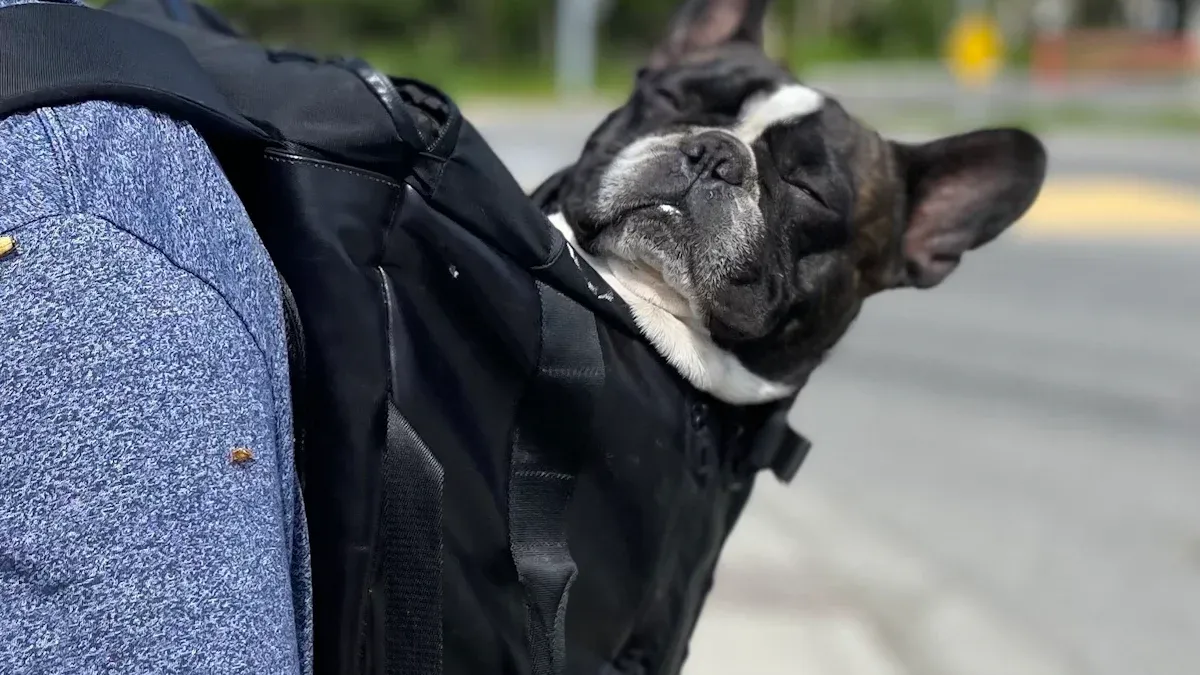
Ventilation, shade, and pacing for hiking safety
You need to keep your dog cool and comfortable during every hike. Start by choosing a dog backpack with mesh panels on more than one side. This allows air to move through the dog backpack and helps prevent hot spots. Always check that the dog backpack carrier for hiking fits your dog and your dachshund well. Take breaks in the shade and slow your pace, especially on warm days. Give your dog water often. Limit each session in the dog backpack to short periods. Watch your dog for any signs of discomfort.
Experts say, “Proper ventilation isn’t just about mesh panels—it’s about strategic placement and coverage. Air should circulate from multiple directions, not just one side.” (AVMA)
High-risk dogs: short-nosed, overweight, older
Some dogs face higher risks during hiking. Short-nosed breeds, overweight dogs, and older dachshunds can overheat faster in a dog backpack. These dogs need extra care. Always check the fit of the dog backpack and use hiking safety gear. Take more breaks and keep your hike short for these dogs.
Overheating cues: panting, drooling, reluctance
You must know the early signs of overheating. Watch for heavy panting, drooling, or your dog trying to get out of the dog backpack. Dachshunds may yawn, lick their lips, or show the whites of their eyes. If your dog pants more than usual or seems tired, stop your hike right away.
Stage | Signs |
|---|---|
Heat Exhaustion | Heavy panting, falling behind, losing focus |
Heatstroke | Gum color changes, drooling, trouble walking |
What to avoid: full enclosure, fast pace, no breaks
Never fully enclose your dog in the dog backpack during hiking. Avoid hiking too fast or skipping breaks. Do not ignore signs of distress. Always give your dachshund water and let them rest in the shade.
Airflow and Heat Risk Control Checklist:
Choose a dog backpack with mesh on multiple sides
Take frequent shade breaks
Hike at a slow, steady pace
Offer water often
Check the fit of the dog backpack and your dachshund
⚠️ Warning: Never fully enclose your dog in warm weather. Stop hiking if you see any warning signs. Seek veterinary help if symptoms get worse.
Trail-safe checklist and quick fixes for your dog backpack
Pre-hike, trailhead, and on-trail checks
Before you start hiking, check your dog backpack for secure closures, harness clips, and proper fit. Make sure your dachshund sits upright in the dachshund carrier. At the trailhead, review leash rules. Most parks require a leash no longer than 6 feet. Always keep your dog leashed to protect wildlife and other hikers. During your hike, watch for signs of discomfort in your dog. Take breaks often and check the fit of your dog backpack.
Feature | Use | Trade-off | Problems if Missing |
|---|---|---|---|
Mesh Panels | Ventilation | Less insulation | Overheating |
Harness Clip | Safety | Extra step to attach | Escape risk |
Adjustable Straps | Fit and comfort | Takes time to adjust | Slumping, bouncing |
Troubleshooting: slipping, bouncing, pawing, vocalizing
If your dog starts slipping or bouncing in the dog backpack, check the straps and adjust for a snug fit. Pawing or vocalizing may mean your dachshund feels uncomfortable. Stop hiking and check for rubbing or heat. Carrying a dachshund requires extra attention to fit. Use the troubleshooting table below for quick fixes.
Problem | Possible Cause | Immediate Fix | Prevention |
|---|---|---|---|
Slipping | Loose straps | Tighten straps | Check fit before hike |
Bouncing | Poor fit | Adjust carrier | Use best dog backpacks |
Pawing | Heat or discomfort | Take a break | Use mesh, check often |
Vocalizing | Anxiety or pain | Stop, check carrier | Acclimate before hiking |
Safety: leash rules, wildlife, rocky terrain
You must follow leash rules for hiking. Keep your dog on a leash no longer than 6 feet. Off-leash walking is not allowed. Respect wildlife and other hikers. Watch for rocky terrain that can cause slips. Carrying a dog in a small dog backpack carrier helps protect paws. Always check for hazards before you hike.
The BARK acronym reminds you: Bag your dog’s waste, Always leash your pet, Respect wildlife, Know where you can go.
Cleaning and care after hiking
After your hike, clean your dog backpack to remove sweat and odor. Check for dirt in closures and straps. Wash the dachshund carrier with mild soap and water. Dry completely before storing. Inspect for wear and tear. Proper care keeps your dog carrier backpack ready for your next hike.
Common mistakes and solutions:
Forgetting to check fit: Always test before hiking.
Ignoring leash rules: Review park guidelines.
Skipping cleaning: Wash after every hike.
You want every hike with your dog to be safe and enjoyable. Always check the dog backpack for fit, stability, and ventilation. Carrying a dachshund means you need a carrier ideal for dachshunds. Review this table before hiking:
Priority | Description |
|---|---|
Base Rigidity | A firm bottom keeps your dog stable during movement. |
Ventilation Coverage | Mesh on several sides helps your dog stay cool. |
Internal Tether Point | Secure the tether to your dog’s harness for safety. |
Quick Checklist:
Check the fit for both you and your dog.
Make sure your dog sits upright in the dog backpack.
Use a harness, not a collar, for the tether.
Watch for signs of discomfort in your dog.
Take breaks often during your hike.
Stay alert to your dog’s needs. When you use a dog backpack that is ideal for dachshunds, you help your dachshund enjoy the outdoors. Always put safety and comfort first when carrying a dachshund on your next hike.
FAQ
How do you check if your dog is comfortable in the backpack carrier?
Watch your dog’s posture.
Look for calm behavior.
Stop if you see signs of discomfort.
Safety tip: Always check your dog during breaks.
What should you do if your dog starts panting heavily in the carrier?
Pause your hike.
Move to shade.
Offer water.
Alert: Heavy panting can signal overheating. Monitor your dog closely.
Can you use a collar for the internal tether?
You should use a harness for the internal tether. This prevents choking and keeps your dog secure.
Precaution: Never attach the tether to a collar.
