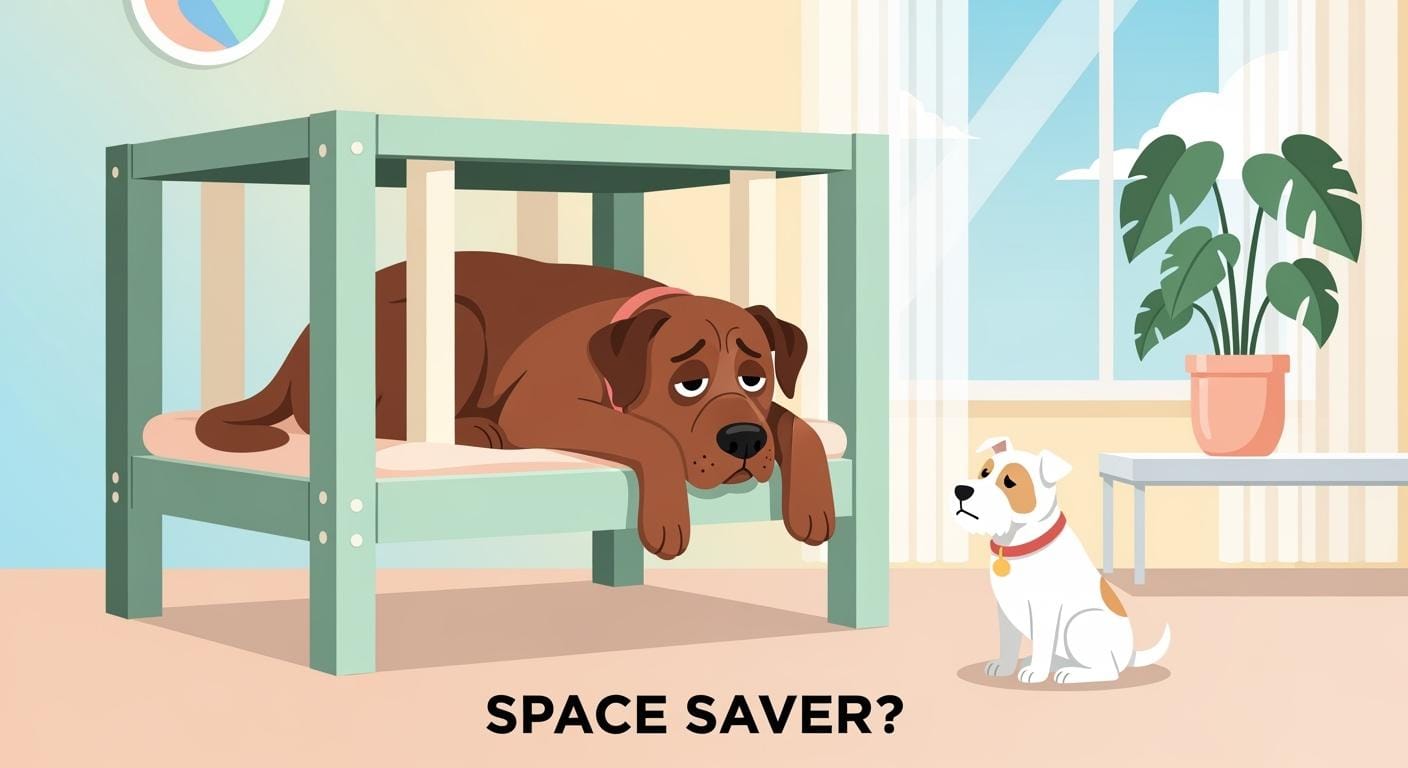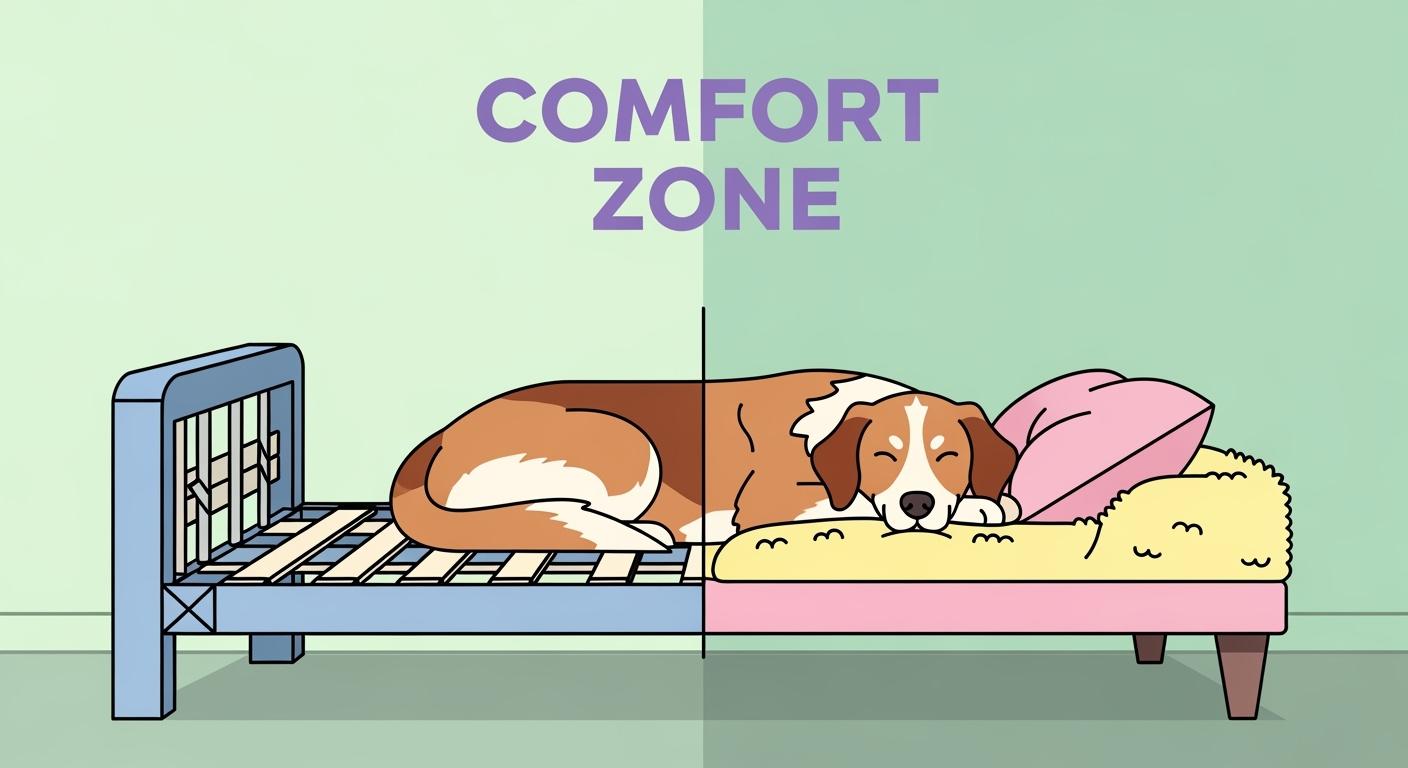
The toughest dog bed is not always the thickest one or the hardest one. It is the one your dog cannot destroy easily and still wants to use every day.
Some dogs target seams, corners, and zipper pulls the moment a new bed appears. Others ignore those weak points completely but need more warmth, softer cushioning, or easier entry. That is why the better choice usually comes from matching chew access, support level, and sleep style instead of chasing toughness alone.
Disclaimer: This article is about bed choice, chew resistance, and sleep comfort. It is not a diagnosis of joint pain, anxiety, skin problems, or other health issues.
Das Wichtigste in Kürze
- Raised-frame beds usually last longer for active chewers because they expose fewer soft edges and fewer easy bite points.
- Soft padded beds often work better for nesting dogs, anxious dogs, and dogs that need warmer, more cushioned sleep.
- A bed that survives but never gets used is still the wrong bed, so durability and real sleep comfort have to be judged together.
When a Raised Bed Usually Lasts Longer
Raised-frame beds usually hold up better when a dog likes to attack corners, pull at seams, or worry fabric until a small opening turns into a large one. The main reason is simple: there is less soft material to grip and fewer exposed entry points to start tearing.
Why hard frames help some chewers
A taut sleep surface changes the whole chewing pattern. Dogs that enjoy grabbing loose edges often lose interest when there is no soft corner to catch with their teeth. A rigid outer frame also removes many of the weak points that padded beds naturally have.
Why cleanup is usually easier too
A raised bed is also easier to wipe down and dry after dirt, saliva, or wet paws. That matters because a bed that stays cleaner usually lasts longer in real use, especially for active dogs that move between indoors and outdoors.
| Feature | Raised-Frame Bed | Armored Floor Pad | Soft Padded Bed | What to Watch |
|---|---|---|---|---|
| Chew resistance | High | Medium to high | Low | Even raised beds fail faster when frame ends stay exposed |
| Chew access | Low | Medium | High | Seams and zipper areas usually get hit first |
| Rest comfort | Good | Moderate | Excellent | Some dogs still prefer softer surfaces |
| Cleaning effort | Easy | Moderate | Harder | Soft beds usually need more drying time |
| Best fit | Chewers, active dogs, large dogs | Diggers, heavy users | Nesters, seniors, anxious dogs | Sleep style still matters as much as durability |
When a Softer Bed Still Makes More Sense
A soft bed still works better for some dogs even when it will not win on toughness. Dogs that like to circle, dig, curl tightly, or press into a warm surface often sleep more deeply on a padded bed than on a firmer suspended one.
Why some dogs ignore the tough option
A bed can be extremely durable and still feel too firm, too open, or too cold. If your dog keeps choosing the floor, couch, or rug instead, the problem may not be durability at all. It may be that the sleep surface does not match how your dog actually likes to rest.
Who usually needs more cushioning
Seniors, thin-coated dogs, anxious nesters, and dogs that settle best on warmer, softer surfaces often do better on a padded bed. For these dogs, better sleep can matter more than maximum chew resistance, especially if the chewing is mild or occasional instead of constant.
The tradeoff is that soft beds usually expose more seams, more corners, and more weak points. If your dog already destroys fabric beds quickly, a padded bed may only make sense when chewing is a small part of the picture and comfort is the bigger need.
What Usually Gets a Bed Destroyed First
Most beds do not fail because the whole design is weak. They fail because one small area gives the dog an easy start. Once that first grip point opens, the rest goes fast.
Edges and seams matter more than thickness
A thick bed with loose seams can fail faster than a simpler bed with cleaner construction. Dogs usually start where they can grip, pull, or compress something soft. That is why corners, zipper pulls, and stretched seams get damaged before the center of the bed does.
Cleaning and wear still matter
Dirt, oils, saliva, and dampness break beds down faster over time. A soft bed that rarely dries fully or stays dirty between washes usually loses strength faster than owners expect, even before heavy chewing starts.
| Construction Feature | Why It Helps | What to Watch |
|---|---|---|
| Recessed or capped frame ends | Removes an easy bite-start point | Uncovered frame ends still invite chewing |
| Ripstop or dense outer fabric | Slows spreading after the first puncture | Fabric alone will not save weak seams |
| Reinforced stitching | Helps corners and seams last longer | Corner seams still take the most stress |
| Recessed zipper or hidden closure | Reduces one of the easiest grab points | Visible zipper pulls often get targeted first |
| Waterproof inner barrier | Helps protect fill from moisture and odor | Only useful when the outer layer still stays intact |
Failure Signs That Matter Most
Your dog’s behavior usually tells you which part of the bed is wrong. Where the chewing starts, whether the bed gets skipped, and how the dog moves after sleep all help show whether you need tougher construction, softer support, or a different layout entirely.
| Failure Sign | What It Usually Means | Fast Check | Beheben |
|---|---|---|---|
| Corner targeting | Soft weak point is easy to grip | Press corners and see how much they compress | Move to a bed with fewer exposed edges |
| Seam picking | Stitching or seam layout is easy to attack | Look for puckering or stretched thread lines | Choose stronger seam construction or harder geometry |
| Frame chewing | Frame ends or legs are too exposed | Inspect all outer contact points | Use capped or recessed frame ends |
| Skipped use | Surface feel or support level is wrong | Watch where your dog chooses to rest instead | Change firmness or bed type |
| Persistent odor | Bed is holding moisture or oils | Check smell after a full wash and dry cycle | Increase wash frequency or change construction |
| Visible fill exposure | The cover has already failed | Run a hand over seams and chew points | Replace immediately and change design direction |
Tip: The most common mistake is replacing a destroyed soft bed with another soft bed that fails at the same seam, corner, or zipper point.
How to Match the Bed to the Dog
The toughest dog bed only makes sense when it matches how your dog actually sleeps and chews. A hard-wearing raised frame often works best for active chewers. A softer bed often works better for dogs that care more about warmth, nesting, or cushioning than they do about ripping fabric apart.
| Dog Profile | Better Starting Point | Main Reason |
|---|---|---|
| Active chewer | Raised-frame bed | Fewer soft edges and fewer easy bite points |
| Digger or scraper | Armored floor pad | Better resistance to surface wear and scratching |
| Senior large dog | Raised frame or supportive orthopedic pad | Needs support, but easy entry still matters |
| Anxious nester | Soft padded bed | Usually settles better on warmer, shaped cushioning |
| Puppy in a chewing phase | Simple supervised raised bed | Often needs fewer chew points while habits are still changing |
The better result usually comes from watching what your dog does for a few days, not from one first impression. If the dog chooses the bed willingly, settles fully, and leaves it alone, you are probably much closer to the right fit.
Häufig gestellte Fragen
What usually makes a dog bed tough for chewers?
Fewer exposed edges, stronger seams, hidden weak points, and a surface that does not give the dog an easy starting grip usually matter most.
Can a tough bed still work for an older dog?
Yes, but only when support and entry still feel practical. A very tough bed that feels too firm or too hard to access may still get ignored.
How often should you clean a dog bed?
That depends on the dog and the bed type, but regular cleaning matters because dirt, saliva, and moisture shorten usable life faster than many owners expect.
The toughest dog bed is usually the one that removes easy chew access without turning sleep into an afterthought. If your dog destroys soft corners, start with a harder frame. If your dog keeps avoiding firm surfaces, toughness alone is probably not the answer.