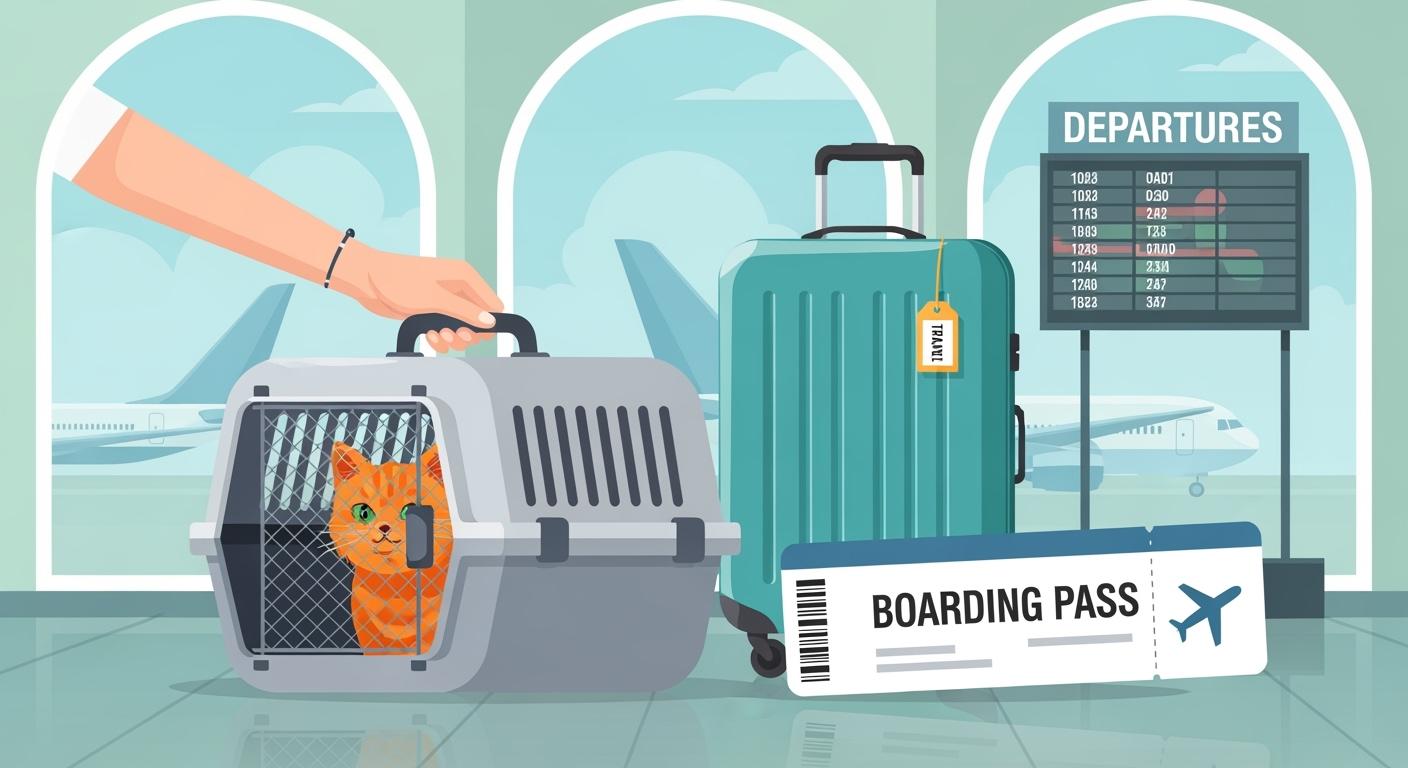
“Top rated” is not the same as “ready for your flight.” A carrier can have strong reviews and still fail at the gate if it does not fit under the seat, does not close securely, or does not give your pet enough usable room. Before you buy an airline pet carrier, start with fit, airline acceptance, and handling on travel day.
This page is a product-selection guide for in-cabin travel. It does not guarantee airline acceptance, and it does not replace destination paperwork, airline rules, or veterinary advice for pets with breathing, stress, or other health concerns.
Das Wichtigste in Kürze
- Check the airline rule page first, not the product badge. “Airline approved” labels are not enough on their own.
- Measure your pet inside the position they actually use for travel: standing, turning, and lying down naturally.
- Compare the carrier’s outside size to under-seat limits, but also check base shape, zipper bulk, and whether the carrier keeps its shape when fully closed.
- Prioritize secure closures, practical ventilation, a leak-resistant base, and a liner you can remove and wash easily.
- Do a home test before travel day: zipped-in test, short carry test, under-seat mockup, and cleanup check.
What “top rated airline pet carriers” should mean
Search results do not decide gate acceptance
When you compare top rated airline pet carriers, ratings can help you spot common complaints, but they do not tell you whether your route, seat, or aircraft will accept that shape. For this topic, a better definition of “top rated” is simple: the carrier fits your airline’s rule set, gives your pet usable room, and is easy to handle from check-in through landing.
That means you should be careful with strong claims like “guaranteed for every airline” or “FAA approved” without context. Different airlines and even different aircraft can have different under-seat space, pet limits, and cabin restrictions. A model that works on one trip may still be rejected on another.
Under-seat fit matters more than review count
Start with two measurements, not one. First, measure the carrier exterior, because that is what must slide under the seat. Second, measure the usable interior floor and wall shape, because that is what affects your pet. Rounded sides, thick padding, outside pockets, and zipper tracks can reduce real space even when the label looks generous.
If you need a more detailed measuring walkthrough, use your existing airline’s rules for pet carriers as the first checkpoint, then compare that rule page to the real outside dimensions of the carrier you plan to buy.
| What to verify | What to look for | Common mismatch |
|---|---|---|
| Exterior size | Closed carrier fits your airline’s under-seat limit without forcing the top or sides open. | Outside pockets, wheels, thick trim, or rigid corners make the carrier effectively larger than expected. |
| Interior room | Your pet can stand, turn, and settle naturally without pressing hard into the roof or sidewalls. | A carrier looks roomy on a product page but narrows quickly inside. |
| Base shape | The floor stays flat when the carrier is lifted and when your pet shifts weight. | Soft carriers sag in the center, which reduces comfort and can make airport handling harder. |
How to size and test a carrier before travel day
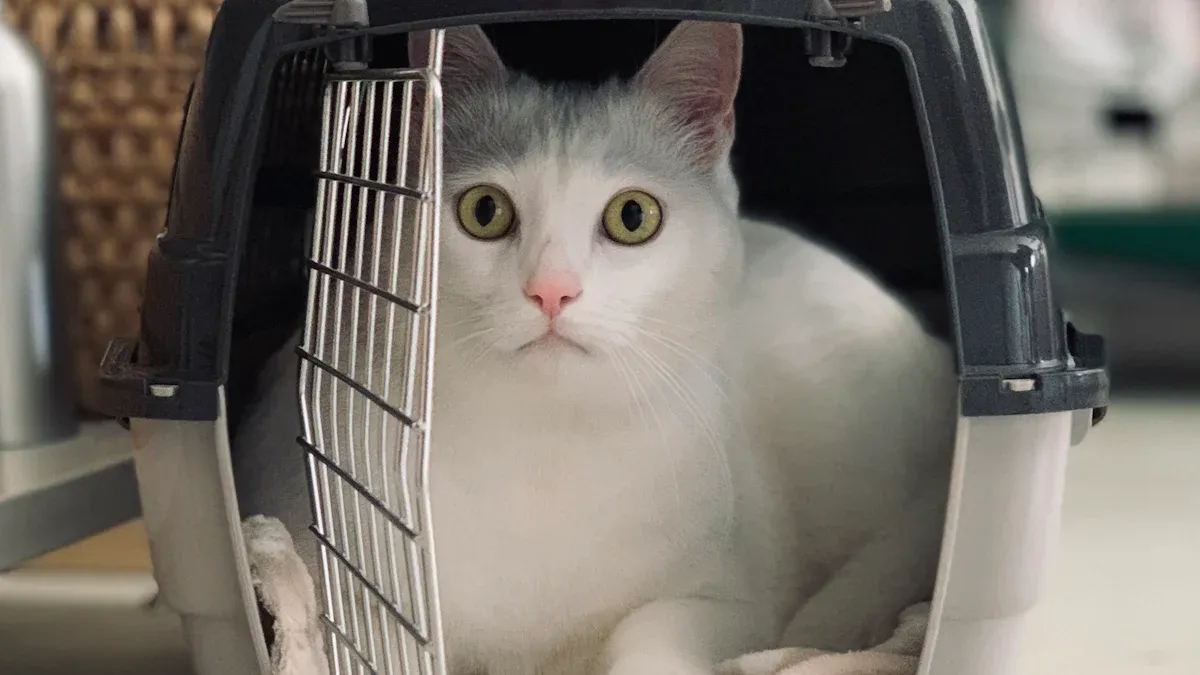
Measure the position your pet actually uses
Measure in the posture your pet will use in flight, not while stretching at full length. For many cats and small dogs, the most useful checks are settled body length, sitting height at the tallest point, and curled width. Then compare those numbers to the carrier’s usable interior, especially the floor length and the lowest roof point.
A short test at home is more useful than a long feature list. Put the carrier on the floor, let your pet enter on their own, zip it fully closed, and watch whether they can shift position without pressing their face into the mesh. If your pet immediately hunches because the roof is too low, or cannot settle without curling tighter than usual, the carrier is too small even if the label says it fits the weight.
Use a pass/fail check instead of guessing
| Home test | Pass | Fail |
|---|---|---|
| Zipped-in test | Your pet can settle, shift, and lie down without constant crouching. | The roof presses down, the sidewalls collapse inward, or your pet cannot change position. |
| Carry test | The base stays level and the carrier does not swing sharply as you walk. | The floor sags, twists, or tips when your pet moves. |
| Mock under-seat test | The carrier slides under a low chair or bench without deforming badly. | You have to crush the top heavily or angle the carrier to force it in. |
| Cleanup test | The liner comes out easily and the base material wipes clean. | Padding traps moisture or the liner is awkward to remove and dry. |
Features that matter on flight day
Ventilation, closures, and leak control
Good airflow matters, but “more mesh” is not always better if the carrier loses structure. For this type of travel, look for a balanced setup: practical ventilation on multiple sides, a base that resists leaks, and zippers that stay fully closed without obvious gaps at the corners. Soft-sided carriers are often easier to fit under the seat, but they still need enough structure to avoid collapsing onto your pet when stowed.
Leak control is part of comfort, not just cleanliness. A removable absorbent liner or washable pad helps on longer travel days. A base that wipes down quickly also matters if you are dealing with airport delays, weather, or a nervous pet.
Airport handling should be easy for you too
Choose a carrier you can open, close, and carry smoothly under pressure. Security screening, boarding lines, and seat changes are the moments when a bad design becomes obvious. Long shoulder straps that slide off, zippers that snag, and floppy tops that fold into your pet’s face can all turn a “top rated” carrier into a poor travel choice.
Before departure, review your airport routine with the same care you use for fit. Your check airline travel pet carriers process should include where your documents go, how you remove your pet for screening, and whether you can get the carrier back under the seat quickly after boarding.
Tip: Practice opening the main zipper and lifting your pet out calmly at home. A carrier that works well in a quiet room is much easier to use at security.
What to recheck for international or changing itineraries
Airline rules, route changes, and paperwork
International travel adds more than seat-fit questions. Destination rules, connection airports, and airline handling policies can change what documents you need and when you need them. Do not assume the same setup works for every route just because the carrier fits one airline’s cabin rule.
Recheck your itinerary if any of these change: airline, aircraft type, cabin, destination country, or your return route. That is especially important if you are flying with a dog internationally or bringing a dog back into the United States, where health and entry paperwork can change over time.
When to pause and ask your veterinarian
If your pet has breathing issues, panic behaviors, recent illness, or struggles badly during the zipped-in home test, pause before booking. This is also a good point to ask your veterinarian for travel guidance. Pets with flat faces or a history of heat stress deserve extra care because air travel can combine confinement, handling, and temperature change in a way that is harder on them than an ordinary car ride.
Häufig gestellte Fragen
Is a soft-sided carrier usually better for cabin travel?
Often, yes, because a soft-sided carrier can fit under the seat more easily. But the better choice is the one your airline accepts and your pet can use comfortably with the carrier fully closed.
Can you trust an “airline approved” label?
No label can replace checking the airline rule page. Use the label as a starting point, then verify under-seat size, route rules, and whether your pet can stand, turn, and lie down inside the carrier.
What is the biggest mistake before a flight?
Buying by review count or weight label alone. The most common problem is a carrier that looks acceptable online but is too tall, too narrow inside, or too unstable once the pet is actually inside it.