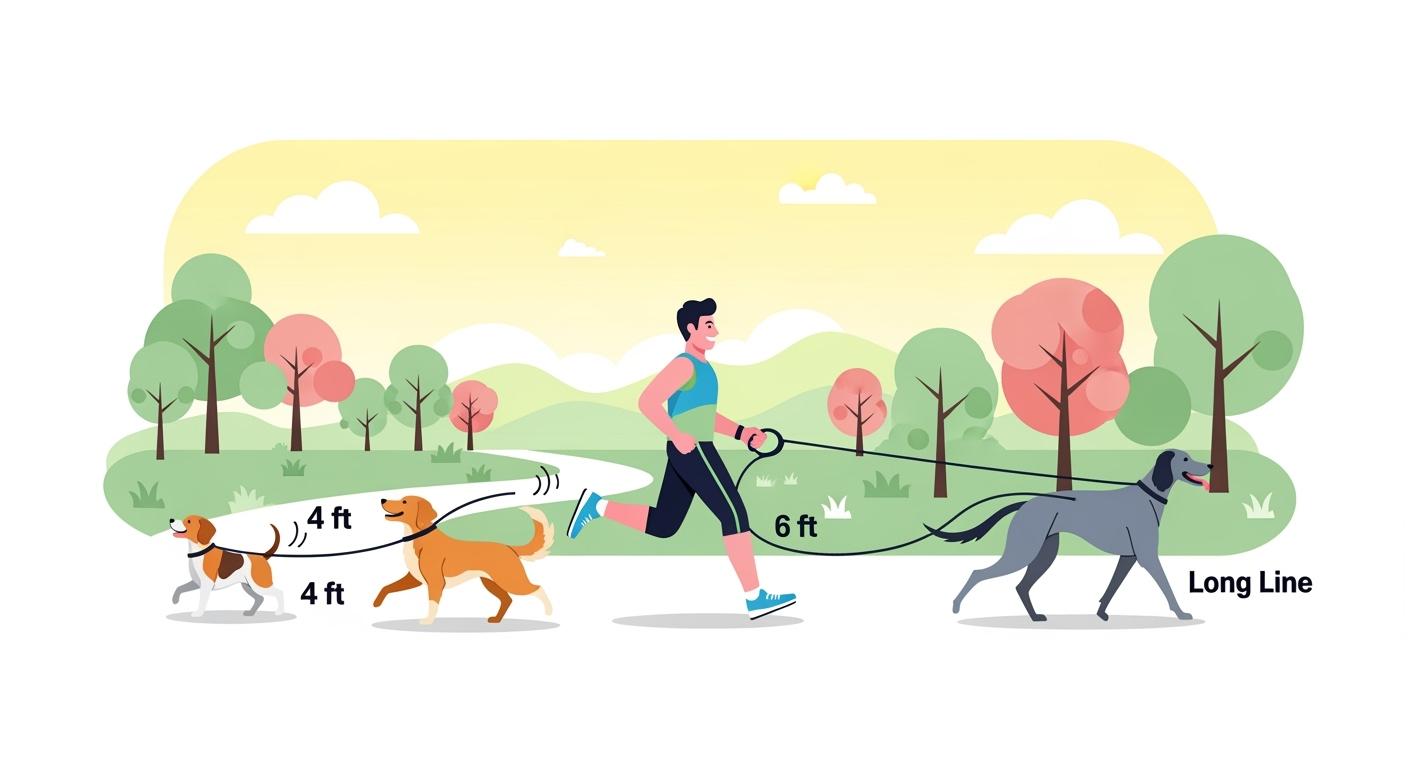
The right running leash is not the one with the longest feature list. It is the one that matches your route, your passing distance, and how quickly you may need to shorten the line. For most dog-and-runner pairs, 4 ft works best where control matters most, 6 ft works best where there is steady space to move, and a long line belongs in open training sessions rather than normal runs.
If you are still comparing basic options, start with dog leash styles first. Then use the checks below to decide which length matches your dog, your pace, and the places where you actually run.
Choose leash length by route, not by habit
Many bad running setups happen because people choose leash length the way they choose a walking leash. Running changes the picture. You have less reaction time, your dog covers ground faster, and small mistakes get bigger once speed increases.
Start with one question: what usually forces you to shorten the leash? In city blocks, it is often curbs, bikes, and people passing close by. On wider paths, it is usually changes in pace, turns, and occasional passing. In open training areas, it is distance work rather than jogging rhythm.
- Choose 4 ft when you need close control before crossings, narrow paths, or repeated passing.
- Choose 6 ft when the route is open enough to allow a smoother stride but still needs quick shortening.
- Choose a long line only when the goal is recall or distance training in open space, not ordinary running.
What 4 ft, 6 ft, and long lines each do well
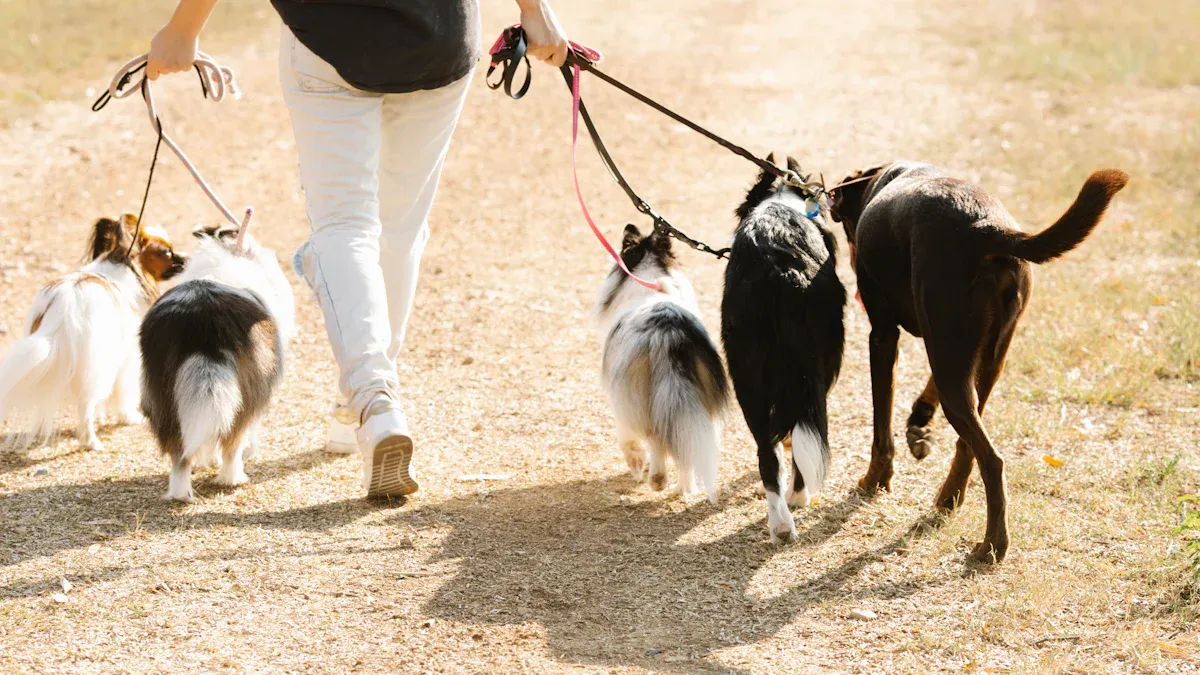
4 ft leashes are the safest choice when your dog needs to stay near your side. They help at street corners, near traffic, on crowded sidewalks, and whenever you expect repeated passing. The tradeoff is that a 4 ft leash feels less forgiving if your dog forges ahead or drifts across your path.
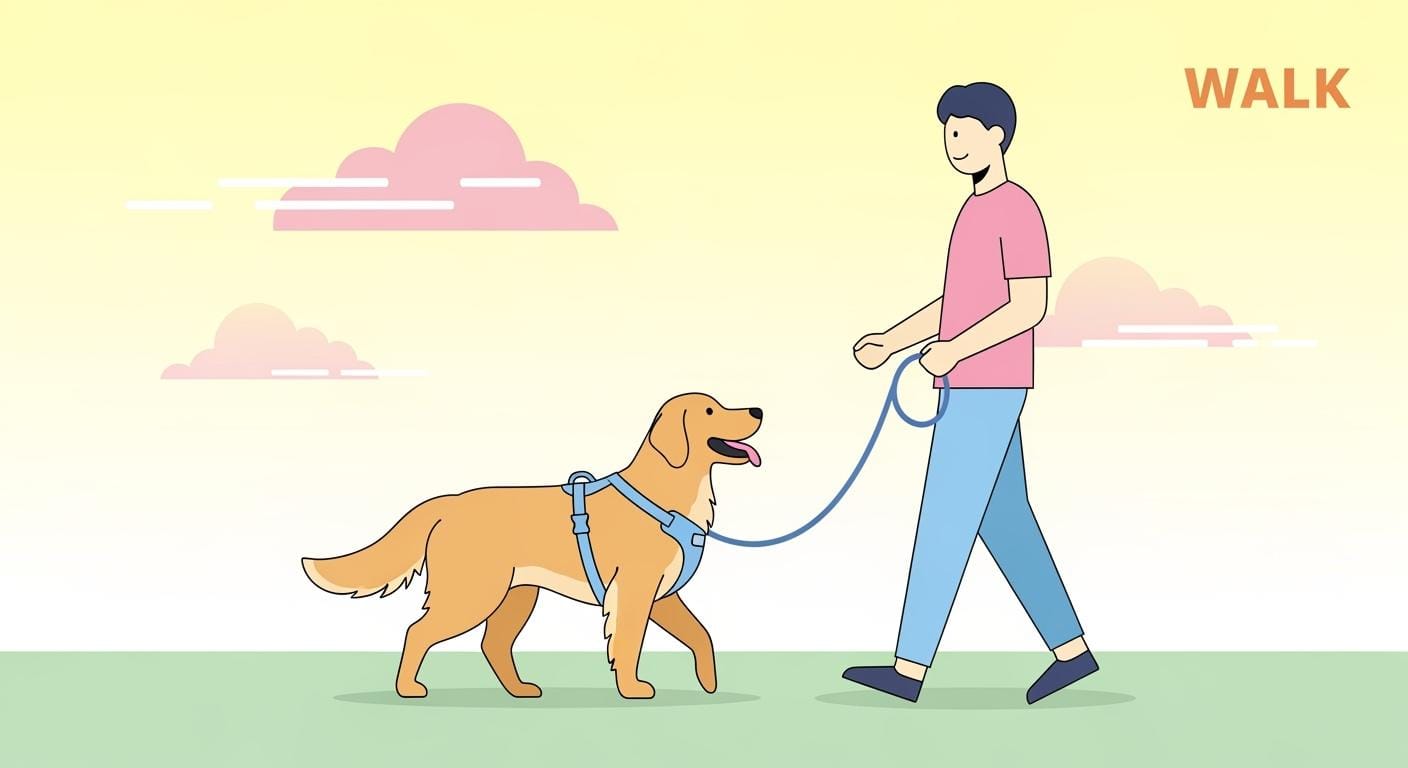
6 ft leashes usually make the most sense for steady runs on wider paths. They leave enough working room for a natural gait without creating too much extra slack. For many runners, this is the easiest length to shorten quickly, then release again after the pass.
Long lines are not a normal running leash. They are a training tool. Use them for recall practice, distance handling, and open-space control drills where you can see hazards early and gather the line quickly. Once bikes, blind corners, or other dogs become part of the route, the extra length becomes a problem instead of a benefit.
| Length | Best fit | Main advantage | What to watch |
|---|---|---|---|
| 4 ft | Busy sidewalks, crossings, narrow routes | Fast control | Can feel restrictive if your dog crowds your stride |
| 6 ft | Parks, greenways, wider shared paths | Balanced space and control | Needs active shortening before passes |
| Long line | Open-field training | Distance work and recall practice | Too much slack for regular runs |
Check the full running setup before you blame the leash length
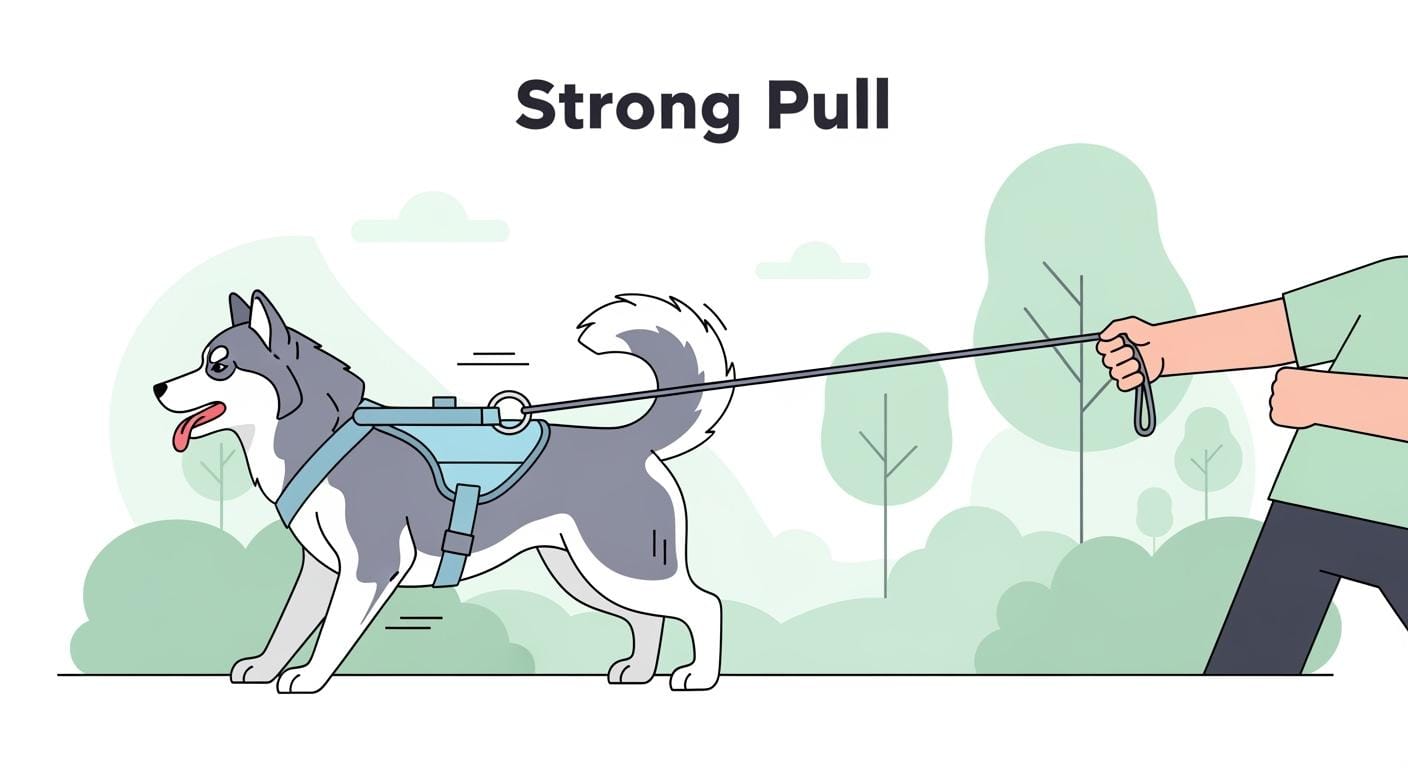
Sometimes the problem is not 4 ft versus 6 ft. It is the whole setup. If your dog pulls hard, cuts across your line, or causes repeated jolts, changing the leash length alone may not solve much.
Before your next run, check these points:
- Attachment point: use a secure harness for running instead of clipping to a collar.
- Handle control: make sure you can shorten the leash quickly without wrapping it around your wrist.
- Bungee behavior: treat stretch sections as comfort support, not as a replacement for control.
- Passing routine: shorten, cue, pass, then release back to normal working length.
- Route fit: if the route is too tight for your current setup, change the route before changing everything else.
If the bigger issue is belt bounce, delayed reaction, or how a waist setup feels once your pace changes, compare those tradeoffs with this hands-free dog leash guide before you assume a longer leash is the answer.
Know when not to run and when to downshift to a walk
A leash can improve handling, but it cannot make an unsafe run safe. Downshift to a walk if your dog is overheating, coughing, repeatedly lunging, freezing at traffic, or getting too aroused to stay on one side. In those moments, the issue is not just line length. It is that the run has become too difficult for the current setup.
For route planning, passing control, and calmer handling in shared spaces, build your checks around a walking and training setup rather than treating the leash as the only decision. That usually gives you a clearer answer about whether you need tighter control, more practice, or a quieter route.
- Stop running if your dog starts limping, overheating, panicking, or repeatedly surging toward distractions.
- Use walking sessions to teach passing, side changes, and stopping before you add speed.
- If a run keeps falling apart at the same trigger, shorten the route or lower the difficulty before trying a different leash length.
Häufig gestellte Fragen
Is a 4 ft leash too short for running with a dog?
Not if your route is busy or your dog needs close control. A 4 ft leash works well where quick shortening happens all the time, such as crossings, narrow paths, and frequent passing.
Is 6 ft the best all-around running leash length?
For many dogs, yes. It often gives the best balance between room to move and quick control, especially on wider shared paths and park routes.
Can I use a long line for jogging if my dog has good recall?
It is still better to keep long lines for open training sessions. Even with good recall, the extra slack becomes a tripping and tangling risk on normal runs.
Should I use a collar or a harness for running?
A harness is the safer choice for most running setups because it spreads pressure away from the neck and gives you a more stable attachment point.
What matters more: leash length or leash type?
Both matter, but route fit usually comes first. Start with the route, then check whether your dog needs a fixed leash, a hands-free setup, or a little bungee support.