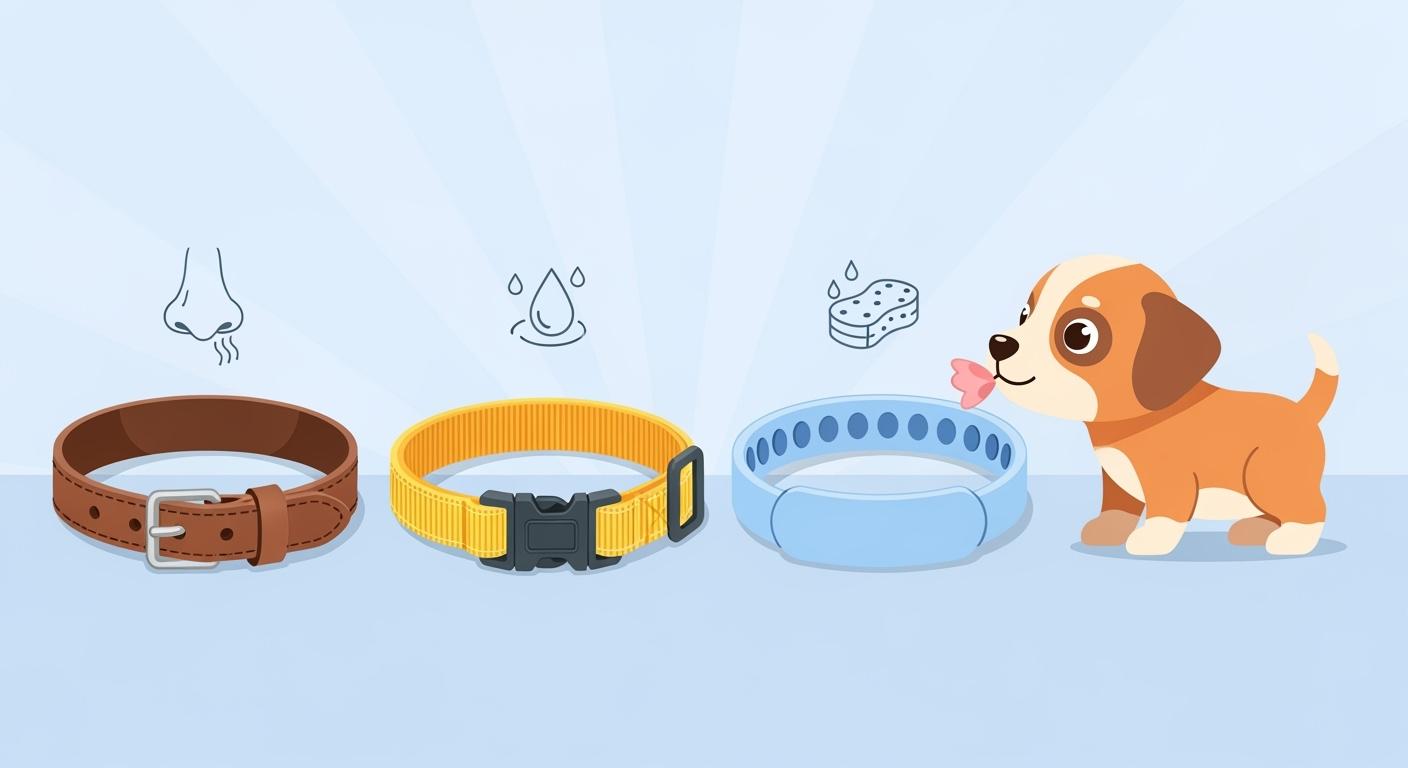
When you choose a puppy collar, the material affects everyday comfort more than many owners expect. A collar that dries quickly, stays cleaner after muddy walks, and does not hold odor as easily is usually more comfortable to live with, especially when a puppy is still growing fast and getting dirty often. The best choice usually depends on how often your puppy gets wet, how much cleaning you can realistically keep up with, and whether the collar still feels comfortable after repeated daily wear.
It helps to think of this as part of your wider everyday collar options rather than choosing by color or pattern first.
What matters most in puppy collar materials
Puppies get wet, roll in dirt, chew, scratch, and outgrow gear quickly. That means a collar material has to do several jobs at once: stay reasonably fresh, dry without holding too much moisture, feel comfortable against the neck, and remain easy enough to clean that you will actually maintain it.
What most owners notice first
- Whether the collar smells bad soon after wet walks.
- Whether it dries quickly or stays damp against the neck.
- Whether dirt rinses off easily or sticks in the material.
- Whether the surface stays smooth instead of feeling rough or stiff after repeated cleaning.
Why material matters more for puppies
A growing puppy often needs more frequent fit checks and more frequent cleaning than an adult dog. A collar that traps water, odor, or grime can become uncomfortable faster simply because puppies are more active, messier, and more likely to need adjustment as they grow.
Quick rule: if a collar stays damp too long or smells bad again soon after cleaning, the material may not fit your puppy’s daily routine well enough.
How common puppy collar materials compare in real use
Each collar material solves a slightly different problem. Some are easier to wipe clean. Some feel softer at first. Some handle wet weather better but may still need regular checks for fit and comfort. The best choice is usually the one that matches your puppy’s habits, not the one that only sounds strongest on paper.
| Material type | Usually works well for | What to watch for |
|---|---|---|
| Nylon webbing | Everyday use, light weight, simple washing | Can hold odor if it stays wet or is not dried well |
| Waterproof coated materials | Muddy, wet, or high-mess puppies | Need smooth edges and comfortable finish against the neck |
| Leather | Owners who want a softer natural feel and will maintain it carefully | Absorbs moisture more easily and needs more care |
| PU or coated leather-like styles | Owners wanting easier wipe-down care than untreated leather | Surface wear and stiffness over time if cleaned harshly |
Nylon
Nylon is often the easiest middle-ground option. It is light, flexible, and simple to rinse. The main downside is that it can hold moisture in the fibers if it is left wet too often, which can lead to odor and a collar that feels less fresh than it looks.
Waterproof coated materials
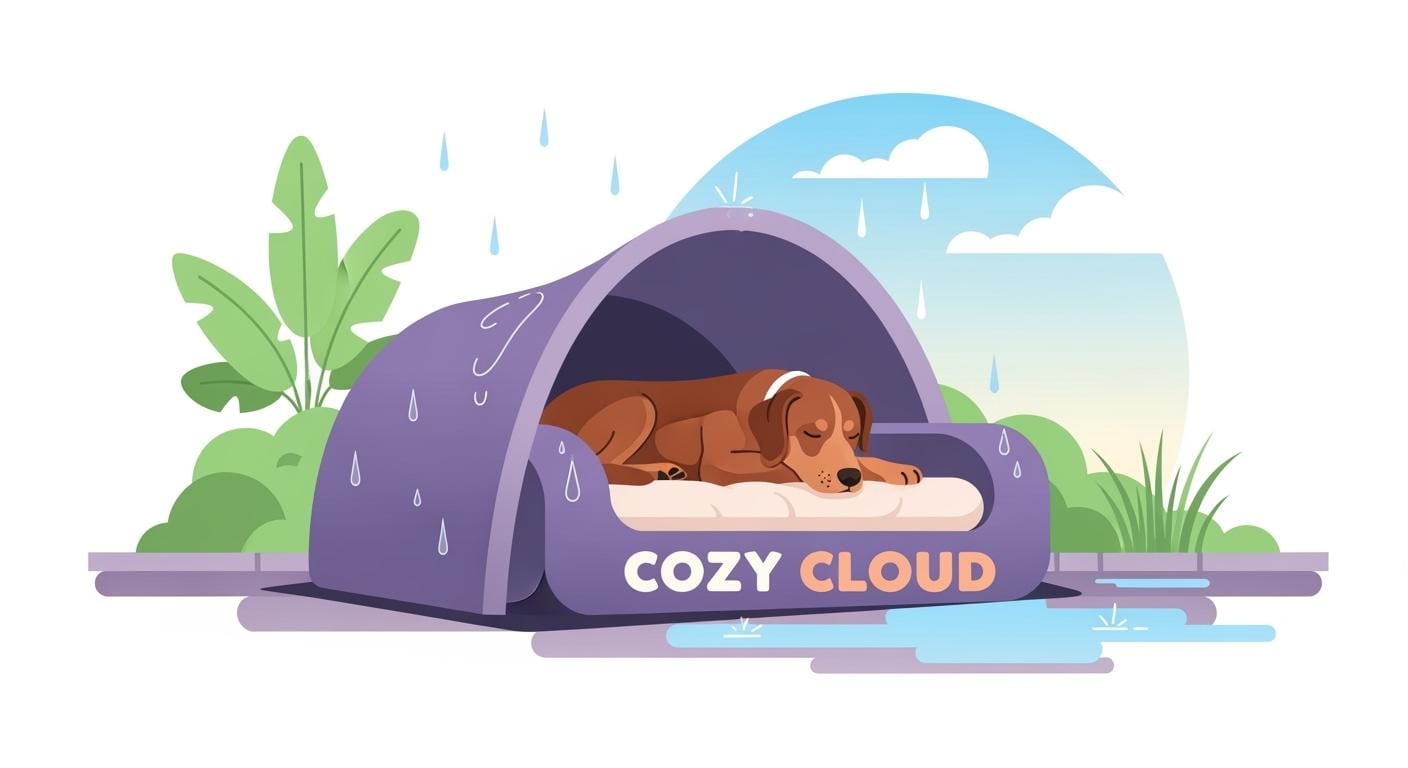
Waterproof coated styles are usually the easiest to wipe clean after rain, mud, or messy play. They work well for puppies that get dirty often because they do not absorb water the same way woven materials do. The main thing to check is whether the edges stay smooth enough for everyday wear and whether the surface still feels comfortable once used regularly.
Leather and coated leather-like styles
Leather can feel soft and classic, but it usually needs more attention if the puppy gets wet often. Coated leather-like styles may be easier to wipe down, but they still need regular inspection so the surface does not become rough, cracked, or uncomfortable.
Fit, comfort, and when a collar is no longer the right tool
Material choice is only helpful if the collar still fits well. A soft collar that is too tight is still a problem. A waterproof collar that is too loose can still slip off. For puppies, the right material and the right fit have to be checked together, especially because neck size can change quickly in the first months.
Use these simple fit checks
- Check the collar after growth spurts, grooming, and wet-weather use.
- Make sure you can fit two fingers comfortably between the collar and the neck.
- Look for rubbing, redness, or flattened fur after walks or play.
- Recheck the fit if the collar smells musty, feels stiff, or seems to sit differently once dry.
Signs the collar setup needs attention
- The puppy scratches at the neck more than usual.
- The collar smells bad again shortly after cleaning.
- The surface feels rough where it touches the skin.
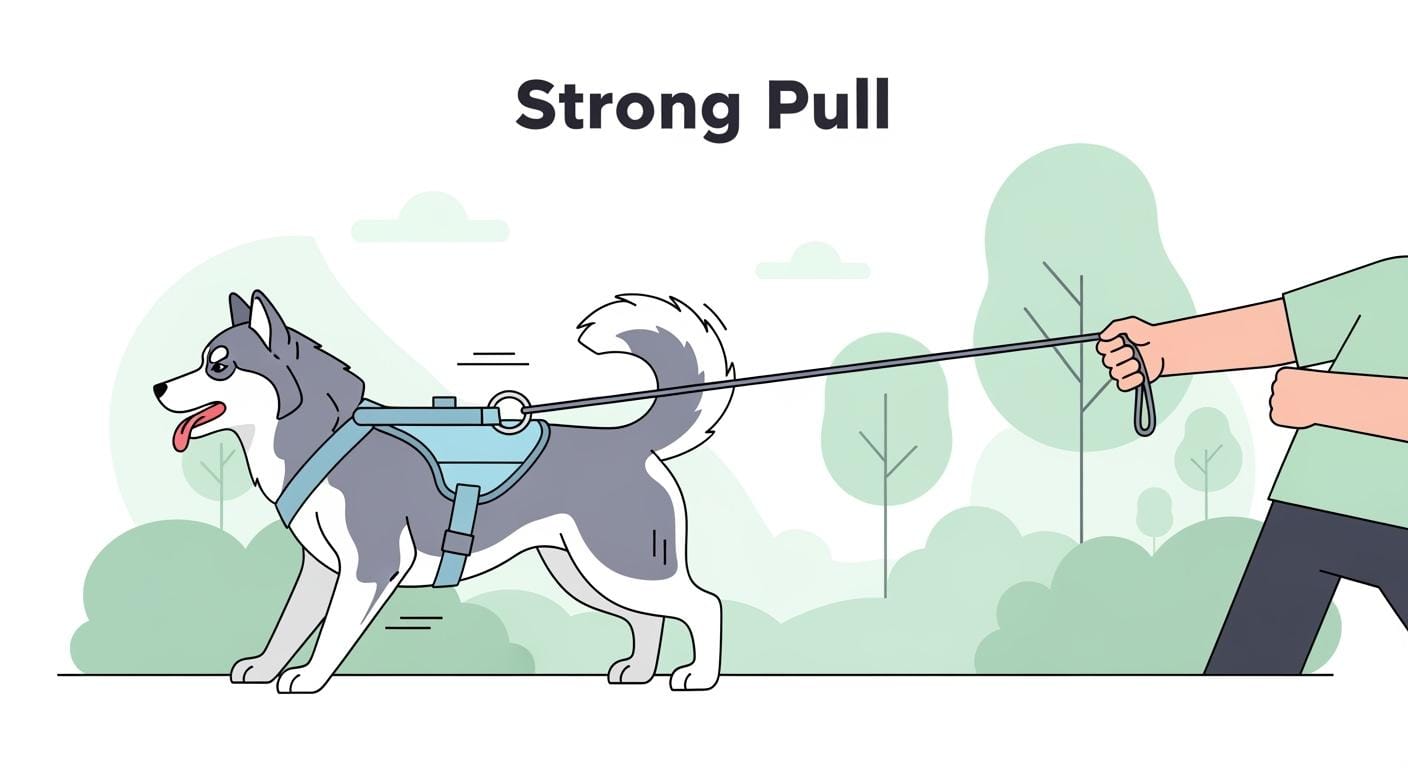
- The puppy pulls or coughs and the collar is taking too much pressure.
If the puppy starts pulling, jumping, or coughing on walks, the issue is no longer only about collar material. In those cases, it often helps to place the choice inside a calmer walking and control routine and reassess whether a harness is the better everyday walking tool.
Cleaning habits, replacement signs, and easy daily care
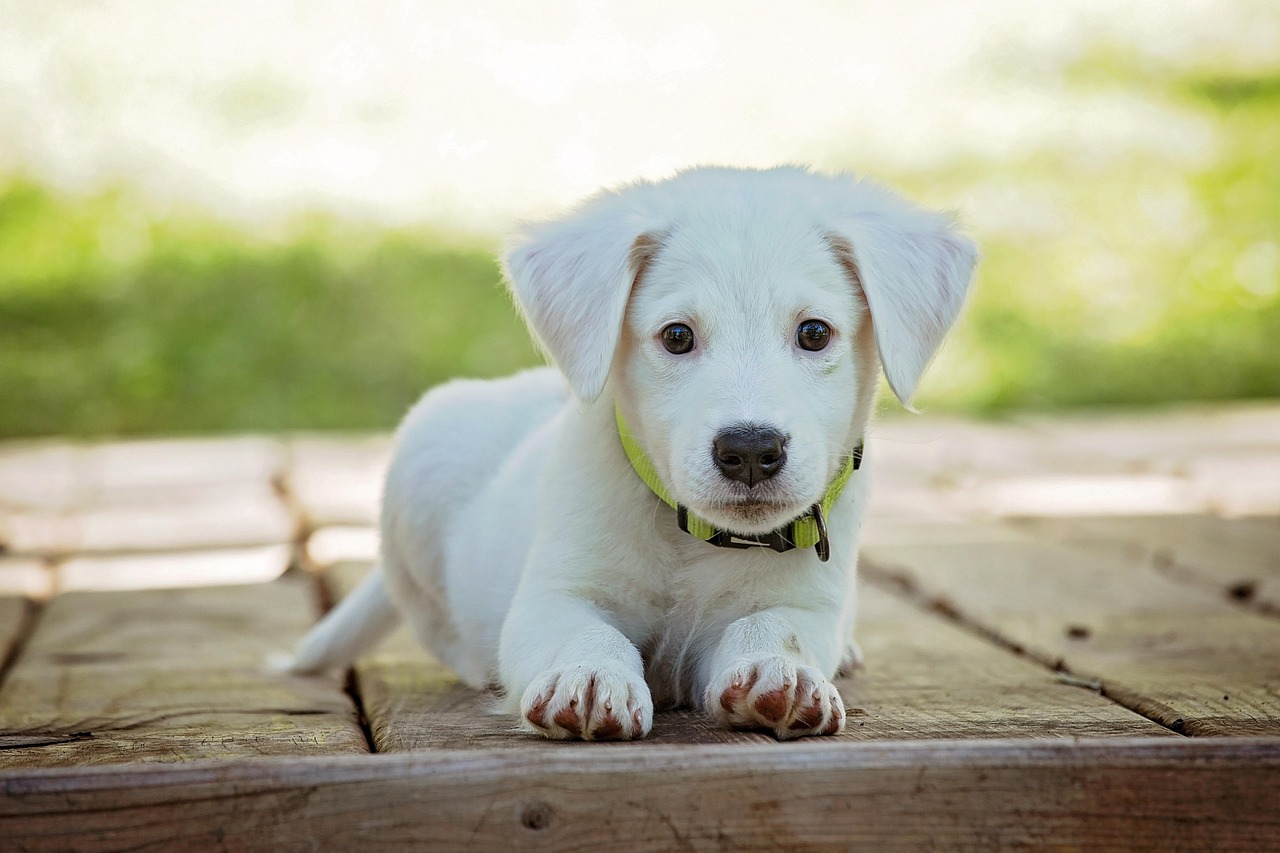
The best collar material still needs basic care. The goal is not to scrub constantly. It is to keep moisture, odor, and rough wear from building up until the collar becomes unpleasant to use.
Simple care habits that usually help
- Rinse after muddy or wet walks instead of letting dirt dry into the surface.
- Let the collar dry fully before putting it back on.
- Use milder cleaning methods first and avoid making the surface rougher.
- Check hardware, edges, and contact points while cleaning.
When cleaning is no longer enough
- Odor returns quickly after washing.
- The collar shows cracking, fraying, or rough spots.
- The finish starts breaking down where it touches the neck most.
- The collar no longer feels comfortable or fits the puppy’s growth stage.
If you want a broader reference point for choosing material, fit, and everyday-use checks across collar types, it is useful to compare these habits against StridePaw’s wider fit-and-material guides before replacing gear too quickly.
Häufig gestellte Fragen
What puppy collar material is easiest to clean?
Waterproof coated materials are often the easiest to wipe down quickly after mud or rain, while nylon is usually the easier woven option for everyday cleaning.
Why does my puppy’s collar smell bad so fast?
That usually means the material is holding moisture, dirt, or odor more than expected, or the collar is being put back on before it dries fully.
Is nylon a good choice for a puppy collar?
Yes, for many puppies it is a practical everyday option because it is light and flexible. It just needs regular rinsing and drying if your puppy gets wet or muddy often.
When should I replace a puppy collar instead of cleaning it again?
Replace it when odor returns quickly after cleaning, when the surface gets rough or damaged, or when growth changes mean the fit is no longer safe or comfortable.
What if my puppy pulls or coughs in the collar?
If pulling or coughing keeps happening, the main issue is no longer only the collar material. It is usually time to reassess the walking setup and consider whether a harness is more appropriate.