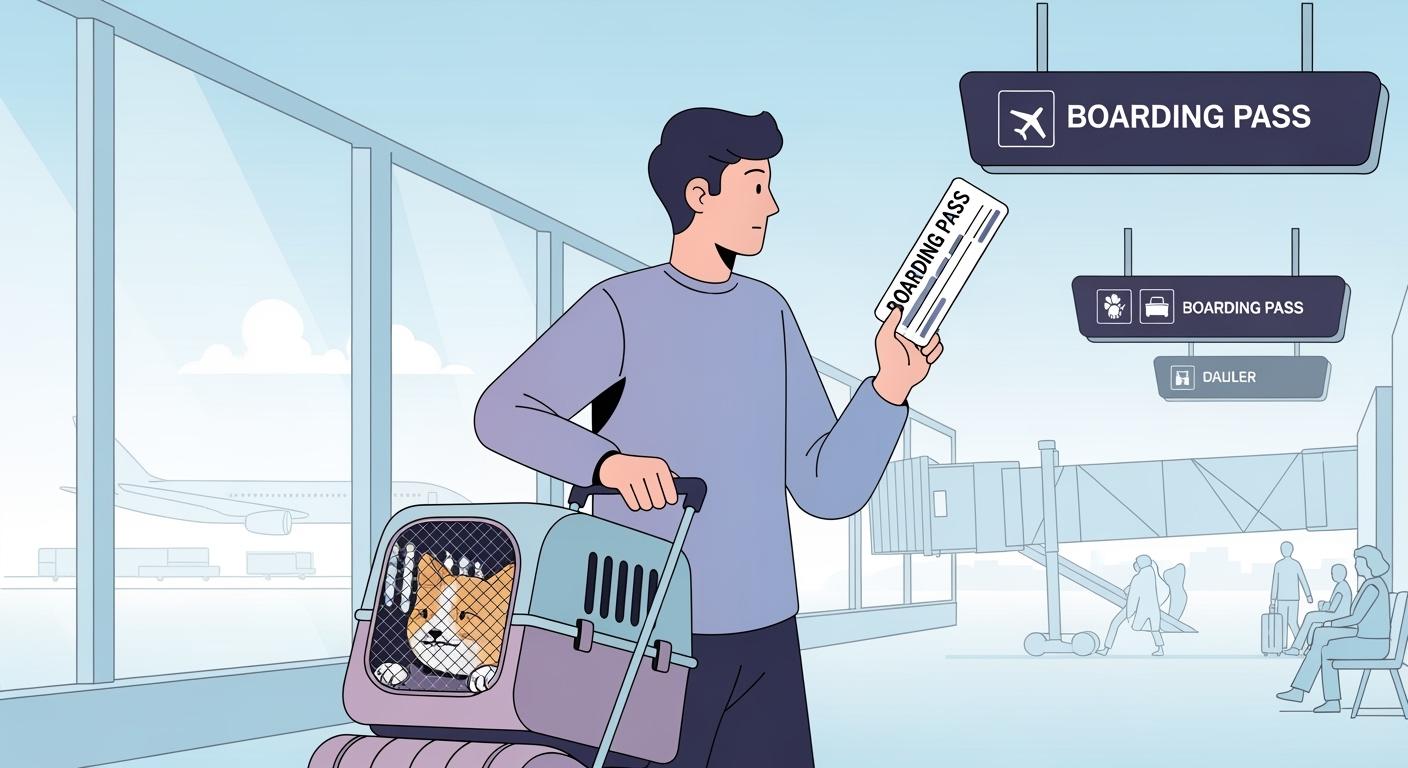
A long walk through the airport can make a rolling carrier look like the obvious choice. A pet carrier on wheels airline approved can make terminal travel easier, but the real test is not the product label. It has to roll smoothly, lift cleanly at security, and fit under the seat without blocking airflow or stressing your pet.
Das Wichtigste in Kürze
- A rolling carrier helps most when your pet is small enough for cabin travel but heavy enough that carrying them through the terminal feels tiring.
- The weak point is usually not rolling. It is lifting, turning in crowds, and getting the carrier under the seat once you board.
- Measure the full carrier at its widest points, test it with your pet inside, and practice the security routine before flight day.
When Rolling Helps and When Carry-First Is Easier
Terminal movement
Rolling makes sense when you have a long walk from parking, a connection with little spare time, or a pet that feels manageable in the cabin but heavy after ten minutes on your shoulder. Pulling the carrier instead of carrying it can reduce arm and back strain, and it also leaves one hand freer for boarding documents or another bag.
That advantage gets smaller when the route is crowded, uneven, or full of quick turns. Wheels can catch on seams, the carrier can swing wider than you expect, and a model that feels effortless on a smooth floor can become awkward near a packed gate. If you already know you will be lifting often, a soft carry-first model may be easier overall.
Tip: Pack the carrier the way you would for a real trip, place your pet inside, and test rolling, lifting, and under-chair fit at home. Empty-bag tests miss the problems that show up in real use.
Pet comfort matters as much as your comfort
A good rolling carrier does not just help your shoulders. It should also keep your pet stable, ventilated, and calm. Quiet wheels, a balanced frame, and enough structure to prevent sagging usually matter more than extra pockets or accessories. If the carrier rattles, tips on corners, or shifts too much with each pull, some pets will tense up quickly.
Pets that already dislike vibration, sudden stops, or unfamiliar noise may do better in a carrier that stays close to your body. Rolling is often easier for the person, but not always better for the animal. If your pet pants, scratches, leans hard to one side, or tries to brace during normal movement, the design may not suit them for air travel.
Rolling, soft-sided, or backpack
Each carrier style solves a different problem. The best choice depends on what is hardest on your trip: distance, lifting, or hands-free movement.
| Carrier type | Best use case | Why people choose it | Main tradeoff |
|---|---|---|---|
| Wheeled carrier | Long terminal walks | Less carrying strain and easier movement on smooth floors | Bulkier frame and harder under-seat fit on some flights |
| Soft-sided carry-first carrier | Cabin fit and frequent lifting | Usually lighter and more flexible under the seat | Less convenient on long airport walks |
| Backpack carrier | Short walks and hands-free movement | Keeps both hands free and stays close to your body | Can feel cramped or unstable for some pets |
When to skip a rolling carrier
You may want to skip a pet carrier on wheels airline approved if your flight uses a smaller aircraft, your pet is easily startled by motion, or you know you will be dealing with stairs, shuttles, or frequent lifting. Wheels and telescoping handles add weight and rigidity, which can work against you once you leave the wide terminal floor.
A rolling carrier is also a weak fit when the under-seat space is already tight and the model depends on a rigid base. In those cases, a soft-sided carrier with a strong shoulder strap often gives you more flexibility at boarding.
What Changes on Real Trips
Smooth floors are the easy part
Rolling carriers usually feel best right after check-in because airport floors are flat and open. That is the most flattering part of the trip. The harder test comes later: weaving through a crowded concourse, stopping suddenly, turning into a narrow boarding lane, and lifting the bag when the line compresses.
If the wheels are narrow, noisy, or poorly aligned, you will feel it fast. A small amount of wobble on a quiet home floor can turn into real instability when your pet shifts weight inside the carrier.
Security and boarding are where problems show up
You cannot stay in rolling mode the whole time. At security, your pet has to come out while the carrier goes through screening. At boarding, you may need to lift the carrier with one hand while managing your personal item and moving down a tight aisle. That is why handle stability matters so much. A handle that feels fine while pulling can feel weak once the carrier is fully loaded and off the ground.
Look for a top handle that feels balanced, stitching that does not twist under load, and a shape that stays upright when lifted. If the bag sags badly or the base tilts forward, the wheels are helping in the terminal but hurting you everywhere else.
Under-seat fit is the real standard
“Airline approved” on a product listing is not a reliable final answer. Airlines set their own cabin rules, and aircraft within the same airline can have different under-seat space. What matters is whether your specific carrier fits the flight you are taking.
Measure the carrier at the widest points, including wheel housings, frame edges, side pockets, and the handle base. If a model uses removable wheels or a detachable platform, confirm that the carrier still stays secure and ventilated when configured for the cabin. Soft-sided designs usually have an easier time because they can flex slightly, but they still need enough structure to avoid collapsing onto your pet.
Note: If your pet has breathing problems, severe anxiety, or a history of motion sickness, ask your vet about air travel before the trip.
Ventilation and balance are not optional
A carrier that technically fits but blocks mesh panels once it is under the seat is not a good cabin setup. Check that vents remain open when the bag is closed, packed, and slightly compressed. Also check that your pet can settle in a natural position instead of being pushed into a corner by the wheel frame or storage pockets.
Balance matters just as much. A well-designed rolling carrier should not tip easily when you turn, lean awkwardly when lifted, or drag more on one side than the other. Those small handling issues often become the main source of stress on travel day.
Quick fit check before you leave
| Check item | Pass signal | Fail signal | What to do |
|---|---|---|---|
| Overall size | Fits your flight’s cabin limits and slides under a chair at home | Rigid corners, wheels, or handle base catch | Choose a smaller model or use a removable wheel base if the design allows it |
| Lift stability | Carrier stays level with your pet inside | Handle twists, base sags, or bag tips forward | Switch to a sturdier model |
| Wheel behavior | Rolls quietly and tracks straight | Rattles, pulls sideways, or sticks on seams | Inspect wheels and avoid using it for air travel if instability remains |
| Airflow | Mesh panels stay open when fully packed | Side pockets or seat pressure block vents | Repack or choose a design with better vent placement |
| Pet comfort | Pet can lie down, turn lightly, and stay settled | Pet braces, pants heavily, or cannot rest naturally | Size up within airline limits or choose a different style |
| Leak control | Liner stays dry and contained | Moisture reaches the base or outer fabric | Add an absorbent pad and test again before travel |
Failure Signs That Matter Before You Fly
| Problem | Likely cause | Fast check | Better response |
|---|---|---|---|
| Carrier tips on turns | Narrow wheel base or uneven load | Walk tight corners with your pet inside | Slow down, rebalance the load, or replace the carrier |
| Noisy wheels | Loose hardware or poor wheel design | Roll on tile and listen for rattle | Tighten what you can, but avoid flying with a carrier that stays noisy |
| Awkward lifting | Weak handle, bad balance, or bulky frame | Lift from floor to waist height several times | Choose a model with a stronger top handle and firmer structure |
| Blocked vents | Overpacking or poor mesh placement | Close the bag and press lightly as a seat would | Remove extras or switch to better-placed ventilation |
| Pet gets restless fast | Too much sway, noise, or a cramped fit | Use the carrier for short practice outings | Give your pet more time to adapt or move to another style |
Common mistakes
- Trusting “airline approved” without checking your actual flight.
- Testing the carrier empty instead of with your pet and real travel items inside.
- Ignoring how the bag feels when lifted because the wheels seemed good enough.
- Packing side pockets so full that they reduce airflow or add bulk.
- Waiting until airport security to practice taking your pet out and settling them back in.
If the carrier fails at boarding
If the carrier looks too tall, too rigid, or unstable at the gate, stay practical. Ask whether a removable wheel base can be taken off without making the carrier unsafe. If not, you need a backup plan before travel day, not during a boarding line. That may mean traveling with a softer cabin carrier from the start or changing the trip arrangement for your pet.
The safest approach is to treat rolling as a convenience feature, not the whole buying decision. If the carrier does not work from curb to cabin, it is not the right flight carrier even if it feels great in the terminal.
Häufig gestellte Fragen
Can you use a rolling pet carrier on every airline?
No. Acceptance depends on the airline, the aircraft, and whether the carrier fits under the seat on that specific flight.
Do you have to remove your pet at airport security?
Yes. In normal screening, your pet comes out while the carrier goes through the scanner.
What matters most when choosing a pet carrier on wheels airline approved?
Focus on under-seat fit, lift stability, ventilation, and how calm your pet stays inside, not just how easy the carrier is to roll.
What if the carrier does not fit under the seat?
If it cannot be adjusted safely, you will usually need a different cabin carrier because under-seat fit is the basic requirement for in-cabin pet travel.