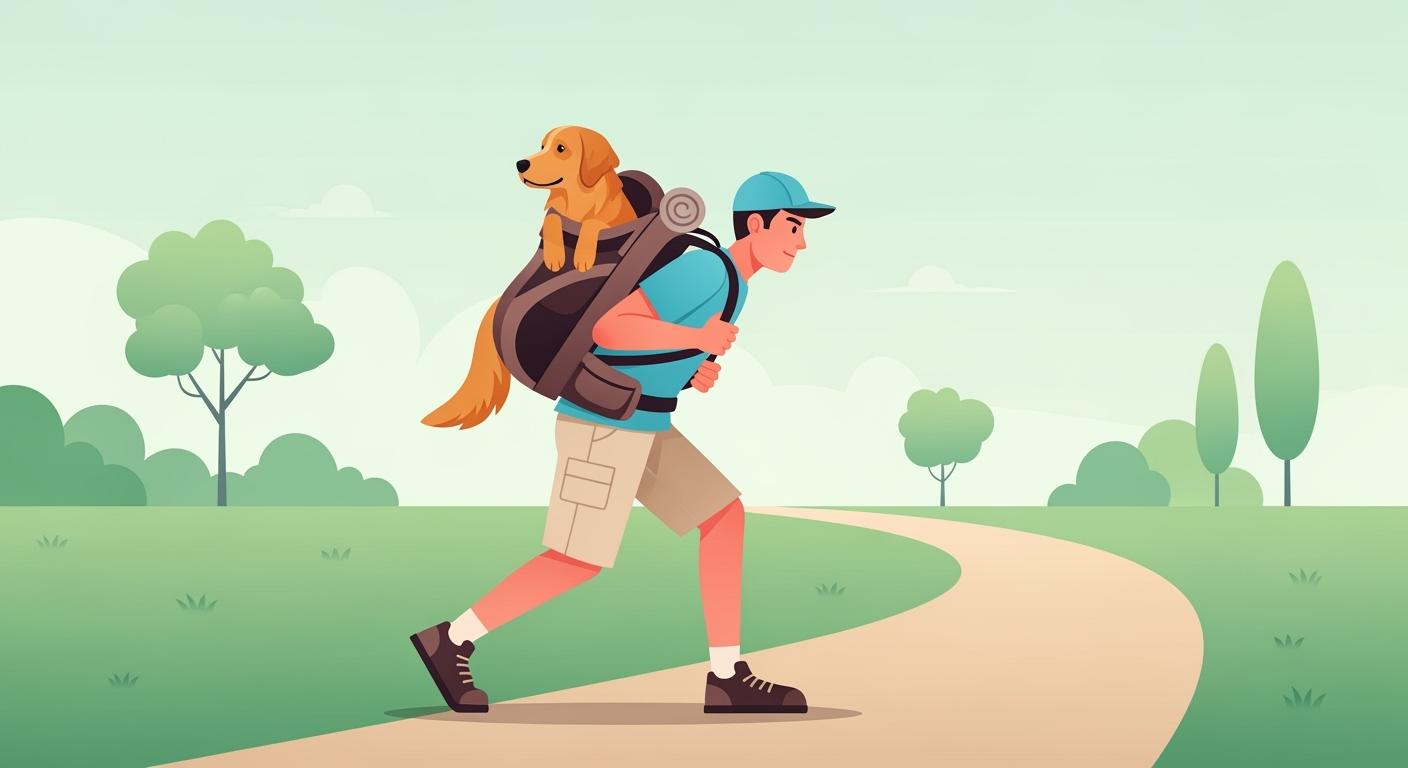
A medium dog carrier backpack works best on short outings when the load stays close, the base stays level, and your dog can rest without twisting or sliding.
At first, a backpack feels like an easy hands-free solution. Then the route gets longer, your shoulders start working harder, and your dog begins shifting inside the carrier. That is usually when the real answer shows up. The better setup is not the one that only holds your dog. It is the one that stays balanced, keeps airflow open, and still feels manageable after more than a few minutes.
Note: A backpack carrier can make short outings easier, but it is not a replacement for a car-secured carrier during vehicle travel or for a crate during longer confinement.
Das Wichtigste in Kürze
- A medium dog carrier backpack usually makes the most sense for short walks, quick errands, stairs, and crowded stops where hands-free movement helps.
- Once the dog is no longer very light, load feel, sway, and heat usually matter more than extra pockets or a stylish shape.
- If the carrier sags, bounces, traps heat, or keeps making your dog shift position, another style is usually easier for both of you.
When a Medium Dog Carrier Backpack Actually Helps
A medium dog carrier backpack usually helps most when the trip is short and active. Stairs, sidewalks, waiting lines, apartment entries, and quick store stops are the kinds of places where a backpack can feel more useful than carrying a dog in your arms or using a handheld bag.
It also works better when your dog settles in a natural position and the base stays supportive enough that the body does not slump. For medium dogs, that body support matters more than many owners expect, because the extra weight makes every small fit problem show up faster.
Where it usually works well
This kind of carrier usually fits short, low-intensity outings better than long, continuous wear. If your dog gets tired in busy areas, needs help through crowds, or only needs carrying for part of the route, a backpack often feels practical.
Where it usually stops making sense
If the outing turns into a long hike, a hot-weather walk, or an all-day event, the same backpack often becomes less comfortable for both dog and owner. Shoulder fatigue, blocked airflow, and rear sag tend to show up quickly once the route gets longer than the original use case.
| Carrier type | Usually best for | Main benefit | Main limitation |
|---|---|---|---|
| Medium dog carrier backpack | Short errands, stairs, crowded stops | Hands-free movement | Shoulder strain and sway build faster with weight |
| Handheld carrier | Very short transfers | Simple loading and easy access | Weight stays on one arm or hand |
| Car-secured carrier | Vehicle travel | Better travel stability | Not useful once you leave the car |
Tip: The easiest reality check is a five-minute test at home. Load your dog, walk, turn, stop, and feel whether the backpack stays centered without constant adjustment.
What Changes Once the Dog Is No Longer Light
Medium dogs change the carrying experience quickly. The extra weight makes balance, base support, strap pressure, and dog posture much more important than they feel with a very small dog.
A backpack that seems fine at first can start sagging at the rear, pulling to one side, or bouncing more than expected once your dog settles in. That is not a small detail. It changes your own balance and makes the carrier harder for the dog to rest in.
Load feel and sway matter more than people expect
Once the dog’s weight increases, even slight strap looseness or a weak base becomes obvious. A centered pack should feel close to your body, not like it is hanging away from your back or shifting with every step.
Heat builds up faster than you think
A medium dog can block airflow more easily inside the carrier, especially when the fit is snug and the weather is warm. Even if the backpack has mesh, your dog can still overheat if the face sits too close to fabric or if the route is longer than the carrier really suits.
| Check item | Pass signal | Fail signal | Beheben |
|---|---|---|---|
| Fit | Dog stands, turns, and settles without twisting | Dog cannot settle or keeps shifting | Adjust fit or change carrier size |
| Weight distribution | Load stays centered and even | Backpack sags or pulls to one side | Retighten straps and reduce extra load |
| Airflow | Dog breathes normally and stays calm | Panting, blocked nose area, heat stress signs | Stop, cool down, and improve ventilation |
| Base support | Base stays flat under the dog | Dog slides or the bottom droops | Add support or switch carriers |
| Owner comfort | Shoulders and back stay comfortable | Pressure points, pain, or numbness | Adjust carry height or shorten the outing |
Failure Signs That Matter Most
You usually see the important warning signs before a trip goes fully wrong. Rear sag, restless shifting, blocked airflow, and carry fatigue are not small annoyances. They are signs that the setup may be wrong for the dog, the route, or both.
What to stop and fix right away
- The base sags once your dog settles in.
- Your dog keeps shifting and cannot relax.
- The nose or mouth sits too close to fabric or mesh.
- The load pulls unevenly on your shoulders or lower back.
- Your dog pants heavily, drools, or looks too warm.
When you should stop using the backpack
If you cannot fix sag, heat, blocked airflow, or major imbalance with a simple strap adjustment, stop using the carrier for that route. At that point, the issue is usually not technique. It is the wrong setup for the dog or for the length of the outing.
| Symptom | Likely cause | Fast check | Beheben |
|---|---|---|---|
| Rear sag | Weak base or poor fit | Check bottom support after loading | Add support or switch carrier type |
| Blocked airflow | Dog positioned too close to fabric | Watch breathing and nose clearance | Reposition dog or stop use |
| Extra bounce | Loose straps or unstable load | Walk and feel for sway | Retighten evenly and reduce movement inside |
| Restless shifting | Poor comfort, poor support, or heat | Watch for repeated repositioning | Shorten trip and reassess fit |
| Owner fatigue | Uneven weight distribution | Notice shoulder or back strain | Stop and switch setups if strain builds fast |
Disclaimer: If your dog shows heat stress, heavy panting, breathing strain, or distress, stop immediately. This advice does not replace veterinary guidance.
Common Mistakes and What They Lead To
Most backpack problems come from the same few mistakes. Owners often choose the bag because the dog technically fits, then ignore whether the weight stays balanced, whether the dog can settle naturally, or whether the outing is simply too long for a backpack.
- Ignoring breathing or posture because the dog is still quiet.
- Overloading storage pockets and shifting the center of gravity.
- Skipping the fit check before each outing.
- Using the backpack for outings that are too long or too warm.
- Leaving dirt, moisture, or fur buildup inside after outdoor use.
The best medium dog carrier backpack usually feels stable, unremarkable, and easy to repeat. If you keep fixing the same problems every trip, that is often the clearest sign the carrier is not really working.
Häufig gestellte Fragen
Can a medium dog carrier backpack work for all-day hikes?
No. It usually works better for short outings, short rests during longer walks, and places where hands-free movement matters more than long carry time.
What matters most before each outing?
Check whether the load stays centered, the dog can breathe easily, the base supports the dog well, and the straps still feel even on your body.
How do I know the backpack is too heavy for me or my dog?
If you feel quick shoulder strain, lose balance, or your dog keeps shifting, overheating, or slumping, the load is already too much for that setup.
Choose a medium dog carrier backpack when the outing is short, the dog can settle in a supported position, and the weight still feels steady after a few minutes. Change setups when the backpack starts creating sag, heat, or fatigue faster than it creates convenience.