Measuring dog harness size starts with one number in most cases: chest girth. That measurement usually does the most to determine whether the harness stays centered, clears the armpits, and sits below the throat without slipping loose. Some styles also need a neck measurement, especially when the opening sits higher or has less adjustment around the front.
A good fit should feel secure without pinching. If the harness twists, leaves rub marks, rides up toward the throat, or lets your dog back out, the size, adjustment, or style is probably wrong even if the label looked right.
Why chest girth matters most
For most harnesses, the chest is the widest and most important point to measure. It affects how the harness sits across the front of the body and how stable it stays once your dog starts moving. When chest girth is correct, the harness is less likely to rotate, rub behind the front legs, or press into the neck.
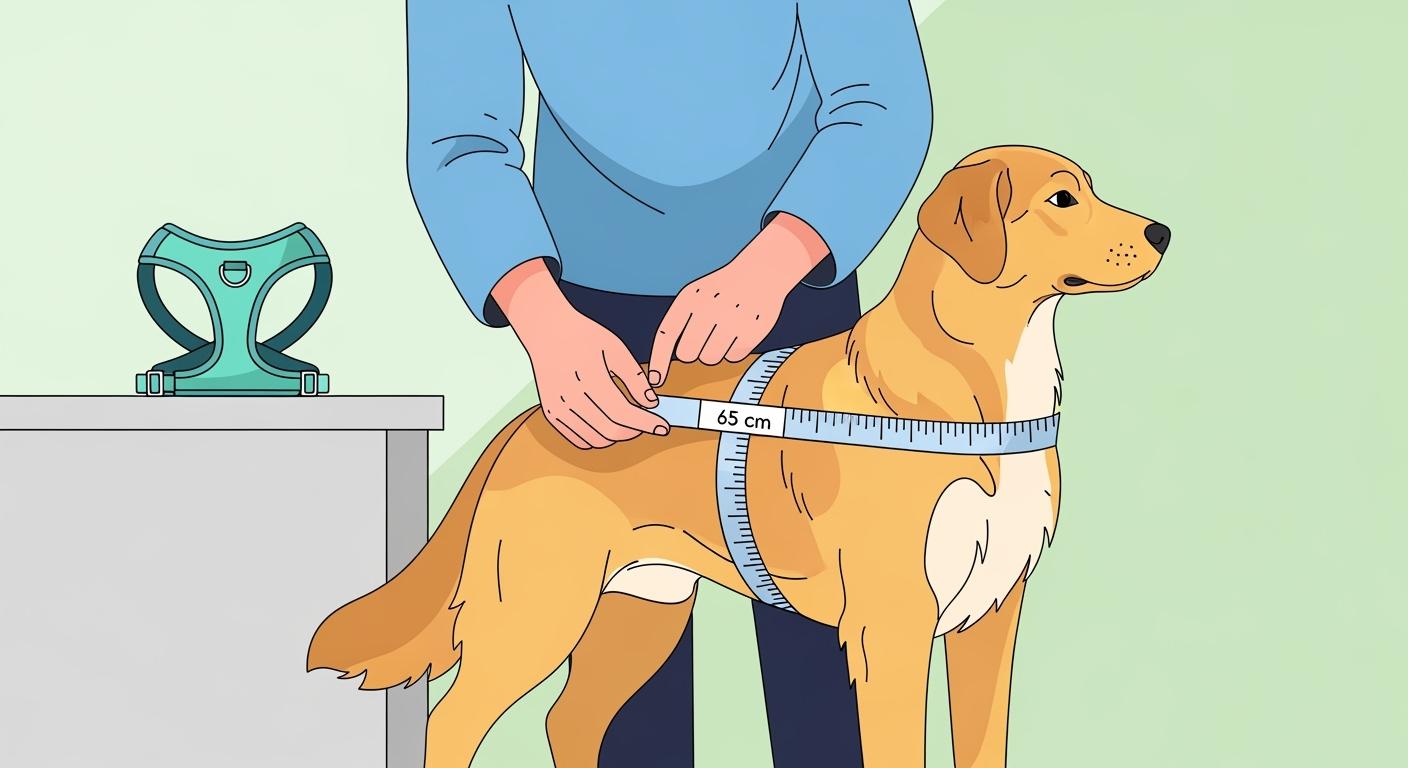
Measure around the widest part of the rib cage, usually just behind the front legs. Keep the tape flat against the coat without pulling it tight. If your dog has thick fur, press gently enough to measure the body rather than the outer fluff.
When neck measurement changes the answer
Chest girth should still lead the decision, but neck size matters more with over-the-head designs, some tactical harnesses, and styles with a narrow front opening. If the neck opening is too small, the harness can press on the throat or sit too high on the chest. If it is too loose, the front can shift and make escape easier.
Measure the neck at the base near the shoulders, not where a collar normally sits. That lower point gives a better match for harness sizing.
| Harness type | What to measure first | What to double-check |
|---|---|---|
| Standard adjustable harness | Chest girth | Neck only if the brand asks for it |
| Over-the-head harness | Chest girth | Neck opening at the base of the neck |
| Tactical or structured harness | Chest girth | Neck, and sometimes back length if listed on the size chart |
Tip: If your dog falls between sizes, start with the size that fits the chest measurement best, then confirm the neck opening will not sit too high or too tight.
How to measure a dog for a harness
- Have your dog stand naturally on all four legs.
- Wrap a soft tape measure around the widest part of the chest, just behind the front legs.
- Write down the chest girth.
- Measure the base of the neck near the shoulders if the harness style calls for it.
- Check the brand size chart using chest girth first.
- Put the harness on and adjust it so it stays centered and sits below the throat.
- Take a short walk and watch how it moves in real use.
If you do not have a soft tape measure, use a string, mark the overlap point, and compare it against a ruler. It is better to measure twice than to guess from weight alone.
What a good fit looks like
A properly fitted harness should stay stable while your dog walks, turns, and changes pace. It should not crowd the throat, dig into the armpits, or slide off-center after a few minutes of movement.
| Check item | Good fit | Poor fit | What to do |
|---|---|---|---|
| Chest panel position | Centered and below the throat | Rides up or twists | Adjust straps or try another size |
| Armpit clearance | No rubbing after a walk | Redness, hair wear, or chafing | Loosen the fit or try a different shape |
| Stability | Stays in place during movement | Slides, rotates, or shifts sideways | Re-measure the chest and check adjustment points |
| Neck pressure | No coughing or gagging | Presses into the throat | Try a larger size or a lower-cut front design |
Common measuring mistakes
Most fit problems come from a small set of errors rather than from the harness itself.
- Measuring too high on the chest instead of the widest part of the rib cage.
- Measuring while the dog is sitting, crouching, or twisting.
- Pulling the tape too tight and choosing a size that runs small.
- Buying by weight only and skipping body measurements.
- Ignoring neck size on harnesses with a narrow front opening.
These mistakes can lead to rubbing, restricted movement, throat pressure, or an easy escape. A size chart is only useful when the measurement points match the way the harness is built.
What to do when the harness looks right but still feels wrong
Sometimes the numbers match the chart, but the shape still does not suit your dog. Broad chests, deep ribs, narrow shoulders, or thick necks can all change how a harness behaves once your dog starts moving.
If the fit looks acceptable at rest but problems show up on a walk, check these points before assuming the size is correct:
| Symptom | Likely cause | Fast check | Beheben |
|---|---|---|---|
| Harness twists on the chest | Chest fit is too loose or unevenly adjusted | Look at strap symmetry on both sides | Even out the straps or size down if the chart allows |
| Rubbing behind the front legs | Harness sits too high or too close to the armpits | Inspect the skin after a short walk | Loosen slightly or try a different cut |
| Pressure near the throat | Front opening is too small or too high | Watch for coughing or reluctance to move | Use a larger size or a different front shape |
| Dog backs out of the harness | Overall fit is too loose or the style is not secure for that body shape | Check whether the harness shifts backward under light tension | Re-measure and consider a more secure design |
Note: If the harness causes throat pressure, repeated rubbing, or a clear change in gait, stop using it until you can refit or replace it.
When to try a different size or style
Move up or down a size when the chest measurement sits near the edge of the brand range and adjustment cannot solve the problem. Change styles when the harness technically fits but still rotates, crowds the shoulders, or sits too close to the throat.
In general, size changes fix measurement mismatch. Style changes fix body-shape mismatch. If your dog keeps having the same problem after careful measuring dog harness size, the design may be the issue rather than the strap settings.
Häufig gestellte Fragen
How do you measure chest girth for a dog harness?
Wrap a soft tape around the widest part of the chest just behind the front legs, then record that number without pulling the tape tight.
Can you choose a harness by weight alone?
No. Weight can be a rough starting point, but chest girth is the more useful measurement for actual fit.
When should you measure the neck too?
Measure the neck at the base when the harness goes over the head, has a narrow front opening, or the size chart specifically asks for it.
What should you do if your dog is between sizes?
Start with the size that best matches the chest, then adjust and test the fit in motion to make sure it stays centered and does not press on the throat.