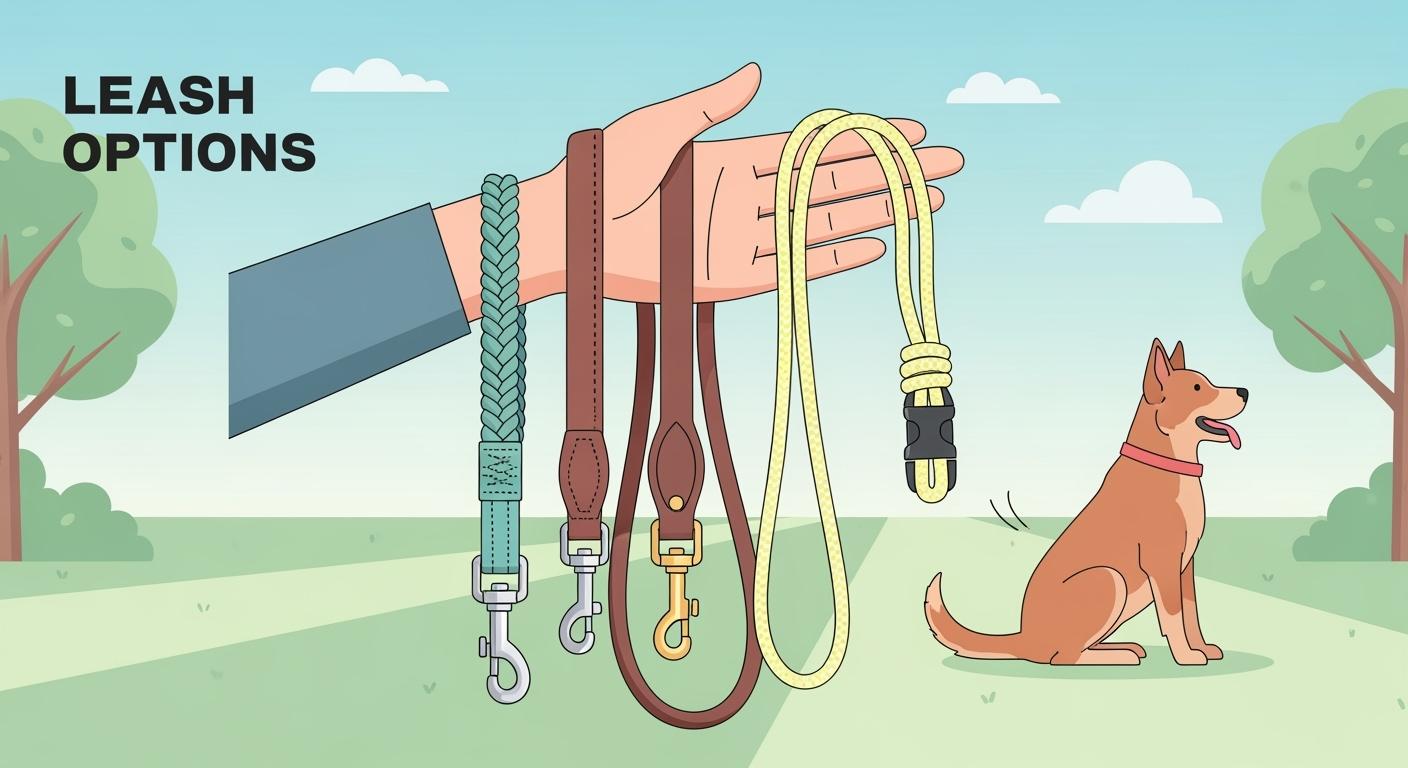
If a leash feels “wrong,” it usually comes down to three things: (1) the length is mismatched to the environment, (2) the width/handle is uncomfortable under real pulling, or (3) the clip and stitch zone do not feel reliable. This Cluster guide helps you choose a leash that feels safer and easier to control on real walks.
If you want to compare types first, start here: dog leash.
Choose leash length by where you walk
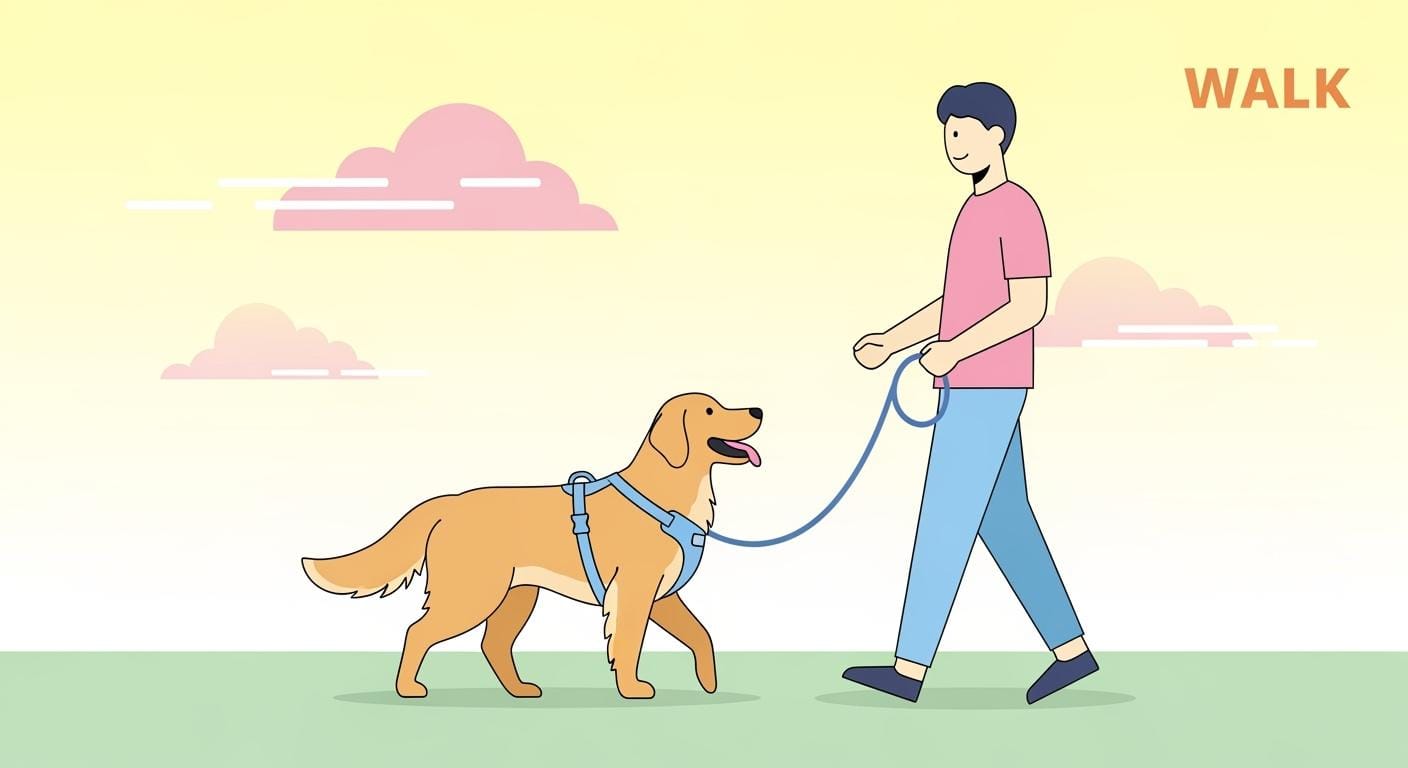
Length is a reaction-time tool. In crowds, shorter distance prevents “too far, too fast.” In open areas, a longer line can support training and exploration, but only when you can manage slack safely.
| Where you walk | Best length direction | Why it works | Common problem if wrong |
|---|---|---|---|
| Crowds, crossings, tight sidewalks | Short to mid | Close control, fewer tangles | Tangles, late reactions, unsafe passes |
| Neighborhood routes, mixed foot traffic | Mid | Balance of sniffing and control | Constant tension or “too restrictive” feel |
| Open fields, recall practice, distance work | Long line (space required) | Controlled freedom for training | Trips, slack tangles, end-of-line jolts |
60-second check: is the length working?
- Turn test: can you turn 90 degrees without wrapping the leash around your hand?
- Pass-by test: can you shorten distance quickly when someone approaches?
- Trip risk: does slack drag near feet, wheels, or obstacles?
If you want one reference that combines leash length with fit and comfort checks for a full setup, use this harness and leash set fit guide.
Choose width and handle for control and comfort
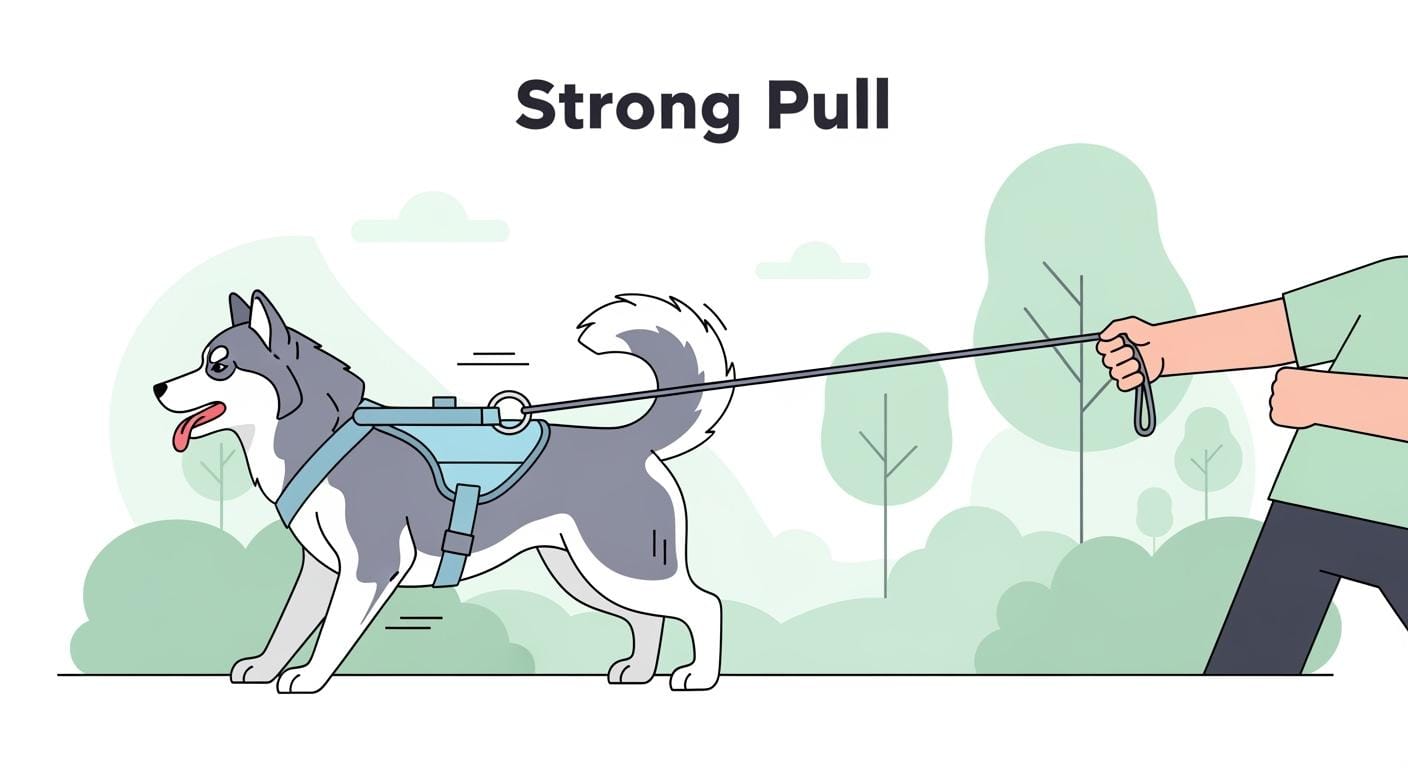
Width is not just about strength. It is about how the leash feels in your hand during repeated pulls and quick stops. Too thin often causes hand pain. Too thick can feel bulky and harder to manage for small dogs.
- If you get hand pain: a wider webbing or a more comfortable handle usually helps.
- If the leash feels bulky: downsize width for small dogs or choose a softer, more flexible material.
Quick handle checks
- Grip comfort: does it cut into your hand under a sudden pull?
- Wet behavior: does it get slippery in rain or after washing?
- Close control: can you shorten distance quickly without grabbing webbing near the clip?
Clips and stitching: the most common “failure” hotspot
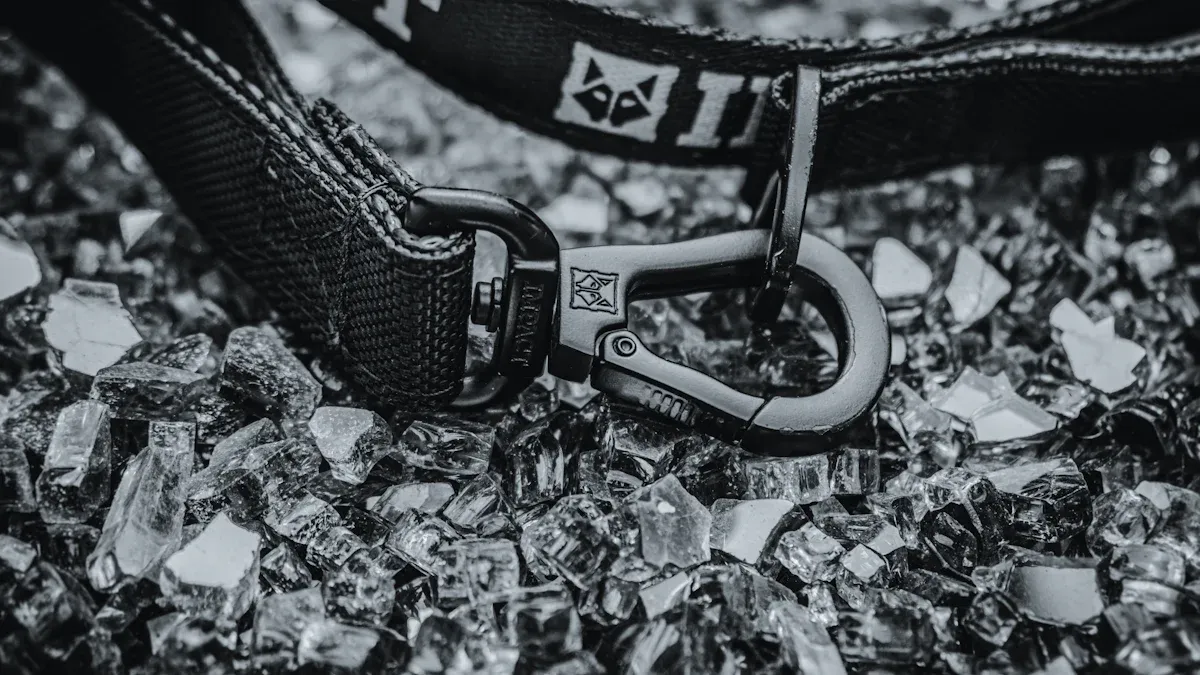
Many “sudden break” stories start at the clip, swivel, or the stitch zone just behind the clip. A strong leash body still feels unsafe if hardware action is rough or stitching is inconsistent.
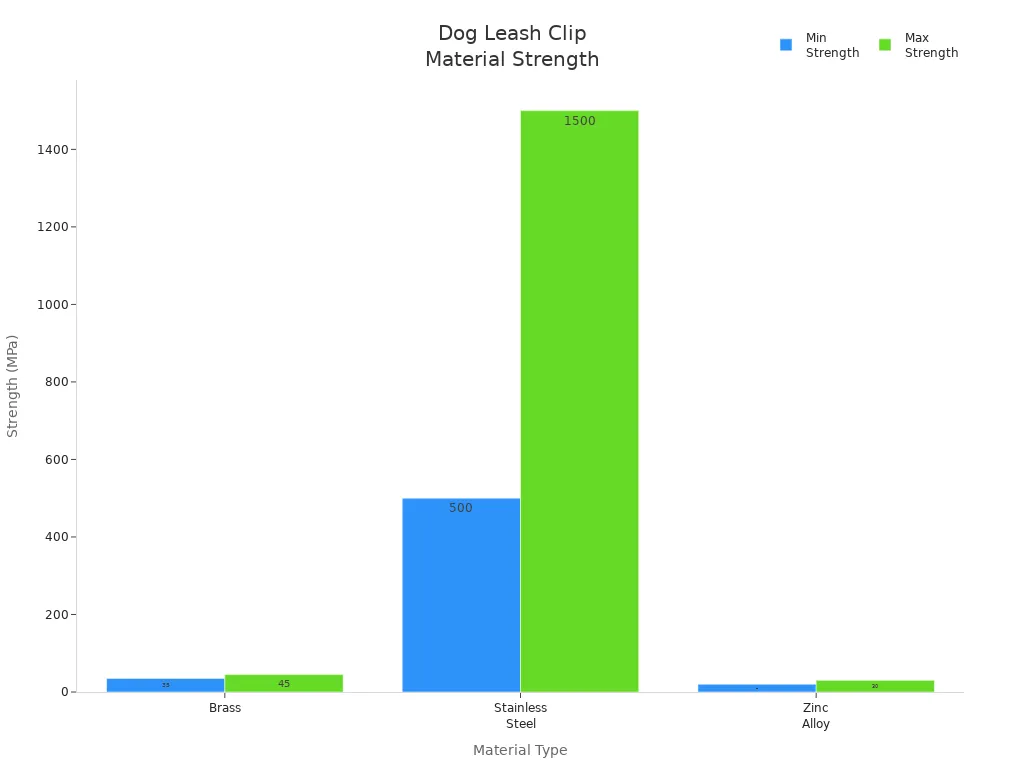
Fast pass/fail checks
- Snap action: opens/closes smoothly; no sticky movement.
- Swivel: rotates without binding (helps reduce twisting).
- Surface: no burrs or sharp edges that can cut webbing.
- Stitch zone: no loose threads; stitches look even and reinforced.
Material and cleaning: match your route
Material affects grip comfort, water behavior, odor, and how easy it is to clean. If you walk in rain, sand, or muddy paths, “easy clean” often matters more than a premium feel.
Simple care tips that prevent surprises
- Rinse or wipe after salt, sand, or mud, then dry fully.
- Inspect the clip and stitch zone after any hard pull.
- Replace the leash if you see cuts, melted spots, deep abrasions, or a clip that no longer closes reliably.
Häufig gestellte Fragen
Is a longer leash always better for training?
No. A long line is useful in open spaces for structured practice, but it creates slack and tangle risk in crowded areas. Start with a length that lets you react quickly, then increase distance only when the environment is safe.
Why does the clip feel unreliable even if the leash looks strong?
Hardware action and the stitch zone matter. If the snap is sticky, the swivel binds, or stitching looks uneven near the clip, the leash can feel unsafe even when the webbing itself is thick.
How do I reduce tangles fast?
Shorten the effective length in crowds, keep slack off the ground, and avoid long lines in busy places. Twisting is also worse when the swivel binds or when slack is excessive.
What’s the clearest sign I should replace a leash?
Any damage near the clip (cuts, deep abrasion, broken stitches) or a snap that no longer closes reliably. Leash failures often start at the clip zone, not in the middle of the webbing.
Are hands-free leashes always safer for running?
Not always. Hands-free can feel smoother for steady pacing, but it can increase risk if a dog can surge into triggers. This belt vs bungee setup guide explains how length changes under tension and when handheld control is safer.