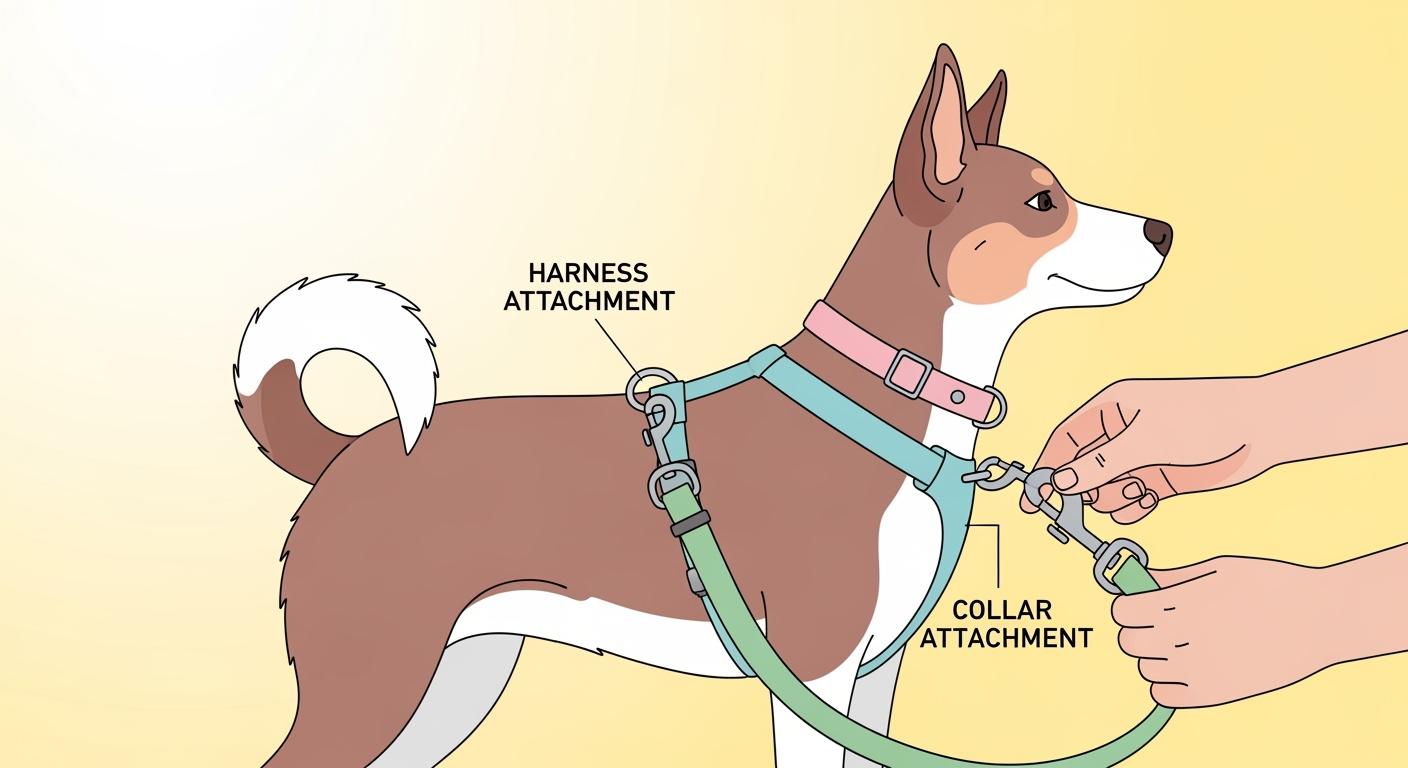
When you ask how to put dog leash on the right way, the real question is not just how to clip it. You also need to decide where the force should go once the walk starts. A flat collar can work for calm dogs on short, controlled walks. A harness is usually the better starting point when the dog pulls, backs up, coughs on leash pressure, or needs cleaner control through the chest instead of the neck.
Das Wichtigste in Kürze
- Clip to a flat collar for calm dogs that walk on a loose leash and do not lunge, cough, or try to back out.
- Clip to a harness when you need better control, less neck pressure, or a more stable setup for a dog that pulls or twists.
- Check the ring, clip gate, strap lay, and body position before you start walking. Many leash problems come from a setup issue, not from the leash itself.
Collar or Harness: Where the Leash Should Go
When you decide how to put dog leash on your pet, you face an important choice: collar or harness. The better answer depends on how your dog actually walks. Start with behavior, not theory. If the dog walks evenly and does not load the leash much, a collar may be enough. If the dog hits the end of the leash, turns sideways, or becomes noisy or uncomfortable when pressure goes to the neck, move the leash attachment to a harness.
When a collar clip still makes sense
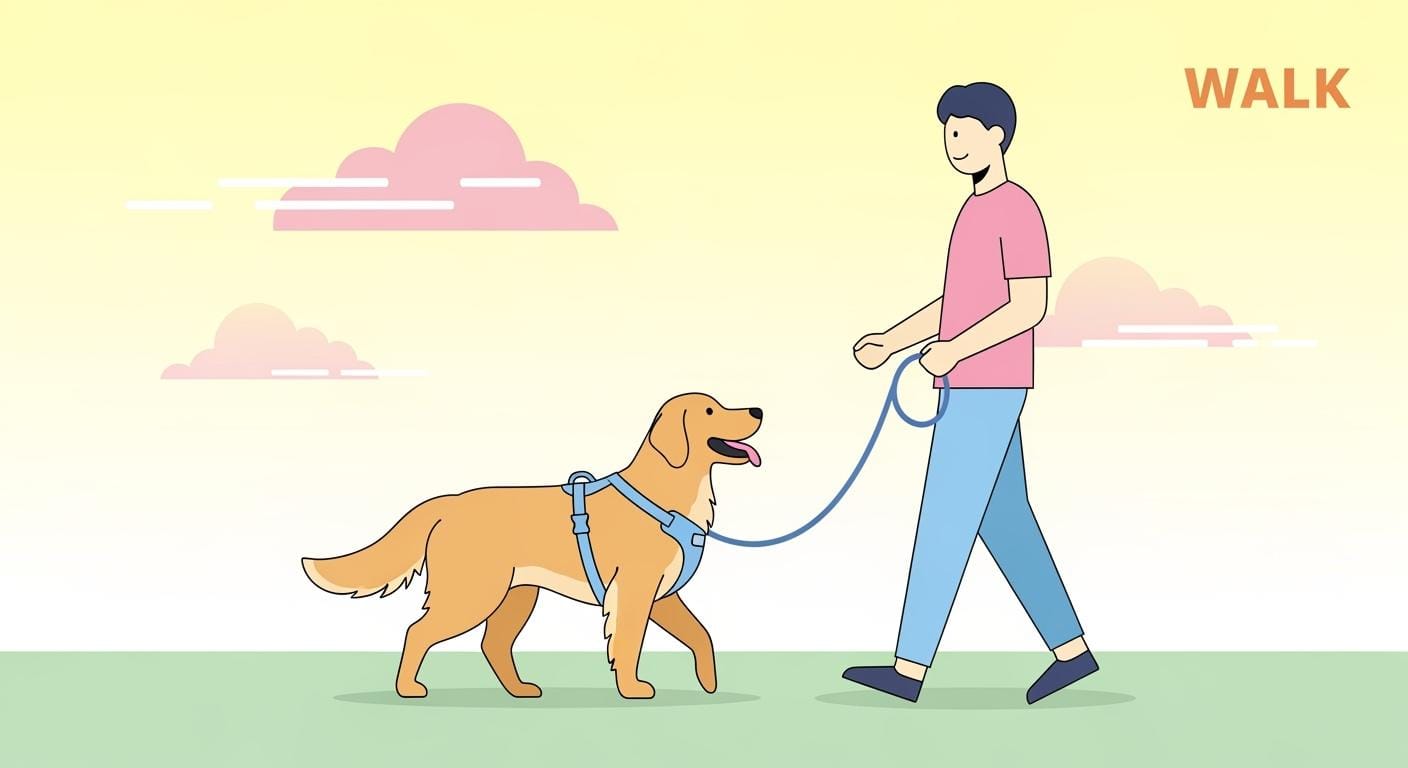
A flat collar works best for dogs that already walk with light leash pressure and do not make the collar do all the work. It is simple, fast to use, and practical for quick outs, short neighborhood walks, or dogs that reliably stay with you on a shorter lead. It also keeps ID tags on the dog without adding more gear.
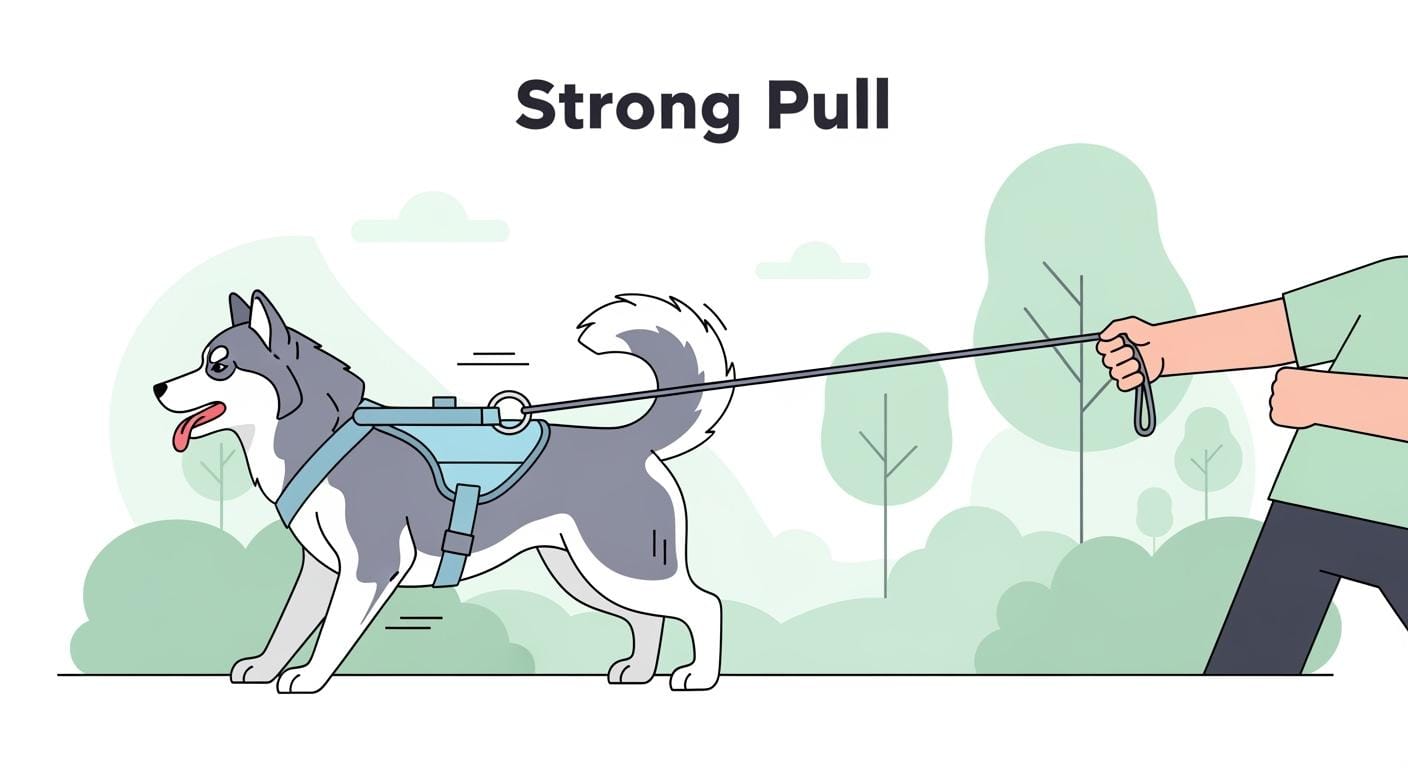
Where collars start to fail is when the walk stops being calm. If the dog pulls hard, hits the leash suddenly, coughs, gags, or keeps leaning forward through the neck, a collar is no longer just a clip point. It becomes the main pressure point. That is where many “easy” setups stop being good setups.
Tip: A collar is a lighter option, not a universal option. If the walk depends on constant leash tension, reassess the attachment point instead of tightening the collar more.
When a harness is the better call
A harness usually makes more sense when you need to move the working load away from the neck and back onto the chest and torso. That matters for pullers, young dogs still learning leash manners, dogs that spin or reverse out of pressure, and dogs that do not handle neck tension well. It also tends to be the cleaner choice when your goal is not just restraint, but steadier body control.
Front-clip and back-clip harnesses do not do the same job. A front clip often gives you a cleaner redirection path for dogs that rush forward or pull straight ahead. A back clip usually feels simpler and less intrusive for dogs that already walk calmly. The right answer is not which one sounds more “advanced.” It is which one keeps the dog aligned without twisting, dragging, or increasing frustration.
Note: A harness should improve the walk path, not just add more straps. If the dog still loads hard into the setup, twists sideways, or rubs under the front legs, the style or clip point may still be wrong.
How to clip the leash the right way
You do not need a complicated routine, but you do need a clean one. Use the same order each time so you catch mistakes before the dog starts moving.
- Decide first whether this walk should start from a collar or a harness.
- Hold the dog close enough that you are not clipping onto moving hardware.
- Find the intended ring instead of clipping by feel.
- Close the snap fully and check that the gate is not resting against webbing, fabric, or another ring.
- Give one short test pull before you start walking to confirm the clip is seated correctly.
- Check that the harness lies flat, the chest area is centered, and no strap is twisted.
- Watch the first few steps. If the dog turns sideways, the leash drags under a leg, or the hardware rotates out of place, stop and reset.
If you want to know how to put dog leash on your dog for the best results, treat the first ten seconds as part of the setup. A secure clip that starts from the wrong ring, or from a twisted harness, still creates problems once the dog moves.
Front clip, back clip, or collar clip?
The table below keeps the choice practical and tied to real walk behavior.
| Attachment Point | Usually Works Best For | Main Benefit | Main Watchout | Usually a Weak Match For |
|---|---|---|---|---|
| Collar Clip | Calm dogs on short, controlled walks | Simple setup and quick on/off use | All working force goes through the neck | Pullers, dogs that cough on leash pressure, or dogs that back into the leash often |
| Back-Clip Harness | Dogs that already walk fairly evenly | Comfortable daily setup with clear top access | May not reduce forward drive enough for hard pullers | Dogs that surge hard at the start of the walk |
| Front-Clip Harness | Dogs that lunge, pull, or need better redirection | Cleaner control over body direction | Bad fit can create sideways drag or leg interference | Dogs that become more frustrated with chest-side pressure |
Choosing the right attachment point is less about labels and more about what fails first on your walk: neck pressure, pulling force, side twist, or control loss.
Mistakes That Make a Good Setup Fail
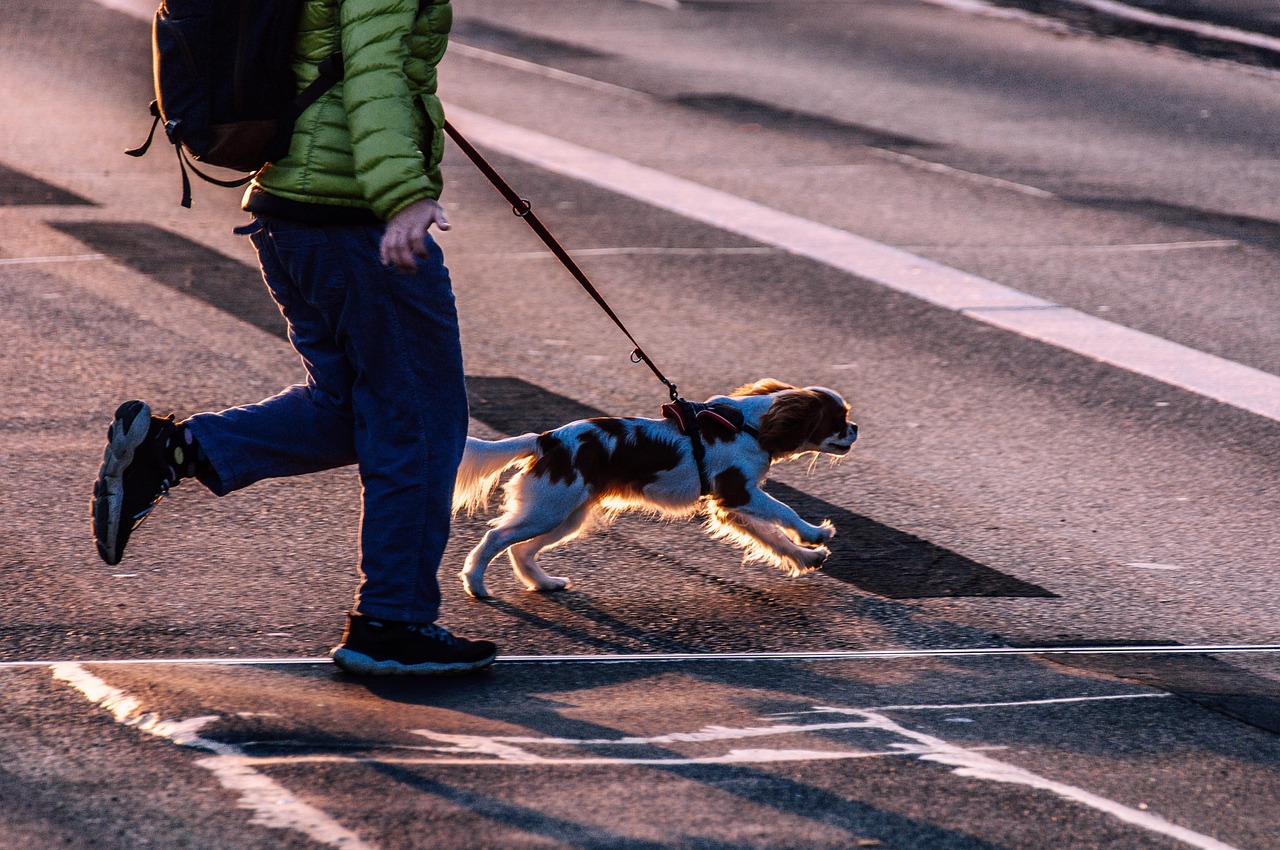
Wrong ring, half-closed clip, twisted webbing
Some leash problems look like behavior problems, but they start as hardware mistakes. A leash clipped to the wrong ring, a snap not fully seated, or a twisted chest section can change how force moves through the whole setup. The dog feels that before you do. What looks like sudden resistance, zig-zagging, or extra pulling can come from an awkward load path rather than stubbornness.
Pass/Fail Checklist: Before You Take the First Step
| Artikel prüfen | Pass | Fail |
|---|---|---|
| Leash clipped to the intended ring | Yes | No or unsure |
| Snap gate fully closed | Yes | Partly blocked by fabric or hardware |
| Harness lies flat | Yes | Twisted or rotated |
| Dog can step forward without side pull | Yes | Body turns or leash drags off-line |
Loose fit, neck-only control, and rushed starts
A setup can also fail even when the correct ring is used. Loose collars can slide, rotate, or ride up when the dog changes direction. Loose harnesses can shift to one side, rub at the armpit, or make backing out easier. Rushed starts create another common problem: the dog hits the end of the leash before the handler has checked whether everything is sitting where it should.
Tip: Do not judge the setup only when the dog is standing still. Watch the first five to ten walking steps. That is when off-center pull, drag, and shoulder restriction usually show up.
Quick troubleshooting before the walk gets worse
You can catch most leash setup problems early with one fast reset instead of forcing the walk through them.
| Symptom | Mögliche Ursache | Fast Check | What to Change First |
|---|---|---|---|
| Dog turns sideways at the start | Twist in the harness or poor front-clip alignment | Look at chest strap lay and leash path | Reset the harness and reclip to the intended ring |
| Dog coughs or gags when tension comes on | Too much neck loading | Notice whether the pressure is going through the collar | Move the attachment point to a harness |
| Leash drags under a leg | Clip position or leash angle is off | Watch the dog’s first turns | Shorten the lead and reassess clip point |
| Harness shifts to one side | Loose fit or uneven strap adjustment | Check whether the chest stays centered | Refit before continuing |
| Dog braces or refuses to move forward | Pressure point feels wrong or restrictive | See whether the dog relaxes when tension comes off | Reassess both fit and attachment point |
Note: If a setup keeps producing the same problem after one or two clean resets, stop blaming the dog first. Recheck the gear path, fit, and where the leash is actually doing its work.
Failure Signs That Mean the Attachment Point Is Wrong
Neck pressure, noisy breathing, or repeated coughs
One of the clearest failure signals is when the dog looks fine until the leash tightens. If the moment of tension brings coughing, gagging, neck bracing, or heavier breathing sounds, the attachment point is likely wrong for that dog or that walk. This does not mean every dog must stop using a collar. It means a collar is the wrong working point when the neck is clearly taking the hit.
Disclaimer: If coughing, breathing difficulty, or visible distress keeps happening during or after walks, stop and reassess the setup and speak with your veterinarian. This article is for gear judgment, not medical diagnosis.
Clip drag, repeated tangles, or backing out
Another failure pattern is mechanical rather than medical. The dog may back out when pressure comes on, the leash may keep wrapping under one leg, or the hardware may twist every time the dog changes direction. Those are not small annoyances. They are signs that the current clip point and body layout are not staying stable in motion.
Pay extra attention if the dog can reverse quickly or if the harness rotates when the leash goes tight. A setup that looks secure when standing still may still fail once the dog hesitates, spins, or plants backward.
When to switch collar, clip point, or harness style
You should stop and change something when the same problem repeats across multiple walks, not just one rushed outing.
- Switch away from a collar attachment if the dog repeatedly coughs, gags, or loads hard into the neck.
- Switch away from a back clip if the dog keeps surging forward and you lose clean body control.
- Reassess a front clip if the dog keeps getting sideways drag, chest irritation, or leg interference.
- Change the harness style or fit if the dog can back out, the chest panel drifts off center, or the setup rubs during normal movement.
The best answer to how to put dog leash on your dog is usually simple: start with the attachment point that keeps pressure where your dog handles it best, then confirm that the clip, ring, and body layout stay stable once the walk begins. A collar can work for calm, low-tension walking. A harness is often the better choice when the dog pulls, twists, coughs, or needs clearer body control.
Häufig gestellte Fragen
How do you know if the harness fits right?
You want the harness to stay centered and lie flat when the dog starts moving. It should not twist, rub under the front legs, press into the throat area, or let the dog back out when tension comes on.
Can you use both a collar and harness at the same time?
You can, but only if each piece has a clear job. For everyday walking, more hardware does not automatically mean better control. If the setup becomes cluttered, twisted, or confusing to manage, simplify it.
What if your dog keeps escaping the harness?
Do not just tighten everything harder. Check whether the harness is the wrong shape, sitting too high, or shifting off center when the dog backs up. If escapes continue, reassess the harness style and fit before the next walk.